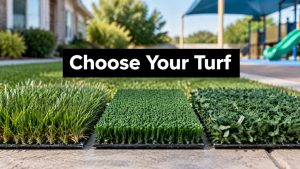

The usual advice for choosing synthetic turf is to pick a realistic blade, find a color you like, and buy the softest sample. That's backwards. Start with what the space has to do, then choose the fiber, backing, infill, and base that can do it. A front lawn, dog run, and school play area shouldn't get the same specification just because the samples look alike.
For Austin properties, the deciding questions are practical: Where does rainwater go? Who'll use the surface in afternoon sun? Will dogs run the same route every day? A photograph can show color and neat seams. It can't prove drainage, impact performance, or comfortable temperatures.
Types of Synthetic Turf by Fiber and Generation
Two lawns can photograph identically and still fail differently. One may flatten along a walking route; another may hold water because the ground beneath it wasn't prepared properly. A turf type needs a description of its parts, not just a product name.
Types of synthetic turf by fiber and blade
| Type | How the yarn is built | Usual role | Where it fits | Tradeoff |
|---|---|---|---|---|
| Nylon | Short, dense fibers in first-generation sports faces | High-wear specialized surfaces | Heavy-traffic sports and tough public spots | Less soft; resilience and cost differ from landscape polyethylene |
| Polypropylene | Longer fibers, often with sand infill on second-generation fields | Older sports faces and support or backing yarns | Budget or blended systems, not a soft show lawn | Stiffer feel; UV stability must be specified |
| Polyethylene | Soft face fiber, monofilament or texturized; modern sports piles commonly fall within the ranges discussed below | Default modern face yarn | Homes, pets, and most new installs | Softness still depends on density, pile, and infill |
| Monofilament | Single blades rather than a slit sheet; market share noted below | Realistic landscape face | Front yards and barefoot areas | Looks thin if face weight and density are low |
| Fibrillated slit-film | A slit sheet that opens into a net | Infill-holding sports and play yarn | Multi-use play where looks matter less | Less natural up close than monofilament |
The table mixes materials with yarn construction deliberately. Polyethylene names the polymer; monofilament describes how a blade is made. They aren't competing categories. A useful proposal identifies both, so you know what you're comparing.
What the generations actually explain
The synthetic-turf review published in IOP Conference Series describes the progression from short nylon fibers over backing at Houston's Astrodome in 1966, generally without loose infill, to longer, sand-filled polypropylene systems in the late 1970s. Sand supported the longer blades, improved stability, and moderated ball bounce.
The same review places third-generation systems in the late 1990s, with approximately 40–65 mm piles, and reports modern sports-system piles of about 40–70 mm. Polyethylene is now the most widely used contemporary fiber. Those are sports-system descriptions, not a recommendation to make every residential lawn that tall.
The progression is easier to understand when the fiber and installation changes sit together.
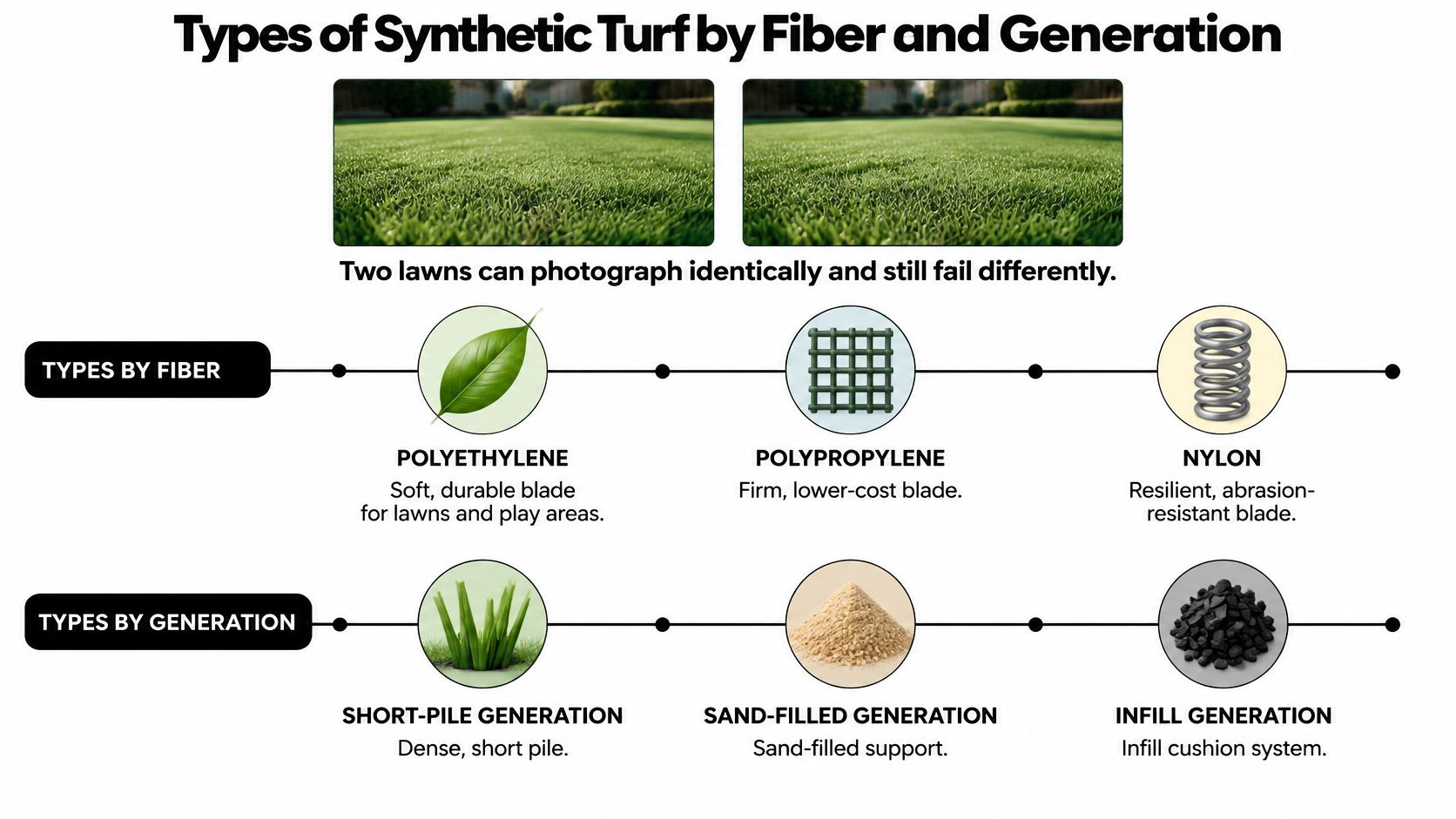
Nylon remains a specialized choice where resilience matters more than a lounge-lawn feel. Polypropylene deserves a closer specification check, especially when it appears in a blend or support yarn. Polyethylene is the sensible starting point for a residential surface where softness and everyday durability both matter.
Choose the blade build after the material
Monofilament blades give you a grass-like face, but an attractive blade doesn't compensate for sparse construction. Separate the fibers with your fingers and look toward the backing. Compare samples upright, brushed aside, and viewed from the direction people will approach the lawn.
According to Market.us, monofilament synthetic turf held a 52.30% share of the global artificial turf market in 2025. Popularity isn't proof that an individual product suits your yard. Density, supporting thatch, and the finished assembly still need scrutiny.
Fibrillated slit-film yarn opens into a net-like structure that helps retain infill. It's a practical construction for certain play and sports uses, but it won't give the same close-up impression as individual blades.
Practical rule: Choose the fiber and blade construction for the job before you choose the shade of green.
Use the artificial turf specifications guide to organize the comparison. Record the face fiber, blade construction, pile, backing, and intended infill together. A color sample alone isn't a specification.
Backing Infill and Base Decide the Feel
A lawn can look right in a photo and still feel wrong underfoot. The blades get the attention, but the structure beneath them decides whether the surface feels solid or spongy, and where the water goes after a storm.
Start at the soil and work upward. Prepare the subgrade, establish the drainage route, and install a compacted aggregate base suited to the property. A good carpet over soft ground will not stabilize the ground. It will ripple, pond, or pull apart at the seams within a season.
Name every layer in the proposal
A shock pad, where impact control requires one, sits beneath the carpet. The backing holds the tufts and needs a water pathway compatible with the rest of the assembly. Infill sits between the blades, supporting them and influencing footing and ball response.
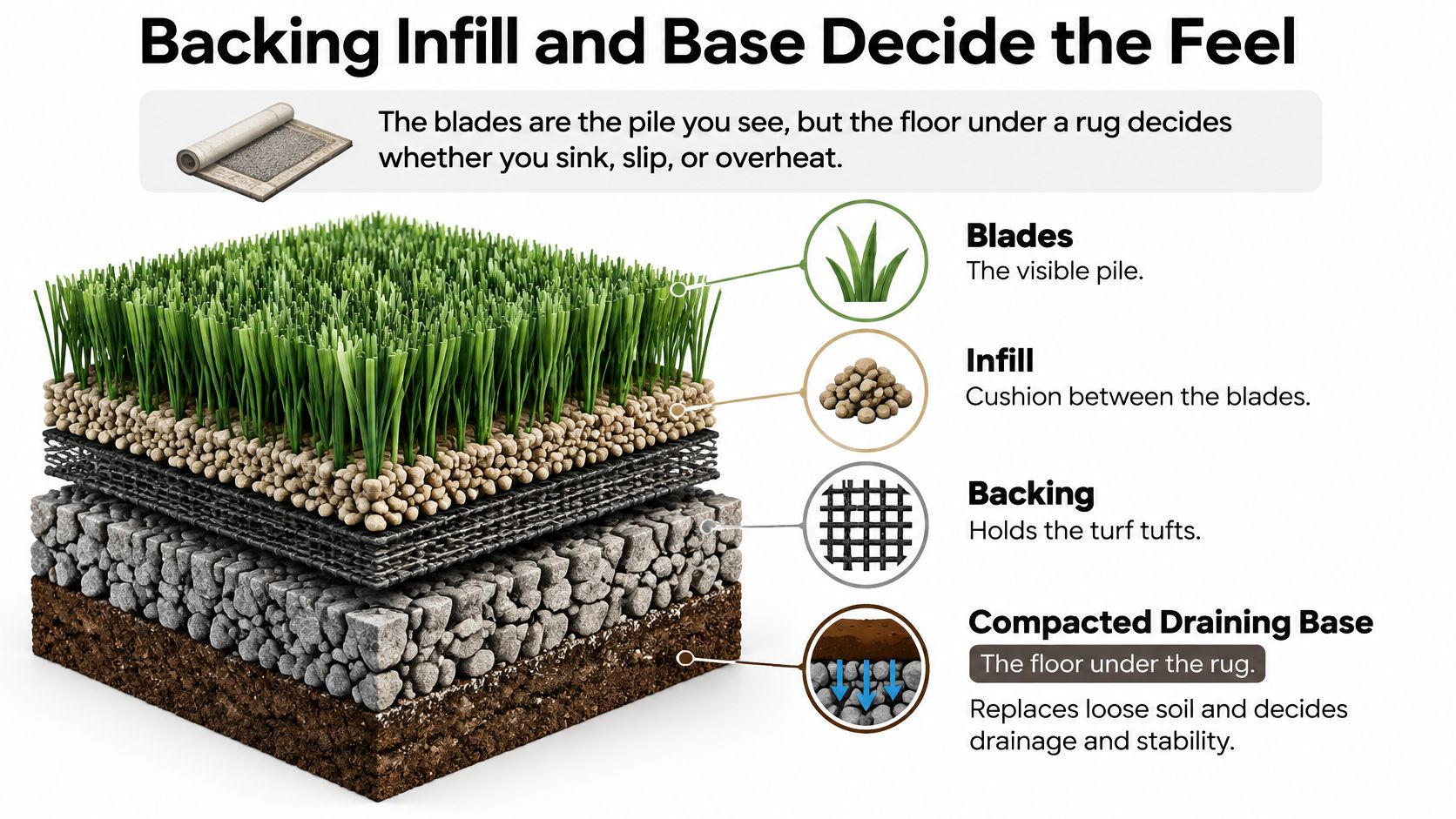
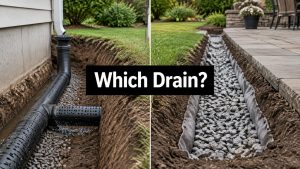
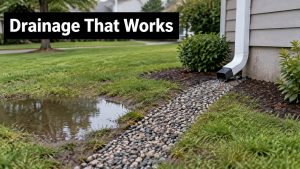
The cross-section makes the distinction that matters: drainage through the turf is not drainage away from the property. A permeable backing won't solve a trapped low spot. During a walkthrough, identify the outlet, check adjoining paving elevations, and look for roof runoff entering the proposed turf area. Keep the finished surface from directing water toward doors or a neighbor's lot.
Water is the part of the system buyers underrate.
The New Jersey Department of Environmental Protection's synthetic turf report lists common infills including sand, recycled tire crumb, EPDM, thermoplastic elastomers, and organic options such as cork or walnut shells. Infill can carry a major share of the system's weight, so treat it as a structural decision rather than a finishing accessory. Choose it for the intended use, not because a bag carries a reassuring name. Our artificial grass infill guide separates the available materials and the questions worth putting on the proposal.
Match impact testing to the activity
A decorative front lawn doesn't need the acceptance process of an athletic surface. For sports or high-impact areas, request test documentation for the exact assembly, including its pad and infill, rather than a report covering only the carpet. Confirm the applicable standard for the intended use before you accept the system, and check that the assembly you are buying is the assembly that was tested.
For a playground-adjacent space, establish whether children will merely cross the surface or fall onto it from equipment. For athletics, put rotational resistance into the performance discussion. A soft hand sample answers neither question.
Ask for the product tested, the complete assembly tested, and the standard used. A reassuring adjective isn't a test result.
Pad and infill choices also affect temperature. Don't approve them for cushioning without checking what they do to surface heat on an exposed Central Texas site. A configuration that feels pleasant at nine in the morning can be uncomfortable by mid-afternoon, and comfort complaints usually start there.
Heat Behavior Changes with the Whole System
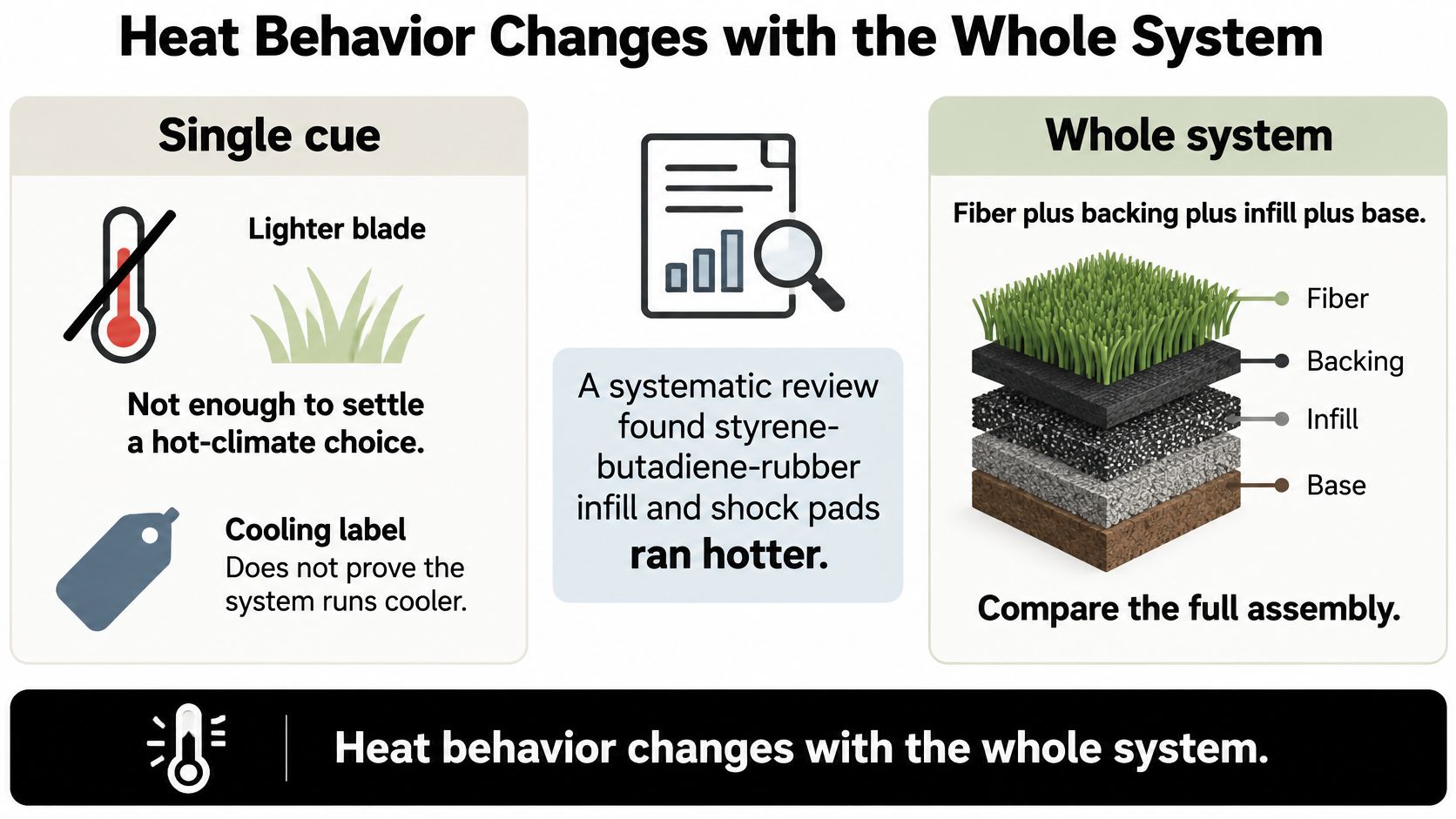
A lighter blade or a cooling label doesn't settle a hot-climate choice. Compare the installed assembly under relevant weather conditions, not isolated product features. A comfortable sample inside a showroom tells you almost nothing about afternoon use outdoors.
A systematic review and synthetic-turf temperature testing summary reports higher temperatures with styrene-butadiene-rubber infill or a shock pad, and lower temperatures with thermoplastic-elastomer infill, cooling-oriented fibers, and HydroChill-type technologies, compared with conventional configurations. Separate testing of 34 products found significant effects from infill and pad presence, while solar radiation, ambient temperature, and relative humidity were the strongest environmental drivers.
What drives synthetic turf surface heat
| Factor | Reported effect on surface temperature | Source |
|---|---|---|
| Styrene-butadiene-rubber infill | Higher | Systematic review |
| Shock pad | Higher | Systematic review |
| Thermoplastic-elastomer infill | Lower | Systematic review |
| Cooling-oriented fibers | Lower | Systematic review |
| HydroChill-type technology | Lower | Systematic review |
| Solar radiation, ambient temperature, humidity | Strongest environmental drivers | Testing of 34 products |
Those findings support comparing configurations. They don't support calling every product containing a particular ingredient cool or safe.
Surface temperature isn't the whole safety question
The relevant comparison includes both the product and the exposure conditions.
A shaded side yard and a full-sun play pad need different operating plans even when they use the same face fiber. Decide when people will use each area, where shade will fall then, and whether an alternative surface is available during hot conditions.
Washington State Department of Health guidance identifies artificial-turf heat concerns including burns, dehydration, and heat stress. A lower surface reading doesn't establish lower whole-body heat exposure. Time outside, activity, and conditions around the user remain part of the decision.
Pets need an escape from hot surfaces, barefoot children need particular care with direct contact, and athletic users need an activity and heat-management plan. Don't treat any cooling feature as permission to ignore those differences.
Make cooling claims measurable
Occasional wetting can reduce surface temperature temporarily, but it uses water and requires someone to manage it. Decide whether that maintenance is acceptable before specifying a cooling approach that depends on moisture. It isn't honest to sell a water-saving project and leave that obligation unexplained.
Use the heat-resistant artificial turf guide to frame the comparison, then press for test conditions rather than a headline temperature drop:
- Exposure: Was the reading taken in full sun or shade, and under what weather conditions?
- Duration: How long did the reduction last, and did it require another application of water?
- Intended user: Does the test address contact by pets or children, or only an instrument reading above the surface?
A credible answer may still favor turf. It should also identify when shade, restricted use, or a different surface is the better choice.
Which Type Fits Each Yard and Site
Turf system to specify by site
| Site | System to specify | Why it wins | Verify on site |
|---|---|---|---|
| Shaded home lawn | Softer polyethylene, moderate pile, light infill within the product's specification | Natural feel where grass fails in shade | Drainage, because shade can still sit on wet soil |
| Full-sun yard | UV-stabilized polyethylene plus heat-minded infill or cooling fiber | Addresses exposure rather than catalog appearance | Shade map and whether any cooling rinse is acceptable |
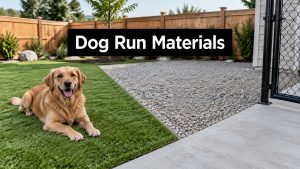
| Dog run | Durable polyethylene, permeable base, rinseable infill | Traffic and cleanup matter more than showroom blade | Hose access and waste removal |
| Playground-adjacent | Carpet over a shock pad with confirmed impact numbers | Prioritizes falls over curb appeal | Shock absorption, deformation, and the standard for that use |
| Putting green | Short, dense specialized pile with minimal infill where its design permits | Prioritizes ball roll rather than barefoot comfort | Keep it a separate specification from the lawn |
| School, apartments, or courtyard | Commercial system with designed base and drainage | Accounts for public wear and standing water | Base preparation, drainage, and even infill distribution, not a loose roll |
Treat these as starting specifications, not permission to substitute materials without checking compatibility. Infill quantity must follow the selected system's requirements. Removing infill to make a sample feel softer can change the finished surface in ways the manufacturer never intended.
Residential choices need a use map
Mark the places where people sit, dogs turn, furniture stands, and children repeatedly enter the yard. Those concentrated uses matter more than an average description such as light residential traffic. Keep decorative areas separate from routes that function as walkways.
For a dog run, prioritize access for cleaning and a clear route for rinse water. Don't choose nylon just because it sounds tougher; decide whether its texture is acceptable for the animals and people using that confined area. Durable polyethylene is the better starting point when comfort and cleanup both matter.
A putting green deserves its own sample and installation discussion. Ask to evaluate ball roll and transitions rather than choosing it by matching the surrounding lawn's color. Minimal infill is appropriate only when the selected putting system supports that design.
Public spaces need a defined section
Schools, apartments, and courtyards bring different responsibilities from a private ornamental lawn. Identify who maintains the surface, how equipment reaches it, and where frequent entrances will concentrate wear. Include transitions to paths and paving in the design rather than treating them as finishing details.
Our commercial installation process addresses base preparation, drainage, and infill distribution as connected parts of the work. That matters when several people are involved in approving a project and the maintenance team inherits the result.
Site check: Name the activity at each location before assigning a turf product to it.
Say a shaded backyard can't sustain natural grass, and the family wants an evening play space. A softer polyethylene system may suit that goal once the drainage and supporting layers are right. That doesn't make it the appropriate specification for an exposed commercial court with concentrated daytime use.
Bring your selected site row to the proposal discussion. It gives everyone a concrete reference for checking whether the written coverage matches the activity you're buying the surface for.
Read the Warranty Before You Sign
The warranty is a document, not a handshake. The Federal Trade Commission's warranty guidance explains that federal law requires written warranties to be available before purchase, whether you buy in person or online. Coverage can differ substantially, so verbal assurances aren't a substitute for reading the terms.
The FTC also explains that a manufacturer generally can't require particular parts or services to preserve coverage unless those items are supplied free or the manufacturer has received an FTC waiver. That doesn't eliminate legitimate maintenance responsibilities. It makes the exact wording important.
Request the terms you'll actually rely on
Before signing, collect the complete documents and check:
- Covered defects: Identify what protection applies to fibers, backing, seams, and installation workmanship.
- Exclusions: Look for restrictions involving pets, furniture, unusual heat exposure, misuse, or drainage conditions.
- Duration: Confirm when coverage starts and whether the remedy changes over time.
- Required maintenance: Establish what cleaning, brushing, or documentation you must provide.
- Claim steps: Record whom to contact, what evidence is needed, and what remedy the warranty offers.
Two proposals can both use the word lifetime and still leave you with very different protection. One might exclude seam failure, pet-related damage, or fading; another might require a maintenance record. Those are examples of terms to inspect, not assumptions about any particular warranty.
Use the artificial turf warranty guide to organize that review. Compare the written obligations and remedies, not the largest guarantee printed beside the sample.
Reject promises the site can't support
Don't accept a guarantee that replacing grass will eliminate all outdoor water use. Trees, planting beds, cleaning, and any planned cooling rinse still need consideration. The EPA's outdoor water guidance likewise treats irrigation and runoff management as broader outdoor issues.
Reject claims that a cooling feature removes heat risk in full sun, too. A useful proposal explains limits alongside benefits.
Paperwork is only half of trust. Someone still needs to walk the slope, inspect the shaded areas, and identify where the drains discharge before recommending the final system.
Book a Walkthrough to Lock the Right Type
Narrowing the types of synthetic turf comes down to three checks: a fiber and blade construction suited to the activity, an infill and base suited to the property, and written coverage you understand. You don't need to memorize every product specification. You need a proposal that connects those decisions to your yard.
A sample can't see the property. It can't show the low corner behind the patio, the narrow access beside the house, or the route dogs take from the back door. Those details belong in an on-site conversation before you order.
Put the decision on the ground
Modern Yard has been installing premium synthetic turf for 15 years and works across Central Texas. Our representative visits your property, walks it, and explains what synthetic turf can and can't do for that specific situation.
Use that visit to get direct answers:
- Bring your site choice: Identify whether you need a decorative lawn, dog run, play space, putting green, or courtyard.
- Show the problem areas: Point out pooling, worn routes, difficult access, and the places you want to use during sunny hours.
- Bring your questions: Ask how the proposed drainage approach and written warranty fit the intended use.
Homes, schools, and businesses can use the same walkthrough process without receiving the same specification. The goal is a clear recommendation: yes, no, or a different type, not a generic promise of green grass everywhere.
Call to schedule an appointment before committing to a roll or approving a product substitution. Choose the type on the ground, where the person preparing the estimate can see the conditions that a photo leaves out.
Modern Yard offers on-site walkthroughs to help match synthetic turf to your lawn, dog run, putting green, or commercial space. Visit Modern Yard Landscapes for contact details, then call to schedule your appointment and bring your questions about drainage, heat, and warranty coverage.