
You can have a beautiful artificial lawn that looks perfect from the street and still regret it every afternoon. In Central Texas, the difference often comes down to the material tucked between the blades. Artificial grass infill affects heat, drainage, odor, footing, blade recovery, and how the lawn handles dogs, pool water, and daily traffic.
That's why I don't recommend choosing infill by price alone. A south-facing Lake Travis lawn, a shaded backyard, a dog run, and a putting green need different answers. The right material is the one that matches the way your yard is used and the conditions your installation has to survive.
A Hot Afternoon That Changed How I Think About Turf
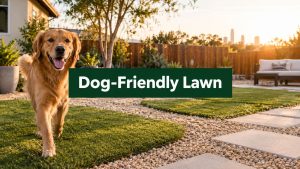
Last August, a Lake Travis homeowner stepped barefoot onto her two-year-old synthetic lawn. She expected the usual warm surface. Instead, her infrared thermometer read 168°F. Her golden retriever stopped at the edge and refused to cross.
The surface had another problem. Heated crumb rubber gave off a sharp smell, and cloudy water beaded across the turf instead of moving through it. She called the original installer to ask about a warranty claim. The warranty covered the turf, but not the infill selection.
From the curb, the lawn still looked fine. The blades were green, the seams weren't obvious, and the surface had survived two years of use. Underneath, though, the system was a poor match for a south-facing yard, two dogs, and a pool runoff path.
That conversation is common because homeowners are often shown blade shape, color, and face weight first. Those details matter, but infill can decide how the finished lawn behaves under Central Texas sun. It changes how the blades stand, how the surface feels, how pet areas smell, and how water moves through the installation.
The practical lesson: A turf sample can look convincing indoors. The infill has to make sense outdoors, where sun, pets, foot traffic, and runoff all meet.
The first widely recognized third-generation infilled synthetic turf system appeared in 1997, when FieldTurf installed one at a Pennsylvania high school. Unlike earlier sand-only systems, the system used granular infill between vertical fibers to improve resilience and playability. By 2011, North America had more than 6,000 synthetic turf installations, with roughly 1,000 to 1,500 new fields added each year, according to this review of synthetic turf systems.
The point isn't that every residential lawn needs a sports-field specification. It's that infill moved from a minor finishing material to a core part of turf design. You should know what yours is supposed to do before the crew opens the bags.
What Artificial Grass Infill Actually Does
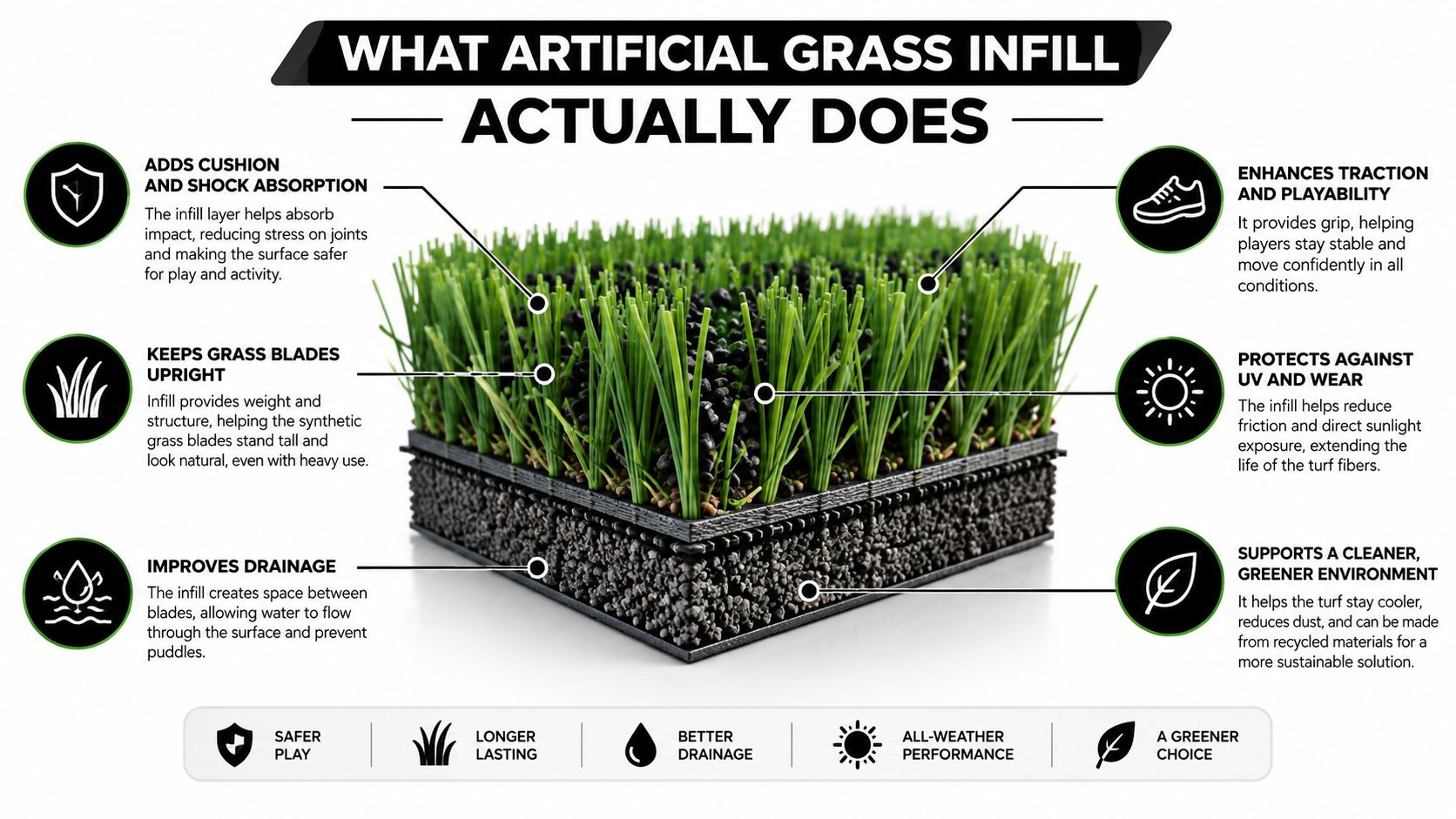
Think of infill as the sand in a sandbox. It isn't decoration spread over the top. It occupies the space around the turf fibers and gives the entire surface weight, support, and working room.
A properly designed system uses infill for four main jobs:
Ballast keeps the turf in place. The material weighs down the turf so it doesn't ripple, lift, or shift as people walk across it or as temperatures change. Heavy-use areas need a stable, well-distributed layer rather than a light dusting.
Blade support keeps the fibers upright. Infill surrounds the blades and helps them spring back after footsteps, play, or repeated traffic. Without enough support, turf flattens and starts looking matted instead of natural.
Fiber protection reduces wear. The infill takes some of the abrasion caused by shoes, paws, and movement. It also gives the backing another layer of protection from sunlight, animals, and everyday wear.
Drainage depends on open space. Water needs a path between the fibers and through the backing into the prepared base. Poor distribution, excessive packing, or an unsuitable base can leave water sitting on top or moving toward low spots.
For a deeper look at the purpose of this material, review this explanation of what infill does for turf.
Fill depth matters
Installers should specify pounds per square foot, not say they'll “spread some infill.” Independent guidance places the target fill depth at roughly 75% of the pile height. Filling to the full blade height can bury the tips, encourage matting, and trap heat, while leaving the upper portion exposed helps the blades remain upright and supports drainage, as described in this turf resilience and infill guidance.
The infill layer can also influence surface heat, but it isn't a magic cooling blanket. The turf fiber, backing, base, shade, irrigation, and surrounding hardscape all affect the result. A darker, heat-absorptive material can make a hot lawn feel worse, while a lighter mineral product may help without eliminating the underlying heat of synthetic turf.
The Main Infill Types and How They Behave
An Austin lawn can look fine in spring and become hot, smelly, or compacted by August. The right infill depends on which problem matters most at that property, especially across sunny yards, dog runs, and pool decks.
Rubber options
SBR crumb rubber is the familiar lower-cost choice. It adds weight, cushions foot traffic, and helps hold turf blades upright. Dark rubber also absorbs afternoon heat, can develop a stronger heated-rubber smell, and may retain pet odor when urine reaches the backing. I do not make black SBR my default for a south-facing Austin yard.
EPDM and thermoplastic rubber offer a more consistent feel and usually cleaner performance than basic SBR. They can provide reliable resilience, but they cost more and still heat up under strong sun. A rubber product does not solve a heat problem by itself.
Mineral options
Silica sand is the practical starting point for many residential lawns. Lighter mineral infill generally feels cooler than dark rubber, supports blade stability, and fits well beside pool decks. Its main weakness is compaction. In a busy dog run or heavily used path, settled grains reduce the open space that lets water move through the turf system.
Installers should match the product to the yard's drainage and maintenance plan. This guide to sand infill for artificial grass explains why sand remains a common choice and where its limits appear.
Acrylic-coated sand offers a stronger middle ground. Its coating helps the granules resist moisture-related problems and can improve odor performance in pet areas. The lighter surface also behaves better in direct sun than black crumb rubber. It costs more than plain sand, but that added control makes sense for many dog yards and pool settings.
Organic options
Cork and coconut-shell infills appeal to homeowners seeking lower heat and alternative materials. They are lightweight and can feel comfortable underfoot. I use more caution in high-traffic Austin yards because migration, replenishment, and long-term durability depend heavily on the complete turf system and maintenance routine.
| Infill Type | Heat Behavior | Drainage | Odor Control | Cost Tier |
|---|---|---|---|---|
| SBR crumb rubber | High heat retention in direct sun | Air gaps can support flow, but surface design still matters | Weak when untreated and exposed to pet use | Lower |
| EPDM or thermoplastic rubber | Generally better controlled than SBR, but can still heat up | Stable when properly distributed | Better than basic SBR, product dependent | Higher |
| Silica sand | Relatively cool, especially in lighter colors | Good initially, though compaction can slow flow | Limited without an odor-control additive | Lower |
| Acrylic-coated sand | Cooler surface behavior than dark rubber | Balanced flow and stability | Better suited to pet and pool applications | Mid-range |
| Cork or coconut shell | Lower-heat feel in suitable systems | Lightweight, with migration and durability concerns | Product dependent | Higher |
Large turf installations show why infill replenishment belongs in the maintenance plan. An environmental review estimated at least 51,000 artificial grass pitches across Europe, covering 112 million square metres, and calculated roughly 1.8 million tonnes of performance infill using an assumed density of 16.1 kilograms per square metre. The same OSPAR review of artificial turf infill notes that Danish pitch managers add between 2.5 and 5 tonnes of granulate per pitch each year.
For residential work, choose around the yard's dominant risk. If hot bare feet are the concern, start with a lighter mineral option and plan shade where possible. If dogs use the space every day, prioritize odor control and regular cleaning. Pool decks need stable, well-distributed infill that will not become an afterthought when water and foot traffic increase.
How Infill Changes Heat, Drainage, Odor, and Durability
On a sunny Austin afternoon, the wrong infill can turn a clean-looking lawn into a hot, smelly surface that drains poorly after a storm. Choose infill around the problem your yard cannot afford, whether that is heat on bare feet, urine odor in a dog run, standing water beside a pool, or shifting material under constant traffic.
Heat is a system problem
A Penn State heat evaluation recorded black rubber at 156.0°F, tan rubber at 153.4°F, and green rubber at 147.9°F after one hour under a heat lamp. The published turf heat evaluation shows that infill color and composition materially affect surface temperature.
Pale infill will not make synthetic turf cool. Reviews summarized by the TURI artificial turf factsheet report that artificial turf surfaces are typically 9.4°C to 33.7°C hotter than natural turf, regardless of infill or fiber type. Cooling products may help at the margin, but shade, irrigation, fiber design, base construction, and surrounding concrete still shape the surface temperature.
For a sunny Austin yard, I would not make black SBR the default. Start with lighter silica, coated mineral, or another heat-conscious specification, then plan shade and irrigation instead of expecting infill to solve the whole problem.
Drainage follows the whole build-up
Round mineral grains can leave useful voids for water, but they may compact over time. Rubber crumbs can preserve air gaps and allow lateral movement, yet they cannot repair a poorly graded base or a low point beside a pool.
Artificial turf also sheds rainfall quickly instead of absorbing it like natural soil. A recent review describes a cooled turf system with below-field water storage that could detain up to four times more rainwater than conventional artificial turf while reducing surface temperatures, as reported in this artificial turf and stormwater review.
Drainage rule: In a wet or flood-prone yard, specify the base, slope, collection points, and discharge route before choosing an infill.
Pool owners should judge turf and hardscape as one drainage system. If the surrounding deck needs a more textured, water-aware finish, Concrete Resurfacing Products pool deck offers a useful comparison point for the adjacent surface. Turf should not be expected to compensate for slippery or poorly draining concrete.
Odor starts below the blade tips
Untreated rubber is a poor choice for a dog-heavy lawn when odor control matters. Urine can reach the backing, and a warm, damp system can make the smell return after cleaning.
Coated mineral products and zeolite-based blends give pet zones a better starting point because they help manage moisture and ammonia. They still require rinsing, correct slope, and an open drainage path. No infill can compensate for urine trapped by a blocked backing or poorly prepared base.
Durability depends on traffic pattern
A dog run needs resilience along the same narrow paths every day. A pool surround needs stable granules that will not wash or scatter when water and foot traffic cross the surface. A putting green needs a controlled, fine fill that supports ball roll instead of cushioning every step.
The right loading changes with use. Guidance identifies at least 1.0 pound per square foot for low-traffic outdoor turf, 1.0 to 1.5 pounds per square foot for active residential use, and 1.5 pounds per square foot or more in pet-heavy zones when zeolite is used, as noted in the earlier infill-depth guidance.
Durability comes down to migration, compaction, and brushing. Rubber rebounds well but can shift, while coated sand stays put when distributed and brushed correctly. Repeated traffic can still flatten fibers or move material toward edges, so the crew should set the application rate for the turf pile and the yard's actual use, not treat every installation the same.
Installation Details That Make or Break Infill
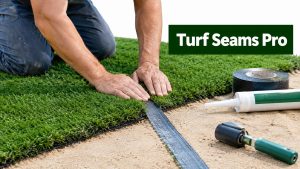
The bag isn't the starting point. Base preparation is. A compacted decomposed granite base, correct grading, and firm edging keep the turf stable and reduce infill migration. If water already collects beneath the installation, changing from rubber to sand won't solve the underlying problem.
Pile height sets the fill target. A 2-inch blade may need roughly 1.5 to 2 pounds per square foot, while a 1.5-inch putting green may use about 1 to 1.5 pounds per square foot. A 2.5-inch turf can take 3 pounds per square foot or more, depending on the product and intended use. Those figures should be confirmed against the turf manufacturer's specification rather than guessed on site.
Questions to ask before installation
Ask the crew to show you how they'll measure and distribute the material. A drop spreader, consistent passes, and a written application rate are more reassuring than a promise that the crew has “done this for years.”
You should also ask:
- How will you brush between applications? The crew should lift the fibers upright between infill passes so the material settles throughout the pile instead of remaining in clumps.
- How will you verify the amount? Ask whether they'll record bags used and calculate the application rate by square foot.
- What protects the edges? Proper edging helps keep infill from washing into flower beds, drains, and pool areas.
- Will the crew complete a second pass? One light application can leave the lower pile unsupported.
- Is the material turf-grade? Playground rubber isn't a substitute for a product formulated for synthetic turf.
The installation sequence matters. Crews should broom the fibers upright, spread evenly in multiple directions, work the infill down into the pile, then inspect for exposed granules and flat sections. The finished surface shouldn't look dusty or have loose material sitting on top of the blades.
Use this breakdown of artificial turf layers when reviewing the full build-up with your installer. It helps keep the conversation focused on the turf, infill, base, drainage, and edging as one system.
Choosing the Right Infill for Pets, Pools, and Putting Greens
A pet lawn isn't a pool surround, and neither should be specified like a putting green. Use the main activity to set the priority.
Pet runs and family yards
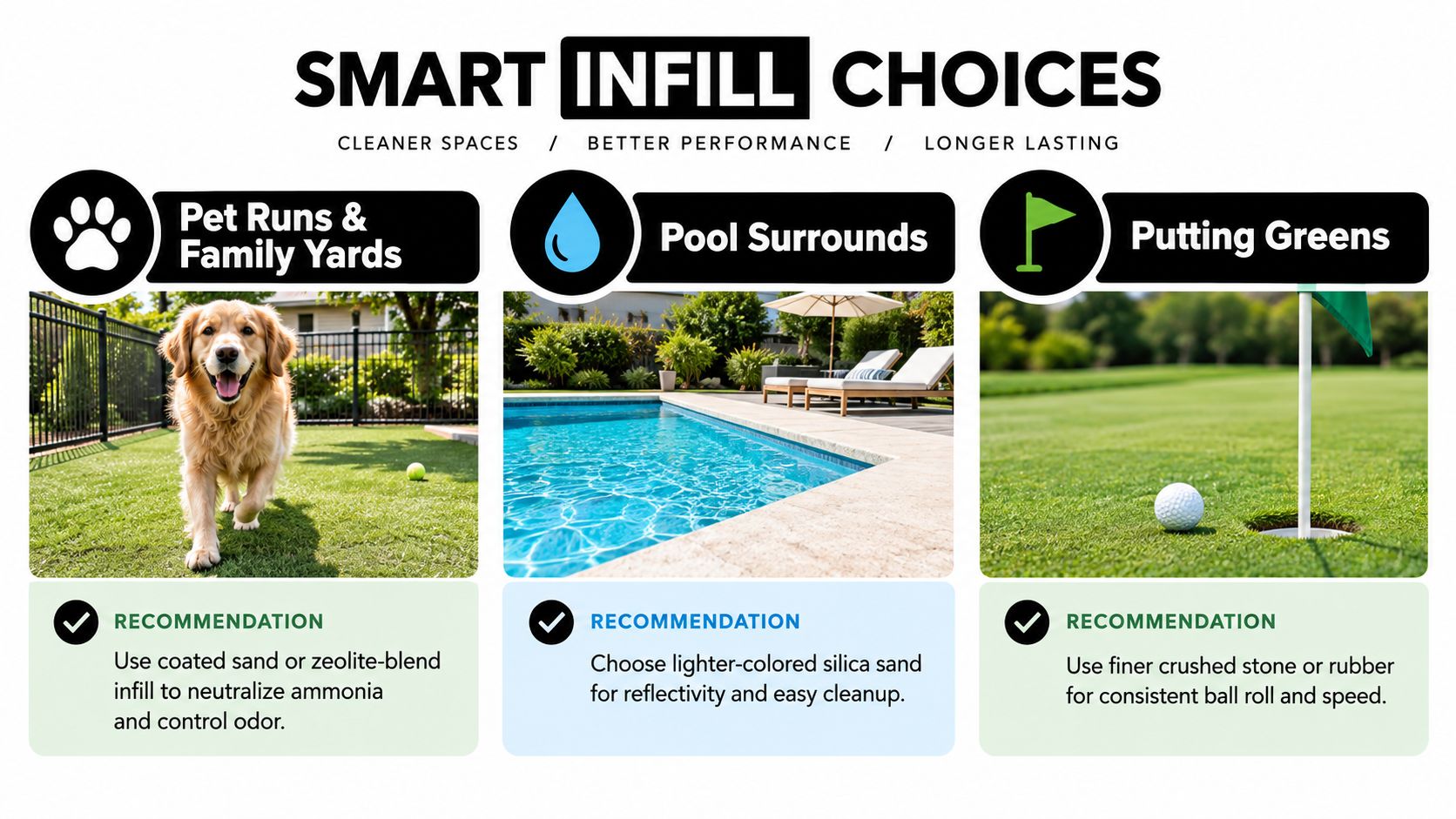
For dogs and active children, I recommend coated sand or a zeolite-blend infill. These options give you a better chance of managing ammonia and rinsing the surface clean than plain SBR crumb. They also provide the support needed in the repeated paths dogs create along fences, doors, and water bowls.
The homeowner-friendly instruction is simple: “Use a coated or zeolite-blend infill because odor control matters more than the lowest upfront material cost.”
Review this guide to artificial grass infill for pets before choosing a product. Then confirm the drainage route and cleaning plan with the installer.
Pool surrounds
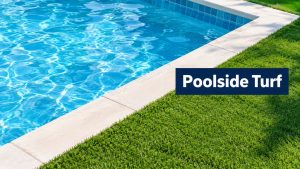
Around a pool, choose round silica sand or acrylic-coated sand, preferably in a lighter color. The material should stay stable when splashed, resist breakdown from routine pool chemicals, and feel more manageable under bare feet than dark rubber in full sun.
Your repeatable instruction is: “Use a lighter mineral infill around the pool because I need stable drainage, easy cleanup, and a surface that won't hold as much heat as black rubber.”
Pool runoff deserves special attention. Water shouldn't carry infill into drains or landscaping, and the base should move splash and rainfall away from the house.
Backyard putting greens
Putting greens need precision, not cushioning. I recommend a fine-mesh silica or rounded quartz infill at a measured depth that supports the fibers without slowing the ball. Skip rubber here. Its feel and movement can work against the consistent roll golfers expect.
Tell the installer: “Use a fine mineral infill at the specified depth because ball speed and repeatable roll matter more than impact cushioning.”
Common Infill Myths and the Next Step for Your Yard
Myth one: Cooler infill fixes turf heat. It doesn't. Color, fiber shape, shade patterns, irrigation, and the base all matter. A lighter product under dense turf can improve comfort, but it won't turn a south-facing synthetic lawn into natural grass. The research above found artificial turf can remain substantially hotter than natural turf even when the infill changes.
Myth two: More infill is always better. Excess material can bury the blade tips, encourage matting, restrict drainage, and hold pet contamination in the backing. An Austin dog run needs enough infill for support, not an unmeasured excess poured into every low spot.
Myth three: All rubber is the same. SBR crumb, EPDM, and thermoplastic or encapsulated rubber differ in composition, dust, heat behavior, and resilience. The CPSC's crumb rubber information says current information from multiple studies doesn't show a health risk from playing on fields with tire crumb, while the EPA's 2024 exposure report reports dermal exposure to chemicals associated with recycled tire crumb during field use. Massachusetts public-health guidance describes exposure estimates as likely low and reports blood metal levels similar to the general population, with no difference in urine PAH metabolites compared with natural-grass users, as summarized in this state artificial turf fact sheet. Those findings don't settle every homeowner's preference, but they do support making an informed material choice rather than treating every rubber product as identical.
If you're planning the yard layout before installation, a backyard design AI tool can help you visualize pet zones, pool access, shade, and pathways. The final infill decision still needs an on-site review of sun exposure, drainage, and use.
Modern Yard Landscapes evaluates those conditions, recommends the infill type and weight for your turf system, and installs the base, drainage, edging, and surface together. Visit Modern Yard Landscapes to schedule an on-site walkthrough in the Austin area and stop guessing about what will hold up in your yard.