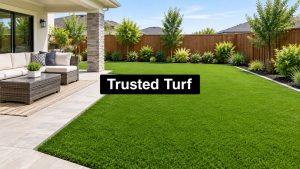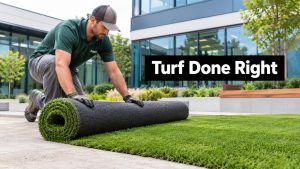

You wanted a backyard you could use in July. Instead, by late afternoon, the turf feels closer to a parking lot than a lawn. The dog steps onto it, then steps right back off. Kids make it about ten seconds barefoot before they head for the patio. A yard that looked clean, green, and low maintenance ends up becoming off-limits during the hottest part of the day.
That frustration is common in Austin. A lot of homeowners buy artificial grass for the right reasons. They want less watering, less mud, fewer weeds, and a yard that still looks sharp through a long Texas summer. The problem is that not all turf is built for Central Texas heat, and not all installations are designed to manage that heat once the sun starts pounding the surface.
The good news is that the heat problem is solvable. But the fix usually isn't one miracle product. Heat resistant artificial turf works best as a full system, with the right fiber, the right infill, the right base, and the right installation details underneath it.
Your Austin Lawn Shouldn't Feel Like Hot Pavement
A lot of people start looking into heat resistant artificial turf after they've already had a bad experience. The yard looked great in the showroom. It looked great right after installation. Then summer hit, and the surface became something nobody wanted to stand on.
That's the moment when expectations and reality collide. You don't invest in turf so your family can admire it from the window.

What homeowners usually expect
Many are trying to solve a simple set of problems:
- Less maintenance: No mowing, edging, fertilizing, or chasing dead patches.
- A cleaner yard: Less mud tracked inside after rain or dog play.
- A better-looking lawn: Green color through drought, water restrictions, and heavy use.
- A family-friendly surface: Somewhere pets can roam and kids can play.
Those are all reasonable goals. They're also possible, but only if the turf system is designed for heat from the beginning.
Where the first generation of turf went wrong
Older turf products and budget installations often focused on appearance first. They used darker materials, standard infill, and basic construction methods that looked fine on day one but didn't perform well when exposed to long, direct sun.
That's why homeowners often compare artificial turf to real grass after the fact. If you're weighing those options, this breakdown of artificial turf vs natural grass helps clarify where each one works best in Austin.
A good lawn shouldn't force you to choose between low maintenance and basic usability.
Modern cooling technology has improved the category a lot. Better fibers, better infills, and better install practices can create a lawn that stays more comfortable, lasts longer, and holds up under Texas conditions. But only when those parts are chosen together.
Why Your Artificial Grass Gets Dangerously Hot
Heat doesn't build up on turf by accident. It happens for a few specific reasons, and once you understand them, it gets easier to separate real performance from marketing language.
According to documented surface temperature findings on artificial turf, synthetic turf surfaces can reach up to 200°F on a 98°F day, and artificial turf commonly runs 35 to 55°F hotter than natural grass, which rarely exceeds 100°F. That gap is why some turf installations feel unusable in peak sun.
The fibers absorb and hold heat
Standard turf fibers are synthetic materials, and some handle sunlight a lot worse than others. Think about the difference between touching a shaded wooden deck and touching a dark plastic seat that's been in the sun all day. Turf fibers can behave more like that plastic.
Some materials are better at reflecting solar energy. Others act like heat sinks.
Color matters more than most buyers realize
A dark surface gets hotter. That sounds obvious, but homeowners often focus on blade shape and color realism without asking how that color performs in direct sun.
The same rule applies to cars, roofing, and hardscape. A darker surface absorbs more radiant heat. Turf is no different.
Infill can make the problem worse
A lot of standard installations still rely on infill choices that don't do much to reduce heat. Some infill types hold heat and radiate it back through the blades. That means the surface temperature problem isn't just coming from the grass fibers you see. It's also coming from the material packed between them.
If you're comparing products, understanding the differences between artificial grass types helps you spot where heat management starts and where it falls apart.
If the turf product, infill, and installation were all chosen separately on price alone, heat is usually the first problem homeowners notice.
Natural grass has one built-in advantage
Real grass cools itself differently. It holds moisture and benefits from natural evaporative cooling. Synthetic turf doesn't do that on its own. If an artificial lawn is going to stay more comfortable, the installer has to build cooling performance into the system.
That's why cheap turf can look decent in a sample but fail in a real backyard. Samples don't spend all afternoon in Austin sun.
The Anatomy of a Truly Cool Turf System
Heat resistant artificial turf isn't one feature. It's a stack of decisions. When the whole system is built correctly, each layer helps reduce heat load, improve comfort, and protect the turf from wearing out too early.

Heat-reflective fibers
The most important upgrade starts with the blades themselves. According to heat level testing on synthetic turf systems, lab-tested heat-reflective products demonstrate a 10.5–14°F average surface temperature reduction by modifying fiber composition to reflect infrared wavelengths instead of absorbing them.
That matters for two reasons:
- Lower surface heat: Better comfort underfoot.
- Lower material stress: Less thermal punishment on the turf over time.
Some product lines are designed specifically around this concept. Names like DualChill™, HeatBlock, and TigerCool show up for a reason. They're trying to solve a real materials problem.
Cooling infill
Once the blade technology is doing its part, infill becomes the second major lever. A cooling infill can help dissipate heat more effectively than traditional options, especially when paired with reflective fibers rather than used as a standalone fix.
Not all cooling infills behave the same way in Austin. Some rely heavily on retained moisture and evaporative effect. That can be useful in some settings, but performance depends on weather, sun exposure, and maintenance habits.
Permeable backing and airflow
Backing doesn't get enough attention from buyers, but it affects drainage and airflow. A turf system that traps moisture poorly or limits breathability can create secondary problems, especially in pet areas and heavily used spaces.
The backing also has to work with the rest of the system. If water moves through the turf but the base below it is wrong, cooling performance and hygiene both suffer.
Proper base preparation
The base is where many cheap installs are prone to failure. Surface comfort, drainage, stability, and seam performance all depend on what happens below the turf.
A clean install starts with proper ground preparation for artificial turf, not just the product roll itself. If the base isn't compacted correctly, if drainage isn't planned, or if the grade is off, you can end up with movement, trapped heat, and premature wear.
Practical rule: When someone promises a cooler lawn but only talks about the grass blade, they're only talking about part of the job.
The surrounding yard matters too
Trees, fences, reflected heat from stone, and the direction of afternoon sun all change how turf performs. A west-facing yard bordered by masonry and hardscape will behave differently than a partially shaded lawn with air movement.
That's why the best heat resistant artificial turf projects are designed as outdoor environments, not just surface replacements.
Choosing Your Cooling Technology and Infill
It's easy for homeowners to get lost fast. The sales language starts sounding similar, every product gets called “cool,” and nobody explains the trade-offs clearly.
The key is to evaluate cooling tech as a pair. Fiber technology and infill need to support each other. If one is strong and the other is average, the final result usually lands in the middle.
According to performance details on heat-resistant turf technologies, innovations in heat-resistant artificial turf have reduced surface temperatures by 20-30% compared to standard synthetic turf through infrared-reflective fibers and specialized infills such as DualChill™ and HeatBlock.
What the main options actually do
Some turf products focus on reflective yarn technology. Others lean on infill to create a cooling effect. The strongest systems usually combine both.
Below is a practical comparison for Austin homeowners.
Cooling Infill Comparison for Austin Lawns
| Infill Type | Cooling Mechanism | Est. Cooling Effect | Best For | Considerations |
|---|---|---|---|---|
| Standard sand infill | Primarily ballast and support, limited cooling value | Qualitative improvement is minimal for heat control | Budget installs where cooling isn't the priority | Can leave the surface feeling hotter in direct sun |
| Coated sand infill | Dissipates heat better than basic sand and supports blade stability | Can contribute to a cooler-feeling system when paired with reflective turf | Lawns needing a balanced, lower-maintenance setup | Cooling depends heavily on turf fiber and site exposure |
| Water-retaining cooling infill | Uses retained moisture to help create evaporative cooling | Part of systems marketed for meaningful temperature reduction | Full-sun residential lawns, play spaces, select commercial areas | In Austin humidity, performance can vary and may need more active maintenance |
| Zeolite or antimicrobial cooling blends | Supports cooling while also helping with odor and hygiene in pet areas | Useful in pet-focused systems when matched with the right turf | Dog runs and family yards with heavy pet use | Product selection matters. Not every pet turf handles heat and ammonia equally well |
Best fit depends on how you use the yard
A front lawn that's mostly visual has different needs than a backyard where kids sprint barefoot from the pool, or a dog run that gets repeated use every day.
Here's how I'd break the choices down in practical terms:
- For a showpiece lawn: Prioritize fiber reflectivity first, then choose an infill that supports appearance and stability.
- For family use: Build around comfort underfoot and realistic afternoon conditions, not how the sample feels indoors.
- For pet areas: Cooling matters, but drainage and hygiene matter just as much.
- For putting greens or specialty spaces: Surface performance may outweigh maximum cooling, so product pairing becomes more technical.
Don't ignore the rest of the property
Homeowners who are serious about reducing summer heat usually get the best results by treating the whole yard as one thermal environment. Turf is one piece. Shade structures, planting, hardscape color, and even house glass all affect how hot the space feels.
If you're also dealing with radiant heat around patios or west-facing windows, this guide to heat reduction tint options for Atlanta is a useful example of how surface and solar gain strategies work together across a property.
A “cool turf” claim means a lot less if nobody asks where the sun hits hardest, what the yard reflects, or whether pets use the area daily.
What usually doesn't work
The most common mistake is trying to solve a high-heat yard with one add-on. Cooling infill alone won't rescue a low-grade turf product. A reflective blade alone won't fix poor drainage or a badly built base.
You need the combination to be right. That's what turns a green surface into a usable lawn.
Keeping Your Cool Turf Safe for Pets and Kids
Comfort is nice. Safety is the primary issue.
If children are running across the yard barefoot or your dog is spending time on the surface every day, heat resistant artificial turf isn't a luxury upgrade. It's part of building a yard people can trust.

Pet areas need more than cooling
According to pet-focused turf guidance on thermal expansion and hot-climate installs, 35% of new installs include antimicrobial cooling infills, and those products are gaining traction because pet urine can amplify heat while lower-denier fibers degrade faster under ammonia and high temperatures.
That matters in practice. A pet run doesn't just face sunlight. It also faces repeated moisture, waste, odor pressure, and constant traffic. A turf product that seems fine on a general lawn can break down faster in a dog area.
If your project is pet-focused, this guide to the best artificial grass for pets that stays safe and durable is worth reading before you pick a product.
Kids use the yard differently than adults
Adults notice heat and step away. Kids don't always stop to test the surface first. They run, kneel, fall, crawl, and stay low to the ground. That changes what “safe enough” means.
For family yards, I look at these points first:
- Surface touch temperature: It has to stay more comfortable in direct sun.
- Drainage and cleanliness: A damp, dirty surface creates a different kind of problem.
- Material durability: Fibers and seams need to hold up under repeated use.
- Transition zones: The hottest spots are often next to stone, concrete, and dark edging.
Family turf should be judged at 4 p.m. in summer, not at 10 a.m. during a sales appointment.
Hygiene and landscaping work together
Homeowners often focus on the turf itself and forget the planting around it. If dogs use the yard regularly, surrounding planting choices matter too. You don't want to cool and clean the turf area, then border it with plants that create another safety issue.
This list of safe plant choices for your backyard is a helpful companion if you're designing a pet-friendly outdoor space as a full environment rather than just a surface.
The best family turf jobs usually come from that bigger view. Cooler blades. Cleaner infill. Smarter drainage. Safe planting. Comfortable transitions.
Smarter Installation for a Cooler Austin Yard
At 5 p.m. in August, two turf yards can sit on the same block and feel completely different underfoot. The difference usually is not the sample board. It is the install.
I've seen homeowners spend extra on a cooling fiber, then lose most of that benefit because the base held heat, the infill was wrong for the site, or the yard around the turf reflected afternoon sun right back onto it. In Austin, cooler turf comes from a full system that works together.
Humidity changes the equation
Austin heat is not dry desert heat. We get humidity, still air, hard reflective surfaces, and long afternoon sun. That matters because some cooling infills perform better in certain conditions than others, especially once real use, dust, and weather enter the picture.
That is why product selection has to match the yard, not the brochure. For long-term performance in humid climates, I usually look at the fiber type, the infill behavior over time, the amount of direct western exposure, and whether the area gets enough airflow to help the surface shed heat.
The hidden details that matter
A cooler yard usually comes from disciplined work in a few places:
- Base build: The base needs to drain, stay stable, and avoid turning into a stored heat source under the turf.
- Seam work: Seams have to stay tight through heat cycles so the surface does not shift or open up.
- Infill depth: Too little infill reduces support and cooling performance. Too much of the wrong infill can trap heat or create a harsh feel.
- Edge conditions: Concrete, stone, metal edging, and dark borders can raise surface temperatures right where people step on and off the turf.
- Sun mapping: The hottest part of the yard is usually the zone that gets hammered by late-day sun and reflected heat, not the whole lawn evenly.
Those details decide whether the system keeps working after the first summer.
The yard around the turf affects surface temperature
Sometimes the best heat reduction does not come from changing the turf product. It comes from adding filtered shade, reducing reflected heat off nearby hard surfaces, or changing materials around the turf so the area stops acting like a heat bowl.
I tell clients to judge the whole setup. Turf fiber matters. Infill matters. Base prep matters. Shade pattern matters. The surfaces surrounding the turf matter too.
DIY installs often miss that. The turf itself may be decent, but the overall yard setup keeps loading heat into the surface all afternoon.
Your Questions About Heat Resistant Turf Answered
Is heat resistant artificial turf completely cool in summer
No. In Austin sun, no synthetic surface is going to feel identical to shaded natural grass. The goal is to make the lawn safer, more comfortable, and more usable than standard turf. That's a real improvement, and for most homeowners, it's the difference between a yard that gets used and one that gets avoided.
Is the extra investment worth it
If the yard gets regular family use, yes. If pets use it daily, yes again. The extra value comes from comfort, durability, and fewer regrets after installation. The cheaper route often costs more in frustration because it solves the maintenance problem but not the heat problem.
What should I prioritize first
Start with the way you'll use the yard.
- For kids: Surface comfort and safety.
- For dogs: Drainage, antimicrobial infill, and tougher fiber choices.
- For appearance-first spaces: Reflective fiber and a clean finish.
- For full-sun backyards: The complete cooling system, not a single upgraded component.
Does maintenance still matter on cooling turf
Yes. Even a strong system needs basic upkeep. Keep debris off the surface, maintain the infill condition, and pay attention to pet sanitation in dog areas. A neglected lawn won't perform like a maintained one, even if the materials were good on day one.
How do I know if a proposal is solid
Ask direct questions. What fiber technology is being used? What infill is being paired with it? How is the base being built? How will the system handle pet use, drainage, and afternoon sun on your property?
If those answers are vague, the install probably is too.
What's the right next step
Get your yard evaluated in person. Heat resistant artificial turf is site-specific. The same product can perform differently depending on orientation, shade, use, and installation method. A real recommendation should come from seeing the yard, not from guessing over the phone.
If you want a lawn that looks good and stays usable in Austin heat, Modern Yard Landscapes can help you plan it the right way. Their team installs turf as a complete cooling system, with the right materials, base preparation, drainage, and pet- or family-focused details for your property. Schedule a consultation and get a straightforward recommendation based on how your yard performs in the sun.