
An artificial turf warranty is a contract about defects and measurable performance, not a promise that your lawn will look new forever. Most manufacturer warranties run about 8 to 10 years, while an artificial-turf field may serve for 10 to 25 years, and the manufacturer's coverage and installer's coverage are two separate documents.
You're probably looking at a turf quote, comparing green samples, and wondering whether “lifetime warranty” means you'll never have to worry about fading, seams, drainage, pets, or Texas heat. It doesn't. The useful question is what the warranty measures, what it excludes, who pays for labor, and what evidence you'll need when something goes wrong.
At the kitchen table, I tell Austin homeowners to treat the warranty like a small insurance policy with conditions. A long term sounds reassuring, but a short list of covered defects, vague repair language, or strict maintenance rules can leave you paying for the problem. Read the contract before the crew arrives, not after a seam lifts.
Why Your Artificial Turf Warranty Matters More Than the Sales Pitch
A homeowner in Round Rock installed a new lawn expecting “lifetime coverage” to handle whatever came next. Three Austin-area summers later, fibers along the back fence were matted, and a seam near the patio had lifted. The installer cited a labor warranty that had ended. The manufacturer cited “inadequate maintenance” as a condition that could void coverage.
The practical problem was responsibility. Product defects and installation failures follow different warranty documents, different evidence, and often different deadlines. The manufacturer generally addresses the turf system, including material failure, premature wear, or ultraviolet-related degradation. The installer generally handles workmanship such as base preparation, seams, edging, and drainage. If the complaint involves both, you may need to deal with two parties instead of one.
Practical rule: Before approving the job, get the complete documents and ask the contractor to identify who handles each likely failure. A year count alone tells you almost nothing about that process.
Read the conditions before the turf goes down
A warranty may cover defects in materials and workmanship while still requiring specific maintenance, approved use, and proof that the site was installed correctly. The Sports Turf Managers Association recommends measurable benchmarks for issues such as fiber loss, shock absorption, drainage, seam integrity, and infill requirements. The New Jersey artificial-turf best-practices bulletin distinguishes the warranty period from expected service life and notes that many manufacturers offer warranties of approximately 10 years, while average service life ranges from 10 to 25 years depending on quality, use, weather, and maintenance.
Austin heat makes those conditions practical, not decorative. A claim can turn on whether the surface was cleaned as required, whether furniture or vehicles caused damage, or whether drainage problems came from the original base. “Lifetime” may describe expected product life or a limited remedy. It does not automatically mean free replacement when the surface looks worn.
Keep the product name, installation date, invoice, site preparation details, maintenance requirements, and claim procedure in one file. Photograph the finished installation before use, then record changes with dates and close-up images. That evidence helps separate a product problem from workmanship, maintenance, or site-use damage.
A contractor who explains those boundaries before installation gives you a clear path when something fails. Ask who pays for inspection, removal, labor, replacement material, and disposal. Those clauses determine whether the warranty protects your budget or only describes a remedy you must fund yourself.
Manufacturer Coverage Versus Installer Coverage
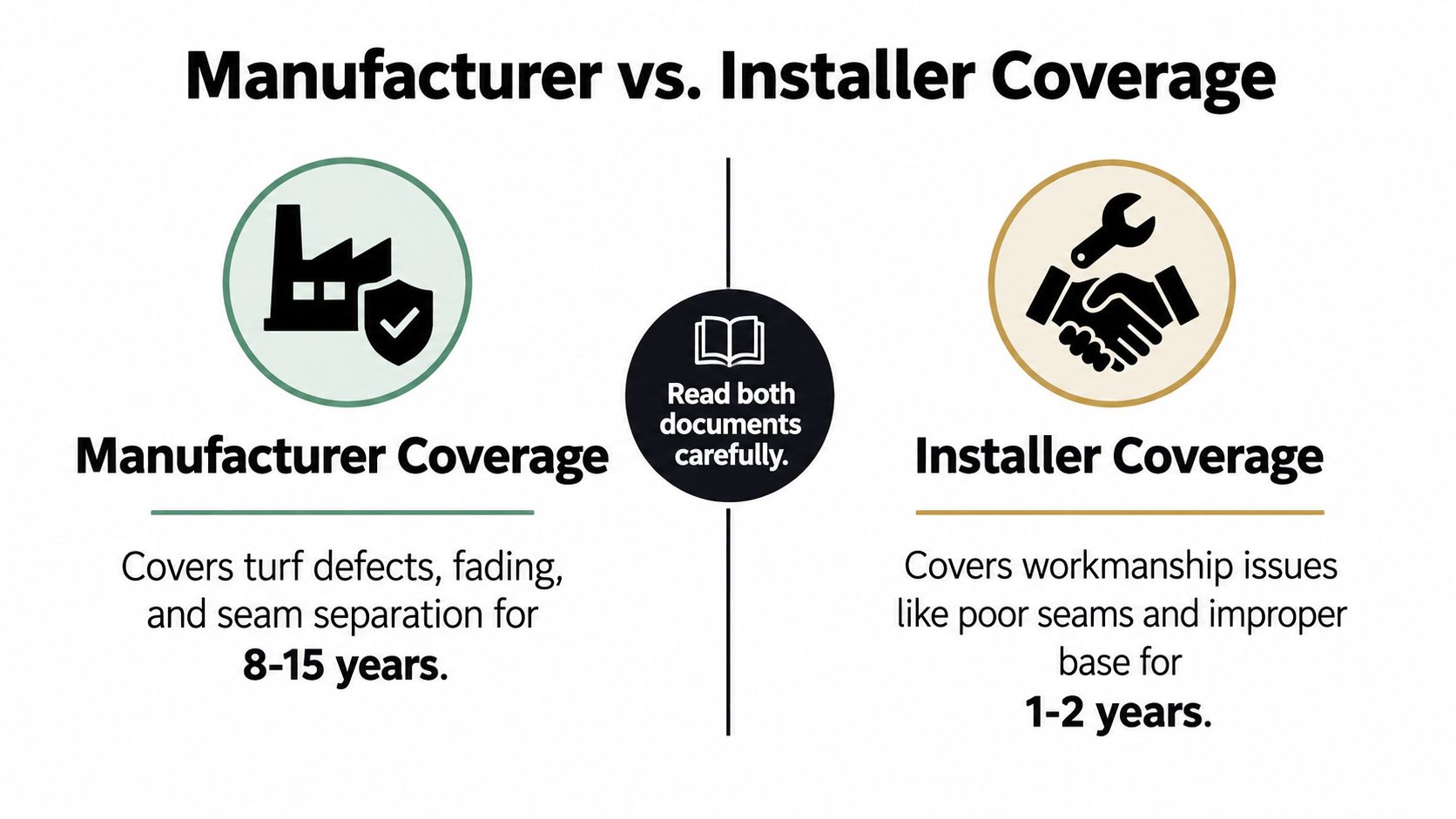
Most homeowners should receive two separate warranty documents. The manufacturer's document follows the turf product. The installer's document follows the work performed in your yard. Ask for both before signing, because a strong product warranty won't repair a poorly prepared base, and an installer warranty may not cover fiber degradation caused by the product itself.
What the manufacturer document should identify
Manufacturer coverage typically concerns the turf system and its components. Look for clear language addressing:
- Material defects: Problems in the fibers, backing, coatings, or other permanent components.
- UV degradation: Fading, fiber breakdown, or related damage caused by ultraviolet exposure.
- Premature wear: Performance failure during authorized use, with an objective definition of excessive wear.
- Seams and system components: Whether seam tape, adhesives, fasteners, and infill are included or excluded.
- Remedy: Repair, replacement of affected sections, full replacement, or a prorated credit.
The document should name the product, explain when the term starts, and state whether the remedy includes removal and reinstallation labor. If “wear” and “fade” aren't measurable, ask the contractor to explain how the manufacturer determines failure.
What the installer document should identify
Installer coverage should address the work beneath and around the turf. Ask whether it covers base preparation, compaction, grading, drainage, seaming, edging, fastening, and infill application. A drainage problem caused by the site preparation process is not the same claim as a defective backing material.
The contract should also state who inspects the issue first and who pays for labor if the claim is accepted. Don't accept “we stand behind our work” as the warranty. Get the term, exclusions, start date, and remedy in writing.
For a useful comparison, homeowners can also review how a different construction trade explains builders warranty cover in Victoria. The products differ, but the lesson carries over: coverage must be defined by responsibility, conditions, and remedy.
A product warranty protects what was manufactured. An installer warranty protects what was built in your yard.
Before your site visit, use this artificial turf installation contractor resource to prepare questions about the scope of work and warranty paperwork. Then write down the answers. Verbal assurances are difficult to prove once the crew has left.
Standard Warranty Durations and What the Numbers Mean
A turf quote can promise 8, 10, or 15 years and still leave you paying for removal, labor, or replacement later. The number is only the outer limit. The contract language decides what that promise delivers in an Austin yard.
Public specifications show why an eight-year term deserves close attention. Montgomery County, Maryland, required at least an eight-year warranty, while Fairfax County, Virginia, required eight years for the main field and two years for an infield area. Those requirements also show the difference between a warranty term and the turf's expected service life.
Read the payment schedule, not just the headline
A non-prorated warranty generally provides the stated remedy throughout the covered term, subject to its exclusions. A prorated warranty reduces the manufacturer's obligation as the turf ages. A long headline term can therefore provide little replacement value near its end.
Put these questions in writing:
- Does coverage begin on the purchase date, installation date, or shipment date?
- Does the remedy include labor, removal, disposal, and reinstallation?
- Will the company replace the affected area or patch only the visible failure?
- Does the customer receive a full remedy or a declining prorated credit?
Fairfax County's municipal specification shows how precise warranty language can be. Its eight-year warranty covered defects, premature wear during authorized normal use, and UV degradation. It also required non-prorated coverage backed by third-party insurance. Use that level of detail when reviewing residential paperwork, rather than choosing a product by duration alone.
Compare the promise side by side
| Duration | Typical Coverage | Prorated or Non-Prorated | What to Verify |
|---|---|---|---|
| 8 years | Materials and workmanship may be covered, depending on the document | May be either | Confirm UV, wear, seams, labor, and exclusions |
| 10 years | Often presented as a standard manufacturer term | May reduce with age | Ask when the term begins and how wear is measured |
| 15 years | Longer stated product coverage | Proration may still apply | Verify whether the remedy remains meaningful near the end |
| “Lifetime” | Usually defined by contract language, not an unlimited promise | Often limited or conditional | Demand the legal definition, exclusions, and remedy |
A 15-year warranty isn't a guarantee that the lawn will look new in year 14. Service life depends on material quality, usage intensity, weather, and maintenance. Review artificial grass durability information alongside the warranty. Choose the document that defines measurable failure, responsibility, and a usable remedy, not the one with the longest number.
Common Exclusions and Actions That Void Coverage
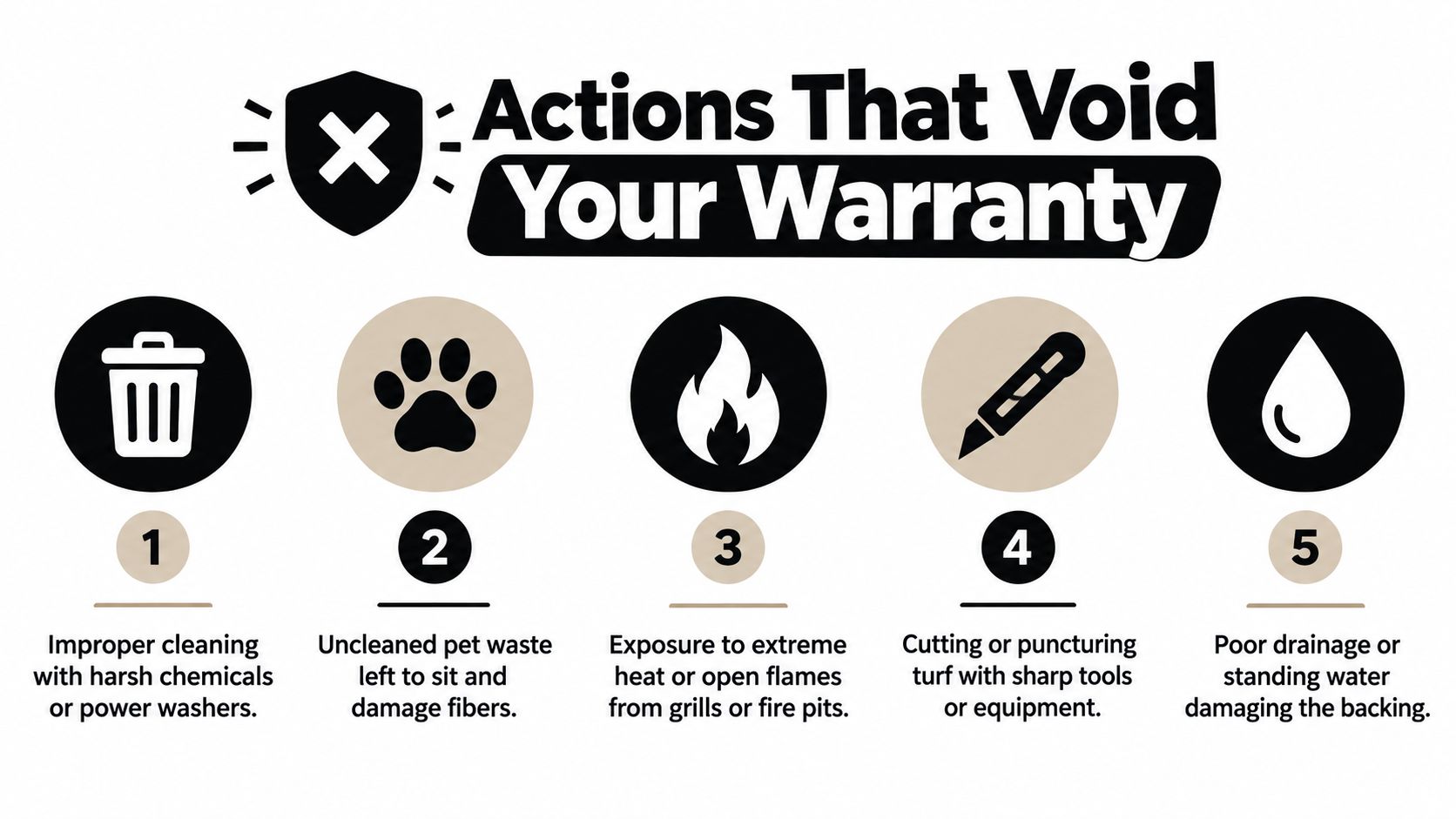
Warranty disputes usually start with a simple question: did the turf fail because of a covered defect, or did a listed exclusion cause the damage? The Sports Turf Managers Association identifies improper cleaning, normal wear, inadequate maintenance, subbase failure, incorrect infill grade, insufficient infill, burns, cuts, accidents, improper footwear or equipment, and uncontrollable events as conditions that can limit or void coverage.
Austin examples are easy to recognize. A pressure washer held too close can disturb fibers or backing. A fire pit installed directly on the lawn can burn the surface. A handyman who re-tucks a loose seam with the wrong adhesive can create a repair problem the manufacturer refuses to own.
Run this exclusion audit before you buy
- Cleaning: Check whether harsh chemicals, solvents, bleach, or high-pressure washing are prohibited. Follow the manufacturer's cleaning method, and keep receipts for professional treatments.
- Heat and fire: Keep grills, fire pits, reflected heat, and hot equipment away from the turf. Heat damage may be treated as an accident or improper use.
- Pets: Ask specifically about pet waste, digging, chewing, odor, and repeated traffic. Pet use can be acceptable while still creating maintenance duties and exclusions.
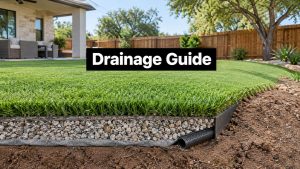
- Infill and drainage: Confirm the required infill type and depth. Inadequate infill, incorrect grade, subbase failure, and standing water can shift responsibility away from the manufacturer.
- Unauthorized repairs: Don't cut, glue, patch, or retuck a seam without written approval. A third-party repair can complicate causation and void a claim.
The Federal Trade Commission warranty guide says written warranties on consumer products costing more than $15 must disclose required information clearly and identify the warranty as either “full” or “limited.” The FTC also requires pre-sale availability under applicable rules. That label matters. A limited warranty can contain substantial restrictions on remedy, labor, exclusions, and customer obligations.
Keep a copy of the warranty, installation agreement, maintenance instructions, and any approved repair instructions. If a contractor won't explain an exclusion in ordinary English, assume it deserves more scrutiny before you sign.
How to Document and File a Warranty Claim
A warranty claim is won or lost on documentation. Start building the file on installation day, while the turf is clean, the seams are visible, and the site conditions are easy to record.
Keep a claim-ready file
Save these items in both a physical folder and a digital folder:
- Dated installation invoice: Include the contractor, product name, installation date, and scope of work.
- Product and batch information: Keep labels, order details, samples, and any batch or lot identification.
- Complete warranty documents: Save the manufacturer and installer versions, including amendments and maintenance instructions.
- Photographs: Take installation-day photos of seams, edges, drainage points, and the full yard. Photograph the problem from close and wide angles as it develops.
- Maintenance records: Record cleaning, brushing, infill work, pet-zone rinsing, inspections, and drainage observations.
- Written timeline: Note when you first saw the issue, weather conditions, use patterns, and every conversation with the installer or manufacturer.
The distinction between a product defect and a site-condition issue drives the claim. Fading or fiber breakdown may implicate the turf product. A lifting seam, sinking area, or pooling water may implicate installation, base preparation, or drainage. Don't diagnose the cause aggressively in your first message. Describe what you see and request an inspection.
Ask what “covered” actually means
A company may offer repair, replacement of affected sections, prorated reimbursement, or no cash refund. The remedy language controls the practical value of the warranty. Ask whether replacement means a matching roll, a patch, or a credit toward new material, and ask who pays for removal and labor.
Send the claim in writing, attach the invoice and photos, and request a written response identifying the accepted or denied clause. If you need a local assessment, artificial grass repair services can help you separate a visible symptom from the underlying installation or product issue before you make an irreversible repair.
Maintenance Practices That Keep Coverage Intact
Maintenance isn't just about keeping turf attractive. It creates evidence that you followed the contract. Texas service-contract rules distinguish a manufacturer's warranty from a separately purchased service contract, and they emphasize disclosures about covered services, exclusions, and the holder's duties. The Texas Department of Licensing and Regulation's service-contract guidance explains that a manufacturer warranty comes with the product, while a service contract is purchased separately.
Use the warranty's exact instructions first. The routine below gives you a practical framework, but the product document controls if it requires a different method.
A simple Austin maintenance rhythm
- After heavy use: Brush matted areas against the grain with a suitable soft brush. Check pet runs, play areas, and pathways where fibers flatten first.
- After storms: Clear leaves and debris from drainage paths. Look for standing water, slow drainage, sinking, or movement at edges.
- For pet zones: Remove waste promptly and rinse regularly. Record unusual odors, discoloration, or drainage changes instead of masking them with harsh chemicals.
- For infill: Check the manufacturer-specified depth and top up with the approved material when needed. Incorrect grade or insufficient levels can affect both appearance and coverage.
- For repairs: Keep metal blades, sharp tools, and unapproved adhesives away from seams. Call the installer before cutting or gluing anything.
Turn care into a maintenance log
Write down the date, task, area, product used, and any concern you noticed. Add photographs when the surface changes. This log helps show that you didn't ignore drainage, allow debris to build up, or use an incompatible cleaner.
An annual inspection is also sensible when the lawn receives heavy traffic, supports a dog run, or has complex drainage. Ask the inspector to document seam integrity, infill condition, edges, and water movement. Those observations can identify a small installation concern before it becomes a disputed failure.
Austin-Specific Conditions and Your Next Step
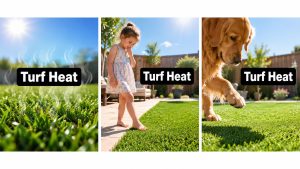
Austin's heat exposes weak warranty language fast. Synthetic turf can become substantially hotter than nearby natural grass. A 2026 municipal review cites surfaces reaching 62.5°C, or 144.5°F, and notes that sunny climates including Texas can exceed 70°C, or 158°F. The Pasadena municipal review identifies solar radiation, plastic fibers, infill, and base layers as contributors.
Those temperatures do not decide whether turf fits your property. The contract does. Ask whether the warranty addresses heat-related buckling, odor, infill degradation, cooling systems, pet comfort, and maintenance. A product warranty may cover UV fading while excluding reflected heat, open flames, improper cleaning, or site conditions. Read each exclusion separately, because coverage for one failure does not cover the others.
Match the contract to the yard
For a pet run, ask how the warranty handles waste, rinsing, antimicrobial or cooling claims, infill, and drainage. For commercial use, confirm the definition of authorized use and traffic limits. On a sloped yard, check the terms for base movement, runoff, edging, and responsibility if water undermines the installation.
End-of-life wording matters as much as the installation guarantee. A 2026 Los Angeles public document described an 8 to 15-year lifecycle and discussed landfill disposal, illegal dumping, incineration, and 2025 concerns about microplastics in certain coastal permitting contexts. Ask every contractor one direct question: if replacement becomes necessary, who pays for removal and disposal?
Before choosing turf, diagnose the lawn problem. From Brown Grass to Green Grass offers context for evaluating brown grass before replacing it. A surface change will not fix poor drainage, unstable soil, or runoff.
For an Austin project, request a site walkthrough and both warranties before signing. The contractor should inspect drainage, access, slope, pet use, heat exposure, and the existing base, then put product and workmanship terms in writing. Use this guide to artificial turf installation in Austin to prepare questions, but rely on the actual warranty documents.
Modern Yard installations provides residential and commercial artificial turf installation, pet-friendly dog runs, putting greens, drainage work, and maintenance across the Austin area. Its written manufacturer and workmanship warranty packages should identify what is covered. Schedule an on-site evaluation, bring existing paperwork, and ask the team to mark exclusions before new turf is installed.
Visit Modern Yard Landscapes to schedule an Austin site walkthrough and review manufacturer and installer terms in writing. Bring your quote, invoice, or existing warranty documents. Get a clear recommendation for drainage, heat, pets, seams, maintenance, and claim protection before scheduling installation.