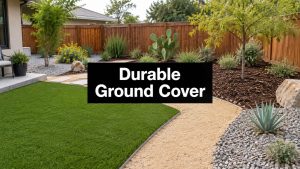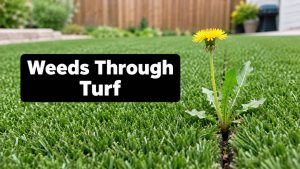

Converting an average 1,800-square-foot natural lawn to artificial turf could save up to 99,000 gallons of water a year, according to a 2014 UCLA Water Action Research Team report. The same report tracked a larger conversion: UCLA planned to replace 7.7 acres of irrigated grass at its Intramural Fields, with projected savings of 6.4 million gallons a year. That grass used about 1,397 gallons per minute in a 22-minute cycle, roughly 30,700 gallons on a watering day, five days a week for 41 weeks. Those numbers reframe the job. You're not shopping for a green carpet. You're deciding whether a thirsty irrigation schedule should stay, and whether the ground under it can carry a new surface.
Why Austin Homeowners Are Switching to Artificial Turf
Walk a typical Central Texas yard in late July and the decision gets practical fast. The Bermuda or St. Augustine that looked fine in April is thin, the sprinkler heads are spraying the fence, and the water bill is doing more explaining than the lawn. Homeowners aren't switching because a catalog photo looked lush. They're switching because the irrigation habit no longer matches the climate or the way the family uses the yard.
Treat that UCLA residential figure as an upper-bound planning estimate, not a promise on your invoice. Actual savings swing with local climate, how often you irrigate, the grass you have now, and whether the new surface still needs water for cooling or cleaning. A shaded north side that you already water twice a week will not match a full-sun slope on a five-day schedule. Pull last summer's bills and your controller's run times before you compare products. Square footage alone doesn't tell the story.
Start with the lawn you already have
- Measure the irrigated area. Don't guess from the fence line. Include only the grass the system hits, and note beds you plan to keep.
- Write down the schedule. Days per week, minutes per zone, and which months you shut the system off. That record is your baseline.
- Separate wants from water. A play lawn, a dog run, and a front strip that only has to look tidy from the street don't share one answer.
Practical rule: If you can't say how many minutes each zone runs, you're not ready to compare turf quotes. The water case lives in your controller, not in a national average.
The other reasons people call are simpler, and they stack. Mowing drops off the Saturday list. Routine fertilizer, herbicide, and pesticide use on that patch goes away. The color stays even through August instead of browning between storms. None of that is automatic. A yard with bad fall, a low spot by the AC pad, or a gate too narrow for a machine will still disappoint if you buy blades and skip the ground. Residential artificial turf installation is a decision about the whole yard: where water leaves, where kids and dogs stand at 3 p.m., and who is accountable after the crew leaves.
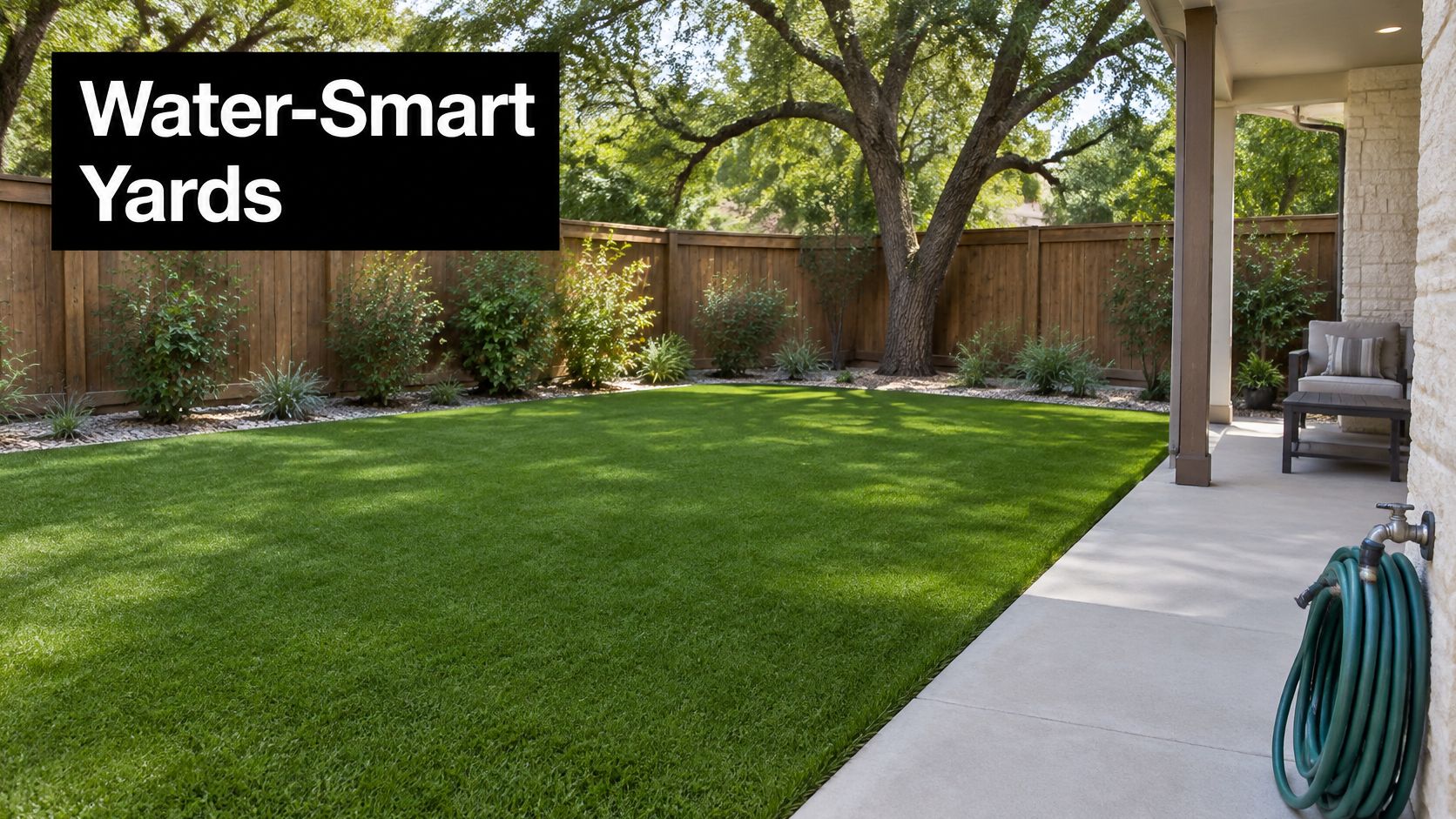
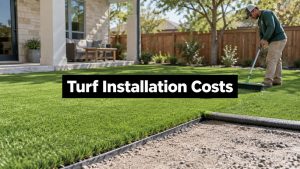
Use the photo as a finish line, not a spec. The patio, the fence line, and the planting beds only work because someone graded, edged, and drained the lawn first. That's the conversation worth having on your own lot before anyone orders a roll.
What a Residential Turf System Includes
A finished lawn is the visible end of a stack. Judge the stack, not the sample in the sunlight. Think of it the way you'd think of a house. Paint on a cracked slab doesn't make the house sound. Blade color on a soft, uncompacted yard doesn't either.
The New Jersey Department of Environmental Protection marks the Houston Astrodome's 1966 installation as the first major synthetic-turf milestone and notes that about 1,500 new synthetic surfaces go in each year in the United States for sports fields, playgrounds, and community recreation. That count is mostly public and athletic work, not backyards, but it shows how long the trade has been refining fiber, backing, infill, and install practice. Early surfaces existed because high-use venues couldn't keep natural grass alive. Later generations got better yarns and better bases. The same review notes that synthetic turf is promoted because it skips routine irrigation, mowing, fertilization, herbicides, and pesticides, and that some systems use recycled tires. Promotion isn't a spec. Your yard still needs the layers to work together.
The stack, from the finish down
Turf face. This is the blade layer you walk on. Face weight, pile height, and UV stability decide how it looks after two summers, not how it looks on day one.
Backing. The backing holds the tufts and has to pass water. A pretty face on a backing that sheds water sideways will pond at the first low edge.
Infill. Infill stands the blades up, adds ballast, and changes heat and pet odor. Hydrophobic infill that won't stay wet is a heat problem, not a footnote. The layer breakdown is worth reading before you accept a one-line product name on a quote.
Aggregate base and subgrade. The base is your slab. It has to be shaped, compacted, and thick enough for the soil under it. The subgrade is the native ground. In Austin that often means clay that was already compacted by years of mowing.
Edging. Edging locks the perimeter so the field doesn't creep, and it sets the line where turf meets beds, concrete, or a retaining wall.
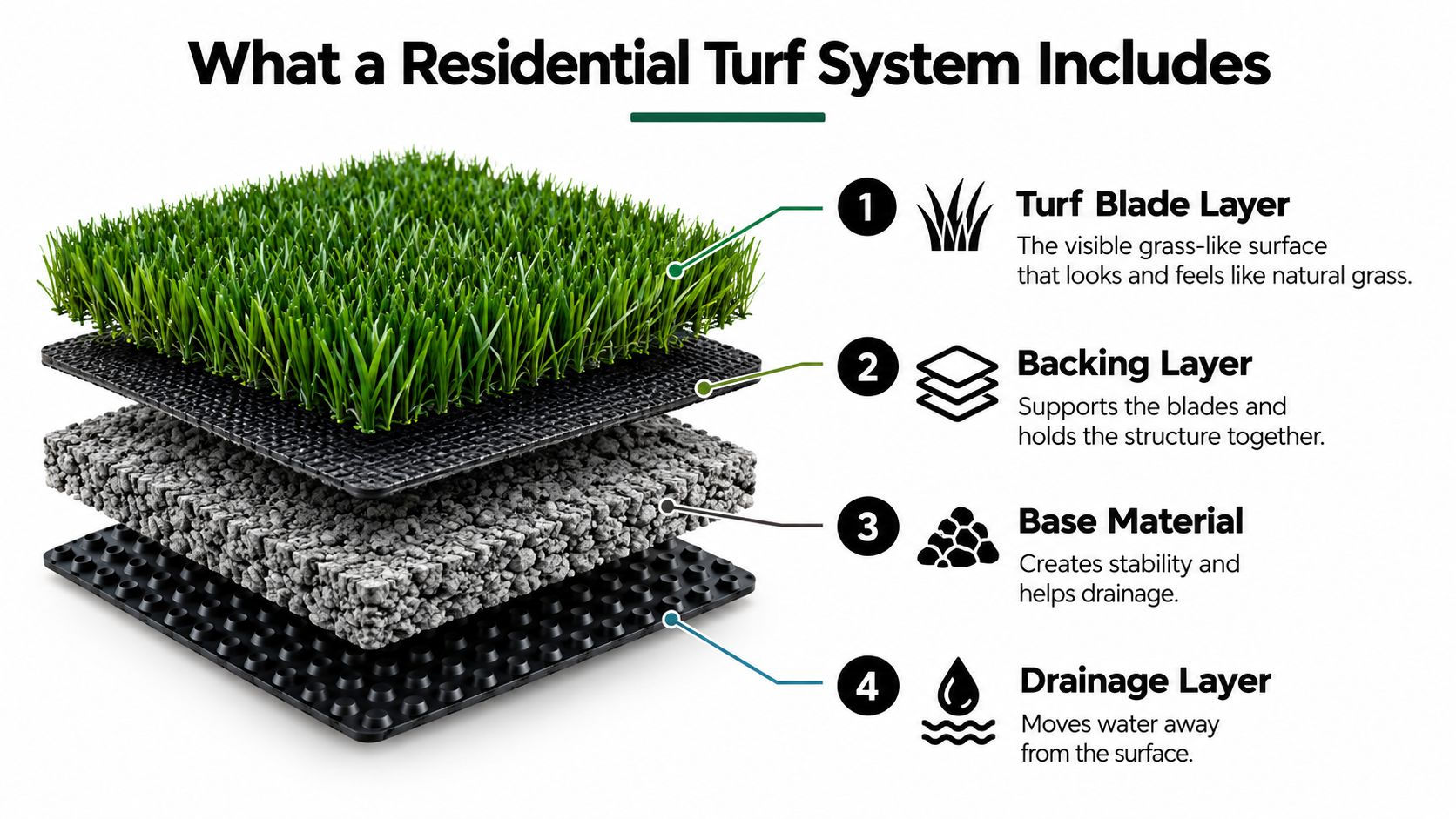
If a salesperson only hands you a blade sample, ask what sits under it and where the water goes after it passes the backing. Durability is the fiber, backing, infill, sub-base, edging, grading, and drainage acting as one assembly. A weak base will telegraph through the best yarn within a season.
Choosing Materials, Infill and Pet-Friendly Options
Match the product to the heaviest use on the yard, not the prettiest photo. A front lawn that sees foot traffic on weekends can live with a lighter face. A dog run, a play pad, and a putting green cannot share that spec and still age well.
| Use Case | Key Material Priority | Watch For |
|---|---|---|
| Dog run | Fast drainage, odor control, tough fiber | Cheap infill that holds urine smell, seams in the run path |
| Kids' play | Face softness, UV-stable yarn, even base | Hard spots over poorly compacted base, dark yarn in full sun |
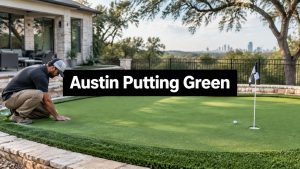
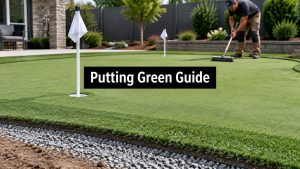
| Putting green | Short, dense pile and a true roll | Using lawn turf and expecting green speed |
| Low-traffic front lawn | Natural color and a face that resists UV fade | Overbuying sports turf you will never load |
Fiber type and denier set wear life. UV resistance is essential on a south or west exposure in Central Texas. Pile density changes how the lawn looks when you part it with your hand, and how pet waste sits on the surface. Infill is the decision most quotes bury. Some fills cool better, some resist odor, and some are sand. Antimicrobial treatments and cooling technologies earn their place on pet zones and full-sun play areas. They don't belong on every square foot if nobody uses that square foot hard.
Ask four questions on every line item. What yarn, and is it UV-stable? What infill, and why that one for pets or heat? What edging, and will it hold against a bed or a driveway? Which add-ons are in the price, and which are optional? A transparent quote names those choices in plain language. A thin quote gives you a square-foot price and a color name.
Modern Yard Landscapes builds residential jobs with UV-resistant, high-denier fibers, commercial-grade steel edging, and infill selected for the use, including antimicrobial and cooling options where a household needs them. That is one way to spec the stack. Your job is to see those choices written down, not implied. If you want the infill trade-offs in more detail before a site visit, the infill guide is the right page to read with the quote in your other hand.
Don't let a pet-friendly label replace a drainage conversation. Dogs care about smell and puddles more than blade style.
Site Prep for Drainage, Grading and Access
"Permeable" on a brochure doesn't mean your yard will drain. Water has to pass the backing, move through the aggregate, follow the subgrade slope, find soil that will take it or a pipe that will carry it, and leave at an outlet that isn't higher than the lawn. Miss any of those and the surface hides the failure until the next hard rain.
Austin's own documents flag increased stormwater runoff and water-quality concerns, including possible releases of microplastics, PFAS, and heavy metals, as noted in the city's artificial turf briefing materials. A 2025 University of British Columbia review, discussed in that same policy context, reached a similar conclusion: artificial turf can increase runoff, add chemical and microplastic pollution, raise temperatures, and cut habitat value. That's a reason to design the water path on purpose, not a reason to skip the product and hope the clay behaves.
What rainfall does on a bad lot
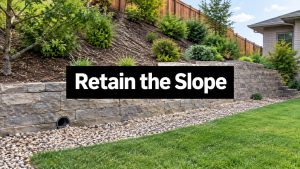
On compacted clay, water that can't soak in sheets to the fence or the neighbor's swale. On a slope, it gains speed at the low edge and scours the perimeter if the edging and outlet aren't planned together. On a yard that already ponds, turf will look dry on top while the base stays soft, and seams and odors show up later. Drainage easements and retaining walls change the legal and physical path. You don't get to send water somewhere new because the lawn is new.
A prep visit should measure, not guess.
- Infiltration and soil. Note clay, fill, and any spot that stays wet two days after rain.
- Grade and outlet elevation. Water needs a fall, and the outlet has to be lower than the lawn.
- Edges and walls. Beds, patios, and retaining features either steer flow or trap it.
- Access. A narrow side gate changes equipment, base depth, and labor before a roll is cut.
- Pet and wash water. Plan where rinse water and waste go so they don't sit in the base.
After the first real storm, walk the edges, the low corner, and any seam near a downspout. You want to see water gone, not a squishy patch. Drainage system planning belongs in the bid, with a sketch of where water leaves, not a single adjective on the proposal.
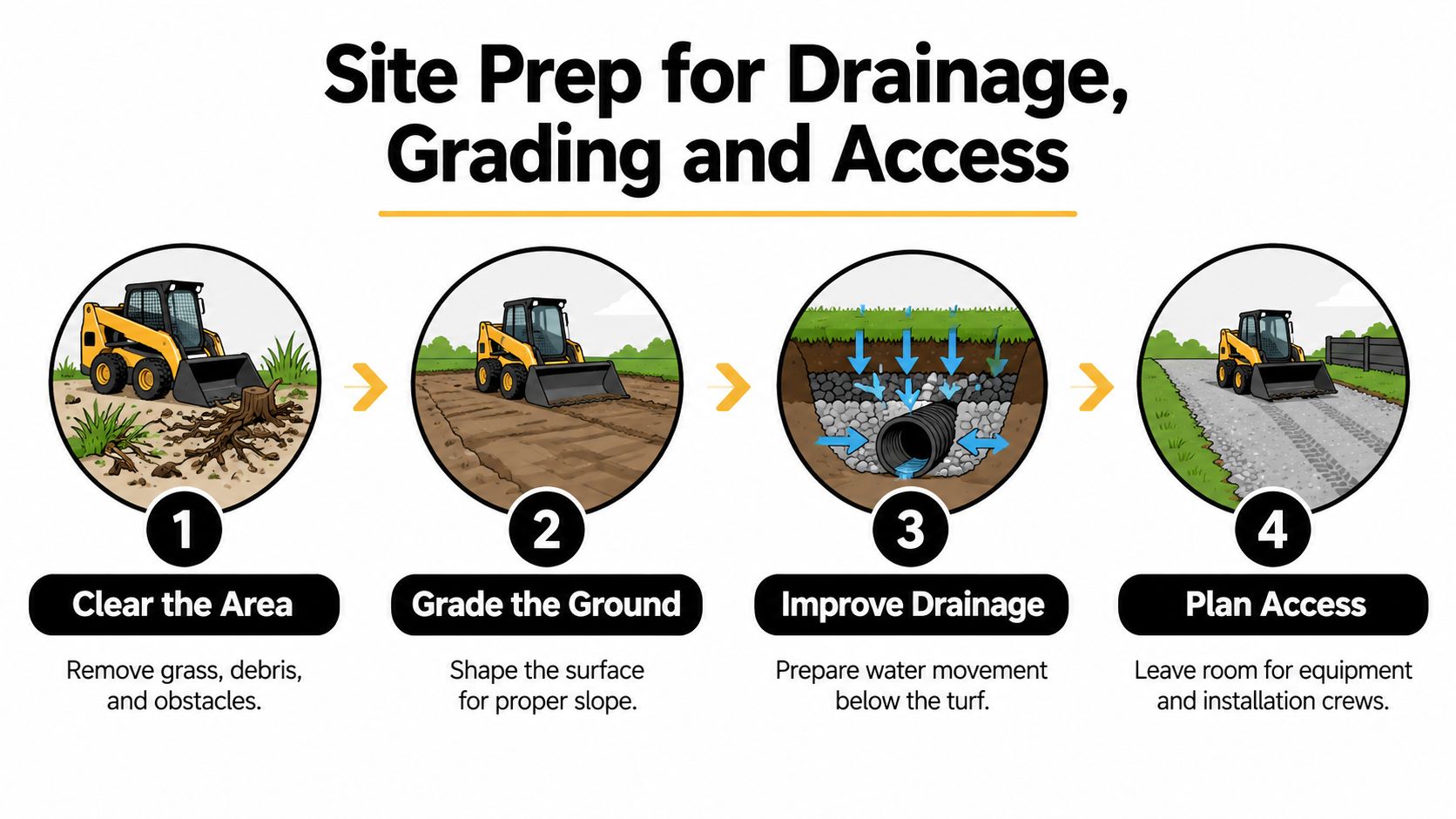
Order turf only after that assessment is written down. Rolls are easy to buy. Fixing a buried grade under a finished lawn is not.
Installation Steps and What Drives Your Cost
A clean install follows a sequence, and skipping a step to "save a day" shows up as wrinkles, soft spots, or a seam that opens. Here's the order a crew should work, and why each step exists.
Excavation to the planned depth. Grass, roots, and excess soil come out so the base has room. Too shallow and the new lawn sits high against the patio. Too deep and you're paying for base you didn't need, or you've undercut a footing.
Base installation and compaction. Aggregate goes in lifts and gets compacted so footsteps don't print through the face. This is the step that makes the lawn feel like a lawn six months later.
Edging. Steel or an equivalent rigid edge locks the shape before the turf is stretched. Curves, tree wells, and driveway meets get set here, not after the infill is down.
Turf layout, seaming, infill, and brushing. Rolls are oriented so grain and seams make sense for the view from the house. Seams are joined, infill is spread evenly, and brushing stands the blades up. Then the site is cleaned.
Take a common Austin backyard: a four-foot side gate, a low corner by the neighbor's fence, and a covered patio you don't want to raise. The gate means base moves by wheelbarrow, not by a large machine, so labor climbs. The low corner needs grade or a drain before any turf is laid, or that corner becomes the puddle. The patio elevation caps how thick the build-up can be. None of that is visible in a per-square-foot teaser price.
What moves the number
Material quality moves it first: yarn, backing, and infill aren't interchangeable. Total quantity moves it next, including waste on curves and odd shapes. Labor complexity from access, slope, and demolition can outweigh the product cost on a tight lot. Specialized features, such as antimicrobial treatments, cooling technologies, drainage tile, or a small retaining wall, belong as line items so you can accept or decline them. Compare quotes by those factors. The lowest bottom line often omitted the base depth, the drain, or the edging you will wish you had.
Heat, Maintenance and Long-Term Care
Turf can get uncomfortable fast in direct sun, and that matters more in Austin than almost any other design detail after drainage. A systematic review summarized by the Canadian National Collaborating Centre for Environmental Health found artificial turf surfaces 9.4 to 33.7°C hotter than natural turf, with nearby air only 0.5 to 1.2°C higher. The surface is the problem, not the air a few feet up. Kids, dogs, and bare feet feel the fibers and the infill.
Pennsylvania State University research showed why a quick hose-down is a weak plan. Irrigation dropped a synthetic surface to about 29°C after 30 minutes, then the temperature climbed back to about 49°C within five minutes, partly because hydrophobic infill didn't stay wet. If your water-savings story depends on never using the hose, and your play area faces west against a light-colored wall, you have a conflict. Say so in the design.
A heat plan that fits the lot
Specify UV-stable turf and an infill that isn't chosen only for price. Put shade where people and pets pause, from a tree, a sail, or the patio cover you already have. Keep a hose or irrigation access for peak heat, and treat that water as a comfort cost, not a failure of the product. Check the surface with a thermometer on a representative August afternoon before you decide the yard is fine. Don't park a dog run or a toddler zone against a sun-reflective wall. Time pet access for morning and evening when the reading says the surface is harsh.
Cooling infill and water-retentive components can help. Judge them after installation in your exposure, not from a lab claim on a hot day somewhere else.
The upkeep that protects the install
Low maintenance isn't maintenance free. Plan a simple rhythm.
- Debris. Leaves, berries, and pet waste come off on a schedule, not when the lawn looks tired.
- Brushing. Groom high-traffic lanes so the pile doesn't lay over.
- Spot cleaning. Rinse pet areas and spills. Don't flood the yard as a substitute for infill choice.
- Seams and drainage. After storms and a few times a year, check seams, edges, and the outlet you designed.
That rhythm is also how you stay inside a warranty. Neglect, unapproved chemicals, and damage from equipment aren't "the product failing." A seasonal walkthrough with photos of the edges and the low spot takes less time than one mowing season used to.
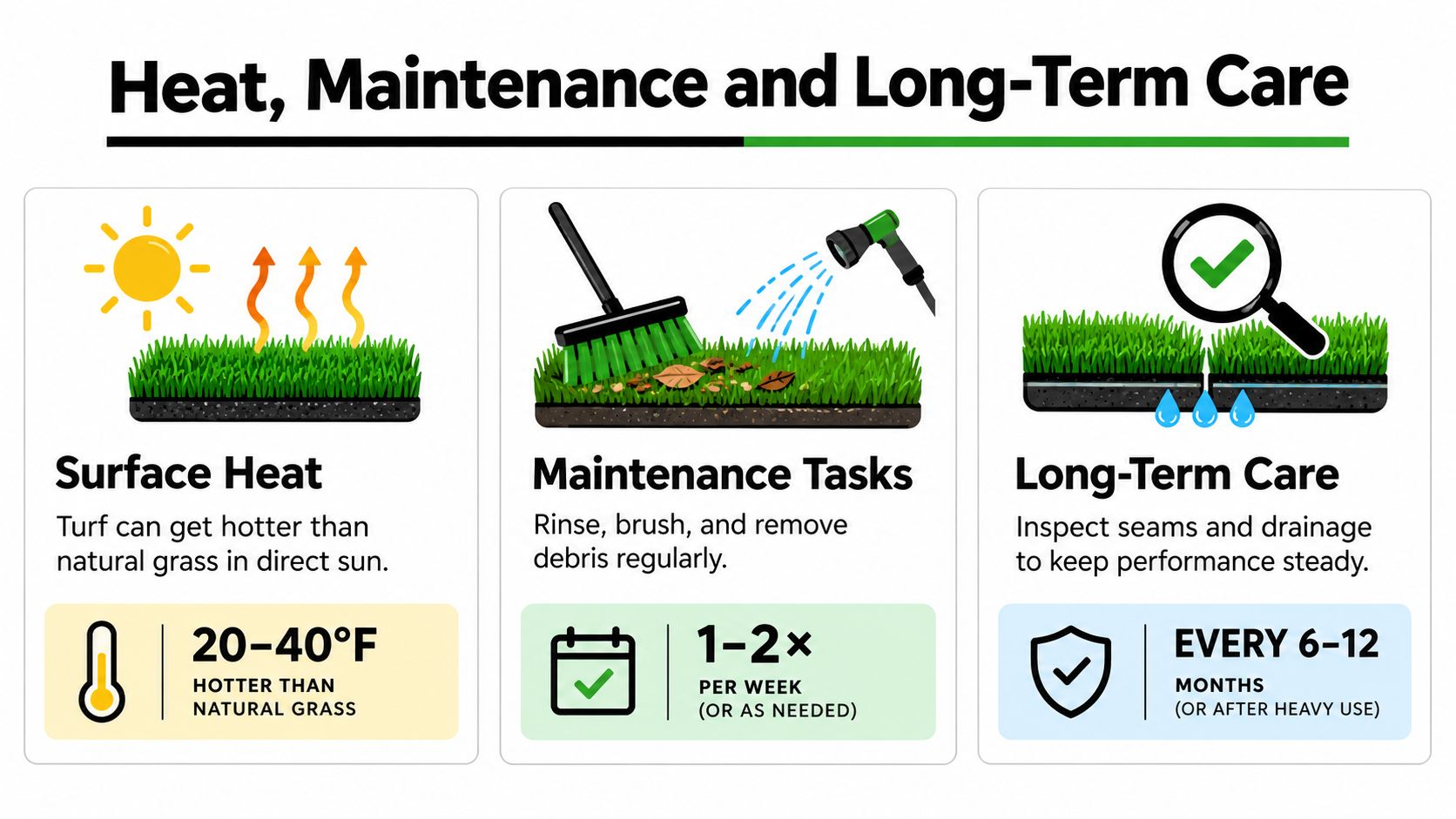
If the yard fails the thermometer test at the hours your kids play, change the shade or the schedule before you blame the fiber.
Warranties, Credentials and Your Next Step
Price is the weakest way to pick an installer. The work that fails is usually excavation, edging, and drainage, and that's also where property damage and injuries happen. The U.S. Federal Trade Commission says homeowners should hire contractors who are licensed and insured, confirm the license with state or county authorities, and ask for proof of insurance. Get recommendations, read online ratings with a skeptical eye, and don't choose on the lowest price alone.
Ask what the policy covers while the crew is cutting grade and setting drains, not only after the lawn looks finished. Then read the warranty like a contract. Which parts are covered, the yarn, the seams, the labor? How do you file a claim, and who stands behind the base if it settles? A long fiber warranty with no labor coverage and no drainage responsibility is a thinner promise than it looks. The warranty details are the page to compare against any proposal you receive.
Modern Yard is a fully insured Austin company with a total satisfaction guarantee, decades of combined experience, and estimates built from material, quantity, labor complexity, and add-ons rather than a single teaser rate. That's the paperwork you should expect from anyone you let onto the property. Credentials you can verify, a written prep method, and a warranty you can explain back to a neighbor.
Call and schedule a site visit. A useful appointment measures drainage, access, and afternoon heat on your lot before anyone recommends a system. Bring your irrigation schedule and a rough idea of where dogs and kids spend time. You'll leave with a plan tied to the yard you have, not a price tied to a photo.
Modern Yard Designs and installs residential turf systems for Austin yards, including the base, drainage, edging, and infill choices that decide how the lawn behaves in heat and rain. If you want a site visit that measures your lot before you sign, visit Modern Yard Landscapes and set a time to walk the yard.