
Yes, weeds can grow through artificial grass, but they usually appear at seams, edges, drainage openings, or in surface debris rather than punching through an intact, well-installed turf surface. The right fix depends on which path the weed used.
You may be looking at a weed along the fence line after paying for a lawn you were told would be weed-free. Before spraying it or blaming the turf, check where it's rooted. A plant growing in windblown dust on top needs a different fix from one pushing up at a loose seam or spreading from soil beneath the base.
In Austin yards, the installation and the way water and debris move across the site matter as much as the synthetic grass itself. A realistic installation reduces weed opportunities. It can't make seeds, roots, and moisture disappear.
The Short Answer Most Installers Won't Give You
Yes, weeds can grow through artificial grass. But they almost never punch through an intact turf surface. They usually take one of four routes: the edge, a seam, a drainage opening, or a patch of surface debris that has become a seedbed.
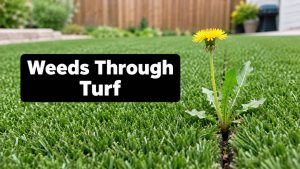
That fence-line dandelion may be growing in soil just outside the turf and leaning through a gap. A weed at a joint may be exploiting a seam that has lifted or opened. If it appears in a low spot, look for a drainage opening or trapped moisture. And if it pulls out easily from a dusty patch on top, the seed may have germinated in decomposed leaves, soil, or pet waste rather than coming up from underneath.
Artificial grass is doing its job when it covers the soil and limits open growing space. The whole installation system determines whether weeds remain isolated or keep returning. A barrier can help block some growth from below, but it can't stop seeds from landing on top, and it won't fix a loose edge or a wet, poorly prepared base.
The useful question isn't “Can a weed grow through turf?” It's “Where did this one start?”
Walk the lawn before reaching for weed killer. Look at whether the plant is rooted above the backing, coming through a gap, or entering from the border. That quick diagnosis points to the right repair: remove debris and hand-pull a surface sprout, secure an edge or seam, or investigate the base and drainage when growth keeps appearing across the field.
Where Weeds Actually Get In and Why
The weed's location is a clue. Take a slow walk around the lawn and look for the entry point before you treat the symptom. Each pathway has a different cause, a different telltale sign, and a different fix.
| Pathway | Telltale Sign | Likely Cause | Typical Fix |
|---|---|---|---|
| Edge | Growth follows a fence, bed, or hard border | Loose or poorly restrained turf edge; nearby roots or soil | Secure the perimeter and remove encroaching growth |
| Seam | Plants appear along a joint between turf pieces | Gap, lifted seam, or failed joining work | Rejoin and secure the seam |
| Base | Growth appears through the field without visible surface debris | Residual roots, inadequately prepared soil, or drainage trouble | Have the base and drainage assessed |
| Surface debris | A small sprout sits in dust, leaves, or organic buildup | Seeds germinated in material sitting on top | Remove the debris and pull the weed |
Edges are exposed to nearby planting beds, lawn, and soil. If the turf restraint has loosened, roots can work under the border, while seeds can settle into the gap. A border needs to hold the turf firmly and make the transition to adjoining materials deliberate. If you're planning that transition, this guide to borders for artificial grass can help you think through the edge detail.
Seams deserve a close look if weeds appear in a line. A joint may have separated, or a curved section may not have been joined securely. Don't keep pulling the same growth without checking whether the gap is still open.
Base problems are more concerning. If weeds emerge across the field and there's no visible surface growing medium, a persistent root system or poor drainage may be involved. Surface colonization is simpler: leaves, dust, and organic matter sit long enough to create a thin rooting layer.
What Proper Base Preparation Actually Looks Like
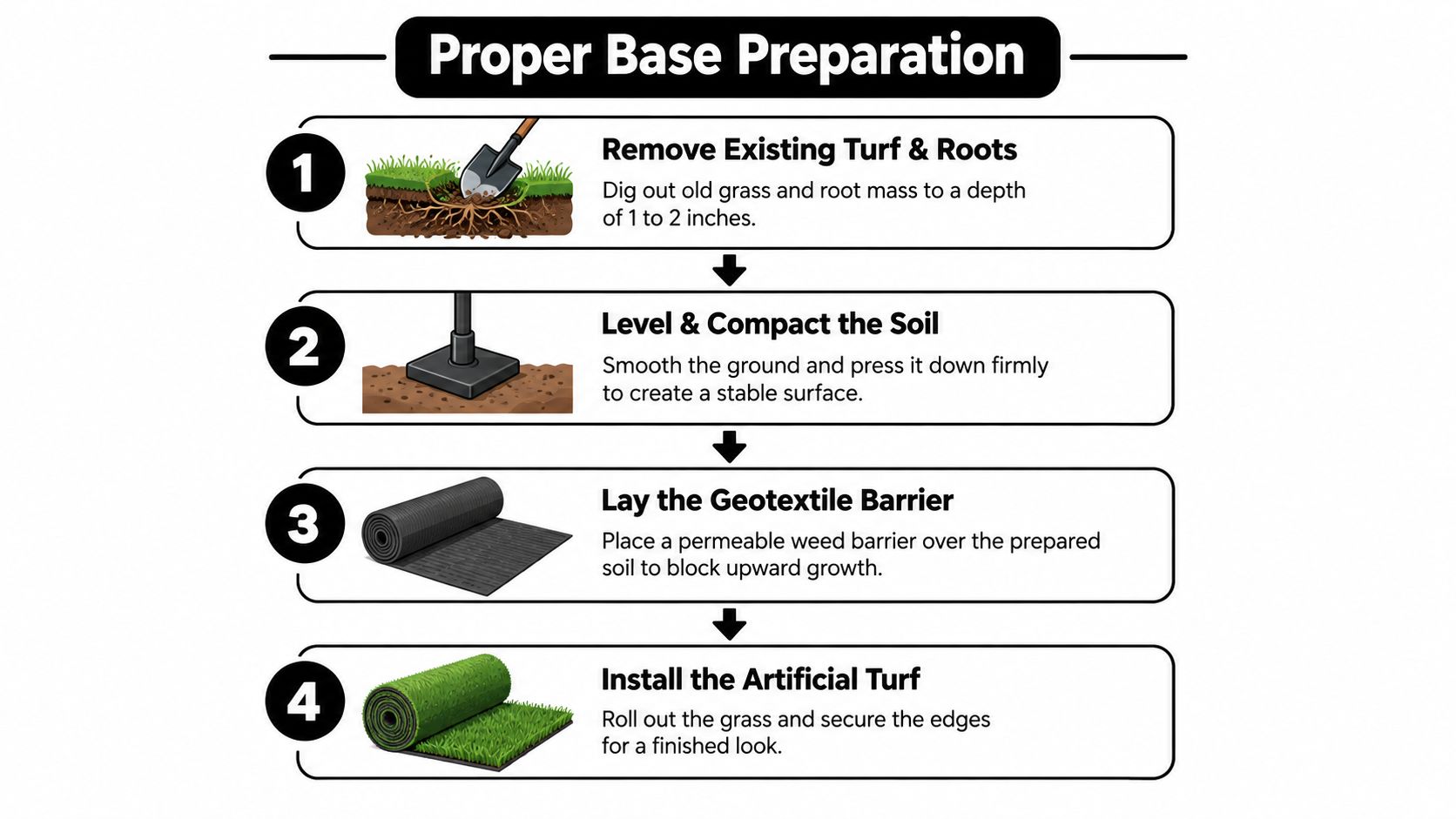
On installation day, you should see the crew remove the old lawn and root system, not lay turf over grass and hope a fabric layer solves everything. University of Arizona Extension recommends removing existing grass roots to 1–2 inches and excavating an additional 3–4 inches for a compacted gravel base. Those dimensions matter: buried roots or rhizomes can survive, while a shallow base can leave fertile soil close to the surface. The University of Arizona's artificial-turf installation guidance treats removing existing turf and roots as a foundational preparation step.
The crew should leave a stable, evenly prepared area and compact the aggregate base so it doesn't shift underfoot or settle unevenly. In Austin, where sites can have clay-heavy soil and periods of heavy rain followed by dry weather, a free-draining base and a plan for runoff matter. Water shouldn't collect in low spots under the turf. A competent installer checks the grade and drainage before covering the base, rather than promising that synthetic grass alone will fix a soggy yard.
Here's what to watch for: old roots left behind, organic soil buried in pockets, a base that hasn't been compacted evenly, or a crew rushing past drainage and grade checks. Ask what will be excavated, what aggregate will be installed, how it will be compacted, and where water will go. If you're comparing the ground work with a separate hardscape project, this 12×12 stepping stones installation guide offers useful context on preparing a stable outdoor surface. You can also review how to prepare ground for artificial turf before discussing the scope with an installer.
The graphic below lays out the basic preparation sequence. Treat it as a conversation starter with the crew, not a substitute for site-specific drainage work.
Why a Weed Barrier Alone Will Not Save You
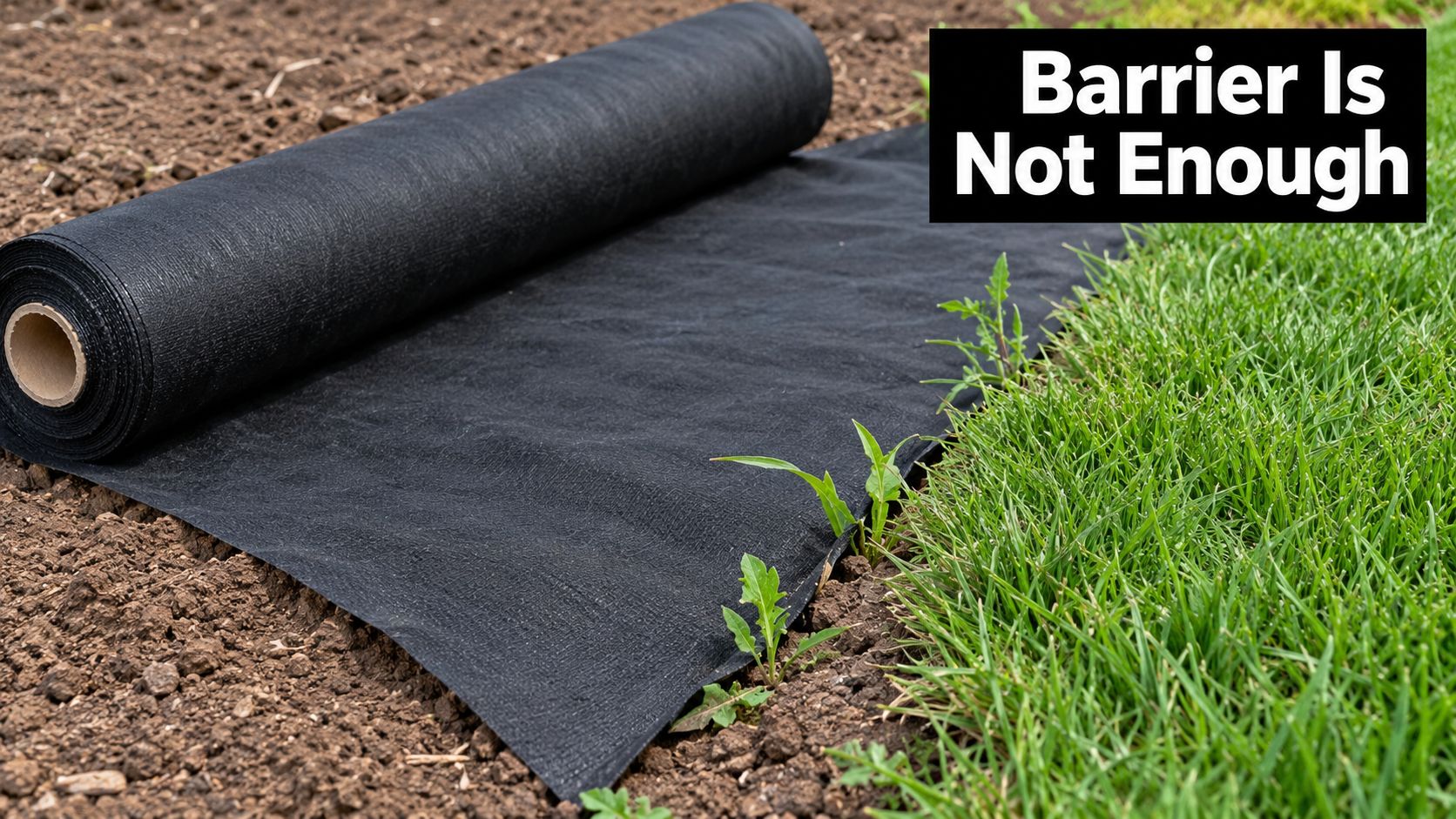
A weed barrier is one layer of the installation, not a magic shield. A permeable geotextile can reduce upward emergence from below, but it can't stop seeds that land on top of the turf and germinate in trapped debris. Persistent perennial weeds may penetrate fabric, and gaps at overlaps or edges can let growth bypass it. North Carolina State Extension explains that geotextiles allow water and air through while blocking many seedlings, but perennial weeds can grow through and surface-rooted weeds can establish on top of the fabric. Its geotextile guidance makes the limitation clear.
That's why I'm skeptical when anyone sells fabric as the entire weed-control plan. Fabric doesn't remove existing roots, compact the base, seal the edges, or keep leaves from breaking down on the turf. And impermeable plastic isn't an upgrade. If water can't drain through, it can collect beneath the system and create the damp conditions that favor unwanted growth.
A sound installation combines prepared subgrade, compacted aggregate, continuous permeable fabric where specified, secure edges, joined seams, and drainage that doesn't pond. Keep the fabric covered and protected from sunlight, and detail its joins so roots can't work around it. Modern Yard Landscapes describes its artificial turf installations as including a porous barrier beneath the aggregate base to reduce weed intrusion, while allowing drainage.
If you're considering fabric for an existing project, first identify what it needs to do and how it fits into the rest of the build. This overview of weed-barrier installation is a starting point, but the fabric choice shouldn't distract from drainage and preparation.
The Ten-Minute Maintenance Habit That Stops Most Weeds
You don't need to turn turf care into a chore schedule. You do need to keep seeds and the material they grow in from settling into the surface, and to notice gaps before they become pathways.
Make the routine purposeful
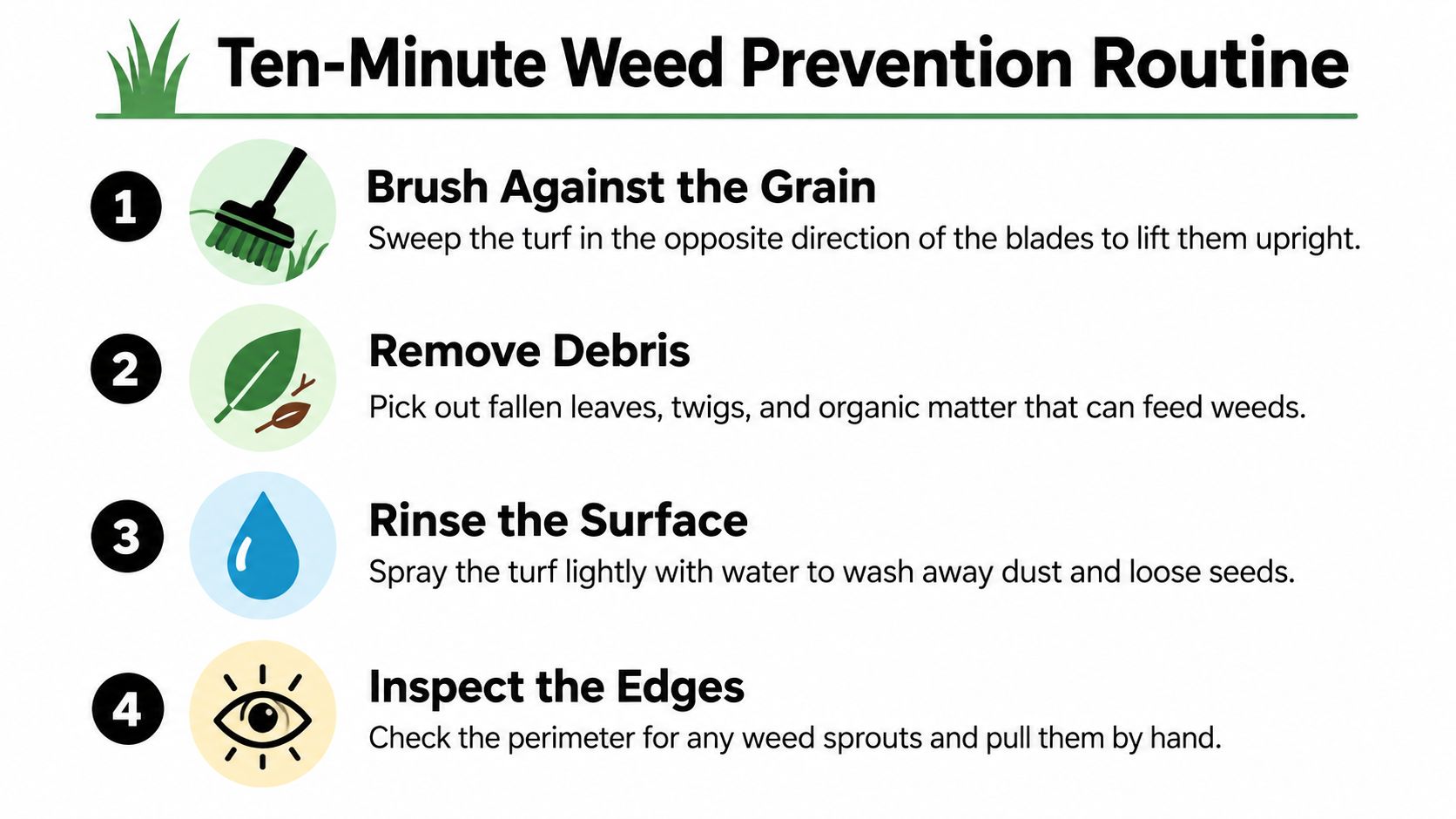
Brush the turf against the grain with a stiff broom to lift the fibers and loosen grit. Blow or rake away leaves and twigs before they break down. If you have pets, pick up waste promptly and rinse the area as needed so residue doesn't add to surface buildup.
Then inspect the seams and perimeter. Look for lifted edges, open joints, weeds entering from a planting bed, and low spots where water lingers. Pull any small weed by hand before it establishes. If it keeps appearing in the same place, don't just repeat the pull; check the underlying cause.
Match the check to the conditions
A practical rhythm is monthly brushing, a weekly debris check in fall, and an inspection after a storm. Those are simple habits, not a guarantee that no seed will ever land on the lawn. University of Delaware Cooperative Extension warns that frequent, light watering encourages weed encroachment in living turf, while University of Utah guidance distinguishes shallow, frequent watering from deep, infrequent irrigation. For artificial grass, the sensible application is different: don't water routinely just to keep it green. Rinse for cleaning or cooling when needed, and address drainage that leaves water sitting. Delaware's weed-control guidance and Utah's irrigation guidance explain the water-management principles behind that advice.
When to Stop DIYing and Call a Pro
A few surface sprouts in accumulated debris are a homeowner job. Clear the material, hand-pull the weed, and watch whether it returns. Don't cut into the turf or start applying treatments until you know whether the weed is growing from above.
A weed at a seam or edge points to a repair, not a cleaning routine. If the turf has lifted or a joint has opened, an installer can assess whether it needs to be rejoined and secured. If weeds are appearing across the field, or you keep finding them in the same damp areas, stop treating individual plants and get the base and drainage checked.
A pattern is more informative than a single weed. Repeated growth in multiple spots calls for a site assessment, not another round of guessing.
Modern Yard Landscapes provides on-site assessments across the Austin area and written estimates that separate material quality, turf quantity, labor complexity, and specialized features. Before you hire any crew, ask for the preparation, drainage work, maintenance responsibilities, exclusions, and warranty coverage in writing. The American Bar Association advises consumers to confirm that remodeling contracts specify new materials and applicable manufacturer warranties; qualifying at-home sales may also carry a three-business-day cancellation right. The ABA's remodeling guidance is worth reviewing before signing.
For a second opinion on the installation or a new project, you can speak with artificial grass installers serving Austin. Ask what they'll inspect and what their written scope says about site preparation and weed-related workmanship. A site visit is the straightforward choice when the source isn't obvious.
What a Truly Weed-Resistant Austin Lawn Comes Down To
A low-weed turf lawn doesn't depend on one product. It starts with removing existing vegetation and preparing a stable, compacted base. It needs well-joined seams, secure edges, and drainage that moves water away instead of leaving it trapped. Then routine brushing and debris removal keep seeds from finding a surface bed.
The last habit is knowing when to call for help. An isolated sprout in dust is a small cleanup. A repeating line along a joint or growth scattered across the field can point to a repair or a base problem. Don't assume every weed means the installation has failed, but don't ignore a pattern.
A properly installed lawn that gets sensible upkeep should make weeds an occasional, manageable nuisance, not a recurring battle. That's a more honest promise than saying a weed can never appear. If you want a clear answer for your yard, arrange an on-site assessment so someone can examine the turf, soil, edges, and drainage in person.
Frequently Asked Questions About Weeds and Artificial Turf
Can I spray herbicide directly on artificial turf?
Don't spray first and diagnose later. Check the product label for compatibility with synthetic turf, nearby plants, pets, and runoff, and follow its directions. For a single surface sprout, hand-pulling is usually the simpler first move. If a weed is rooted beneath a seam or at the edge, spraying the leaves won't repair the opening that let it in.
Are pet runs at higher risk for weeds?
Not automatically. Pet runs can need more frequent rinsing for cleaning, and any area that stays damp or collects organic residue deserves attention. The practical issue is whether the surface drains well and whether waste and debris are removed, not the fact that a dog uses the lawn. If weeds appear repeatedly in a pet area, have the drainage checked.
How long will a properly installed Austin lawn stay weed-free?
There's no honest fixed number of weed-free years to promise. Seeds can arrive from wind, birds, and nearby beds, while debris can accumulate on any outdoor surface. A well-prepared installation reduces opportunities for growth; it doesn't remove the need to brush, clear debris, and deal with occasional sprouts.
Can another contractor reseal old seams?
Yes. The original installer isn't the only person who can assess a seam, but a new contractor should inspect how the turf was joined and whether the base or edge has shifted. Ask for a written repair scope and check any existing warranty before authorizing work.
Modern Yard Landscapes assesses artificial turf, site preparation, and drainage conditions across the Austin area, then provides a written estimate built for the property. If weeds are returning and you want to know whether the issue is a seam, an edge, surface debris, or the base, contact Modern Yard Landscapes to schedule an on-site assessment.