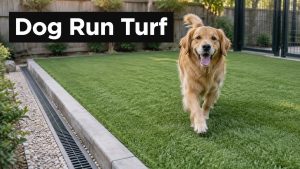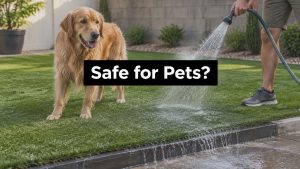

Most dog run turf advice starts with the grass. Pick a pet friendly blade, add odor control infill, rinse it now and then, and you're done. That's backwards, and it's why so many runs look fine on install day and smell, puddle, or cook paws by the first hard summer.
A dog run isn't a lawn substitute. It's a drainage and sanitation system with a turf surface on top. Urine, rinse water, storm runoff, and waste residue all have to leave the run through a defined path, every time. If that path isn't built before the turf goes down, no fiber choice or infill upgrade fixes it later. And in Austin heat, safety isn't a product claim printed on a sample card. It's a site-use rule you measure, shade, and schedule around.
Build Specs and Site Prep Before Turf
Hold every quote against checkable build values before you talk about color, pile height, or price. If an estimate for dog run turf doesn't name a finished grade, a drainage path, perimeter containment, and wash water access, you don't have a complete scope. You have a surface price with the expensive failure points left out.
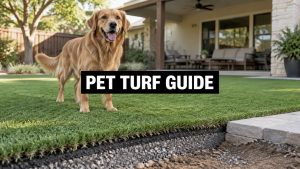
Those values aren't preferences. The Fairfax County dog park guidance summarized in the Ann Arbor legislative record identifies a 1.5% to 4.5% site slope as a workable range for well-drained dog park construction, and it specifies a curb at least 6 inches high from the interior finished grade and 8 inches wide. The same guidance notes synthetic turf can withstand heavy wear but requires subsurface drainage plus irrigation or a hose bib for washing accumulated waste.
Use that table as your filter. Ask any contractor to confirm each line in writing, or explain in writing why your site needs a different answer. A clear answer builds trust. A vague answer tells you to keep asking.
| Build element | Target value | Why it matters |
|---|---|---|
| Finished grade slope | 1.5% to 4.5% | Moves runoff off the run without washing out the base |
| Perimeter curb height | At least 6 in above interior grade | Keeps base and infill inside the run |
| Perimeter curb width | At least 8 in | Resists migration under digging and heavy use |
| Subsurface drainage | Installed before turf goes down | Removes liquid waste from below the surface |
| Wash water access | One dedicated hose bib | Lets crews flush waste to an approved outlet |
| Sub-base condition | Compacted, graded, free of low spots | Prevents trapped liquid and uneven drainage |
Read the Yard When It Is Wet
Step 1. Walk the yard after heavy rain and mark every puddle. Use survey flags, chalk, or your phone camera with a tape measure in frame for scale. Pay closest attention near gates, hose bibs, water bowls, and downspouts. Those spots collect concentrated water, foot traffic, and waste, so they show odor and softness first.
Don't trust a dry-day walk alone. Dry soil hides the low spot that holds water for hours after a storm. If you can't wait for rain, run a hose at low flow across the proposed run and watch where water slows, spreads, or reverses. You're looking for the actual flow path, not the slope you wish you had.
Step 2. Regrade to a finished slope of 1.5% to 4.5%. Set grade stakes at the corners and at the gate, run string lines, and check fall with a level or laser before any material arrives. Water should move away from the house, away from resting areas, and toward a planned outlet, not toward a fence line where it sits against posts.
Too flat and liquid lingers in the base. Too steep and rinse water sheets across the surface, carrying infill toward the low edge and exposing backing at the high edge. The workable band in the table balances those two failures. On heavy clay, I would not accept a promise that turf permeability alone solves drainage. Clay that drains poorly under grass still drains poorly under turf, only now contaminated liquid hides where you can't see it.
Build the Base as a Drain, Not a Pad
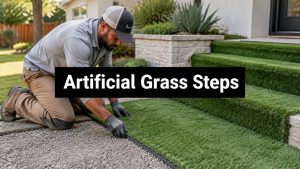
Step 3. Excavate to the drainage design depth and compact the base in thin lifts. Strip existing grass, roots, and loose topsoil first, because organic material breaks down and settles unevenly. Bring in clean, angular base material, spread it in thin layers, mist it lightly if your material spec calls for it, and compact each lift with a plate compactor before adding the next.
Skipping compaction between lifts creates a base that feels firm underfoot on day one and settles into ruts along the fence run and turning circles within months. Dog traffic isn't evenly distributed. Dogs sprint the perimeter, pivot at gates, and pace the same line. The base has to resist that concentrated wear, not just support a person standing still. If you want the layer logic in more detail, review the guide to base material for artificial turf before you approve a materials list.
Pass test: After a full flush test, there should be no standing water within an hour. If water is still sitting there, the base is not ready for turf, no matter how level it looks.
Step 4. Install drainage pipe or tile with a clear outlet to an approved discharge point. Lay the subsurface system before surfacing, slope it toward daylight or an approved drain connection, and keep the outlet accessible for inspection. Cap or screen the outlet so mulch, soil, and rodents don't block it, and mark its location on a simple site sketch you'll keep after install.
An outlet you can't find is an outlet you can't maintain. An outlet that dumps rinse water against a foundation or into a neighbor's low corner just moves the problem. Walk the full path with the installer and ask two plain questions. Where does urine and rinse water enter the system, and where does it legally leave your property?
Step 5. Lay weed barrier fabric over the sub-base. We recommend adding a weed barrier fabric between the sub-base and the turf for pet owners. It helps keep fines from the soil from working up into the drainage layer and infill, where they hold moisture and odor. Use a permeable geotextile fabric, not plastic sheeting, and overlap seams so base material doesn't migrate through gaps.
Plastic sheeting is a common cheap substitution, and it's the wrong one here. It traps the very liquid you're trying to move. If a quote lists plastic as the barrier layer for a pet run, ask for the product name and its permeability in writing before you sign.
Prove It Works Before Turf Covers It
Step 6. Set the hose connection, flood the base, and time the exit. Connect the dedicated hose bib, pour buckets of water across the high side and at the gate and bowl locations, then watch the outlet. Time how quickly flow appears and how long surface puddles take to clear. Photograph the test with the date visible, and keep those photos with your warranty paperwork.
This is the cheapest moment to find a reversed slope, a crushed pipe, or a dead flat corner. Once turf, seams, and infill cover the base, the same correction means lifting finished work. A contractor who's confident in the drainage design won't rush past this test. I would insist on seeing it, in person, before the first roll is cut.
Compare your yard against the spec table now, while changes are still drawings and stakes. Mark the slope direction, the outlet, the hose bib, and the curb line on the ground. If any one of those four can't be pointed to on your site, pause and get a written site assessment rather than a surface-only quote. That's the difference between buying dog run turf and buying a system that drains, rinses clean, and stays usable after Austin storms.
Choosing Turf Fiber and Infill for Pet Use
Infill controls most of what you'll notice day to day: odor between cleanings, how the surface holds heat, and how stable the blades stay under turning paws. Drainage controls the rest. Owners often reverse that order, spending on a premium blade while accepting whatever sand the installer had on the truck. Don't.
Start with the fiber, but keep it practical. We use heat-resistant, UV-stabilized turf, because Central Texas sun breaks down unstabilized fiber and fades color unevenly across shaded and exposed zones. The surface should also be textured and non-slip so dogs keep traction in wet weather, especially older dogs and large breeds that brake hard at the gate. Dog run turf is made from non-toxic materials, and premium turf is non-toxic, pet-safe, and soft underfoot. Ask for those properties by name in the written spec, not as verbal assurances.
Pile construction matters for cleaning more than for looks. A dense, resilient pile that stands back up lets solid waste sit on top where you can pick it up, and lets rinse water move through instead of ponding in matted thatch. A long, lush pile photographs well and traps waste. For a working run, I would trade a little show-lawn realism for a pile you can rinse clean in minutes.
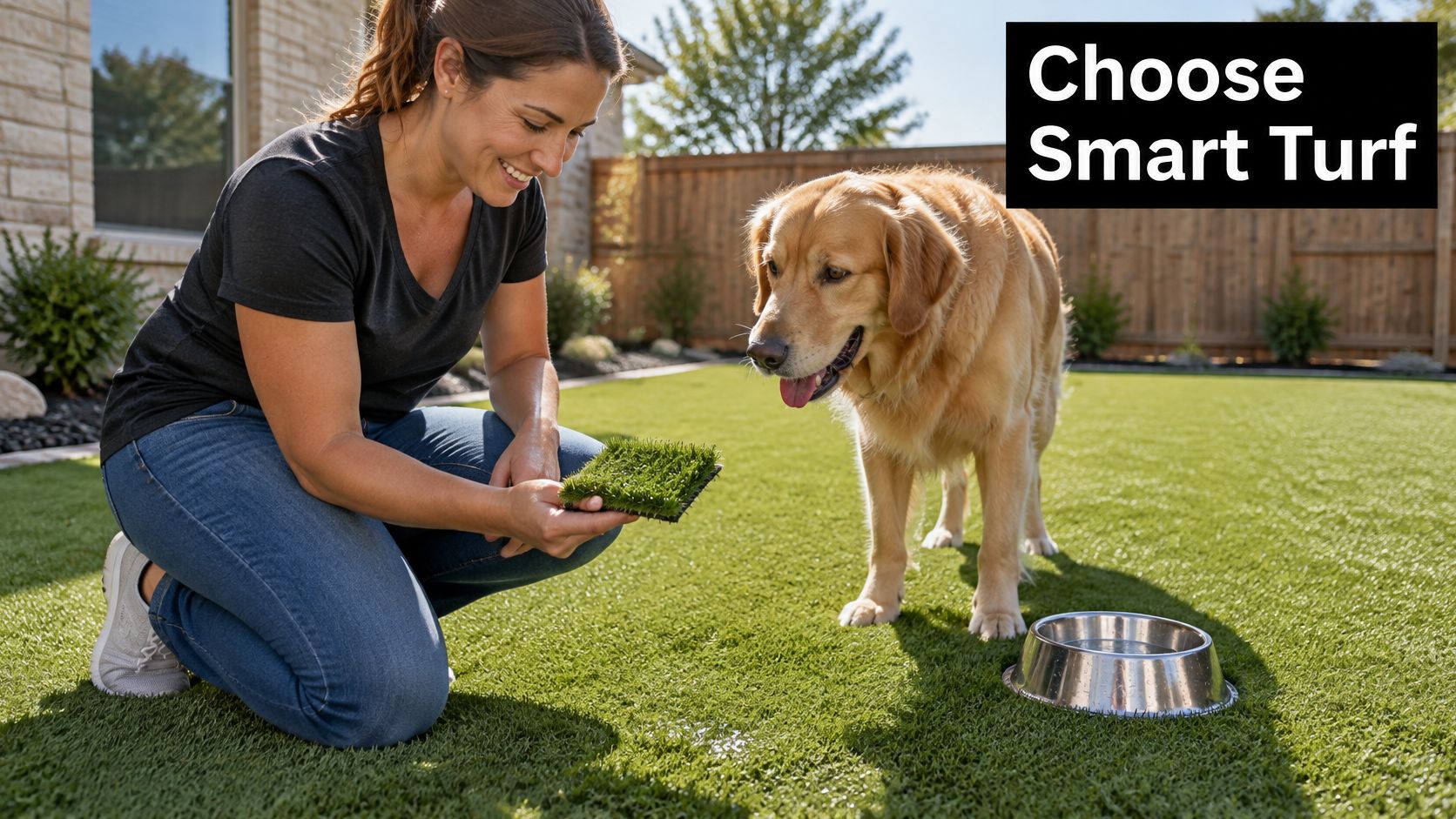
| Infill type | Odor control | Heat behavior | Best use |
|---|---|---|---|
| Silica sand | Limited on its own | Heats up in full sun | Low-traffic runs with reliable shade |
| Zeolite | Adsorbs odor compounds | Similar to sand; test on site | Multi-dog homes with frequent urination |
| Antimicrobial infill | Slows bacterial odor between cleanings | Similar to sand; test on site | High-traffic runs that need added sanitation |
| Cooling infill | Depends on cleaning routine | Still hotter than grass | Mitigation only, not permission for full summer use |
Match the infill to three facts about your household: number and size of dogs, hours of direct sun, and the cleaning routine you'll keep. One large dog using a shaded side yard in the morning is a different system from three dogs playing and urinating in full afternoon sun. The second household needs stronger odor control, a written rinse rhythm, and shade, and it shouldn't pretend cooling infill alone closes the gap.
Before you approve a product, read the comparison of artificial grass infill for pets and put three questions to any installer. Which infill is specified for my dog count and sun exposure? What exact odor claim does that infill support, and what cleaning does it assume? What maintenance interval are you putting in writing, and who supplies top-up material when high-traffic zones thin out? Specific answers signal a spec. General claims about freshness signal a sales pitch.
Edging, Gates and Wash Access Details
Runs rarely fail in the middle first. They fail at edges, seams, gates, and water points, where digging, dragging, and repeated soaking concentrate. A dog that tests the fence line will find a lifted corner faster than you'll notice it, and once a paw gets under the edge, each session makes the opening bigger.
Bury edging deep enough to resist that pull, typically 6 to 8 inches, and anchor it with fasteners rated for the turf and base you're using. Don't accept a surface-pinned edge on a run for a known digger. Where turf meets concrete, cut a tight seam and seal the joint so infill doesn't spill onto the pad, get tracked indoors, and leave the edge zone starved of the weight that holds blades upright. Walk every seam after compaction and after infill is brushed in. A seam that rocks under your heel will open under sprinting dogs.
Gates and Water Belong on the Drainage Plan
Set the gate so it swings clear of the turf surface. A gate that drags carves a shallow arc, pushes infill into a ridge, and creates a debris trap that's wet after every rinse. Add a raised threshold or a shallow drainage channel at the gate line where grade would otherwise send wash water toward the house, patio, or a low doorway. You want rinse water to leave through the planned outlet, not through the opening you walk through with groceries.
Add drainage openings in the curb where your slope and outlet location need them, and screen those openings so infill doesn't migrate out with storm flow. Place the water bowl or drinking station on a drained concrete pad outside the turf, not on the surface. A bowl that's tipped and refilled on turf soaks the same square foot several times a day, saturates infill, and creates the run's most persistent odor spot. Keep the hose bib reachable from the gate side, so rinsing doesn't require dragging a hose across planting beds or through the run itself.
Check the details before final payment:
- Edging buried and anchored: No corner lifts by hand, no exposed fastener heads catching paws.
- Seams flat and sealed: No ridge, gap, or loose lip along fence runs or at concrete transitions.
- Gate threshold draining: Wash water moves to the outlet, gate swings without dragging.
- Hose bib reachable: You can rinse the full run from the gate side without extra hose length or awkward routing.
Those four checks take ten minutes. They prevent the slow edge failures that turn a sound drainage system into a muddy, lifted perimeter by the second season.
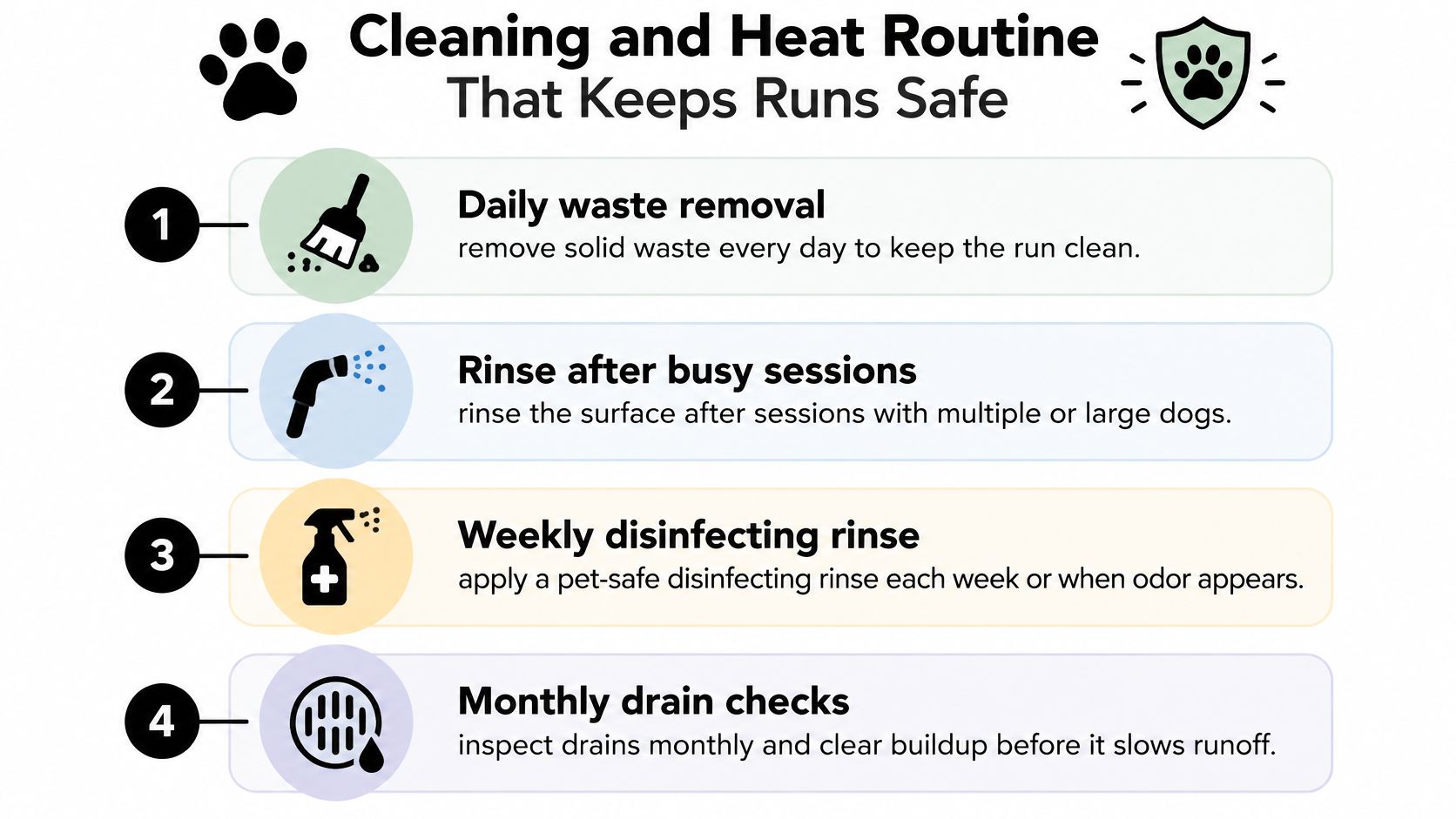
Cleaning and Heat Routine That Keeps Runs Safe
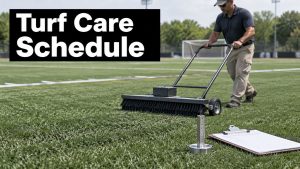
A clean run runs on a schedule, not on good intentions. Solid waste left through a hot afternoon bakes into fiber, urine left unrinsed saturates infill, and a blocked outlet converts both into a base problem. Short, frequent tasks beat occasional deep cleans.
| Task | Frequency | Trigger or threshold |
|---|---|---|
| Remove waste | Daily | Before every session |
| Rinse urine-prone zones | After each session with multiple or large dogs | Visible wetness or odor |
| Pet-safe disinfecting rinse | Weekly | Odor returns or heavy use |
| Check drain outlets | Monthly and after storms | Any standing water after rain |
| Surface heat check | Before peak-use hours on hot days | Surface reading high, or air above 25 C |
| Infill top-up and grooming | Seasonally | Flattened or compacted spots |
For homes with multiple dogs or larger breeds, we recommend a quick rinse after playtime. Routine turf cleaning includes rinsing and disinfecting the turf with pet-safe solutions and treating odors, especially in dog runs and high-traffic spots, and dog run turf is cleaned by hosing it down occasionally for lighter use. If you want the full method, follow the steps for how to clean artificial turf for dogs and adapt the frequency to your dog count, not to the calendar alone.
Treat Heat as a Measured Site Rule
Don't judge safety by air temperature or by what the turf sample promised. The National Collaborating Centre for Environmental Health artificial turf evidence summary reports artificial turf surfaces can run 9.4 to 33.7°C hotter than natural turf, and a 2025 dog-turf study it cites found artificial turf averaged 25.2°C versus 19.4°C for natural grass and advised caution when environmental temperatures exceed 25°C. That's a measurable gap on your dog's paws and belly, not a minor comfort difference.
Put an infrared thermometer or a simple surface probe on the turf in the sunniest zone before peak use. Shade entry, resting, and water-adjacent areas first, because dogs linger there. Keep drinking water nearby on its drained pad, wet the surface when conditions warrant, and shift exercise to early morning or evening when air temperature climbs past that caution point. Where layout allows, orient the longest sprint line to reduce direct afternoon exposure rather than running it through the hottest western strip.
Separate two risks that owners often merge. Paw burns happen on contact with a hot surface. Whole-body heat stress builds while a dog keeps playing close to that surface and doesn't reliably stop on its own. End sessions early when you see heavy panting that doesn't settle, lethargy, drooling, or reluctance to move. A pet friendly specification doesn't override a hot afternoon. Your heat operating plan does.
Fixing Puddles, Odors and Hot Spots
Puddles after rain are usually the first complaint, and they're diagnostic, not cosmetic. Water standing on finished dog run turf tells you the base, grade, or outlet below it isn't moving liquid at the rate the surface admits it. Start there, not with a stronger deodorizer.
| Symptom | Likely cause | Fix |
|---|---|---|
| Puddles after rain | Low spot or blocked outlet | Regrade the low spot, clear the outlet and retest |
| Lingering urine smell | Waste trapped in the base | Flush through the drainage and check the outlet |
| Odor returns within days | Saturated infill | Replace the contaminated infill layer |
| Mud on the surface | Missing weed barrier or base migration | Lift, add barrier, re-level the base |
| Surface too hot to touch | Full sun on dark turf | Add shade and water, shift sessions to cooler hours |
| Edges lifting | Edging not buried or anchored | Re-anchor the edging and reseat the seams |
| Heaving after freezing | Water trapped below the surface | Verify drainage and clear the outlet |
The pattern behind most rows is the same. Drainage problems cause most puddle and odor complaints, because trapped liquid feeds odor even after the surface looks and smells clean for a day. Check the outlet first. Clear leaves, infill, mulch, and soil, run the hose at the high side, and confirm strong flow at discharge. Then check grade with a string line across the puddle zone. Only after flow and fall are proven does it make sense to judge infill. Replacing infill over a blocked outlet buys a brief improvement and repeats the cost.
Sort fixes by time so you can plan. Clearing an outlet, flushing the system, reseating a short lifted edge, and adding temporary shade are one-day corrections for most residential runs. Replacing a saturated infill layer, lifting turf to add a missing barrier, re-leveling a settled base, or regrading a reversed section is a week or more once you include material delivery, drying time, and retesting. Anyone who quotes the second category as a quick service call should explain exactly what will be lifted, replaced, and flood-tested.
Watch freeze-thaw heaving closely, even in Central Texas cold snaps. A section that lifts after freezing and settles unevenly after thaw is reporting trapped water below the surface. That water expands, moves base fines, and opens seams a little more each cycle. Read the diagnostic guide to artificial turf drainage problems if you're deciding whether your symptom is surface-level or structural.
Stop troubleshooting and call a professional when water still pools after the outlet runs clear, when the base feels spongy or shows movement underfoot, or when odor returns within days after a full flush and disinfecting rinse.
At that point, more cleaning product isn't diligence. It's delay. A site visit with grade checks and an outlet inspection will identify whether you're facing a maintenance gap or a rebuild of the layer that should have been proven before turf covered it.
Book a Free Dog Run Turf Site Assessment
You don't need another product brochure if your yard puddles after rain, your current run stays muddy, or the surface gets too hot for afternoon play. You need someone to walk the actual site, find where water goes today, and put a buildable scope in writing. That's what our free site assessment is for, and I'll explain exactly what happens so the first call feels low-risk and information-rich.
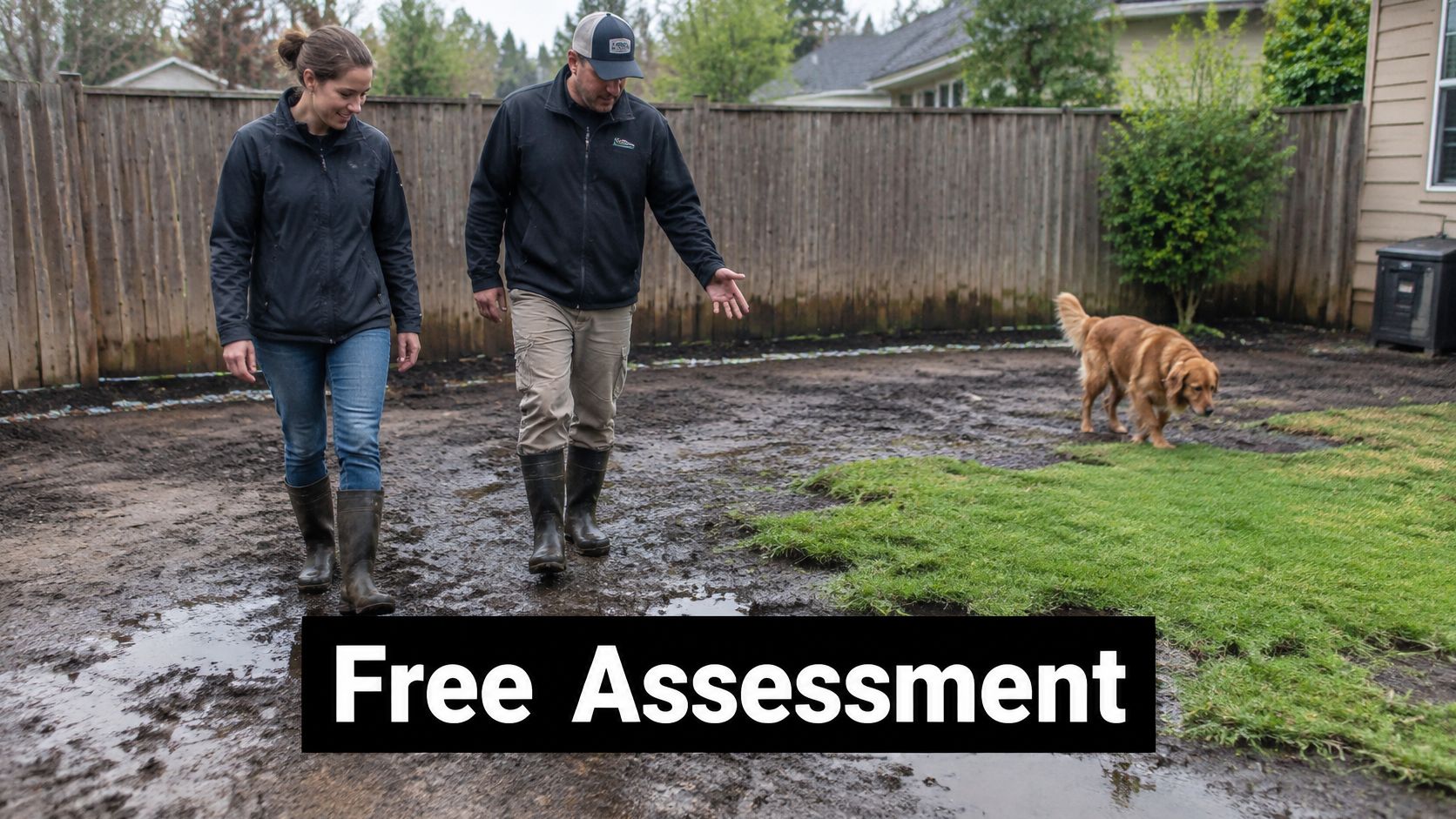
We start with a walk of your property, ideally during or shortly after a wet period, checking grade and drainage at the spots most likely to fail: low points, hose bibs, gates, downspouts, and water bowl locations. A Hyde Park couple tired of their muddy backyard after every rain had a turf dog run with proper drainage built, and that pattern is familiar across Austin. Mud after rain is rarely a grass problem alone. It's water with nowhere planned to go. Properly built dog run turf installations have superior drainage that eliminates puddles and mud, and we build turf dog runs with proper drainage and a deodorizing infill.
Next, we review turf and infill options against your dog count, breed size, digging habits, and hours of direct sun. You won't get a single lump-sum number with no reasoning. Your written scope lists material quality, turf quantity, site preparation, drainage, edging, labor complexity, and optional features such as antimicrobial or cooling infill, with each item marked included or optional. That line-by-line structure lets you compare our proposal against any other quote without guessing what was left out.
We also separate commitments that are often blurred. The turf manufacturer's warranty covers the product under its stated terms. Our workmanship commitment covers the installation we perform. We'll state plainly what an estimate doesn't cover, such as a drainage condition that needs further testing after excavation or a sun exposure pattern that needs added shade before summer use is safe. Explaining why grading, drainage tile, or added access work is recommended is part of earning your trust, not an upsell script. Modern Yard is fully insured, and you'll have the written scope, the factors that drive price, and time to compare before you decide.
Services include turf installations, putting green installations, dog run installations, drainage tile installations, and turf cleaning, so the same assessment can also flag whether a drainage correction, rather than a full run, solves your immediate problem. Call Modern Yard to schedule your free turf consultation and site visit. Bring your questions, your dog's routine, and photos of the yard after rain if you have them. We'll bring measurements, drainage checks, and a written plan you can audit line by line.
Ready to replace mud, puddles, and lingering odor with a dog run that drains, rinses clean, and stays planned for Austin heat? Modern Yard Landscapes offers a free turf consultation and site assessment that checks grade, drainage, turf, and infill for your dogs and sun exposure, then puts the full scope in writing. Visit Modern Yard Landscapes today to schedule your appointment and take the first, low-risk step toward a cleaner run.