
Most online advice about artificial grass infill for pets points to one “best” material, usually zeolite or antimicrobial sand. That advice is too simple for Austin. A shaded dog run, a sunny side yard, and a multi-dog property don't place the same demands on turf. Odor control, heat, drainage, paw comfort, and surface stability must be designed together, not selected from a single product list.
The right infill depends on how much urine reaches the area, how quickly the yard drains, how much direct sun the surface receives, and whether the turf sits over heavy Austin soil or a properly engineered aggregate base. Standard sand may provide weight, but it won't solve every pet-related problem. A professional evaluation identifies the blend and installation details that fit your property instead of forcing your yard into a generic recommendation.
| Pet turf priority | Strongest direction | Main caution |
|---|---|---|
| Heavy urine exposure | Zeolite combined with antimicrobial-coated sand | Odor control still depends on drainage |
| Blade stability and traffic | Antimicrobial-coated sand | Sand alone isn't a complete odor strategy |
| Full-sun comfort | Cooling-focused pet infill and proper drainage | Rubber can become uncomfortably hot |
| Fast liquid evacuation | Permeable backing and free-draining base | Infill can't repair poor grading |
| Multi-dog use | A heavier, scenario-specific blend | Loading must match traffic and maintenance |
The Myth of a Universal Pet Turf Infill
The most popular advice skips the most important question. It asks, “Which infill is best?” A better question is, what does this yard need the infill to do?
Austin properties can have intense sun, compacted native soil, uneven grades, and narrow drainage paths around foundations or fences. Dogs add another variable. A small dog using one corner creates a different urine load from several large dogs using a dedicated run throughout the day. A shaded yard may prioritize drying and odor management, while a full-sun yard also needs careful attention to surface heat and paw comfort.
Odor control isn't the only test
Zeolite is widely valued for absorbing odors, and antimicrobial-coated sand is useful for stability and bacterial inhibition. Neither material should be treated as a universal answer. A product that performs well in a shaded, heavily used dog area may not be the right choice for a sunny courtyard where heat is the homeowner's primary concern.
Guidance for pet turf commonly ranks zeolite, coated antimicrobial sand, and cooling infills by general performance, while warning that pure rubber can become uncomfortably hot in sunny climates. Recommended loading also varies with use, often ranging from 1.5 to 4.0 pounds per square foot, according to scenario-based pet turf infill guidance. The range matters because more material isn't automatically better. It changes the way the surface feels, drains, and supports the turf fibers.
The practical rule: Choose infill around the yard's actual failure risk. If urine lingers, solve drainage and odor. If the surface bakes in the sun, solve heat and paw comfort. If dogs sprint and turn, solve stability.
A professional installer should inspect sun exposure, grade, soil conditions, pet traffic, and the planned maintenance routine before recommending a material. That isn't overcomplication. It's how you avoid paying for a surface that looks good at installation but develops odor, compaction, or heat problems later.
Why Standard Sand Fails the Hygiene Test
Standard silica sand adds ballast, but it does not solve the hygiene demands of a dog area. Urine passes through the turf blades into the infill zone, where moisture and organic residue can remain when drainage is slow. The infill layer therefore affects cleanliness, odor, and maintenance, not just turf stability.
A 2020 peer-reviewed study on synthetic turf found that MRSA survived up to 24 hours on turf fibers and up to 96 hours inside infill material. That result makes the layer beneath the blades especially important where dogs contact the surface with paws, noses, and urine exposure. The study also reported availability ranging from about 2 hours on EPDM rubber to 27 hours on sand, while fewer than 15% of MRSA cells remained viable after 48 hours across all tested infills. The findings are summarized in the discussion of MRSA survival in synthetic turf and infill.

Sand adds weight, not urine treatment
Silica sand does not neutralize urine odor effectively. Consumer guidance in Australia advises pet owners to choose artificial grass with strong drainage and a special pet infill because standard sand does not address urine odor well. Specialty infills can absorb urine, limit ammonia release, reduce foul smells, and support cooler surface temperatures, depending on the product. See consumer information about artificial grass for pet owners.
Repeated dog traffic can also compact sand. Compaction restricts wash-through, holds moisture in the infill zone, and reduces the value of routine rinsing. The turf may remain firm underfoot while becoming harder to keep fresh.
Functional infill changes the maintenance plan
Pet-specific infills address separate problems. Zeolite targets odor absorption. Antimicrobial-coated sand supports stability while inhibiting odor-related bacterial activity. Cooling products address surface temperature. Combining functions can work better than forcing one material to handle heat, drainage, and odor across the entire yard.
An antimicrobial turf infill benchmark cited in the market claims pet urine ammonia odor reductions of up to 99% under standard laboratory tests, as described in pet-turf infill comparison guidance. Treat that figure as a product-level laboratory benchmark, not an installation guarantee. Poor grading or a restricted base can overwhelm effective infill because liquid remains trapped in the system.
For homeowners comparing materials, our guide to sand infill for artificial grass explains where sand fits and where it falls short. Ballast-only sand is not a complete hygiene strategy for a dog area. In Austin, the right blend depends on sun exposure, drainage, traffic, and odor concentration. Have a professional inspect the yard before installation.
Evaluating Premium Infill Materials for Dogs
Premium pet infills solve different problems, so the comparison should focus on the conditions they face in Austin. Zeolite is a strong odor-control tool. Antimicrobial-coated sand offers stability and bacterial inhibition. TPE and cork can contribute cushioning or a more natural material profile, but they still need to be evaluated against drainage, heat, and the specific pet-use pattern.
| Material | Odor Control | Heat Reduction | Drainage Impact | Best Use Case |
|---|---|---|---|---|
| Zeolite | Strong absorption of urine-related odor | Can support comfort when paired with a suitable system | Works well when the backing and base drain freely | Dog areas with concentrated urine exposure |
| Antimicrobial-coated sand | Strong bacterial and odor-control support | Limited by itself | Supports a stable, washable surface when properly installed | Active yards needing ballast and surface stability |
| TPE | Can provide cushioning and comfort | Often considered for comfort-focused designs | Depends heavily on product shape and system design | Play areas where softer underfoot feel matters |
| Cork | Natural-feeling cushioning and thermal comfort potential | Useful when heat and feel are priorities | Must be matched to drainage and long-term maintenance needs | Smaller pet zones with comfort-focused specifications |
Zeolite targets the odor problem
Zeolite is the material I look toward first when urine concentration is the dominant concern. It works as an odor-absorbing mineral and makes sense in a dog run, a narrow side yard, or a corner that several pets repeatedly choose. Its performance still depends on moisture movement. If the base traps liquid, adding more odor-absorbing material won't correct the underlying installation defect.
Zeolite also needs to be placed and loaded correctly. A thin decorative dusting won't perform like a properly specified pet-turf system. The right amount depends on the turf, use, drainage, and whether it forms part of a blended installation.
Coated sand keeps the surface working
Antimicrobial-coated sand is the mechanical workhorse in many pet systems. It helps anchor the turf, supports upright fibers, and contributes odor control through its antimicrobial treatment. Manufacturer-backed guidance for Envirofill and zeolite positions Envirofill's Microban treatment as capable of reducing pet urine odor by up to 99%, by inhibiting bacteria involved in converting urine into ammonia, as detailed in the Envirofill product information.
That doesn't make coated sand the only material worth considering. It makes it valuable where dogs run, pivot, dig, or repeatedly cross the same path. For more information about the role of treated products, see our guide to antimicrobial turf infill.
TPE and cork need a site-specific reason
TPE can be considered where cushioning and surface feel matter. Cork may appeal to homeowners who want a softer, more natural-feeling component. Neither should be selected because it sounds premium. The installer needs to confirm how the material behaves with urine exposure, rinsing, sun, traffic, and the rest of the turf assembly.
Pure rubber deserves particular caution in sunny Austin yards. General pet-turf guidance notes that rubber can become uncomfortably hot in direct sun. A cooling infill may help, but it can't replace shade planning, efficient drainage, and a surface-temperature evaluation during the design process.
The strongest system usually combines materials rather than asking one product to handle every requirement. Odor control, stability, drainage, and heat management should be treated as separate design targets.
The Professional Blending Strategy for Odor Control
A single infill rarely solves every pet-turf problem in an Austin yard. A layered or blended system works better because it assigns separate jobs to each material. Antimicrobial-coated sand adds weight and surface stability, while zeolite targets odor absorption near the urine path. The right mix also depends on sun exposure, drainage, traffic, and the turf system.
Use the published layer specification as a design reference, not a formula to spread blindly. It places zeolite above antimicrobial-coated sand, while another approach uses roughly 50 to 60% zeolite and 40 to 50% antimicrobial sand, according to dog-run odor-control guidance. In a shaded Austin yard, the higher end of that zeolite range can make sense where moisture lingers longer. In a full-sun yard, keep the blend balanced and prioritize drainage and surface-temperature planning, since added odor-control material cannot correct heat or trapped liquid.

Why the layers serve different jobs
The coated sand below helps anchor the turf and support blade recovery under repeated traffic. Zeolite above it places odor absorption closer to the area where urine enters the system. Keep the infill about a quarter inch below the fiber tips to protect the finished appearance and prevent loose material from sitting above the blade line, following pet turf installation guidance.
The crew must spread both materials evenly. Low spots create inconsistent footing and concentrate odor. Too much material can change the surface feel and restrict flow, while too little leaves blades unsupported and exposes the backing under traffic.
Residential yards and heavy-use runs differ
A family yard with one or two dogs may use the two-layer method, adjusted for the turf product, dog behavior, shade, and drainage. Kennels, daycare areas, and busy dog runs require a separate loading plan. Published pet-turf specifications describe broader material requirements for these settings, including heavier applications of antimicrobial-coated sand, according to pet-turf odor-control specifications.
Cleaning remains part of odor control. Remove solid waste promptly, rinse urine zones, and use products labeled safe for synthetic turf. Homeowners managing shared indoor and outdoor spaces can review these hygiene tips from WipesBlog.com for broader sanitation practices.
A professional installer should calculate the material mix, protect the fiber tips, and adjust the blend to the yard's sun and use pattern. Schedule a site evaluation before ordering infill. That inspection determines whether the proposed system will handle Austin heat, drainage demands, and daily pet traffic.
Engineering the Base for Rapid Liquid Evacuation
Poor grading can defeat any infill system. When urine reaches a saturated or compacted base, it has nowhere to travel, so odor and lingering moisture follow. The drainage plan starts below the turf, not at the surface.
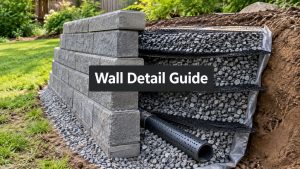
Use about 3 to 4 inches of compacted clean, angular rock, graded away from structures. Where the site requires it, add a permeable geotextile or flow-through backing to keep liquid moving through the assembly, as explained in guidance comparing zeolite and coated silica sand for pet turf.

Grade controls where the urine goes
The base must direct water away from the house, retaining walls, gates, and low areas. A surface can look level while subtle depressions hold urine beneath the turf. Proper excavation and compaction create a firm plane with enough fall to carry liquid toward an approved discharge area.
Austin's clay-heavy or compacted soil can restrict infiltration, and existing grades may send runoff toward the house. Before cutting and seaming turf, the installation plan should account for downspouts, fence lines, irrigation remnants, and limited equipment access.
Backing and base must work together
Pet turf requires a fully permeable backing system. A drainage rate of at least 30 inches per hour is commonly specified to reduce surface lingering, paired with permeable backing and a free-draining base, as described in pet-safe artificial grass drainage guidance.
That specification does not guarantee identical performance on every property. Soil, slope, aggregate condition, seam placement, and nearby drainage structures all affect evacuation. Have the contractor test the site instead of relying on the turf rating alone.
Homeowners comparing materials can review synthetic grass base material information to see why sub-base construction deserves as much attention as infill. Excavation, grading, aggregate placement, and compaction determine whether the pet surface stays dry and usable after repeated exposure. Schedule a professional site evaluation before ordering materials, so the drainage design fits Austin heat, soil, and daily pet traffic.
Matching the Right Infill to Your Specific Yard
A good infill decision starts with the pet's routine and the yard's exposure. Don't choose the same blend for every property. The Austin homeowner with a shaded multi-dog yard has a different problem from the homeowner with a small, bright urban courtyard.
The shaded multi-dog household
Several dogs using a shaded area create concentrated moisture and limited evaporation. I would prioritize a zeolite-forward blend over antimicrobial-coated sand, while still using enough coated material to support the turf fibers and handle traffic. The base should be checked carefully because shade can conceal slow drying and persistent dampness.
Maintenance should focus on prompt waste removal, routine rinsing of the primary toilet areas, and periodic inspection for compacted spots. If the dogs consistently use one corner, that area may deserve a more durable specification than the rest of the lawn.
The small yard in full sun
A compact urban yard with direct sun needs a balanced approach. Odor matters, but so do surface temperature and paw comfort. I would avoid treating pure rubber as an automatic solution because guidance warns that it can become uncomfortably hot in sunny climates. A cooling-oriented product, appropriate coated sand, good drainage, and a realistic shade plan should be evaluated together.
Use the yard's size to your advantage. A smaller area is easier to rinse and inspect, but it can also concentrate urine in a limited footprint. The infill should support wash-through instead of relying on evaporation alone.
The estate with a dedicated dog run
A large property with a defined run has clearer traffic patterns and more room for drainage planning. The run may justify a heavier blend, reinforced edges, and a base designed for repeated liquid exposure. A mixture of zeolite and antimicrobial-coated sand gives the installer separate tools for odor absorption and surface stability.
For a broader overview of turf systems designed around animals, homeowners can review pet-friendly artificial turf options. Pet owners also often improve a dedicated run with customized feeding, shade, or enrichment accessories. Resources such as Pet Magasin custom pet gear can help organize those details around the animal's routine.
A site visit is the only reliable way to distinguish these scenarios. The installer should inspect sun, grade, soil, access, dog traffic, and discharge points before finalizing the blend. Your yard's conditions should determine the infill, not a one-size-fits-all sales pitch.
Schedule Your Custom Pet Turf Consultation
A trustworthy consultation should feel like an evaluation, not a product presentation. The installer should ask where your pets relieve themselves, how many animals use the area, which parts receive full sun, and whether water currently collects near the home. Those answers determine the base, backing, turf, infill blend, edging, and maintenance plan.
Modern Yard approaches pet turf as a complete system. The company provides factors-based estimates that account for material quality, turf quantity, labor complexity, and specialized features such as antimicrobial treatments and cooling technologies. Its work includes residential and commercial turf, custom dog runs, drainage improvements, and site preparation for difficult topography.
What the installation process should include
A sound project typically moves through a clear sequence:
- Site evaluation: Review grade, soil, access, sun, existing drainage, and pet traffic.
- Base preparation: Remove unsuitable material, establish the required grade, install and compact the aggregate base, and address drainage paths.
- Turf installation: Fit, seam, secure, and edge the turf so the surface remains stable under use.
- Infill placement: Apply the selected materials at the specified loading and keep the infill below the fiber tips.
- Final walkthrough: Explain rinsing, waste removal, inspection, and the conditions covered by the warranty.
The company is fully insured and offers a total satisfaction guarantee, warranty packages, and eco-friendly landscaping practices focused on water conservation and eliminating harmful chemicals. Decades of combined experience across the greater Austin area also matter because local properties rarely share identical grading or soil conditions.

Don't let an infill recommendation stand in for an installation plan. Ask for the drainage approach, the proposed material blend, the expected maintenance routine, and the reason each component fits your yard. That transparency protects your investment and gives you a clear standard for long-term performance.
Modern Yard can evaluate your Austin property, design the drainage and base correctly, and specify an artificial grass infill blend around your pets, sun exposure, odor risk, and traffic. Visit Modern Yard Landscapes to schedule a professional site evaluation and start planning a cleaner, safer pet area built for Texas conditions.