
A lot of Austin homeowners start looking at artificial turf after they've had it with the same cycle. Brown patches in summer. Mud after rain. Weeds at the edges. Then they see two turf yards side by side in the world. One looks crisp, flat, and clean. The other already has wrinkles, dips, and puddles.
That difference usually isn't the turf itself. It's what's under it.
If you're comparing bids, this is the part that decides whether your lawn stays smooth and usable or turns into an expensive correction project. In Central Texas, the base material for artificial turf matters more than is commonly understood because Austin soil moves, swells, dries, and shifts. Add intense heat, sudden downpours, and heavy foot traffic, and a weak foundation gets exposed fast.
Your Guide to a Flawless Artificial Lawn
A good artificial lawn should feel boring in the best way. It should drain when it rains, stay level when people walk across it, and keep looking finished instead of patched together. You shouldn't have to think about the ground moving underneath it.
That outcome starts below the surface.

Most failed turf jobs follow the same pattern. The visible grass looks fine on day one, but the hidden support system is weak, rushed, or chosen with no regard for local soil. A year or two later, the surface starts telling the truth. You see low spots where water hangs around. Seams get stressed. Edges lift. The yard feels soft in some places and hard in others.
Austin is not a forgiving place for shortcuts. Expansive clay soil pushes and pulls on the surface. Heat bakes the ground dry. Storms dump water fast. A generic install spec copied from another market isn't good enough here.
What homeowners should care about first
If you want turf that lasts, focus on the part you won't see after the install:
- Stable support: The lawn has to resist shifting when the soil underneath expands and contracts.
- Fast drainage: Water needs a path through the system so you don't end up with soggy areas or runoff problems.
- Consistent surface: The finished yard should stay flat enough for furniture, pets, kids, and regular use.
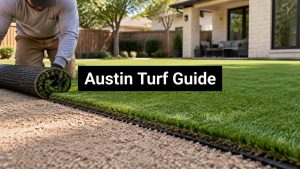
If you're early in your research, it helps to understand the full artificial turf installation process before you compare materials or bids.
A pretty turf product can't rescue a bad base. The foundation decides whether the lawn performs or disappoints.
Homeowners usually call when they want certainty. They don't want a sales pitch. They want someone to tell them what works in Austin, what fails in Austin, and why. That's the right approach, because the wrong base material for artificial turf doesn't just create cosmetic issues. It creates structural ones.
The Unseen Foundation of a Perfect Turf System
A lot of turf failures in Austin start below the grass. The surface may look clean on install day, then a summer of heat and a few hard storms expose every shortcut underneath.
The base system carries the load. It has to stay stable while Austin clay swells during wet periods, shrinks during drought, and keeps moving through long heat cycles.

Start with the subgrade
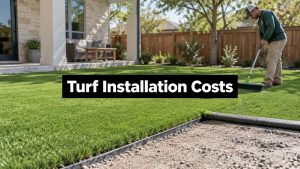
Base work starts before the first load of aggregate shows up. Strip out loose organic material, cut down to firm native soil, and shape the subgrade so water has a planned path out of the yard. If you install over soft topsoil, buried roots, or old mulch-heavy fill, the surface will settle unevenly and you will see it.
That matters even more on Austin lots. Expansive clay does not stay put. It changes volume as moisture levels swing, so the goal is not pretending the soil will stop moving. The goal is building a system that spreads loads, drains fast, and resists surface distortion.
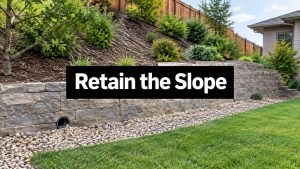
If your yard has major slope changes, runoff issues, or low areas that already collect water, this guide for yard grading projects is useful background before you approve a turf proposal.
Keep the soil and stone separate
A geotextile layer belongs between the soil and the aggregate base in many Austin installs. Skip it, and fine clay can work its way up into the stone over time.
That contamination hurts drainage and weakens the base. Once clay fills the voids in the aggregate, water moves slower, the surface stays wetter longer, and compaction consistency gets worse. That is exactly how small base problems turn into soft spots, low spots, and seam stress.
The aggregate base does the real structural work
The compacted aggregate layer is what gives the turf system shape and support. Use angular crushed stone, compact it in lifts, and build enough depth for the site conditions. Rounded rock shifts. Loose fill settles. Thin base sections telegraph every weakness in the soil below.
For residential synthetic turf, the Synthetic Turf Council installation guidelines describe a compacted base layer over the prepared sub-base, with depth based on soil conditions, drainage needs, and intended use. That is the right standard to follow in Austin. Clay-heavy yards and high-use areas need more attention to depth and compaction than generic national advice usually admits.
One blunt rule. If a bid treats excavation, compaction, and base depth like minor details, do not trust the bid.
A quick way to judge whether the install plan is serious
Ask the installer to show you these layers clearly, in writing:
| Layer | What it does |
|---|---|
| Prepared subgrade | Creates the shape, slope, and starting stability for the system |
| Geotextile separator | Reduces clay migration into the stone base |
| Compacted aggregate base | Supports foot traffic and gives water a path through the system |
| Turf and infill | Finishes the surface and helps the turf perform as intended |
If you want to see what solid prep includes before turf is installed, review this ground preparation guide for artificial turf.
Homeowners see the turf. Installers see the base. The base is what decides whether the yard still looks flat and drains cleanly after an Austin summer.
Choosing Your Aggregate Base The Austin Way
Most online advice treats base materials as if every yard sits on the same soil in the same climate. That's lazy advice. Austin has expansive clay, long heat cycles, and sudden rainfall. Those conditions punish weak compaction.
Local decision-making is important here.

The two materials homeowners hear about most
In Austin-area turf conversations, two options come up constantly: decomposed granite, usually called DG, and Class II road base. Both can show up in turf projects, but they are not equal choices for every site.
DG is familiar to a lot of homeowners because it's used in pathways and outdoor applications. It can be workable in some settings. But for artificial turf over active clay, I don't think it should be the default recommendation.
Class II road base is the stronger choice when the goal is resisting movement and keeping the finished surface consistent over time.
The compaction difference matters
For Austin's clay-loam mix, data comparing Class II road base and DG shows Class II road base reaches 95% compaction density, while decomposed granite reaches 85–90%. That gap matters because compaction density is directly tied to how well the base resists shifting on expansive clay.
This is one of the few pieces of hard, local-relevant data homeowners can effectively use. Generic guides often talk about drainage and leveling in broad terms, but they don't connect the material choice to Austin's soil behavior. They should.
If the ground below your turf wants to move, the base above it needs to resist that movement. That's why compaction isn't a technical footnote in Austin. It's the decision.
My recommendation for Austin yards
If you're installing a standard residential lawn on Austin clay, choose Class II road base unless there's a site-specific reason to do something different. That recommendation isn't based on preference or habit. It's based on the fact that stronger compaction gives you a better chance of avoiding:
- Turf shift: The surface stays where it was installed instead of creeping and loosening over time.
- Buckling and ripples: Heat and soil movement are less likely to telegraph into the finished lawn.
- Uneven wear patterns: A firmer, more consistent base supports traffic better.
A quick comparison
| Material | Best use in Austin | Main drawback |
|---|---|---|
| Class II road base | Standard turf over clay-heavy residential yards | Requires proper compaction and grading to perform well |
| Decomposed granite | Select landscape applications, not my first pick for turf over expansive clay | Lower compaction range for this soil condition |
| Washed rock | Niche drainage-focused applications, usually as part of a layered system rather than a full surface base | Doesn't provide the same finished stability on its own |
Notice what isn't in that table. There's no “one material works everywhere” answer. Austin lots vary, but if you force me to make one clear recommendation for the average local homeowner, Class II road base is the safer bet.
Why generic advice falls short
National articles usually flatten this decision into a simple menu of acceptable materials. That doesn't help you if your backyard sits on clay that swells after rain and tightens up in summer heat. A material that performs fine in another region can become a maintenance headache here.
The right base material for artificial turf in Austin should be chosen with three questions in mind:
- How much movement will the native soil create?
- How much compaction can the aggregate reliably achieve?
- Will the finished lawn stay stable through heat, rain, and regular use?
Homeowners don't need more vague options. They need a recommendation that fits the dirt under their feet. In Austin, that means taking base selection seriously before the first load of aggregate hits the driveway.
Designing for Drainage and Specific Use Cases
You see this all the time in Austin. The turf looks clean on install day, then the first hard storm sends water toward the patio, low spots stay soggy, and the edges start to betray every grading shortcut underneath. Our clay soil and heat make that worse. Clay swells when it holds water, shrinks when it dries out, and that cycle puts stress on the base long before the turf itself wears out.
That is why drainage design has to be specific to the yard, not copied from a generic national detail.
Drainage starts with grade, not the turf roll
Water needs a planned exit path. If the finished grade stalls water in the middle of the yard or pushes runoff back toward the house, the system is wrong before the turf is even stretched.
A good installation manages water in layers. The surface sheds it. The backing lets it pass through. The base moves it laterally and down to the right outlet point. On Austin lots, that outlet point matters because expansive clay does not forgive standing water under a finished lawn. If you manage larger properties and want a broader overview of runoff control principles, this drainage guide for property managers is a useful companion read.
Different uses need different base behavior
Homeowners get in trouble when they buy one turf spec and try to force it into every part of the yard. A play area, a dog run, and a putting green do not need the same foundation.
- Family lawn areas: Prioritize stable footing, even drainage, and a surface that does not feel overly hard in summer.
- Pet zones: Build for fast drainage and wash-through performance so urine does not sit in the system and create odor problems.
- Commercial and high-traffic spaces: Increase structural support near gates, walk paths, seating zones, and entries where repetitive traffic pounds the same spots every day.
Build for the way the area gets used on a normal week, not for the photo you want right after installation.
Putting greens need tighter tolerances and deeper planning
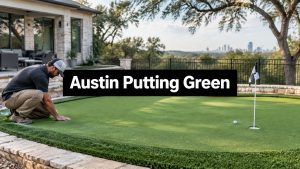
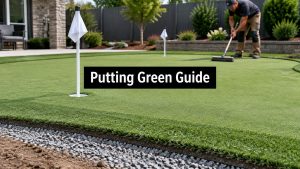
Putting greens are their own category. Short-pile turf alone does not create a true roll. The base controls speed, contour, and consistency.
Industry guidance from SYNLawn's putting green installation overview explains that putting greens often require a deeper, more carefully shaped foundation than a standard residential lawn. That lines up with what we see in the field. If the sub-base is off, the ball tells on you immediately. Small dips, soft edges, and uneven compaction that might go unnoticed on a lawn become obvious on a green.
Questions that prevent expensive mistakes
Before you approve a layout, get direct answers to these points:
- Where does the water leave the yard? “The turf drains” is not an answer.
- What is the primary use of this area? Kids, pets, parties, and golf practice change the build.
- How are the edges terminated? A bad perimeter detail lets base stone migrate and water collect.
- Does the plan account for clay movement? In Austin, that should be part of the conversation from the start.
For a closer look at grading, runoff routing, and collection details, review these artificial turf drainage system considerations.
The best turf jobs in Austin are designed around water first and appearance second. That order saves money. It also keeps the lawn flat, usable, and trouble-free through heat, storms, and the constant movement of clay soil.
Infill The Topping That Supports Your Turf
A lot of homeowners mix up the base and the infill. They aren't the same thing, and treating them as interchangeable leads to bad questions and worse decisions.
The base sits under the turf and carries the structural load. Infill goes into the turf, between the fibers, and helps the finished surface perform the way it should.
What infill actually does
Infill has several jobs at once:
- Keeps blades standing up: It supports the fibers so the turf doesn't mat down too quickly.
- Adds ballast: It helps hold the turf in place and supports a more settled finished feel.
- Provides cushioning: It changes how the surface feels underfoot.
That's why infill choice affects comfort and appearance, but it doesn't replace proper base construction. If the lawn underneath is unstable, no infill product will fix that.
Safety concerns need current information
Some older conversations about synthetic turf materials are based on outdated products or incomplete context. The more accurate position is this: infill such as sand or specialized granules is worked between the fibers to keep them upright and provide cushioning, and the New York State Department of Health fact sheet on crumb-rubber infill says multiple studies have concluded health risks from materials like crumb rubber are negligible during play. That same fact sheet also notes the industry uses a g-max guideline below 165 for the life of the field.
That doesn't mean every infill is identical or right for every project. It means homeowners should evaluate current options based on how the yard will be used, not on old rumors.
Some of the confusion in turf buying happens because people compare one product's marketing to another product's engineering. Ask what the infill is doing, not just what it's called.
Choosing infill with the yard in mind
For most residential projects, the decision comes down to practical priorities:
| Priority | Infill focus |
|---|---|
| Natural appearance | Fiber support and even distribution |
| Pet use | Cleanability and odor-management compatibility |
| Comfort underfoot | Cushioning and surface feel |
| Heat concerns | Pairing the turf system with products suited to site conditions |
If you want to see how sand-based options fit into residential turf systems, this overview of sand infill for artificial grass is a good place to start.
The main point is simple. Infill supports the turf. It does not replace the base. When homeowners understand that difference, they make much better decisions.
Invest in a Foundation That Lasts a Lifetime
Artificial turf is supposed to remove headaches, not create a new category of them. If the yard is built on the wrong foundation, the problems show up where you walk, where water sits, and where the surface starts to move. Once that happens, the fix usually means going backward, not forward.
That's why the base material for artificial turf deserves more attention than the turf color, pile height, or marketing label. Those details matter, but they sit on top of the foundational decision.
What a smart homeowner protects
A proper base protects more than the turf itself:
- Your surface quality: The lawn stays flatter, cleaner, and more usable.
- Your drainage performance: Water has a planned path instead of finding one on its own.
- Your budget: It's cheaper to build the foundation correctly than to tear out a failed install.

Austin homeowners don't need generic turf advice copied from another climate. They need a plan built for local clay, hard heat, and real drainage behavior. If you're comparing proposals right now, this is the moment to slow down and ask the right questions before the wrong base gets buried under a nice-looking surface.
The best turf jobs earn trust before the install starts. They do it by being clear about materials, honest about site conditions, and specific about how the foundation will be built.
When you're ready to stop guessing, the smartest next step is to talk with a local team that will inspect the site, explain the base recommendation in plain English, and give you a plan you can trust.
If you want a turf lawn that stays level, drains properly, and holds up in Austin conditions, talk with Modern Yard Landscapes. They'll walk your property, explain what the base needs, answer your questions directly, and help you schedule an appointment with confidence.