
You paid for a clean, low-maintenance lawn. Then the first hard Austin rain hit, and now your turf feels soft, looks patchy in spots, and holds water where it shouldn't. That situation frustrates homeowners because the problem doesn't look major at first. But once puddles, odor, or a spongy feel show up, it usually means the issue sits below the surface.
Artificial turf drainage problems rarely come from the green part you can see. They usually come from the base, the grade, the soil, or the way water was supposed to leave the area and never really could. In Austin, that matters even more because clay-heavy ground and sudden downpours expose every shortcut in an installation.
Your Perfect Lawn is a Swampy Mess Now What
A lot of homeowners call after the same moment. Rain stops, the sky clears, and the yard still has standing water. Step onto the turf and it feels squishy. Walk near a fence line or low corner and you notice a stale smell. Instead of a clean lawn, you have a wet system that isn't doing its job.
That reaction makes sense. Turf is supposed to simplify life, not create a drainage headache. When water stays on or under the surface, people start worrying about whether they bought the wrong product, whether the whole lawn has to come out, or whether the smell is going to get worse.
What your yard is telling you
When artificial turf holds water, it's giving you a signal. The signal isn't usually "bad grass." It's more often one of these:
- Water has nowhere to go: The area may be too flat, or the original installer didn't create a reliable path for runoff.
- The base is too shallow or too dense: Water gets through the turf, then stalls underneath.
- The native soil is fighting the system: Austin clay doesn't forgive weak prep work.
- Debris and organic matter are building up: The surface may look fine while drainage performance slowly drops.
Practical rule: If turf keeps puddling after rain, treat it like a drainage-system issue until proven otherwise.
The good news
A swampy synthetic lawn isn't always a total replacement job. Some failures are maintenance-related. Others need targeted repair. Some require pulling the turf back and rebuilding the hidden layers correctly.
The important thing is to stop guessing. Artificial turf drainage problems don't improve with wishful thinking, and surface-level fixes only go so far. A proper diagnosis tells you whether you're dealing with a clogged system, a grading mistake, a base problem, or a combination of all three.
Why Artificial Turf Drainage is a System Not a Product
Modern synthetic turf is built to pass water through quickly. One industry source says premium turf can drain at up to 1,200 inches per hour, and another notes that perforations are typically about 0.5 cm wide with drainage capacity around 30 inches per hour per square yard. But those same references also point out that clogged holes and poor installation can still cause pooling, which is why drainage has become more of an installation-and-maintenance issue than a turf-face issue (artificial turf and drainage overview).
That surprises people because they naturally focus on the visible surface. The underlying drainage system sits below it. Think of turf like tile on a shower floor. The tile matters, but if the slope and drain assembly underneath are wrong, water won't leave the way it's supposed to.

The layers that actually control drainage
The top surface sheds very little water on its own. The layers below do the heavy lifting.
| Layer | What it does | What goes wrong |
|---|---|---|
| Turf face | Lets water reach the backing | Debris buildup can slow entry points |
| Backing and infill | Moves water down through perforations or permeable backing | Fine material can clog pathways |
| Drainage layer | Spreads and carries water away | Missing or undersized drainage leaves water trapped |
| Sub-base | Supports the system and creates pore space for flow | Thin, dense, or poorly compacted base holds water |
| Native soil | Receives or redirects water below the system | Clay can slow percolation and create perched water |
A lot of avoidable failures start with the wrong synthetic grass base material. Homeowners don't see that layer once the project is finished, so it's easy for installers to cut corners there.
Why Austin sites fail differently
Austin yards can be deceptive. A site may look dry most of the year, then fail fast during a hard storm. Clay subgrades, uneven grading, high groundwater, missing base layers, and installations over nonporous surfaces are all known risk factors behind turf ponding. Best-practice fixes focus on regrading, installing a permeable aggregate base, and adding drainage products where runoff concentrates, according to this artificial turf drainage guide.
When a turf lawn stays wet, don't ask only whether the grass drains. Ask whether the whole assembly underneath was built to move water off the property.
That's the shift most homeowners need to make. Once you view turf as a drainage system instead of a carpet, the symptoms start making a lot more sense.
How to Diagnose Your Drainage Problem
You can learn a lot before anyone lifts a seam or pulls back the turf. The yard usually leaves clues. Look at it after rain, walk it slowly, and pay attention to how it smells and feels.

Start with what you can see
Standing water is the obvious warning sign, but it isn't the only one.
- Puddles after rain: Surface low spots often point to poor grading, base settlement, or both.
- Dark, dirty-looking zones: Water may be lingering there longer and trapping fine debris.
- Washed-out seams or edges: Flow may be concentrating in one path and eroding infill.
- Moss, weeds, or persistent organic growth: Moisture is hanging around instead of moving through and out.
If your yard has multiple low spots, the issue usually isn't a simple clog. It often means the entire area was installed without enough fall, or the base has shifted over time.
Pay attention underfoot
Walk the lawn in dry weather and again after rain. A stable turf system should feel firm and consistent. If one area feels springy, soft, or hollow, water may be sitting in or above the base.
That kind of feel matters because it often points to deeper trouble than surface puddling alone. A spongy spot can mean the sub-base is too thin, too fine, or too wet to support the surface correctly. If you're also seeing broader yard drainage issues nearby, this guide on how to fix yard drainage helps connect what happens on the turf to the larger drainage pattern around the property.
A wet smell is often as useful as a wet spot. Turf that traps moisture long enough to smell musty is telling you water isn't exiting cleanly.
Match the symptom to the likely cause
Use this quick diagnostic table as a reality check:
| Symptom | Most likely cause | What it usually means |
|---|---|---|
| Water pooling in one corner | Incorrect slope or a low area | Regrading may be needed |
| Widespread squishiness | Saturated or undersized base | Structural repair is likely |
| Odor after rain or rinsing | Trapped moisture and organic buildup | Drainage and cleaning both matter |
| Water near patios or foundations | Runoff path aimed the wrong way | System redesign may be needed |
| Slow drying in pet zones | Biological loading and clogging | Pet-specific drainage approach may be needed |
Check the neglected areas
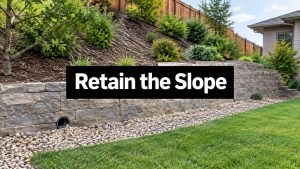
Some failures hide at the edges. Inspect around fences, against hardscape, near downspouts, and beside retaining walls. Those transitions often reveal whether runoff is entering the turf area faster than the system can move it away.
If the turf drains poorly only where pets use it most, that points in a different direction than a full-yard grading failure. The symptoms may look similar on the surface, but the fix usually isn't the same.
Immediate Actions and Maintenance You Can Try
When a turf lawn stays wet after a normal rain, start with the parts you can reach before assuming the whole install has failed. I tell homeowners this all the time in Austin. Surface buildup can slow drainage, but cleanup only helps if the system underneath still has a clear path to carry water away.
Start with the surface and the edges
A lot of short-term drainage trouble comes from blockage at the top. Leaves, mulch, dust, pet hair, and fine soil work their way into the turf and collect along the perimeter. In Austin, clay fines also wash onto the turf during hard storms and can seal off drainage openings faster than people expect.
Use a blower, a plastic rake, or hand cleanup to clear debris from low spots, fence lines, and hardscape edges. Then brush the turf across the grain with a stiff broom to loosen compacted infill and reopen the surface. A light rinse can help flush residue through, but only use enough water to test flow. If water sits there again, the issue is below the fibers, not dirt on top.
If you need a practical cleaning routine, follow this guide on how to clean artificial turf.
Treat pet areas like a separate drainage zone
Pet sections fail differently.
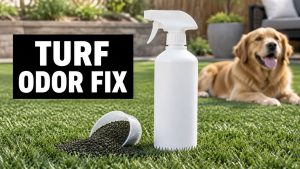
Urine, organic residue, and fine debris build up faster there, and the smell often shows up before visible standing water. Homeowners usually assume they need deodorizer or more rinsing. Sometimes they do. But if that liquid has nowhere to go, cleaning products only mask a drainage problem for a little while.
That is why dog runs and heavily used relief areas often need more than permeable turf. They may need a dedicated collection path under the surface. The same principle shows up in Voyager Plumbing sub soil drainage. Water has to be directed out of the zone, not just allowed to soak into stubborn ground.
What maintenance can actually fix
Maintenance helps when the system was built properly and has lost performance over time from neglect or buildup. It can improve:
- Surface clogging from leaves, dust, and soil
- Compacted infill in traffic lanes
- Minor slow-drain behavior in isolated spots
- Odor tied to residue sitting near the surface
Those are real fixes, but they are limited.
What it will not fix
If the base is saturated, the grade is off, or water is hitting dense Austin clay and backing up, brushing and rinsing will not solve it. The turf may look cleaner and still stay soggy because the failure is in the full drainage system, not the product on top.
Maintenance will not correct:
- A yard installed too flat to shed water
- A shallow or poorly compacted sub-base
- Water trapped over clay-heavy soil after intense rain
- Missing drains near patios, fences, or low collection points
That is the trade-off homeowners need to hear clearly. Simple maintenance is worth trying first because it is inexpensive and low risk. If the wet area keeps returning after cleanup, stop spending time on surface fixes and start looking at the structure underneath.
Professional Solutions for Permanent Drainage
When turf keeps puddling, the long-term fix usually means correcting the hidden layers. That's why the right repair is rarely a patch. It's a rebuild of the path water is supposed to take.
Regrade first, then rebuild the base
Drainage starts with geometry. Technical installer guidance commonly recommends about 1% slope away from structures on hard surfaces and at least 2% on many soil-based installations. Another guide recommends 1 to 2% slope, or about 1 to 2 inches of fall for every 8 to 10 feet, along with a 3 to 4 inch stone base. For heavy clay, one reference says a 15 cm sub-base may be needed, compared with a more typical 7 cm base that can prove inadequate in difficult conditions (artificial turf slope and base guidance).
Those numbers matter in Austin because clay-heavy sites punish shallow installations. A lawn can look finished on top and still fail because the base below doesn't have enough depth or permeability to move water.

What a permanent fix usually involves
A real drainage correction may include several steps working together:
- Lifting the turf carefully: This allows inspection of the base, seams, and wet zones rather than guessing from the surface.
- Regrading the subgrade: Low pockets get corrected so water moves in a planned direction.
- Installing permeable aggregate: The new base must hold shape and allow water to pass through, not trap it.
- Adding collection drainage where needed: Perforated pipe, collector drains, or French drains capture concentrated water.
- Reinstalling the turf over a stable system: The surface only performs when the support layers are right.
In properties with strong runoff or confined drainage exits, subsurface drainage becomes the deciding factor. If you want a plain-language explanation of how below-ground collection systems work, Voyager Plumbing sub soil drainage offers a useful overview of the principle behind moving trapped water away from problem areas.
What works and what doesn't
Surface fixes can buy time. They don't replace structural drainage.
| Approach | What it can do | Where it falls short |
|---|---|---|
| Brushing and cleanup | Helps minor clogging | Won't fix slope or base failure |
| Adding more infill | Can improve surface feel briefly | Can worsen drainage if misused |
| Spot patching one corner | Helps isolated defects | Fails if the whole field drains poorly |
| Drain tile and base correction | Solves root water movement problem | Requires excavation and planning |
The most reliable upgrade for recurring artificial turf drainage problems is often a properly designed drain tile system installation. That's especially true when runoff concentrates near foundations, fence lines, pet runs, or low-elevation corners of the yard.
Preventing Problems An Ounce of Prevention in Austin
A yard can look finished on install day and still fail the first time Austin gets one of those hard, fast rains. I see that pattern all the time. The turf gets blamed, but the failure usually starts underneath it, around it, or uphill from it.
Austin is rough on any drainage system. Expansive clay holds water, shifts with moisture swings, and exposes weak grading fast. A base that seems fine in dry weather can start acting like a bowl once the soil swells and runoff starts stacking up from patios, roofs, and neighboring elevations.
Prevention starts with the whole site, not the roll of turf. The soil, the slope, the base depth, the edging, the nearby concrete, and the discharge path all have to work together. If one part is wrong, the system is wrong.

Pet areas need a different mindset
Dog runs and general lawn areas should not be built the same way. Pet use adds constant liquid, fine debris, and more frequent wash-downs. Over time, that extra load can slow drainage and trap odor if the base and outlet path were only designed for rainfall.
That is why I treat pet zones as higher-demand parts of the yard. They often need better drainage below the surface, cleaner separation between base materials, and a setup that can be rinsed without pushing water back toward the house or fence line.
What prevention actually looks like
Good prevention means making a few correct decisions before installation starts:
- Grade the site with intent: Water needs a planned exit, especially on lots that look flat from the patio.
- Match the base to Austin soil: Clay sites usually need more excavation, better aggregate, and tighter compaction control.
- Account for incoming water: Downspouts, pool decking, sidewalks, and neighboring runoff can overload a turf area that would otherwise drain fine.
- Build by use case: Decorative turf, play space, and pet areas each put different stress on the system.
- Scope the work clearly: Clear estimating helps homeowners see what is being fixed below grade, what is staying, and where cost is tied to drainage risk. Tools like Exayard landscaping estimating software show why organized scope planning matters on projects with drainage variables.
The best prevention work is quiet. You do not notice it because the yard dries out the way it should, storms do not turn into cleanup jobs, and routine rinsing does not create new puddles.
In Austin, that level of planning is not extra. It is what keeps a turf investment from becoming a recurring drainage problem.
Dont Guess With Your Investment Get an Expert Opinion
Once you understand how these failures happen, the pattern is hard to miss. Artificial turf drainage problems are usually a sign that the water-management system under the lawn wasn't designed well enough for the site or wasn't maintained well enough to keep working.
Guessing gets expensive. Homeowners often spend time on extra rinsing, surface brushing, odor treatments, or patch repairs, only to find the same wet spots return after the next storm. That's because drainage problems don't care how good the turf looks from the street.
Why an expert opinion matters
A proper diagnosis separates cosmetic issues from structural ones. It tells you whether you're dealing with:
- Surface clogging
- Pet-area overload
- Low spots from settlement
- Insufficient sub-base
- A larger site drainage failure
That kind of clarity protects your budget. It also protects you from fixing the wrong layer first.
Transparent planning matters too. Homeowners deserve to know what work is needed, what can be saved, and what has to be rebuilt. If you're curious how contractors can make that process clearer on the front end, tools like Exayard landscaping estimating software show the value of organized estimating and scope planning for drainage and site projects.
The next smart step
If your turf feels swampy, smells off, or keeps pooling in the same spots, don't wait for the next storm to make the diagnosis for you. Get the site checked while the symptoms are visible and the root cause can still be tracked clearly.
A good drainage assessment should leave you with a direct answer, not vague reassurance. You should know what's failing, why it's failing, and what the permanent fix looks like.
If your turf in Austin isn't draining the way it should, Modern Yard Landscapes can inspect the site, identify the underlying cause, and recommend a practical fix that protects your lawn and your property. Schedule an appointment and get a clear, no-pressure expert opinion before a small drainage issue turns into a full rebuild.