
At 7 a.m. in South Austin, the sun is already burning through the last of the dew on a narrow strip of pet turf. Your dog trots out, sniffs the same corner, and gets to work. You scoop the solids, turn toward the house, then catch the smell and wince.
That moment is familiar to Central Texas dog owners. Dogs may visit the run several times a day, while cedar debris, oak pollen, sprinkler overspray, and hot afternoons add more material to the surface. A single-dog yard and a three-dog yard don't load the turf the same way. Warm conditions can concentrate bacteria and odors in the infill and backing, especially when urine isn't flushed through the system. Industry guidance on pet-turf hygiene explains why routine pickup, rinsing, and enzymatic cleaning matter.
A dog run isn't a backyard decoration. It's a working surface absorbing urine, feces, heat, and foot traffic every day. The advice our team gives on a maintenance call is straightforward: pick up promptly, rinse urine areas, deep-clean on a schedule, and stop blaming the turf when the drainage system underneath has failed.
What Daily Life With a Dog Run Really Looks Like
Central Texas weather changes the way artificial turf behaves. A cool morning can leave moisture sitting beneath blown-in debris, then a hot afternoon dries the visible blades while residue remains below. If a dog returns to the same potty patch, the infill receives another dose before the first one has fully moved through the backing and base.
The difference between households shows up quickly. One small dog using a well-drained run creates a manageable maintenance pattern. Three dogs using the same sunny strip create a concentrated sanitation problem, especially when the area also receives sprinkler overspray or stays shaded by dense vegetation.
Field rule: Low-maintenance turf still needs a maintenance routine. It eliminates mowing and fertilizing, but it doesn't eliminate waste, moisture, or odor.
What the surface is handling
Solid waste leaves organic residue even after pickup. Urine can convert to ammonia and create a persistent smell when it isn't flushed away, while stagnant moisture in poorly drained spots can support bacterial growth. Those conditions are why pet-turf maintenance guidance converges on immediate waste removal, regular rinsing, enzyme treatment, and deeper cleaning for heavily used areas.
The practical schedule starts before odor becomes obvious:
- Remove solids immediately: Don't let waste sit where paws can drag it into the infill.
- Rinse urine zones: Move liquid through the drainage path rather than leaving it on the fibers.
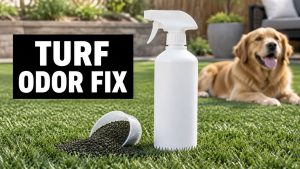
- Treat residue with enzymes: Use a product that breaks down odor-causing organic material instead of covering it with fragrance.
- Watch the system: Persistent smell, soft spots, or standing water points to more than a dirty surface.
The mistake I see most often is waiting until the whole yard smells, then applying more soap. That approach may make the first few minutes seem better, but it doesn't remove contamination trapped below the blades. In Austin, the right response is to clean the surface now and identify drainage trouble before heat turns a small issue into a recurring one.
The Immediate Cleanup Every Austin Owner Should Do
The first response should be simple and repeatable. Remove the animals from the area, pick up solid waste, rinse the urine zone, and let the turf drain before the dog returns. A practical guide to dog potty-area planning can also help reduce concentrated traffic by directing dogs toward areas designed for easier cleanup.
Follow the pickup and rinse sequence
Scoop solids promptly. The crew standard is within ten minutes of deposit whenever possible. Lift waste rather than smearing it across the blades. Early removal keeps residue from being pressed into the infill by paws.
Rinse the urine spot. Use a garden hose on low-to-medium pressure for 30 to 60 seconds per spot, directing the water toward the drainage path. This timing is specified in guidance for flushing pet urine from artificial grass. The aim isn't to flood the yard. It's to move urine through the backing and into the base before salts linger.
Use enough water to flush, not flood. A practical target is two to three gallons per pickup event, adjusted for the size of the area and the quality of drainage. The turf should become thoroughly wet without creating puddles.
Brush the blades upright. A stiff nylon or polypropylene broom helps lift matted fibers after rinsing. Brush lightly, following the turf's normal grain, so the blades dry standing rather than lying flat.
Skip soap at this stage. Fresh urine needs water movement first. Adding household soap before flushing can leave a film in the infill and make later odor diagnosis harder.
Adjust for the Austin clock
A rinse at 9 a.m. in July may dry quickly under direct sun. An evening rinse in December can remain damp overnight, particularly in shade or where sprinkler water already collects. If the area stays wet, remove puddles where possible and improve airflow or drainage rather than repeatedly adding cleaner.
For routine supplies, keep a hose with an adjustable nozzle, waste bags, a scoop, and a turf-safe enzyme product nearby. If you're comparing general cleaning products, Fillaree's heavy duty cleaner overview offers useful context on cleaner selection, but always confirm that the product is appropriate for synthetic turf and pets.
Daily rinsing handles much of the odor risk only when the backing, infill, and sub-base drain properly. When smell survives that routine, the next step isn't stronger soap. It's a structured deep clean followed by a system check.

A Practical Deep Cleaning Routine That Actually Works
A deep clean should reach the turf surface and the material beneath it. Our maintenance sequence begins with waste removal, then uses an enzymatic cleaner, controlled agitation, and a complete rinse. The order matters because spraying cleaner over leaves, hair, or feces spreads contamination instead of removing it.
Use enzymes before disinfectant
For general cleaning, mix an enzymatic turf cleaner at 2 ounces per gallon. For heavy soil or strong odor, the companion-animal protocol increases the concentration to 4 ounces per gallon, with a 3 to 5 minute dwell time before agitation and rinsing. The ProVetLogic companion-animal protocol specifies this sequence and emphasizes flushing the cleaner into the substrate.
Apply the solution evenly with a pump sprayer, concentrating on potty zones and high-traffic paths. Keep the surface wet during the dwell period. Some label guidance calls for a longer 10 to 20 minute dwell time for bio-enzymatic cleaners, so follow the product label when it differs from a general protocol. Enzymes need contact time to break down urine crystals and organic residue. A quick mist followed by an immediate rinse rarely gives them enough opportunity to work.
Brush with a soft or medium stiff-bristle tool, working against the grain to lift dirt from the blade bases. Don't use bleach or ammonia as a shortcut. These chemicals can damage turf materials, irritate paws, and complicate the odor problem rather than solving the residue inside the infill.
Add a disinfecting pass when needed
For a disinfecting workflow, remove visible debris first, apply a turf-safe disinfectant at 1:64 for routine use or 1:16 for suspected outbreaks, keep the surface wet for 5 minutes, then rinse before pets return. The Rescue turf protocol also recommends a spot test and removing trapped hair with a rake, electric turf sweeper, or shop vacuum.
A final rinse should be thorough enough that no chemical residue or standing puddles remain. Pets shouldn't return until the area has been rinsed and dried appropriately.
For additional general pet-cleaning context, Eco Clean Solutions' cleaning advice for pet owners reinforces the value of matching the treatment to the type of residue rather than using one product for every mess. You can also review this artificial turf cleaner resource before choosing a product.
This process resets surface contamination. It won't repair a saturated base, compacted infill, failed seams, or a drainage path that traps water. Those symptoms require diagnosis, not another cleaning pass.
When the Smell Will Not Go Away and Why
More soap is usually the wrong response to recurring turf odor. Soap can leave residue in the infill, hold moisture against the backing, and mask the source long enough for the smell to return. The first useful question is whether you're dealing with surface contamination or system failure.
Surface contamination usually stays localized. You may smell it around a favorite potty patch, while the rest of the yard remains neutral. A proper enzyme application, adequate dwell time, agitation, and a full flush should improve that condition because the residue remains near the fibers and upper infill.
System failure behaves differently. Urine can migrate beneath the infill into a compacted or poorly draining base. In clay-heavy Austin soil, a weak base, missing drainage path, or barrier that traps moisture can leave urine pooled below the turf, where warmth and stagnation intensify odors. Drainage guidance for dog-friendly artificial grass explains why quick drainage is central to keeping the surface dry and limiting bacterial buildup.
Diagnose the pattern, not just the smell
Use the yard's behavior as evidence:
- Localized odor: More consistent with surface residue or contamination in one heavily used area.
- Whole-yard odor: Suggests broader infill contamination, drainage trouble, or widespread moisture retention.
- Odor that fades after rain: May indicate temporary dilution at the surface, not a permanent fix.
- Odor that intensifies after rain: Points toward trapped moisture or contamination moving through the system.
- Standing water after irrigation: Indicates that water isn't leaving through the intended drainage profile.
- Spongy turf or lifting seams: Suggests movement, base instability, or moisture beneath the installation.
Diagnostic rule: If cleaning changes the smell briefly but the odor returns, stop escalating products and inspect the layers below the blades.
A professional inspection should check the infill depth and condition, seam stability, backing, slope, and drainage exit points. The important distinction is simple: enzymes address residue, while repairs address the place where water and urine are being held. Dog urine odor troubleshooting is useful background, but a persistent Austin yard problem still needs an on-site look.

Building a Cleaning Schedule That Matches Your Yard
A generic weekly schedule is easy to print and often wrong for the property. Dog count, climate, sun exposure, debris, and drainage quality determine how quickly residue accumulates and how long moisture remains in the system.
Austin's warm conditions increase the need for flushing and odor control. Maintenance guidance for heavily used or multi-dog yards recommends more frequent rinsing, while another residential protocol places professional deep sanitization at 6 to 12 month intervals. Those are reference points, not a substitute for observing the actual yard.
Assign the yard a practical tier
A single small dog using a partially shaded area with good drainage may need a light weekly rinse and a deeper enzymatic clean every six weeks. A two- or three-dog run in full sun with marginal drainage may need daily spot treatment, biweekly deep cleaning, and a quarterly infill review or refresh.
Use the following as a starting framework, then adjust after weather changes, a new pet, installation work, or a shift in potty habits.
| Yard Profile | Routine Rinse | Deep Clean | Infill Refresh |
|---|---|---|---|
| Single dog, good drainage, partial shade | Weekly, plus immediate urine rinses | Every six weeks | Inspect when odor or matting appears |
| Single dog, full sun, frequent use | Weekly, with extra attention during hot weather | Weekly or biweekly during peak heat | Review during scheduled maintenance |
| Two or three dogs, good drainage | Daily spot treatment and regular zone flushing | Biweekly in heavy-use periods | Review quarterly |
| Multiple dogs, marginal drainage or pooling | Daily spot treatment, with prompt inspection of wet areas | Frequent professional cleaning until drainage is corrected | Refresh or replace contaminated infill as diagnosed |
One guide notes that hot weather can require weekly or twice-weekly deep cleaning, along with daily spot treatment in extreme heat. Treat that as a climate adjustment rather than a universal promise. A shaded, well-drained run may need less intervention than a sunny strip beside a pool or sprinkler head.
The schedule should change when the system changes. New infill, repaired drainage, altered dog traffic, and trimmed vegetation can all affect drying and odor. Keep a simple log of cleaning dates, problem zones, and how long the improvement lasts. If the smell returns quickly despite consistent care, schedule an inspection instead of shortening the interval again.
Preventing Odor Before It Starts in Your Turf
Pet turf isn't install-and-forget. The installation choices determine how easily urine exits, while the maintenance routine determines how much residue reaches the lower layers.
Start with the infill. Zeolite-based or specialty antimicrobial infill can capture or control odor compounds more effectively than ordinary silica sand, which offers little odor control by itself. Antimicrobial turf fibers can support hygiene, but they don't replace suitable infill or good drainage. Each layer has a separate job.
Build for Central Texas drainage
Austin's clay-heavy soil makes site preparation especially important. A pet run needs a stable, properly compacted base, a drainage route that carries water away, and a finished grade that doesn't create a low pocket beside the house. Perforated drainage components, a well-prepared decomposed granite base, and a slight slope away from structures all help prevent urine and irrigation water from collecting below the turf.
The prevention plan should match the failure you're trying to avoid:
- Choose odor-controlling infill: Helps manage ammonia and residue in the infill layer.
- Use antimicrobial turf where appropriate: Adds material-level protection but can't correct standing water.
- Flush favorite potty zones quickly: Reduces the time urine remains on fibers and moves residue toward the drainage path.
- Rotate concentrated traffic: Temporary fencing can encourage dogs to use more than one spot.
- Trim dense shade vegetation: More drying airflow and sunlight can reduce persistent dampness.
- Inspect seams and edges: Early repairs can prevent water from entering unintended layers.
The biggest shortcut is relying on fragrance. It tells you the product smells strong, not that the urine has been removed. Baking soda, household soap, and vinegar may be familiar, but a turf-safe bio-enzymatic cleaner is the more direct choice for urine crystals and organic residue. Always test a product in an inconspicuous area and follow its label.
Installation principle: Infill manages odor, but drainage determines whether contamination leaves the system.
For homeowners comparing infill options, Modern Yard Landscapes' antimicrobial turf infill information explains how specialty infill fits into a pet-turf system. It should be evaluated alongside base preparation, slope, backing, and the yard's actual dog traffic.

When It Is Time to Call Modern Yard Landscapes
Some turf problems belong in a routine cleaning. Others need a site visit because the visible odor is only the symptom. A professional can test the installation layers, drainage behavior, and infill condition instead of asking you to keep buying stronger cleaners.
Call when any of these signs appear:
- Odor returns within 48 hours of a deep clean: The contamination may extend below the surface.
- Matting doesn't lift with a stiff broom: Fibers may be damaged, compacted, or carrying embedded debris.
- Bald or shiny areas appear: Infill may have washed out, or traffic may have exposed the turf backing.
- Water remains after rain: Standing water indicates a drainage or grading concern.
- Black-green growth appears along backing edges: Persistent moisture is likely present.
- The turf feels soft or spongy: The base may be unstable, saturated, or failing beneath the surface.
Each signal can point to a different remedy. A localized problem may need an enzyme flush. Washed-out material may need an infill top-off with antimicrobial ZeoFill or a similar product. Damaged backing may require repair, while a failed sub-base can make re-turfing the practical long-term option.
Modern Yard handles residential and commercial artificial turf installation, pet-friendly dog runs, drainage work, and maintenance across the greater Austin area. The team is fully insured, offers a total satisfaction guarantee, and evaluates site preparation, access, topography, materials, and drainage rather than treating every odor complaint as a cleaning-product issue.
A site visit gives you a clear answer about what the turf needs. You may only need a scheduled maintenance service, or you may need drainage correction and infill work. Either way, an on-location diagnosis is more useful than guessing from the smell alone.
Modern Yard can inspect your pet turf, identify whether you have surface contamination or a deeper drainage failure, and provide the appropriate cleaning, infill, repair, or installation service. Visit Modern Yard Landscapes to request a site visit and schedule an appointment for your Austin dog run.