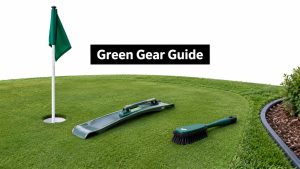

Have you chosen your backyard putting green accessories by how often they improve your practice, or by how good they look in a finished photo? In Austin, that distinction matters. A flag, cup, mirror, or ball-return system can make practice more efficient, but the hidden accessories beneath the turf decide whether the surface stays firm, drains properly, and keeps a predictable roll.
The accessory package should follow your practice goal. Speed control needs a surface with consistent infill and reliable drainage. Accuracy work benefits from alignment mirrors, putting gates, and hole reducers. Easy daily use depends on retrieval tools, durable cups, clean edging, and a maintenance routine that suits Central Texas heat.
The wider market gives homeowners plenty of choice. The global golf accessories market was estimated at $7.37 billion in 2021 and projected to reach $8.89 billion by 2025, a 4.81% compound annual growth rate, with North America accounting for 40.1% and the United States representing 76% of that regional share. The same ecosystem supports backyard products such as flags, cups, markers, alignment aids, and training tools. Market context for putting green accessories helps explain why the product range keeps expanding, but more choice makes prioritization even more important.
Why Your Backyard Putting Green Needs More Than Just Turf
A homeowner in northwest Austin once showed me a green that looked fine when it was installed. The turf was neatly trimmed, the cups were in place, and the price had seemed attractive because the contractor had kept the accessory package simple. After a heavy rain, water collected along one side and stayed there long enough to leave a soft patch. The problem wasn't the visible turf. The crew had skipped proper subsurface planning and used weak perimeter control.
That shortcut created several connected failures. Water had nowhere reliable to move, the base shifted under repeated wetting, and the turf edge began admitting soil and debris. A replacement cup or decorative flag couldn't solve any of those issues. The expensive part was opening a finished green to correct work that should have been completed before the turf was laid.
Treat the green as one connected system
A backyard green has a visible layer and a working structure beneath it. The turf, infill, base, drainage, edging, cups, and practice hardware all affect how the finished installation behaves.
- Base and drainage: These control whether rain leaves the surface quickly or creates soft spots.
- Perimeter restraint: This keeps the turf edge tight and limits soil migration into the system.
- Surface and infill: These influence fiber position, ball speed, and roll consistency.
- Training accessories: These determine whether your practice targets speed, alignment, or face control.
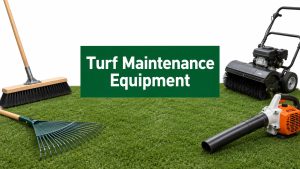
- Maintenance tools: Brushes, turf rakes, and brooms preserve the surface after installation.
Practical rule: If an accessory doesn't support drainage, durability, practice quality, or maintenance, it probably belongs at the bottom of the buying list.
Austin's heat adds another layer of stress. Direct sun, irrigation, sudden rain, and soil movement expose weak materials quickly. Plastic can become brittle, loose edging can lift, and poorly filled turf can flatten where people walk or repeatedly retrieve balls. A professional installation starts by understanding the site rather than treating accessories as a final shopping trip.
That systems approach protects your investment. It also gives you a useful way to evaluate an installer: ask what sits below the turf, how water will leave the green, how the perimeter will be secured, and which accessories match the way your household will practice.
Accessories That Transform Practice Quality
The most useful backyard putting green accessories remove friction from practice or give you clearer feedback. Decorative flags may finish the look, but a ball-return setup can keep a solo session moving, while a putting gate can show whether your start line is consistently consistent.
The broader putting-green market was valued at $1.2 billion in 2024 and is projected to reach $2.5 billion by 2033, with an expected 8.9% CAGR from 2026 to 2033. That market includes products such as flags and mats, and one cited industry source identifies more than 24 million golfers in the United States. Putting alignment market context also points to the importance of portable, versatile products, with a portable putting mat listed as the best-selling item among sampled listings. Growing choice doesn't mean every product deserves space on your green.
Choose tools by practice goal
For speed control, prioritize a surface that rolls consistently, then add targets that force you to vary pace. Different cup positions and hole reducers can make you finish putts to distinct landing areas. A mirror may help face alignment, but it won't compensate for a surface that drains poorly or has uneven infill.
For accuracy, alignment mirrors and putting gates offer more useful feedback than an elaborate flag design. A mirror can reveal eye and face position, while gates create a narrow start-line test. These tools don't correct your stroke automatically. They make an error visible early enough for you to adjust it.
For convenience, use a ball-return system, retriever, or collection setup. Solo practice often loses momentum when every missed putt requires a walk around the green. Retrieval equipment may not improve mechanics directly, but it increases the number of focused repetitions you can complete in the same session.
For presentation, choose a flag and cup combination that fits the scale of the green and withstands exposure. A custom flag can add personality, and homeowners comparing designs can see what's in the archive for ideas without confusing visual appeal with training value. For a purpose-built flag, review custom putting green flag options alongside the mounting hardware and expected weather exposure.
The best accessory depends on the task. Repeated putting favors retrieval. Start-line training favors gates and mirrors. Speed practice favors reliable roll and varied targets. Spending more on a decorative add-on won't make a stroke more informative if the accessory doesn't serve the goal.
Drainage Systems and Perimeter Controls
Could a green with perfect turf still fail after one Central Texas storm? Yes. In Austin, drainage is the hidden requirement behind a playable backyard green. Intense rain quickly exposes weak grading, shallow base work, and missing outlets. Set contours that shed water in more than one direction, then give runoff a defined route through the base and away from buildings.
Build from the ground up
- Shape the site. Establish slopes that direct surface water away from structures and eliminate enclosed depressions where water can collect.
- Plan subsurface collection. On native-soil builds, place subsurface drains closer than 10 feet apart. The backyard drainage guidance describes closer spacing as a way to reduce standing water and persistently soft areas.
- Use a permeable base. Select aggregate that lets water move through the system instead of trapping it beneath the turf.
- Consider a drainage grid. AirDrain is described as a 1-inch drainage grid installed below artificial turf to support water movement and help keep the surface cooler. Turf drainage and accessory guidance explains how a rigid layer can support both drainage and airflow.
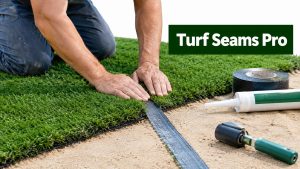
- Secure the perimeter. A Benda Board frames the turf and helps keep soil and debris away from the edge. Install the border before the finished surface hides the connection.
USGA guidance for closely mown turf recommends drainpipes on 10- to 15-foot centers and at 2-4 feet deep to help the upper rootzone dry faster after rainfall. USGA drainage guidance offers useful design context, while a residential synthetic green still needs site-specific decisions about grading, base depth, and the outlet.
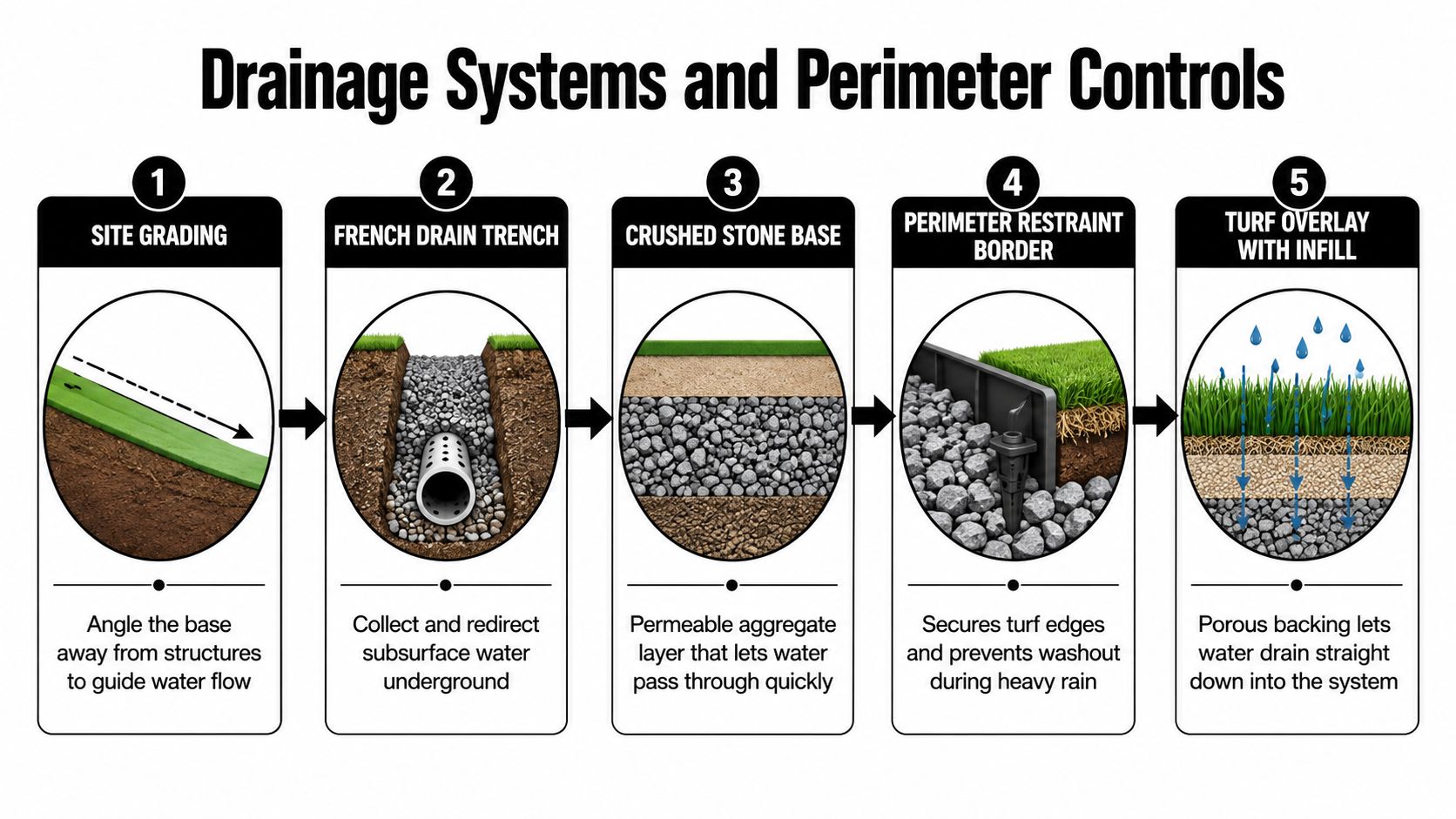
Protect the work before the turf arrives
A secure perimeter does far more than frame the turf. Heavy rain can wash soil toward the green, and foot traffic can lift or loosen an exposed edge. Separate the putting surface from planting beds, hardscape, and lawn so each area keeps its own structure.
Review artificial turf drainage systems to see the subsurface options an installer may recommend. Ask for the outlet location, drain spacing, base depth, and edge-restraint method. A proposal that discusses only the turf roll has skipped the work most likely to determine long-term playability.
Cups, Flags, and Edge Treatments That Last
Visible hardware gets handled, struck, moved, and exposed to the weather. In Central Texas, the cheapest option often costs more in attention than it saves at purchase. The right comparison isn't just plastic versus metal. It's how each choice behaves under ultraviolet exposure, heat, wind, mowing or trimming around the edge, and repeated ball retrieval.
Compare the parts that take the abuse
Aluminum cups generally hold their shape better outdoors and resist the brittleness associated with low-grade plastic. Plastic cups can work for a temporary or lightly used green, but they may become less forgiving after prolonged sun exposure. A cup that deforms changes the target and can make replacement awkward if the surrounding turf has settled.
Flagsticks should be rigid enough to remain visibly upright and compatible with the cup. Flags need secure attachment points and fabric that won't quickly fray in wind. A highly visible flag helps with aiming, but it should also be scaled to the green rather than oversized for appearance alone.
Hole reducers add training variety. Smaller targets demand more precise speed and start-line control, while standard cups provide a familiar finishing target. Use reducers as a practice tool, not as a substitute for a well-installed cup opening.
| Component | Material Option | Durability Rating | Maintenance Need |
|---|---|---|---|
| Cup | Aluminum | High for outdoor exposure | Check seating and clear debris |
| Cup | Plastic | Moderate for light use | Inspect for brittleness and distortion |
| Flagstick | Rigid metal or reinforced composite | High when properly supported | Check vertical alignment and attachment |
| Flag | Outdoor-grade fabric | Moderate to high, depending on exposure | Rinse and inspect seams |
| Edge restraint | Commercial-grade metal or rigid board | High when installed correctly | Keep soil and debris away from the edge |
| Edge restraint | Lightweight plastic edging | Low to moderate under heat and movement | Re-seat or replace if it lifts |
Think beyond the first purchase
Total cost of ownership includes replacement work, not just the original receipt. A low-cost cup that needs frequent attention can become a nuisance, while a stronger edge treatment can prevent soil intrusion and protect the turf line. Review artificial grass border options with the surrounding area in mind, because the best border is the one that locks the edge without creating a trip point.
Don't let a flag become the most expensive part of the package just because it photographs well. Spend first on the cup, edge restraint, and installation details that receive constant outdoor stress. Add personalization after the functional hardware is settled.
Infill, Brushing, and Maintenance Routines
Could the right infill and brushing routine determine whether your Austin putting green still rolls well after a hot summer? Infill affects synthetic turf behavior by supporting upright fibers, adding ballast, influencing speed, and shaping the surface feel under regular traffic. Silica sand or specialty products have different performance characteristics. Turf infill guidance explains how material selection can support resilience, drainage, and durability.
Apply enough, then distribute it properly
Follow the turf manufacturer's recommendation for the application rate and replenishment schedule. Spread infill evenly, work it into the pile with a power broom, then maintain the surface through routine brushing and debris removal. A practical guide to artificial grass infill can help compare product types and clarify why an installer may specify one material for a particular turf system.
Over-filling can bury fibers, alter the intended pace, and restrict drainage after compaction. Under-filling leaves fibers unsupported, encourages matting, and produces inconsistent ball roll in heavily used areas. In Central Texas, keeping the drainage paths open matters as much as preserving surface speed. A green that holds water will develop maintenance problems regardless of how carefully it is brushed.
Use a repeatable routine:
- Clear debris first: Remove leaves, sticks, and loose material before brushing.
- Brush with the pile: Work methodically so fibers stand consistently instead of developing random grain.
- Watch high-use lanes: Ball-return paths, entrances, and favorite cup locations usually need extra attention.
- Top up selectively: Match additions to visible wear and the installer's surface recommendation.
- Keep the surrounding edge clean: Soil and mulch should stay out of the turf system, especially before heavy rain.
Short, regular maintenance prevents a recovery project later. Inspect after storms, check areas where water or foot traffic collects, and address compacted infill before the affected section changes speed.
Maintenance also controls usability
A low-glare fixture can make evening practice practical, but lighting cannot correct compacted infill or standing water. Keep lighting supports outside the putting line, and protect wiring from the same drainage paths that carry runoff. Usability depends on the surface remaining clean, level, and predictable through the seasons.
Scheduling Your Custom Green Consultation
A useful accessory list starts with a site assessment. The same cup, drainage grid, or edging product won't perform identically on every Austin property because soil, slope, access, irrigation, shade, and surrounding hardscape change the installation demands.
A consultation should address the whole build before anyone recommends decorative hardware. That means reviewing the intended practice goals, mapping water movement, planning the base and perimeter, selecting turf and infill, and deciding where cups, flagsticks, gates, and retrieval equipment will sit.
Ask for decisions you can verify
A credible proposal should make its assumptions visible. Look for:
- Site preparation: How will excavation, grading, and base construction address the existing soil?
- Drainage design: Where will water go, and what prevents low pockets?
- Edge protection: Which restraint will secure the perimeter against soil and weather?
- Practice layout: Will the contours and cup locations support speed and accuracy work?
- Material selection: Why does the proposed turf and infill fit the intended use?
- Maintenance support: Who will handle brushing, cleaning, infill care, or repairs?
- Cost clarity: Does the estimate separate material quality, turf quantity, labor complexity, and specialized features?
Modern Yard Landscapes is one Austin-area option that provides custom putting green design and installation, including excavation, grading, base construction, drainage planning, contouring, turf installation, and maintenance support. The company also offers transparent, factors-based estimates that can account for features such as antimicrobial treatments and cooling technologies. Its broader services include artificial turf installation, drainage tile, retaining walls, and seasonal lighting.
A fully insured installer with a satisfaction guarantee gives you a clearer path if the finished work doesn't meet the agreed expectations. Decades of combined experience can also matter when crews encounter restricted access, difficult topography, or soil that behaves differently from the initial assumption. Those details rarely appear in a product listing, but they determine whether the accessories function as part of a stable green.
Don't schedule a consultation merely to choose a flag color. Schedule it to confirm that drainage, edging, infill, training tools, and maintenance have been designed as one system. That conversation can prevent the most expensive Austin shortcut, installing attractive turf over a base that can't handle the weather.
Modern Yard Landscapes designs and installs Austin-area custom putting greens with site preparation, drainage planning, durable edging, turf, infill, and maintenance support. Visit Modern Yard Landscapes to discuss your practice goals and schedule a consultation built around a green that holds up in Central Texas weather.