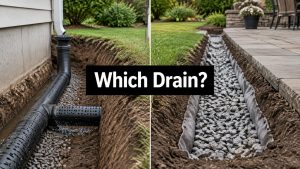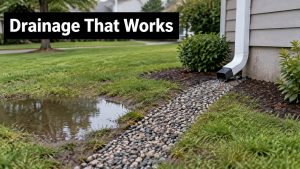

Rain hits your Austin yard, the grass turns to mud, and by dinnertime your dog has tracked it across the kitchen floor. Outside, the same worn patch keeps getting worse: yellow grass, concentrated odor, and loose soil that's becoming a favorite digging spot.
A clean yard starts with the right potty zone, but choosing the surface is only part of the job. Repeated use concentrates wear and waste in a small area. In Central Texas clay-heavy soil, gravel, turf, and pavers all need a properly prepared base and somewhere appropriate for water to go.
These backyard dog potty area ideas follow drainage logic rather than appearance alone, starting with straightforward contained surfaces and moving into integrated runs and solutions for sloped yards. The right choice depends on your dog's paws, your cleanup routine, and your property's drainage. A pretty patch that holds urine underneath won't stay pleasant for long.
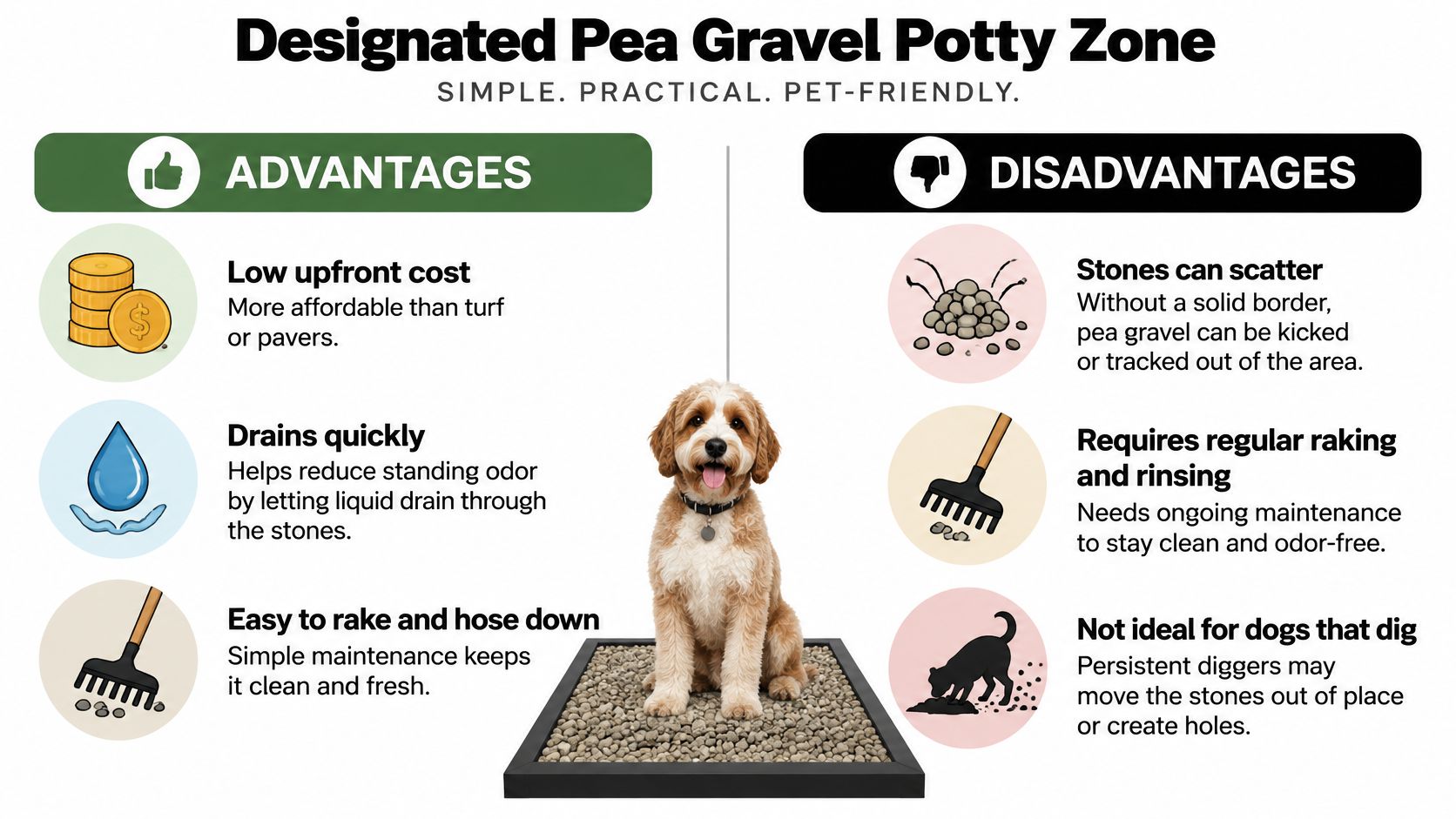
1. Designated Pea Gravel Potty Zone
Rounded pea gravel works well for a contained, easy-to-inspect potty corner. Choose smooth, washed stones rather than sharp crushed rock at the walking surface, and let your dog try a sample before committing. Some dogs accept loose gravel readily; others dislike its movement underfoot.
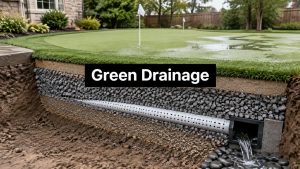
A practical layout is a corner enclosed with steel edging, connected to the back gate by a stable path. Beneath the gravel, a permeable aggregate base needs a deliberate drainage route. Dumping stone directly onto compacted clay can leave you with a gravel-lined puddle rather than a functioning potty area.
Give the Water Somewhere Responsible to Go
A fence-line French drain is an option only when its outlet is suitable. It shouldn't send contaminated water into a neighbor's yard, a play area, or a storm drain. The EPA's pet-care fact sheet explains that rainfall can carry pet waste into storm drains and waterways, transporting pathogens and nutrients.
- Contain the edges: Steel edging helps keep stones out of adjoining grass and mower paths.
- Keep waste visible: Remove solids promptly, including contaminated stones when necessary.
- Maintain the surface: Rake displaced gravel back into place and rinse urine-prone spots without flooding the surrounding yard.
Pea gravel is a sensible budget-first option, but it isn't ideal for a dog that eats stones or digs enthusiastically. During a site assessment, we check the soil, access, and drainage path before recommending the base preparation.
2. Pet-Specific Artificial Turf Potty Patch
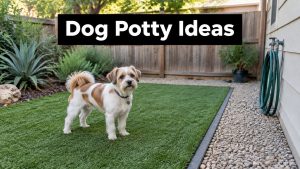
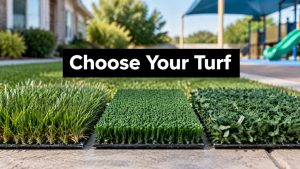
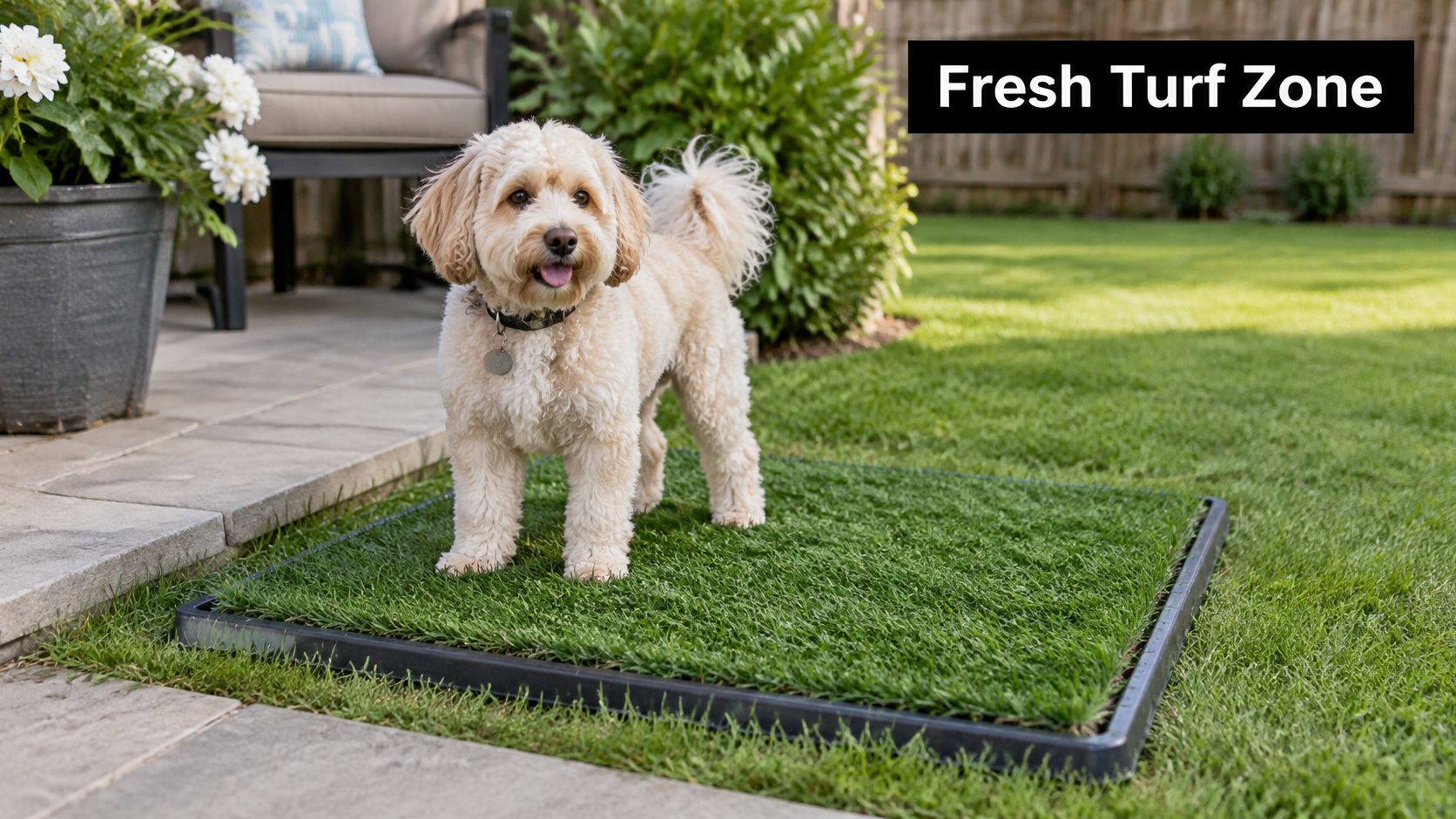
A pet-turf patch beside the patio gives a grass-loving dog a familiar-feeling surface without waiting for damaged lawn to recover. Choose pet-specific turf with a freely draining backing, not decorative carpet placed over dirt. The backing, aggregate base, and drainage outlet must function together.
Fairfax County's dog-park design guidance identifies synthetic turf as suitable for smaller parks and runs when paired with subsurface drainage and a hose connection or irrigation supply for washing away accumulated urine and waste. It also cautions that turf needs frequent cleaning and can be costly to replace.
Buy Drainage Before Cosmetic Upgrades
For a patio-side patch, keep the finished surface below door thresholds and direct drainage away from the foundation. Provide hose access that doesn't require dragging equipment through the house.
Antimicrobial or deodorizing infill can support odor management, but neither replaces pickup and rinsing. Likewise, cooling technology doesn't mean a sunny surface will always be comfortable. Check the turf with your bare hand before allowing use, and provide shade or another route if it feels hot.
Installation priority: A premium turf face can't compensate for urine trapped in a poorly prepared base.
Rinse after heavy use and establish a pet-safe enzymatic cleaning routine suited to traffic. Our estimating process separates material quality, labor complexity, access constraints, and optional features so you can understand what affects the investment.
3. Permeable Pavers with Drainage Joints
Permeable pavers suit homeowners who want a firm surface near the back door. Unlike loose stone, they won't scatter each time a dog turns sharply. They also create a clean transition between a patio, a dog run, and the rest of the yard.
Consider a rectangular pad beside the back steps, with open joints filled with the aggregate specified for that paver system. Liquid moves through the joints into an open-graded base. On clay-heavy ground, that base may also need an underdrain rather than relying entirely on infiltration.
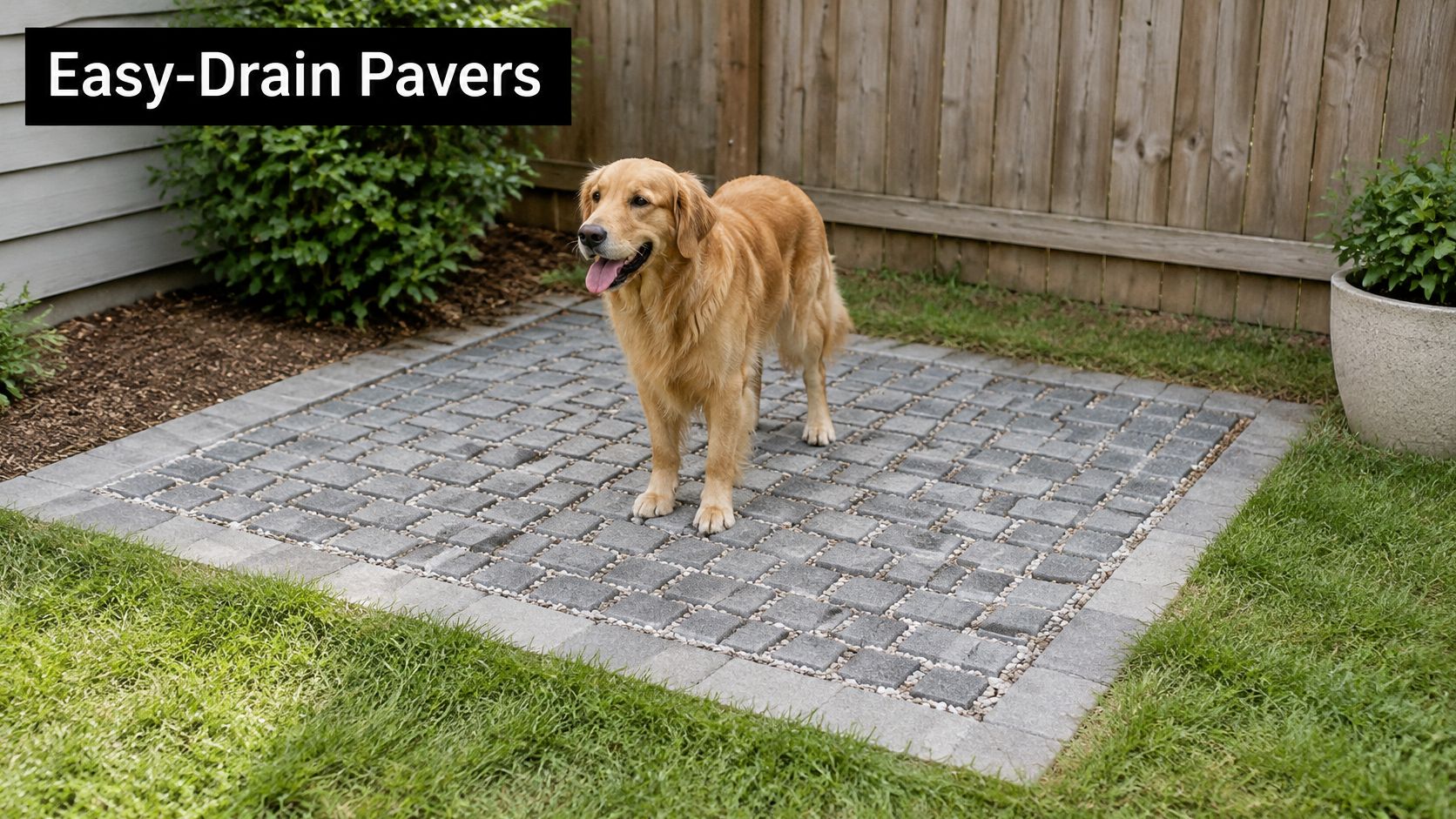
Keep the Joints Functional
Choose a textured finish that provides traction without being abrasive. Light-colored pavers are worth considering for exposed locations, but shade and a hands-on temperature check still matter.
- Grade the assembly: Set the surface and base to move water away from structures, without creating a trip at the adjoining patio.
- Protect permeability: Sweep out debris and replenish joint aggregate when it's displaced. Don't substitute ordinary soil or incompatible joint filler.
- Plan cleanup access: Position a hose and waste container where you can reach them without crossing children's play spaces.
The CDC's healthy-pets guidance recommends picking up dog feces even in your own yard, particularly where children may play. A durable paver surface makes waste easier to see, but doesn't make it safe to leave behind.
The trade-off is upfront construction effort. Pavers need stable edge restraints and careful base preparation, and some dogs prefer a softer potty surface. Test that preference before building an entire pad.
4. Dog Run with Turf and Integrated Drainage
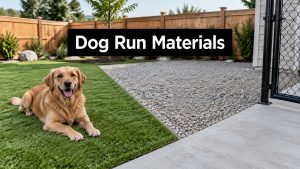
For a household with active dogs, a dedicated run can organize both exercise and potty use without sacrificing the entire backyard. A useful layout connects the patio or garage route to a rear gate, with the relief area positioned away from seating and children's play.
Start with the outlet location, then work backward to the run's shape. A narrow side yard isn't automatically suitable just because it's unused. Roof downspouts, air-conditioning access, gate clearances, and neighboring grades can all complicate construction.
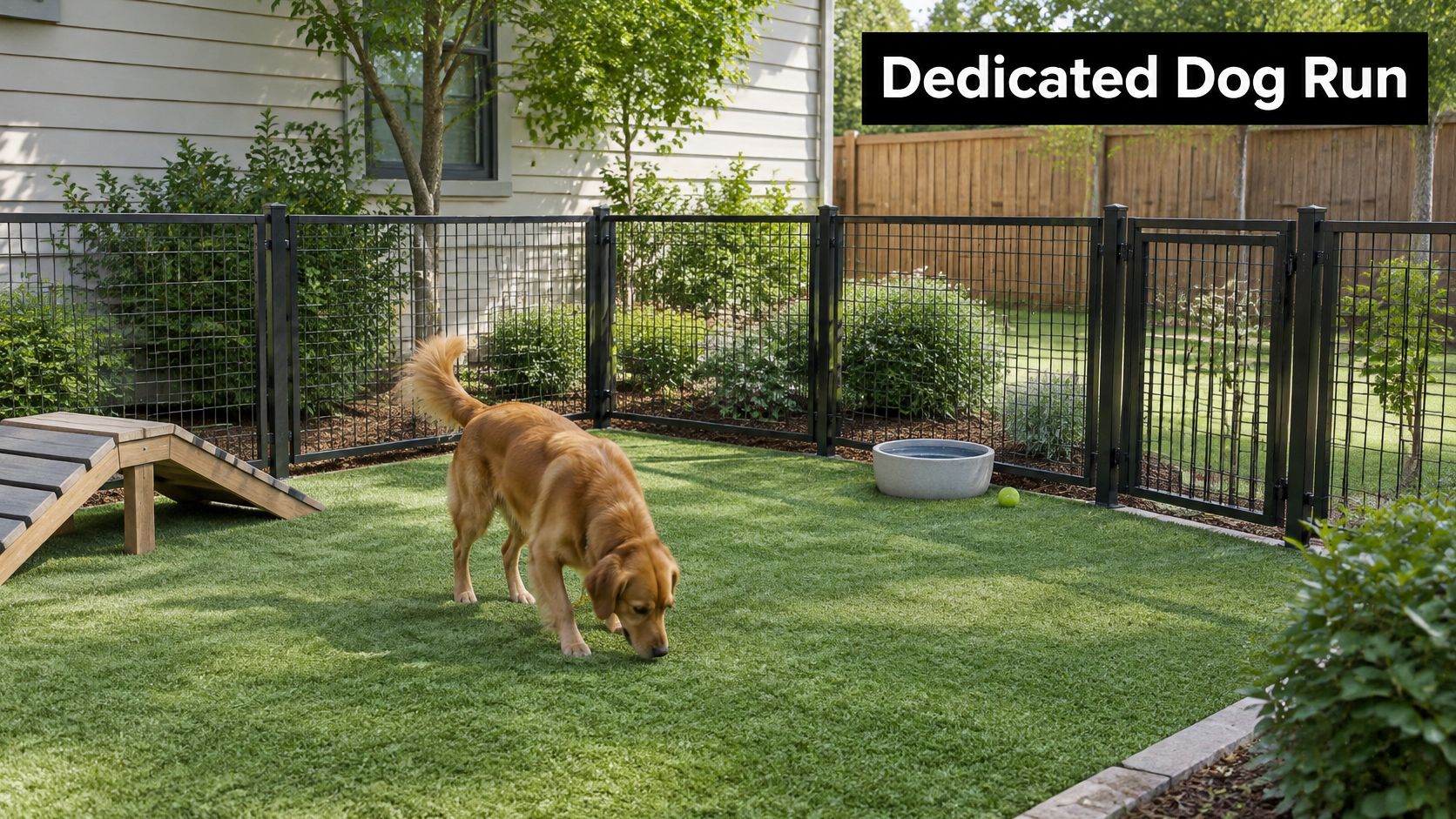
Separate the Busy Entrance from the Relief Area
Use durable edging and a stable entrance transition so paws don't repeatedly disturb the turf edge. Place the gate where you can enter with cleanup tools, and provide enough space for the dog to turn comfortably.
The Florida water-management pet-waste review discusses the connection between cleanup behavior and waste accumulation, including lower fecal counts where more pickup reminders were present. At home, the practical lesson is simple: put bags and a secure, lidded bin beside the run rather than across the yard.
Make the clean routine the convenient routine. A hose, waste bags, and a clear inspection path belong in the layout.
For an exposed run, plan afternoon shade before depending on infill to manage comfort. Our dog-run turf planning guidance is a useful starting point for considering the surface alongside drainage and access. During assessment, we also review installation constraints and explain the applicable warranty coverage.
5. Decomposed Granite Potty Area
Decomposed granite blends naturally into a xeriscaped Austin yard. It's a good candidate for a lightly used side-yard strip or a contained relief area beside native planting, especially when you don't want a bright green patch.
Unlike rounded pea gravel, decomposed granite contains angular particles and fines that compact into a firmer surface. That can make walking easier, but it also means drainage depends on the material blend, compaction, and underlying soil. Don't assume every product sold as decomposed granite performs alike.
Choose Firmness Without Sealing the Surface
For a dog that dislikes shifting gravel, test a compacted sample. Avoid sharp exposed aggregate, and keep the surface below adjacent paving so loose material doesn't continually spread onto the walkway.
A stabilizer may help control displacement in a busy area, but confirm that it's suitable for pet contact and the intended drainage design. A harder surface isn't automatically a more permeable one.
- Use positive containment: Steel edging keeps the granite separate from planting soil and mulch.
- Watch the low spots: Regrade depressions rather than repeatedly covering them with fresh material.
- Clean gently: Pick up solids promptly, rake disturbed areas, and rinse without washing fines into drains.
A strip beside a swale needs particular care. The pet-waste and water-quality brochure explains how runoff can carry waste pollutants into waterways. Keep the potty surface out of the drainage channel itself.
Compare firmness, tracking, and upkeep through our durable ground-cover guide. Decomposed granite is practical where grading already works, but it's less forgiving where water collects or dogs dig persistently.
6. Sloped Potty Corner with Retaining Wall Drainage
An awkward slope can become a useful potty terrace, but the retaining wall and drainage must be designed together. The surface should feel level underfoot while retaining enough fall to avoid ponding. Water behind the wall needs its own managed route.
For example, a small terrace can hold a contained gravel relief area below the main lawn, connected by a stable walking path. On a steeper site, stepped terraces may fit better than forcing a broad platform into the hillside.
Don't Treat the Wall as a Drain
A sound assembly coordinates wall support, drainage aggregate, suitable separation fabric, and an outlet appropriate to the property. Sending every downspout and washdown toward the back of a retaining wall is not a drainage plan.
A dry-looking surface doesn't prove the wall is draining correctly. Check where the water actually exits.
Keep the potty area away from the principal stormwater flow path, and provide safe access for both the dog and whoever cleans it. A secluded terrace becomes inconvenient quickly if reaching it means navigating slippery steps with a hose.
- Check requirements early: Confirm local permitting and engineering requirements before choosing wall dimensions.
- Coordinate the estimate: Review excavation, wall construction, drainage, access, and finish surfacing as one scope.
- Preserve inspection access: Keep outlets visible and reachable rather than burying them behind planting.
Our retaining-wall drainage guidance explains why the drainage belongs in the initial design. We assess topography and access before setting the construction approach, rather than treating them as surprises after excavation starts.
7. Turf Potty Zone with Enzymatic Maintenance Plan
The most useful upgrade for an existing turf potty area may be a better cleaning routine rather than a different surface. Pickup, urine rinsing, odor treatment, and drainage inspection are separate jobs. An enzymatic cleaner can help with organic residue, but it can't repair trapped water beneath the turf.
For a busy household, place supplies near the back door and create recurring reminders for cleaning. For a shared commercial pet area, assign responsibility for inspections instead of assuming someone will notice a problem.
Match Cleaning to Use
The Lehi public-health pet-waste guidance recommends prompt pickup before rain and more frequent cleanup where children play. A concentrated potty patch deserves inspection after use, not the same attention as an occasionally visited lawn corner.
- Remove solids first: Don't hose feces into the backing or drainage joints.
- Rinse concentrated spots: Use controlled water flow after heavy use, especially with multiple dogs.
- Treat odor deliberately: Select a pet-safe enzymatic cleaner compatible with the turf, follow its dilution and contact-time directions, and observe pet re-entry instructions.
- Investigate persistent smells: Check blocked drainage, trapped debris, seams, and the underlying base before adding more fragrance.
Austin's Scoop the Poop guidance distinguishes the city's prompt-removal requirement from the exception for an owner's own property. That legal exception isn't a reason to leave waste in the backyard.
Our guidance on urine patches on lawns helps frame when a dedicated relief zone makes sense. For the grass outside that zone, these lawn health tips for Texas homeowners offer complementary reading.
Backyard Dog Potty Area Options at a Glance
| Potty Area Option | Surface Type | Drainage Performance | Maintenance Level | Best For |
|---|---|---|---|---|
| Designated Pea Gravel Potty Zone | Rounded pea gravel | Fast drainage over a permeable base | Moderate; rake regularly and rinse periodically | Affordable, compact potty areas |
| Pet-Specific Artificial Turf Potty Patch | Pet turf with perforated backing and optional antimicrobial infill | Fast when installed over a properly prepared drainage base | Moderate; rinse and clean periodically | A lawn-like look with no mud or bare patches |
| Permeable Pavers with Drainage Joints | Interlocking pavers with open joints over a gravel base | Drains through joints into the base layer | Low; hose down and sweep joints periodically | Durable, easy-to-clean areas with heavy daily use |
| Dog Run with Turf and Integrated Drainage | Pet turf over drainage tile, with optional fencing | Integrated drainage carries liquid to a designated outlet | Moderate; regular rinsing and sanitizing | Defined spaces for pottying and play |
| Decomposed Granite Potty Area | Compacted decomposed granite | Moderate; grading is important | Moderate; rake and rinse regularly | Natural-looking yards and xeriscape landscapes |
| Sloped Potty Corner with Retaining Wall Drainage | Gravel, turf, or pavers on a level surface supported by a retaining wall | Drainage tile or a French drain directs water away from the wall and house | Moderate to high; depends on surface and drainage system | Uneven or sloped yards |
| Turf Potty Zone with Enzymatic Maintenance Plan | Pet turf with scheduled rinsing and enzymatic cleaning | Depends on the turf installation and drainage system | High; requires consistent cleaning and upkeep | Turf areas where odor control is a priority |
Turn Your Yard Into a Potty Area That Actually Works
A potty surface can look right and still fail after rain. In Austin yards, the result depends on the base, grading, and drainage beneath it, especially where compacted clay holds water. A low spot filled with clay won't be fixed by a more expensive finish.
Choose materials around your upkeep tolerance. Pea gravel and decomposed granite can suit a budget-conscious plan, but expect to rake displaced material. Pet turf keeps a lawn-like appearance and needs periodic rinsing. Permeable pavers provide a firm surface near doors and patios.
Make the Decision at Ground Level
On a steep yard, plan safe access, retaining support, and drainage before choosing the surface. Keep the potty area separate from play space, with cleanup supplies nearby. Low maintenance still means picking up waste and following a manageable cleaning routine.
Modern Yard is a fully insured, Austin-based turf and outdoor company. Its turf dog runs use proper drainage and deodorizing infill to prevent puddles and mud. An assessment considers soil, slope, access, and how your dogs use the yard before recommending a layout.
A Hyde Park couple tired of a muddy backyard after every rain had a turf dog run with proper drainage built. Getting the drainage right addresses the problem below the surface, rather than covering worn ground.
Ask for a clear explanation of what your yard needs and why. Schedule a site assessment to discuss your property's conditions and your dogs' habits. As Jerome put it: “Will did a great job on my back yard. The kids and dogs love it!”
The Modern Yard team offers custom dog runs, pet-friendly turf, and drainage solutions. Visit Modern Yard Landscapes to discuss a practical layout for your soil, slope, and dogs.