
If you're looking at another summer of brown patches, rising water bills, muddy dog paths, and a lawn that gives up every time Austin heat settles in, you're probably asking the right question: will artificial grass last, or will it just become another expensive problem?
That concern is justified. A lot of turf marketing talks about lifespan like it's automatic. It isn't. The actual issue in artificial grass durability isn't the number printed on a brochure. It's what fails first, and why.
Most durability advice stays shallow. It gives a years range and stops there. The more useful way to judge a turf system is to look at the actual failure points: heat, UV exposure, poor drainage, and improper installation. Those are the problems that shorten turf life in high-sun climates like Texas, as noted in this durability guide focused on real-world failure modes.
A turf lawn doesn't usually fail all at once. It starts with seams opening, low spots holding water, fibers flattening, or backing breaking down where the system was weakest from day one.
That distinction matters. A lawn that lasts for decades isn't just made from better yarn. It's built on the right base, installed with proper drainage, matched to the way the space is used, and selected for Austin's climate instead of a generic catalog description.
Beyond the Warranty What Durability Really Means
Most homeowners hear "durable turf" and think it means the blades won't wear out. That's only part of the story. In practice, durability means the whole lawn keeps performing. It still drains, still looks consistent, still feels stable underfoot, and still holds together at the seams years after installation.
Durability is a system, not a label
A turf product can be perfectly fine in a showroom and still fail early in a yard. The usual reasons aren't mysterious. Water gets trapped because the base wasn't built correctly. The backing weakens because drainage was ignored. Seams separate because the installer rushed layout and joining. Fibers fade or turn brittle because the product wasn't chosen for intense sun.
That is why warranty language often gives people a false sense of security. A warranty may cover certain manufacturing issues, but it doesn't magically fix bad prep work or the wrong product choice for the site.
What homeowners should really ask
Skip the vague question, "How long does this turf last?" Ask better questions:
- What handles the heat: Is the turf designed to resist sunlight-driven wear and color loss?
- What protects the backing: How does the system deal with heavy rain and runoff?
- What supports the surface: Was the base designed for stability, compaction, and long-term drainage?
- What fits the use case: Is this turf built for pets, play, looks, or repeated traffic?
Those questions reveal whether you're buying a product or paying for a complete surface system.
What cheap turf usually gets wrong
Low-priced turf jobs often look acceptable at first. The problems show up later. The pile crushes faster. The seams become visible. Edges lift. Drainage slows. Odor gets worse in pet areas. The lawn stops looking like an upgrade and starts feeling like something you have to work around.
Practical rule: If a quote is dramatically lower, someone usually cut one of the parts you can't easily see. Base depth, compaction, drainage detail, seam work, or product grade.
That's why artificial grass durability should be judged the same way you would judge a roof or a driveway. The visible surface matters. The hidden construction matters just as much.
The Three Pillars of a 20-Year Turf System
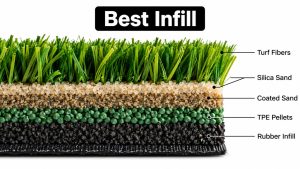
A 20-year turf lawn is never just about the grass fibers on top. It is a system made up of fibers, backing, and infill, and those parts have to work together under real conditions like Austin heat, hard sun, foot traffic, pets, and sudden heavy rain.
If one part is weak, the whole surface ages on borrowed time.

Fibers that recover instead of collapsing
Fibers take the daily abuse. Sun exposure, repeated foot traffic, dog activity, patio furniture, and brushing all wear on the face of the turf. Better yarns rebound after compression and keep their color longer. Cheap yarns mat down, lose their shape, and start looking tired much sooner.
The spec sheet matters here, but only if you know what to look for. UV or color fastness points to fade resistance. Resilience shows how well the blades spring back. Pull-out resistance helps indicate whether the yarn will stay anchored once the lawn sees real use. Those numbers matter more than sales language or a sample board that looks good indoors.
Backing that holds the system together
Backing is where a lot of early failures start. It holds the tuft bind, supports the seams, and has to keep doing that job through heat cycles, moisture, and movement. A lawn can still look decent from across the yard while the backing is already breaking down underneath.
Good backing does two things. It keeps the yarns locked in place, and it allows water to pass through without creating stress in the system. If drainage through the turf is poor, pet areas smell worse, seams stay under more strain, and trapped moisture can shorten the life of the install. In Austin, where dry stretches can be followed by hard rain, that balance matters.
Infill that matches the job
Infill is not just there to add weight. It helps support the blades, affects surface temperature, changes how the lawn feels underfoot, and influences how the turf performs over time. The right choice depends on how the yard will be used.
A decorative front lawn, a dog run, and a play area should not all be built the same way. Pet spaces may need infill chosen for drainage and odor control. Play areas need support and cushioning. A display-focused yard may prioritize blade support and appearance. Treat infill like a filler material, and the lawn usually shows it.
| Component | Cheap choice tends to do | Better choice tends to do |
|---|---|---|
| Fibers | Flatten faster, fade sooner, show wear early | Recover better, resist sun better, keep a cleaner appearance |
| Backing | Lose hold under stress, seam tension, or drainage problems | Support yarn retention, drainage, and long-term structure |
| Infill | Shift, support unevenly, or mismatch the use case | Help blades stay upright and improve performance for the space |
Material selection only works if the installation matches it. Our artificial turf installation guide shows how product choices and installation methods need to fit the same long-term durability plan.
Why Your Turf's Lifespan Is Decided Before It Is Unrolled
A turf lawn can look sharp on install day and still be headed for early failure. I see it after the first hard rain, after a Texas summer, or after a year of foot traffic. The fibers get blamed, but the primary problem is usually under the turf.
Installation decides whether the product ever gets a fair chance to last.

The base controls drainage, stability, and how the lawn ages
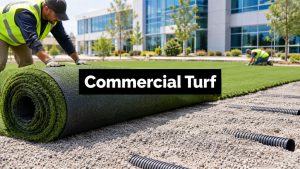
Durability starts before the roll is cut open. Grade, runoff, soil conditions, shade, reflected heat, edge restraints, and traffic patterns all need to be accounted for first. A pet area, putting space, and front yard display lawn should not sit on the same build just because they use artificial grass.
The prep work sets the life of the whole system. Homeowners comparing bids should understand how to prepare ground for artificial turf because that is where good installs separate from cheap ones.
When excavation is too shallow, the base stone is thin, or compaction is rushed, the problems show up fast:
- Low spots and puddling: Water collects where grade correction never happened.
- Spongy footing: The surface gives underfoot because the base was never compacted in a controlled way.
- Surface movement: Repeated traffic exposes weak areas and uneven support.
- Premature seam stress: Shifting under the turf puts tension on joints that were never meant to carry it.
Cheap turf can fail early. Premium turf can fail early too if it sits on bad prep.
Seams, edges, and transitions show the install quality
The middle of the lawn usually isn't the first place to break down. Failures start at seams, borders, drain cuts, and material transitions. Those are the areas that expose rushed crews.
Good seam work takes accurate trimming, proper adhesive use, clean alignment, and enough cure time. Miss one of those steps and the seam starts to show, separate, or move under traffic. Perimeter fastening works the same way. If the edges are weak, heat expansion, foot traffic, and water movement will find them.
That is why a lawn can look finished and still be poorly built.
Finishing work affects wear, recovery, and day-to-day performance
Infill and final grooming are part of the structural build, not just the appearance. Even infill distribution helps blades stand up, supports traffic areas, and reduces early matting. Uneven application creates soft zones, hard zones, and wear patterns that make the lawn age faster than it should.
Final inspection matters for the same reason. A professional crew should be checking drainage flow, seam visibility, edge security, grade consistency, and how the turf performs for the intended use, not just whether it photographs well.
The pattern is predictable:
- Site-specific planning lasts longer.
- Proper excavation and compacted base stone last longer.
- Clean seams and secure edges last longer.
- Use-specific finishing lasts longer.
Modern Yard is one local company that treats turf as a system, with site prep, drainage planning, and material choices matched to how the yard will be used.
Our Strategy for Bulletproof Lawns in the Austin Heat
Austin doesn't forgive generic turf choices. The lawn has to deal with punishing sun, long heat stretches, and sudden heavy rain. A turf system that performs well in a mild climate can struggle here if the product and build were chosen without local conditions in mind.
That is where a lot of durability claims fall apart. They describe ideal conditions. Austin asks harder questions.

Heat and UV are separate problems
People often lump heat and sun damage together, but they affect turf differently. UV exposure drives fading and long-term material degradation. Surface heat affects comfort and can make a lawn less enjoyable during peak summer hours.
That means the solution isn't just "buy thicker turf." The turf needs fibers built for strong sunlight, and the system may need infill and layout choices that reduce heat buildup where practical. Shade patterns, reflected heat from walls or stone, and how the yard is used during the day all matter.
A product built for Austin should be chosen with UV resistance, resilience, and drainage in mind, not just color and pile height. Homeowners comparing options can start with this page on heat-resistant artificial turf.
Drainage has to handle both daily use and storms
Central Texas lawns often face two different moisture realities. Long dry periods create dust, pet residue concentration, and compacted traffic zones. Then a hard rain arrives and tests the entire drainage path at once.
A durable lawn deals with both. That usually means:
- A base that stays permeable: Water has to move down and away, not sit under the surface.
- A turf product with strong permeability: The face of the turf can't become the bottleneck.
- Transitions that don't trap runoff: Edges, curbs, patios, and planters have to be considered together.
Local durability comes from matching the build to the yard
Not every Austin property needs the same turf recipe. A shaded courtyard has one set of priorities. A west-facing backyard with dogs and kids has another. A putting green has different demands from a front lawn designed mainly for curb appeal.
Field observation: The turf that lasts longest is usually not the one with the flashiest sample. It's the one that matches the site's sun, traffic, drainage, and maintenance reality.
That is what separates durable turf from turf that only looks convincing during the sales process.
Choosing the Right Turf for Your Lifestyle
The wrong turf can fail early even when the installation is solid. That's because durability isn't only about surviving weather. It's also about matching the product to the way the space gets used every week.
A front yard, a dog run, a play area, and a backyard putting green may all be "artificial grass," but they shouldn't all be built the same way.

Four common uses and what each one needs
| Use case | What matters most | What usually goes wrong with the wrong turf |
|---|---|---|
| Pet-friendly yard | Fast drainage, odor control, durable yarn, easy rinse-down performance | Lingering odor, wet spots, crushed paths, harder cleaning |
| High-traffic play area | Resilient blades, stable footing, cushioning options, strong seam integrity | Flat wear lanes, inconsistent footing, visible joint stress |
| Aesthetic front yard | Natural appearance, balanced blade mix, long-term shape retention | Shiny look, obvious plastic appearance, uneven wear near entries |
| Putting green | Consistent ball roll, controlled surface speed, precision finish | Bumpy roll, inconsistent play, edge and seam visibility |
If you're comparing product families, this overview of artificial grass types is a useful starting point.
Pet yards need drainage first, softness second
A lot of homeowners choose pet turf based on how soft it feels in a hand sample. That's understandable, but it's not the first priority. A dog run lives or dies by how it drains and how easy it is to clean.
The turf should move liquid efficiently, hold up to repetitive pacing, and recover from concentrated use along fence lines or door exits. If the drainage and backing aren't up to the job, no amount of softness will make that lawn pleasant after repeated pet use.
Putting greens and play lawns can't share the same priorities
One-size-fits-all advice is unsuited for artificial grass applications. A putting green needs precision. It needs the right surface behavior for repeatable roll. A family lawn needs visual realism, comfort, and resilience under foot traffic.
A dense, short-pile surface that works for golf practice usually won't feel right as a general lawn. On the other hand, a lush-looking lawn turf won't deliver the performance a golfer expects on a green.
Choose turf for the activity, not the sample board. The sample only shows appearance. The application determines whether the lawn still performs years later.
Front yards deserve a different kind of durability
For decorative areas, durability is about consistency. The lawn should keep its shape at entry points, resist fading where the sun is strongest, and blend naturally with hardscape and planting beds.
That doesn't mean these areas can use bargain-grade turf. It means the wear pattern is different. The right product should be selected for visual longevity, not just brute resistance.
Decoding Lifespan Claims and Warranty Fine Print
A realistic lifespan claim should sound conditional, because it is. A widely cited benchmark for modern artificial grass is 15 to 25 years, with premium turf often lasting 20 to 25 years when installation, maintenance, UV resistance, backing quality, and traffic levels all line up correctly, according to this artificial grass durability reference.
That range is useful. It is not a blanket promise.
What a product warranty usually means
Most turf warranties are focused on the manufactured material. They may address issues like abnormal fading or product defects. That's helpful, but it doesn't cover everything that makes a lawn succeed in actual use.
A product warranty usually does not solve these problems:
- Bad installation: Poor seams, poor grading, thin base work, and drainage mistakes
- Site-specific abuse: Use beyond what the product was chosen for
- Normal wear patterns: Flattening or appearance changes in heavily used zones
- Water issues caused by construction: Pooling, backing stress, or odor problems tied to poor prep
How to read the claim behind the claim
When someone says a turf product lasts decades, ask what that statement assumes. Ask whether the estimate is based on light decorative use, heavy family traffic, pet activity, or commercial wear. Ask what kind of base and drainage the manufacturer expects under the product.
Then look at the full protection picture:
- Material warranty: What does the manufacturer cover?
- Installation warranty: Who stands behind the workmanship?
- Maintenance expectations: What do you need to do to protect the system?
- Use-case fit: Was the product selected for your actual yard?
A trustworthy quote should talk openly about exclusions, not hide behind the biggest number on the page.
Your Path to a Hassle-Free Lawn Starts Here
A durable turf lawn isn't something you buy off a shelf. It's something you build correctly. The product matters. The base matters. Drainage matters. The way the lawn will be used matters.
That is why some installations wear out early while others keep performing for decades. Published lifespan ranges show the gap clearly. Standard turf is often estimated around 8 to 15 years, while high-end synthetic grass is often estimated around 20 to 24 years, which means the difference can be a decade or more according to this lifespan comparison for standard versus high-end turf.
What pays off over time
The best long-term value usually comes from getting four decisions right at the start:
- Choose turf for the actual use
- Build the right base for the site
- Plan drainage before installation day
- Hire an installer who treats durability as a system
What to do next
If you're serious about replacing a high-maintenance lawn, don't settle for a generic estimate and a sample square. Ask for a site-specific plan. Ask how the system will handle sun, runoff, traffic, pets, and long-term wear.
That conversation tells you a lot. So does the quality of the answers.
If you want a straight answer about what will last in your yard, contact Modern Yard Landscapes. We can walk the site, evaluate drainage and usage, explain the trade-offs, and give you a clear path to a durable, low-maintenance lawn built for Austin conditions.