
You're looking at a brown lawn, checking the forecast for another hot week, and wondering whether watering it is still worth the money or the effort. In Austin, natural grass can struggle through summer restrictions, intense sun, heavy rain events, and the constant cycle of mowing, edging, fertilizing, and repairing bare spots.
Artificial turf can solve several of those problems, but only when the installation is designed for Central Texas conditions. A green surface alone isn't enough. The base must move stormwater, the fibers and infill must handle heat, and the finished project must fit Austin's changing rules for impervious cover. This guide explains where artificial turf Austin TX projects succeed, where they fail, and how to choose an installation that performs beyond the first season.
Why Austin Homeowners Are Choosing Artificial Turf
A typical Austin homeowner doesn't usually replace a lawn because natural grass has become impossible overnight. The decision builds gradually. A summer restriction limits watering, brown patches spread across the yard, and the weekend disappears behind mowing, trimming, and trying to revive areas that never receive enough sun or moisture.
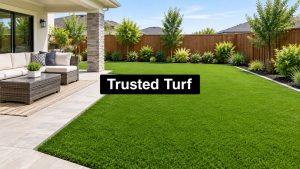
Artificial turf offers a different maintenance profile. It doesn't need routine irrigation to stay green, and it removes much of the mowing and fertilizing workload. For families, that can mean a cleaner play area. For pet owners, a properly designed dog run can provide a more predictable surface than mud or stressed grass. For businesses, consistent curb appeal can matter even when natural landscaping is struggling.
The water argument is particularly relevant in Austin. Austin Water's single-family conservation guidance identifies single-family homes as the city's biggest water users and notes that replacing grass lawns with native beds can reduce water use by up to 50%. Turf isn't the only low-irrigation choice, but it can be a practical fit where the homeowner wants a usable green surface rather than planting beds or decomposed granite.
Practical rule: Choose turf for the way you use the yard, not simply for the color you want to see from the street.
That distinction protects homeowners from poor installations. A cheap product over a weak base may look attractive at completion and still develop pooling, loose seams, flattened fibers, or uncomfortable heat. A site with tree roots, slopes, narrow access, or existing drainage issues needs a different plan from a simple, open lawn replacement. Before comparing samples, compare installation methods and ask how the contractor will address water movement.
The decision also depends on personal priorities. If your main concern is reducing irrigation, turf may fit. If you want habitat, shade, or pollinator planting, a native yard may be more appropriate. Many Austin properties combine turf with native beds, trees, patios, and drainage improvements. Homeowners comparing those approaches can review this practical guide to artificial turf versus natural grass before scheduling a design consultation.
Water Conservation and Environmental Benefits
Artificial turf's strongest Austin argument is irrigation reduction. A typical 1,000-square-foot natural lawn in Texas may use roughly 20,000 to 30,000 gallons of water each year, while some Texas estimates place annual use closer to 58,000 gallons, depending on irrigation intensity, as reported in Central Texas coverage of turf and xeriscaping. Even the lower estimate represents tens of thousands of gallons that may no longer be needed when a homeowner replaces that lawn area with artificial turf.
Austin Water gives homeowners another useful benchmark. A 500-square-foot turf area typically uses about 1,240 gallons per month, and converting that area can save up to 930 gallons per month, according to the Austin Water WaterWise rebate FAQs. The same guidance says the program requires at least 75% of the conversion area to have healthy turf grass, so eligibility depends on the condition and composition of the existing ground cover, not just the size of the proposed project.
That water reduction has practical value during drought restrictions and periods of rising water costs. It also changes how the yard functions. Children can use the space without waiting for stressed grass to recover, and homeowners don't have to choose between maintaining a green appearance and conserving irrigation water.

Beyond the water bill
Artificial turf can also reduce reliance on lawn fertilizers, herbicides, and gas-powered mowing equipment. Those benefits depend on the design and the homeowner's previous maintenance routine, so they shouldn't be treated as automatic environmental proof. A turf installation still uses manufactured materials, requires responsible disposal of removed soil and grass, and must be designed to manage stormwater rather than just covering the ground.
The better environmental comparison is site-specific. A heavily irrigated lawn with frequent mowing and chemical applications has a different resource profile from a small natural lawn maintained with limited inputs. A mixed design using turf in high-use areas and native planting elsewhere may reduce irrigation while preserving more ecological variety.
For homeowners planning a broader low-water design, smart tech for drought resistant landscaping can add useful ideas around irrigation controls, plant selection, and water-aware design. Turf works best as one component of a deliberate plan, not as a blanket replacement for every planted surface. A related overview of drought-resistant lawn alternatives can help compare turf with other Central Texas options.
The Installation Process and Critical Site Preparation
The surface you see is only the final layer of a turf system. Most long-term failures begin underneath it, where a contractor skipped excavation, used the wrong base, ignored the slope, or assumed perforated backing would solve every drainage problem.
Assess the site before ordering turf
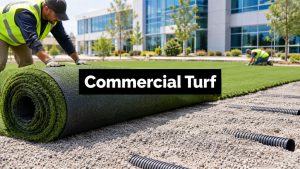
A proper installation starts with measurements, access planning, and an inspection of existing conditions. The contractor should identify irrigation lines, tree roots, downspouts, gates, retaining structures, utility features, and places where water already collects. Narrow side yards may require hand transport of materials, while slopes can call for additional grading or edge restraint.
Existing drainage deserves particular attention after Austin's intense rain events. Properly installed synthetic turf systems can achieve drainage rates exceeding 30 inches per hour, but only when the turf backing, aggregate base, and subgrade work together, as explained in this technical discussion of artificial grass in heavy rain and heat. The turf itself may be perforated, yet water can still perch in the profile if the base or subgrade blocks lateral movement.
Build the base, then install the surface
After removal and excavation, the installer grades the area and places a suitable aggregate base. The base must be distributed evenly and compacted in a way that creates a stable plane without sealing off drainage. Low spots should be corrected before turf arrives. If the contractor spreads material over uneven soil, the finished lawn can telegraph those defects and develop soft areas.
Edging keeps the perimeter controlled. Depending on the site, that may involve commercial-grade steel edging, concrete borders, bender board, or another restraint compatible with nearby hardscape and planting. Seams require careful alignment, adhesive, and seam tape. Rushing this stage can leave visible joins that become more noticeable as fibers settle.
Ask before signing: What aggregate will you use, how will you test drainage, and what happens if water still pools after installation?
The final stages include laying and cutting the turf, securing seams and edges, distributing infill, and power-brushing the fibers upright. For larger or complicated properties, drainage tile may be appropriate, especially where downspouts or topography direct water toward the turf. A contractor may also need to coordinate with retaining walls or adjacent hardscape rather than treating the lawn as an isolated rectangle.
For homeowners preparing a project, this guide to how to prepare ground for artificial turf explains why excavation and base work deserve as much attention as product selection. If buried lines or an uncertain sewer path could affect excavation, knowing when to find sewer camera service is a useful general planning consideration, although local site conditions should determine which inspection service is appropriate.

Choosing the Right Turf Type and Infill for Your Needs
There isn't one correct turf specification for every Austin property. A quiet front lawn, a dog run, a children's play area, and a backyard putting green each place different demands on the fibers, backing, infill, and base.
Polyethylene fibers generally provide a softer, more natural lawn feel, while polypropylene can serve specialized applications where a different fiber profile is appropriate. UV stability matters in either case because direct Texas sun can accelerate fading and brittleness in materials that aren't designed for prolonged exposure. Pile height, density, and face weight influence appearance, resilience, and how easily fibers recover after foot traffic.
| Turf Type | Best For | Key Features | Typical Cost Range |
|---|---|---|---|
| Residential landscape turf | Front and back lawns | Natural appearance, moderate traffic performance, low routine maintenance | Varies by product and installation scope |
| Pet-friendly turf | Dog runs and pet areas | Drainage-focused base, odor-control options, easy waste removal | Varies by drainage and infill requirements |
| Play-area turf | Families with children | Softer feel, resilient fibers, carefully selected infill | Varies by cushioning and site preparation |
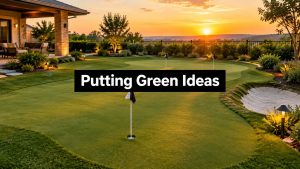
| Putting-green turf | Golf practice areas | Short, consistent pile, controlled ball roll, specialized base | Varies by design and performance requirements |
| Commercial-grade turf | Offices, retail, and high-use spaces | Durable fibers, stronger edge and seam planning, heavy-use design | Varies by traffic and access conditions |
Match infill to the way the yard is used
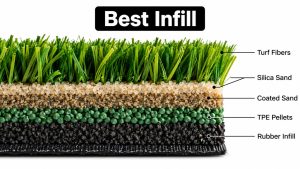
Silica sand can help support fibers and stabilize the surface. Crumb rubber offers a different performance profile, while antimicrobial treatments may be useful in pet applications. Cooling infills deserve close attention in sunny yards because the infill affects both surface comfort and maintenance.
Hydrophilic cooling media use evaporative heat removal, while infrared-modifying infills reflect or re-radiate some solar energy. Hot-climate guidance also emphasizes a free-draining base and periodic misting or irrigation when reducing peak surface heat matters, according to this overview of turf weather performance.
Pet owners should prioritize drainage, waste removal, odor management, and access for rinsing. Families may value a softer surface and stable seams around play equipment. Golf enthusiasts need a system built for ball roll rather than a tall, lawn-like appearance. Commercial properties may need durable fibers and a maintenance plan that accounts for concentrated pedestrian traffic.
Product samples don't reveal the entire system. Ask for the fiber material, pile profile, backing design, infill type, drainage approach, seam method, and warranty terms. You can also compare broader specifications in this guide to artificial grass types before accepting a recommendation.
Understanding Costs and What Drives Pricing
Artificial turf pricing changes with the site, not just the square footage. A flat, open lawn with easy equipment access has a different labor profile from a narrow side yard that requires hand excavation, detailed grading, drainage work, and custom edging.
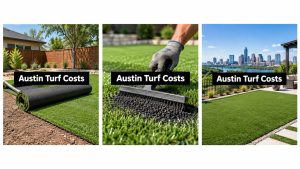
The supplied Austin cost breakdown identifies these approximate components: turf material at $4 to $8 per square foot, base materials at $1 to $2 per square foot, site-preparation labor at $2 to $5 per square foot, infill at $0.50 to $1.50 per square foot, and permits or drainage at $0 to $1 per square foot. It contrasts a basic installation at $6 to $10 per square foot with a premium installation at $12 to $18 per square foot.

What a quote should make clear
A transparent estimate should separate turf, demolition, excavation, aggregate, compaction, edging, seams, infill, hauling, drainage, and finish work. If a quote combines everything into one unusually low figure, you may not be able to tell whether the contractor is using less base material, skipping drainage improvements, or offering a lower-grade product.
Invest first in the parts that are difficult to repair later. Proper excavation, grading, compaction, drainage, seam construction, and edge restraint protect the entire system. Homeowners can often economize by simplifying shapes, reducing decorative cuts, or choosing a product that matches actual traffic instead of paying for specifications they won't use.
Premium features can include drainage tile, retaining walls, antimicrobial treatments, and cooling technologies. Financing may be available through individual contractors or third-party providers, but terms differ, so review the complete repayment obligation rather than judging a project only by its monthly payment.
A higher upfront price makes sense when it buys verified site preparation and a suitable system. It doesn't make sense when the quote relies on vague labels such as “premium” without identifying the fibers, backing, infill, edge treatment, and warranty.
Managing Heat and Maintenance in Austin's Climate
Artificial turf can become hot in direct Texas sun. That isn't a defect a salesperson should hide, and no product can promise a naturally cool surface under every summer condition. Heat management depends on fiber color and composition, infill, shade, airflow, surrounding hardscape, and whether the homeowner is willing to mist the surface during peak heat.
UV-stable polyethylene and polypropylene fibers help slow fading and brittleness. Cooling infills work through different mechanisms. Hydrophilic materials support evaporative cooling, while infrared-modifying materials reflect or re-radiate solar energy, as described in this hot-climate turf performance guidance.
Practical ways to manage surface temperature
- Use shade strategically: Trees, shade structures, and covered seating can make the yard more comfortable while also reducing direct solar exposure.
- Select the infill deliberately: Ask how the proposed infill manages heat, pet use, drainage, and replenishment.
- Mist when needed: Periodic misting or irrigation can reduce peak surface heat, although the base must remain free-draining.
- Plan activity areas carefully: Place seating, play zones, and pet paths where shade and access make routine use easier.
- Consider the surrounding materials: Dark pavers and masonry can add reflected heat near the turf.
Maintenance is lighter than natural grass maintenance, but it isn't zero. Remove leaves and branches with a blower or soft rake, rinse pet areas, lift flattened fibers with a power broom when needed, and inspect edges for weed growth. Pet waste should be removed promptly, followed by rinsing and the cleaning method recommended for the installed system.
Seasonal grooming matters most after periods of heavy use, leaf drop, pollen, or storms. Homeowners can handle routine debris removal and light rinsing. A professional should address persistent odors, displaced infill, damaged seams, drainage problems, or areas where fibers remain flattened after ordinary brushing.
Warranties, Quality Standards, and Choosing Your Installer
A turf warranty is only useful when you understand what it covers and what the installation requires. Product warranties may address UV degradation, manufacturing defects, or fiber performance. They may not cover poor drainage, damage from improper cleaning, pet-related staining, seam failure caused by weak installation, or changes made by another contractor.
Ask for the product documentation before work begins. The installer should identify the turf manufacturer, fiber type, backing, infill, seam method, edge restraint, and maintenance requirements. Written terms should explain whether labor is covered and how a claim is handled. An installer who won't provide those details is asking you to trust a promise instead of evaluating a system.
Questions that reveal installation quality
- How will you verify drainage? A perforated backing doesn't guarantee that the aggregate base and subgrade will move water away.
- What happens to existing irrigation? Lines may need to be capped, relocated, or repurposed for planting beds.
- How will you handle slopes and edges? Ask for the specific restraint and grading plan.
- What is excluded from the quote? Look for hauling, excavation, drainage, access limitations, and repairs to adjacent surfaces.
- Which work affects the warranty? Installation and maintenance conditions should be written down.
Austin's policy environment adds another layer of risk. City materials in 2026 explicitly recommend banning artificial turf except in special circumstances and classifying it as impervious cover in code, according to this Austin city document on artificial turf and impervious cover. Homeowners should verify current permitting, stormwater, lot-calculation, and HOA requirements before signing a contract, particularly if they may sell the property later.
A contractor's broader documentation habits matter. For another perspective on how exterior improvements can affect property decisions, this resource on the best fence for resale value Ottawa illustrates why material selection, compliance, and long-term presentation deserve attention beyond installation day.
Modern Yard Landscapes provides residential and commercial turf installation, pet-friendly dog runs, custom putting greens, drainage tile, retaining walls, and maintenance in the Austin area. The company describes its approach as factors-based estimating, UV-resistant and high-denier materials, commercial-grade steel edging, advanced infill options, full insurance, warranty packages, and a total satisfaction guarantee. Compare those details with any other installer, and choose the contractor who explains the work clearly rather than just quoting the lowest figure.

If your Austin lawn is struggling with heat, watering limits, drainage, or constant maintenance, Modern Yard Landscapes can assess the site, explain turf and infill options, and build a quote around the actual preparation and drainage requirements. Visit the company to schedule a consultation for residential or commercial turf, a pet-friendly dog run, a putting green, or related outdoor improvements.