
Austin homeowners usually call about turf after the same stretch of frustration. The grass won't hold through the heat, the irrigation bill keeps climbing, muddy spots show up after storms, and the backyard still doesn't look finished. By that point, homeowners aren't looking for a novelty. They want a yard that works.
Artificial turf can absolutely solve that problem. But the turf product itself is only half the job. The contractor matters more than most buyers realize. A clean-looking install on day one can still fail early if the base shifts, drainage was ignored, or seams were rushed. In Austin, where heat, clay soil, runoff, and slope all show up on the same property, cheap work tends to show itself fast.
Your Lawn Deserves Better Than a Texas Summer
The idea of a perfect green lawn sounds great until you try to keep one alive through an Austin summer. You water. You mow. You patch bare spots. Then the next hot stretch hits, and the yard looks tired again.
That's why more homeowners and property managers are taking artificial turf seriously as a long-term grounds upgrade instead of a temporary fix. The global artificial turf market was valued at USD 7.27 billion in 2025 and is projected to reach USD 13.67 billion by 2033, according to Grand View Research's artificial turf market analysis. That kind of growth tells you this isn't some fringe product anymore. It's a mature category serving homes, commercial spaces, schools, and managed properties that want lower maintenance and a cleaner year-round appearance.
The product matters, but the installer matters more
A lot of buyers start with the wrong question. They ask, “What's the cheapest turf you have?” A better question is, “Who's building the foundation under it?”
That's where the key distinction emerges. Good artificial turf installation contractors don't just roll out green carpet. They consider drainage, traffic patterns, edging, site access, pet use, sun exposure, and how the lawn integrates with its surroundings. They match the turf system to how the space is used.
If heat is one of your biggest concerns, it helps to review heat-resistant artificial turf options for Austin properties before you even compare bids. Not every turf system handles full sun the same way, and not every installer knows how to build for that condition.
Practical rule: If two lawns look similar from the street, the one with better excavation, base prep, seam work, and drainage usually lasts longer.
Cheap turf usually becomes expensive turf
Low bids often leave out the hardest part of the job. That means less excavation, a weaker base, rushed compaction, and minimal attention to runoff. You may not see those shortcuts right away. You will see them later when the surface settles, edges lift, seams show, or water hangs where it shouldn't.
A professional install costs money because the labor is technical. The result should feel stable underfoot, drain properly, stay neat around the edges, and still look right after Texas heat does its work.
If you're going to invest in turf, invest in the part you can't easily fix later.
First Steps Before You Request a Quote
Before you call anyone, get clear on what you want the space to do. A backyard for two dogs needs a different build than a front lawn built for curb appeal. A shaded side yard under oaks needs a different plan than a sunny play area behind a pool.
Most bad turf projects don't start with bad intentions. They start with a vague request like “I want low maintenance grass.” That leaves too much room for assumptions.
Start with use, not color
Write down the purpose of the area.
- Family yard: Think about running space, soft footing, and how the lawn meets patios, mulch beds, and walkways.
- Pet run: Focus on drainage, cleanability, odor control, and whether the layout creates dead corners that are hard to rinse.
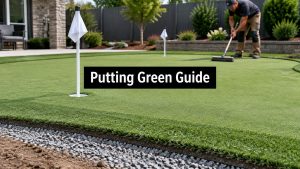
- Putting green or recreation area: Surface speed, contours, fringe design, and transitions matter more than a standard lawn install.
- Commercial frontage or common area: Durability, clean edges, and a professional look usually matter as much as the turf fiber itself.
If your lot has a slope, a low corner, heavy shade, or a lot of tree roots, note that before the consultation. Those site conditions drive labor and design decisions.

Get your own project basics organized
You don't need perfect plans. You do need enough clarity to compare contractors fairly.
Use this short prep list:
- Measure the area as closely as you can, including odd corners and curves.
- Check HOA rules and neighborhood expectations if those apply to your property.
- Think through access. Side gates, stairs, tight alleys, and limited driveway access can affect labor.
- List your deal-breakers. Maybe it's muddy dog traffic, visible seams from the patio, or poor drainage near the house.
- Decide your priorities. Some people care most about realism. Others care most about pet performance or lower upkeep.
A little prep helps you avoid comparing apples to oranges.
Build a shortlist before you schedule visits
Look for contractors who show actual local work, not just product photos. You want to see yards, pet areas, putting greens, or commercial projects that resemble your own. If a company can't show how they handle transitions, edges, grading, and finished details, that's useful information.
A practical next step is reviewing guidance on how to find the best turf contractors near you. It helps narrow the field before you spend time on consultations.
The best quote process starts before the first phone call. Define the job well, and you'll get better answers from every contractor you speak with.
Aim for a shortlist of a few companies that seem to understand your type of project. That's enough to compare quality without turning the process into a full-time job.
How to Spot an Expert During the Consultation
The consultation isn't just for the contractor to inspect your yard. It's for you to inspect how they think.
A true professional won't rush to price. They'll walk the site, ask how you use the space, look at grade changes, and explain what could create problems later. In Austin, that matters because drainage-sensitive and flood-prone sites depend heavily on sub-base design, slope, and drainage detailing, as noted in this Houzz guidance on artificial grass installation considerations. If a contractor can't clearly explain when drainage tile, grading changes, or retaining elements are needed, you're not talking to someone who's thinking beyond the sale.
Questions that reveal real experience
Ask questions that force specifics.
- How will you handle drainage on this lot? Listen for a real explanation about slope, runoff path, low spots, and whether the sub-base needs help moving water.
- What concerns do you see on this property? Experienced installers notice access, roots, curves, utility conflicts, patio height, and transitions immediately.
- How will you plan seams so they're less visible from the main viewing angle? Good contractors think about sightlines from patios, windows, and doors.
- What edging system do you use here, and why? You want an answer tied to durability and finish quality, not “whatever we normally do.”
- What maintenance should I expect after install? If they promise “zero maintenance,” be careful. Turf is lower maintenance than grass, not no maintenance.
If you want a broader homeowner checklist for vetting any kind of pro, this expert guide for homeowners hiring is worth reading before appointments.
What a strong consultation looks like
A good consultation usually includes observation, explanation, and pushback where needed. Sometimes the best answer isn't what the client expected. A contractor who tells you a certain area needs more prep, added drainage, or a layout change may be saving you from an expensive mistake.
Look for signs like these:
- They measure the site carefully.
- They ask how the yard is used day to day.
- They mention drainage before you bring it up.
- They explain trade-offs between turf options instead of pushing one product.
- They take notes about pets, kids, traffic, trees, and slope.
A contractor who identifies problems during the consultation is usually more trustworthy than one who says every yard is simple.
Red flags that should end the conversation
Some warning signs are easy to miss because they sound confident at first.
| Red flag | Why it matters |
|---|---|
| Price given before a proper site review | They may be guessing, and guesses turn into change orders or shortcuts |
| No questions about drainage | Water problems don't disappear because the turf looks good on install day |
| Vague answers about base prep | Base work determines whether the surface stays stable |
| No local project photos | You can't verify finish quality in conditions like yours |
| “All turf is basically the same” | It usually means the contractor is selling on price alone |
You don't need a polished salesperson. You need someone who sees the job clearly and explains it plainly.
Decoding Estimates to Understand True Value
A turf quote can look simple until August hits and the yard starts telling the truth.
I've seen plenty of installs that looked fine on day one and started showing the shortcuts later. Seams separate. Low spots hold water. Edges lift. The homeowner thought they bought turf. What they really bought was whatever the contractor was willing to put under it.
That is why estimates matter so much. Two bids can be hundreds or thousands apart, and the gap usually comes from the parts you will not see after the crew leaves. National pricing guides put installed artificial grass in a broad range, with costs climbing fast when the yard has slope, tight access, curves, or added prep, as noted in LawnStarter's artificial grass pricing guide. A cheap quote is not automatically wrong. It does need a closer look.
What a serious estimate should actually tell you
A good quote does more than give a total. It shows how the job is being built.
You should be able to find these items clearly, whether they are listed one by one or grouped by phase:
- Removal of existing grass, rock, or debris
- Excavation depth
- Base material and compaction
- Drainage correction, if the yard needs it
- Turf product name and intended use
- Seaming and edge restraint
- Infill
- Cleanup and haul-off
If those details are missing, ask for them in writing.
Material matters too, but only when it is tied to a real product. Earlier cost breakdowns show that turf fiber types vary in price before labor, which is one reason “premium turf” means very little by itself. A quote should tell you what product is being installed, how it fits the way you use the yard, and why it costs what it costs.
Shape and access affect labor in a real way. A flat rectangular yard is faster to build than a yard with tree rings, curves, narrow gates, and AC units crowding the work area. Good contractors price that accurately up front instead of pretending the job is simple and billing for surprises later.
Compare estimates by scope, not just by total
| Line Item | Quote A, Warning Sign | Quote B, Professional |
|---|---|---|
| Scope of work | “Install turf in backyard” | Defines removal, excavation, base prep, turf install, infill, cleanup |
| Drainage | Not mentioned | Notes grade, runoff path, and whether drainage work is included |
| Base prep | “Prep included” | Identifies excavation, base material, compaction, grading |
| Turf product | Generic “pet turf” or “premium grass” | Names the product and intended use |
| Seams and edges | Not mentioned | Explains seam placement and edge treatment |
| Site complexity | Same price regardless of conditions | Adjusts for slope, curves, access, and hauling |
| Maintenance guidance | None | Includes basic care after installation |
| Warranty language | Verbal or vague | Written workmanship and product terms |
The pattern is usually pretty clear. Vague low bids hide risk. Detailed bids show where your money goes.
Why low bids often become expensive jobs
Artificial turf can last a long time, but lifespan depends heavily on heat exposure, product choice, infill, and upkeep, according to Thumbtack's consumer guidance on artificial turf installation. In Texas, that long-term view matters. Heat exposes weak installs fast.
If a contractor cuts excavation, uses a thin base, skips proper compaction, or rushes seam work, the yard may still look good for a while. Then the surface starts to move. Repairs are rarely small because the visible problem usually starts underneath. By the time a homeowner calls for help, the fix often means removing turf and rebuilding the base correctly.
For a local view of what changes pricing from one yard to the next, review these artificial turf installation cost factors in Austin before you sign a contract.
Read the estimate like a build sheet. Ask what is included, what is excluded, and what assumptions the price depends on. Good work costs more than a shortcut on the front end. It usually costs less over the life of the yard.
The Anatomy of a Bulletproof Turf Installation
A durable turf job doesn't start when the turf roll hits the ground. It starts when the crew cuts into the site and builds a base that won't betray the finish later.
That's the part homeowners rarely see, and it's where the install either earns its lifespan or loses it.

Industry guidance is clear on the sequence. A professional workflow begins with excavation, then a compacted base of crushed stone or decomposed granite, followed by grading checks to prevent ponding. The same guidance identifies poor grading and inadequate internal drainage as primary causes of failure, which is why Smart Turf's installation guidance treats base preparation as the critical step.
What good work looks like below the surface
A strong install has a few traits in common.
- Excavation is deliberate. The crew removes what needs to come out so the finished system has room for a stable base.
- The base is compacted properly. Turf needs a firm platform, not loose fill that settles after the first wet season.
- Grade is checked before turf goes down. Water needs a path. If the crew can't explain that path, the project isn't ready for turf.
- Drainage gets added when the property needs it. On some sites, that means drainage tile or related improvements, not wishful thinking.
One practical resource for homeowners who want to understand the build sequence is this guide on how artificial turf is installed step by step. It shows what to pay attention to before the finished surface hides the work.
What separates a finish that lasts from one that just photographs well
The top layer matters too. Seam planning, infill, and grooming aren't cosmetic details. They affect how the lawn performs over time.
Research-based guidance on turf finishing points to a few essential elements in AGL Grass's discussion of turf installation quote mistakes:
- Seams should be planned around turf width, not improvised after material shows up.
- Seam tape and adhesives should be made for artificial grass, not swapped out with whatever is on the truck.
- Infill should match the manufacturer's system and be maintained to spec over time.
That matters because infill loss can increase surface hardness and affect traction. Grooming and top-dressing help restore pile support and keep the surface performing as intended.
If seams draw your eye immediately, or if the surface feels inconsistent underfoot, the install probably wasn't controlled carefully enough.
For Austin projects, material selection also has to respect the sun. High-denier, UV-resistant fibers, suitable infill, and sturdy edging all matter because heat exposes shortcuts. A contractor can use quality products and still fail with poor workmanship. They can also ruin a decent turf product with bad grading and weak seam layout. Durable installs need both the right materials and the right craft.
One local option handles turf along with drainage tile, retaining walls, and pet or putting-green layouts, which can matter on properties where the lawn isn't a standalone feature. That kind of scope isn't required on every project, but integrated site work often solves problems a turf-only bid misses.
Finalizing Your Project and Ensuring Peace of Mind
It is the day before install. Pallets are scheduled, a crew is coming, and this is the point where a homeowner either feels settled or starts wondering what they bought. That difference usually comes down to paperwork, communication, and whether the contractor has been specific from the start.
Once you hire the company, stay involved through the final review. Good turf work lasts because the install details were decided before the crew ever cut open a roll. Cheap jobs often go sideways here. Scope stays fuzzy, change orders show up late, and warranty language gets vague enough to be useless once a seam opens or drainage starts backing up.
What should be locked in before work starts
The contract should clearly spell out the turf product, base preparation, edging, drainage work, haul-off, cleanup, and payment schedule. It should also explain what happens if the crew finds buried rock, irrigation problems, unstable soil, or other site conditions that were not visible during the estimate. If that part is missing, you are the one holding the risk.
Get proof of insurance. Get the expected start date and projected duration in writing. Ask who your point of contact is once the job begins.
Warranty terms need the same level of detail. As noted earlier, turf life can vary a lot depending on sun exposure, product quality, infill, and how well the install was done. In Austin, that matters. Texas heat exposes weak glue lines, poor edge fastening, and thin base prep faster than mild climates do. A workmanship warranty should tell you what is covered, how long it lasts, and what maintenance is expected from you.

What to expect on install week
You should know where materials will be dropped, how the crew will get into the yard, and whether gates, dogs, sprinklers, pool decking, or shared fence lines need special handling. You should also know what the site will look like at the end of each day. Professional crews do not leave homeowners guessing about noise, debris, or when the space becomes usable again.
Before you release the final payment, walk the whole job with the contractor.
Use a practical checklist:
- Check the edges: They should be straight, secure, and finished cleanly around beds, hardscape, and transitions.
- Look at seams in normal daylight: Seams should disappear unless you are standing over them and looking for them.
- Test the surface underfoot: It should feel consistent, without soft pockets, humps, or dips.
- Ask where water goes: Run through drainage expectations so you know what should happen in a heavy Austin storm.
- Review care instructions: Ask how often to rinse, brush, and inspect high-use areas, especially with pets or heavy foot traffic.
- Put punch-list items in writing: Small corrections get handled faster when everyone agrees on them before the crew leaves.
A contractor who does careful work should be comfortable with that walkthrough. No defensiveness. No rushing. No vague answers.
If you want turf that still looks right after a few brutal summers, closeout matters as much as installation day. Clear warranty terms, a documented scope, and a careful final inspection are what separate a durable project from one that starts costing you money a year later.
If you want that level of detail, clear pricing, and a crew that takes site prep seriously, Modern Yard Landscapes is worth calling for a consultation. They're based in Austin, fully insured, and handle residential and commercial turf projects with the kind of drainage, grading, edging, and maintenance planning that helps a lawn hold up long after install day.