
Artificial turf in an Austin summer can run 20 to 60°F hotter than ambient air in direct sun, with documented extremes above 150 to 170°F. That range is why the right question isn't whether turf gets hot, but how your yard's shade, infill, surface design, and watering schedule control the heat.
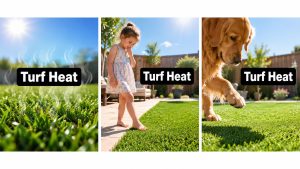
At 3 p.m. on a clear Central Texas afternoon, a turf surface can feel completely different from the air temperature reported by your weather app. Bare feet notice it first. Dogs may hesitate before crossing the yard, children can struggle on exposed play areas, and a patio surrounded by unshaded synthetic grass can lose its comfort long before sunset.
The practical levers are straightforward: fiber color, infill, shade, and irrigation timing. Each one changes the way a turf system absorbs, stores, or releases heat. A good installation plan treats those details as part of the design, not as upgrades added after a hot yard becomes a problem.
What Austin Yards Feel Like in July
A July turf lawn can feel comfortable in the morning and painfully hot by midafternoon. The material has not changed, but sun angle, exposure time, nearby hardscape, and the loss of evaporative cooling have. That rebound effect can also linger after sunset, especially where turf borders concrete or receives little evening airflow.
Artificial turf typically runs 20 to 60°F hotter than surrounding air under direct summer sun, although the result depends on the product and site. In a University of Nevada, Las Vegas and Desert Research Institute field study, green artificial turf reached 169°F, or 76°C, and measured approximately 69°F hotter than irrigated natural grass and 62°F hotter than the air (UNLV's study summary).
That figure does not predict every Austin yard. It shows why a product label cannot describe how a west-facing dog run, south-facing play area, or exposed putting green will behave in July. Homeowners comparing heat concerns across desert climates can also review this explanation of whether artificial turf gets too hot in Phoenix from Pool & Landscaping of Vistancia LLC.
Four choices that shape the experience
- Color: Darker fibers generally absorb more solar energy than lighter fibers.
- Infill: The material between the blades affects heat storage and moisture retention.
- Shade: A tree, pergola, or shade sail blocks the solar radiation that drives surface heating.
- Timing: Morning and evening use avoids the period when the surface has absorbed the most energy.
Site layout often matters more than fiber chemistry. A dog may have a shaded bed but still cross exposed turf to reach it. A child may play beneath a shade structure, then step onto a much hotter strip beside it. A patio can remain uncomfortable after the air cools if surrounding hardscape and turf release stored heat slowly.
Practical rule: If family members, pets, or customers will use the surface during the hottest part of the day, design shade and access routes before choosing the turf roll.
Turf in full sun gets hot, and irrigation timing can provide temporary relief without changing the underlying layout. A responsible Austin installation plans retreat areas, shaded crossings, and evening recovery before the first blade is cut. That gives people and pets a cooler option instead of leaving them to discover the problem after installation.
Surface Temperature Versus Air Temperature Explained
A forecast in the mid-90s does not describe what bare feet or paws feel on sunlit turf. Weather apps report ambient air temperature, usually measured in a shaded, ventilated setting. Turf absorbs direct solar energy, so its exposed surface can run much hotter than the surrounding air.
Three readings answer different questions:
- Ambient air temperature describes the surrounding air and supports weather forecasts.
- Surface temperature measures the fibers, infill, or grass blades that touch skin and paws.
- Wet-bulb globe temperature combines radiant heat, humidity, and wind to estimate broader human heat stress.
For barefoot comfort, surface temperature is the immediate check. Overall activity also depends on hydration, humidity, wind, and radiant exposure. A breeze may make a yard feel better without making sun-heated turf comfortable for a dog's paws.
A University of Kansas field study recorded an average artificial-turf surface temperature of 94.8°F, compared with 75.3°F for adjacent natural grass. The 19.5°F difference was statistically significant at P < 0.001 (University of Kansas heat-stress white paper).
The comparison also explains the rebound effect. After sunset, air temperature can fall faster than the turf cools, particularly where infill, concrete, or other dense surfaces have stored heat. Natural grass can benefit from evaporative cooling, while synthetic turf may remain warm until its surface releases that stored energy.
Material choice still involves maintenance and performance trade-offs. This guide to artificial turf versus natural grass provides a broader comparison.
How to interpret a reading
A surface thermometer shows conditions at one place and one moment. Cloud cover, wind, color, moisture, measurement height, and probe contact with the fiber, infill, or backing can all change the result.
Check the actual use zones before relying on an air forecast. A shaded seating area, exposed pet route, and strip beside a concrete patio may behave differently on the same property. The weather app helps plan outdoor time, but a surface check is more useful before barefoot play or pet activity.
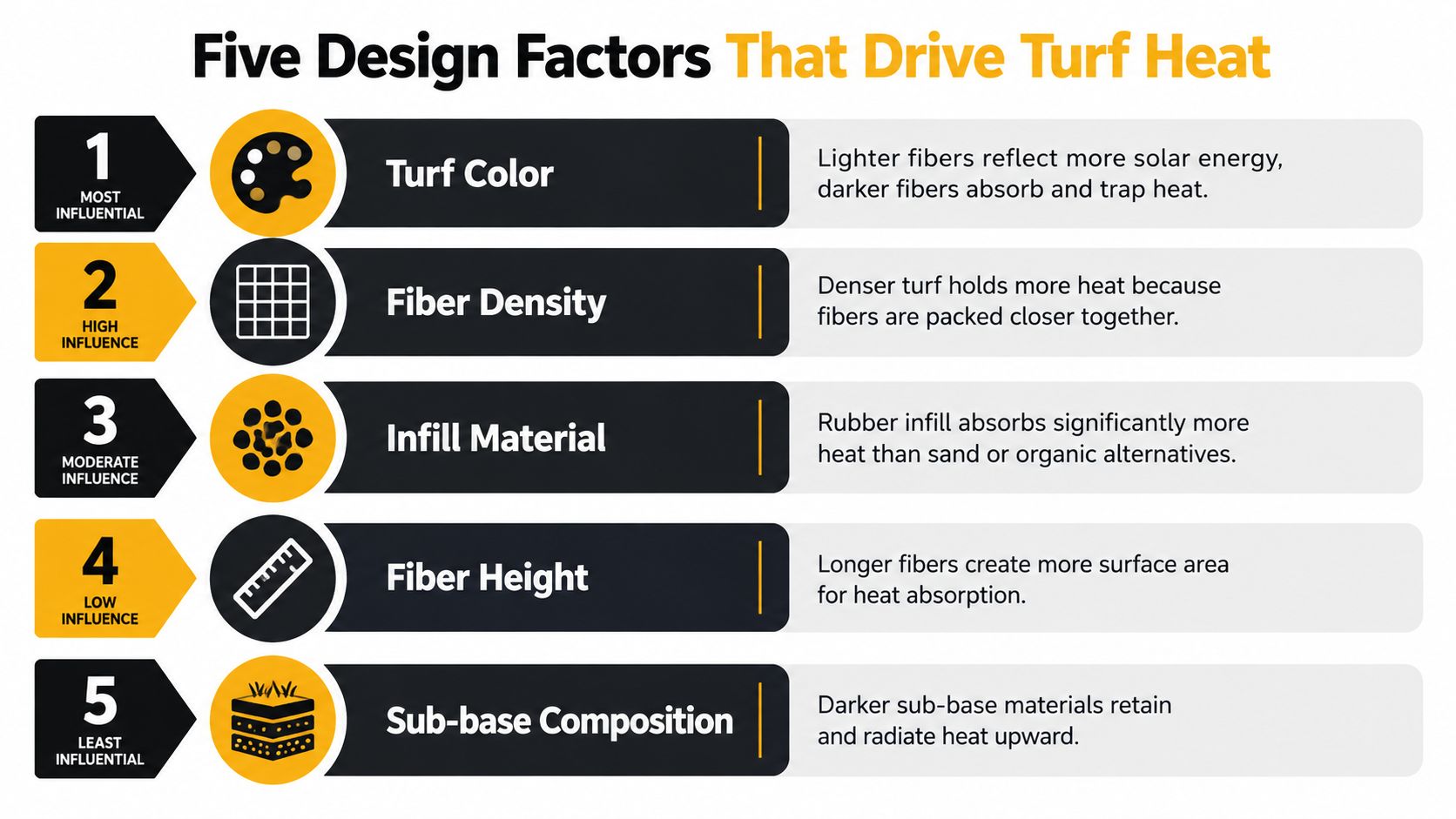
Five Design Factors That Drive Turf Heat
A turf label gives only part of the answer. Fiber construction, infill, base preparation, shade, and nearby hardscape determine how much solar energy reaches the surface and how long the installation stays warm after sunset. In Austin, those site details often matter more than a small difference in fiber chemistry.
Penn State research comparing 10 synthetic turf products found surface temperatures approximately 41 to 59°F above air temperature measured 3 feet above the ground, depending on the month. Separate measurements recorded exposed fibers reaching 156°F (TURI summary of physical and biological hazards). Those figures describe exposed conditions, not every part of every yard, but they show why surface readings matter more than the weather app alone.
1. Color and fiber construction
Lighter fibers can reflect more solar energy than darker fibers. Fiber thickness, density, and height also affect how much plastic sits in direct sun and how much heat the surface retains. Denser or longer fibers may suit a yard's appearance or use, but evaluate them with the property's orientation, shade, and activity zones.
2. Infill material
Infill supports the blades and affects stability, drainage, odor control, and heat behavior. Dark rubber can absorb substantial heat. Sand and other lighter materials behave differently, while water-holding amendments can support evaporative cooling when moisture is available. A homeowner should ask how the infill performs after installation, not only what it costs upfront. This artificial grass infill guide offers a useful starting point.
Penn State found that water-holding infill amendments such as calcined clay support evaporative cooling, and that greater infill depth tended to slightly reduce surface temperature (Penn State irrigation and temperature research). Cooling depends on available water and timing, so an amendment cannot replace shade or sensible scheduling.
3. Underlayment and backing
A shock pad, cooling pad, or permeable backing changes how heat and water move through the system. These components also affect impact response and drainage. Select them for the full installation, rather than temperature alone.
4. Substrate and base
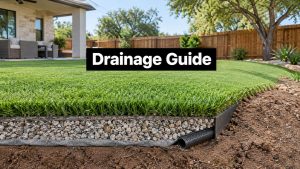
The material beneath the turf controls drainage and heat storage. A properly prepared aggregate base behaves differently from a slab or poorly drained compacted area. Concrete and dark hardscape can also radiate heat back toward the turf, extending the warm period into the evening.
5. Surrounding exposure
West-facing walls, windows, patios, fences, and reflected sunlight can intensify one section of a yard. Trees, shade structures, and building shadows interrupt that energy source. A New Jersey comparison measured midday synthetic turf at about 130°F and natural grass at about 84°F, a difference of 46°F (New Jersey Department of Environmental Protection report).
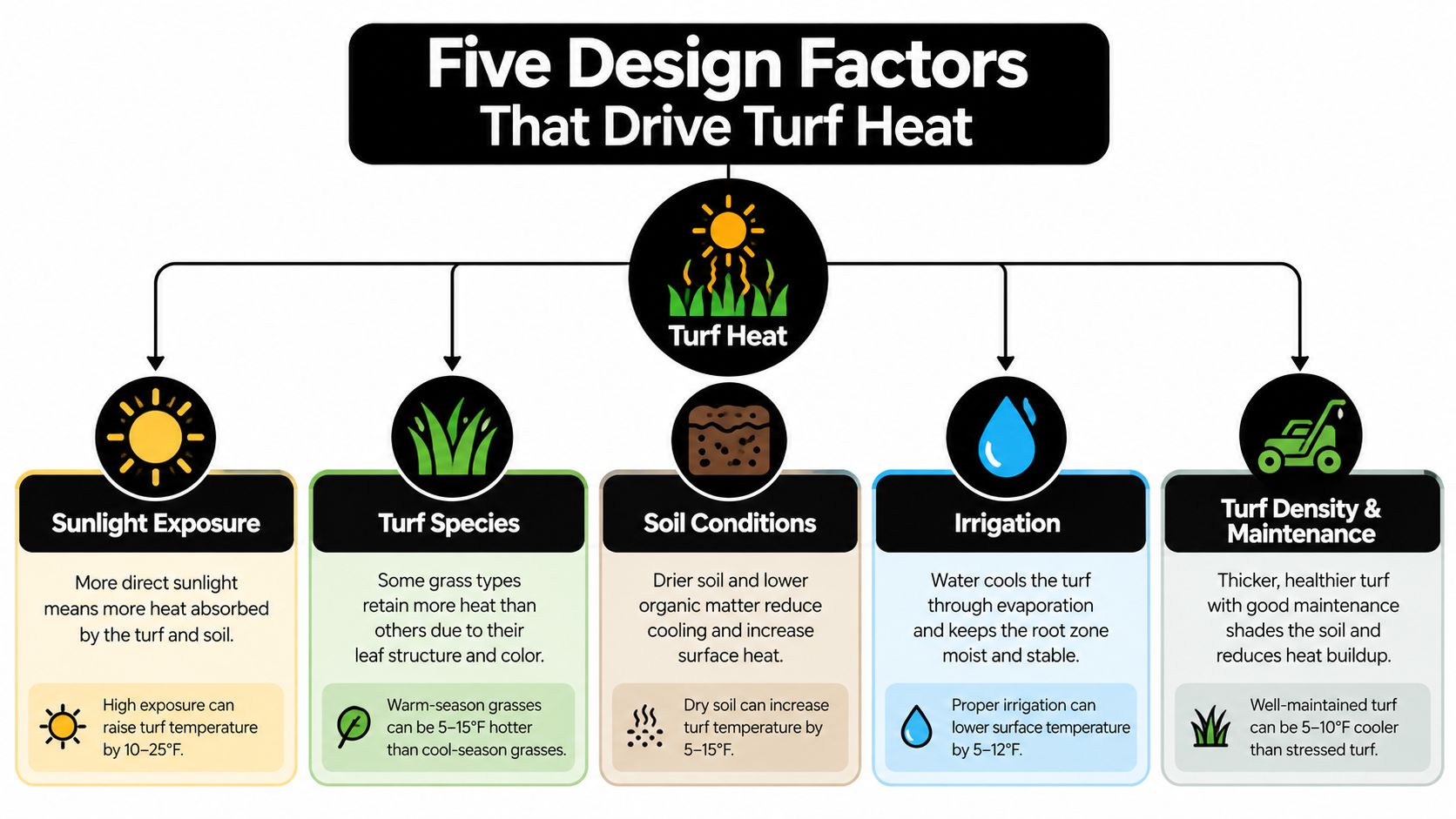
Plan around the highest-use zone. A family using the yard after work may benefit more from afternoon shade and comfortable access than from a minor fiber change. A dog run with little escape from direct sun needs attention to infill, drainage, shade, and use timing. Check those zones during the day and again after sunset, because turf can stay warm after the air has cooled.
What Field Studies Measured Across Climates
Field studies do not produce one universal answer for artificial-turf temperature. Researchers measure different products, climates, surfaces, weather conditions, and instruments. The comparisons below show why Austin homeowners should treat published readings as benchmarks, not installation guarantees.
| Source | Measured surface temperature | Conditions | Comparison baseline |
|---|---|---|---|
| University of Nevada, Las Vegas and Desert Research Institute | 169°F | Green artificial turf in a field study | Approximately 62°F above air and 69°F above irrigated grass (UNLV) |
| Penn State | Up to 199°F | Synthetic turf with air at 99°F | Nearby natural grass reached a comparable cooled surface after irrigation in testing (Penn State irrigation study) |
| BYU study cited by the New York State Department of Health | 174°F before wetting | Synthetic turf before temporary cooling | Fell to 85°F after wetting, then rebounded (New York-focused report summary) |
| Provo, Utah study | Approximately 200°F | Turf on a 98°F day | Demonstrates an extreme exposed-surface condition (TURI) |
| University of Kansas | 94.8°F | Average artificial-turf surface temperature | Adjacent grass averaged 75.3°F (University of Kansas) |
The methods matter. Satellite readings, surface probes, and field instruments do not measure the same part of the heat cycle. A reading from an exposed sports field also says less about a residential yard with tree shade, a covered patio, lighter surroundings, or different base and infill.
Across the studies, artificial turf often runs warmer than grass, with the gap widening under strong direct sun. The practical question is where that heat goes and how long it remains. Fiber chemistry matters, but shade, surrounding hardscape, infill, drainage, and the timing of use usually shape the experience homeowners notice first. A dog run, children's play area, and patio approach may need different layouts even on the same property.
Why Watering Alone Does Not Solve Turf Heat
Water cools synthetic turf quickly, but the effect can disappear within minutes under direct Austin sun.
A BYU study found that wetting synthetic turf lowered its surface temperature from 174°F to 85°F, then showed how quickly the surface recovered. It reached 120°F within five minutes and 164°F within twenty minutes (study summary cited by the New York State Department of Health). Penn State testing adds an important practical detail: thirty minutes of irrigation can produce that initial reduction, but the cooling still fades rapidly after irrigation stops (Penn State temperature research).
What the rebound means in practice
A hose-down can make a dog run or play strip more comfortable immediately before use. It cannot keep a large, exposed lawn cool through an entire afternoon. Sun intensity, wind, humidity, fiber color, infill type, and retained water all affect how long the benefit lasts.
The rebound also changes how irrigation should be scheduled. Watering at noon and assuming the surface will stay comfortable later creates false confidence. Cool the specific area shortly before children or pets use it, then rely on shade, shorter exposure, and a separate resting area for longer stays.
Where watering can cause a second problem
Cooling irrigation needs a properly built drainage path. Water trapped in the subgrade can contribute to saturated areas, odors, or an unstable base. Pet runs require particular care because urine, rinse water, and rain all use the same drainage system.
Use irrigation as a timed intervention, not as a substitute for site design. Shade, infill selection, drainage, and the daily sun path determine whether a yard remains usable after the water evaporates. For extended outdoor time, those features matter more than a single cool reading immediately after watering.
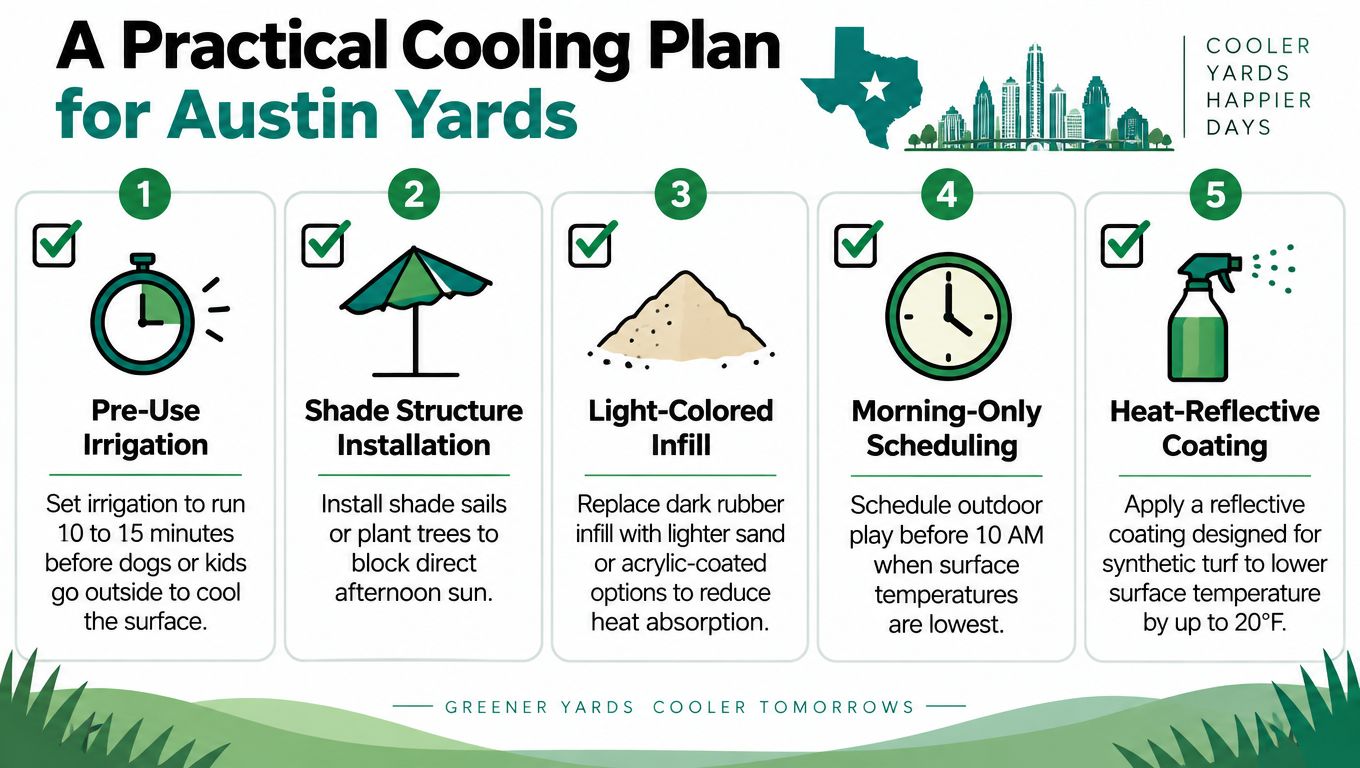
A Practical Cooling Plan for Austin Yards
A dependable Austin cooling plan combines several moderate measures rather than trusting one product label. Start with the areas people and pets use, then match shade, infill, drainage, and watering times to each area's exposure.
Begin with the sun path
Check the yard in the morning, around midday, and during late afternoon. West-facing sections often become the hardest zones because they receive strong sun after nearby paving, walls, and other surfaces have already stored heat.
Shade usually changes comfort more consistently than a turf upgrade by itself. A shade sail, pergola, mature tree, or other structure over the main seating or play area can reduce direct exposure where it matters most. A review of 23 publications found artificial turf surfaces were generally 9.4 to 33.7°C hotter than natural turf during the day, while nearby air was only 0.5 to 1.2°C warmer. It also cited a study in which building shade cooled manufactured turf to 35°C, a 26°C reduction (2025 artificial turf review).
Match cooling to the use case
- Family lawn: Place the main sitting and play zone under shade, and schedule longer activity outside the strongest afternoon sun.
- Dog run: Include a shaded resting area, a cooler route between activity zones, and drainage that can handle rinsing, rain, and pet use.
- Putting green: Review its orientation and nearby hardscape. A small exposed installation may feel hotter than a larger lawn with afternoon shade.
- Commercial courtyard: Put seating under structural shade and give customers another outdoor surface besides synthetic turf.
Use irrigation precisely
Run a short cooling cycle shortly before use, not hours beforehand. Check the actual surface with your hand or a suitable thermometer before barefoot activity, particularly after prolonged direct sun. The benefit fades as water evaporates, so timing matters more than adding more water.
Choose infill for the whole job
The calcined-clay infill discussed earlier still needs moisture access, so pair it with shade, drainage, and sensible use timing.
Day and night can produce different results. The 2025 review found artificial turf may run hotter than natural turf during the day, while a New Jersey environmental review reported that synthetic turf may be cooler at night. Evening use may therefore feel comfortable even when the same area is unpleasant in midafternoon, but nighttime comfort does not remove daytime burn risk.
For product comparisons, heat-resistant artificial turf options can help organize questions about fiber, infill, and site conditions. The useful choice is the system that fits the yard's shade, drainage, and activity patterns, not a product carrying the word "cool."
Talk Through Your Yard With a Local Installer
A useful in-yard assessment should be a design conversation, not a sales presentation. The installer should ask where dogs rest, when children play, whether the patio is used in the afternoon, and which areas must remain comfortable without frequent watering.
Ask the installer to review:
- Sun exposure: Which zones receive direct light in the morning, afternoon, and evening?
- Base and substrate: What lies below the turf, and how will that base drain after irrigation or rain?
- Use patterns: Will people walk barefoot, or will pets stay on the surface for long periods?
- Infill options: Which infill suits a shaded patio zone versus an exposed dog run?
- Shade strategy: Would a tree, structure, umbrella, or shaded retreat protect the highest-use areas?
- Maintenance access: Can the surface be rinsed without creating drainage, odor, or access problems?
Ask for a site-specific heat plan that accounts for shade, activity, drainage, and irrigation timing. The Penn State temperature and irrigation research can help frame questions about water-holding infill and cooling, but the yard's design still determines when that benefit matters.
Modern Yard Landscapes provides Austin-area turf installation, drainage tile, retaining wall work, pet-friendly designs, cooling infill options, UV-resistant high-denier fibers, antimicrobial treatments, and custom putting greens. Review its approach to a turf installer in Austin, Texas and ask how the proposed system will perform in exposed and shaded zones.
Modern Yard Landscapes can assess sun exposure, drainage, infill needs, and high-use areas before recommending a turf system. Visit Modern Yard Landscapes to schedule an Austin assessment.