
You step onto the backyard turf after another long Austin summer and notice that it doesn't look like the lawn you bought. The blades lie flat along the patio, the infill feels crusty instead of springy, and the sunniest edge has lost some of its color. After rain, there's an odor near the dog run, while a few weeds are working through the perimeter.
That doesn't automatically mean the turf needs replacement. In many homes, the problem is the wrong maintenance approach, not an old lawn. Artificial turf maintenance equipment works best when each tool is matched to a specific symptom, and Texas heat makes that decision more important. A stiff broom can restore a residential lawn. A powered groomer can correct compacted high-traffic areas. The same machine used too aggressively can damage fibers or move infill where you don't want it.
When Good Turf Starts to Look Tired
A homeowner usually notices turf decline in small ways. The walkway looks shiny, the play area feels firmer, and the grass near the back door stays flattened even after someone brushes it. In late September, those details become obvious because the lawn has spent months absorbing intense sun, foot traffic, pet use, dust, and storm debris.
The first question should be, what changed in the surface? Flat fibers point toward matting or poor grooming. Crusty infill can signal compaction. Odor after rain often means organic material or pet residue has settled deeper than a quick rinse can reach. Weeds at the edges usually involve exposed seams, soil migration, or a perimeter that needs inspection rather than another pass with a brush.
Practical rule: Match the machine to the failure mode. More force isn't a substitute for the right diagnosis.
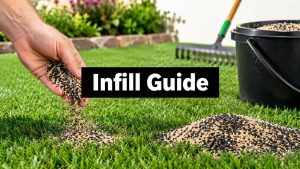
Synthetic turf relies on infill to help support upright fibers, provide cushioning, and maintain consistent traction. Guidance from Penn State's synthetic turf maintenance program describes a sequence of brushing, decompaction, and grooming, while warning that over-aggressive brushing can abrade fibers and under-maintenance can allow infill to compact or migrate unevenly.
Read the lawn before reaching for equipment
Look across the turf from a low angle. If blades are lying in one direction around a gate or patio, light cross-brushing may be enough. If the surface has hard lanes, low spots, or noticeably different infill depth, a professional should assess it before you rent a powerful machine. Surface hardness and inconsistent infill can affect footing, drainage, and playability, not just appearance.
The history of purpose-built equipment supports this practical distinction. The Roll&Comb 141 E launched in 2014 as the first electric brush specifically designed for artificial turf, after a dedicated maintenance-tool gap had been identified in 2003, according to the synthetic turf maintenance equipment industry history. Specialized turf care developed because general lawn tools couldn't reliably manage synthetic fibers and infill.
A tired-looking lawn is often recoverable, particularly when the backing, seams, drainage, and edges remain sound. A useful overview of artificial grass durability can help you separate normal surface wear from signs that deserve an installation or repair inspection.
The Core Tools Every Turf Owner Should Know
Buy equipment by the job it performs. A homeowner with leaves, pet use, and ordinary foot traffic needs a different setup from a putting green or athletic field.
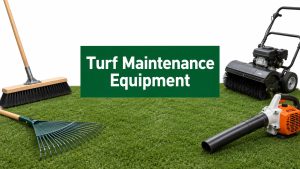
Start with a stiff synthetic-fiber push broom. It lifts flattened residential fibers and levels light surface disturbance without the aggressive penetration of a powered machine. Michigan State University recommends approved bristles, a dry surface, and low vehicle speed, and identifies a static brush as useful for leveling infill and standing fibers upright in its synthetic turf care guidance.
A leaf blower handles dry leaves, grass clippings, and loose debris with less disturbance to infill than repeated raking. Use a leaf rake only when it has flexible plastic tines and you're working gently. Metal rakes can catch fibers and pull at the turf system.
Choose the tool that fits the symptom
A powered turf brush or rotary groomer makes sense on compacted lanes, dog runs, putting greens, and heavily used commercial areas. It can cover ground that would make hand brushing inefficient, but the operator must control depth and speed. A decompaction tool loosens infill that has become hard under repeated traffic. It isn't a general-purpose brush, and using it without checking infill levels can leave low areas underfilled.
An infill redistributor helps move material into shallow depressions, pet zones, and worn paths. It shouldn't be used to hide drainage failure or a soft base. A pump sprayer with a turf-safe sanitizer is useful for odor control, especially around pets, but it needs even application and a product compatible with the turf and infill.
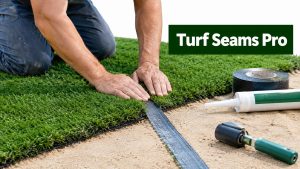
For putting greens and sports fields, a linesweeper or drag brush provides controlled surface grooming over larger areas. Seam rollers and turf cutters belong mostly with repair work. Homeowners can own them, but cutting, lifting, and resetting turf without understanding the base can create wrinkles or visible seams.
| Equipment | Problem It Solves | Best Setting |
|---|---|---|
| Synthetic-fiber push broom | Light matting and surface leveling | Residential lawn |
| Leaf blower or plastic-tine rake | Leaves and loose debris | Residential lawn |
| Powered turf brush | Compaction and concentrated traffic | Dog runs, putting greens, commercial turf |
| Infill redistributor | Low spots and displaced infill | High-use or pet areas |
| Pump sprayer and turf-safe sanitizer | Odor and organic residue | Pet-friendly residential areas |
| Drag brush or linesweeper | Broad, even grooming | Sports fields and putting greens |
| Seam roller and turf cutter | Local repairs | Repair work by trained operators |
Michigan State's equipment guide identifies grooming brushes, sweepers, drag brush groomers, utility carts, and spraying equipment as core synthetic turf tools. It explains that grooming equipment can stand fibers upright and redistribute crumb rubber, while sprayers may help with weeds, static charge, and wetting agents. For climate-specific homeowner observations, Prescott AZ turf maintenance tips offer a useful comparison, even though Austin's heat, storms, and soil conditions require local judgment. You can also review this guide to choosing an artificial grass maintenance brush before buying.
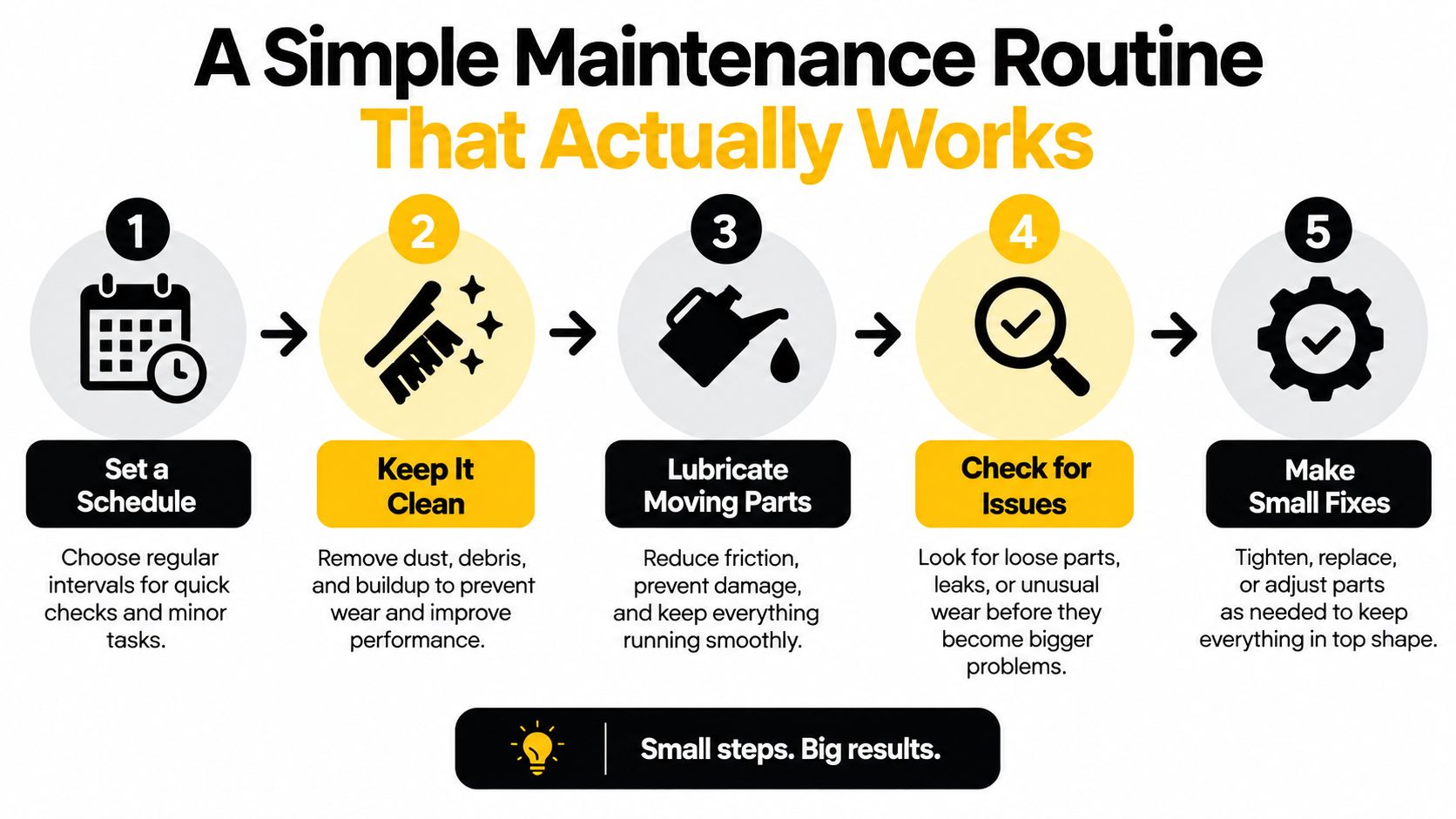
A Simple Maintenance Routine That Actually Works
The routine is straightforward, but the order matters. Brush first, decompact second, and groom last. That sequence removes debris, loosens compressed infill, and leaves the surface looking uniform instead of moving the same material around.
Start with a light brush
Use a stiff synthetic-fiber broom across the direction of the lay, especially in walkways and around patio furniture. The goal is to lift matted blades, not scour the backing. Penn State recommends brushing synthetic turf with purpose-designed equipment every three to four weeks during the season, with the brush set to lightly contact the surface rather than carry the machine's full weight, as explained in its field maintenance guidance.
For a typical Austin home, light brushing can happen weekly in busy paths, while the whole lawn may need a less frequent pass. Pick up litter and remove organic debris before brushing. Safe Healthy Playing Fields recommends sweeping and dragging to keep fibers upright, checking infill in high-use areas, and grooming at least monthly or more often based on use in its synthetic turf maintenance recommendations.
Decompact without digging
When the infill feels hard or the fibers stay flat, use a power brush or turf rake on a slow, shallow pass. Independent field guidance describes monthly power brushing at roughly 2 to 3 millimeters of penetration, with deeper work reserved for specific conditions, as documented in this synthetic turf maintenance study. Keep the machine moving and avoid turning sharply on the surface.
A deeper decompaction pass isn't a weekly chore. Penn State guidance limits vertical star-shaped non-powered slicer use to two or three times per year, and recommends regular brush settings that only lightly contact the surface. If the machine is pulling out large amounts of infill, stop. That's a sign the setting, tool, or surface condition needs professional review.
Finish by grooming with the grain
The final pass redistributes loosened infill and restores a consistent appearance. In Texas, schedule deeper grooming for early morning or evening, when the turf isn't at its hottest. A cool, dry surface gives you more control and reduces the chance of stressing heat-softened fibers.
For cleaning methods between visits, use this practical guide on how to clean artificial turf. The routine, not a rigid calendar, keeps turf performing well. Adjust it when traffic, pets, storms, or visible surface changes demand attention.
Residential Versus Commercial Care Compared
A residential lawn and a commercial putting green may use the same basic principles, but they don't have the same workload. A homeowner generally manages leaves, occasional spills, pet areas, and foot traffic. A commercial operator manages repeated use, consistent presentation, infill distribution, and surface performance across a much larger area.
For most homes, a stiff push broom and blower handle routine care. A power brush becomes more useful when the yard has a putting green, a large dog run, concentrated activity, or recurring hard spots. Commercial turf may use a motorized groomer regularly because hand tools can't provide consistent coverage across a heavily used surface.
| Factor | Residential Lawn | Commercial or Putting Green |
|---|---|---|
| Primary goal | Appearance, cleanliness, odor control | Appearance, consistency, traction, and service life |
| Brushing approach | Manual sweep commonly works | Motorized grooming often suits repeated use |
| Debris removal | Blower and light hand tools | Sweepers, drag brushes, and planned cleanup |
| Sanitizer use | Spot treatment in pet areas | Controlled treatment based on contamination and use |
| Infill attention | Check paths, low spots, and dog zones | Monitor distribution across the entire surface |
| Professional work | Seasonal or condition-based service | Scheduled inspections and specialized maintenance |
The Penn State workflow of brushing, decompacting, and grooming applies to both settings, but the depth and frequency must follow use. High-use facilities may need a maintenance effort approaching one hour for every ten hours of use, with power brushing commonly performed six to twelve times per year, according to independent turf research in the Journal of Sports Engineering and Technology.
Place your property on the spectrum
A backyard used mainly for walking and occasional entertaining sits near the residential end. A yard used by several dogs, children, sports practice, or frequent gatherings moves toward the commercial end. A putting green demands even more consistency because uneven infill changes ball roll and surface feel.
You don't need commercial equipment just because your lawn is artificial. You need a tool that solves the problem you can see. If you're correcting broad compaction, uneven infill, drainage-related softness, or a recurring odor, a crew with calibrated equipment is usually safer than a larger machine in inexperienced hands.
Mistakes That Wear Turf Out Faster
Harder brushing doesn't mean better brushing. On a hot Austin afternoon, heat-softened fibers can bend, abrade, or break when someone attacks a flat area with a machine set too low.
The most common mistake is using a steel-wire brush on polyethylene fibers. Synthetic turf guidance consistently recommends synthetic-fiber bristles and warns against metal or wire bristles. A wire brush can catch individual fibers, roughen their surface, and pull at the backing instead of restoring the pile.
Repeatedly brushing against the grain creates another problem. One cross-grain pass can lift matting. Repeating that motion aggressively can move infill away from the area you're trying to correct and leave the lawn with inconsistent fiber direction.
Correct the habit, not just the appearance
Pet waste needs prompt removal because organic residue can settle into the infill and backing. Pick up solid waste, rinse appropriately, and use a compatible sanitizer for odor control. Don't rely on a stronger chemical or repeated soaking to compensate for neglected cleanup.
Heavy equipment also belongs off the turf unless the surface and manufacturer allow it. Parking carts, trailers, or machinery in one location can compress infill and stress seams. Sports turf guidance specifically cautions against unsuitable vehicles, objects that puncture the surface, and wire brushes in its synthetic turf field maintenance practices.
Finally, don't wait until the lawn feels spongy before checking infill. Infill that migrates or compacts unevenly leaves some areas less supported than others. Use a light brush for routine correction, keep the equipment high enough to avoid digging into the pile, and bring in a professional when you see wrinkles, exposed backing, drainage trouble, or spreading bare spots.
Buying Equipment Versus Calling the Pros
Homeowners often compare a cheap broom with a professional visit, but the actual decision involves more than the purchase price. A broad industry breakdown places a synthetic turf maintenance setup at roughly $8,250 to $82,000, depending on scale and equipment mix, according to synthetic turf maintenance equipment pricing research. The same breakdown lists boom sprayers from $1,000 to $35,000, sweepers from $1,500 to $20,000, brooms from $500 to $3,000, groomers from $1,500 to $2,000, carts from $2,500 to $16,000, field magnets from $500 to $1,000, and rollers from $250 to $2,000.
Those figures describe professional equipment categories, not a required homeowner shopping list. A typical residential owner may only need a broom, blower, and appropriate cleaning supplies. The expense becomes harder to justify when a power brush sits unused in a garage, requires storage, and is operated only occasionally.
Spend on the tasks that require judgment
Leaf blowing and spot cleaning are reasonable homeowner jobs. Light brushing is also manageable when the turf is dry, the bristles are synthetic, and the operator avoids digging into the pile. Deep decompaction, infill redistribution over broad areas, seam inspection, and repairs pay a professional crew back faster because the risk of making the surface worse is higher.
A putting green or heavily used dog run may justify specialized ownership, especially if someone on the property will use and maintain the machine consistently. For most Austin homes, a modest hand-tool setup plus condition-based professional service is more practical than purchasing a full equipment package.
Landscaping crews also need safe, organized transport for brushes, sprayers, carts, and repair supplies. Businesses evaluating best trailers for landscaping businesses can find useful guidance on matching trailer capacity to their equipment needs.
A local service provider can inspect the turf before recommending machinery. Modern Yard Landscapes provides artificial turf maintenance services that include brushing and fiber lift, infill redistribution and top-up, deep cleaning, pet-area treatment, and repair-focused inspections. That kind of visit is especially useful when you know the lawn looks wrong but can't identify whether the cause is compaction, contamination, fiber layover, or a base issue.
Getting Your Turf Back to Looking New
A good maintenance visit should produce a visible change without making exaggerated promises. The fibers stand more upright, infill spreads more evenly, edges look cleaner, seams receive closer attention, and pet odors are treated rather than covered. The surface should have a more uniform height and direction, so sunlight reflects across it like it did after installation.
The timing of those results depends on use, pets, weather, drainage, and the condition of the infill. A professional can explain what the current surface will support and whether it needs routine grooming, deeper decompaction, top-dressing, cleaning, or repair. That inspection matters because brushing alone won't correct a damaged seam or a drainage problem.
Independent research links grooming with infill redistribution and reduced surface hardness, while also discussing contamination control and newer equipment designed with lower emissions, precision, and digital integration in mind in this review of synthetic turf maintenance outcomes and equipment trends. Those benefits only appear when the machine, setting, and surface condition match.
Professional service and homeowner care work together
A service visit isn't wasted because you brush between appointments. Light brushing, debris removal, rinsing, and prompt spot cleaning help preserve the correction. They don't replace a deeper inspection when infill has compacted, migrated, or become contaminated.
For homeowners, the practical decision is straightforward. Handle leaves, light grooming, and routine pet cleanup yourself. Call a qualified crew when the turf stays flat, feels hard, develops low spots, smells after cleaning, shows uneven infill, or begins separating at seams and edges.
If your lawn looked worn after a long Texas summer, you don't need to guess at the machine or push harder until the surface changes. Schedule a maintenance visit, let the crew identify the actual failure mode, and get a clear recommendation for what to own, what to avoid, and what work should be done professionally.
Modern Yard Landscapes provides artificial turf maintenance, deep cleaning, infill redistribution, pet-area treatment, fiber lifting, and repair-focused inspections for Austin homes and commercial properties. Visit Modern Yard Landscapes to request an assessment and schedule a maintenance visit for a cleaner, more even, better-performing lawn.