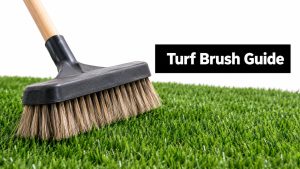

The first sign usually appears under your bare feet. A homeowner crosses the Austin backyard and notices a flat, crunchy patch where the dog runs each morning. Near the back door, the pile leans in one direction, while the grass under a patio chair looks pressed down and slow to recover.
That isn't a reason to replace the lawn. It's a reason to use the right artificial grass maintenance brush before ordinary traffic turns temporary layover into persistent matting. Synthetic turf needs grooming because its fibers bend, lock together, and stay bent until something physically lifts and resets them. A dry, controlled brushing routine also helps redistribute infill and preserve a more even playing surface, as described in synthetic turf maintenance guidance from Sports Health.
Why Your Synthetic Lawn Needs a Maintenance Brush in the First Place
A synthetic lawn behaves more like carpet than living grass. Carpet fibers flatten under repeated footsteps, furniture, and pet traffic. Turf blades respond the same way, especially along the route between a back door and a dog run, beside a gate, or beneath a chair that gets moved only occasionally.
In Central Texas, reflected heat from limestone walls and hardscape makes those high-use areas feel harsher underfoot. Pet traffic adds another problem. Hair, dirt, and residue settle between the blades, compacting the pile and making a small worn lane look older than the rest of the lawn.
Brushing fixes several problems at once:
- It lifts flattened fibers: A brush raises matted blades after patio furniture, foot traffic, and repeated pet movement.
- It redistributes infill: Light grooming helps move loose infill back into areas where it has shifted.
- It interrupts permanent matting: Brushing common paths before the fibers stay locked in one direction protects the surface's appearance and playability.
The Central Texas artificial turf FAQ also treats brushing as part of normal turf care, not as an emergency repair. That distinction matters. A modest maintenance brush used at the first sign of poor recovery is cheaper and less disruptive than waiting until a contractor has to correct compacted infill, localized matting, or a damaged edge.
Installer's rule: Brush the places people and pets actually use, not just the places visitors see.
A $25 maintenance brush can outperform a $200 service call when you use it before damage sets in. Those figures are practical price comparisons from the maintenance scenario described here, not a universal service rate. The point is simple. Routine grooming costs less effort than corrective work, and it gives you a chance to spot low infill, loose seams, or recurring traffic damage early.
The brush head matters, though. A stiff tool can create more trouble than it solves, while a soft brush may never reset dense artificial turf. Your turf style and daily use should determine the head you buy.
Choosing the Right Artificial Grass Maintenance Brush
Brush choice starts with bristle stiffness, not brand loyalty. Synthetic turf guidance favors approved bristles that groom without overly abrading the fibers, and the surface is most effectively brushed when dry, according to the Synthetic Turf Council maintenance guidelines.
Match bristles to the surface
Soft nylon is the safest choice for pet turf, delicate grass, and areas where you're worried about pulling fibers. It lifts hair and light debris without attacking the backing.
Medium polypropylene is the practical residential option. It has enough bite to stand ordinary fibers upright while remaining controlled for routine grooming. For most Austin backyards, I'd start.
Stiff synthetic bristles suit demanding commercial corridors and some putting greens, but only when you can control pressure. A commercial patio or apartment dog run may need more aggressive grooming than a lightly used backyard. A putting green needs a brush that restores the intended lay without scraping or tearing the pile.
A steel-wire brush is permanently off the list. It can shred polyethylene fibers, damage the backing, and turn a matting problem into a repair problem.
Choose a head width you can control
A 12-inch head works well around putting-green holes, borders, gates, planter edges, and pet-run corners. It gives you detail control where a wide head can catch edging or skip tight areas.
A 24-inch head covers open lawn efficiently, but it requires enough room to make straight passes without twisting the handle. A medium-width head often makes more sense for a typical residential lot because it balances coverage with maneuverability.
| Brush Type vs. Turf Use Case | Bristle Stiffness | Head Width | Manual or Power |
|---|---|---|---|
| Pet run | Soft nylon | 12 to 18 inches | Manual for control |
| Residential lawn | Medium polypropylene | 18 to 24 inches | Manual or low-power |
| Putting green | Controlled stiff synthetic | 12 to 18 inches | Manual or dedicated groomer |
| Commercial corridor | Stiff synthetic | 18 to 24 inches | Wheeled or power brush |
Decide whether power earns its place
A manual push brush is usually the smart buy for a smaller lawn or a property with isolated flat spots. Choose a handle long enough to let you work upright. Back strain comes from short handles and repeated bending, not from the turf itself.
A wheeled brush helps on broad commercial areas because the wheels keep contact consistent. A rotary drill attachment can work for small detail patches, but keep the speed low and the contact light. A stiff push broom is acceptable only when its bristles are synthetic and appropriate for turf. A high-speed rotary floor buffer is not a shortcut. It can tear the pile.
Buying rule: Light traffic calls for a controlled manual brush. Repeated traffic justifies a wider or powered tool, but only when you can regulate contact.
How to Brush Artificial Turf the Right Way
Brush a dry surface. Wet turf makes debris and infill clump together, reducing the brush's ability to lift fibers evenly. This dry-surface requirement appears consistently in the Penn State synthetic turf maintenance guidance, which also advises setting the brush to “tickle” the surface rather than resting the machine's full weight on it.

Use this sequence:
- Dry the lawn first. Wait until the surface, fibers, and loose material are dry. Don't brush immediately after rinsing or rain.
- Clear debris. Use a leaf blower or stiff synthetic rake to remove leaves, hair, twigs, and loose trash. Pick up solid pet waste before any grooming.
- Check the infill. At the start and end of each pass, look at the blade tips. If the infill level has dropped below the tips, stop and top up the low area before continuing. Brushing an underfilled section can yank loose fibers and expose the backing.
- Brush against the grain. Make straight, even passes against the natural lay of the pile. Use enough contact to lift the fibers, not enough pressure to scrape the backing or drag infill out of position.
- Change direction. Make a second pass at roughly 45 degrees, then finish with a light pass that follows the lawn's natural lay. This prevents a one-direction grain bias.
Give extra attention to gates, dog runs, the path beside the back door, and putting-green holes. Those locations show poor fiber recovery before the rest of the lawn does. For a deeper cleaning or a stubborn traffic lane, Austin turf cleaning services can address debris and infill issues that brushing alone won't correct.
Finish with a 30-second visual test. Walk away from the area, view it from two directions, and look for blades standing rather than leaning in a uniform stripe. Press a few fibers with your hand and release them. If the pile rebounds and the infill looks even, you've reset the surface. If footprints and flattened lanes remain, reduce the area you're treating, inspect infill depth, and use controlled grooming instead of pushing harder.
Matching Brushing Frequency to How Your Lawn Is Used
A fixed calendar is a weak maintenance plan. Traffic should set the schedule. The Synthetic Turf Council and related field manuals recommend regular brushing to preserve appearance, upright fibers, and even infill, while FieldTurf Australia recommends light brushing at least monthly in alternate directions with a medium-soft bristle brush. Sports-field guidance cited by Penn State recommends brushing every three to four weeks during the season, but a private lawn may need more or less depending on use.
A shaded backyard nobody plays on can go longer between brushes if the fibers recover and the infill remains even. A narrow dog path used morning and evening may need attention far sooner. Pet runs and kennel areas deserve particular care because hair and residue compact the pile and trap material between blades.
| Brushing Frequency by Lawn Use | Brushing Frequency | Trigger Signal |
|---|---|---|
| Shaded, lightly used yard | Inspect and brush when recovery slows | Footprints remain visible |
| Family backyard | Every three to four weeks during busy use, with less frequent grooming when traffic drops | Play lanes stay leaned over |
| Pet run or kennel area | Weekly or whenever hair and residue compact the pile | Odor, trapped hair, or persistent layover |
| Putting green | After roughly 40 hours of play, based on the use-specific schedule described here | Ball roll starts tracking the grain |
| Commercial corridor | Every other day during peak use, as a traffic-driven operating plan | Walk lanes remain visibly flat |
The right signal is fiber recovery, not the date. Step away after use and see whether the blades return upright. If footprints stay visible, brush that zone regardless of whether the rest of the lawn looks fine.
Practical rule: Don't groom an untouched lawn simply to satisfy a calendar. Groom the lane that keeps telling you it's being used.
For pet owners, custom pet turf in Austin should be planned around the animal's actual route, drainage, and cleanup needs. Brushing the whole yard with equal force wastes time. Focus on the compacted strip beside the door, around the relief area, and anywhere the pet circles or waits.
Brushing Mistakes That Quietly Damage Turf
The shortcuts are attractive because they feel efficient. Most of them move damage from the surface into the backing, infill, seams, or fiber roots.
Brushing wet grass drags moisture and infill into clumps. The next day, you may see uneven coverage and bald-looking streaks. Let the lawn dry before grooming.
Steel-wire brushes are worse. They can shred synthetic fibers and pull tufts from the backing. The brush may feel powerful, but it's using the wrong kind of force.
Other failures show up gradually:
- Skipping the edges: Perimeter fibers flatten first along curbs, borders, and gates. If you ignore them, the matted area can spread inward.
- Brushing in one direction: Repeated passes create a grain bias, making seams and color changes more noticeable.
- Pressing too hard: Heavy pressure compresses infill below the fiber base and can expose the backing to ultraviolet exposure and foot traffic.
- Running a rotary buffer too fast: High-speed agitation tears the pile rather than lifting it.
- Using a brush that's too stiff: Excessive abrasion can disturb infill and wear fibers before the lawn looks visibly damaged.
The turf maintenance and cost guidance is useful when you're comparing routine grooming with corrective work, but the operational lesson is straightforward. Use nylon or polypropylene bristles, keep the surface dry, vary direction, and let the brush do the lifting.
A damaged lawn may eventually show early replacement needs, seam separation, or warranty complications. You can avoid much of that by reducing pressure and checking the infill before every aggressive pass.
A Seasonal Brush-and-Care Routine for Austin Lawns
Austin turf needs a routine that changes with weather and use. Spring brings pollen and renewed outdoor activity. Summer brings intense sun, dust, and heavy backyard use. Fall brings leaves that can mat into the pile, while winter usually calls for lighter attention focused on traffic lanes.
Spring
After the main pollen drop, clear debris and give the lawn a deeper, controlled brush before outdoor gatherings begin. Check pet areas for shifted infill and top off low spots in thin layers before incorporating the material with a medium-soft brush.
Summer
Brush early in the morning, before the surface becomes excessively hot. Inspect fibers after prolonged stretches of extreme heat for brittleness, and rinse dust from the lawn regularly so particles don't remain packed between blades. Busy pet runs and play lanes may need light weekly attention, while quiet sections can wait until their recovery slows.
Fall
Remove leaves before they settle into the pile. Use a moderate synthetic brush to restore the lay and redistribute infill that summer activity has shifted. Don't grind organic debris into the surface with a power tool.
Winter
Reduce grooming to gentle attention on high-traffic lanes, with monthly brushing as a practical baseline when use is limited. A quarterly infill check helps catch low areas before they become obvious, while a professional groom is appropriate when fibers remain flat after three controlled passes.
For broader property upkeep, a power washing maintenance plan offers a useful seasonal framework for coordinating exterior cleaning tasks alongside turf care. Keep the turf-specific work separate, though. Synthetic grass needs dry brushing, controlled pressure, and infill awareness.
The payoff is a surface that stays upright, drains as designed, and looks maintained instead of tired. If a traffic lane won't recover, the issue may be infill depth, seam movement, drainage, or installation conditions rather than a missing brush.
Modern Yard provides artificial turf installation, pet-friendly dog runs, custom putting greens, and turf maintenance for Austin homes and commercial properties. If your fibers stay flat, infill has shifted, or you want a maintenance plan matched to how your lawn is used, visit Modern Yard Landscapes to schedule an assessment.