
Late summer in Austin has a way of exposing weak turf maintenance. A homeowner steps onto the backyard lawn and notices that the path from the back door to the patio no longer feels springy. The fibers lie flat where the family walks, and after a rain, a faint dog-urine odor rises from the surface.
That isn't a cosmetic problem. Artificial turf is a working system made of fibers, infill, backing, seams, and a drainage base. When one part loses performance, the yard can become less comfortable, less sanitary, and less reliable long before the damage looks dramatic.
The four symptoms I use most often when advising homeowners are matting, odor, drainage slowdown, and seam lift. Each points to a different maintenance response. This guide explains when a broom and hose are enough, when professional artificial turf maintenance services make sense, and what a properly scoped visit should include. For a broader look at how installation quality affects longevity, review this guide to artificial grass durability.
Why Artificial Turf Needs More Care Than You Think
Artificial turf is low maintenance, not maintenance-free. Cornell's sports-field guidance recommends sweeping or dragging fibers, loosening and redistributing infill, and replenishing infill in high-wear areas because infill provides the system's padding, shock absorption, footing, and resilience. The guidance also notes that about 20 tons of crumb rubber can create only a 1/4-inch layer of coverage, so even modest infill loss can affect surface consistency and playability. Read the full Cornell synthetic-turf maintenance guidance for the technical explanation.
Austin yards put this system under steady pressure. Heat, ultraviolet exposure, oak pollen, dust, foot traffic, patio furniture, and pet use all introduce material that can settle between the blades and into the backing. A rinse may make the surface look cleaner, but it won't necessarily restore fiber lift, redistribute infill, or clear a restricted drainage path.
The symptoms tell you what the turf needs
Matting usually means the fibers have been pressed down or the infill has compacted or shifted. A stiff broom can help with light flattening, but persistent matting calls for mechanical brushing and an infill check.
Odor that returns after rinsing usually means urine residue has reached the backing or infill. Surface fragrance only masks that problem. Deep cleaning and an enzyme treatment address the residue where it remains.
Drainage slowdown shows up as water that sits longer than expected after ordinary rain or a hose test. Organic debris, compacted infill, backing contamination, or a base issue can all contribute, and the correct response starts with inspection rather than more deodorizer.
Seam lift is a safety and durability concern. A raised edge or separating seam can catch a foot, admit debris, and spread further when people or pets cross it. Re-securing it early is more sensible than waiting for a larger repair.
Installer's rule: If the yard looks clean but feels hard, smells sour, drains slowly, or shows a lifting edge, appearance has already stopped being a useful measure of condition.
The practical distinction is simple. Routine care preserves the system. Professional service restores performance when a symptom shows that brushing or rinsing alone isn't reaching the problem.
What a Professional Turf Maintenance Service Actually Covers
A credible crew doesn't arrive with one bottle and a hose. The work should follow the turf system from the surface down, with each service aimed at a particular failure point.
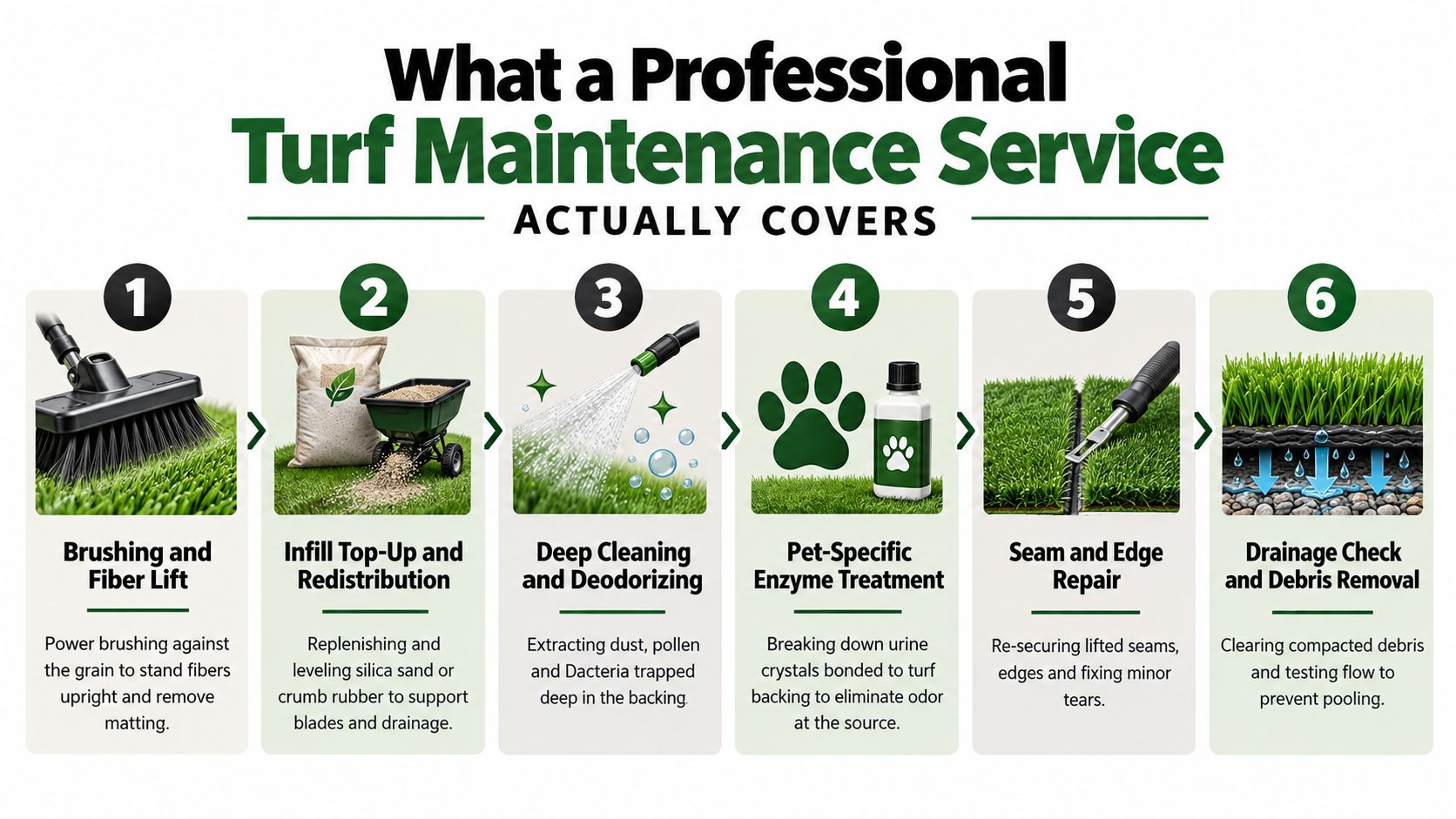
The crew's service sequence
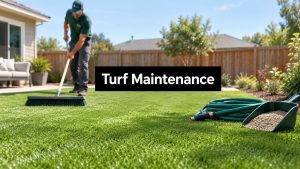
Brushing and fiber lift comes first. A stiff broom or power brush works against the existing grain to lift flattened fibers and loosen surface debris. This is performance work, not just grooming. Upright fibers distribute traffic and help the infill support the pile.
Infill redistribution and top-up follows when low spots, exposed backing, or uneven support appear. A calibrated spreader distributes silica sand or crumb rubber, while leveling equipment works it into the pile. Cornell's guidance identifies infill as the material that restores cushioning, footing, and resilience, so skipping this step leaves the underlying problem in place.
Deep cleaning and deodorizing removes dust, pollen, organic matter, and residue trapped below the visible surface. The crew should use turf-appropriate cleaning equipment and products, not harsh chemicals that can damage fibers or leave a problematic film.
Pet-specific enzyme treatment targets urine residue bonded to the backing and infill. Pet runs may also need an encapsulated deodorizer or antimicrobial treatment when ordinary rinsing hasn't stopped recurring odor. The right treatment depends on whether the smell is localized or spread across the entire relief area.
Inspection finishes the job
Seam and edge inspection checks adhesive failure, lifted borders, minor tears, and movement around transitions. A small lifting seam may be re-secured during the visit, while a larger failure needs a separate repair scope.
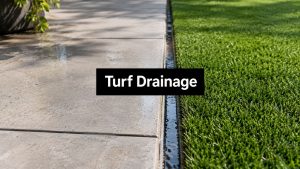
Drainage checking and debris removal clears compacted material from the surface and tests water movement. Drainage isn't an aesthetic detail. A 2025 New Jersey Department of Environmental Protection review cites Synthetic Turf Council guideline minimum drainage rates of 10 inches per hour for turf and backing/infill and 14 inches per hour for the base and finish stone. Those benchmarks show why a crew should treat pooling as a system question, not rinse harder. See the NJDEP synthetic-turf review.
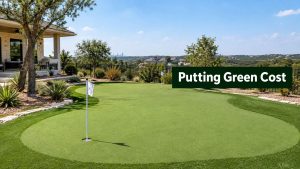
Putting greens need a more controlled visit. The crew should brush against the grain, inspect hole cups, and use a stimpmeter when green speed and consistency are part of the maintenance objective. Pet areas need a different emphasis, with deeper odor treatment and closer drainage attention. A useful overview of homeowner cleaning practices is available in this guide to cleaning artificial turf.
How Often Your Turf Should Be Serviced
A calendar helps, but traffic and symptoms matter more than a generic promise that every yard needs the same visit. FIFA's quality manual recommends brushing at about every 40 playing hours, while Cornell advises grooming before each game, checking hardness at least annually, and keeping hardness below 150 Gmax. Those are sports-field benchmarks, not a residential schedule, but they make the point clearly. Heavy use requires more frequent grooming and periodic performance testing. Review the FIFA quality manual for the field-management standard.
For a normal residential lawn, light brushing and rinsing throughout the year can handle surface debris and ordinary traffic. Schedule a deeper visit after the oak pollen drop in March, inspect seams after winter in February, and check infill before the heaviest summer use. July through September is when foot traffic, pets, heat, and infill migration tend to expose weak areas in Austin yards.
Match service to use, not wishful thinking
| Turf Use Type | Light Brush & Rinse | Deep Clean & Infill Check | Pet Treatment | Putting Green Grooming |
|---|---|---|---|---|
| Standard residential | Quarterly, plus visible debris removal | Twice yearly | As needed for odor or deposits | Not applicable |
| Pet-heavy residential | More often in active paths and relief areas | Twice yearly, with condition-based checks | Monthly during warm months, or sooner if odor persists | Not applicable |
| Commercial or high-traffic | Weekly brushing may be appropriate on heavily used surfaces | Frequent condition-based inspections and scheduled deep service | Based on use and odor triggers | Not applicable |
| Backyard putting green | Light grooming as needed | Semiannual deep service | Not usually applicable | Monthly, with grain and cup inspection |
The weekly figure for heavily used surfaces is supported by synthetic-turf best-practices guidance, which also recommends daily or near-daily inspection for tears, seam damage, foreign objects, and liquids on high-use fields. A private yard doesn't need a stadium routine, but a commercial courtyard, apartment dog area, or busy play zone should be inspected far more often than a lightly used lawn.
Keep a simple log of brushing, rinsing, pet treatment, infill work, repairs, and observed symptoms. Michigan State guidance recommends regular inspection, debris and contaminant control, infill checks, and a maintenance and activity log. That synthetic-turf best-practices document is useful because it turns maintenance from guesswork into a record of what the surface has experienced.
What Artificial Turf Maintenance Services Cost in Austin
Don't accept a quote that gives you one number without explaining the work. Austin maintenance pricing moves with four practical variables: square footage, pet intensity, infill condition, and site access.
A small lawn behind a wide gate is simpler than a large yard with a narrow side passage, slope, fencing, furniture, or multiple pet relief zones. A surface with healthy, evenly distributed infill needs less corrective work than one with compacted high-traffic paths and exposed backing. Pet urine also changes the scope because odor treatment may need deeper cleaning instead of a quick rinse.
Price should follow the service scope
The following ranges are planning categories, not promises. A reputable company should inspect the yard and explain which line items apply before work begins.
| Service Tier | Typical Use Case | Price Range (Austin) | Main Cost Drivers |
|---|---|---|---|
| Light upkeep | Brushing, debris removal, and rinse for a generally healthy residential lawn | Low-end residential service | Area size, access, debris load |
| Deep cleaning | Embedded dust or pollen, deodorizing, and a condition review | Mid-tier service | Soil and organic buildup, pet use, equipment time |
| Corrective maintenance | Infill top-off, redistribution, seam repair, or drainage correction | Highest service tier | Infill loss, repair extent, access, drainage complexity |
Pet enzyme treatment and seam re-adhesion should appear as clear line items, not surprise charges. The same applies to infill material, antimicrobial treatment, specialized putting-green grooming, or drainage investigation. If the provider can't tell you what the crew will add, remove, test, or repair, the quote isn't detailed enough.
For a useful framework on installation economics and long-term ownership, read the real cost of artificial turf. Maintenance pricing makes more sense when you treat it as protection for an installed system rather than a recurring cosmetic fee.
A service visit can feel expensive when compared with a hose and broom. It looks different when the work addresses compacted infill, persistent odor, a lifting seam, or water that no longer clears properly. The sensible question isn't only, “What does this visit cost?” Ask, “Which failure is this visit preventing or correcting, and what happens if I leave it alone?”
DIY Upkeep Versus a Professional Service Plan
Homeowners can handle more than many service companies admit. A stiff broom, leaf blower, hose, mild turf-safe cleaner, and a free weekend are enough for surface debris, light brushing, rinsing, and small spot cleanups. Keep leaves and oak litter from settling, rinse pet areas, and brush the paths where the fibers visibly lean.
That routine won't correct every problem. Hand-shaking infill into a low spot rarely produces an even layer, and aggressive brushing can spread the material without restoring proper support. A homeowner also can't reliably diagnose whether slow drainage comes from surface debris, backing contamination, or a base problem without checking the system below the pile.
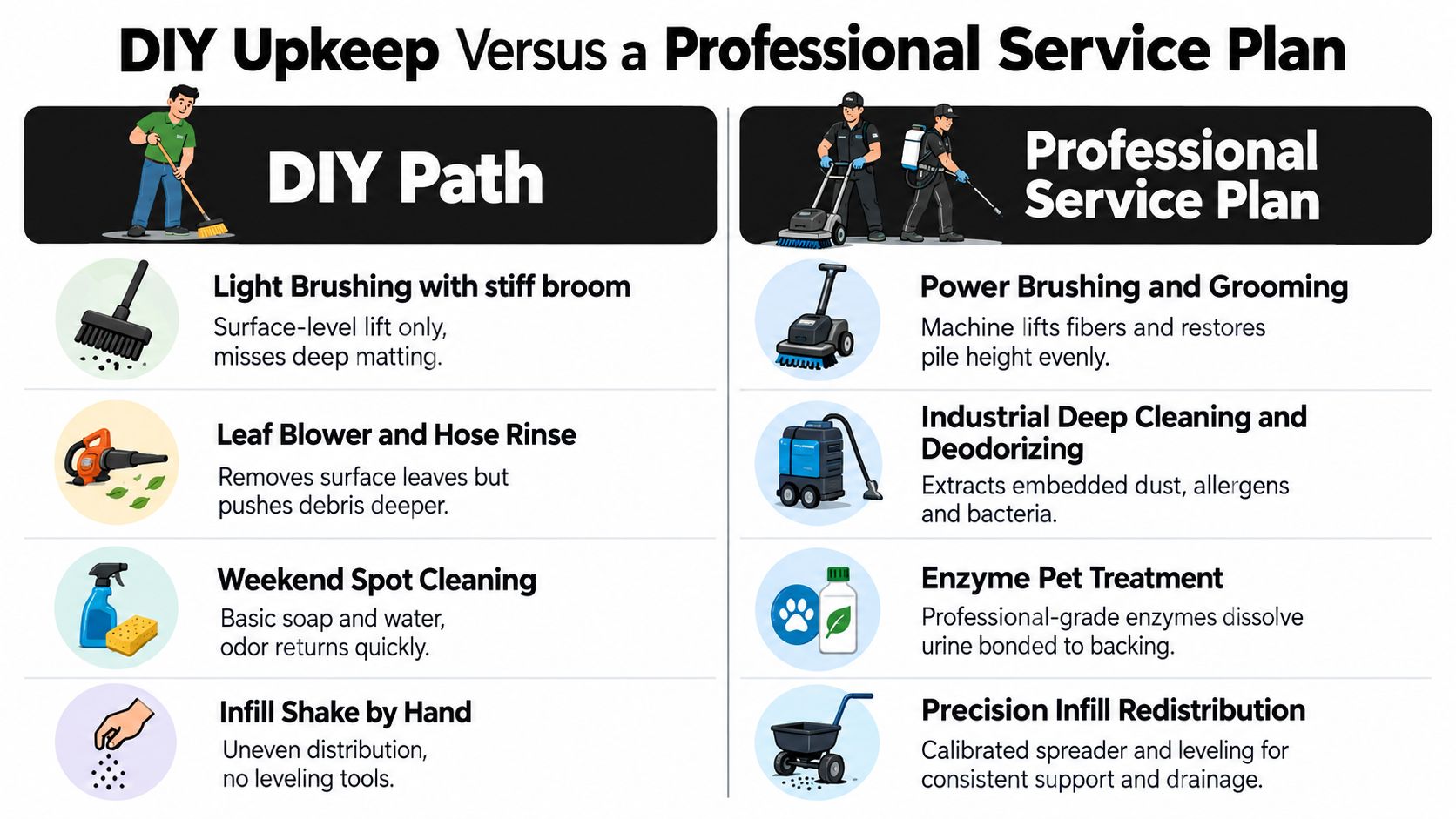
Use DIY care for upkeep, not reconstruction
| Concern | DIY Path | Professional Service Plan |
|---|---|---|
| Light matting | Stiff broom provides surface-level lift | Power brushing restores fibers more evenly |
| Leaves and dust | Blower and hose remove visible debris | Deep equipment reaches embedded material |
| Recurring pet odor | Soap and water may provide temporary relief | Enzyme treatment targets residue in backing and infill |
| Uneven infill | Hand distribution is difficult to level | A spreader and grooming equipment create consistent coverage |
| Lifted seam | Home repair can misalign or contaminate the joint | Technician inspects and re-secures the seam correctly |
| Drainage slowdown | A hose reveals pooling but not always the cause | Crew checks flow and investigates the turf system |
Warranty risk is another reason to avoid improvising with unsuitable adhesives, harsh chemicals, or heavy equipment. DIY is a good fit for an attentive homeowner who enjoys routine care and catches symptoms early. A professional plan is a better fit for pet-heavy yards, commercial areas, putting greens, and homeowners who want condition records and scheduled inspections.
The artificial turf repair guide can help you distinguish routine care from damage that needs a repair scope. If a seam is lifting or the turf feels unusually hard, stop trying to hide the symptom and schedule an inspection.
Warning Signs That Mean It's Time for Professional Service
Walk the yard with your eyes and your nose. The surface will usually tell you when ordinary upkeep has stopped working, especially if you check the same traffic paths, pet zones, edges, and low areas after rain.
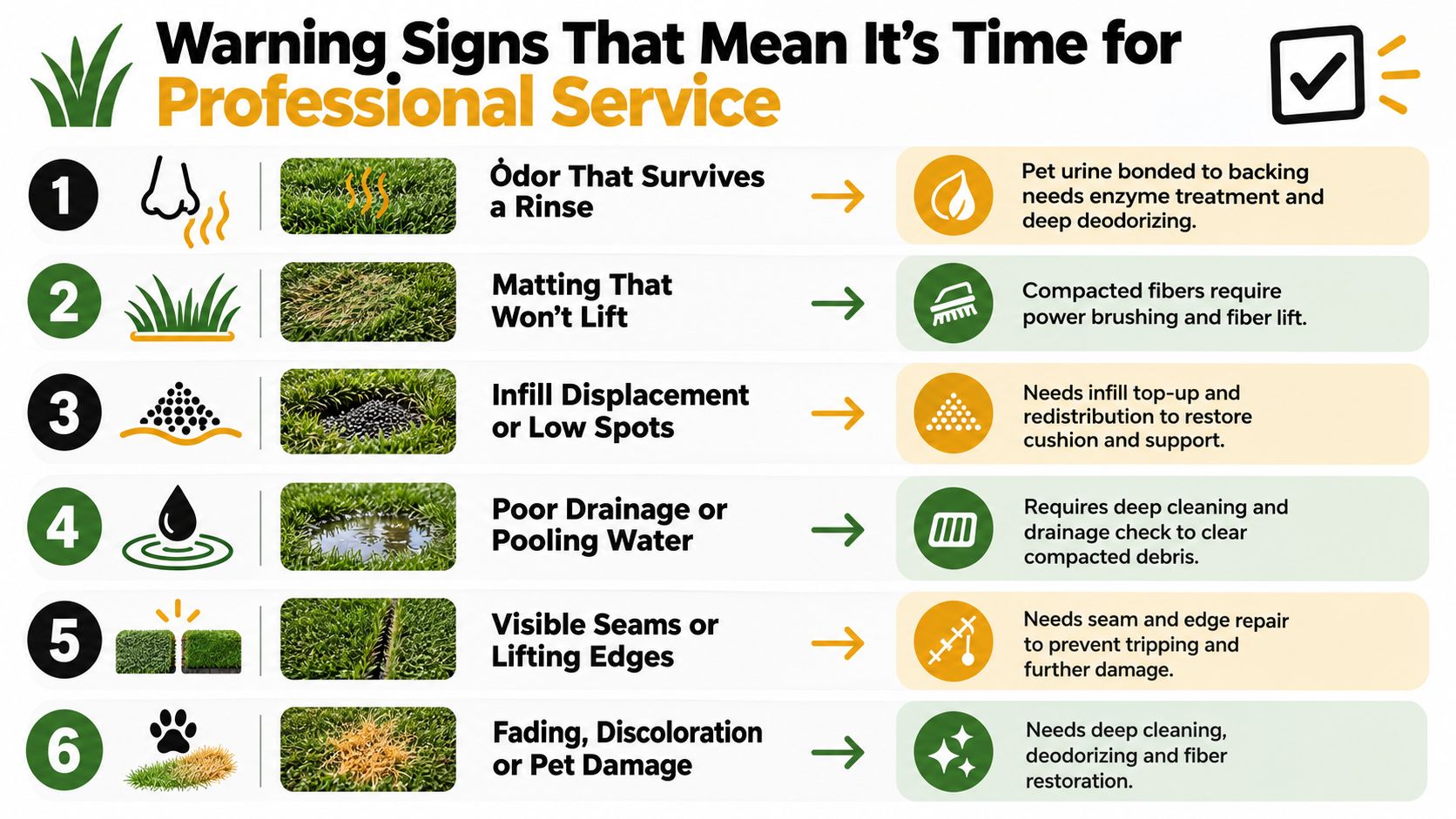
Use the symptom to choose the service
Odor that survives a rinse: Urine residue has likely reached the backing or infill. Ask for deep cleaning, deodorizing, and a pet-specific enzyme treatment rather than another surface rinse.
Matting that won't lift: Fibers remain flat after stiff-bristle brushing when traffic has compacted the infill or altered pile support. Power brushing, fiber lift, and an infill assessment are the proper response.
Low spots or visible infill displacement: Uneven support can make parts of the yard feel less resilient and can leave fibers without adequate backing. The crew should redistribute existing infill and top up areas where material has been lost.
Pooling after ordinary rain or a hose test: Standing water signals a drainage concern, compacted debris, or a problem below the visible surface. A drainage inspection should come before adding more cleaning product.
Visible seams or lifting edges: Adhesive failure or movement at the perimeter can become a trip hazard and allow the damage to spread. Request seam and edge repair while the affected area remains manageable.
Fading, discoloration, shiny patches, or pet damage: These areas need more than a visual touch-up. Deep cleaning, deodorizing, fiber restoration, and a check for wear or contamination can identify whether the issue is surface residue or material stress.
Hard spots near busy paths deserve the same attention. Penn State best-practices guidance says fields should be tested regularly, preferably annually, and meet a g-max requirement below 200 under ASTM F355, a limit accepted by the U.S. Consumer Product Safety Commission. See the Penn State synthetic-turf best-practices document. Residential turf isn't a regulated sports field, but a noticeably hard area still warrants inspection.
A quick walkaround checklist
- Smell the dog relief area after it gets wet.
- Look for strips where blades stay flat.
- Check whether water clears or sits in shallow pools.
- Press along seams and edges for movement.
- Look for shiny, faded, or discolored traffic patches.
- Compare hard-feeling zones with areas that still feel resilient.
Modern Yard can evaluate those symptoms and match them to brushing, infill work, cleaning, pet treatment, repair, or drainage service. You shouldn't have to guess which product to buy first.
What to Expect When Modern Yard Landscapes Visits Your Yard
A professional visit should feel organized before the truck arrives. During the booking handoff, the coordinator confirms the yard's square footage, pet situation, putting-green location if applicable, service history, and access notes. Gates, slopes, fencing, narrow side yards, and locked areas affect how the crew plans the visit, so those details should be discussed early.
The assessment comes before the equipment
The lead technician walks the yard with you and identifies high-traffic paths, pet zones, low spots, seams, edges, and areas where fibers look compressed. The technician checks infill levels with a probe and confirms the work scope before starting. That conversation matters because a homeowner may call about odor while the inspection also reveals a drainage restriction or low-infill path.
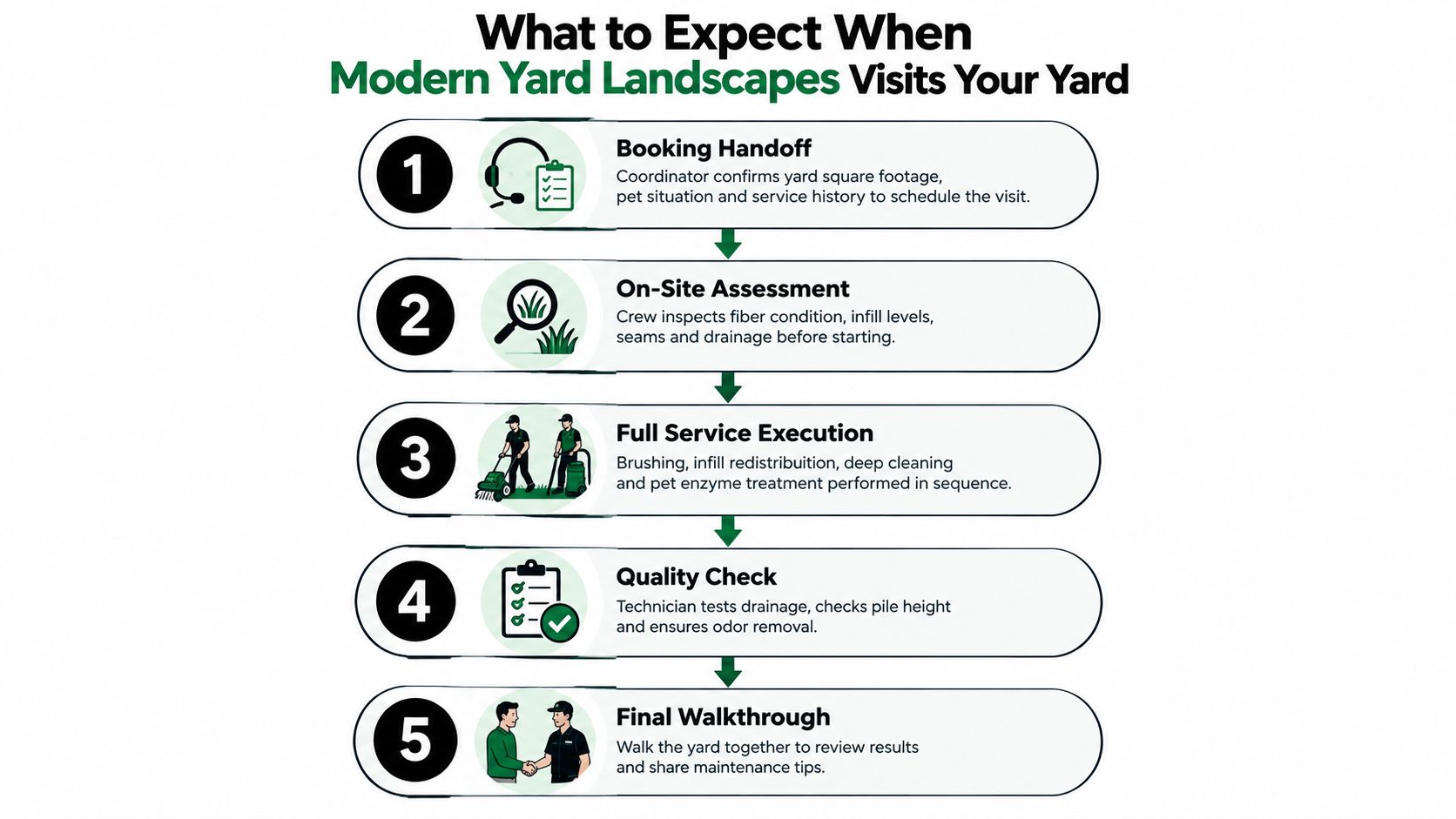
The work then follows a logical order:
Debris blow-out: Leaves, loose dirt, and organic material are removed before brushing or washing.
Power brushing against the grain: Mechanical grooming lifts the pile and exposes areas where infill has compacted or shifted.
Infill redistribution or top-up: The crew levels existing material and adds compatible infill where coverage is low.
Deep cleaning and pet treatment: Embedded residue is extracted, then pet areas receive deodorizer or enzyme treatment when the symptom calls for it.
Seam, edge, and drainage checks: The technician examines transitions, tests flow with a hose, and may complete a minor in-visit repair, such as applying re-adhesive to a lifting seam.
The final walkthrough should be specific
Before leaving, the crew should show you what changed instead of saying the lawn is finished. Before-and-after photos, a written condition report, and a next-service recommendation give you a usable record. The report should identify remaining concerns, areas to watch, and whether the next visit is routine or condition-based.
That transparency is what builds trust. You know what was found, what was done, and why the recommendation fits your yard rather than someone else's schedule.
A good maintenance visit leaves you with fewer mysteries, not more products.
Modern Yard offers artificial turf maintenance for Austin residential and commercial properties, including cleaning, brushing, infill care, pet-area treatment, putting-green service, and repair-focused inspections. If your turf is matted, odorous, slow to drain, or showing a lifting seam, visit Modern Yard Landscapes to schedule an assessment and get a clear service recommendation for your yard.