
Dog urine doesn't break down turf fibers; odor means liquid or residue is sitting in the infill or base long enough for bacteria to make ammonia. Buying a stronger deodorizer before checking drainage is often the wrong move.
The common advice is to spray the lawn and keep spraying whenever the smell returns. That's reasonable for a lawn that drains, but it's wasted effort when rinse water collects underneath it. With artificial turf and dog urine, the useful question isn't which fragrance covers the smell. It's where the liquid goes after it leaves the grass.
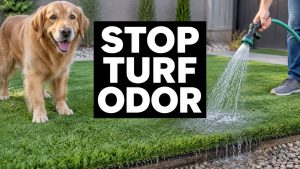
A garden hose can help you separate a cleaning problem from an installation problem. Start there before paying for another treatment or agreeing to replace the lawn.
Where Dog Urine Goes in Each Turf Layer
Dog urine doesn't damage synthetic blades. The trouble starts when liquid stalls below them. FusionTurf's explanation of urine movement through artificial turf identifies retained liquid and residue in the infill or permeable base as the principal concern, rather than damage to the grass itself.
Think of a pet lawn as a connected drainage assembly. The visible grass is only the entrance. Each material underneath must let liquid continue toward soil that can accept it or a drainage route that carries it away.
Follow the liquid below the blades
Where dog urine goes in an artificial turf system
| Layer | What urine does | Odor risk if it lingers |
|---|---|---|
| Blades and fibers | Passes through; does not break down the yarn | Low |
| Infill | Holds moisture, salts, and organic residue | High when warm and wet |
| Backing | Drains if perforated or flow-through; traps liquid if solid or clogged | High if impermeable |
| Aggregate base | Should carry liquid away on a positive slope | High in low spots or compacted stone |
| Soil below | Accepts drainage unless clay or a liner holds it | High when drainage is blocked |
The blades may look clean while contamination remains farther down. That's why brushing the pile or spraying the tips can improve appearance without changing the underlying odor.
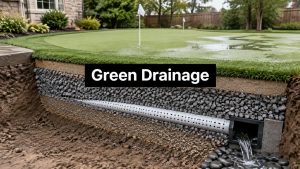
Backing needs perforations or a flow-through structure. Below it, an open-graded aggregate base with positive drainage gives liquid a route out instead of a place to collect. An impermeable membrane directly beneath the turf can interrupt that route, as FusionTurf's pet-odor installation guidance explains.
Soil matters too. A permeable lawn laid over a poorly draining site doesn't automatically become a working pet system. In Austin, clay soil and existing yard drainage constraints deserve attention before anyone chooses the grass.
Infill helps, but it isn't an outlet
Sand and rubber provide ballast, while zeolite can offer ammonium-binding properties. None should be selected without considering the completed assembly's permeability. A technical article in Pet Boarding & Daycare warns that sand, rubber, and even zeolite infill can reduce drainage and retain more urine near the surface.
Enzyme treatments address biological residue. Antimicrobial products target microbial activity. Neither gives pooled water somewhere to go.
Practical rule: Choose the drainage route first, then choose the infill and cleaning routine that work with it.
Use our guide to artificial turf layers to understand what should sit beneath the surface before discussing a repair.
Then take a hose or watering can to the busiest toilet spot. Apply water gently and watch whether it passes through, collects on top, or runs toward a trapped edge. Compare that location with the table, but don't assume the surface alone reveals the failed layer. A puddle identifies where to investigate, not necessarily what needs replacing.
Why Warm Leftover Urine Turns into Ammonia
A warm dog area can smell stronger even when the blades look dry. Moisture can remain underneath the visible surface, where microorganisms continue working on urine residue.
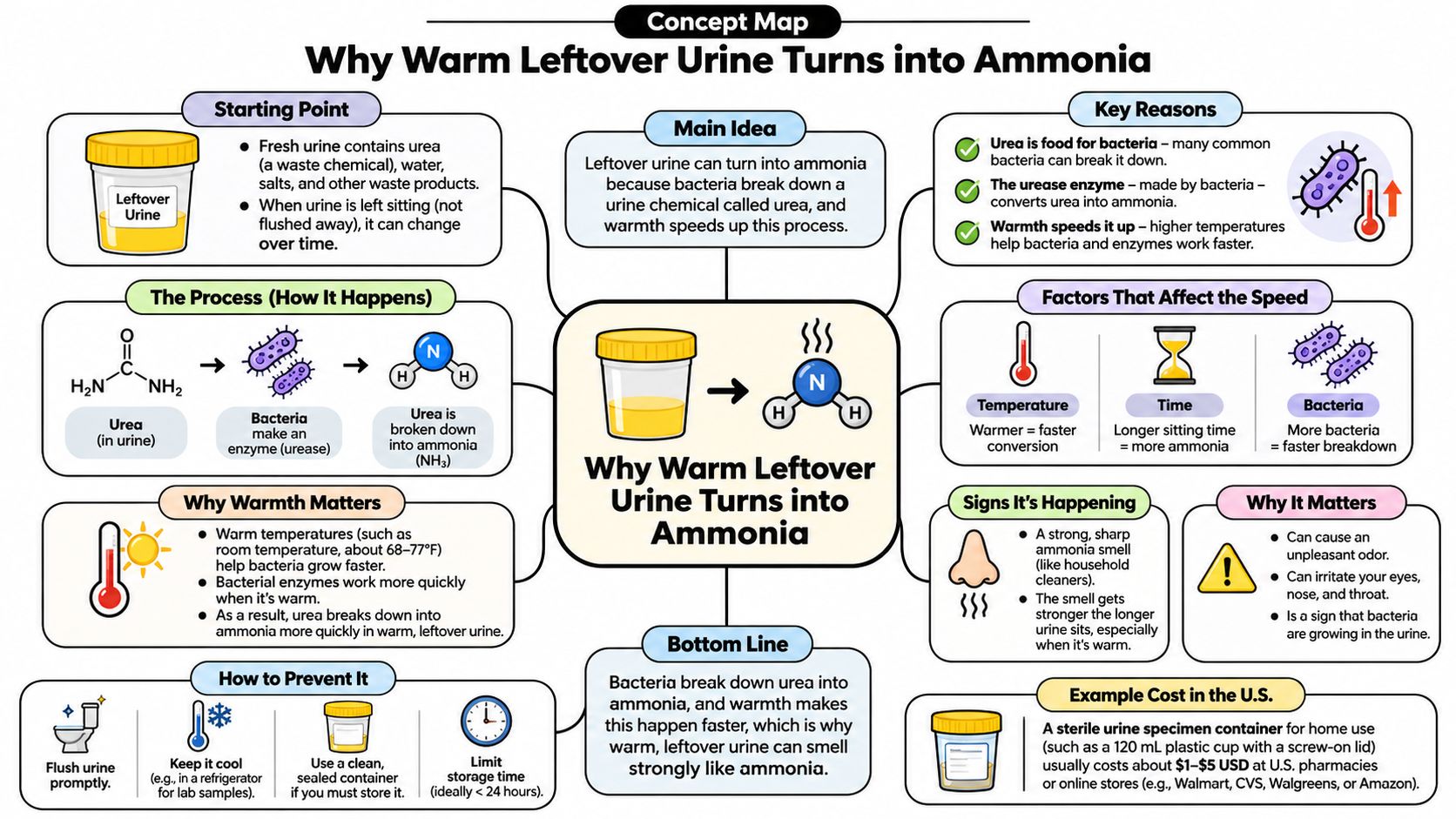
Urine carries urea, a nitrogen-containing compound. Urease-producing microorganisms split that urea, producing ammonia and carbon dioxide. The sharp ammonia smell is the result of that breakdown, not evidence that the plastic grass is decomposing.
The biological sequence is straightforward.
Heat changes what you notice
An extension-based comparison discussed by Timeless Grass found ammonia loss from urea applied to soil increased from 2% of nitrogen at 60°F to 4% at 75°F over four days, doubling across 15°F, but those soil results aren't a prediction for an artificial lawn.
The practical lesson is narrower and more useful than an odor forecast: warm, moist residue deserves attention. You can't calculate how strongly your yard will smell from air temperature alone. Dog use, retained moisture, contamination, and the drainage route all affect the conditions beneath the pile.
Think of contaminated infill like a sponge containing dirty water. Wetting the top doesn't necessarily empty the sponge. If liquid stays inside, the surface can appear refreshed while the material underneath remains contaminated.
That analogy also explains why an afternoon smell can be more revealing than a cool morning inspection. Check the problem area when the odor is normally noticeable, not only immediately after washing it.
What zeolite can and can't establish
The same account describes a 2020 laboratory study in which clinoptilolite zeolite held approximately 15 to 16 milligrams of ammonium per gram. That measures laboratory binding capacity, not outdoor service life, an installation quantity, or guaranteed performance under repeated dog use.
Zeolite's mineral structure can bind ammonium through ion exchange. That makes it a useful supporting material, but it doesn't make a wet base acceptable.
Odor-control infill is a treatment layer, not permission to leave urine trapped underneath the lawn.
If odor peaks on hot afternoons in places that stay damp, treat that pattern as a reason to investigate retained residue. The chemistry explains the smell. The layer holding the moisture determines what you should do about it.
Diagnose Whether Drainage or Cleaning Is the Problem
Is the smell a cleaning miss or a drainage failure? Answer that before choosing another product. A persistent odor can come from a concentrated toilet corner, contaminated infill, or a problem affecting the whole installation.
A municipal review published by Fraser notes that pet waste can accumulate on synthetic turf, that rinsing is necessary, and that deeper sanitation may require removing infill and applying a waste-breaking cleaner. A surface wash isn't always enough, but neither does every sour patch justify rebuilding a yard.
Run a focused hose test
Start at the places your dog uses most: the gate, a favorite corner, or a shaded resting area. Test a problem zone rather than soaking the entire lawn immediately, so you can see where water collects.
Use a normal hose flow, not a pressure washer. Watch the surface, the downhill edge, and any visible outlet. Then check the same location after the water has gone and again when the yard warms up.
Rinse, enzyme, or drainage repair
| What you see | Likely location | Next action |
|---|---|---|
| Smell fades after a real hose-down | Surface residue only | Keep rinsing busy zones and remove feces |
| Smell returns within hours in heat | Warm, moist infill | Enzyme or urine cleaner plus more frequent rinsing |
| Rinse water pools in one spot | Low grade, clogged base, or blocked edge | Open the outlet and correct the depression |
| Odor across the yard after rain | Failed base, clay, or trapped drainage | Drainage tile, base correction, or both |
| One corner stays sour | Localized contamination | Clean that zone before replacing the lawn |
| Cleaner never changes the smell | Liquid trapped under the surface | Inspect backing and sub-base before adding product |
These are working diagnoses, not proof of a hidden defect. A successful rinse suggests accessible residue, but it doesn't certify that every underlying layer is clean. Likewise, pooling warrants inspection before anyone decides whether the backing, aggregate, edge, or soil is responsible.
Separate a local problem from a site problem
Say the gate corner smells, but the rest of the lawn drains and stays neutral. Treat that corner first. Removing localized contamination is a more proportionate response than replacing otherwise functional turf.
A yard-wide odor after rain calls for a different investigation. Check whether surrounding runoff enters the turf, whether edging blocks discharge, and whether the underlying soil can accept water. In Austin, heavy rain and clay soils make those site questions particularly relevant.
Our guide to artificial turf drainage systems explains the drainage options worth discussing when water has no reliable exit.
Don't cut backing, pull up seams, or excavate a drain based on smell alone. Record what the water does and have the assembly inspected. Antimicrobial infill cannot correct poor grading, blocked drainage, or an impermeable barrier. The repair should address the verified obstruction, not add another layer of material.
How to Rinse and Deodorize a Draining Lawn
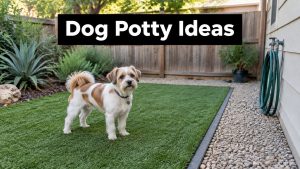
A busy dog area receives repeated waste loading. Treat it as a washable pet surface, not a decorative lawn that happens to get dirty.
Use this routine when rinse water already passes through and has somewhere to go. Turfresh's explanation of turf sanitation emphasizes that contamination can extend through infill, backing, and the base, so effective maintenance needs more than a spray over the grass tips.
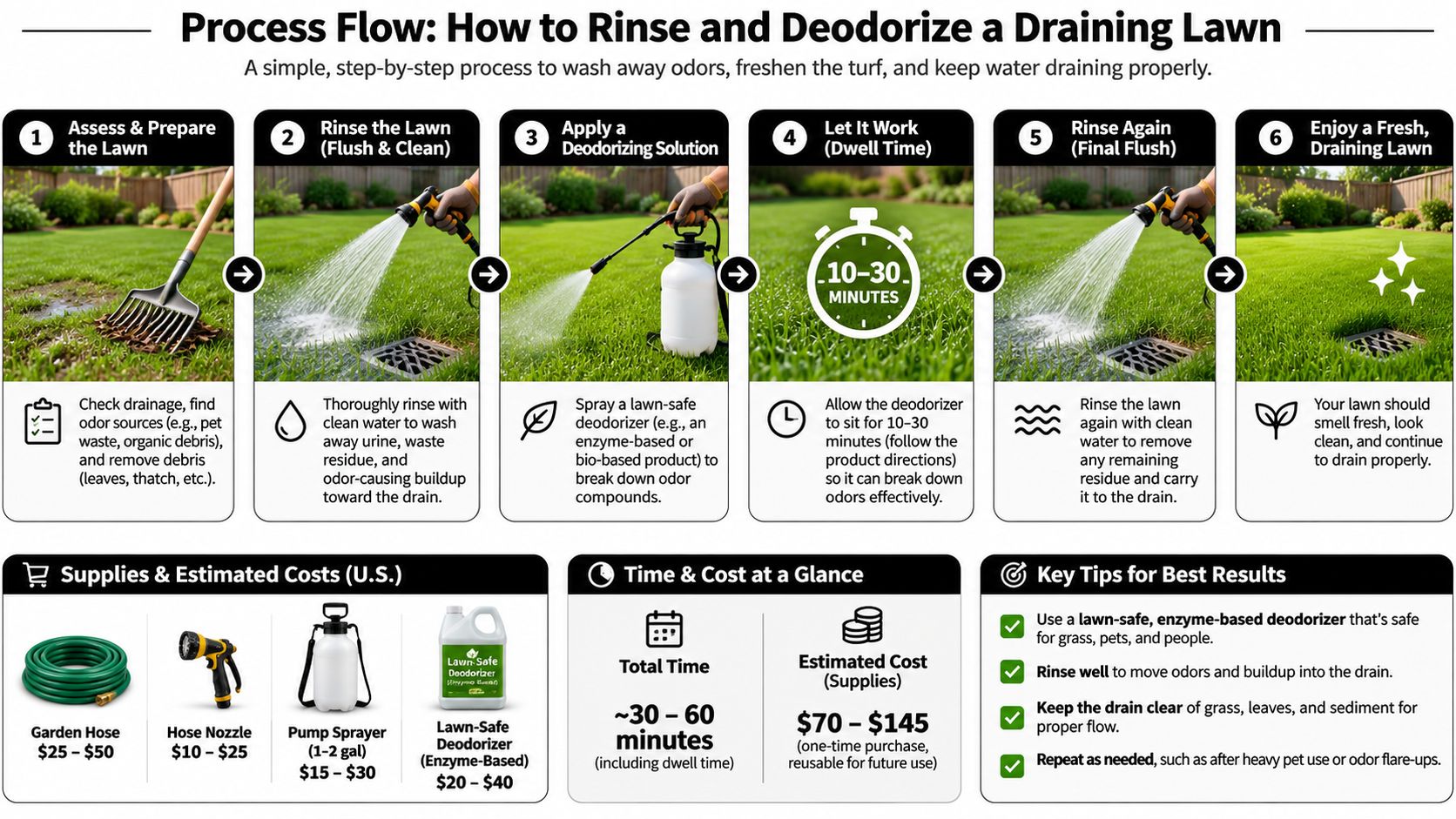
The sequence matters because you want to remove waste, flush accessible residue, and then treat what remains.
Clean in the right order
Pick up feces before adding water. Use a scoop or waste bag, then remove remaining solids without grinding them into the pile. Hosing waste downward makes the deeper assembly harder to clean.
Flush the busiest urine zones thoroughly. Use a garden hose with a shower-style nozzle and enough water to move through the infill. A light mist wets the blades without reliably diluting and transporting soluble urine compounds.
Adjust rinsing to actual use. Occasional hosing is a baseline for a lightly used dog run, not a universal schedule. During hot weather or with several dogs using the same patch, rinse more frequently so residue doesn't repeatedly dry in place.
Treat recurring spots with a compatible urine cleaner. Choose a pet-safe enzymatic or urine-treatment product specifically labeled for artificial turf. Apply it into the affected pile and infill, observe its stated contact time, and follow its directions on whether to rinse afterward.
Remove hair, leaves, and settled debris. Use a plastic-tine rake or turf-compatible brush rather than sharp metal tools. Clearing the pile keeps debris from collecting around drainage openings and gives you a clearer view of recurring wet spots.
Recheck under warm conditions. Return when the lawn would normally smell, rather than judging it while everything is freshly wet. A successful cleaning should leave the area smelling neutral after the rinse water has drained away.
Give the cleaner a fair test
Water is useful, but it doesn't dissolve every urine component equally. Turf Product Solutions' explanation of urine chemistry notes that uric acid is sparingly soluble in water, which helps explain why rinsing can leave odor-causing residue behind.
Don't assume all enzyme products have identical dilution or contact requirements. Read those details before application, and keep pets away for the period stated on the product. Mixing cleaners or immediately washing off a treatment can undermine the intended process.
Our practical guide to cleaning artificial turf for dogs can help you organize ongoing care around the areas your pets use most.
Stop buying more product when the result never changes. Persistent odor despite a proper cleaning cycle is a reason to inspect beneath the surface.
An unchanged smell while the hose runs isn't, by itself, proof of base failure. Combined with pooling, lingering dampness, or repeated unsuccessful treatment, however, it's enough to stop guessing. Investigate the drainage path before increasing the chemical load.
What to Ask a Turf Installer Before You Sign
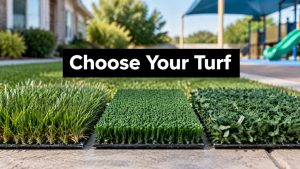
A pet-turf estimate should explain how the yard will function, not just identify the grass being sold. A sample board tells you about appearance and feel. It doesn't tell you whether urine and rinse water can leave your property's particular installation.
Trust is a legitimate concern. In a Which? survey of more than 16,000 members, 58% of respondents who had renovations carried out said they couldn't find a trader they trusted, 27% found selecting a trader difficult, and 17% were dissatisfied with quoted prices.
The answer isn't a bigger promise. It's a scope you can understand and compare.
Take a written checklist to the estimate
Separate the costs. Request an itemized estimate showing turf quantity, material quality, site preparation, drainage work, edging, infill, and pet-specific options. You should be able to tell whether competing proposals include the same work.
Identify the discharge route. Have the estimator explain where liquid goes after crossing the backing. A description that stops at permeable grass leaves the most important site question unanswered.
Document existing conditions. Low spots, runoff entering from neighboring surfaces, soil limitations, access constraints, and existing drains belong in the assessment. Photographs and written notes make proposed corrections easier to understand.
Define routine care. Establish what the homeowner or property manager must remove, rinse, and monitor. Maintenance expectations should reflect how heavily the area will be used.
Put correction terms in writing. Clarify what the installation warranty covers, what it excludes, who handles a pooling complaint, and what response arrangements apply. Don't substitute a verbal assurance for written terms.
Compare explanations, not slogans
An odor-free claim sounds reassuring until you ask what happens when a dog repeatedly uses the same spot. A responsible explanation includes both a working drainage design and ongoing cleaning. Neither should be hidden in fine print.
We use transparent, factors-based estimates that account for material quality, turf quantity, labor complexity, and specialized features. Our site preparation addresses drainage, access, and topography, because those conditions affect the work beneath the visible lawn.
Use our artificial grass installer guidance to prepare for that conversation, but judge the proposal by its specificity. If drainage work is recommended, the scope should name the problem it addresses. If it isn't recommended, you should understand why the existing route is adequate.
You don't need to become a drainage designer before making a call. You do need an estimator who can distinguish a cleaning task from construction work and explain the difference without pressuring you to approve both.
Book a Visit When the Hose Test Fails
Keep cleaning when the lawn drains and the odor stays controlled between cleanings. A functioning pet area doesn't need a rebuild just because dogs use it.
Book an assessment when water pools after a hose-down, odor reaches beyond the dog's usual spots, or properly applied cleaners haven't changed the smell. Those findings point below the surface, where a hose can't help. They justify an inspection, not an automatic replacement.
Bring observations rather than guesses
A short record made before the appointment speeds up diagnosis:
- Mark the location. Note the favorite urine zones and whether the smell is confined to them.
- Capture the water movement. Take a phone video showing where rinse water sits or exits.
- Describe the timing. Explain whether odor appears after pet use, in afternoon heat, or after rain.
- List previous treatments. Include the cleaner used and whether it changed the smell.
Reliability is worth checking too. A 2024 U.S. survey of 2,074 homeowners found nearly 70% worried about unreliable contractors and 41% said they had been deceived by service providers, according to Leaf Home's survey announcement. Asking for a documented diagnosis before any work is approved is a reasonable filter.
Match the service to the cause
Modern Yard builds turf dog runs with proper drainage and a deodorizing infill, and its services include turf installations, putting green installations, dog run installations, drainage tile installations, and turf cleaning. That range matters because the right response might be a deep clean, drainage work, or a new pet-area installation, and nobody can pick correctly before seeing the site.
Quality artificial grass with proper drainage is designed to keep urine moving through the system rather than letting it soak in or linger. When it does linger, the usual suspects are a compacted base, a blocked drainage route, or infill that has stopped doing its job. Each of those has a different fix, and none of them is solved by a stronger deodorizer.
Ask the visit to produce three things: what is happening, what work addresses it, and what maintenance remains your job afterward. No installer can promise zero odor under every use pattern, but a straight answer on those three points tells you whether you're dealing with a cleaning habit or a construction fix.
Modern Yard offers turf cleaning, drainage tile installation, and dog runs built with drainage and deodorizing infill. If your hose test leaves standing water or cleaning hasn't changed the smell, visit Modern Yard Landscapes to call or request an appointment. Bring your notes and video so the visit starts with the cause rather than another bottle of deodorizer.