
If you're shopping for artificial grass installers in Austin, you're probably already tired of the same cycle. Brown patches in summer. Mud after a hard rain. Clay soil that turns slick, then hard as concrete. A quote from one company that seems suspiciously cheap, and another that sounds polished but never explains what they're doing under the turf.
That confusion is reasonable. Artificial grass can be a smart long-term move in Austin, but only when the installer treats it like a drainage and base-construction job first, and a lawn makeover second. The pretty green surface is the finish layer. The primary work is underground.
A lot of bad turf jobs look great for the first few months. Then the seams lift, puddles form, edges curl, pet odors linger, and the whole thing starts to feel like an expensive shortcut. A good installer prevents those problems before they start.
Why a Perfect Lawn Starts Beneath the Surface
A professional turf installation isn't defined by how nice it looks on day one. It's defined by what it prevents on day 500. No sinking. No low spots that collect water. No ripples. No weak seams. No squishy feel underfoot.
In Austin, that matters even more because our soil is unforgiving. Clay expands, contracts, holds water in the wrong places, and creates movement that punishes lazy prep work. If an installer skips excavation depth, rushes compaction, or ignores grade, the turf will tell on them later.
What the base is really doing
The base under artificial turf does three jobs at once:
- Supports weight so the surface doesn't settle unevenly.
- Moves water so rain doesn't sit under the turf.
- Keeps the lawn stable through heat, foot traffic, and soil movement.
Industry guidance tied to the Synthetic Turf Council stresses that the sub-base is the primary determinant of turf longevity, and the City of Lawrence guidelines specify a minimum 3 to 5 inches of compacted aggregate base to help the system drain and avoid settlement, wrinkling, and seam failure over time, as outlined in these artificial grass installation guidelines.

That's the part homeowners rarely see in a quote. They'll see the turf color. They might see the square footage. What often gets buried is the excavation plan, the aggregate depth, the compaction process, and the drainage path.
Practical rule: If a contractor spends more time talking about blade color than base depth, keep looking.
What a real installation process should include
A solid turf install usually follows a disciplined sequence. Not a rushed one.
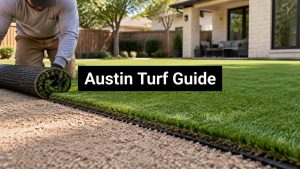
- Excavation with purpose: Remove existing grass, roots, debris, and unstable soil. Surface cleanup alone isn't enough.
- Grading for runoff: The installer should shape the area so water has somewhere to go.
- Compacted aggregate base: This is the structural layer that carries the load and creates drainage space.
- Weed suppression layer: Not a magic shield, but a useful part of a controlled system.
- Tight seams and secure edges: Sloppy seaming is one of the fastest ways a turf job starts looking cheap.
- Correct infill and final grooming: Infill adds ballast and helps protect fibers from wear and UV exposure, while helping blades recover under traffic.
If you want to understand what proper prep should look like before the turf ever arrives, this guide on how to prepare ground for artificial turf lays out the fundamentals clearly.
The foundation analogy is the right one
Artificial turf is a lot like tile over a bad slab. The finish may look clean at first, but the movement underneath will eventually show up. Cracks in tile. Wrinkles in turf. Hollow spots. Separation at joints.
That's why I'm blunt about this: the cheapest bid is often cheap because the installer is deleting the most important part of the job. You can cut corners on decorative extras. You cannot cut corners on excavation, aggregate, grading, or compaction and expect a stable lawn in Austin.
Decoding Your Turf Investment Materials and Costs
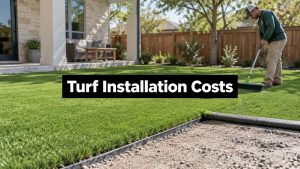
The price of a turf job isn't just about how much grass you buy. It's about what's under it, what it's made of, and how well the installer matches the material to the way you'll use the space.
That's where a lot of homeowners get burned. They compare two quotes that look similar on the surface, but one includes stronger backing, better infill, and proper prep while the other is basically cosmetic carpet over a weak base.

Not all turf products are built for the same job
If the area gets heavy use, material specs matter more than sales language. A technical commercial guide notes that high-traffic installations often call for nylon fibers, with decitex above 1,800 per end and dense construction above 18,000 stitches per square meter to resist matting and premature wear, based on this commercial artificial grass specification checklist.
That matters for dog runs, side yards, commercial entries, play areas, and anywhere people walk. Long pile height alone doesn't mean quality. In fact, a taller product with weak density can flatten faster than a shorter, denser turf built for traffic.
What usually drives the quote
Here's what I tell homeowners to look for when they're trying to understand cost differences:
| Cost driver | What it affects | What to ask |
|---|---|---|
| Base preparation | Stability, drainage, lifespan | How deep are you excavating, and what aggregate are you compacting? |
| Fiber type | Recovery, wear resistance | Is this polyethylene, polypropylene, or nylon, and why is it right for my yard? |
| Turf density | Appearance and crush resistance | What are the stitch density and intended traffic level? |
| Backing and drainage | Water movement and durability | Is the backing perforated or vertically draining? |
| Infill choice | Cooling, ballast, hygiene | What infill are you using, and why this one? |
| Layout complexity | Labor and seam visibility | How are you minimizing seams and handling curves or tight access? |
How to compare quotes without getting fooled
A cheap quote usually hides one of three things. Thin prep. Cheap turf. Minimal labor on the details that take skill.
Ask every bidder to itemize these parts separately:
- Base work: excavation, haul-off, aggregate, compaction
- Surface product: turf brand or product line, fiber type, backing style
- Infill: standard versus upgraded options for cooling or odor control
- Edge restraint and seams: what holds the system together over time
- Drainage work: especially important on Austin lots with slope changes or stubborn clay
The part you don't see is often the part you're actually paying for. That's exactly where the value is.
If you're trying to sort through different product categories before you compare bids, this breakdown of artificial grass types is worth reviewing. It helps you ask sharper questions and avoid comparing an outdoor aesthetic turf to a pet or commercial product.
I'd rather see a homeowner buy a smaller area of well-installed turf than a bigger area of bargain turf installed over a weak base. One lasts. One becomes a repair job.
Solving Austin's Unique Yard Challenges
Austin isn't a generic turf market. The yards here have their own personality, and it's not always friendly. Clay-heavy soil, sudden downpours, brutal sun, and long hot stretches put pressure on every decision an installer makes.
A turf system that works fine in a mild, dry climate can fail here fast.

Drainage isn't optional in Austin
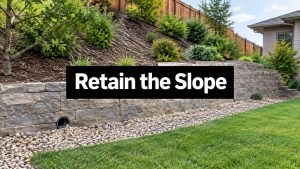
The biggest local mistake I see is treating turf like a surface-only upgrade. On Austin properties, drainage has to be engineered into the install. Clay soil already slows infiltration. Add slope, compacted subgrade, or runoff from roofs, and you can turn a yard improvement into a water problem.
A recent NC State finding, summarized here in a review of common synthetic turf installation mistakes, notes that poorly installed synthetic turf can create much higher runoff than natural grass, especially on sloped sites. That's why grading, drainage layers, and sub-base construction matter so much on local lots.
If your yard already puddles, turf alone won't fix it. The installer needs to solve the water path first. In some cases that means tying the project into broader yard drainage solutions instead of pretending the turf will magically absorb the problem.
Heat changes product choices
Austin sun will expose a lazy product recommendation in a hurry. Surface temperature matters, especially for backyards where kids play, dogs nap, or people walk barefoot from the patio.
That changes the conversation. Instead of asking only what looks most natural, ask what stays more usable in July and August. Lighter fiber tones, better airflow in the system, and cooling-focused infill choices deserve real attention here.
Turf that looks good but gets miserable to use in direct sun isn't a smart buy for Austin.
Local conditions require local judgment
The best artificial grass installers in Austin don't use one default assembly for every property. They adjust for:
- Heavy clay subgrade: requires disciplined compaction and drainage planning
- Flash-rain patterns: demands positive runoff and no dead-flat installs where water can stall
- High UV exposure: calls for durable materials that hold up under year-round sun
- Mixed-use backyards: need turf systems matched to pets, play, lounging, and foot traffic
National chains and general contractors often miss these nuances because they're selling a product package. A good local installer reads the lot first. Then they design the system.
Custom Turf Applications for Your Lifestyle
You see it all the time in Austin. The dog run turns into a mud trench along the fence. The backyard putting green looks sharp for photos but putts like a bumpy patio rug. The office entry starts curling at the edges after a summer of heat and foot traffic.
Those failures are not bad luck. They come from using the same turf system for completely different jobs.
Pet spaces that stay cleaner
Pet turf needs to do three things well. Drain fast, clean up easily, and stay usable in Austin heat. Miss one of those, and the yard becomes a smelly, sticky mess by August.
The usual problem spots are side yards, shaded fence lines, and narrow runs where dogs pace the same route every day. Those areas need a build that flushes waste through the system instead of holding it near the surface. They also need a product that can handle repeated traffic without matting down in a month.
Heat matters here too. Synthetic turf can run much hotter than natural grass in direct sun, so dogs and kids feel the difference right away. If the yard gets blasted in the afternoon, ask about cooling-focused infill and turf options designed for hotter climates, not just whatever sample looks nicest on a board.
Putting greens that roll well
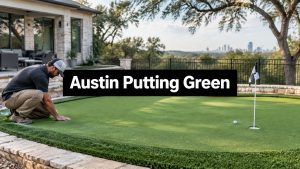
A backyard putting green will expose a weak installer fast. If the base is sloppy, the roll will be sloppy. No sales pitch fixes that.
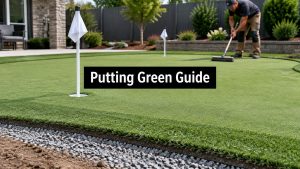
A real practice green needs careful shaping, consistent compaction, clean cup placement, and turf built for ball speed instead of general backyard use. I've seen plenty of homeowners pay for a “custom green” and get a decorative patch that breaks unpredictably and deadens putts. If you want something worth practicing on, hire an installer with a track record in custom turf projects for Austin homeowners, not a crew learning specialty work in your backyard.
Commercial entries and high-traffic zones
Commercial turf has a different job. It must hold its shape, keep edges tight, and still look clean after constant use. Apartment dog areas, office frontage, retail entries, and courtyard corridors all wear differently, so the product and install details need to match the traffic.
This is also where communication matters. Property owners and managers need clear expectations on cleaning, wear patterns, and maintenance response. Good crews handle that well, and many of the same proven tips for home service client satisfaction apply here too.
A dog run, a putting green, and a business entry should never get the same build specification.
Modern Yard Solutions serves Austin with residential and commercial turf, pet runs, and custom putting greens. The point is simple. Hire a company that already installs your type of system on a regular basis. Austin's heat, clay, and sudden rain will punish a one-size-fits-all install.
Your Hiring Checklist Questions for Any Installer
Most homeowners don't need to become turf experts. You do need to know how to spot a contractor who cuts corners. The fastest way is to ask direct questions and listen for direct answers.
If the person giving the estimate gets vague, defensive, or overly salesy, that tells you plenty.
Ask these questions before you sign anything
Here's a practical shortlist you can use with any artificial grass installers you're considering.
| Category | Question to Ask | What a Good Answer Looks Like |
|---|---|---|
| Insurance | Are you fully insured for liability and workers' compensation? | They answer clearly and can provide proof without hesitation. |
| Site prep | How much soil are you removing, and what base are you installing? | They describe excavation, aggregate base, compaction, and grading in plain language. |
| Drainage | How will you handle runoff on my specific yard? | They talk about slope, water path, and whether extra drainage work is needed. |
| Materials | What turf product are you quoting, and what is it designed for? | They explain the intended use, fiber type, density, and backing. |
| Infill | What infill are you using, and why? | They connect the infill choice to pets, cooling, ballast, or wear. |
| Seams | How do you seam turf sections and keep them from separating? | They explain their seaming method and where seams will be placed. |
| Edges | How are the edges secured? | They describe the restraint method and how they prevent curl or movement. |
| Warranty | What does your warranty cover? | They explain material and workmanship coverage clearly, including limitations. |
| Maintenance | What will I need to do after installation? | They give realistic upkeep guidance, not “zero maintenance” nonsense. |
| Communication | Who updates me during the project? | They explain who your contact is and how scheduling changes are handled. |
What red flags sound like
Some answers should make you walk.
- “We don't need much base in Austin.” Wrong. Our soil and weather punish weak prep.
- “All turf is basically the same.” Also wrong. Product specs change performance.
- “It drains because it has holes in the backing.” Incomplete. Drainage depends on the whole system, not just the turf.
- “We can give you a firm quote without seeing the property.” Maybe for a rough budget, not for a trustworthy installation plan.
- “It's maintenance-free.” Nothing outdoors is maintenance-free.
Good installers make communication easy
A lot of customer frustration has nothing to do with the turf itself. It comes from poor scheduling, vague updates, and nobody returning calls once the deposit clears. If you want a simple benchmark for what responsive service should look like, these proven tips for home service client satisfaction line up well with what homeowners should expect from any contractor.
If you're comparing local companies, a search for turf contractors near me is a start, but don't stop at reviews. Use the checklist above and make each company explain its process in plain English.
The right installer won't mind hard questions. The wrong one will try to talk around them.
Your Partner for a Flawless Austin Lawn
You hire a turf installer in August. By the next spring, the yard smells sour after rain, one seam is lifting by the patio, and the low corner stays wet for days because the crew treated Austin clay like sandy soil. I have seen that story too many times.
A good-looking turf job on day one does not prove much. The true test comes after a brutal summer, a hard downpour, dog traffic, and a full year of expansion, drainage, and wear. Austin exposes weak installation fast.
Analysts at Grand View Research describe artificial turf as an established market with plenty of product and service options in this artificial turf market overview. That gives homeowners more choice. It also means you need better judgment, because polished sales language is easy to find and careful installation is not.
The installer you want pays attention to the parts homeowners usually cannot see. How water moves off the roof and across the lot. How the base is built over clay that swells and shifts. How much afternoon heat the turf will hold near stone, fencing, and west-facing walls. Those details decide whether your lawn stays clean, drains well, and still looks sharp a few years from now.
Pick the company that walks the property carefully and talks plainly. They should point out the slope near the house, the muddy dog run along the fence, the gate access that affects equipment, and the spots where runoff will collect during one of our heavy Austin storms. If they rush past those issues, keep looking.
Modern Yard offers consultations for homeowners who want a direct assessment of the yard before committing. The useful part is not a sales pitch. It is getting a clear recommendation on drainage, grade, heat exposure, pet use, and which turf products make sense for your property.