
A barefoot guest crosses the patio lawn and the smell arrives before the greeting does. Or it's Sunday morning, the dog has used the same six feet of turf by the fence for a year, and the yard smells like a warm kennel no matter how long you stand there with the hose.
That loop isn't a shopping failure. Most bottles sold for artificial grass are built for one of seven different messes, and reaching for the strongest one first is how homeowners end up with a stiff, sticky lawn and an odor that keeps coming back by mid-afternoon. Enzyme sprays and disinfectants get misused more than anything else on the shelf because they sound like upgrades.
We install and maintain artificial turf around Austin, and most odor complaints we hear trace back to a drainage or infill question long before they trace back to chemistry. What follows is the matching system, the rates that hold up, and the point where no bottle is going to save you.
Cleaner Classes Matched to the Mess
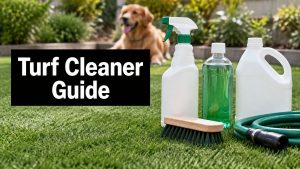
Name the mess before you reach for the bottle. Say it out loud: dust and pollen, dog urine, ammonia hanging in the heat, grill grease, a defined contamination event like vomit or a dropped diaper, or nothing worse than a week of foot traffic. Then confirm the lawn drains. Then read the label for four things: the words synthetic turf, the dilution, the dwell time, and when pets come back.
The first two checks are the ones homeowners skip. That is how a bleach mix ends up on turf that cost real money to install, and how a full jug of enzyme cleaner gets poured onto dust that needed a broom.
| Product class | Best for | Rate or dilution | Dwell and pet return | Skip when |
|---|---|---|---|---|
| Mild turf detergent | Dust, pollen, light soil | A few ounces per gallon, per the turf label | Short wet time, then rinse; pets back when dry | Urine odor or grease is the real problem |
| Enzyme cleaner | Pet urine and organic film | Often about 1:1 up to 4 oz per gallon | Labeled 10 to 30 minute dwell; pets off until dry | Solids remain or drainage is blocked |
| Odor neutralizer | Lingering ammonia smell | Spot or area rate on the label | Until dry; keep pets off wet turf | The bottle is fragrance only |
| Turf-safe degreaser | Grill, sunscreen, and patio oils | Diluted, turf-labeled degreaser | Short dwell, then a full rinse; pets after dry | Daily use that leaves oily residue |
| EPA-registered disinfectant | Feces, vomit, defined sanitation | About 1 gallon mixed per 200 sq ft | 10 minutes wet or until dry; follow re-entry | Routine weekly washing or mixing with ammonia or acid |
| Pet-labeled turf cleaner | Dog runs and repeat urine zones | Label rate for turf and animal contact | Labeled dwell; pets back only when dry | "Pet-safe" with no turf or contact claim |
| Plain warm-water rinse | Weekly dirt, hair, and light debris | Hose only, no chemical | No dwell; safe once the surface is not slick | Water ponds or the base does not drain |
The rate column is a ceiling, not a target
Read a row from the middle outward. The rate on a label is the maximum the manufacturer validated. Doubling it leaves twice the residue in the infill voids without adding cleaning power. The dwell column governs when the dog goes back out. A ten-minute wet contact means the chemistry stays wet for the full ten minutes, and "until dry" means the fibers, not just the surface sheen.
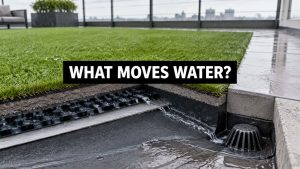
The one rule that prevents most callbacks: if the lawn doesn't drain, no product in the aisle fixes the smell. Fix the water path first, then buy chemistry.
The skip column saves the most money. No bleach, no ammonia, no solvents, and no general-purpose weed killer on synthetic turf. RoundUp stays off artificial grass entirely. Seam weeds get a vinegar-based solution or a weed treatment built for turf systems instead. Ammonia is worse than useless on a pet lawn, because it reads as urine and invites the dog back to the same spot. Treating every hose-down as sterilization is the other expensive habit, and a fragrance spray only perfumes the problem.
If a pressure washer also runs on the patio and pavers beside the lawn, detergent choice matters twice, since overspray and runoff end up in the same infill. Low-residue options like certified green detergents for pressure washing set the right reference point for hardscape work next to turf. When the pile lies flat and matted, the mechanical side of the job lives in artificial turf maintenance equipment, because a brush does work no spray can.
Match the cleaner to the mess you named, treat the label rate as a ceiling, and most of the shelf stays at the store. A weekly rinse, a turf-labeled detergent, and one enzyme for the dog's corner covers most lawns. Stronger chemistry earns its place only after the water path and the infill are proven clean.
When Water Beats a Bottle
A South Austin patio lawn took a party on Saturday. Sunday morning it smells like spilled beer, feet, and whatever the dog did at midnight. You spray something, the smell dies for four hours, and by 2 p.m. it's back. The first move is debris and water. The bottle can wait.
Order of operations matters more than the brand name on the jug.
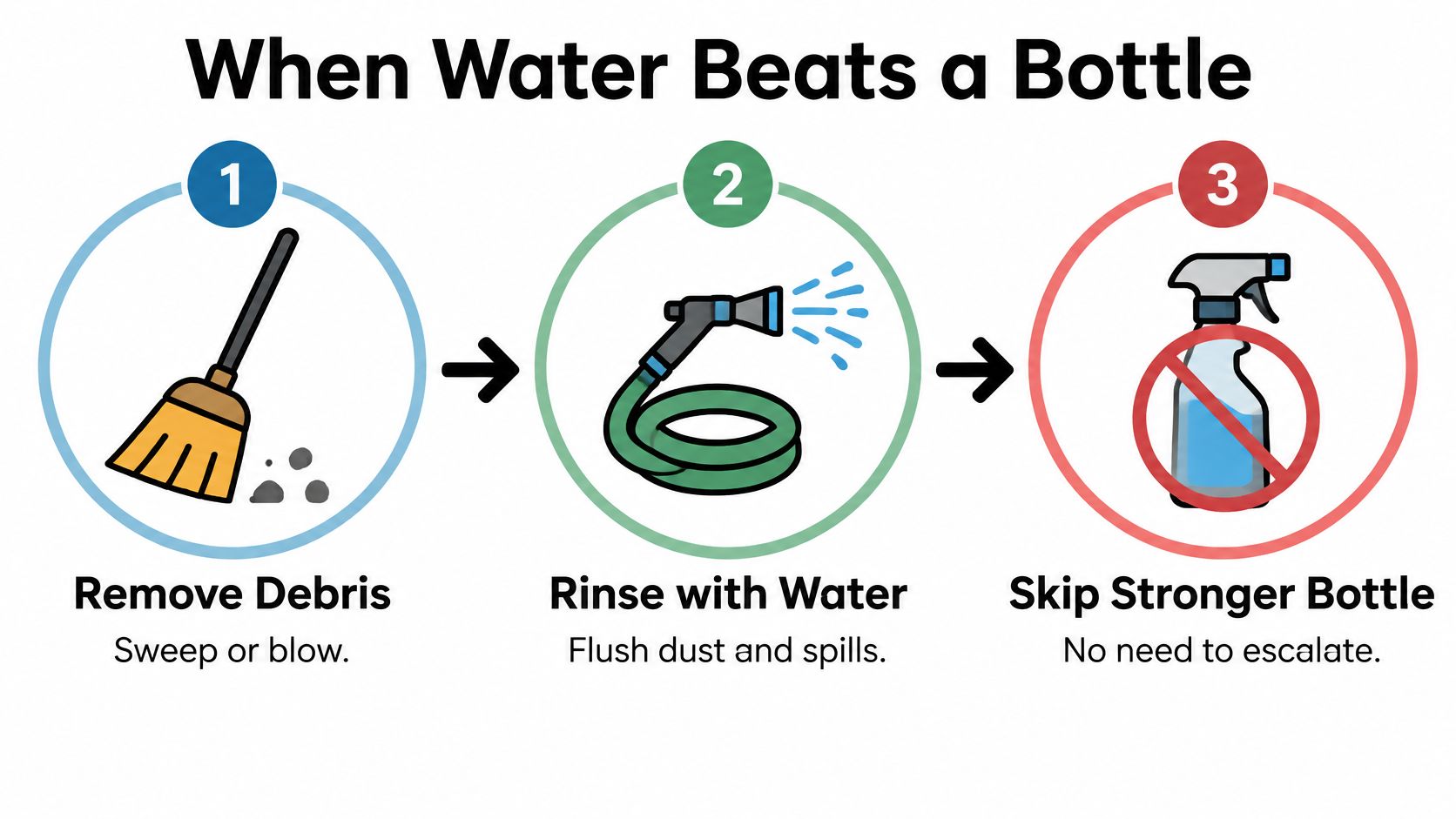
Routine care starts dry. Sweeping, blowing, or vacuuming lifts the debris that otherwise works down into the pile and blocks the voids infill needs to stay open. A University of Florida Extension publication treats that dry pass as normal maintenance, allows water spraying for cleaning, and advises against solvents or general-purpose cleansers for ordinary soil. The same guidance warns against widespread fungicide and antibacterial treatment, because those substances can reach stormwater, and it cites research showing ultraviolet light and temperature make synthetic turf an inhospitable home for bacteria. A disinfectant isn't owed after every rinse.
Washdowns are where the water math gets real. That publication reports many manufacturers recommend weekly washdowns to remove dust, pet waste, and odors, then warns that urine washing can consume a substantial amount of water because the liquid has to pass through the turf, the sub-base, and the weed barrier. A free-draining base turns a rinse into a ten-minute job. A base that holds water turns it into a mud layer under the blades.
A sensible baseline is a weekly rinse with water to clear dirt, pet hair, and debris, using warm water rather than boiling and a gentle cleaner when water alone isn't enough. Boiling water and harsh mixes stress fibers and soften seam adhesive, so the aggressive option costs more later.
Three checks before you buy anything
- Outlet flow. Pour a bucket at the worst corner and time it. Water that sits more than a few minutes means the drain path is compromised.
- Low spots. Walk the lawn after rain or a rinse. A dip that stays dark and spongy is where urine collects and where odor will always start.
- Odor return. If the smell comes back on a dry day after a correct rinse, the problem is below the surface, not on it.
Where drainage is poor, a specialized cleaner is a temporary control while slope, infill, and outlets get inspected. That is no reason to escalate chemistry weekly, and flooding the yard is worse, since contaminated wash water can accumulate under a base that won't release it.
Daycares and shared play lawns face the same logic with higher stakes, and this artificial grass cleaning guide for daycares covers the frequency question well. Modern Yard prepares every artificial grass installation with groundwork that improves drainage and stability, which is why the rinse-and-walk-away test works on a properly built base and fails on a bad one.
Detergents and Enzyme Cleaners in Practice
Detergent and enzyme are not the same tool with different labels. A turf detergent is a low-residue surfactant that lifts dust, pollen, and body oils. An enzyme product is a biological treatment aimed at the proteins and uric acid in urine. Buy the wrong one and you either waste money or leave a film that grabs dirt for a month.
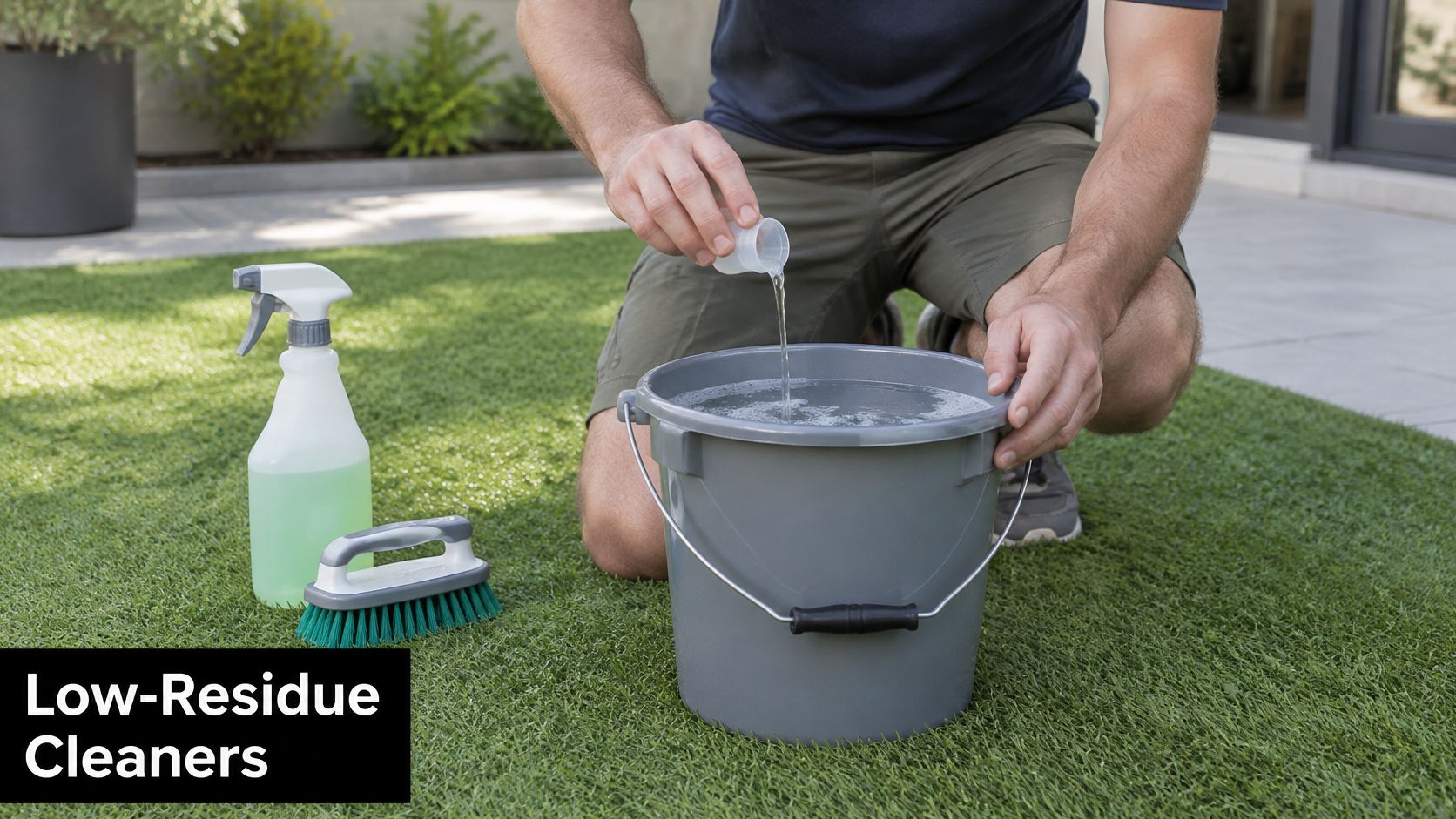
The detergent mix that keeps infill open
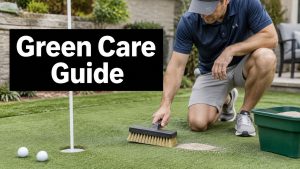
Use a turf-labeled gentle cleaner at the low end of the label, which usually lands around a few ounces per gallon of warm water. Brush the area first so the solution reaches soil instead of sitting on top of it, apply, agitate with a soft broom, and rinse until the runoff runs clear. What you're avoiding is heavy soap and anything with wax, because residue glues infill granules together, dulls the fibers, and slows drainage in exactly the zone that already smells.
Skip dish soap on a whole lawn. A few drops in a bucket for a localized food stain is fine, but a full-yard pass leaves a sticky surfactant layer that attracts dust and holds moisture.
One enzyme job on a 200-square-foot corner
Here's the whole method on the dog's favorite patch, roughly 200 square feet:
- Remove every solid. Bag it, don't rinse it into the pile. Enzymes can't digest what they can't reach.
- Pre-wet the zone so the mix doesn't flash off before the culture gets going.
- Mix only what that patch needs, following the label, typically somewhere between a 1:1 dilution and 4 oz per gallon.
- Keep the surface wet for the full dwell, commonly 10 to 30 minutes. On a 100°F Austin afternoon that means a second light mist halfway through.
- Rinse if the label calls for it, then stay off it and keep the dog off until it's dry.
- Write down the result. Check the smell the next dry morning, not ten minutes after rinsing.
That last step is the one nobody does, and it's the only way to know whether you solved the problem or just reset the clock.
Three ways an enzyme pass fails
It dries too fast. Live cultures need contact time. A dry afternoon kills the pass before it works, which is why evening application beats noon.
The infill never gets wet. Compacted infill sheds liquid sideways. If the mix rolls off the crown of the pile, the enzyme never reaches the urine salts, and you've washed the surface twice for nothing.
A fragrance covers the gap. Some products add perfume so the yard smells handled while ammonia remains in the base. If the "clean" smell fades in an hour and the urine smell returns by evening, you bought deodorant.
Test a one-foot square before treating a whole yard. It costs a minute and tells you whether the product reacts with your fiber, your infill, or your seam adhesive.
Pros of this class are real, low odor, pet re-entry once dry, and compatibility with a weekly water rinse. Cons are slow action, zero usefulness on grease, and the constant temptation to double the dose when patience would do the job.
Never combine an enzyme product with bleach, ammonia, or a disinfectant in the same pass. You'll kill the culture you paid for, and on a good day you'll create chlorine gas on a lawn where your kids play.
Odor Neutralizers, Degreasers, and Pet Products
Odor control on a pet lawn is a drainage treatment wearing a spray bottle. A neutralizer earns the name only if it goes after the ammonia source once solids are gone. A fragrance-only product does something different and much cheaper, which is to mask the smell until the next hot afternoon and teach you that nothing works.
Urine wash water has to pass through the fibers, the infill, the compacted sub-base, and the weed barrier before it leaves the yard. Where that path is blocked, urine salts stay in the profile, and no amount of surface chemistry reaches them. That's the honest limit of the whole product category.
A neutralizer has to break something down
Look at what the label claims to do. If the copy talks about eliminating odors and the ingredient list is essential oils and water, you've got a scent. If it names ammonia, uric acid, or organic odor sources and gives a dwell time, it's making a chemical promise you can hold it to. Enzyme and biologically active formulas can work on organic odor, but only when solids are gone, the profile is wet, and the labeled dwell is honored.
Pet odor on a heavily used surface is minimized by proper infill and consistent maintenance rather than by any single product, which is why the schedule matters more than the brand. A turf cleaning visit usually includes rinsing and disinfecting with pet-safe solutions plus odor treatment, with most of the attention on dog runs and high-traffic lanes rather than a whole-yard soak.
Grease, sunscreen, and sticky drink film
Degreasers belong to a different mess entirely. Outdoor kitchens throw grease, aerosolized cooking oil, sunscreen, and spilled cocktails onto the turf edge, and none of that responds to an enzyme. Use a turf-labeled degreaser, diluted per the label, on the spot only, keep dwell short, and rinse hard enough that no oil-cutting surfactant stays behind. Residual degreaser is a dirt magnet, and a dirt magnet on a patio lawn looks like a stain within a week.
Practical rule: water-compatible and low-residue wins. If a product leaves an oily feel or a slick film after rinsing, it will clog infill voids, soften polyurethane or latex backing, and attack seam adhesive over a season.
What pet-safe should mean on a label
"Pet-safe" is not a regulated category. It's a marketing phrase, and what matters is the active ingredient, the concentration, whether the label names synthetic turf and animal contact, the drying time, and the exposure route. A product can be perfectly safe for a dog once dry and a bad idea while wet, which is why every method here ends with pets off until the surface is dry.
Storage and exposure questions come up more than people admit, especially in households with puppies and toddlers, and this safe storage and exposure first-aid reference covers the handling side well. Keep concentrates locked, keep the vet number on the shelf, and never transfer a mix into an unlabeled bottle.
Keep a record per zone: dilution, gallons per 100 or 200 square feet, dwell, rinse volume, weather, and whether the smell returned after drying. When the same corner still smells after a correct application and a rain, stop shopping for a stronger scent. That record is your evidence, and it points at outlets, low spots, and saturated infill. This is the point where a dog urine odor diagnosis beats another bottle.
Disinfectants Reserved for Real Contamination
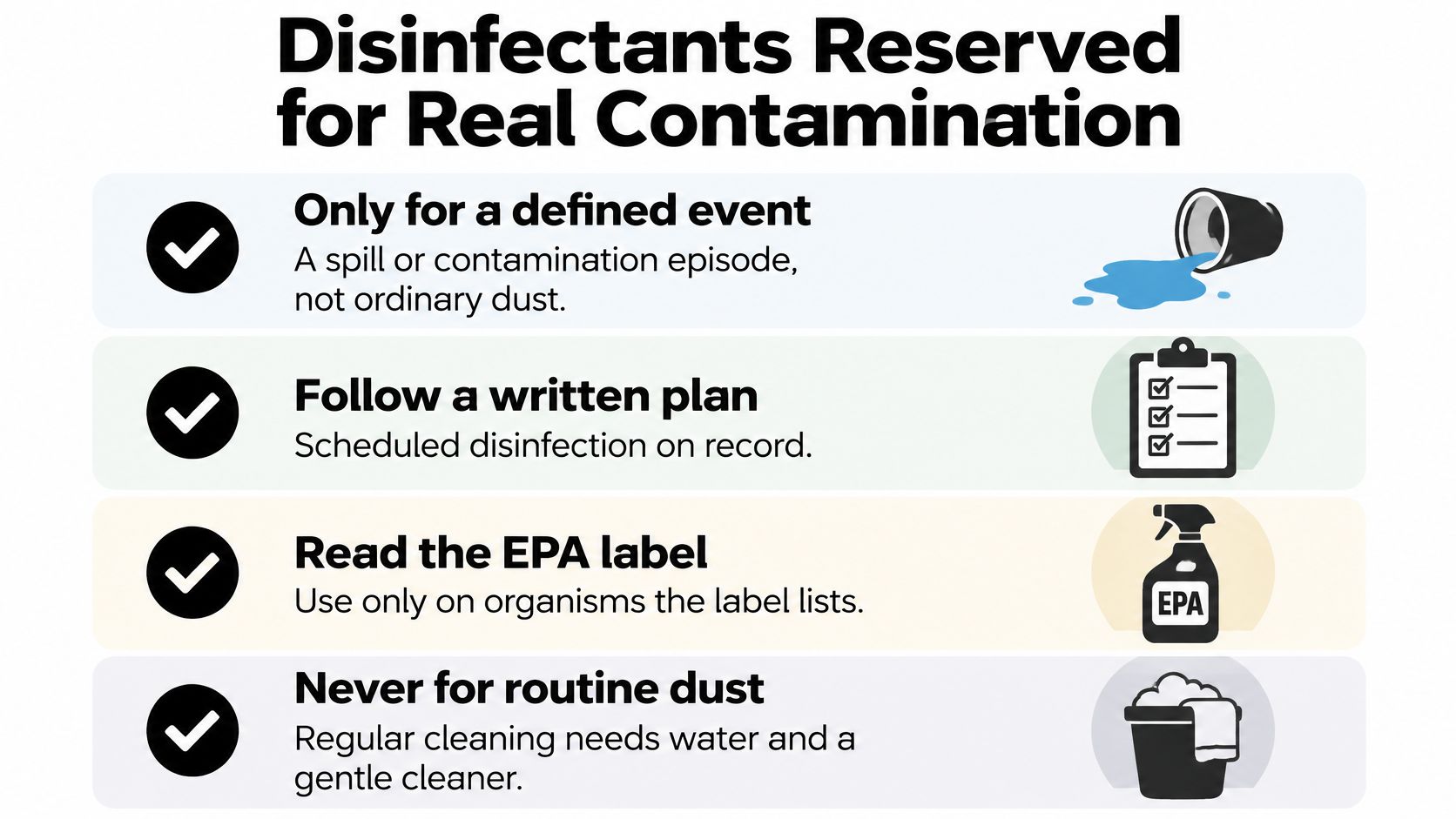
Full-surface disinfection belongs to a defined event or a written plan. Feces, vomit, a burst diaper at a birthday party, a raccoon in the yard overnight. Not dust, not pollen, not the ordinary grime of a Tuesday.
An antimicrobial is only as broad as its EPA label. The EPA's registry of selected disinfectants is explicit that these products are registered for particular claims and that efficacy isn't established for pathogens absent from the label. A generic kitchen cleaner is not a turf disinfectant, and pouring it on because it says "kills 99.9%" is a guess dressed as a procedure.
The label is the entire claim
The checklist before the first drop leaves the bottle:
- Synthetic turf named. Not "hard, non-porous surfaces." Turf is a porous system of fiber, backing, and infill.
- Target organism listed. If the label doesn't name it, the claim doesn't exist.
- Dilution and rate stated. One registered label pattern is about 1 gallon of mixed solution per 200 square feet.
- Contact time stated. That same label pattern calls for a 10-minute wet contact, or letting the surface dry.
- Re-entry stated. Write down when people and pets may return, and hold to it.
Spot, quarterly, or never
A schedule homeowners can scale looks like this. Waste comes out immediately, every time. Spot disinfection follows any feces or vomit event. Whole-surface disinfection, if it happens at all, runs about quarterly on a yard with heavy biological load. DC public-field guidance follows that same risk-based shape, requiring waste removal, spot disinfection after organic or biological waste, and whole-surface disinfection quarterly. That's a contamination schedule, not a Saturday ritual.
Three rules that prevent real damage. Never mix disinfectants with acids, ammonia, or other cleaners. Avoid oils, waxes, and high-residue surfactants, which attract soil and slow drainage. Stop if the label conflicts with the turf maker's fiber, backing, infill, or seam adhesive, because the turf loses that argument every time.
The pros are genuine sanitation after organic waste, and there's no substitute for it when something bodily ends up on the lawn. The cons are cost, water use, runoff risk, and fiber or adhesive stress when a product was formulated for tile and grout. Spot the solids, rinse soluble urine toward a working drain, then disinfect the zone the event touched.
For a paid job or a careful DIY pass, write it down: EPA registration number, lot, dilution, square footage, contact time, and the re-entry window. That sheet is what separates a sanitation record from a shrug.
Compatibility with Antimicrobial and Cooling Treatments
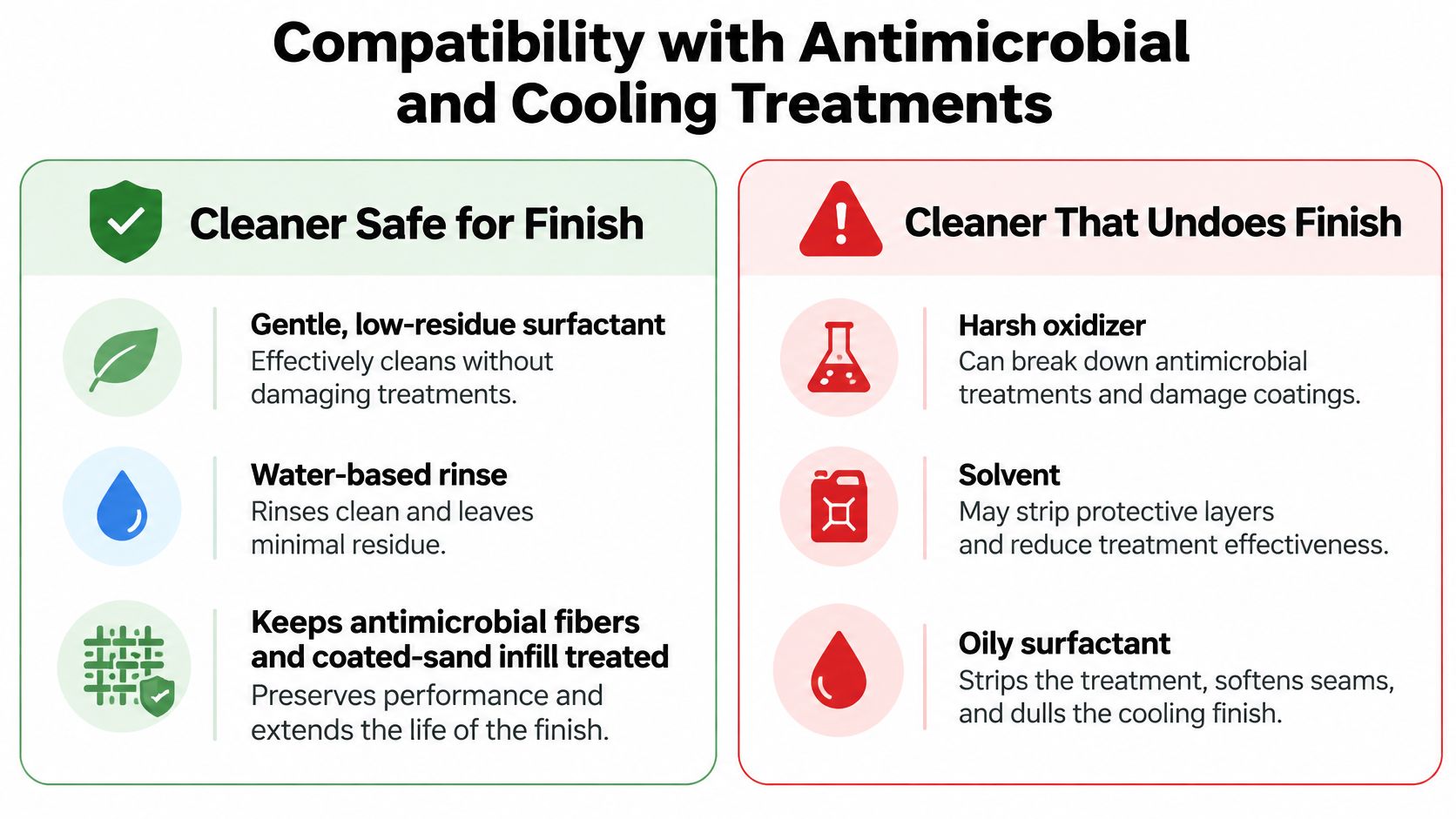
A cleaner can undo an expensive finish. If your turf came with antimicrobial fibers or a coated-sand infill, that treatment is a surface layer, and harsh oxidizers, solvents, and oily surfactants are exactly what strip surface layers. The same chemistry softens seam glue, dulls a cooling finish, and leaves a film that blocks the voids engineered infill needs to shed heat and water.
What an aggressive cleaner takes off with it
A 2025 environmental-health review from the National Collaborating Centre for Environmental Health notes that some polymer-coated sand infills contain microbicides or pesticides, and that research on their release from artificial turf remains limited. The same review of artificial turf and environmental health identifies gaps in the evidence on PFAS, phthalates, and other chemicals moving out of turf fibers, backing, and infill.
Read that as a warning about certainty, not a verdict on your lawn. A product marketed as antimicrobial may cut surface odor and still leave an open question about where the active ingredient goes after the tenth rinse. Neither side of that deserves a confident marketing claim.
Decide by site, not by marketing
Four questions settle it faster than any label:
- How often does this surface get used? A party lawn and a three-dog run aren't the same job.
- Does it drain freely? If water sits, everything you spray stays in contact longer and travels further sideways.
- Who's on it? Kids and dogs change the acceptable re-entry window and the acceptable residue.
- How close is a creek, inlet, or storm drain? Distance decides whether runoff has somewhere to go besides the neighbor's yard.
Synthetic turf doesn't filter like a living lawn, so runoff carries what you put on it. Routine soil gets detergent or water. Odor gets an enzyme or a real neutralizer plus a drain check. Disinfection stays on the contamination schedule.
Before a first full-yard application on treated or cooled turf, confirm the mix against the maker's notes for fiber, backing, infill, and adhesive, then run a hidden test patch and check blade spring, color, and smell once it dries. If the yard was sold with an antimicrobial or cooling system, ask the installer which chemistries they'll stand behind before you experiment. Our own position on antimicrobial artificial grass is that the treatment is worth protecting rather than scrubbing off with a weekly bleach habit.
Home Lawns Versus Dog Runs
Two buying paths cover almost every household, and neither requires a shelf of products. What separates them is how much biological load the surface takes and how much chemistry you're willing to store under the sink.
The history here isn't decorative. Artificial-grass cleaning products grew out of synthetic-field sanitation, and a 2006 maintenance manual from the American Sports Builders Association reported that some synthetic-turf operators disinfected fields as often as twice per month, with more frequent cleaning in sideline areas where contaminants concentrate. A review of artificial turf and human health adds the part worth remembering, that water contacting rubber infill could release 25 chemical species and four metals, zinc, selenium, lead, and cadmium, and that synthetic turf doesn't provide the biological filtration a living lawn does. Strong chemistry on a residential lawn is a choice with a runoff consequence, not a free upgrade.
The family lawn
Most Austin backyard lawns with kids, parties, and one older dog do well on a weekly water rinse, a mild detergent two or three times a season, and a degreaser only along the outdoor-kitchen edge. The advantages are a light chemical load, fast re-entry, and infill that stays porous. The catch is that a party sticky spot or a single accident still needs a targeted product, not another hour with the hose.
We install turf for homes, schools, and businesses, and the family-lawn pattern holds across all three until the traffic gets heavy.
The dog run
A dog-run owner should own an enzyme or pet-labeled turf cleaner and keep one EPA-registered disinfectant for solid-waste accidents, while expecting odor control to depend on infill depth and a base that drains. The advantages are chemistry aimed at urine and re-entry language you can follow. The catch is cost, the false comfort of the phrase pet-safe, and odor that returns whenever liquid sits under the blades.
Three things in the cleaner aisle aren't cleaner problems. Weeds in the seams are a vinegar-based solution, hand-pulling, or a turf-system weed treatment, never RoundUp and never a disinfectant. Flattened, matted blades need debris removal and power brushing to stand the fibers back up. Thin infill and open seams are wear checks, not a reason to soak the yard.
If odor survives a correct enzyme dwell and a free-draining rinse, your next purchase is an infill and drainage inspection, not a second brand of the same spray.
Book a Turf Cleaning Visit
Stay DIY while the mess matches one product, the lawn drains after a rinse, and a patch test plus the labeled dwell clears the smell. Book a visit when odor survives that test, when grease covers a party lawn, when infill is matted flat, or when disinfectant rates around kids and dogs feel like guesswork.
Our artificial turf maintenance services typically cover debris and leaf removal, power brushing to lift the blades back up, a rinse and pet-safe disinfecting pass, odor treatment on dog runs and traffic lanes, grooming, infill attention, and a seam and wear check. One South Austin homeowner with turf beside an outdoor kitchen added turf cleaning after big parties so the area stayed free of stickiness and smell.
Scope is where trust gets built. A free turf cleaning consultation should say whether the quote covers labor, rinse, stain or pet-waste treatment, and deodorizing, and what would add time, like heavy debris, compacted infill, or a drainage problem. Ask for that in writing before anyone unrolls a hose.
Pricing clarity is not a courtesy. In a 2025 survey of 1,001 Americans, 84% said every fee should be included in the advertised price, 59% said they had felt misled by pricing or plan terms, and people who saw a price rise reported an average of $20.78 more per month, according to the 2025 consumer trust survey. A separate 2025 survey of more than 1,000 U.S. adults found 82% put clear pricing and no hidden fees at the top of the list, more than a third were frustrated by unexpected costs, and 20% abandoned a purchase the moment a late fee appeared, as reported in this summary of pricing transparency research.
Reviews deserve the same hard read. When researching local businesses, 75% of consumers always or regularly read online reviews, and 50% trust them as much as a personal recommendation, according to this local consumer research compilation. Check recent turf-cleaning reviews for the same debris, brushing, pet-waste, and odor work your quote describes, then book the visit that matches the corner you already diagnosed.
Modern Yard installs and maintains artificial turf across the Austin area, and our turf cleaning service pairs debris removal and power brushing with a rinse, pet-safe disinfecting, odor treatment, infill attention, and a seam and wear check, so a lawn that smells like a kennel in July comes back to neutral. If you followed the label, gave the cleaner its dwell, and the smell still returns on a dry morning, skip the stronger bottle and start with a free turf cleaning consultation. Visit Modern Yard Landscapes to book that visit and get the scope in writing.