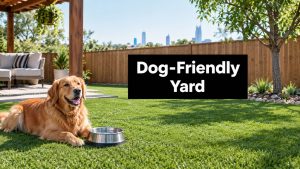

You've probably seen the pattern already. A dog runs across the backyard after a hard Austin storm, comes inside with clay packed between its toes, and leaves a trail across the floor. A few weeks later, the lawn is thin along the fence, the urine spots are brown, and the dog has started digging wherever the ground stays soft.
A durable yard for dogs isn't just a patch of green. It's a working outdoor system that has to manage heat, rain, urine, digging, containment, and daily cleaning. In Central Texas, the surface only performs as well as the soil preparation beneath it.
Why Austin Dog Owners Need a Purpose-Built Yard
Walk through a typical Austin backyard in July and the failure points usually show themselves quickly. St. Augustine has gone patchy beneath a trampoline, the soil feels like baked pottery, and a brown ring marks the spot where the dog rests or urinates. Along the fence, two fresh craters reveal an escape plan that's already underway.
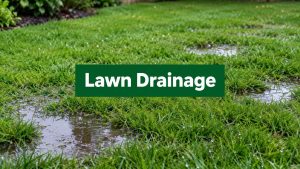
A lawn can look acceptable from the patio and still fail as a dog area. Central Texas clay sheds water instead of absorbing it, so intense rain often moves across the surface before it can soak in. A flat section near the fence becomes a holding area, while repeated traffic compacts the soil and creates slick mud during wet weather. Dry periods bring the opposite problem. Hard ground invites digging, and exposed soil heats quickly under direct sun.
The history of dedicated dog parks helps explain why homeowners see such different advice about size, fencing, and maintenance. The modern movement began in San Francisco in 1979, Berkeley formally approved an experimental dog park by 1983, and at least 25 dog parks existed in the San Francisco area by 1990, according to the Smithsonian's history of the urban dog-park movement. The Trust for Public Land later counted 569 dog parks in the 100 largest U.S. cities in 2010, 774 in 2017, and 810 in 2019, showing how quickly dedicated dog spaces became part of mainstream urban planning.
Treat the yard as a system
The same principle applies at home. A reliable design combines:
- Containment: Fencing and gate hardware must account for jumping, climbing, and digging.
- Drainage: Grade, aggregate, permeable layers, and outlets determine whether paws stay dry.
- Surface: Turf, gravel, concrete, or planted areas each create different heat and cleaning demands.
- Shade: A dog needs usable relief from direct summer sun, not just a decorative tree near the property line.
- Waste flow: Urine and rinse water need a managed path away from the play surface.
A U.S. study of six dog parks found entire park sizes ranging from 4 to 24 acres, while fenced dog-play sections ranged from 0.4 to 3.0 acres. A separate nationwide summary placed the average U.S. dog park at about 2 acres and estimated more than 9,000 registered dog parks. Those figures, reported in the published dog-park study, reinforce a practical point: dog areas need real space and durable construction, even when the residential footprint is much smaller.
For a homeowner comparing a grass replacement with a dog-friendly lawn approach, the right question isn't “Which material looks most natural?” It's “What will still work after clay, heat, rain, urine, and daily traffic have all tested it?”
Site Prep, Grading, and Drainage That Actually Work
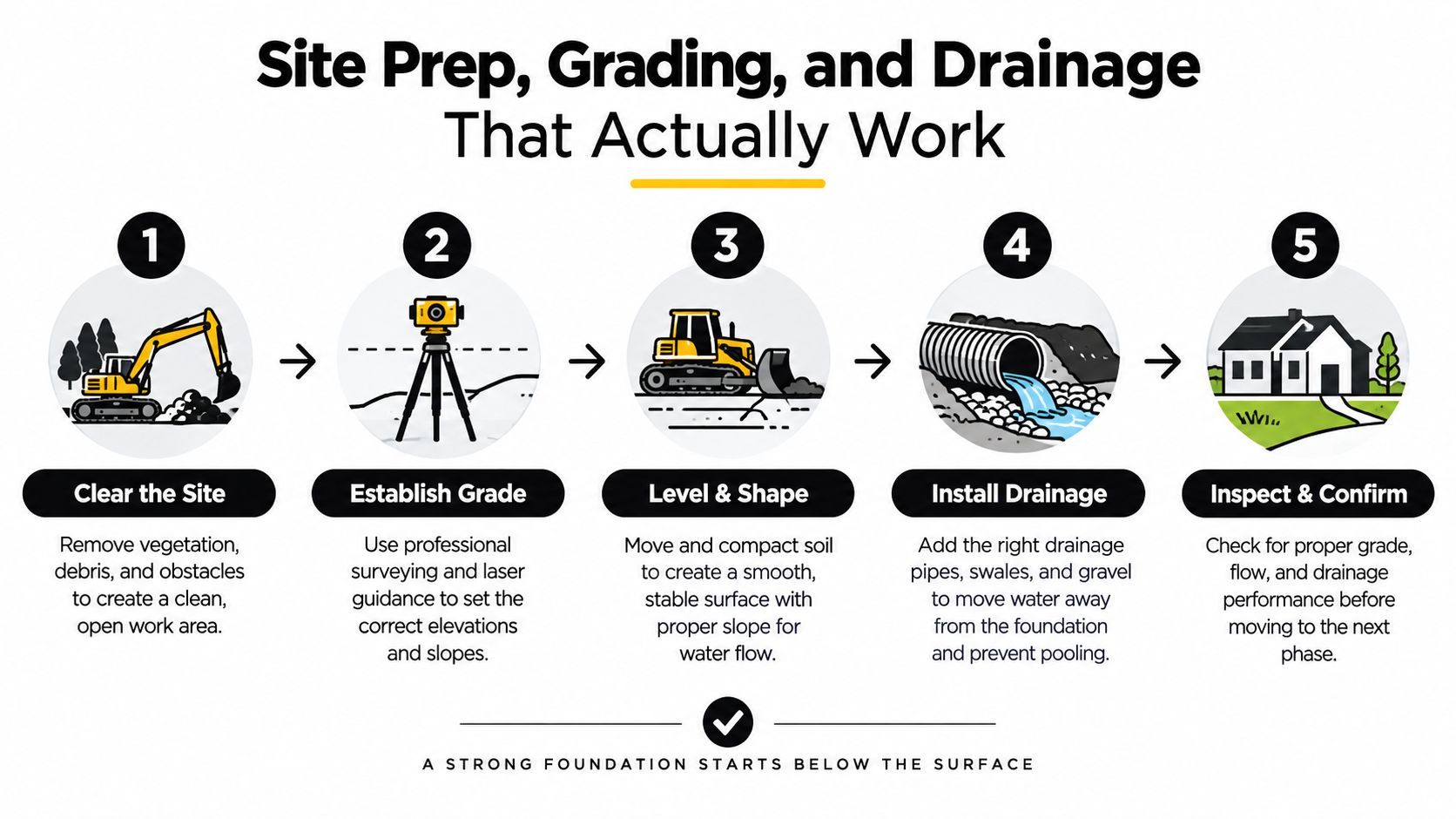
The surface is the visible part of a dog yard, but the buried layers decide whether it survives Austin weather. I start by looking for four things: where water enters, where it collects, where dogs patrol, and where runoff can safely leave.
Clear the site before building the base
Remove existing grass, roots, loose soil, and weeds from the full installation area. If old vegetation remains beneath the system, it can decay, create uneven spots, or push through seams. The finished area also needs enough excavation to accommodate the base without raising the surface toward the house, slab, or door threshold.
Grade the subgrade away from the home. A practical target is a 1% to 2% slope, with clay-heavy sites often benefiting from the steeper end and an added subsurface drain. The Chesapeake Stormwater guidance emphasizes that persistent wetness is a drainage problem, not a surface-material problem. If a section remains wet for days after rain, plan for a French drain, perforated pipe, dry well, or daylight outlet instead of hoping turf will solve it.
Low spots along the fence deserve special attention. Dogs repeatedly run the same route, and that traffic compresses already dense soil. A channel drain may help where water crosses a gate or run path, while a French drain works better when groundwater or a broad wet zone needs relief.
Build a compacted, permeable foundation
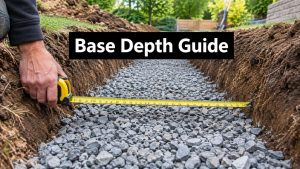
A common dog-run build uses 3 to 4 inches of compacted angular crushed aggregate, decomposed granite, or an appropriate crushed miscellaneous base. The exact aggregate should match the soil and drainage plan, but the principle stays consistent: angular particles lock together and create a stable layer without turning the surface into a soft pocket.
A vibrating plate compactor matters here. Without proper compaction, the base shifts under paws, gates, and concentrated traffic. Fines can also migrate downward and clog the path into the clay. The pet-run drainage methodology recommends a compacted base paired with a permeable backing or drainage mat, rather than relying on turf alone.
Practical rule: If the base is flat, loose, or built over soft native soil, the turf is being asked to hide a construction problem.
Use a permeable separator where soil conditions call for it, then connect chronic wet areas to perforated pipe or a managed outlet. The purpose isn't to eliminate puddles. It's to move urine, rinse water, and stormwater away from the play surface before odors and saturation develop.
For homeowners reviewing a contractor's proposal, the Austin yard grading and drainage guide should be a useful comparison point. Ask to see the proposed slope, base depth, compaction method, and discharge location in writing.
Choosing Turf, Infill, and Backing for Heavy Pet Use
Pet turf should be compared as a system, not as a single roll of green material. I evaluate samples through four filters: odor control, drainage, heat, and cleanability. A blade can look convincing in a showroom and still perform poorly when a dog uses the same area every day.
| Component | Option A | Option B | Option C |
|---|---|---|---|
| Turf fiber | Nylon, resilient and firm | Polyethylene, softer under paws | Blended construction, balancing feel and recovery |
| Infill | Acrylic-coated sand, cleaner and more stable | Rounded silica, economical but not an odor solution by itself | Zeolite, designed to trap ammonia |
| Backing | Standard latex, limited permeability | Perforated polyurethane, faster vertical flow | Fully permeable backing, strongest choice for managed pet drainage |
The face of the turf
Nylon fibers generally feel firmer and recover well, but they can transfer more heat in direct Texas sun. Polyethylene feels softer and is common in residential settings, although heavy traffic can mat a poorly selected product. For a pet run, a shorter pile around 1 to 1.25 inches is easier to rinse, less likely to hold waste, and better at keeping infill where it belongs than tall blades.
Color matters too. Darker blades absorb more solar energy than lighter green blends. That doesn't make a light product cool by itself, but it can support a better heat-management plan when combined with shade and appropriate infill.
Infill and backing are not interchangeable
Acrylic-coated sand can help stabilize blades and reduce tracking. Rounded silica is another common stabilizing material, but neither should be presented as an ammonia treatment. Zeolite is the infill option that actively traps ammonia, which makes it especially relevant for a heavily used dog area.
Backing controls how liquid enters the base. Perforated polyurethane can offer strong flow performance, but holes in the backing won't help if the aggregate beneath is clogged or the clay subgrade has nowhere to send water. Pet-run guidance recommends a fully permeable or perforated backing, a free-draining base, and a consistent 1% to 2% slope. The technical guidance on artificial-turf fiber performance also supports checking how the entire system handles long-term exposure and use.
Before approving a sample, ask:
- Fiber: What is the fiber type, pile height, and UV documentation?
- Infill: Does the proposal include zeolite, and how much?
- Backing: Is it perforated or fully permeable?
- Base: What aggregate is being installed, and how will it be compacted?
- Drainage: Where does water go after it passes through?
- Warranty: Does the warranty cover pet use, seams, drainage, and excessive wear?
A useful buyer reference is this guide to artificial grass infill for pets. It keeps the conversation focused on what the dog yard must do, not just how the sample looks in a catalog.
Keeping the Yard Cool, Shaded, and Safe in Texas Heat
Austin heat changes the surface your dog touches. A yard can feel manageable at the patio door while the exposed play area becomes unsafe for paws and breathing. The PetScy dog heat safety tips are useful general guidance, but a yard design also needs to address the material under the dog.
A Texas case study found hazardous ground temperatures in both built and natural environments, and a 2026 study of artificial turf advised caution for dogs when environmental temperatures exceed 25°C, as summarized in the available surface-heat research. The lesson is straightforward: don't assume natural soil, concrete, or synthetic turf is safe merely because it isn't black asphalt.
| Surface Material | Ambient 95°F | Ambient 100°F | Paw-Safe? |
|---|---|---|---|
| Artificial turf in direct sun | Can become hazardous | Can become hazardous faster | Test before use |
| Natural soil or grass | Variable by moisture and shade | Can become hazardous in exposed areas | Test before use |
| Concrete or pavers | Can retain intense heat | Often remains unsafe after peak sun | Test before use |
Design shade for the hours dogs actually use
Shade at noon won't necessarily protect the run at 3 p.m. Position shade sails around the late-afternoon sun angle, use a pergola with UV-rated cloth, or combine built shade with mature canopy. Live oak and cedar elm can provide valuable long-term shade in Central Texas, but new trees won't solve the immediate summer problem.
Cooling infills may help reduce surface heat compared with darker, heat-retaining materials, but they don't replace shade. Water bowls should sit in the shaded part of the run, and cooling mats belong on a stable, dry zone where dogs can leave them easily.
Use the back-of-hand test before opening the gate. Press your hand against the surface for several seconds. If it's uncomfortable for you, it's too hot for paws. Keep a visible thermometer near the yard so family members and visitors can make the same decision.
A practical layout should preserve a substantial shaded portion of the run throughout the afternoon. Don't promise a fixed percentage without a site-specific sun study. Instead, watch the yard at the hottest use period and place the dog's water, resting spot, and primary route where shade lands.
Waste Management and Routine Cleaning That Prevent Odor
In an Austin dog run, odor follows a predictable path. Urine stays in the system, residue settles into the infill, and bacteria break it down into ammonia-smelling compounds. A surface rinse removes what you can see. It does not replace an enzyme cleaner that digests organic residue.
Keep the routine simple enough to follow
Daily: Remove solid waste within a few hours, then rinse the main hit zone. This prevents residue from drying around the blades and settling deeper into the infill.
Weekly: Hose the entire run, apply an enzymatic cleaner where dogs urinate repeatedly, and brush the turf to lift the blades and redistribute infill. Brushing also exposes flattened areas, shifting seams, and places where clay or debris may be restricting drainage after hard rain.
Monthly: Use a broader enzyme soak, then apply a pH-balanced turf cleaner if the product instructions permit it. Inspect seams, perimeter edges, transitions, and drain outlets at the same time. A strong smell is a late warning, not the right inspection schedule.
The artificial turf cleaning guide for dogs provides a repeatable maintenance schedule. Follow each product's dilution and application directions, especially when the installation includes antimicrobial treatment or specialty infill.
Avoid cleaners and tools that shorten the system's life
Skip bleach, vinegar, and harsh household chemicals unless the turf manufacturer approves them. Bleach can damage fibers and nearby plants, while vinegar may leave the biological source of urine odor untreated. Pressure washers can lift seams, move infill, and damage the backing. Use a controlled hose rinse instead, particularly where clay soil can wash onto the surface during Austin rain bursts.
Warranty language also gives installers and homeowners a measurable standard to check. One published artificial-turf warranty covers material and workmanship defects, including drainage, seam rupture, UV stability, excessive wear, and tensile strength. Its terms require vertical drainage of at least 15 inches per hour without visible ponding. Keep the warranty terms with your project records.
Record invoices, product names, dilution instructions, and cleaning dates. Pet-use requirements vary by manufacturer, and a maintenance log helps clarify responsibility if odor, drainage, or seam problems appear later.
Safety, Fencing, and Vet-Proofing the Space
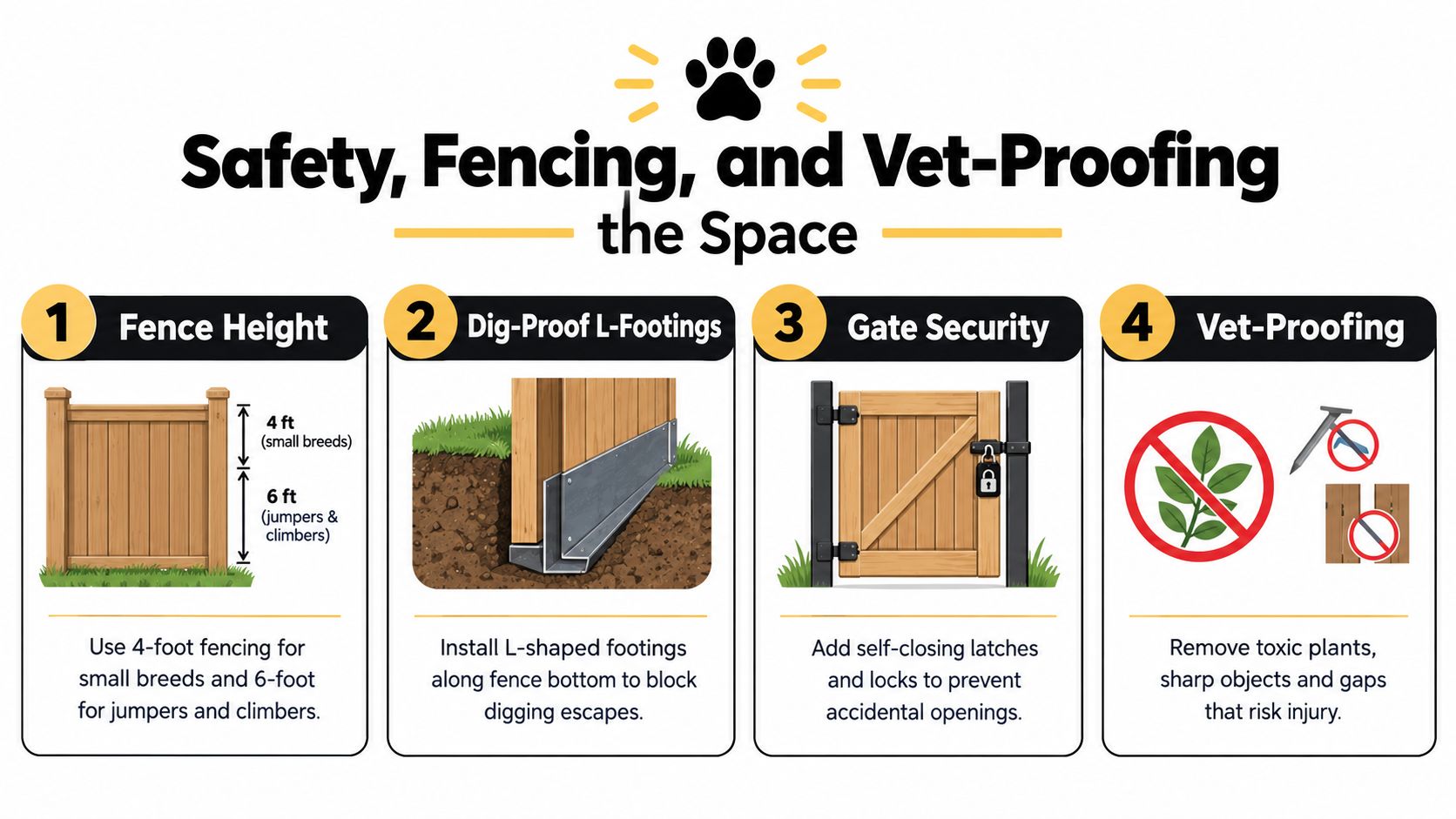
A dog yard can have excellent drainage and still be unsafe if containment is under-built. For small breeds, 4-foot fencing may be appropriate, while jumpers and climbers may need 6-foot fencing or a more specialized design. Along any boundary where escape would create a risk, an L-shaped footing at the fence bottom can block digging beneath the panel.
Match the fence to the dog
Cedar privacy fencing limits visual triggers and gives a dog a calmer boundary, but boards can splinter and horizontal rails can become climbing aids. Welded wire offers visibility and airflow, although a dog may react to animals or people outside the yard. Wrought iron is durable and open, but gap spacing must suit the dog's size. Composite fencing can reduce splinter concerns, yet it still needs secure posts and a design that doesn't create footholds.
For a straightforward overview of how homeowners can compare wood vinyl chain link, look beyond appearance. The right choice depends on jumping behavior, digging, visibility, maintenance, and whether the fence borders a street, pool, or neighboring property.
Gate hardware deserves the same attention as the panels. Use self-closing hinges and a two-way latch that resists a clever nose or paw. Check the bottom corner for gaps, especially where grade changes near an air-conditioning pad.
Remove common Austin hazards
After rain, inspect for fire ant mounds before releasing the dog. Remove or isolate toxic plants such as sago palms and oleander, secure exposed irrigation lines, and close gaps beneath AC condensers where small dogs can disappear. Keep sharp tools, loose wire, and unstable ornaments outside the run.
The final check should include:
- Identification: Confirm visible ID tags, a working microchip record, and current rabies tagging and county registration.
- Heat awareness: Mount an outdoor thermometer where visitors can see it.
- Gate control: Test every latch with the dog nearby and verify that the gate closes fully.
- Surface access: Make sure the dog can reach shade and water without crossing a hot obstacle.
A local installer should also explain the warranty in plain English. A warranty covering UV stability isn't the same as a promise that every shaded and exposed area will look identical forever. A drainage warranty may specify a measured flow rate, but it can't compensate for a clogged base or an outlet that wasn't designed for the site.
What to Look for in a Local Installer and Next Steps
A dog-yard proposal should show how the finished system will handle Austin clay, summer heat, and hard rain bursts. Product names matter less than the work beneath the turf, the route water takes off the property, the warranty measurements, and the maintenance required after installation.
Start with insurance and a written scope. Request a current liability certificate, licensing information where applicable, and a line-item proposal covering excavation, disposal, aggregate, compaction, drainage additions, edging, turf, infill, seams, and cleanup. A quote that only says “install pet turf” leaves too much undefined.
Read the performance language carefully
Permeability needs a measurable benchmark. The Synthetic Turf Council guidance cited by pet-turf drainage information says permeable synthetic grass systems are typically designed to drain 25 inches of water per hour, while advising buyers to compare performance with local rainfall patterns. That number helps compare products, but it does not explain where water goes after passing through the backing. In Austin, the base, slope, outlet, and clay beneath the installation determine whether a hard rain leaves the yard usable or creates standing water.
Ask the installer to document the base, finished grade, drain outlets, and any site-specific test. Warranty language may include a defined drainage threshold, coverage period, maintenance duties, and exclusions. The turf warranty expectations guidance explains the type of documentation buyers should request. Compare your proposal's actual wording with those requirements instead of accepting a phrase such as “lifetime drainage.”
UV claims also deserve documentation. UV stabilizing agents help turf fibers resist degradation, but the proposal should identify testing such as ASTM G155 xenon-arc or ASTM G154 fluorescent UV exposure, along with fiber type, colorfastness, and HALS or equivalent stabilizers. Ask which terms apply to exposed areas, shaded areas, seams, and heavy pet use.
Ask this directly: What does the warranty cover, what maintenance does it require, and what evidence would I need if I made a claim?
Use a practical vetting checklist
- Site walkthrough: The installer should inspect clay, slopes, fence lines, doors, patios, AC equipment, and existing drainage before pricing the work.
- Drainage plan: Request the proposed grade, base depth, permeable layer, pipe, drain, and discharge point in writing.
- Pet references: Ask for Austin-area dog-yard references, not only decorative lawn installations.
- Samples: Compare blade height, fiber type, color, backing, infill, and cleaning instructions in natural sunlight.
- Warranty: Confirm who provides it, how long it lasts, whether pet use is included, and what voids coverage.
- Maintenance plan: Get the approved cleaners, rinse routine, brushing method, and inspection schedule with the final documents.
- Timeline: Make sure the schedule allows for excavation, compaction, drainage work, and weather windows before dogs use the space.
Modern Yard Landscapes offers residential and commercial artificial turf installation, pet-friendly dog runs, drainage tile, design, and maintenance in the Austin area. Its site preparation process addresses drainage, access, and topography. Proposals can account for turf quantity, labor complexity, infill, antimicrobial treatments, and cooling features.
The appointment should begin outdoors, not with a generic estimate form. Walk the installer to the wet fence line, shaded corner, dog's favorite digging spot, and door where muddy paws enter. Those locations reveal the failure points that a standard lawn measurement misses.
Before your dogs use the yard, schedule a site walkthrough, request a written drainage plan, review turf swatches in the Austin sun, and agree on a timeline that allows the compacted base and drainage work to settle properly. That process takes longer than laying turf over existing clay, but it produces a yard configured for the conditions that caused the original problem.
Modern Yard Landscapes designs and installs pet-friendly artificial turf yards and dog runs across the Austin area, with site preparation, drainage planning, turf, infill, and maintenance coordinated as one system. Visit Modern Yard Landscapes to request a site walkthrough and discuss a dog yard built around your soil, shade, drainage, and dog's habits.