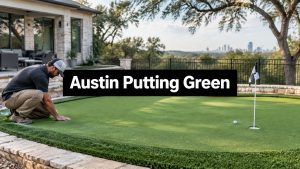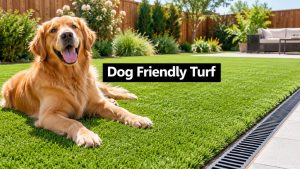

A Crestview backyard can look fine in spring and still fail by August. Two active Labradors run the same line from the back door to the shade tree, stop under the pecan, and use the fence corner every day. Bermuda thins into dust, urine leaves yellow rings, and one heavy Walnut Creek feeder rain turns the lowest part of the yard into standing water.
That isn't a grass problem you solve with another bag of fertilizer. It's a layout problem. Dog friendly lawns work better when the yard is treated as a hybrid system, with living turf reserved for appearance and play, a dedicated relief area built for drainage and rinsing, and shaded hardscape where dogs can rest without destroying the lawn.
When the Backyard Stops Working for Your Dog
The breaking point usually arrives after several repair cycles. The owner reseeds the bare strip, waters carefully, and waits for Bermuda to fill in. Then the dogs run the same route, urine burns return, and the new grass disappears before it establishes.
Under the pecan, the issue is different. Repeated traffic compacts the soil, shade slows recovery, and water collects where the grade can't move it quickly enough. After a feeder rain near Walnut Creek, the dogs track mud through the house while the owner watches another section of turf fail.

Dog urine damage isn't random. Extension research identifies ammonia concentration and urine volume as the main drivers, and even 1 fluid ounce of concentrated urine can burn tall fescue. More sensitive grasses, including Kentucky bluegrass and bermudagrass, can show severe damage lasting more than 30 days after exposure to as little as 4 fluid ounces of dilute urine. University of Missouri Extension research explains the species and dilution differences.
Practical rule: Don't make every square foot perform the same job.
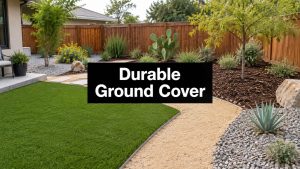
A workable Austin plan separates the yard into three zones. Keep a clear turf area where the family sees and uses it. Put the relief strip in a discreet location with its own drainage and wash-down access. Use pavers, gravel, or another shaded hard surface along the high-traffic route and beneath trees.
That approach also addresses water. The EPA estimates that American lawns occupy 30–40 million acres, while lawns and gardens account for over half of household outdoor water use, within roughly 30% of household water used outdoors. Outdoor watering totals nearly 9 billion gallons per day nationwide, according to the EPA outdoor water-use guidance. In Austin, reducing vulnerable turf can make the yard easier to maintain without asking one surface to survive every dog-related demand.
Natural Turf, Hybrid, and Artificial Turf Compared
Natural Bermuda and St. Augustine have a familiar look and can recover from ordinary wear when they're healthy. They struggle when dogs repeat the same run, relieve themselves in the same patch, and expose compacted soil to heat and rain. Supplements may improve color, but they won't remove the underlying traffic pattern or urine concentration.
A full artificial lawn solves several recurring chores. It doesn't need mowing or routine irrigation, and it avoids most spot reseeding. It still needs proper drainage, brushing, infill management, and a cleaning plan. It can also become dangerously hot in direct sun. A 2025 study reported artificial turf reaching 72°C, a temperature capable of causing irreversible skin burns in about ten seconds. The reported heat-safety findings are summarized by Phys.org.
A hybrid design usually gives Austin homeowners the most control. Living turf remains where its natural appearance matters, while synthetic turf or hardscape takes the abuse along dog runs and relief areas. For adjacent patio and outdoor-living decisions, Denver Dog's guide to dog-friendly patios offers useful planning context, even though Austin heat and drainage require local adjustments.
| Surface Type | Wear Tolerance | Heat Behavior | Drainage | Odor Control | Water Use | Maintenance |
|---|---|---|---|---|---|---|
| Natural turf | 2/5 | 4/5 | 3/5 | 2/5 | 1/5 | 2/5 |
| Hybrid system | 4/5 | 3/5 | 4/5 | 4/5 | 3/5 | 4/5 |
| Artificial turf | 5/5 | 1/5 | 4/5 | 4/5 | 5/5 | 4/5 |
The scores are practical design judgments, not laboratory ratings. Drainage depends on the base and soil beneath the surface, while odor control depends heavily on where dogs relieve themselves and how consistently the area gets rinsed. Product specifications matter too. One pet-turf system publishes drainage above 1,500 inches per hour, while another drainage-focused source reports 569 inches per hour for its turf product. Compare the actual system, not just the label, using this artificial turf versus natural grass comparison.
Planning the Layout for Play, Relief, and Drainage
Start with paper, a tape measure, and a walk through the yard during the hours your dogs use it. For a typical 1,500 to 3,000 square foot Austin lot, sketch the house, fence, patio, shade trees, gates, low points, and every route the dogs take repeatedly.
Mark the path from the back door to the favorite shade tree first. That route usually deserves the most durable surface because dogs don't follow a designer's imagined circulation plan. They follow the shortest familiar path. Next, place the relief zone downwind of the house, away from the patio and main windows, where a hose can reach it easily.

Draw the water path before choosing the surface
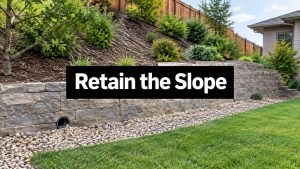
Grade water away from the foundation at a 2 percent slope, directing it toward a drainage swale or French drain connected appropriately to the property's drainage route or easement. Keep turf away from reflective west-facing walls where afternoon heat concentrates. Preserve a shaded stretch beneath existing oaks or other mature trees for summer rest.
A relief zone only works if water has somewhere to go. University of Illinois Extension recommends a well-drained dog bathroom area built with sand topped by pea gravel, and advises watering frequently used turf areas to dilute urine. The University of Illinois guidance covers drainage materials and watering within eight hours. For a more detailed residential planning reference, review these dog potty area design considerations.
Verify the sketch on site
Use three simple checks before approving the layout:
- String line test: Stretch a string from the foundation toward the proposed outlet and confirm the grade consistently falls away from the house.
- Hose run: Run water into the relief area and verify that it leaves the zone within 60 seconds.
- Sightline walk: Stand inside the main living spaces and confirm the relief strip isn't the first feature visible through the windows.
If the water test fails, changing turf products won't fix the yard. Correct the grade or drainage route first.
Choosing Infill and Fiber for Odor, Heat, and Durability
“Pet turf” isn't a meaningful specification by itself. The performance comes from the combination of fiber shape, backing, infill, drainage, and maintenance. A large dog running through full sun puts different demands on a surface than a small dog using a shaded side yard.
Silica sand is the familiar baseline. It adds ballast and can help support the blades, but it's heavy and can hold heat. Antimicrobial acrylic or zeolite blends cost more per pound but are selected for odor management. Cooling infills use infrared-reflective pigments or moisture-retaining cores to reduce surface temperatures. The exact result depends on sun, wind, color, irrigation, and the complete system, so don't accept a cooling claim without a product specification.
| Infill Type | Odor Control | Surface Temp | Cost per lb | Best For |
|---|---|---|---|---|
| Silica sand | Basic | Holds heat | Lower | Budget-conscious, shaded areas |
| Antimicrobial acrylic or zeolite blend | Stronger odor management | Moderate | Higher | Relief zones and active dogs |
| Cooling infill | Depends on formulation | Designed to reduce heat | Higher | Full-sun play areas |
The fiber deserves equal attention. A W-shaped blade resists matting better under running dogs than a basic flat profile. Face weight above 60 ounces is commonly specified for active breeds, while dense thatch helps disguise urine-prone areas and gives the surface a fuller appearance. These are product-selection criteria, not guarantees. Installation quality and drainage still determine whether the system performs.
The marketing trap: A turf sample can look dense in a showroom and still fail if the infill, backing, and base aren't specified for pet use.
Choose the infill after identifying the problem. If the issue is odor, prioritize antimicrobial or zeolite-based material and plan routine rinsing. If the issue is full-sun heat, consider cooling technology, shade, and restricted use during the hottest part of the day. For a clear explanation of baseline materials, see this sand infill guide for artificial grass.
For a large dog, full sun, and budget pressure, antimicrobial infill is a more sensible starting point than plain silica. That doesn't make every antimicrobial product equal. Ask for the exact infill name, application rate, cleaning method, and drainage assembly in writing.
Site Prep, Drainage, and Edging That Actually Last
Most turf failures blamed on dogs begin below the surface. A weak base telegraphs ruts, a blocked drain creates odor and pooling, and a loose edge lets the turf shift under repeated starts and stops. The installation sequence matters more than a polished sample board.
Build in the correct order
- Call 811 before digging. Utility locating is the first step, not an optional courtesy.
- Excavate 4–6 inches and establish the finished grade so water moves away from the foundation.
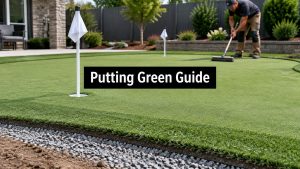
- Install a 4-inch perforated PVC drain tile where site conditions require it, connecting to a daylight outlet or pop-up emitter.
- Place decomposed granite in two lifts and compact each lift to 95% compaction.
- Seam and anchor the turf with non-galvanized staples placed every 6 inches along the perimeter.
- Set bender board or steel edging flush with the turf surface to protect the transition and limit fraying.
Central and south Austin often present clay-heavy soils, restricted access, and grade changes that make drainage design more important than the visible turf. A drain tile run needs a real outlet. A French drain that ends in saturated soil is not a drainage solution.

Reject the shortcuts that create expensive callbacks
Skipping drain tile can leave urine and stormwater trapped beneath the turf. Installing the base in one lift makes it harder to achieve uniform compaction. Burying organic debris under the sub-base creates soft spots as that material breaks down. These shortcuts may remain hidden until the first heavy rain or until dogs establish a concentrated running lane.
A dedicated relief zone is the upgrade that separates a clean dog yard from a smelly one in late summer. Purdue Extension states that completely preventing animal urine damage requires keeping the pet off the lawn, with practical alternatives including one designated area, watering after use, and maintaining vigorous turf. Purdue Extension explains the prevention and management options.
Build the relief area as its own subsystem
A 60-pound dog producing roughly 250 milliliters of urine per trip can repeatedly load the same small patch, concentrating the material where it has nowhere to disperse. That figure and the design implication are drawn from the specified field planning assumptions, while extension research independently identifies urine concentration and volume as the key causes of burn. The relief zone should therefore handle waste separately from the play surface.
A practical layout includes:
- Location: Use a side strip or corner away from the patio and primary windows.
- Size: A starting footprint of at least 6 by 8 feet gives dogs room to enter, turn, and use the area without immediately stepping outside it.
- Grade: Slope the zone 1–2% toward a drain inlet.
- Surface: Use antimicrobial-infilled turf over a higher-permeability assembly, such as pea gravel over a compacted decomposed granite base.
- Containment: Add a low wall or planter so dogs don't gradually relocate the bathroom area.
- Cleaning access: Put a hose bib within 15 feet and rinse the surface routinely.
- Odor routine: Apply an enzymatic cleaner weekly during summer, following the product label and keeping pets away as directed.
The EPA recommends keeping pet feces out of gutters and storm drains, and its Long Grass Principle uses grass about 10 centimeters tall to help filter pollutants and support natural decomposition. It also advises keeping waste areas away from overland flow paths, stream channels, lakes, drinking-water wells, and stormwater inlets. The EPA pet-waste bulletin provides those placement and runoff safeguards.
A 12-Month Care Schedule for Austin Conditions
A dog-friendly lawn succeeds through maintenance that follows Austin's weather, not a fixed calendar. Natural turf needs recovery time, while artificial turf needs brushing, rinsing, and heat management. Give the relief zone the most consistent attention because concentrated waste creates odor faster than ordinary play traffic.
Use a seasonal rhythm
January and February: Check edges, seams, drain inlets, and low areas before spring growth and heavier yard use. During a freeze watch, disconnect exposed hoses where appropriate. Avoid saturating surfaces if water could freeze and create a hazard. Natural turf may remain dormant, so winter repairs will not recover like spring repairs.
March through May: Spring green-up is the right time to repair bare natural turf, clear drainage paths, and start weekly rinses on dog-use surfaces. Watch for a new shortcut between the back door, gate, or relief area. Redirect that traffic before it forms a permanent rut.

June through August: Rinse the relief zone weekly, or more often when several dogs use it. Brush artificial turf every other week to lift flattened fibers and redistribute infill. Apply enzymatic cleaner to the relief area quarterly, then add a summer treatment if odor returns. Before the hottest part of July, inspect infill depth and replace material displaced by repeated traffic.
Direct sun can make artificial turf uncomfortable during the hottest part of the day. Keep dogs off the surface during that period when needed. Shade cloth, mature trees, irrigation used for cooling, and a shorter safe-use window may matter more than the product label. Low watering needs do not mean low surface temperature, as research summarized by Phys.org's summary of artificial turf research indicates.
September through November: Fall shedding adds hair and organic debris to drainage openings and spaces between fibers. Remove it before moisture turns the buildup into a film. Brush high-use paths, inspect transitions, and correct small seam or edge movements before cooler weather and rain restrict access.
December: Review how the yard performed. Note where the dogs played, where water stood, and whether the relief zone stayed convenient. Use those observations to adjust training, shade, drainage, or the next repair instead of repeating an installation problem.
For routine rinsing, brushing, and product selection, follow this artificial turf cleaning guide.
Read the quote by its components
Two yards with the same square footage can differ substantially because the work beneath and around the turf is rarely identical. Compare proposals in three categories:
- Material quality: Check fiber face weight, blade profile, backing, warranty terms, and infill type.
- Site complexity: Look for excavation depth, restricted access, slope correction, base lifts, and drainage tile runs.
- Specialized features: Identify the relief-zone substrate, antimicrobial infill, cooling technology, steel edging, and wash-down access.
A low bid may omit drainage tile, use a thinner base, reduce edging, or treat the relief zone as ordinary play turf. Ask each installer to list those items separately. Modern Yard Landscapes provides turf installation, drainage tile, pet-friendly dog runs, and maintenance across the Austin area, with estimates organized around material quality, site complexity, and specialized features.
Your Dog-Friendly Lawn Checklist and Next Step
Before requesting a quote, spend five minutes answering these questions. The answers help an installer design for your actual yard instead of guessing from a satellite image.
- How many dogs use the yard? More dogs usually means a larger or more carefully drained relief area.
- What are their breed, size, and weight? Two Labradors create different wear patterns than one small dog.
- Where do they run first? Mark the route from the back door, gate, and favorite shade tree.
- Where do they relieve themselves now? A repeated corner may be the natural location for a relief zone.
- Where does water stand after rain? Note puddles, muddy transitions, and flow toward the foundation.
- How much direct afternoon sun reaches the yard? Full sun changes the heat decision for synthetic turf.
- Where can dogs rest in shade? Existing oaks, pecans, covered patios, and shade structures can shape the layout.
- What matters more, appearance or cleanup speed? That answer often determines whether natural turf, hybrid zoning, or full artificial turf makes sense.
- Can a hose reach the relief area? Convenient wash-down access is part of the design, not an afterthought.
Bring photos of the yard during rain, a sketch of the dog paths, and any drainage history to the consultation. A site visit should evaluate soil, slope, shade, access, and outlet conditions together.
Modern Yard Landscapes can design and install a hybrid dog-friendly lawn with durable play turf, a drained relief zone, proper base preparation, edging, and ongoing maintenance options in Austin. Visit Modern Yard Landscapes to schedule an on-site consultation and get a quote built around how your dogs use the yard.