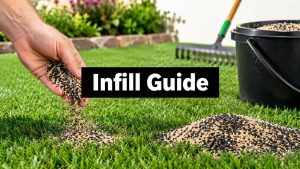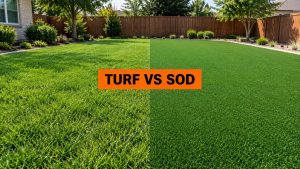

Turf infill is the granular material spread between synthetic grass fibers to keep them upright, add weight, and improve drainage and cushioning. Typical artificial-turf infill application rates are 5–8 kg per square meter, although the correct amount depends on the turf system, pile height, use, and climate.
You may be looking at a new Austin lawn that stays green through heat, pets, foot traffic, and changing weather, while wondering what you're paying for beneath the blades. Infill often looks like a minor detail during an installation estimate, but it influences how the surface feels, drains, recovers, and holds up over time. The right material can protect your investment. The wrong specification can leave you with flattened fibers, uncomfortable heat, odor problems, or drainage trouble.
The Hidden Engine Behind Your Synthetic Lawn
An Austin homeowner usually starts with a simple goal: replace a thirsty, maintenance-heavy lawn with synthetic grass that looks presentable every day. The finished surface gets most of the attention, but the visible green fibers are only one part of the system. Beneath them, the infill provides the weight and support that help the lawn behave like a stable surface instead of a loose carpet.
Think of a house foundation. You don't see it once the project is complete, but it determines how well the structure handles daily loads and changing conditions. Infill plays a similar role in synthetic turf. It sits between the fibers, supports the pile, adds ballast, and helps the surface manage water and impact. Industry guidance describes it as a direct influence on drainage, fiber matting, heat, comfort, odor control, and durability (independent turf guidance on artificial grass infill).
A lawn without enough appropriate infill may look acceptable immediately after installation. The trouble appears later, especially in traffic lanes, around play areas, and where pets use the surface. Fibers can flatten more quickly, infill can migrate through wind or runoff, and the lawn may feel less natural underfoot. Those aren't isolated cosmetic issues. They indicate that the whole turf system isn't receiving the support it needs.
Why the material matters after installation
Synthetic turf has evolved beyond its earliest versions. The third-generation infilled turf system was first installed in 1997 at a Pennsylvania high school, and the scale of use expanded significantly. By 2012, the European Union had at least 13,000 full-sized artificial turf fields and at least 45,000 smaller fields, while the United States had an estimated 13,000 artificial turf fields by 2020, according to a review published through the National Institutes of Health.
For a homeowner, the lesson isn't that every backyard needs a sports-field specification. It's that infill is an established performance component, not filler added to make the installation look complete. If you're comparing turf systems, the broader artificial turf layers guide can help you see how infill works with the backing, base, drainage, and edging.
Buyers also compare surface appearance with decorative products such as the Wonder Gress tiles collection, but a full synthetic lawn still needs a carefully matched infill system beneath its visible finish. Ask what material is being installed, how much is specified, where it will sit in the pile, and how the installer plans to maintain it. Those answers reveal far more than a sample of green grass alone.
What Turf Infill Actually Does
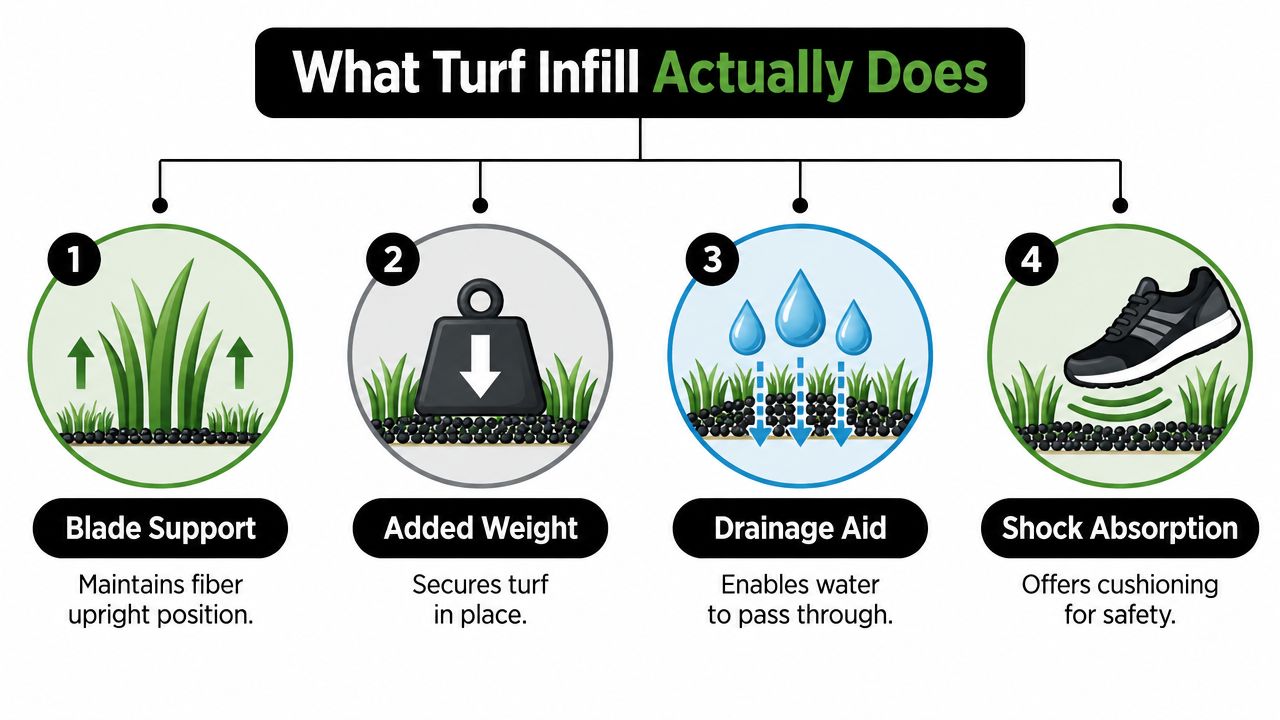
Turf infill performs four connected jobs. It supports the blades, adds weight, helps water move through the surface, and contributes to cushioning and traction. Treating it as only a way to make synthetic grass look fuller misses how much the granular layer affects daily performance.
Blade support and ballast
Picture the difference between a sandbox filled with dry sand and a bare surface beneath loose plastic grass. The sand settles around the fibers and gives them resistance when people walk across them. Without enough material between the blades, repeated foot traffic pushes fibers over, creating matted paths that brushing may not fully restore.
The added weight also helps hold the turf in position. Infill doesn't replace proper base preparation, seam work, or edging, but it contributes ballast once the system is installed. Underfilled turf tends to shift more easily in wind or runoff and can lose its intended feel as the pile collapses.
Drainage and surface behavior
Infill occupies the space between fibers while preserving pathways for water to reach the backing and prepared base. That matters in Austin, where a surface must handle both intense heat and periods of heavy rain. Infill alone can't correct a compacted base or an undersized drainage solution, but the wrong depth, excessive compaction, or poor grooming can reduce the open pore space that water needs.
A turf-performance source identifies infill as a contributor to shock attenuation, ball rebound, and traction, with FIFA testing benchmarks that include ball rebound around 0.6–0.9 and rotational resistance around 30–45 Nm (technical guidance on artificial turf infill). Those benchmarks relate to sport-style systems, not a universal target for a residential yard. They demonstrate why installers must match the recipe and depth to the intended use.
Cushioning and comfort
Different blends change how the surface responds underfoot. A heavier sand-based system emphasizes stability and drainage, while specialty cooling or elastic infills may trade some weight for a softer feel or lower surface temperature. That distinction matters when the same product is being considered for a dog run, a children's play area, a recreational lawn, or a putting green.
The practical question goes beyond, “Which infill is best?” It's, “Which infill gives this turf the behavior I need?” A sand infill guide for artificial grass is useful when you want to understand measured distribution, brushing, and how the installer gets material down to the base of the pile instead of leaving it unevenly on top.
Comparing Common Infill Materials
No single infill wins every project. The appropriate choice depends on how the area will be used, how much heat it receives, what maintenance is realistic, and whether drainage, odor control, softness, or roll quality matters most.
| Infill type | Strengths | Limitations | Practical applications |
|---|---|---|---|
| Silica sand | Adds substantial ballast, supports fibers, and can assist drainage | Can feel firmer and may not address heat or odor by itself | General lawns, stable traffic areas, some putting-green systems |
| Crumb rubber | Provides resilience and cushioning, often at a lower material cost than premium alternatives | Requires careful evaluation of odor, heat, migration, and runoff considerations | Sport-style surfaces where impact response is a priority |
| TPE | Purpose-made elastic material with a soft feel and color options | Usually carries a higher cost than basic sand or crumb rubber | Play areas, premium recreational turf, surfaces needing elastic performance |
| Eco-friendly blends | Options such as cork, coconut, walnut shell, and coated sand can target comfort or heat concerns | Product behavior, durability, and maintenance vary by formulation | Pet areas, residential lawns, heat-sensitive applications, specialty installations |
Silica sand for stability
Dry silica sand is a familiar stabilizing material because it settles around the fibers and contributes meaningful weight. One installer guide lists approximate bulk density at 95–105 lb per cubic foot for dry silica sand, compared with 55–70 lb per cubic foot for zeolite and 28–35 lb per cubic foot for SBR rubber crumb (infill quantity and bulk-density guidance). Because materials have different densities, comparing bags or application weight without considering volume can produce a misleading price comparison.
Sand may suit a general residential lawn where stability and straightforward maintenance matter most. It isn't automatically the best choice for a hot patio-facing yard, a pet-heavy zone, or a putting green where roll consistency deserves more attention.
Rubber, TPE, and specialty blends
Crumb rubber can add resilience, but it deserves a more careful conversation than a simple “soft versus firm” comparison. Public-health reviews distinguish user exposure from environmental exposure. Connecticut's multi-agency assessment found no significant inhalation health risks for outdoor and indoor artificial turf fields under the scenarios evaluated, while also identifying potential risks to surface waters and aquatic organisms from stormwater runoff, including whole-effluent and zinc toxicity (Connecticut artificial turf field risk assessment).
TPE is a purpose-made elastic option that can provide a different feel and color profile, but the material price and project specification need to make sense for the use. Organic and hybrid choices, including cork, coconut, walnut shell, and coated sand, are increasingly discussed for heat and environmental preferences. They shouldn't be selected by label alone. Review how each option handles pets, water, compaction, replenishment, and replacement.
For pet zones, antimicrobial treatment and odor management may matter more than a premium athletic feel. The antimicrobial turf infill option is relevant when cleanliness and pet use are central to the design. For a putting green, fiber height, base preparation, and the infill's effect on ball roll deserve a separate specification rather than a generic lawn package.
Infill Choices for Austin's Climate
Austin creates a demanding combination for synthetic turf. Sun can make dark surfaces uncomfortable, while sudden heavy rain exposes weaknesses in the base, seams, edging, and drainage path. Infill has to work within that larger system. Choosing a cooling material won't rescue a yard that was installed over a poorly prepared or poorly draining base.
Heat is a design factor
Specialty cooling infills and lighter-colored sand-based materials can be reasonable options for a sunny Austin yard, especially where children, pets, or bare feet will regularly contact the surface. Some elastic and specialty products trade a portion of the weight associated with dense sand for a softer feel or lower surface temperature. That trade-off should be discussed openly, because a cooler surface may require a different maintenance approach or a complementary stabilizing layer.
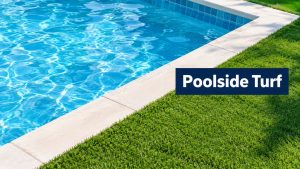
A shaded side yard, a sunny pool surround, and a backyard dog run don't face the same conditions. The installer should ask about shade, irrigation overspray, reflected heat from walls, foot traffic, and the time of day the space gets used. Those details are more useful than choosing a material because its name sounds premium.
Rain exposes installation shortcuts
Water must move through the turf, backing, base, and surrounding grade in sequence. Infill can support drainage by keeping the pile structure open, but it can't create a proper outlet where the site has no drainage path. Pooling often points to a combination of grading, base compaction, clogged pores, inadequate drainage tile, or infill that has migrated and compacted.
A professional installation guide recommends 5–8 kg of infill per square meter and applying it with a drop spreader or stiff broom, followed by brushing so the material settles to the base of the pile (professional turf drainage and infill guidance). That process matters in Austin because uneven distribution can leave some areas unsupported while other areas receive excess material.
Austin rule: Choose infill and drainage together. A material decision made without reviewing slope, base, runoff, and outlet conditions isn't a complete turf specification.
Before signing, ask whether the estimate identifies the infill product, application rate, drainage strategy, and maintenance expectations. A transparent installer should explain why the proposed system fits your yard instead of presenting one material as a universal answer.
Safety, Maintenance, and Long-Term Value
A safe turf surface depends on the complete system, not the infill label alone. Material selection, installation quality, drainage, ventilation where relevant, pet use, and routine care determine the conditions people and animals actually experience.
Crumb-rubber infill shows why blanket safety claims are unhelpful. The Connecticut review found no inhalation health risks under the field scenarios it evaluated, while raising environmental questions about runoff reaching surface waters. In Austin, review where rainwater flows, whether drainage can carry infill away from the property, and how the site handles discharge before choosing a product.
Maintenance protects the system
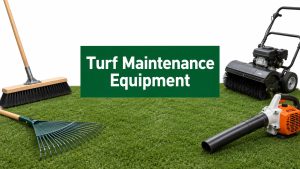
Infill shifts under foot traffic, grooming, pets, runoff, and wind, especially along busy paths. Guidance recommends weekly debris removal and rinsing, monthly grooming of fibers and infill, and seasonal inspection of seams and edging (artificial turf maintenance guidance). Grooming restores the pile while redistributing infill and reopening pore space for drainage.
For the weekly rinsing and grooming routine, follow our guide to cleaning artificial turf. The work is simple, but skipping it allows debris, pet residue, and displaced infill to remain in the surface.
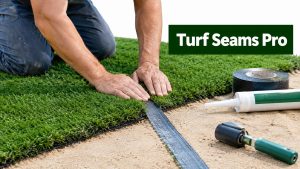
Check infill depth in traffic areas. A homeowner guide recommends topping it up when the gap between the fiber tips and infill exceeds 3/4 inch (turf infill depth maintenance guidance). In Austin, inspect those areas after heavy rain events and budget for a 1-2 kg/m2 top-up every 12-18 months in high-traffic lanes, rather than waiting for a larger repair or full replacement.
Match maintenance to the use
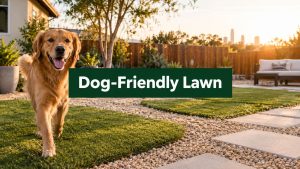
Pet areas need prompt solid-waste removal, thorough rinsing, and an odor-control plan. Family lawns need regular debris removal and attention to walking routes. Putting greens need grooming that protects the intended roll instead of just making fibers look fuller.
Antimicrobial and cooling options can address specific comfort and cleanliness goals, but their value depends on using the right maintenance schedule and keeping drainage functioning. Modern Yard Landscapes provides Austin-area turf installation and maintenance, including infill application, brushing, and final inspection. A small, scheduled routine generally costs less than correcting migration, compaction, or blocked drainage after the problem spreads.
Next Steps for Your Modern Yard
Start with the use case, not the product name. Tell the installer whether the area is a general lawn, a dog run, a children's play space, a pool surround, a commercial area, or a putting green. Then ask for a written explanation of how the selected infill supports that use in Austin's heat and rain.
Questions worth asking before you schedule
- Material: What exact infill is included, and what alternative would you recommend?
- Quantity: What application rate and depth are planned for this turf and pile height?
- Drainage: How will water leave the site, and how does the infill work with the prepared base?
- Maintenance: Which areas will need more frequent grooming or replenishment?
- Health and environment: How will the design address pet contact, runoff, odor, and surface comfort?
- Verification: Will the crew inspect distribution, seams, edging, and cleanup before handing over the project?
The pricing should also separate the factors that change the project total, including material quality, turf quantity, labor complexity, access, base preparation, drainage work, and specialized features such as antimicrobial treatments or cooling technologies. That approach makes it easier to compare proposals. A low initial price can become poor value if it excludes the preparation or maintenance needed to keep the surface performing.
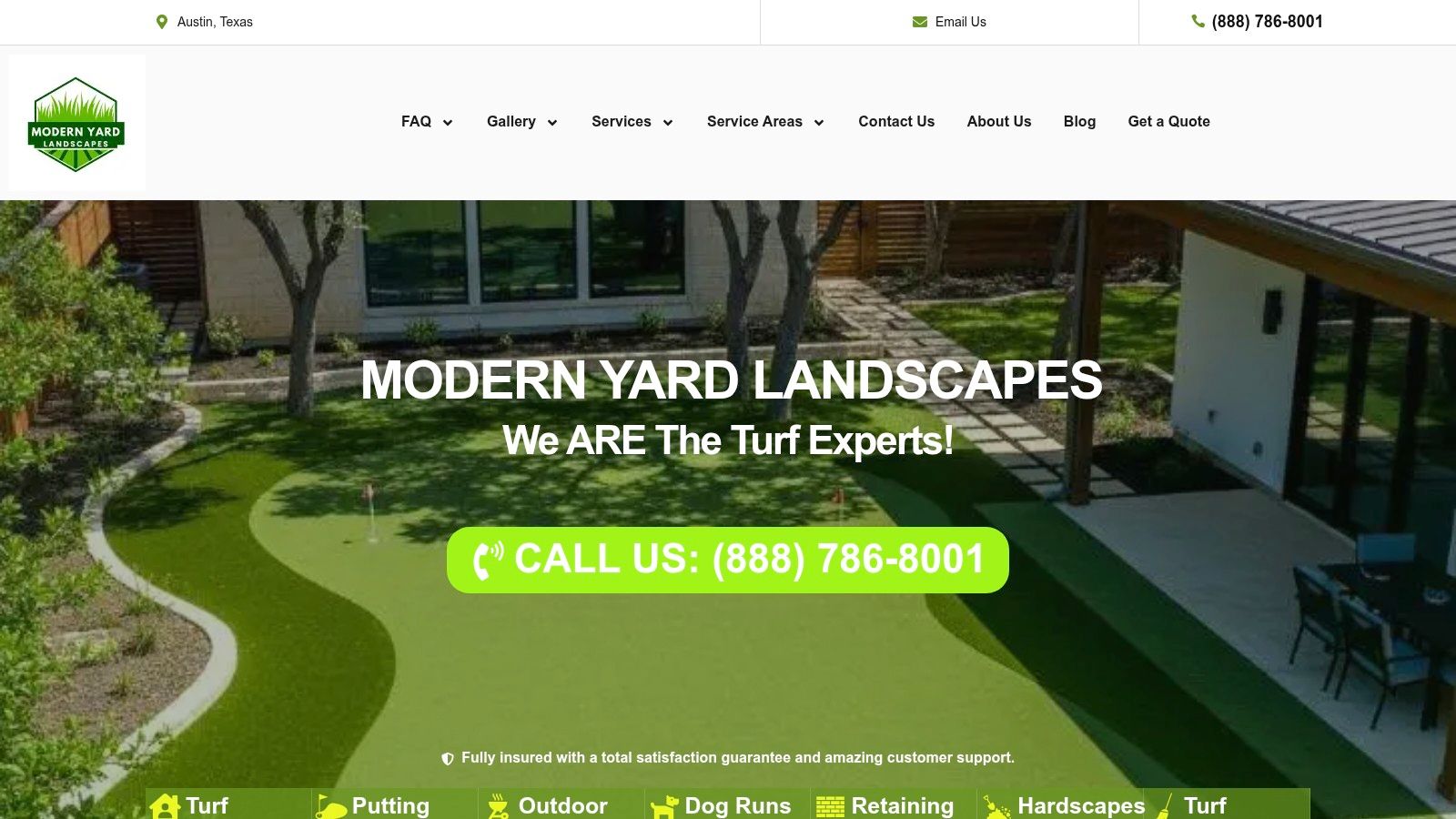
Modern Yard is a full-service artificial turf and outdoor services company based in Austin, Texas. Its services include residential and commercial turf installation, custom putting greens, pet-friendly dog runs, maintenance, drainage tile, retaining walls, and related outdoor work. The company is fully insured, provides a total satisfaction guarantee, and uses transparent, factors-based estimates that account for the conditions affecting your property.
The right infill won't make a poor installation good, but a properly selected and installed infill system can help your turf retain its support, comfort, drainage, and appearance. Schedule a site consultation, bring your questions, and ask the installer to connect every recommendation to your yard's use, exposure, grade, and maintenance plan.
Modern Yard Landscapes can evaluate your Austin property, recommend infill for your lawn, pet area, or putting green, and coordinate the drainage and installation details that protect the finished surface. Visit Modern Yard Landscapes to request a transparent consultation and schedule an appointment.