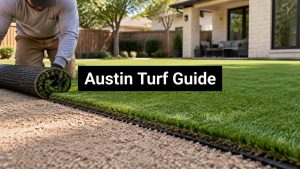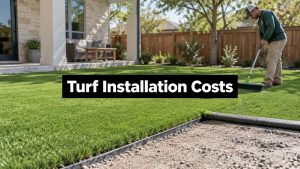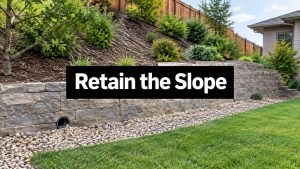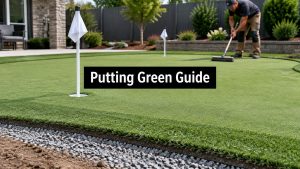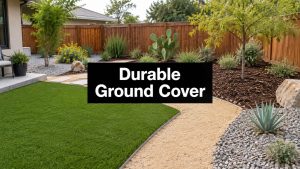

A typical residential artificial-turf system includes compacted subgrade, geotextile fabric, 3–4 inches of crushed aggregate base, an optional shock pad, turf, and infill. For Austin homeowners, the decision is drainage depth and fabric placement, not the turf brand.
You may be looking at a backyard that seemed fine until a storm exposed every weakness. After rain, the low corner stays soft, a seam feels raised underfoot, or water sits along the foundation while the rest of the yard drains. In Central Texas, those symptoms usually point below the carpet, especially where expansive clay meets sudden runoff and summer heat.
The visible grass is only the finish. Beneath it, an installer has to build a stable, permeable section that carries foot traffic, moves water, and limits soil migration. The right answer to what goes under artificial turf depends on the native soil, grade, intended use, and relationship to nearby structures.
Why the Layers Under Your Turf Matter
After a May thunderstorm, an Austin homeowner may find a soft patch, standing water beside the patio, or a sour odor near a seam. The turf can still look green and intact. Those symptoms usually point to the assembly below it: an uneven base, weak subgrade compaction, or a separator that interferes with drainage.

Artificial turf is a layered construction system, not a plastic carpet placed over dirt. The subgrade, aggregate, fabric, and drainage path work together to support traffic and move stormwater. Federal field specifications describe a compacted subgrade, permeable aggregate base, and, in some systems, a topping stone layer. They specify aggregate placed in lifts no more than 6 inches loose depth, a minimum 4-inch nominal compacted base, a 2-inch topping stone layer, 95% compaction by Modified Proctor testing, and surface tolerance within 0–1/4 inch over 10 feet. They also identify poor sub-base drainage as unacceptable. Federal turf field specifications show why installation quality matters as much as turf selection.
The hidden causes of visible problems
Wrinkles, pooling, lifted seams, and pet odors often begin below the surface. Uneven settlement changes the turf plane. Clogged aggregate slows water movement, while a separator placed incorrectly can trap water above the soil instead of helping the profile drain.
Research on infill synthetic-turf systems identifies poor surface grading and insufficient internal drainage as major construction problems. FIDRA's artificial-turf drainage research also describes the move from early carpet-like surfaces over hard bases toward systems designed around drainage and infill.
Practical rule: Choose the turf for appearance and use. Judge the installation by the section beneath it.
Austin's expansive clay sharpens the consequences. A yard that appears stable during a dry installation can shift or drain differently after heavy rain and seasonal moisture changes. Heat adds another test, drying the surface while runoff still concentrates in low areas. The base must stay consistent, and the site must give water a controlled route away from patios, foundations, and other structures. A standard aggregate section may suit a well-graded yard, while a low corner or persistently wet area may justify added drainage work. That decision should come from the site conditions, not a sales pitch about fiber height or color.
A Walk Through Each Layer From Soil to Surface
A durable Austin installation starts with the soil, not the turf roll. The layers work as one system, but each has a separate job. The bid should identify what goes beneath the carpet and why that section fits the yard.
1. Compacted native subgrade
The installer removes organic material and loose soil, then shapes the exposed ground to carry the finished system. Austin's expansive clay changes volume as moisture conditions shift, so the subgrade must be graded deliberately, commonly toward a 1–2% slope. Leaving the slope to chance can send stormwater toward a foundation, patio, or gate.
Compaction sets the elevations and gives the aggregate a consistent platform. It also controls the final height at walkways, doors, and other edges. Aggregate cannot permanently correct a weak or irregular soil surface.
2. Non-woven geotextile fabric
A permeable, non-woven geotextile separator may go over the prepared soil when clay fines or mixed site materials could migrate into the stone. It allows water through the interface while helping keep the subgrade separate from the aggregate. This product serves a different purpose from woven weed barrier used beneath planting beds.
The fabric must lie flat. Wrinkles, folds, and careless overlaps can show through the base and produce uneven areas. On a clean, stable site, an installer should explain why fabric is being used rather than adding it automatically.
3. Crushed aggregate base
The residential base commonly uses 3–4 inches of compacted crushed limestone or decomposed granite. Angular aggregate forms the working platform beneath the turf and gives stormwater routes through the profile. The installer should place and compact it in controlled lifts. A thick loose pile compacted only at the surface can leave soft zones below.
Flatness comes from preparation and compaction, not from the turf carpet hiding defects. Federal field specifications use a 4-inch minimum compacted base, require 95% Modified Proctor compaction, and limit surface variation to 0–1/4 inch over 10 feet. Those requirements provide a useful benchmark for workmanship, even when a residential yard uses a different written specification.
4. Optional shock pad
A shock pad can sit below the turf in play areas, children's spaces, or locations where cushioning and fall protection matter. It may also support drainage, but only when its flow characteristics match the base and outlet plan. The Synthetic Turf Council guidelines call for at least 20 inches per hour of infiltration for pads designed for vertical water flow. Pads intended for lateral drainage should be tested for horizontal flow under ASTM D4716. The Synthetic Turf Council shock-pad guidelines explain the performance requirements.
5. Turf and infill
After the base or pad is ready, the installer cuts, seams, stretches, and secures the turf around its perimeter. Dry infill is spread in uniform passes, then brushed into the fibers. It adds ballast, supports the blades, and helps the surface handle foot and pet traffic. Uneven spreading leaves thin spots, while excessive brushing or buried fibers can change the finished appearance.

Choosing the Right Base Material and Depth
The base material needs to lock together while leaving a practical route for water. That usually means angular, fractured aggregate with a controlled range of particle sizes. The sharp faces interlock under compaction, while the fines fill voids and create a firm grading surface.
Crushed limestone, often specified as 5/8-inch minus, is a familiar Austin choice for general residential turf. Decomposed granite can grade smoothly and suit certain finish requirements. Crushed miscellaneous base, or CMB, may work where the specification and source are appropriate, but the installer should explain its composition rather than treating the label as a guarantee.
Rounded river rock and pea gravel look clean in a sample, but they don't create the same interlocking structure. Loose rounded particles can shift beneath traffic, making rutting and movement more likely. Clean drain rock can be useful in a drainage-focused design, but it may need a compactable material above it to create a stable turf platform.
Depth should follow the site
A stable pedestrian area may work with a 3-inch compacted base. General yards and pet runs commonly call for 4 inches, while driveways, heavy-use zones, or difficult expansive clay may justify 4–6 inches. A residential turf guide identifies 3–4 inches as common and notes that wetter or higher-load areas may need 4–6 inches, sometimes with underdrains. This base-material guide provides a useful starting point, though the excavation conditions should control the final decision.
| Material | Best Depth (in) | Pros | Cons |
|---|---|---|---|
| Crushed limestone, 5/8-inch minus | 3–4 | Locks together, grades well, supports drainage | Can clog if clay fines migrate into it |
| Decomposed granite | 3–4 | Smooth finish, workable for residential shaping | Needs careful compaction and edge control |
| CMB | 4–6 where specified | Often suitable for structural preparation | Quality varies by source and blend |
| River rock or pea gravel | Not preferred as the primary compacted base | Can provide open drainage in selected designs | Rounded particles shift and don't form a dependable turf platform |
Central Texas blackland clay can swell when wet and shrink during dry heat. The aggregate won't stop that natural behavior, but a properly prepared, well-graded section reduces how much movement reaches the finished surface. A bid that says “rock base” leaves too much unanswered. Ask for the material, compacted depth, lift process, and drainage plan. For additional detail, compare the contractor's proposal against this guide to base material for artificial turf.
Where Geotextile Fabric Helps and Where It Hurts
Geotextile fabric earns its place when the soil can migrate into the aggregate. That is particularly relevant over Austin clay, where fine particles can move upward under traffic and wetting. Once those fines occupy the drainage voids, the base can become softer, water can move more slowly, and the turf may develop depressions or wrinkles.
The correct product is generally a non-woven, needle-punched separator placed directly over the compacted subgrade. A light geotextile, often specified around 3–4 ounces, allows water to pass while separating soil from stone. The fabric should hug the soil, not sit casually between multiple aggregate layers.
Placement is more important than the label
Woven weed-barrier cloth belongs in applications where weed control is the primary purpose. Under turf, it can be the wrong tool if the design requires free vertical drainage. Doubling fabric between base lifts can also create an unintended break in the drainage path.
Industry guidance warns that geotextiles can contribute to air-locking and surface ponding if they're placed where they block flow. The practical recommendation is selective placement at the soil and base interface or around drains, not fabric throughout the entire profile. Sports Builders' drainage presentation explains the relationship between aggregate, separation, slope, and internal flow.
A proper installation keeps seams flat and secure. Overlaps should be substantial, commonly 12 inches, with pins installed often enough to prevent movement during aggregate placement. The exact fastening plan depends on soil and site conditions, but the finished fabric shouldn't fold, float, or bunch.

Fabric should solve soil separation. It shouldn't become an extra layer that traps water.
Some sites don't need geotextile fabric. Stable, free-draining soil may support a simpler section, while highly reactive clay usually benefits from deliberate separation. The relevant question isn't whether fabric is always good or always bad. It's whether the specified fabric sits in the right location and supports the drainage design. Homeowners comparing weed control products should distinguish a weed barrier installation from a geotextile soil separator before approving the scope.
Infill Options for Austin Heat and Heavy Use
Infill changes how artificial turf feels and behaves. It supports the blades, adds ballast, and affects maintenance in a family yard, pet run, or putting green. The right choice depends on use, exposure, bare-foot comfort, odor concerns, and how much upkeep the owner accepts.
Rounded silica sand is a practical baseline for many residential yards. It supports fibers without the sharper feel associated with some angular sands and can remain stable when the surface is brushed correctly. Infill must be installed while the turf is dry, applied in uniform layers, and brushed through the pile so the blades stand upright. These turf-system specifications outline the importance of even application.
Match the infill to the use
Acrylic-coated sand offers a cleaner finish and can provide some additional resistance to pet odors, but it costs more and may feel gritty under bare feet. Zeolite-infused products are often considered for pet areas because they can help manage ammonia odors more effectively than sand alone. They still require prompt waste removal and rinsing.
Cooling infills may use reflective minerals, including zircon-based formulations, to reduce heat at the surface. Product performance varies, and exposed south-facing turf can still become uncomfortable during Austin's hottest periods. Shade, irrigation for temporary cooling, and realistic use expectations matter as much as the infill selection.
Putting greens require a different conversation. A finer, rounded silica infill supports a consistent ball roll, but the base contour, turf construction, brushing, and maintenance all contribute to performance. A lawn infill won't automatically produce a putting surface.
| Infill Type | Best Use | Heat Performance | Pet Odor Control | Approx. Cost per sq ft |
|---|---|---|---|---|
| Rounded silica sand | Family yards and general residential turf | Practical baseline | Basic, with regular cleaning | Varies by product and bid |
| Acrylic-coated sand | Clean-finish residential areas | Similar to sand, with a refined surface feel | Some added resistance | Higher than standard sand |
| Cooling mineral infill | Sunny yards and heat-sensitive areas | Designed to reduce surface heat | Limited odor role | Varies by formulation |
| Zeolite-infused infill | Pet runs and dog areas | Depends on carrier material | Better suited to ammonia management | Varies by product |
| Fine rounded silica | Putting greens | Depends on overall system | Not selected for odor control | Varies by green specification |
For a practical overview of installation and maintenance considerations, review the guidance on sand infill for artificial grass. Don't approve an infill solely because a brochure calls it premium. Ask what it does for your actual yard.
Drainage Upgrades Austin Yards Often Need
A standard residential installation often begins with a 3–4-inch compacted crushed-limestone base set to a 1–2% slope. That may perform well when the native soil accepts water, the yard is not receiving runoff from higher ground, and the finished grade has a clear discharge route. On Austin clay, those conditions matter more than adding drainage hardware by default.
Upgrade the drainage when water reaches the yard faster than the base can move it away. Warning signs include a property below a slope, repeated pooling near the foundation, low ground beside a creek or greenbelt, or standing water that remains after ordinary storms. Inspectors should trace where water enters and exits, and observe the property during wet conditions when possible.
Drainage options that solve different problems
An uphill French drain intercepts runoff before it reaches the turf. A common assembly places a 4-inch perforated pipe in a filter-fabric sock, surrounds it with gravel, and connects it to a daylight outlet or pop-up emitter. The pipe needs a real destination. Buried perforated pipe without an outlet only stores the problem.
A channel drain addresses surface flow from a different direction. Set along a foundation, patio, or hardscape transition, it catches sheet flow at the edge before water spreads across the turf. It suits runoff coming off concrete better than groundwater moving through the yard.
Flat sites with heavy clay may benefit from lateral perforated lines arranged in a herringbone pattern and directed toward a collector drain. This can reduce the need to excavate the entire yard deeper, but the layout still needs a workable slope, an outlet, and access for maintenance. Poorly planned laterals can leave water trapped between lines.

The turf and infill layer is commonly expected to drain around 10 inches per hour, while the stone base and finish stone may be specified around 14 inches per hour. Those figures describe a system that moves water through the surface and base, rather than leaving it stored beneath the carpet.
Upgrade drainage where the water tells you to. Don't sell a French drain to a yard that already has a working slope and outlet, and don't call a recurring pond a turf problem.
For a property-specific evaluation, compare the proposed layout with information about artificial turf drainage systems. One yard may need only the standard base. Another may require a drain line, channel drain, basin, or correction at the outlet. The right choice depends on the water source, soil, grade, and available discharge point.
Questions to Ask Before You Sign the Contract
Site preparation is the hidden value driver in an artificial-turf installation. A homeowner can compare blade color, face weight, and warranty language, but those features won't correct organic soil left beneath the system, a base that was never compacted, or a grade that sends runoff toward the house.
Ask the installer to describe the section in writing. You should understand what gets removed, what remains, how the soil is prepared, which aggregate is used, how thick it will be after compaction, and where water is supposed to go.
Questions that reveal the actual installation method
What is the compacted base depth? The proposal should name the material and finished depth. A base quoted below 3 inches deserves a clear site-specific explanation, especially over clay or in a pet area.
How will you handle the slope? Ask how the crew will establish the 1–2% grade away from structures and verify the finished elevations at doors, gates, patios, and drainage outlets.
How do you assess clay movement? The installer should discuss native soil, expansive clay, fill, soft areas, and any reason the standard section needs to change.
What fabric are you using, and where does it go? Look for a non-woven separator at the soil and base interface when the site requires separation. Woven weed cloth or multiple fabric layers should have a specific purpose.
What compaction equipment will be used? A plate compactor is common for residential work. The crew should explain how it will compact lifts rather than merely driving over a loose pile.
Where does stormwater discharge? A drainage plan is incomplete if it only says the base is permeable. Ask for the route to soil, a drain line, daylight, emitter, basin, or another approved outlet.
Read the warranty and the quote together
A turf-only warranty may cover manufacturing defects but say little about settlement, drainage, seams, or installation workmanship. Look for language that identifies who is responsible for site preparation, perimeter securing, infill application, and drainage-related workmanship.
Red flags include a verbal-only quote, no mention of compaction equipment, no stated base material, no elevation plan, and promises that the turf itself will fix a wet yard. A contractor who can't explain the hidden layers clearly may still install attractive turf, but you won't know what supports it.
Bring this checklist to the bid walk-through:
- Base: Material, compacted depth, and lift process are written down.
- Grade: The proposal shows how water moves away from structures.
- Fabric: Product type, location, overlaps, and fastening are identified.
- Drainage: Any French drain, channel drain, pipe, basin, or outlet has a defined purpose.
- Infill: The type, application method, and use match are explained.
- Warranty: Installation responsibilities appear in writing, not only the turf manufacturer's coverage.
Modern Yard is one Austin-area option that combines turf installation with soil preparation, compaction, grading, infill distribution, perimeter securing, and drainage-related work such as drainage tile. Ask any installer to walk the site with you and explain each layer before you sign.
If your Austin yard has clay, pooling, pet traffic, or an awkward slope, Modern Yard Landscapes can evaluate the soil preparation, base depth, fabric placement, turf system, and drainage needs together. Visit the site to schedule a consultation and get a written plan focused on what will hold up beneath the grass.