
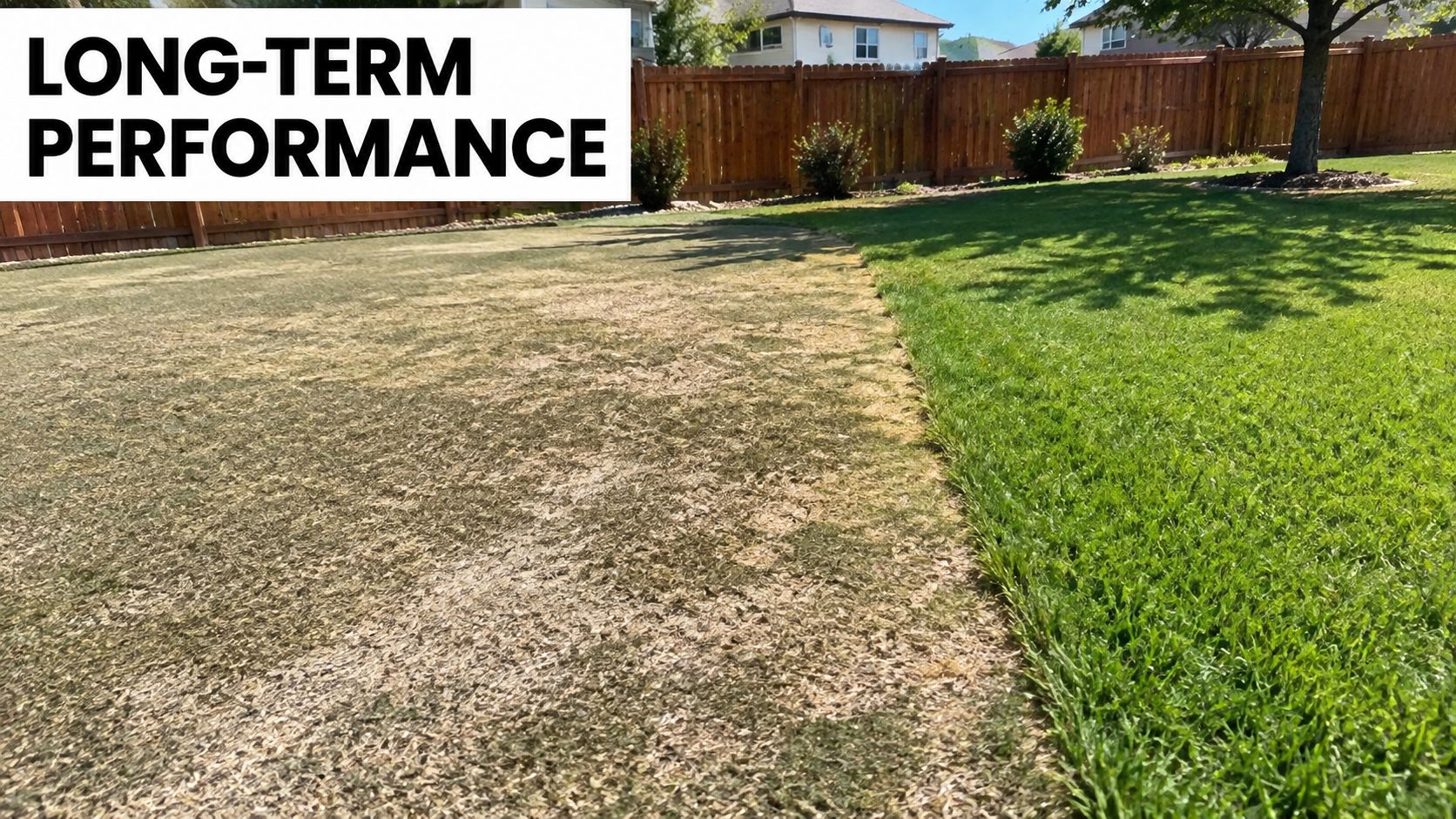
You chose artificial grass because you wanted a lawn that stays green through Austin's heat, saves water, and doesn't demand constant mowing. Then the first summer passes, followed by another, and the turf begins to look lighter. Some blades feel less flexible, traffic lanes stay flattened, and the surface no longer has the resilient finish you expected.
That outcome usually isn't caused by color alone. Ultraviolet exposure attacks the material itself, while surface heating, moisture, temperature changes, and foot traffic add stress. A product can still look green while its fibers are gradually losing strength.
Introduction Why UV Resistance Decides Your Lawn Future
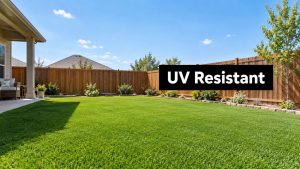
A bright Austin backyard can test artificial turf in several ways at once. Sunlight reaches the yarn, the surface heats and cools, rain or rinsing adds moisture, and people, pets, and furniture repeatedly bend the fibers. UV resistant artificial grass therefore needs more than green pigment that looks appealing on a new sample.
The useful promise is retained color, fiber strength, flexibility, and usable performance after prolonged exposure. Those results depend on the chemistry within the yarn, the backing construction, the infill system, the installation base, and ongoing care. A product label cannot show whether these parts suit your property or Austin's conditions.
The history of synthetic outdoor surfaces also explains why testing matters. Work on artificial surfaces began around 1998, a first proposal followed in 1999, CEN drafts appeared from 2002, and the EN 14836 standard was published in 2004. Field exposure testing at Le Mans began in 2001. One report found that some polypropylene fibers lost more than 50% of tensile strength after 2,500 hours of exposure, showing how sunlight can affect the fiber's working strength, not just its shade (technical history and exposure findings).
A useful analogy is a rubber band left outdoors. It may keep its color for a while, yet repeated sun and heat can make it less flexible before the failure is obvious. Artificial turf can follow a similar path, which is why fiber chemistry, heat cycling, and eventual replacement deserve attention alongside appearance.
The practical lesson: Don't buy based on color alone. Ask how the yarn was stabilized, how it was tested, and how the entire system will perform on your property.
This guide connects those questions to Austin buying decisions for homeowners, property managers, pet owners, and putting-green customers. You'll learn which weathering evidence matters, which specifications deserve attention, and how installation and care influence long-term resilience. A professional turf consultation can then match the product and system to your sun exposure, use, drainage, and maintenance expectations.
How Sun Breaks Down Artificial Grass and How Protection Works
A lawn can keep its green appearance while its yarn loses flexibility. Artificial grass commonly uses polyethylene or polypropylene, durable polymers whose long molecular chains can be damaged by ultraviolet radiation. UV-B and UV-C energy can split those chains, a process called chain scission. Oxidation, surface chalking, fading, and brittleness may follow (polymer degradation and stabilization overview).
The protection works much like sunscreen. Sunscreen absorbs or neutralizes part of the incoming energy before it harms skin. During manufacturing, turf makers blend UV stabilizers and hindered amine light stabilizers, or HALS, into the yarn. These additives help defend the polymer structure rather than coating the finished grass (technical literature on UV stabilizing agents.
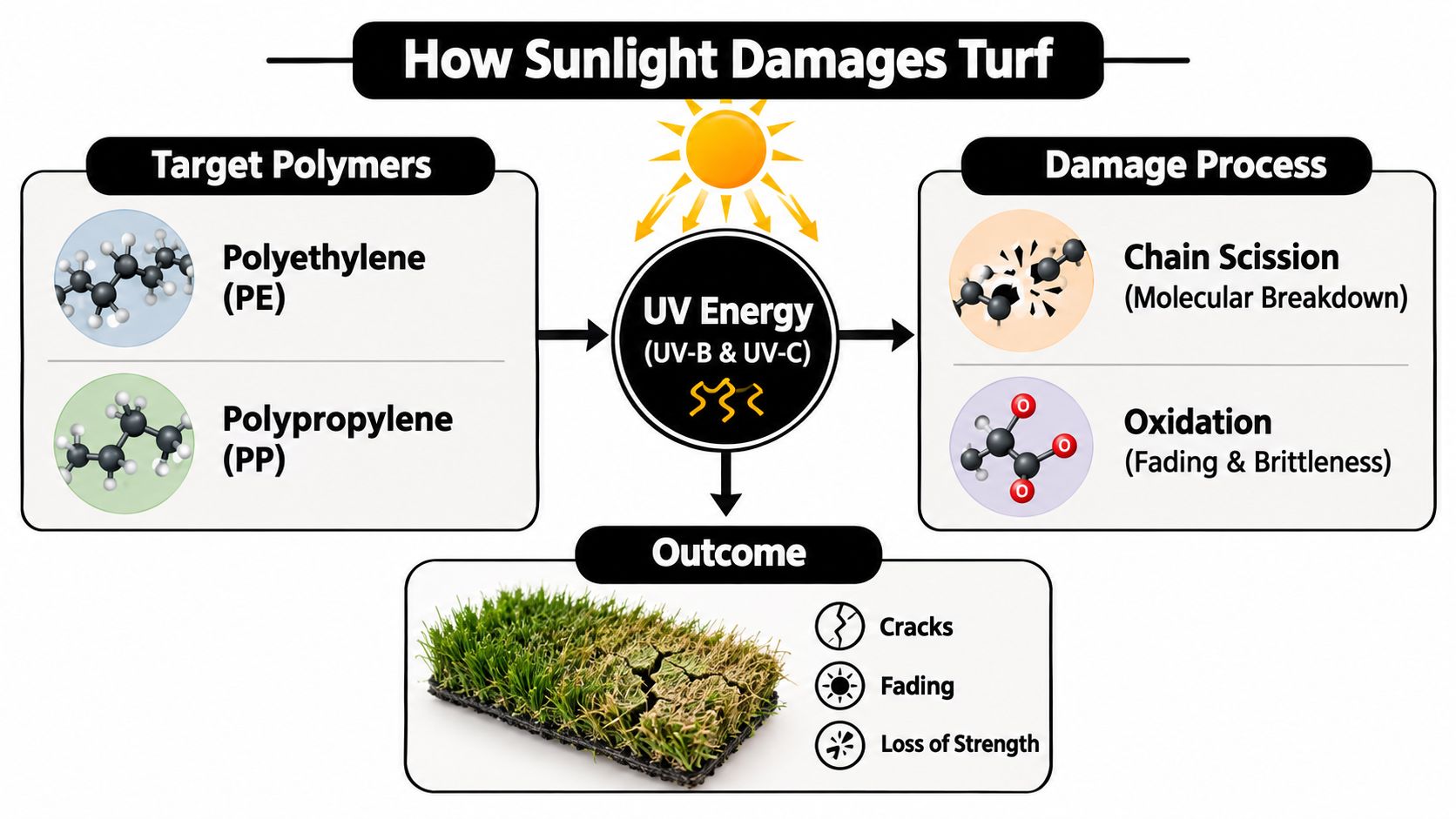
Why color can mislead you
Pigment can make a sample look attractive even when its fiber chemistry has limited protection. A stabilized yarn is formulated to resist the molecular changes that later affect color, strength, and recovery after foot traffic. Ask about the stabilizer package, not only whether the product is described as “UV treated.”
The same question applies to a small practice area. An artificial turf mat for drills can receive outdoor sunlight and concentrated repeated use, so yarn construction still matters despite its smaller footprint.
Sunlight works alongside other stresses. Surface heating, temperature swings, rain, and mechanical wear can contribute to fiber fragmentation and microplastic release (review of artificial turf degradation factors). Repeated heat cycling can make yarn brittle even while the color remains acceptable.
For an Austin project, evaluate the whole system. Ask how the proposed turf handles strong sun, heat, drainage, traffic, pets, and cleaning. A guide to heat-resistant artificial turf can help you compare heat-management features, then a professional consultation can match those features to your yard's exposure and daily use.
How UV Resistance Is Tested and What Ratings Actually Mean
A turf sample can look unchanged in the showroom and still have a weaker future outdoors. Reliable evaluation places specimens in accelerated weathering equipment, where controlled fluorescent UV radiation combines with heat, condensation, and moisture cycles. The process works like a compressed version of outdoor exposure, although it cannot reproduce every Austin condition.
One commonly used framework is EN 14836. It evaluates resistance to UV degradation by measuring changes in material properties against the product specification (EN 14836 standard information). ISO 4892 applies a similar weathering concept for plastics, combining fluorescent UV radiation, heat, and water to examine solar-weathering effects (ISO 4892 testing framework).
FAA guidance requires artificial turf systems to maintain their integrity under UV light throughout their expected life. It also references accelerated weathering practices such as ASTM G154 and ASTM G90 for pre-testing turf chemicals and materials (FAA artificial turf guidance).
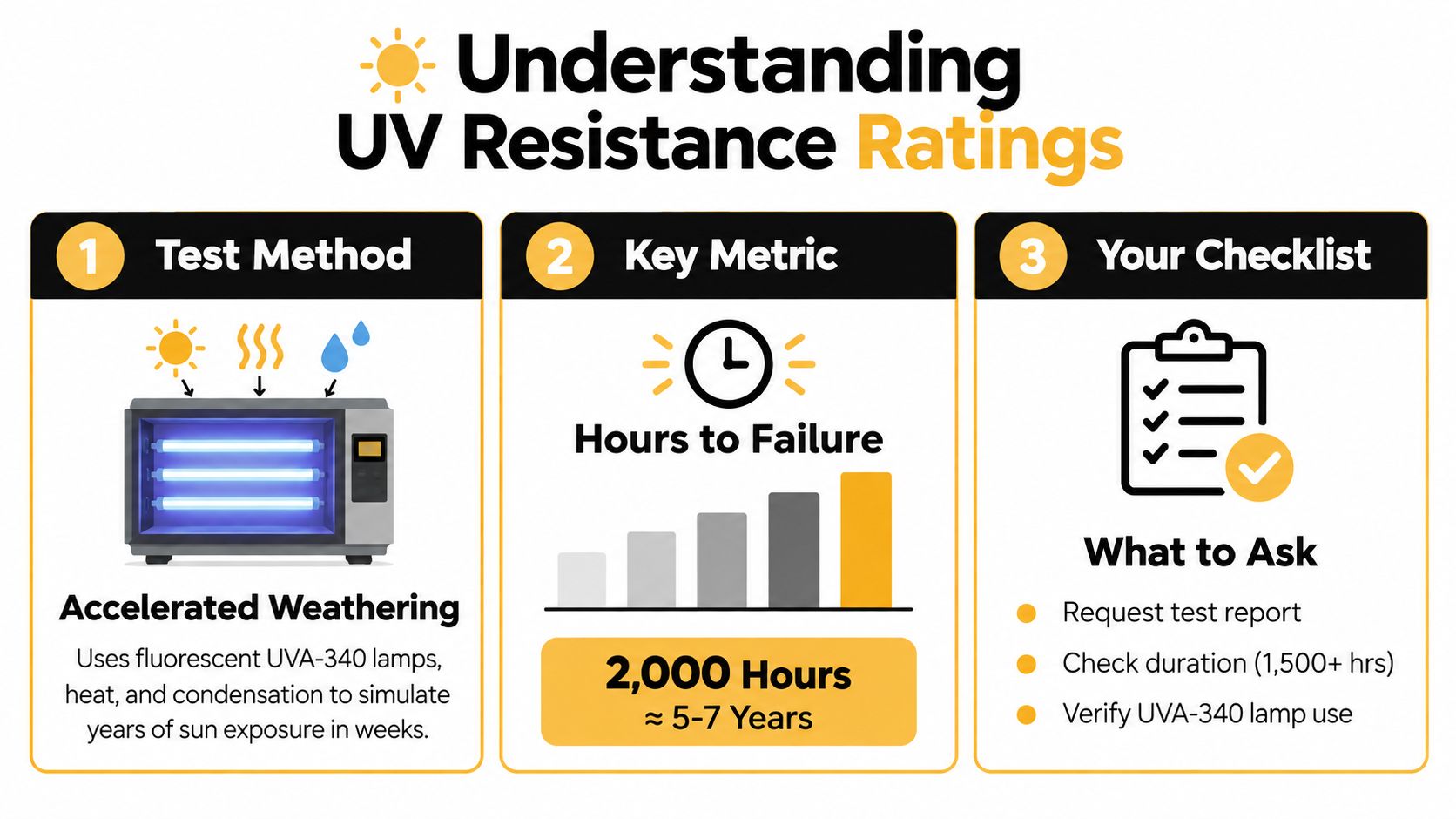
Reading the hours and the score
One independent program reported 5,000 hours of UVA exposure plus 3,000 hours of UVB exposure under ISO-based methods. Color change was measured on a 1-to-5 greyscale, with 5 as the best result. Products in that program consistently reached ratings of 4 to 5, and many achieved 5 (independent UV exposure results).
Those exposure hours do not convert directly into calendar years. The test uses controlled radiation, temperature, and moisture, while an Austin lawn faces shifting sun angles, rain, humidity, heat cycling, foot traffic, pets, and cleaning. Read the duration as evidence of performance under a defined protocol, not as a promise of outdoor service life.
Review the report for four details:
- Test standard: It should identify EN 14836, ISO 4892, ASTM G154, or another relevant method.
- Exposure conditions: Look for the lamp type, radiation cycle, temperature, moisture, and total duration.
- Measured results: Color change matters, while tensile strength, elongation, mass, and surface condition reveal additional effects.
- Product identity: The tested yarn, backing, and construction should match the product in your quote.
A “UV resistant” sticker on an unidentified sample provides little context. A documented report connected to a specific product gives you a stronger basis for comparison. Suppliers offering wholesale synthetic turf options should be able to discuss the test method, results, and product identity before you choose a system for your Austin yard.
How to Evaluate UV Specs Fiber Denier Backing and Infill
Testing shows how a product performed under controlled exposure. Specifications show what you are buying. For an Austin yard, compare the complete turf system, because a thick fiber cannot compensate for weak chemistry, unstable backing, or poorly matched infill.
Fiber denier describes the mass of the yarn. It helps indicate how substantial each fiber feels and how well it may tolerate repeated bending. A higher-denier fiber can provide a fuller feel and support resilience, but denier alone does not establish UV durability. Polymer formulation and stabilizers control how effectively the yarn resists photodegradation, brittleness, and color change during repeated sun and heat cycles.
Polyethylene commonly provides a softer, more lawn-like feel. Polypropylene may appear in specialized components or blends. The suitable choice depends on use, traffic, pets, appearance, and the manufacturer's documented formulation. Compare the available artificial grass types instead of assuming one polymer fits every Austin property.
A practical comparison for local projects
| Feature | What to Look For | Why It Matters in Texas Sun |
|---|---|---|
| Fiber chemistry | Polyethylene or polypropylene yarn with identified UV stabilizers and HALS where applicable | Stabilized polymer chemistry helps slow chain breakdown, oxidation, fading, and brittleness |
| Denier and blade profile | A clearly stated denier with a blade shape suited to the planned traffic | Substantial fibers can better support resilience, but the specification must be considered with formulation and density |
| Post-exposure results | Retained color and mechanical properties after documented weathering | Property retention gives stronger evidence than a visual sample alone |
| Backing construction | A stable, well-assembled backing matched to drainage and installation conditions | The backing supports dimensional stability and helps the system tolerate use and moisture |
| Infill | Infill selected for the use case, including cooling or antimicrobial options when appropriate | Infill affects blade support, surface behavior, pet management, and heat response |
| Warranty language | Clear terms for fading, fiber integrity, defects, and installation responsibility | A warranty is more useful when it explains what the supplier will actually address |
Red flags and green flags
Treat a quote cautiously if it says only “UV protected” without naming a test method, exposure duration, or product identity. Ask for the yarn formulation, backing construction, infill type, and post-exposure results. A clear answer gives you a firmer basis for comparison than a bright showroom sample.
Match the system to its job. A full-sun lawn, shaded side yard, pet run, commercial walkway, and putting green place different demands on fibers and backing. Durability is application-specific. A quiet decorative area and a heavily used dog run should not receive identical specifications because both are green. A professional Austin consultation can connect the UV documentation to sun exposure, heat, drainage, and daily use before installation begins.
Installation and Maintenance That Preserves UV Protection
A turf system can leave the warehouse with sound fiber chemistry and still age early if the site holds water, shifts under traffic, or concentrates heat. Installation supports the chemistry much like a stable frame supports a finished surface. Good preparation reduces mechanical and moisture stress that can speed deterioration.
Prepare the site before laying the turf
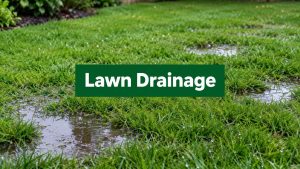
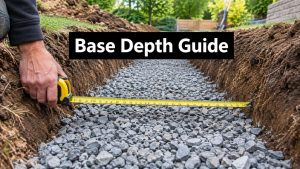
Begin with a properly compacted base that allows drainage and limits movement. Water lingering beneath the system can contribute to installation problems, while low spots place extra stress on seams and frequently used areas. Commercial-grade edging helps keep the perimeter in position where foot traffic, transitions, or furniture create pulling forces.
Plan fiber direction and seam placement around the property. A professional installer should review sun exposure, sight lines, access, drainage paths, and locations for furniture or play equipment. In an Austin yard, shade from trees, structures, or planned features can reduce direct exposure during the hottest part of the day, although it does not remove the need for suitable materials.
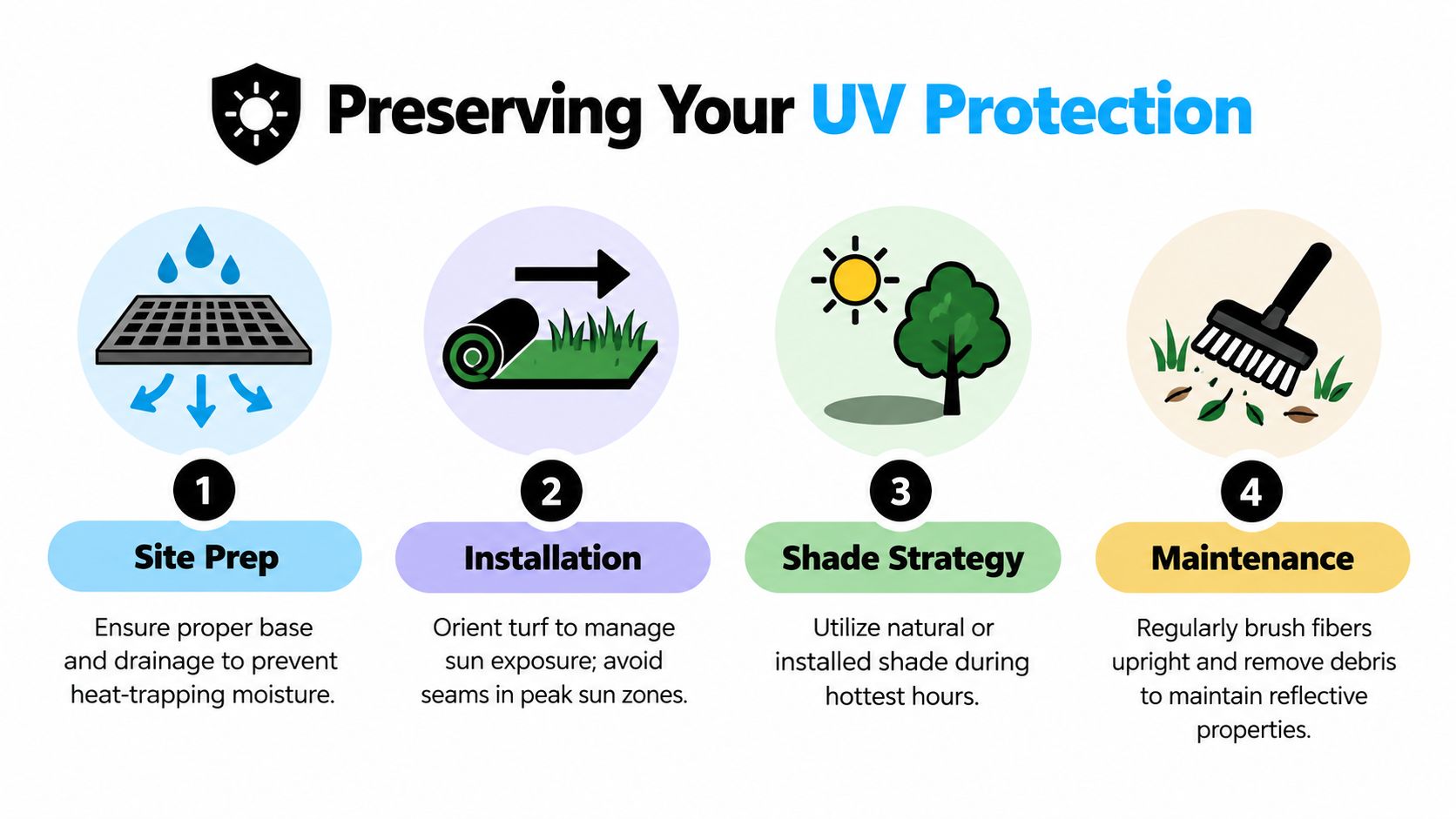
Treat heat as a separate durability question
UV resistant doesn't mean heat safe. Sunlight can alter polymers over time, while surface heating and repeated temperature changes create a separate set of stresses. Heat-reflective turf may reduce surface temperatures by about 10 to 14 degrees Fahrenheit in laboratory studies, but that result applies to the tested product and conditions, not automatically to every turf marketed as “cooling” (review discussing heat and heat-reflective turf).
Ask how the proposed infill and backing respond to the conditions in your yard. A full-sun patio, west-facing lawn, and partly shaded side yard develop different heat profiles. Rinsing removes dust and pollen and offers temporary cooling, but it cannot replace appropriate material selection and site design.
Keep the surface clean and upright
Routine care protects drainage, appearance, and blade recovery:
- Rinse debris away: Use a garden hose to remove dust, pollen, and light soiling, especially after dry periods or heavy use.
- Brush traffic lanes: Use a synthetic-turf broom or stiff plastic brush to lift flattened blades. Avoid wire brushes and metal rakes.
- Remove organic material: Clear leaves and other debris before buildup interferes with drainage.
- Use gentle cleaners: Avoid bleach, harsh chemicals, petroleum products, and battery acid, which can stain or damage fibers and backing.
- Manage pet areas: Remove solid waste promptly and rinse liquid areas with plain water. Use a turf-safe enzyme or deodorizing product when needed.
Warranties Climate Fit and Austin Case Examples
An Austin homeowner may see a generous warranty and assume the lawn is protected from every form of aging. Read the document more closely. A warranty defines the manufacturer's responsibility under stated conditions, while testing shows how the product performs. Check whether coverage addresses color change, fiber integrity, tensile performance, backing defects, installation labor, and site-specific exclusions.
UV resistance also concerns structural life. Fibers can stay green while losing flexibility, and repeated heating and cooling can stress the turf system. The FAA's durability guidance points to maintaining system integrity under UV exposure throughout its expected life (FAA integrity guidance). Ask what the warranty means by fading, brittleness, cracking, or premature failure.
Match the specification to the property
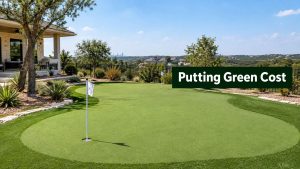
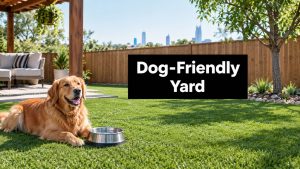
A moderately used residential lawn may call for a soft feel, natural blade appearance, dependable drainage, and stable color. A pet run places more pressure on waste management, infill behavior, cleaning access, and concentrated traffic. A backyard putting green needs consistent ball roll, careful base preparation, and fibers that retain their intended characteristics outdoors.
Commercial sites bring different demands, including busy walking routes, secure edges, maintenance access, and consistent appearance across several areas. The useful question is not whether a product is labeled “premium turf.” It is whether the fiber, backing, infill, drainage, and installation plan suit the way the space will be used.
Modern Yard describes installations using UV-stabilized, high-denier fibers, commercial-grade steel edging, drainage preparation, and infill options such as cooling and antimicrobial treatments. Compare those features with the demands of your lawn, pet run, putting green, or commercial property. This guide to artificial grass durability offers a broader review of material and installation considerations.
Ask what happens at the end
A long service life and an easy end-of-life path are separate questions. Synthetic turf combines different polymers and infill materials, making separation and recycling difficult. Supplemental reports also discuss scrutiny around PFAS, limited processing capacity, and uneven progress toward circular systems and PFAS-free products (supplemental reports on turf disposal and recycling).
Ask whether the product is PFAS-free, how its components can be separated, and which disposal or recycling options exist in your area. That conversation connects Austin's climate fit with the turf's full service life, rather than stopping at its first green appearance.
Your Next Step to a Lasting Green Lawn in Austin
A hot Austin afternoon can expose weak turf quickly. A lasting installation starts by matching UV-stabilized fiber chemistry, weathering evidence, denier, backing, and infill to the property. Drainage, shade, cleaning, and brushing then help protect that system through repeated heat cycles.
Bring photos, approximate dimensions, and notes about standing water, hot zones, pets, children, traffic, and the appearance you want. A professional consultation can translate technical specifications into a practical recommendation, so you are not choosing from a sample alone.
The review should cover the proposed materials, installation scope, drainage plan, warranty terms, and the reasons the system suits your yard. It should also address how the turf may be handled at the end of its service life, not only how it looks when new.
Modern Yard offers site assessments, turf installation, custom putting greens, pet-friendly dog runs, and drainage solutions across the greater Austin area. Request a consultation with Modern Yard Landscapes to compare UV-stabilized turf, heat-management options, drainage preparation, and infill choices for your property.
With suitable chemistry, careful installation, and routine care, your green area can remain inviting and easier to maintain as Austin's seasons change.