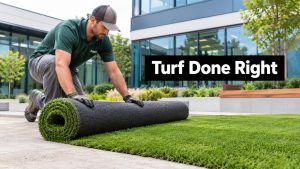

Wholesale synthetic turf is one of those purchases that looks smart on paper and burns people in real life. Buyers see a lower unit price, assume they've outsmarted the market, then discover the turf was cheap for a reason, the backing was weak, the drainage was sloppy, or the install was never going to hold up. If you want a lawn that still looks right in three years, stop shopping by price alone and start shopping like an installer.
The market tells the same story. Artificial turf is still expanding globally, with the market valued at USD 7.3 billion in 2025 and projected to reach USD 13.7 billion by 2033 at an 8.3% CAGR from 2026 to 2033, while Asia Pacific held 32.2% of the market in 2025 (Grand View Research). In North America, installed synthetic turf systems reached about USD 2.7 billion in 2020, covering roughly 265 million square feet and 777 million pounds of infill, with an approximate 15% increase since 2017 (Synthetic Turf Council). That kind of growth is exactly why bad wholesale decisions keep showing up on job sites.
Why Wholesale Turf Is Not Always the Bargain You Expect
Wholesale pricing has a reputation for being the smart move, but that's only true when the spec, the supplier, and the installation all line up. I've seen buyers lock onto a low per-square-foot number, then pay again for replacement, seam repairs, or drainage fixes because the product was never built for the actual use case. The bargain disappears fast when the turf mats early, sheds its look, or fails in the first hard season.
Cheap Turf Usually Fails the Same Way
The failure pattern is predictable. Low-cost turf often looks fine on a sample board, then goes flat under foot traffic because the yarn mass is too light or the blade structure is too weak to recover. The backing can be thin, the drainage holes can be sparse, and the installer ends up fighting the product instead of working with it.
Practical rule: if the quote is low but the spec sheet is vague, you're buying risk, not savings.
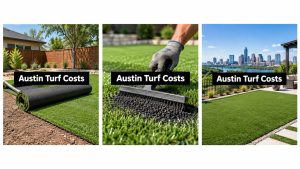
Austin buyers feel this most in hot, high-use yards. A patch that looks acceptable in a shaded showroom can turn into a flattened, hot, awkward surface once it's exposed to direct sun and heavy use. If you're trying to understand where the money really goes, use this installation cost breakdown as the reality check, not the salesman's headline number.
What Actually Makes Wholesale Worth It
Wholesale makes sense when the turf is specified correctly, the order is large enough to justify the logistics, and the install team knows how to protect the base and the seams. It's a volume game only if the system survives long enough to justify the volume. Buyers who win long-term don't chase the lowest quote, they insist on a product that matches the site and the traffic.
The hard truth is simple. A cheap roll that needs early replacement is more expensive than a better roll that lasts. If you're evaluating wholesale synthetic turf, think in lifecycle cost, not first invoice cost. That's where genuine savings are, and that's where bad purchases get exposed.
The Three Specs That Determine Turf Quality
Most spec sheets are written to sell you a price, not a product. An effective filter is simple: pile height, face weight, and stitch rate. Get those wrong and the rest of the sheet is noise.

Pile Height Is About Use, Not Looks
Pile height is the vertical length of the blades. Turf for outdoor areas and residential use commonly falls in the 20 to 50 mm range, which gives enough visual depth without creating a shaggy surface that traps debris and mats under use (LITA Grass). Shorter pile works better where pets, foot traffic, or easy cleanup matter. Taller pile can look lush, but only if the backing and density are strong enough to keep it upright.
Buy height for the job, not for the showroom. A decorative side yard, a pet run, and a putting green each need different blade behavior, and treating them like the same project is how buyers end up disappointed. For a clearer breakdown of how turf styles vary by application, use this artificial grass guide before you compare products.
Face Weight Tells You Whether the Turf Has Body
Face weight is the weight of yarn per square yard, and it tells you how much material is there to support the blades. High-performance turf is often specified around 60 to 90 oz/yd² face weight with a stitch rate above 15 stitches per 10 cm to avoid a thin, sparse look and improve wear resistance (LITA Grass). That is the difference between turf that rebounds and turf that looks tired after the first season.
A dense, well-built carpet hides compression better than a thin one, and turf works the same way. Higher face weight and tighter stitch density usually mean better blade support, stronger recovery after compression, and a more natural appearance under real use.
Installer's rule: if the turf looks fluffy but feels light, the yard will flatten before the warranty expires.
Stitch Rate Is the Density Check People Skip
Stitch rate is the spacing and frequency of the tufts. If it is too loose, the surface looks sparse, shows backing, and wears unevenly. If it is tight enough, the turf reads fuller and handles traffic better because the yarn is distributed more evenly across the backing.
One more thing matters here. A spec sheet that only says “premium” or “luxury” means nothing if it does not show pile height, face weight, and stitch rate. Ask for those three every time, then compare them across samples. If a supplier cannot give you that basic data, move on.
Wholesale Versus Retail Making the Right Choice for Your Project
Wholesale is not automatically the right answer. It's the right answer when you need consistency, volume, and control over the spec, and it's the wrong answer when the project is small enough that storage, freight, and excess material become a headache. The decision should come from the job, not from the marketing.

Where Wholesale Wins
Wholesale makes sense for larger commercial properties, multi-unit developments, HOA work, and contractors managing multiple installs. You get better control over roll consistency, and you can keep a project uniform across multiple zones. It also works when you're ordering far enough ahead that freight and staging aren't a problem.
Retail can still be the better call for a small backyard, a pet patch, or a one-off decorative area. In those cases, the convenience of local pickup, easier returns, and faster availability may outweigh any discount you'd get in bulk. If the job doesn't justify a full pallet mindset, don't force it.
Five Questions That Decide the Route
Use a simple filter before you buy:
- How much turf do you need? If the project is small, wholesale can create waste and storage problems.
- Can you wait for lead time? Wholesale often rewards planning, retail rewards speed.
- Do you need exact spec control? Large projects usually do, small ones often don't.
- Who is installing it? If a crew is handling the job, wholesale fits more naturally.
- What happens to leftovers? Extra rolls are only valuable if you'll use them.
A shopping bag and a pallet solve different problems. The mistake is trying to make one behave like the other. If the project is a compact residential lawn, retail may be the cleaner move. If it's a larger property where every seam and dye lot matters, wholesale is the smarter lane.
How to Request Samples and Verify Quality Before You Buy
Never order wholesale synthetic turf without touching samples first. A photo can hide a weak backing, a flat blade profile, or a color tone that looks wrong once it's outside. A good sample process catches the junk before it shows up on your site.

Start With the Supplier, Not the Price
Shortlist suppliers that give you clear spec sheets and plain answers. If they hide the backing type, drainage rate, or fiber construction, that's not a communication issue, that's a warning sign. The New Jersey DEP describes synthetic turf as a plastic composite surface built from polyethylene, polypropylene, or nylon fibers, plus infill and a backing layer, so every layer deserves inspection, not just the blade color (New Jersey DEP).
The fastest way to filter suppliers is to ask for samples matched to your intended use. A pet run, a family lawn, and a commercial frontage shouldn't be judged by the same feel test. If they only want to talk about price, they're not helping you buy the right system.
Test What Matters in Your Hands
When the sample arrives, bend it, press it, and rinse it. Look for blade recovery after compression, backing integrity, color consistency, and visible drainage perforations. If the turf feels soft but the backing cracks or the blades pull loose with light handling, it won't age well.
For drainage, the wholesale benchmark you want to see is a dual polypropylene backing with urethane coating and rates around 40 inches per hour or higher, while some product sheets list drainage as high as 80 L/m²/min (Globalsources product sheet). The point isn't chasing the biggest number, it's making sure the system can shed water fast enough for your site. If the sample holds water, puddles, or feels unstable when wet, keep looking.
Don't let a polished sample fool you. The yard lives or dies by what's underneath the blades.
For a deeper look at the layer stack, review this turf layer guide. It's the fastest way to understand why the backing and infill matter as much as the visible grass.
Understanding the True Cost Beyond Price Per Square Foot
The headline price is only one line in the budget. Freight, waste, seams, base prep, infill, edging, and labor can swing the final number harder than most buyers expect. If you compare turf by sticker price alone, you're comparing half the job.
The Cost Stack Buyers Forget
Wholesale can lower the material line, but it doesn't erase the rest of the project. A difficult site with slope, bad access, or poor soil can drive labor complexity way up. Retail may look more expensive per square foot on the shelf, but it can sometimes reduce logistics headaches on smaller jobs.
| Cost Component | Wholesale Route | Retail Route | Notes |
|---|---|---|---|
| Material price | Lower unit cost | Higher unit cost | Wholesale wins on volume, not automatically on total spend |
| Freight | Often separate and significant | Sometimes bundled or local | Shipping can change the math fast |
| Waste factor | Must be calculated carefully | Usually easier on small jobs | Poor layout planning wastes rolls |
| Infill | Usually chosen by installer | May be included in package | Spec mismatch causes performance issues |
| Site prep | Same either way | Same either way | Base work doesn't care where the turf came from |
| Installation labor | Separate unless bundled | Often offered in one package | Labor quality matters more than the sales channel |
If you want a broader budgeting framework, the cost of artificial turf page is the right place to start. It helps you separate material cost from the overall project cost.
Compare Like for Like
The right comparison is total installed cost, not roll price. Ask for delivery, trimming waste, edging materials, and drainage adjustments in writing. Then compare the quotes line by line.
That's where buyers get burned. A cheap quote that omits prep and freight isn't cheap, it's incomplete. Once you include the missing pieces, the “deal” often vanishes.
Why Professional Installation Protects Your Wholesale Investment
Even good turf fails when the base is wrong. I've seen premium product roll onto a weak subgrade and start separating at the seams because the installer rushed the prep. Wholesale savings mean nothing if the fieldwork underneath is sloppy.
Site Prep Decides the Lifespan
Drainage is the first thing I look at. If the base holds water, the seams take stress, the infill migrates, and the surface starts to behave like a problem instead of a lawn. Compaction, slope, and access all need to be handled before the first seam is glued.
Professional crews also make better decisions about edging, transitions, and infill selection. That's where local knowledge matters. An Austin install with heat, clay, and runoff pressure needs a different approach than a flat, dry yard somewhere else.
The Install Is Part of the Product
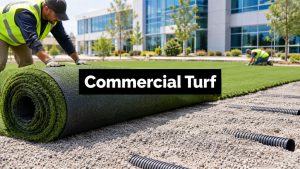
A quality installer doesn't just lay turf; they build the system around it. That includes base correction, commercial-grade edging, seam discipline, and drainage management. I've seen Modern Yard handle commercial turf install work with the kind of site prep that keeps a project from failing early, and that's the standard buyers should expect from any serious installer.
If the crew rushes the base, the turf will tell on them later.
Cutting labor to save a little money on wholesale turf is the wrong gamble. The product might be fine, but the system will still fail if the foundation is weak. That's why professional installation is part of the investment, not an optional add-on.
Warranties, Returns, and Planning for End-of-Life Replacement
A good purchase plan doesn't stop at delivery. You need to know what happens if the product arrives wrong, if the install gets delayed, and when the turf finally reaches the end of its useful life. Buying without those answers leaves you exposed.
Read the Warranty Like a Contractor, Not a Sales Sheet
The warranty should tell you what's covered, what's excluded, and who handles the claim. If it only protects one narrow issue and excludes wear, drainage, or installation-related problems, it's not much of a safety net. Keep the spec sheet, the sample, the invoice, and the batch information.
Synthetic turf typically lasts about 8 to 10 years, and another independent environmental review notes a typical lifespan of 10 to 12 years (Earth at Home). That means replacement is part of the ownership cycle, not an edge case. Buyers should plan for it upfront instead of pretending the surface is permanent.
Disposal Matters More Than Most Sellers Admit
End-of-life is messy because turf systems are built from mixed materials. Many are difficult to recycle because of mixed polymers, latex or polyurethane backings, sand or rubber infill, and contaminants from installation. Policy pressure is rising too, with the European Commission's work on synthetic turf highlighting waste and microplastic concerns, and several national rules tightening or phasing down polymeric infill in sports settings (Synthetic Turf Resources).
That's why return policy, replacement planning, and disposal logistics belong in the buying decision. A supplier that helps you think through the full lifecycle is giving you a more honest deal than one that only sells the roll.
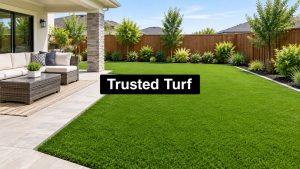
Modern Yard Landscapes designs and installs commercial synthetic turf, residential turf, pet runs, and custom putting greens in Austin, with site prep that accounts for drainage, access, and topography. If you want a clear turf plan that matches the yard and avoids the usual wholesale mistakes, visit Modern Yard Landscapes and schedule a consultation.