
You've probably seen it happen on a Saturday morning, the lawn looked clean last week, then a few yellow circles showed up, and by the next watering cycle they'd turned brown at the center. In Austin, that kind of damage feels personal because you're doing the work, mowing, watering, fertilizing, and still watching the yard lose ground to one dog's favorite bathroom spot.
Why Your Perfect Lawn Keeps Getting Yellow Spots
A homeowner usually notices the same pattern first. The grass around the spot looks a little greener, the middle goes pale, and then the center dries into a dead circle. That ring is the giveaway, because dog urine burns turf with a concentrated load of nitrogen and salts, and Kansas State University Extension explains that the brown patch shows up when that overload overwhelms the grass while the outer edge may still respond with extra green color from diluted nitrogen exposure (Kansas State University Extension).
What the lawn is actually reacting to
Urine spots on lawn turf do not behave like random dead grass. The injury starts when the root zone gets hit with a concentrated dose, and if the grass is already stressed, the damage shows faster. The first move is simple, flush the spot right away with water. Keep mowing at 2.5 to 3 inches and stay on a properly timed nitrogen program so the lawn can recover instead of thinning out further.
That is why one yard can look fine in one section and scorched in another. The grass species, the dog's diet, where the dog squats, and how quickly someone rinses the spot all change the result. Recovery usually improves when the area gets core aeration, repeated heavy irrigation, and then reseeding or sod repair, with seed kept moist for up to 20 days until germination. If you want a broader upkeep routine that supports that kind of recovery, the basics are laid out in this lawn maintenance guide.
Practical rule: if the grass is still green at the edges and has not gone fully brittle in the middle, dilution still has a chance to save it.
For homeowners who keep fighting the same yellow spots, the hard truth is that repair often turns into a cycle of rinse, reseed, wait, and repeat. That is a lot of work for a yard that still may not look even, especially once the dog keeps choosing the same place.
Is It Your Dog or Something Else Entirely
A brown circle in the lawn is not always a urine patch. Fungal disease, heat stress, and grub activity can all make a homeowner blame the dog when something else is behind the damage. Colorado State University Extension says there's no scientifically proven spray-on cure for dog spots, which is why diagnosis matters before spending money on a fix that won't work (Colorado State University Extension).
The fastest visual clue is shape and behavior. Urine spots often look fairly circular, with a dead center and sometimes a greener ring. Fungal problems usually spread in a less tidy pattern, and grub damage tends to show up where the turf loosens and lifts because the roots have been eaten or detached.

How to play detective without guessing
Start with the center of the damaged area. If the turf is matted, sharply discolored, and the edges are still somewhat alive, urine is a strong candidate. If the patch spreads outward irregularly or shows up in several places after wet weather, that points more toward disease pressure than pet behavior.
Then check the grass type. Colorado State Extension notes that fine fescue should be reseeded with fine fescue seed, while zoysiagrass and bermudagrass lawns are often best repaired with sod patches from a sod farm or an inconspicuous section of the same lawn (Colorado State University Extension). That matters because the fix has to match the turf you already have. A mismatched patch stands out longer and usually recovers unevenly.
The biggest myth is the spray-and-pray approach. Colorado State's guidance is direct, there is no scientifically proven spray-on cure, so a bottle will not restore burned roots or replace dead blades. If the lawn is still alive underneath, water and turf recovery can help. If it is dead, you are in repair territory, not treatment territory.
If the damage keeps showing up in the same low spot, drainage may be part of the problem too. A yard drainage resource can help you sort out whether water movement is making the patch worse before you pin the whole thing on the dog.
Your Action Plan for Repairing Lawn Burn Spots
If you catch urine damage early, the repair is usually straightforward. Cornell Extension says watering within about 8 hours of urination can limit the injury to something closer to a fertilization effect, while waiting 12 hours or more gives the burn time to deepen and turn into a bare patch (Cornell Extension). In plain terms, the sooner you act, the less turf you have to rebuild.
The repair sequence that actually holds up
Start with a heavy rinse. A light spray just moves the problem around, while a thorough soak dilutes the urine before it keeps cooking the crown and roots. If you get to it soon enough, that flush can make the difference between a turf discoloration and a dead spot.
If the grass is already gone, cut out the damaged turf and a thin layer of the soil underneath it. Then rake the area lightly, reseed or resod while the grass is actively growing, and keep the surface evenly moist until new growth takes hold. Cheyenne Botanic Gardens also recommends core aeration and repeated deep watering, which fits what I see in Austin yards, urine injury runs through the root zone, not just the blades on top.
For warm-season lawns, the timing matters as much as the fix. Bermudagrass and zoysiagrass usually recover best when they are actively growing, and North Carolina State Extension notes that these grasses can rebound quickly with plugging or sodding that matches the same cultivar (NC State Extension). Matching the existing turf keeps the patch from standing out and helps it blend in faster.

Practical rule: seed or sod only if you are ready to keep watering it. A dry repair fails before it gets a chance to root.
Moisture control matters during the repair period too. Keep the soil evenly damp while the new grass establishes, and avoid letting the spot dry out between watering cycles. If your dog drinks poorly and tends to come out loaded up, the urine is often more concentrated, so a guide to encourage drinking can help reduce the intensity of each hit on the lawn.
Homeowners also need to be realistic about the trade-off. A natural lawn can be repaired, but repeated urine spots turn into a cycle of rinse, patch, wait, and repeat. If you want a cleaner, lower-effort yard after you have done this a few times, the best ground cover guide is a useful comparison point for moving away from endless patchwork.
How to Prevent Future Urine Patches on Your Lawn
Prevention starts with a hard truth. A perfect natural lawn and an active dog are working against each other. You can reduce the damage, but you cannot pretend the problem disappears because the yard was fertilized last month or because the dog usually goes in the same spot. Overfertilized lawns can show urine burn more clearly, because the added nitrogen stacks on top of what the urine already delivers.
What helps before the spot turns brown
Purdue Extension recommends a simple habit that can help: water the spot right after a dog voids with a watering can to limit serious damage, and train the dog to use a designated low-visibility area instead of the main lawn (Purdue Extension). That advice is plain, but it works because it changes both the chemistry and the wear pattern.
Mowing height matters too. Keep turf at 2.5 to 3 inches so it stays a little more resilient after stress. Hold the fertilizer plan to a moderate level instead of pushing nitrogen hard, because too much can make the burn look worse rather than less visible.
Watering right after the dog goes is still the cheapest fix available, and it is the one homeowners skip most often.
Hydration matters on the dog side as well. If you are trying to reduce the concentration of each spot, a useful resource is this guide to encourage drinking, because better water intake can support better dilution habits without making the routine complicated.
The prevention stack is small, but it has to stay consistent. Rinse the fresh spot, keep the turf a little taller, avoid heavy nitrogen, and steer the dog toward one area instead of spreading the problem across the whole yard. That will not make a natural lawn invincible, but it can slow the cycle down enough to keep up. For homeowners who are tired of babysitting every brown circle, that is usually the point where artificial turf starts to look less like a compromise and more like the cleaner, lower-effort finish.
When Natural Lawn Care Becomes a Losing Battle
Some yards never get a break. Two dogs, a compact backyard, summer heat, and a family that wants the grass to stay photo-ready create a constant loop of rinse, patch, wait, and repeat. That's not a failure of effort, it's the predictable result of asking living turf to absorb repeated nitrogen shocks and daily traffic.
The trade-off homeowners usually feel first
The labor doesn't end with the repair. You have to catch the spot early, flush it, wait to see whether the crown survived, remove dead material if it didn't, then reseed or sod and keep people and pets off it while it establishes. If one of those steps gets missed, the patch comes back, and then the entire process starts over.
Cheyenne Botanic Gardens and Kansas State both point toward recovery, but only when the grass is actively growing and the injury hasn't repeated too often (Cheyenne Botanic Gardens). That's the part many homeowners eventually tire of. The lawn can be saved, but saving it never becomes effortless.
In Austin, the question isn't whether you can fight urine patches on lawn turf. It's whether you want to keep spending weekends maintaining a system that's always one accident away from another brown circle. For a lot of pet owners, the answer changes once they've done the repair cycle three or four times and realized the yard is running them, not the other way around.
The Permanent Solution for a Flawless Pet-Friendly Yard
Artificial turf ends the urine patch cycle because it removes the weak point entirely. There's no root burn, no reseeding window, no bare soil waiting for the next accident to make it worse. For homeowners who want a clean, consistently green yard that can handle pets without constant recovery work, that's the key advantage.
What modern pet turf solves
A well-built pet turf system is designed around drainage, durability, and cleanup. Liquids move through the surface instead of soaking into living roots, so the yard doesn't develop the same yellow-to-brown damage pattern that natural grass does. The right infill and base work also help keep the surface cleaner and easier to maintain.
It also changes the daily experience. No mowing at 2.5 to 3 inches, no fertilizer timing, no reseeding after every bad week, and no staring at the lawn to see whether a spot is going to recover or fail. For many Austin homeowners, that's the true luxury, not the look alone, but the fact that the yard stops demanding constant attention.

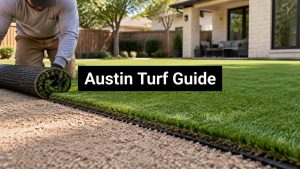
A pet-friendly turf install can also support better yard design around the rest of the property. If you want a cleaner solution for the whole space, the pet-friendly artificial turf options are worth a look because they're built for the kind of use that keeps damaging natural grass.
If you're done fighting the same brown spots every season, reach out to Modern Yard and schedule a consultation. We'll help you choose a permanent, pet-friendly turf solution that fits your yard, your dogs, and the way you live.
A CTA for Modern Yard Landscapes.