
Your backyard probably looks fine for about five minutes after you clean it.
Then the dog sprints a lap along the fence, stops in the same bathroom corner, digs at the one weak patch near the patio, and the next rain turns everything into a muddy mess. You wipe paws at the door, scrub floors, and stare at yellow spots and bare dirt where grass used to be. In Austin, heat makes it worse. Weak turf products bake, cheap installs trap urine, and the whole yard starts smelling like a kennel by summer.
That's why pet friendly artificial turf needs to be treated like a system, not a surface. If you only shop by blade color or whatever the label says on the sample board, you're setting yourself up for odor, heat, drainage problems, and an install you'll want to rip out far too soon.
The End of Muddy Paws and Dead Grass
A lot of homeowners call after they've already tried the cheap fix. They bought “pet turf,” had someone roll it out over a rough base, and thought the problem was solved. It wasn't. The yard stayed green for a while, but the first hard rain exposed the truth. Water sat on top. Urine didn't drain cleanly. The dog tracked grime inside anyway.

If that sounds familiar, you're not looking for a prettier lawn. You're looking for a yard that stays usable after storms, handles daily dog traffic, and stops making your house dirtier. Natural grass struggles with repeated urine, digging, and foot traffic. In a pet yard, the damage always shows up in the same places.
What homeowners are usually dealing with
- Bathroom hotspots: One favorite pee area turns brown, then bare.
- Fence-line wear: Dogs run the perimeter and kill the grass path first.
- Mud at the threshold: Rain and irrigation turn traffic zones into paw-print factories.
- Constant cleanup: If you're still searching for tips on cleaning dog paws after walks, the yard itself is probably the bigger problem.
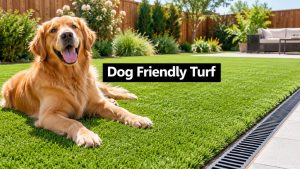
A proper pet turf yard changes the routine. You hose it off. You pick up waste. You move on. No reseeding. No dead patches. No swampy side yard.
For homeowners who want a dedicated relief zone instead of sacrificing the whole lawn, a well-designed dog potty area is often the cleanest fix. The key is that even a small pet zone still needs the right drainage build underneath it.
A yard for dogs has to function first. If it can't manage waste and water, the green surface on top doesn't matter.
What Pet Friendly Turf Really Means
“Pet-friendly” gets slapped on a lot of turf products that aren't built for pets at all. It's usually just a sales label. Real pet friendly artificial turf is a combination of fiber, backing, base, infill, and maintenance plan. Leave out one of those pieces and the system starts failing where dogs use it hardest.
The turf face matters, but it's only one layer. A nice-looking product can still mat down, trap moisture, and hold odor if the backing is weak or the install crew skimps on prep.
Fiber matters more than most buyers realize
The better pet products usually use polyethylene face fibers with polypropylene thatch because PE holds up well under sun and repeated use, while PP thatch helps support the blades under foot traffic. That combination is one reason higher-grade systems feel and recover better in active dog yards. It's also why cheap general-purpose turf often looks tired fast in pet areas. As noted in this guidance on fiber chemistry and maintenance for artificial grass with dogs, high-quality pet turf can last roughly 8 to 12 years or longer, but heavy traffic, poor installation, and weak maintenance shorten that lifespan.
That last part matters. Material quality helps, but neglect kills turf early.
Pet-friendly is not the same as low-effort
Homeowners love hearing “low maintenance.” Fair enough. But low maintenance doesn't mean no maintenance. You still need to:
- Remove solid waste quickly: Letting it sit drives odor and hygiene problems.
- Rinse regularly: Urine salts don't disappear on their own.
- Brush traffic areas: That keeps fibers standing and helps the surface stay cleaner.
- Watch for compaction: Heavy use zones need attention before they turn into hard, matted strips.
Cheap turf fails in pet yards for boring reasons. Bad backing, weak recovery, poor drainage, and skipped maintenance. Not because dogs are unusually hard on the lawn.
If you're comparing products, stop focusing on showroom softness alone. Ask what the system is made of, how it drains, and how it handles repeated cleanup. That's the difference between a surface that works and one that smells.
A deeper breakdown of the best artificial grass for pets should always include those questions, not just a list of blade styles or color blends.
The fast way to spot a bad option
Here's the shortcut. If the seller talks mostly about appearance and barely mentions drainage, backing, and infill, keep walking.
A pet yard is a utility surface first. It still needs to look good, but it has to survive urine, rinsing, heat, and repetitive traffic. Turf that only wins on price usually loses on all four.
Anatomy of a Bulletproof Pet Turf System
A pet yard works from the ground up. Homeowners usually shop the top layer because that's what they can see. Installers know the hidden layers decide whether the yard stays fresh or becomes a problem.

Layer by layer, what actually matters
The turf face
This is the visible grass blade system your dog runs on. For pets, you want fibers that can take repeated use and recover after traffic. Softness matters, but recovery matters more in active zones.
The infill
Infill isn't optional fluff. It supports the blades, affects surface feel, and plays a major role in odor and heat performance. Wrong infill, wrong result.
The drainage layer
Many cheap jobs fail when liquid does not move down and away fast enough to avoid saturation and stink.
The weed barrier
A permeable barrier helps separate the system while still allowing water movement. Skip it or use the wrong product and maintenance gets uglier.
The compacted sub-base
This is the foundation. If it's not properly prepared, graded, and compacted, the rest of the install doesn't stand a chance.
The sub-base is where good installs separate from bad ones
Most odor complaints don't start with the blades. They start underneath. Pet systems typically rely on perforated backing so urine and rinse water can pass through the turf face, while a properly compacted, permeable base carries that liquid away. The bottleneck is usually the sub-base, not the turf itself, as explained in this overview of drainage controls for pet-friendly turf.
That's the part homeowners don't see and discount installers don't want to talk about.
Here's what a weak build usually looks like:
- Shallow prep: Not enough excavation to create a reliable drainage section.
- Poor slope control: Liquids hang around instead of moving out.
- Wrong aggregate or compaction: The base shifts, settles, or stops draining well.
- Decorative turf used as pet turf: The backing and recovery aren't suited for repeated wetting and cleaning.
What to ask before you hire anyone
Use this table when you compare bids.
| Question | Why it matters |
|---|---|
| What base material are you using? | The wrong base traps moisture or shifts over time. |
| How are you handling slope and runoff? | Drainage performance depends on grading, not just perforations. |
| What kind of backing does the turf have? | Pet systems need flow-through performance, not decorative-only backing. |
| What infill are you specifying? | Infill affects odor control, cooling, and blade support. |
| How are seams and edges secured? | Dogs test weak seams fast. |
Practical rule: If a bid is vague about the base, it's vague about the most important part of the job.
A homeowner can spot surface quality in a sample. You cannot judge the base from a showroom square. That's why installation experience matters more in pet projects than people expect.
If you want to understand what belongs under the turf before a crew ever rolls out the green surface, review the role of synthetic grass base material. It's the part that decides whether your yard drains cleanly or turns into a hidden odor trap.
Solving for Austin Heat and Pet Odors
It is 4:30 on a July afternoon in Austin. The sun has been pounding the yard for hours, your dog needs out, and the surface is hot enough that he starts picking his way across it instead of using it normally. Later, the same spot starts holding odor because the install was sold as “pet turf” instead of built as a pet system.
That is the problem to solve here. Heat and smell are not product-label problems. They are system-design problems.

Heat is real, so build for Texas instead of pretending
Synthetic turf gets hot in direct sun. Every honest installer should say that upfront. In Austin, that means the question is not whether heat exists. The question is whether the yard was built to reduce it enough for real daily use.
A cheap install usually ignores the pieces that matter. The crew rolls out darker turf, uses basic infill, leaves the yard fully exposed, and calls it pet friendly because the backing drains. That is how you end up with a surface that still looks green and still fails the dog.
A better system starts with the right turf color and fiber, then adds infill that helps limit surface temperature, then accounts for shade and rinse access. If heat is high on your concern list, review heat-resistant artificial turf options with those factors in mind, not as a stand-alone product choice. Austin yards need all of those parts working together.
The trade-off is simple. Better heat management costs more, and full sun will still be warmer than natural grass. But a yard that is usable most of the year beats a bargain install your dog avoids all summer.
Odor control starts under the turf and finishes with the right infill
Pet odor does not come from one bad rinse. It builds when urine moves through the turf and then hangs up somewhere in the system. That is why “odor-resistant turf” by itself is marketing, not a solution.
Odor control depends on four things working together:
- Fast rinse-through at the surface: Urine has to move through quickly instead of sitting in the fibers.
- A base that does not hold waste residue: If moisture lingers below, smell follows.
- Infill chosen for pet use: The wrong infill holds more heat, contributes less odor control, and makes cleanup harder.
- Easy wash-down access: A pet yard should be simple to rinse, especially in the favorite bathroom zone.
Manufacturers such as SYNLawn describe pet systems the same way. Their pet turf guidance focuses on drainage, infill, and cleanability together, not just the grass product itself.
That is the part too many homeowners miss because the sales pitch is built around the visible surface. Dogs do not live on the sample square. They use the whole system.
My recommendation for Austin pet yards
Do not buy a single-feature fix. “Pet turf” without cooling strategy, wash-down planning, and odor-aware infill is how homeowners end up replacing a yard that was supposed to be low maintenance.
If an installer is not talking plainly about sun exposure, hot zones, urine concentration areas, and how the base and infill handle both, keep shopping. Austin heat exposes shortcuts fast.
If the yard looks good in a bid but gets avoided in August and smells in October, it was designed wrong from day one.
Installation and Long-Term Care Made Simple
A clean pet yard doesn't happen because the turf was expensive. It happens because the install was disciplined and the upkeep stays simple.
Most failed jobs come from shortcuts during prep. Crews rush excavation, skip proper compaction, seam carelessly, or ignore edge security. Everything might look fine on day one. Problems show up later when the dog starts using the yard like a dog.

What a professional install should include
A proper pet turf installation usually follows a sequence like this:
Excavate the area correctly
The crew removes existing grass, roots, and unstable material so the new system starts on solid ground.
Grade for drainage
The yard has to move water and rinse-through away from the surface instead of letting it sit.
Build and compact the base
Stability comes from the base. A loose or uneven base leads to movement, low spots, and drainage issues.
Install the turf and seam it tightly
Weak seams don't survive dog traffic. Neither do sloppy transitions near patios, fences, and gates.
Secure edges and apply infill properly
Edge integrity matters in pet yards because dogs find the weak spot fast.
Why DIY often goes sideways
DIY turf can work for some decorative projects. Pet areas are less forgiving. The yard gets rinsed more often, sees repeated waste in the same spots, and takes more concentrated traffic than a front lawn display patch.
Common DIY mistakes include:
- Underbuilding the base: The system drains poorly or settles.
- Bad seam alignment: The join opens under use.
- Skipping infill details: Fibers flatten and odor control suffers.
- Improper edging: Dogs start lifting corners or chewing exposed sections.
That doesn't mean maintenance is complicated. It's straightforward once the install is right.
The maintenance routine homeowners can live with
Modern artificial grass typically lasts 15 to 25 years with proper care and removes the need for the fertilizers and pesticides commonly used on natural lawns, according to this overview of artificial grass for dogs and long-term upkeep. That long service life only holds up when owners handle the basics.
Here's the simple routine I recommend:
- Pick up solids promptly: This is the easiest way to avoid lingering mess.
- Rinse urine zones regularly: Focus on the spots your dog uses most.
- Brush traffic lanes occasionally: Fence runs and play paths flatten first.
- Check infill and edges from time to time: Small corrections prevent bigger repair bills.
A good pet turf yard should feel easy to own. Not fragile. Not fussy. Just clean, consistent, and predictable.
What low maintenance actually means
Low maintenance means you're done with mowing, reseeding, and trying to revive dead grass every season. It doesn't mean you never touch the yard again.
That's a fair trade. A few minutes of routine care beats rebuilding a lawn that dogs destroy over and over.
Get Your Free Quote for a Perfect Pet Lawn
You get home after a summer storm, let the dog out, and expect the yard problem to be solved. Instead, the surface still holds smell, the hot zone by the fence is too warm by noon, and the seams start showing after a few hard runs. That is what happens when someone sells you “pet turf” as a product instead of building the yard as a system.
Cheap pet turf fails in Austin for predictable reasons. The base is wrong, drainage is undersized, infill is generic, and nobody plans for sun exposure or repeated bathroom traffic. The result is a yard that looks decent on day one and starts costing you money, cleanup time, and patience after that.
What a smart homeowner should demand
Ask direct questions and expect direct answers.
Ask how urine moves through the turf and out of the yard. Ask what base material is being installed and how deep it will be. Ask which infill is being used, why it was chosen for dogs, and how it will help with odor and surface temperature. Ask how the crew will secure edges and seams in the spots where your dog runs hardest. Ask what will be done about the hottest parts of the yard, because full sun in Austin changes everything.
If a contractor keeps talking about the turf blade and avoids the install details, walk away. The turf face matters. The system under it matters more.
The long-term view is the only one that matters
A good pet lawn should fix the daily problems that made you start looking in the first place:
- Muddy paws tracked through the house
- Burned-out urine spots and worn dirt paths
- Fence lines that turn into a dog track
- A yard that becomes unusable after rain or heavy play
You are not buying a roll of synthetic grass. You are buying drainage, odor control, stability, and a surface your dog can use every day without tearing it apart. That costs more up front, and it should. It also saves you from paying twice.
Call when you are ready to price the job correctly. A site visit tells you more than a sample board ever will.
If you want a yard that stays cleaner, drains fast, and holds up to Austin dogs and Austin heat, contact Modern Yard Landscapes for a free, no-obligation quote. They're fully insured, offer a total satisfaction guarantee, and build pet turf systems with the drainage, infill, and installation detail that cheap solutions skip.