
You're halfway through another Austin Saturday, standing behind a mower that's throwing clippings onto the walkway while the St. Augustine grass struggles under a punishing sun. The lawn looks thirsty, the beds need edging, and the narrow strip beside the driveway has turned into a weekly chore. By the time you finish, you've spent your morning maintaining the front yard instead of enjoying it.
Low maintenance landscaping front of house should solve that problem at the design level. It isn't a plant-shopping exercise. It's a climate-and-lot plan that reduces unnecessary turf, controls drainage, groups plants by water needs, and gives every part of the yard a clear maintenance rhythm. Done properly, the result still looks intentional from the street, but it doesn't demand every weekend, constant irrigation, or a series of emergency fixes.
What Low Maintenance Front of House Landscaping Really Means
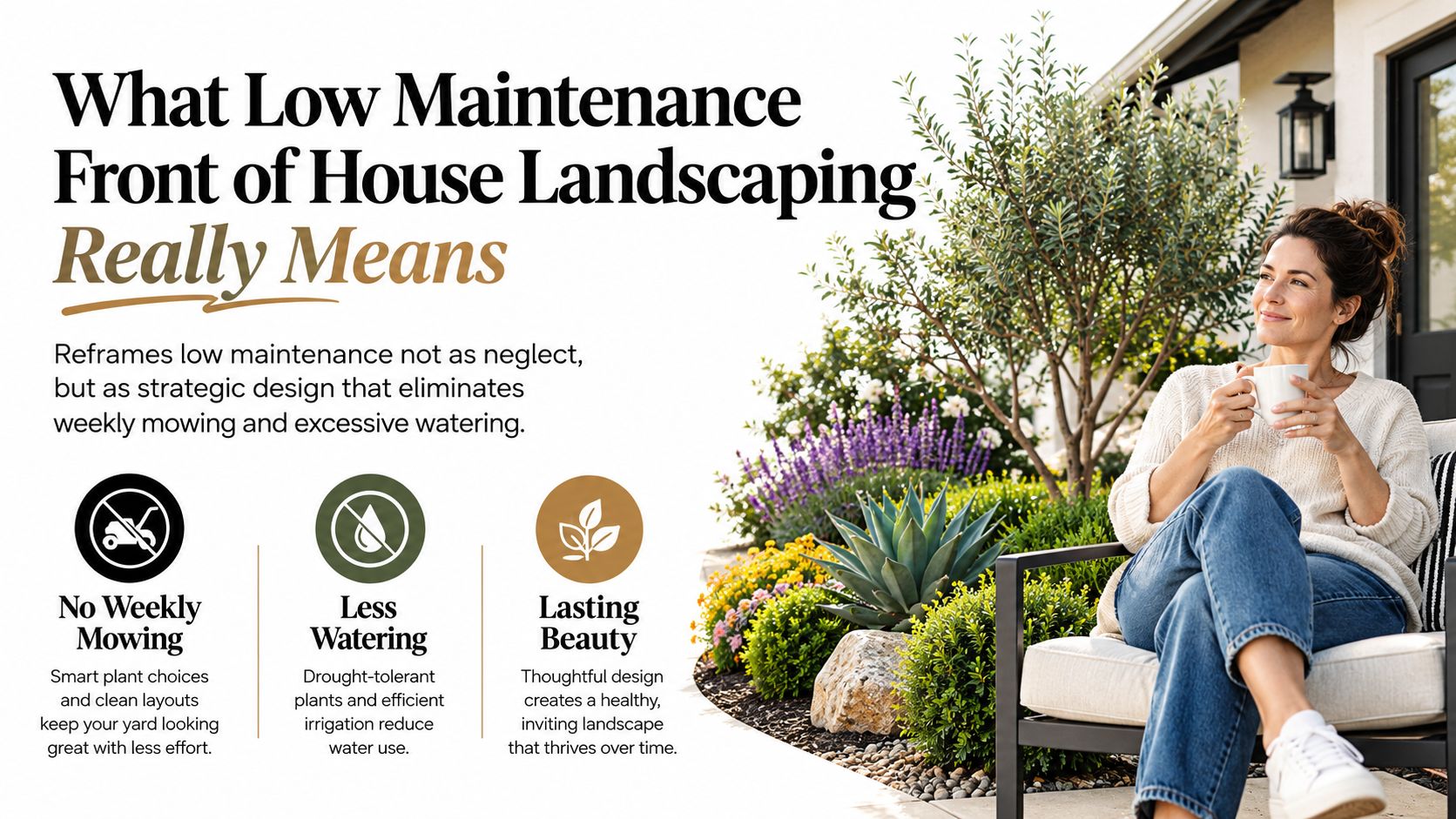
A low-maintenance front yard is planned around the property, not a shopping list of plants. The goal is a finished outdoor space that handles Austin's heat, clay soil, slope, drainage, and street visibility without demanding constant correction.
For an Austin home, that usually means less irrigated turf, drought-tolerant plant layers, durable paths, targeted irrigation, and plant placement suited to sun exposure and grade. Keep a modest lawn where children or pets need it. Remove turf from narrow side areas where mowing is awkward. Use artificial turf only where a reliably green surface matters and the installation can handle drainage and proper base preparation.
The goal is less work, not less character
Outdoor irrigation accounts for about 30% of U.S. household water use, or nearly 8 billion gallons per day, and that share can reach 60% in dry climates, according to the EPA's WaterSense landscape guidance. A front yard dominated by thirsty turf is therefore the first place I look for practical water savings.
A nine-year water-wise case study recorded 83% less water use, 56% less green waste, and 68% less maintenance than a high-water-use, lawn-dominated yard, according to Utah State University Extension. Those figures do not guarantee the same result for every Austin property. They do show why changing the layout usually matters more than swapping one plant list for another.
Practical rule: If the design only replaces St. Augustine with different plants, the maintenance problem remains.
A durable conversion addresses grading, runoff, tree roots, clay soil, irrigation zones, and HOA requirements before installation begins. The finished yard should look intentional from the porch, sidewalk, driveway, and street. A phased plan can preserve curb appeal while a trusted Austin crew handles drainage corrections, bed preparation, and turf installation in the right order.
Review this resource on tips for low maintenance lawns before your consultation, then apply the advice to your actual lot. For evergreen structure, use this guide to low-maintenance landscaping shrubs and choose plants that fit the site rather than forcing the site to fit the plants.
Start with a 15 Minute Front Yard Site Audit
Don't begin by browsing plant photos. Spend fifteen minutes walking the property with a phone, a notepad, and a hose bib key if you have one. The purpose isn't to create a design plan yourself. It's to collect enough information that your consultation starts with real conditions instead of guesses.
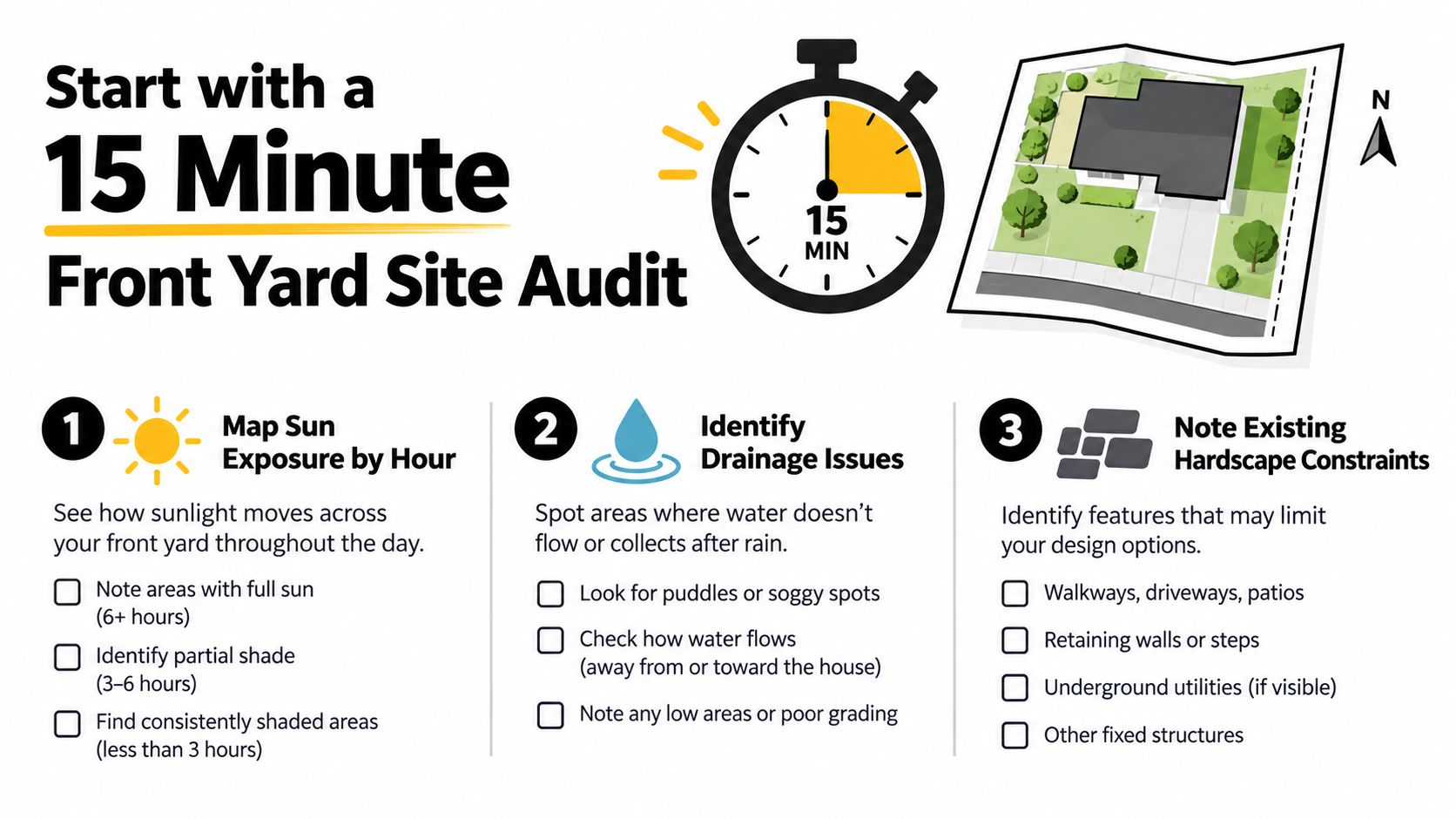
Walk the yard in five passes
Map the sun. Note which beds receive direct afternoon sun, which areas get morning light, and where the porch or mature trees create shade. A plant that survives beside the driveway may fail near a covered entry, even if both areas look similar on a plan.
Follow the water. Look for soil staining, washed mulch, pooling near the walkway, or water that sheets toward the foundation. Photograph problem areas after irrigation or rain if possible. A plant won't correct a grading defect, and mulch won't replace a drainage solution.
Test the soil. Push a hand trowel into several parts of the yard. Heavy black clay behaves differently from sandy soil and affects drainage, root growth, amendments, and plant selection. Don't assume one soil condition applies across the entire lot.
Record what deserves to stay. Photograph mature oaks, established shrubs, useful retaining walls, porch steps, mailboxes, lighting, and paving. Mature trees provide instant scale and shade, but their root zones also limit excavation and plant choices.
Check the HOA rules. Pull the current guidelines before selecting visible stone, artificial turf, large hardscape areas, edging materials, or front-yard structures. Approval requirements can shape the design before any materials are ordered.
Write down your observations rather than trusting memory. Mark the sunny and shaded zones on a simple sketch, circle the drainage trouble spots, and save the photos in one folder. If you're researching water-saving options before the appointment, this guide on how to reduce water usage can help you frame the right questions.
Bring the audit to the consultation
A good installer should be able to explain why a proposed bed belongs in a particular location, where runoff will go, and which surfaces will carry foot traffic. If the conversation jumps straight to a plant palette without addressing slope, soil, irrigation, and access, slow it down.
The audit also protects your budget. Preserving a healthy oak, avoiding unnecessary demolition, or identifying a drainage outlet early can change the construction approach before the crew arrives. You're not trying to diagnose the property. You're making sure the design responds to the property.
Design Principles That Cut Water and Weekly Work
A low-maintenance front yard starts with assignments, not a plant list. Keep turf where people use it, place plants in beds dense enough to shade their soil, use mulch to protect roots, and let hardscape handle foot traffic. Every surface should reduce a specific chore or prevent a predictable maintenance problem.
Keep turf where it earns its place
Reserve grass for a play strip, dog run, or usable green panel. Remove narrow sections that are difficult to mow and edge, areas shaded by the house, and turf nobody walks on. Those leftover strips consume irrigation time while adding trimming, fertilizing, and seasonal repair.
Use the same decision for artificial turf. A consistent green panel can suit a flat, usable area, but it does not justify covering every part of the front yard. Keep the lawn footprint intentional, then shape the surrounding beds and paths around how your household moves outside.
The EPA landscape research supports treating water use as a design and irrigation question, not merely a grass question. In practice, the savings come from assigning water only where plants need it, limiting lawn to useful areas, and setting schedules by zone.
Group plants by water demand
Build hydrozones before choosing the final plant palette. Bed A might hold agave and yaupon on drip once a week, while Bed B keeps a small turf panel on rotors twice a week. A separate zone can serve shrubs that need deeper, less frequent irrigation. The exact schedule should follow soil, exposure, season, and establishment needs, but the controls must reflect those differences.
Do not put dry agave beside thirsty seasonal color on one spray zone. That setup forces you to overwater one planting group or stress the other. Use drip or another targeted system where appropriate, with separate controls for lawn, shrubs, and low-water beds. A trusted Austin crew should verify pressure, coverage, and overspray before finalizing the schedule.
For plant selection and bed layout, use this drought-tolerant landscape design guidance to connect species to sun, soil, drainage, and mature size.
Use mulch and structure together
Bare soil creates recurring work. It invites weeds and leaves roots exposed to Austin heat. Mulch gives beds a finished edge, helps hold moisture, and reduces the soil surface that requires hand weeding. Realtor.com's low-maintenance landscaping guidance identifies mulch as a practical material for weed control, water retention, and a tidy appearance.
Choose shredded hardwood for a softer, traditional finish. Choose decomposed granite for a crisp mineral look that suits modern architecture. Install a defined edge in either case, so material stays out of the sidewalk and lawn.
Anchor beds with durable plants such as yaupon holly, dwarf waxleaf ligustrum, or agave where conditions fit. Put seasonal color in containers instead of filling the entire yard with plants that need repeated replacement.
Let hardscape handle traffic
Flagstone paths, paver entries, decomposed granite courtyards, and dry creek features can replace thin planted strips that are difficult to edge and easy to damage. Follow the route from driveway to front door rather than filling leftover space.
Combine a restrained lawn or turf panel, defined planting beds, and hardscape that supports access. That layout cuts repetitive trimming while keeping the front yard welcoming. Have the installer review grading and drainage before materials are ordered, then phase the conversion so curb appeal stays intact while each new zone is tested.
Comparing Plants, Turf, and Hardscape for the Front Yard
Austin homeowners usually choose from three broad surface types, and the right answer is often a combination. Live drought-tolerant planting offers seasonal change and habitat value. Artificial turf provides a consistently green usable surface without irrigation for the turf itself. Hardscape creates durable circulation and gathering areas, but too much of it can make a front yard feel harsh.
| Surface Option | Water Use | Weekly Labor | Sun Durability | Cost per Sq Ft | Best Lot Type |
|---|---|---|---|---|---|
| Live drought-tolerant plantings | Low once established, with irrigation during establishment | Periodic pruning, weed control, and irrigation checks | Depends on species and placement | Site-specific | Shaded pockets, layered beds, naturalistic or pollinator-friendly designs |
| Artificial turf | No irrigation for the turf surface | Occasional debris removal and inspection | Designed for sun, but material quality and installation matter | Site-specific | Flat, usable areas where consistent green appearance matters |
| Flagstone, pavers, or decomposed granite | Minimal, except for nearby planting | Sweeping, joint care, and occasional resetting | Durable when properly installed | Site-specific | Walkways, entries, slopes, and high-traffic zones |
| Mixed landscape | Determined by the planting and turf zones | Distributed across surfaces | Matched to each material and microclimate | Site-specific | Most front yards with varied sun, slope, and use |
Match the option to the lot
| Lot Condition | Strongest Starting Point | Why |
|---|---|---|
| Flat and small | Artificial turf or a compact mixed design | Simple access and clear edges make the layout efficient |
| Sloped | Graded planting beds, drainage features, and stable paths | Water movement becomes the first design concern |
| Shaded | Evergreen ground cover and shade-tolerant structure | Turf often thins, while the right ground cover can create a continuous finish |
| Family-friendly | Turf alternative with accent beds | The usable surface stays open while the beds frame it |
| Corner lot | Hardscape-led composition with structured planting | More street exposure rewards clean lines and durable corners |
Artificial turf makes the most sense where you want a stable, green surface for pets, children, or a highly visible strip. It still requires proper base preparation, drainage, seaming, and edging. Read this comparison of artificial turf and natural grass before treating turf as a simple roll-out product.
Live planting works better when biodiversity and seasonal change matter more than uniform color. Native and drought-tolerant plants need less supplemental water once established, as noted in Lowe's front-yard landscaping ideas. For a shaded entry, research evergreen ground cover plants for shade, then confirm that the selections fit Austin's soil and exposure.
Don't force an arbitrary ratio onto every property. A corner lot may benefit from a hardscape-forward plan with planting concentrated around the entry and foundation. A family yard may need a larger continuous turf alternative with smaller accent beds. Ask for a layout based on use, drainage, and sightlines rather than a generic percentage split.
Installation Essentials for a Front Yard That Lasts
A durable installation follows a sequence. Crews that skip the sequence usually create the problems homeowners notice later, such as standing water, shifting pavers, exposed edging, or irrigation that waters the wrong plants.
Prepare access before disturbing the yard
Start with a utility locate and an access plan. Decide where the trailer, wheelbarrow, mini-excavator, soil deliveries, and debris containers will travel. Protect the curb, driveway edges, sidewalks, and tree roots before demolition begins.
Remove unwanted turf and debris, then rough-grade the site. The crew should establish positive drainage away from the foundation instead of burying a problem under fresh soil or mulch. On a sloped Central Texas property, that may require a swale, drainage tile, or French drain with a practical outlet.
Drainage components need service access. A cleanout on the system gives the homeowner and installer a way to inspect and clear the line instead of excavating the finished bed later.
Build the base before the finish
Hardscape longevity depends on what sits below the visible surface. Excavate unstable material, establish the correct base, compact it in stages, and verify the finished slope before laying pavers or flagstone. Skipping compaction is one of the fastest ways to create settling and uneven joints.
Install edging after the layout is established but before final mulch or aggregate. Four-inch aluminum or steel edging is a practical choice where string trimmers and mower wheels will repeatedly approach the boundary. It creates a clean line and keeps loose materials from spreading into adjacent surfaces.
For artificial turf, the base, drainage, seam direction, infill, and edge restraint deserve the same attention. A green surface can still fail if water can't leave the installation or if seams face the wrong direction from the primary viewing angle.
Zone irrigation by plant need
Install irrigation according to hydrozone, not just according to the shape of each bed. Lawn, shrubs, perennials, containers, and dry-climate accents should receive schedules that match their actual needs. Flush the system, test each zone, and leave the homeowner with clearly labeled controls.
Finish with a clean mulch or decomposed granite surface. A three-inch top-off is a common installation target in the planned approach for this type of work, but the final depth should account for plant crowns, drainage, and the selected material.
Before approving the work: Ask where the drainage outlet goes, where the irrigation cleanout is located, and how the crew compacted the base beneath each paved area.
Landscaping also involves roof runoff, downspouts, and penetrations that can affect where water enters the property. If you're coordinating exterior work, this roof vents and pipe boots guide offers useful background on roof components that can influence drainage planning.
Austin Cost Ranges and What Drives Your Estimate
In Austin, a reliable estimate begins with the lot, not a package price. The same front-yard conversion can price very differently depending on turf removal, black clay, slope, mature oak roots, drainage, soil depth, and the route from the street to the work area.
Treat each requested feature as site-specific line items. Ask the installer to measure the yard, inspect existing conditions, confirm disposal needs, and separate required construction from optional upgrades. Material tiers should also be clear: basic aggregate, mid-grade pavers, or premium natural stone; smaller starter plants or larger established specimens; standard turf or a higher-spec product with added drainage and infill.
What belongs in the base scope
| Project Element | Base Work Typically Includes | Optional Upgrades or Cost Drivers |
|---|---|---|
| Artificial turf | Turf removal, excavation, compacted base, turf, seams, infill, and edging | Higher-grade turf, added drainage, complex cuts, and difficult access |
| Drought-tolerant plantings | Bed preparation, scheduled plants, irrigation connections, mulch or aggregate, and cleanup | Larger plants, denser spacing, soil replacement, accent boulders, and extra irrigation zones |
| Flagstone or paver hardscape | Layout, excavation, base installation, compaction, surface installation, and edge restraint | Premium material, intricate cuts, seat walls, steps, and slope correction |
| Full front-yard conversion | Demolition, disposal, grading, drainage, irrigation adjustments, and selected finish materials | Phased upgrades, specialty lighting, upgraded drainage, and expanded hardscape |
Access can change labor quickly. A 36-inch side gate versus an open driveway can add 1-2 hours of wheelbarrow time per cubic yard of base material, and a careful estimator should list that handling separately. Long carry distances, stairs, protected trees, narrow gates, and limited staging space also increase labor without changing the visible square footage.
Get these items written into the proposal:
- Demolition and disposal: List the turf, soil, roots, and debris being removed.
- Grading and drainage: Show the flow direction, drain type, outlet, and access points.
- Surface preparation: Specify base material, compaction method, and edge restraint.
- Irrigation: List zones, emitters, controllers, valves, and testing responsibilities.
- Planting and finish: Name the plant palette, mulch or aggregate, installation depth, and cleanup.
- Warranty terms: Separate material coverage from workmanship and state homeowner responsibilities.
Choose a trusted Austin crew that measures first and explains every labor driver. Schedule the site visit before approving a fixed scope, especially if the yard has mature oaks, black clay, a visible slope, or drainage trouble.
Your Year One Plan and the Next Step
The first year is when a good design becomes established. Low maintenance doesn't mean no inspection. It means the inspection is planned, brief, and focused on preventing larger work later.
Follow a simple first-year rhythm
Months one and two should focus on establishment watering, plant observation, drainage checks, and irrigation inspection. Look for stressed plants, exposed roots, runoff, clogged emitters, turf seams that need attention, and areas where water collects after a cycle.
Months three and four are a good time to refresh mulch where it has settled, spot-treat weeds, and confirm that plants are filling their intended spaces. Don't automatically prune every plant into a ball. Remove damaged growth and preserve the natural structure the design was meant to provide.
Summer calls for an irrigation audit and selective pruning. Check that spray or drip isn't hitting the sidewalk, foundation, or foliage that doesn't need it. Prune for clearance and sightlines, not because a plant has grown.
Fall is the time to inspect hardscape joints, top-dress worn aggregate, and decide whether small wildflower accents fit the HOA rules and the yard's maintenance capacity. Leave the design tidy, but don't turn every seasonal change into a wholesale replacement project.
Keep this checklist near the garage
- Tools: Hand pruners, gloves, a stiff broom, a hose-end nozzle, a screwdriver for emitter checks, and a simple moisture probe.
- Seasonal checks: Inspect drainage outlets, clear debris from hardscape, check irrigation coverage, and look for mulch against trunks or siding.
- Callback signs: Persistent pooling, soil washing away, a broken irrigation zone, shifting pavers, exposed turf seams, dying plants in the correct zone, or edging that has separated.
- Records: Save the plant schedule, irrigation map, product details, warranty documents, and photos from installation.
Bring these questions to the consultation:
- Where will water go during a heavy rain?
- What grading changes are included?
- Which irrigation zones serve lawn, turf alternative, shrubs, and perennials?
- Which direction will artificial turf seams face from the street and porch?
- What mulch or aggregate depth will the crew install?
- Which materials and workmanship are covered by warranty?
- What maintenance does the homeowner need to handle during establishment?
- What happens if the soil or drainage conditions differ from the initial inspection?
The right front yard plan should leave you with a clear design, a logical installation sequence, a maintenance rhythm, and a written estimate tied to actual site conditions. Don't wait until the lawn is at its worst to start. An on-site consultation gives you time to solve drainage, review HOA constraints, protect existing trees, and phase the work without making the property look unfinished.
Modern Yard Landscapes designs and installs Austin front yards with artificial turf, drought-tolerant planting, drainage tile, retaining solutions, and clean hardscape layouts. Visit Modern Yard Landscapes to schedule an on-site consultation and get a transparent, factors-based plan for a lower-maintenance front yard.