
August hits Austin and the yard starts losing the argument.
The grass turns patchy, the shrubs that looked decent in spring get crispy at the edges, and every time the irrigation runs you can almost hear money spraying into the heat. You still want a front yard that looks sharp and a backyard you can enjoy, but you don't want a second job built out of pruning, watering, replacing dead plants, and fighting weeds.
That's exactly why smart homeowners stop chasing thirsty outdoor areas and start building yards that fit Central Texas. The answer isn't a random list of plants from a big box store. It's a better plan. You pick shrubs that can handle our conditions, place them where they'll succeed, and pair them with design choices that cut down the work for good.
Your Dream of a Beautiful Low-Effort Austin Yard
A lot of homeowners start in the same place. They inherited a yard with fussy foundation plants, too much lawn, and a sprinkler pattern that misses half the root zones anyway. By late summer, nothing looks polished. It looks tired.
The frustrating part is that you're not asking for anything unreasonable. You want curb appeal without spending your weekends dragging hoses around. You want a backyard that looks good when friends come over, not one you have to apologize for. If you're already thinking about seating, shade, and modern backyard party ideas, the plants around that space matter just as much as the furniture.
What Austin homeowners actually want
Few desire a bare, gravel-only yard; instead, they seek an outdoor setting that still feels alive, offering movement, evergreen structure, seasonal color, privacy where it counts, and clean lines that don't fall apart when the heat gets ugly.
That means low maintenance landscaping shrubs need to do more than survive. They need to hold their shape, recover from weather swings, and look intentional with minimal babysitting.
A good Austin yard shouldn't need constant rescue. It should hold up on its own.
There's also a big difference between a yard that is technically low maintenance and one that feels easy to live with. A few hardy shrubs thrown in at random won't solve much. Beds need the right spacing, the right soil prep, the right mulch, and a layout that doesn't create future headaches.
The yard that works with your life
The best low-effort yards in Austin share a few traits:
- They use adapted plants: Shrubs are chosen for heat, sun exposure, and leaner watering habits.
- They avoid overcrowding: Nothing is planted too tight just to look full on day one.
- They reduce lawn burden: Turf areas are smaller, more useful, or replaced where mowing never made sense.
- They stay usable: Walkways, patios, and gathering spots don't get swallowed by overgrowth.
If you're weighing a full refresh, it's worth looking at examples of low-maintenance backyard landscaping ideas for Austin homes. Not because you need another inspiration board, but because a real plan is what separates a clean, durable outdoor space from one more cycle of trial and error.
Why Smart Landscaping Is Low Maintenance
Low maintenance isn't lazy. In Austin, it's the most sensible way to maintain outdoor areas.
Our weather punishes bad plant choices fast. Long stretches of heat stress shallow-rooted plants. Dry periods expose anything that depends on constant irrigation. Then heavy rain can show you every drainage mistake in the yard in a single afternoon. If an outdoor area isn't designed for those swings, maintenance never ends.
Why the old approach fails here
A lot of high-maintenance yards come from copying garden designs that belong somewhere else. Dense water-hungry shrubs, oversized lawn areas, and plants packed too close together may look lush for a minute, but they usually turn into a trimming, watering, and replacement cycle.
Smart landscaping takes the opposite route. It starts with right plant, right place. It uses shrubs that can tolerate reflected heat, rocky soil, and irregular rainfall. It also accounts for airflow, runoff, and how the yard will look once plants reach mature size.

What smart looks like on a real property
You don't need a desert-looking yard. You need a yard with discipline. That usually means:
- Purposeful plant zones: Foundation shrubs, screening plants, and accent plants each get a job.
- Water-wise layout: Beds are shaped so irrigation targets roots, not sidewalks.
- Fewer problem areas: Narrow strips of struggling grass get replaced with something more practical.
- Better materials: Mulch, steel edging, decomposed granite, stone, and turf each have a place.
Practical rule: If a plant needs constant attention to look decent in August, it doesn't belong in the plan.
This is also why more homeowners are looking beyond traditional lawn thinking and exploring drought-resistant lawn alternatives that suit Austin properties. Shrubs are a huge part of the answer, but the biggest payoff comes when the entire yard is planned around our climate instead of fighting it.
Top 10 Low Maintenance Shrubs for Central Texas
A good shrub in Austin has to earn its spot. It can't just look nice in a nursery pot. It needs to handle heat, tolerate dry spells once established, and avoid turning into a pruning project.
Here's the shortlist I trust most for Central Texas yards.
Austin's Top Low-Maintenance Shrubs at a Glance
| Shrub Name | Sun Exposure | Water Needs | Mature Size | Key Feature |
|---|---|---|---|---|
| Texas Sage | Full sun | Low | Medium to large | Silver foliage and strong heat tolerance |
| Red Yucca | Full sun | Low | Clumping, upright bloom stalks | Architectural form and hummingbird appeal |
| Yaupon Holly | Sun to part shade | Low to moderate | Small to large, depending on variety | Durable evergreen screening |
| Dwarf Palmetto | Part shade to shade | Moderate | Low, spreading form | Native look for sheltered spots |
| Cenizo compact varieties | Full sun | Low | Smaller rounded form | Same toughness as Texas Sage with tighter habit |
| Abelia | Sun to part shade | Moderate | Medium | Long season of color and softer texture |
| Rosemary | Full sun | Low | Small to medium | Edible, fragrant, and clean-looking |
| Esperanza | Full sun | Low to moderate | Medium to large | Bold yellow blooms and fast presence |
| Nandina domestica Gulf Stream type | Sun to part shade | Moderate | Compact | Reliable color and tidy form |
| Wax Myrtle | Sun to part shade | Moderate | Large | Fast privacy and soft evergreen screening |
The best performers for hot, exposed areas
Texas Sage is a workhorse. It thrives in blasting sun, likes lean conditions once established, and brings that soft silver color that makes stone and modern architecture look better. Give it room. Cramming it under windows is a mistake.
Red Yucca isn't a true yucca in the way people think, and that's part of the appeal. It has strappy foliage, airy bloom stalks, and a sculptural look that works in both modern and native-style plantings. It also handles reflected heat better than most shrubs people try.
Rosemary deserves more use in Austin gardens. In the right sunny spot with sharp drainage, it gives you fragrance, evergreen structure, and a useful herb all in one plant. It's especially good along walkways or near patios where the scent matters.
Strong choices for structure and privacy
If you want screening, Yaupon Holly is one of the safest bets around. Upright forms can create privacy without looking stiff, and dwarf forms work well in foundation beds. It's adaptable and far easier to live with than many imported hedge plants.
Wax Myrtle grows faster and gives a looser, softer screen. That's useful when you need to block a fence line or neighboring view without creating a formal hedge. Just don't plant it in a space that's too narrow. It wants to spread into its natural shape.
Dwarf Palmetto is underused. In shady or protected parts of the yard, it brings a distinctly regional feel and doesn't need constant trimming to stay attractive.
If privacy matters, pick shrubs based on mature width first, not nursery height. A tall skinny plant won't stay tall and skinny forever.
Color and texture without constant fuss
Abelia is one of the better choices for homeowners who still want a softer, more traditional look. It mounds nicely, brings small blooms, and doesn't demand endless shaping if it's placed correctly.
Esperanza gives you loud color when you want the yard to feel lively, especially near patios or pool areas. It reads more relaxed than formal, which is a good thing in Austin. Let it be bold.
Nandina domestica Gulf Stream type works when you want tidy size and foliage color. I prefer compact cultivars over the old oversized nandinas because they fit foundation beds better and don't become awkward leggy clusters.
A few that deserve special mention
Cenizo compact varieties are great when you like the toughness of Texas Sage but need a more controlled size. They fit smaller front beds and modern layouts much better.
A simple way to choose from this list is to match the shrub to the job:
- For privacy: Yaupon Holly, Wax Myrtle
- For blazing sun: Texas Sage, Red Yucca, Rosemary
- For shaded pockets: Dwarf Palmetto, Abelia
- For color impact: Esperanza, compact Cenizo, Nandina Gulf Stream type
Not every yard needs all ten. Most successful Austin plantings use a tight plant palette repeated well, instead of a collector's mix of one of everything.
Design Your Landscape for Lasting Success
You plant a row of nice-looking shrubs in April, and by August you're fighting overgrowth at the windows, dry spots near the patio, and runoff carving through the bed after every hard rain. That mess usually starts with the plan, not the plants.
A low-effort Austin yard works because the layout matches our heat, our clay, and the way water moves across the property. Get those three things right and maintenance drops fast. Miss them, and even tough shrubs turn into a chore.

Group plants by how they live
Start with hydrozoning. Put thirsty plants together and drought-tolerant plants together. That one decision makes irrigation easier to set up, easier to manage, and far less wasteful in summer.
Texas Sage should not share water with plants that want evenly moist soil. One gets stressed, the other gets overwatered, and both look worse than they should. Clean groupings solve that problem before it starts.
This is also how you build an Austin-proof yard instead of a random collection of plants. Shrubs, groundcover, hardscape, mulch, and even turf choices should support the same water plan.
Leave room for the mature plant
Crowding is one of the most common DIY mistakes I see. Small nursery plants make a bed look finished on day one, then two growing seasons later they are scraping the house, blocking paths, and begging for constant pruning.
Use a simple filter before you plant:
- Check mature width first: Width creates most trimming problems.
- Keep space off the house: Shrubs need airflow and room to grow naturally.
- Protect access points: Leave room for meters, valves, windows, and hose bibs.
- Repeat proven plants: Fewer varieties usually look better and take less work.
The easiest shrub to maintain is one that fits the space without getting hacked back every few months.
Mulch, grading, drainage, and turf matter just as much as shrubs
Good yards are systems. Shrubs are only one part of it.
Mulch helps hold moisture, cuts weed pressure, and keeps beds from baking in reflected heat. Grading controls where stormwater goes. Drainage fixes the spots that stay soggy long after a storm. Retaining walls can turn a hard-to-use slope into clean planting tiers that are easier to water and easier to maintain.
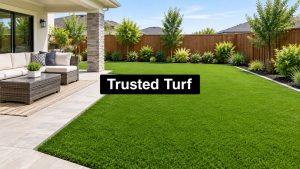
If you want the lowest-maintenance setup possible, stop thinking only in terms of beds and shrubs. In many Austin yards, artificial turf is the smarter move in high-traffic areas, narrow side yards, dog runs, and spots where grass always struggles. It cuts mowing, reduces water use, and pairs well with drought-tolerant shrub beds when the whole yard is planned together.
On bigger refreshes, professional Austin yard design services usually save money over time because they fix spacing, drainage, irrigation layout, and material choices before installation. That prevents the expensive rework homeowners end up paying for later.
For homeowners comparing ideas in other climates, it can also help to see how different regions approach cost-conscious planning, like these examples of budget-friendly Tampa Bay landscaping. The plants are different, but the lesson still applies. A simpler yard with a smart layout is cheaper to live with and easier to keep looking sharp.
Planting and Minimal Care for a Thriving Yard
A shrub usually fails before summer because it was planted wrong in the first place.
In Austin, fall gives you the best odds. The soil is still warm enough for root growth, but the air is no longer punishing the plant every afternoon. Spring can work, but it leaves a much smaller buffer before the first long stretch of heat.
Plant them the right way the first time
Start with the hole. Go wider than the root ball, not deeper. If you bury the root flare, trap the crown below grade, or stuff the hole with rich amendments, you create a weak plant that struggles the moment irrigation gets inconsistent.
Use this approach:
- Set the root ball high enough: The top should sit at grade or slightly above it in heavier soils or spots that drain slowly.
- Loosen circling roots: Container shrubs often need roots teased apart so they grow outward instead of strangling themselves.
- Water heavily right after planting: Settle the soil and remove air pockets.
- Mulch the planting bed correctly: Cover the soil, but keep mulch off the base of the shrub.
That last step matters more than homeowners think. A proper mulch ring cuts evaporation, softens soil temperature swings, and reduces the watering frequency your yard will need during the first establishment phase.
The care plan that actually works
New shrubs need consistency, not pampering. Water thoroughly, then let the upper soil dry a bit before the next cycle. Daily shallow watering keeps roots near the surface, which is exactly where Austin heat does the most damage.
Pruning trips people up too. Stop shearing every shrub into a box. Hand-prune for shape, remove dead or rubbing branches, and leave healthy new growth alone unless the plant is outgrowing its spot. If a shrub needs constant chopping to stay in bounds, the problem is plant selection or placement.
Early care should build resilience, not dependence.
A simple seasonal routine keeps things on track:
- First few weeks after planting: Check soil moisture at the root ball, not just the surface mulch.
- Hot spells: Water based on soil condition and exposure. South and west facing beds dry out faster.
- After heavy rain: Look for settling, exposed roots, or standing water around the crown.
- Routine upkeep: Remove dead wood, refresh mulch as it breaks down, and inspect drip lines for clogged emitters.
If you want the full picture on post-install upkeep, including turf, trees, and landscape bed care, that guide is worth your time. Homeowners who want the fewest headaches over the long run should also look at why synthetic turf works so well in Austin yards, especially when you pair it with shrubs and irrigation zones that are planned together from the start.
Beyond Shrubs The Ultimate Low Maintenance Solution
You pick heat-tolerant shrubs, set up irrigation the right way, and keep mulch where it belongs. Then the lawn still eats your weekends. In Austin, grass is usually the biggest maintenance trap on the property, especially in full sun, narrow side yards, and spots that get hammered by kids or dogs.
That is why smart yard planning goes beyond shrubs. The best low-effort setup usually combines durable planting areas with turf where natural grass keeps failing.
Where artificial turf makes the most sense
Artificial turf pays off fastest in the parts of a yard that are hardest to keep looking good. Side yards, dog runs, narrow strips, busy play areas, and backyards where you want green cover year-round are all strong candidates.

Good turf also solves a design problem. It gives the eye a clean, finished surface without adding another area that needs mowing, fertilizing, edging, and constant water. Pair it with shrub beds, steel edging, decomposed granite, and solid drainage, and the whole yard gets easier to manage.
Think in combinations, not one material
The yards that hold up best in Austin are planned as systems. Shrubs handle structure and screening. Mulch and stone reduce exposed soil and weed pressure. Drip irrigation keeps water targeted. Turf takes over where a traditional lawn becomes a chore.
That mix gives you softness, color, and usable space without turning the property into a weekend project. It also works better for real-life use. Pets, play, entertaining, and foot traffic are hard on grass and much easier to handle when the layout matches how you live.
If you are comparing options, read this guide on why synthetic turf works so well in Austin yards. Installation quality decides whether turf feels like a smart upgrade or an expensive mistake. Base prep, drainage, edging, and material choice all need to be done right, which is exactly why many homeowners are better off bringing in a crew that does this every day.
Schedule Your Free Austin Landscape Consultation
Walk outside in August. If your yard already feels like one more thing to manage, the plan is wrong.
A good Austin yard should hold up to heat, dry spells, runoff, pets, and real foot traffic without turning every weekend into yard work. That starts with the right low maintenance shrubs for your yard, but shrubs are only part of the answer. The yards that stay attractive and easy to manage are built as complete systems, with smart plant placement, solid drainage, efficient irrigation, clean bed lines, and turf where a traditional lawn keeps failing.
That kind of planning saves money, cuts maintenance, and prevents the usual do-overs.
If you are tired of guessing which plants will survive, where water should go, or how to make the whole space look finished without adding more upkeep, get expert help. A professional consultation gives you a clear plan before you waste money on the wrong shrubs, bad spacing, or a lawn area that never made sense in the first place.
If you are ready for a yard that looks sharp and asks less from you, contact Modern Yard. Their team can help you choose the right shrubs, fix layout and drainage problems, and build an outdoor space that works effectively in Austin.