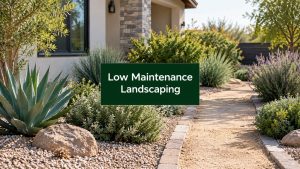

If your Austin yard is patchy Bermuda, tired St. Augustine, or a drip system you barely trust anymore, you already know the problem. The lawn doesn't just look rough in August, it starts changing how you use the property, how often you water, and how high the bill climbs when the heat stays on for weeks.
Drought tolerant design is the practical answer when you want the yard to survive Texas summer without turning into a weekly guessing game. Done right, it's not a plant swap, it's a property-level water strategy that cuts waste, reduces runoff, and gives every part of the yard a job it can handle.
Understanding the True Cost of a Thirsty Austin Yard
A thirsty yard usually shows the strain in small ways first. Dry seams open in the turf. Sprinkler overspray hits the sidewalk. A front lawn can look fine in spring, then start frying once the heat settles in. By the time people call, they have already spent a few seasons watering the same problems over and over.
Outdoor watering can account for about 30% of household water use, and up to 50% of that outdoor water can be lost to wind, evaporation, or runoff when irrigation is inefficient (Gardenia drought-tolerant gardens guide). That is why I do not treat this as a cosmetic project. I treat it like fixing a leak on the outside of the house, because every bad spray pattern and every soggy edge is water and money leaving the property for no good reason.
A smart redesign changes the whole pattern, not just the plant palette. Drip lines, mulch, low-water plantings, and better layout can reduce outdoor water use by roughly 30% to 60% (Gardenia drought-tolerant gardens guide). In Austin, that usually means less watering pressure on the lawn, fewer dead spots near hardscape, and a yard that can take heat without needing constant rescue.
Practical rule: if the water is hitting sidewalk, street, or already-dry soil, you are paying for waste, not yard performance.
A clay-heavy lot can make the bills and the damage worse fast. Water hangs around the foundation, then moves where you do not want it, which is why homeowners dealing with drainage trouble should Prevent foundation water damage. On a property like that, the goal is not just a nicer view from the street, it is a yard that stops asking for repeated repairs.
If you are starting with the basics, this overview on how to reduce water usage is the right first read before you choose materials or plants.
The goal is a yard that puts water to work where it helps, then quits wasting it on turf, runoff, and overspray.
Reading Your Site Before You Pick a Single Plant
A solid install starts with a walk, not a plant list. I want to see where the sun bakes the beds, where water pools after a storm, which side of the house throws back heat, and where the irrigation is already missing its target. Skip that work, and you end up choosing plants for conditions the site does not have.

Walk the yard at three different times
A bed that feels shaded at 8 a.m. can be punishing by mid-afternoon. One corner may stay damp while a slope just a few steps away dries out fast. I would rather a homeowner catch that before install than after the first heat wave.
Pull a simple soil probe in three spots and see what comes up. Sandy soil drains quickly, clay holds moisture longer, and mixed soils often behave differently from one bed to the next. That affects watering frequency, mulch performance, and plant spacing, because the ground is doing different work in different places.
Walk the property after rain too. Drainage paths usually tell the truth faster than a sales brochure ever will.
An irrigation audit belongs on the same visit. Old heads, broken zones, and mismatched spray patterns show up often in Austin yards, especially when a previous owner patched the system a few times and left it there. If you want a useful starting point on the drainage side, this guide on yard grading and drainage helps explain why slope is never just a grading issue.
A simple one-page site map is enough to keep the conversation grounded. Mark sun, shade, slope, existing trees, wet spots, and irrigation coverage. That gives any contractor a real foundation for decisions instead of guesswork dressed up as a design.
Building the Water-Smart Mechanics Underneath
A drought tolerant yard doesn't save water because the plants are “tough.” It saves water because the layout underneath the plants is disciplined. The mechanical pieces, hydrozoning, drip, mulch, and targeted soil work, are what turn a decent-looking plan into a low-waste system.
Hydrozones and delivery method
Group plants by water need, then keep the irrigation method matched to the zone. Spray heads belong where they can water evenly, but they should stay at least 24 inches away from hard surfaces to reduce runoff (Los Angeles County drought tolerant garden guide). That's a small detail with a big payoff, because overspray onto concrete is money washing away.
Drip irrigation usually fits planting beds better than spray because it delivers water at the root zone instead of throwing it into the air. That matters even more when you're working with foundation edges, tight side yards, and beds bordered by walks or patios. If you're dealing with clay soil and drainage concerns near the house, Prevent foundation water damage is a useful read because planting decisions and water movement are connected.
| Factor | Spray Heads | Drip Irrigation |
|---|---|---|
| Water placement | Broad coverage | Root-zone delivery |
| Waste potential | Higher near hard surfaces | Lower when installed well |
| Best use | Turf areas and open coverage zones | Beds, shrubs, and mixed plantings |
| Overspray risk | Higher | Lower |
| Maintenance focus | Alignment and head condition | Filter checks and emitter performance |
Soil and mulch do quiet heavy lifting
A technically sound plan starts with site-specific evapotranspiration and soil analysis, then adds soil work only where it helps. In loam soils, 3% to 5% organic matter additions can double water-holding capacity, and a 3-inch mulch layer can reduce surface evaporation by 25% to 50% (National Irrigation Authority). That isn't decoration, it's water management.
Mulch also keeps splashback down, moderates soil temperature, and helps the root zone stay stable through Austin's hottest stretches. Without it, even good plant choices can struggle because the top layer dries out too fast.
If the irrigation layout needs a complete rethink, the next step is usually a proper yard drainage system installation rather than trying to patch a layout that was wrong from the start.
The point is simple. Water savings happen when the system underneath is built to stop waste before it starts.
Choosing Plant Palettes and Turf Alternatives for Austin
Austin yards need plant choices that can take heat, reflected glare, and long dry stretches without turning the whole yard into a rescue project. Generic xeriscape lists miss the part that matters on-site, how the yard gets used, where the sun bakes hardest, and which spots hold traffic. Plant palette and surface choice have to be judged together.
Plants that hold up in real beds
A good low-water palette here usually leans on Texas sage, Mexican feathergrass, yaupon holly, and salvias. Those plants give you structure, texture, and seasonal color without forcing a design that needs constant intervention. Native plants adapted to dry soil moisture conditions can also cut supplemental irrigation from an average of 2.5 inches per month to less than 1 inch per month (University of Texas study).
That said, plant selection is never just about toughness. It's about putting the right plant in the right pocket of sun, drainage, and root competition. A yaupon under tree canopy behaves differently than a salvia in a south-facing bed with reflected heat, and a plant that looks fine on a nursery bench can struggle fast if the bed stays hot and shallow.
For a deeper dive into options that thrive in Central Texas, see our guide to low-water landscaping plants.
Where turf alternatives make more sense
Some spaces still need a lawn feel, just not a thirsty one. In family yards, pet runs, putting greens, and shaded zones where real grass struggles, artificial turf can be the practical answer. The right product matters, though, because low-end turf shows heat, flattens under use, and looks fake fast.
Look for UV-resistant, high-denier fibers, commercial-grade steel edging, and infill options that support temperature control and antimicrobial performance. Those details are what make a synthetic lawn feel intentional instead of like a shortcut. For some side yards, decomposed granite or permeable hardscape is the better move, especially when the space is narrow and mostly used for traffic.
Here's the decision rule I use. If the area is for visual green only, choose a low-water planting bed. If it needs year-round wear resistance, artificial turf may fit. If it mainly connects parts of the yard, use a hardscape that drains well and does not ask for irrigation at all.
A complete palette feels cohesive because every surface is doing a job. That is what separates a finished yard from a pile of water-saving ideas.
The First 24 Months Most Guides Skip
An Austin install can look finished on day one and still be on shaky ground. The plantings may be in place, the mulch may be clean, and the beds may read well from the curb, but the roots are still working through disturbed soil and heat stress has not backed off.
Year one is about root building, not toughness
Most perennial drought-tolerant plants need one growing season to establish, shrubs and trees often need 1 to 2+ seasons, and trees may need about 1 year per inch of trunk diameter to reach reliable drought resilience. That means a newly installed drought-tolerant yard can need more attention than the old one, especially through its first summer.
A lot of homeowners expect a new planting to behave like a mature native bed on day one. It will not. New roots stay shallow at first, August heat punishes exposed soil, and water has to be delivered carefully enough to keep plants alive without saturating the root zone.
Practical rule: deep, infrequent watering is still the goal, but the timing has to match heat waves, slope, and the soil in each bed.
What the seasons usually demand
In the first summer, hand-watering transplants during extreme heat is often the difference between survival and setback. In the first winter, the system still needs monitoring because dry wind can pull moisture out of young plants even when temperatures feel milder. During the first real drought, irrigation discipline matters more than plant labels.
The failures usually come from two directions. Some crews keep the water running too long and create root problems. Others cut back too fast, and the plant never gets a real foothold. Phasing irrigation down over time solves that, but only if someone is checking the schedule instead of setting it once and walking away.
The shift happens after the establishment window, not on install day. Drought tolerance is a transition, and that transition takes patience, consistent watering discipline, and a crew that knows when to cut back and when to keep helping the plants through stress.
What This Actually Costs and What Maintenance Looks Like
The cost of a drought tolerant install usually comes from a few visible buckets. Turf removal, grading, soil amendment, irrigation conversion, plant material, hardscape, and any artificial turf prep all affect the final number. Flat square-foot pricing hides too much, because two yards of the same size can need totally different amounts of prep.
A better estimate starts with the site. A yard with poor drainage, compacted clay, old irrigation, or tight access for material delivery will take more labor than a clean open space. That's one reason transparent, factors-based pricing is easier to trust than a single number that sounds neat but leaves out the work.
Maintenance is lighter after establishment, but it isn't zero. Mulch needs refreshing seasonally, smart controllers need programming checks, and drip lines need occasional repair. If synthetic turf is part of the design, day-to-day care is low, but the base prep and occasional rinsing still matter.
Ask for a warranty that covers both materials and installation workmanship. If the installer won't explain what's included, that's a warning sign.
A good contractor should also explain what happens after the first season. Year-two care is where many layouts either settle in cleanly or start drifting because nobody adjusted irrigation after the plants rooted. That's the value of a clear maintenance plan, it protects the design you paid for.
Why a Local Site Walkthrough Changes Everything
Austin yards do not fail for abstract reasons. They fail because the site has real quirks, hard clay in newer subdivisions, drainage problems along the Hill Country edge, old irrigation stub-outs, and access issues for hauling material all change the job before the first shovel goes in.
A local walkthrough catches those details early. It shows whether the plan needs more drainage work, better grading, or a different plant mix before anyone starts ordering material. That is the difference between a yard that gets through August and one that looks fine for a few weeks and then starts fading.
The first 24 months matter most. A drought tolerant install can still struggle if the irrigation schedule never gets adjusted, the soil stays compacted, or the wrong plant is placed in the hottest stretch of the property. On a real Austin home, that usually means checking the front bed by the sidewalk, the side yard that bakes after lunch, and the back area where runoff collects after a storm. Those conditions change what survives, and they change how much attention the yard needs while it roots in.
A site visit also keeps the plan honest about trade-offs. More drainage work may mean less planting in the short term. A tougher plant mix may mean a different look than the homeowner first pictured. Less mulch can expose soil faster in the heat, while more mulch can help hold moisture but needs upkeep so it does not build problems around trunks and stems. Those choices are easier to make standing on the property than from a sketch alone.
If you want a low-water yard that works on your property, schedule the walkthrough, ask for a factors-based estimate, and make sure the installer talks through establishment, drainage, and long-term maintenance before the work starts.
Modern Yard Landscapes can help you turn a thirsty Austin yard into a durable low-water space with the right grading, irrigation, and plant strategy for your property. Visit Modern Yard Landscapes to schedule a walkthrough and get a transparent estimate built around your site, not a generic template.