
Your front yard should not look like a patchy compromise every time you step outside. If the grass is thin, the soil stays soggy after rain, and the water bill keeps climbing, the problem usually is not the lawn alone, it's what's underneath it. Austin homeowners need outdoor installation services that fix the base, not just the surface, so the yard finally looks good and holds up through dry heat, heavy rain, and everyday use.
Modern Yard Landscapes works from that reality. Their residential landscaping services focus on durable materials, clean execution, and a total satisfaction guarantee, which matters when you want a yard that feels finished instead of temporary. If you're comparing options right now, look closely at cost transparency, drainage planning, and the contractor's follow-through, because that's what separates a polished result from an expensive redo. Modern Yard Landscapes residential landscaping services
Understanding Landscape Installation Services
Outdoor installation services are the construction side of outdoor improvement. They're different from weekly mowing or seasonal cleanup because they create the structure your yard depends on, grading, drainage, turf, retaining walls, lighting, and other features that have to work together from day one. Done right, installation protects curb appeal, lowers water waste, and cuts down on constant patching and rework.
What installation actually covers
A proper installation starts below the visible finish. Crews shape the site, correct slope, manage runoff, compact the base, and only then add the final material. That's why two yards with the same surface can perform very differently, one may drain cleanly and stay stable, while the other develops soft spots, pooling, or edge failure.
That broader role is part of a major national industry, not a side hustle. In the United States, the landscaping services industry reached USD 176.7 billion in 2026 and employed more than 1.4 million people across 692,777 businesses National Association of Landscape Professionals statistics. For homeowners, that scale matters because it shows the work is standardized enough to demand professionalism, but still local enough that a good crew can understand Austin's soil, slope, and drainage problems.
Why the base matters more than the finish
People usually shop by what they can see, turf color, stone style, light fixtures. I'd push you to ask different questions. What's the slope doing? Where does stormwater go? Is the sub-base stable enough to prevent movement later?
Practical rule: if a quote talks a lot about finish materials but says almost nothing about grading or drainage, you're not comparing equal bids.
That's especially true in Austin, where hidden site conditions can decide whether a project feels smooth or expensive. Good installation isn't decoration. It's site correction with a design layer on top.
Key Service Types for Austin Properties
Austin properties don't all need the same fix. A flat lot in Westlake, a sloped yard in South Austin, and a pet-heavy backyard in Cedar Park all need different solutions, and the right contractor should say that plainly instead of pushing one package for everybody. The six services below cover the core problems most homeowners face.

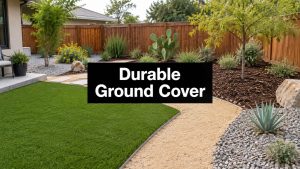
Artificial turf
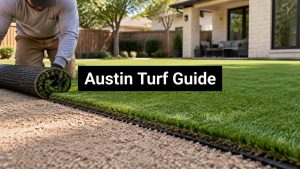
Artificial turf is the cleanest answer when you want a lawn that stays green without the constant cycle of watering, mowing, and mud control. In Austin's dry heat, it's a practical choice for side yards, play areas, and front lawns where homeowners want a tidy look without babysitting irrigation. A key benefit is not just appearance, it's consistency.
Performance depends on the build, not just the roll you see. Higher Dtex yarns mean thicker fibers, and higher face weight usually means better density and better resistance to flattening in heavy-use areas. For demanding spaces, industry guidance points to 8,800+ Dtex and 65–85+ oz face weight as benchmarks for dense, durable landscape turf artificial grass specifications guidance.
Drainage tile
Drainage tile is the quiet fix that protects the rest of the yard. If your property collects water after spring storms, or if one low corner stays wet long after the rest of the lawn dries out, drainage tile can move that water away before it turns into erosion, foundation stress, or dead turf. This is one of the most ignored services because it's underground, but it's often the one that saves the project.
Retaining walls
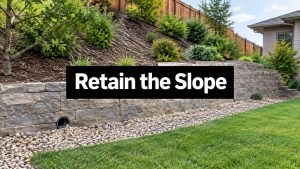
Retaining walls are the right answer for sloped lots that need structure. They hold back soil, reduce washout, and create level spaces for seating, turf, planting beds, or play zones. If your backyard feels unusable because everything tilts, a wall is often the first thing that turns dead space into a real outdoor room.
For a useful look at how structure shapes outdoor living, the Lafayette outdoor living ideas guide from Lucas Furniture & Mattress is worth a read. It pairs well with hardscape installation in Austin, TX when you're thinking about walls, patios, and circulation together.
Custom pet runs
Pet runs are for owners who are tired of muddy paws, worn grass, and cleanup headaches. A custom run gives dogs a defined area that's durable, easy to rinse, and built for daily use. In a city where the weather swings from hot and dry to stormy and wet, a pet run can save the rest of the yard from becoming a wreck.
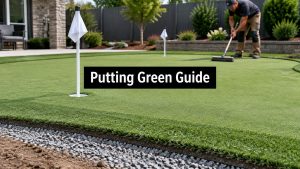
Backyard putting greens
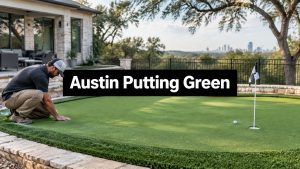
Backyard putting greens turn dead space into a usable hobby zone. They're a smart fit for golfers who want practice at home without taking over the whole yard. The key is not just the putting surface, it's the shaping underneath so balls roll predictably and water doesn't pool in the low spots.
Seasonal lighting
Seasonal lighting is the simplest way to extend curb appeal into the evening. It also makes patios, walkways, and entries feel more finished. Homeowners often think of lighting as an add-on, but it can be the detail that makes the whole outdoor space read as intentional.
Navigating the Installation Process
A clean installation should feel orderly, not mysterious. You should know who's coming out, what they're measuring, how they're pricing the work, and what happens before anyone starts digging. If a contractor can't explain those steps in plain English, that's a warning sign.
Step 1 through 3, site first
The first visit should be a real assessment, not a sales pitch. The crew should look at drainage paths, access points, slope, existing hardscape, and anything that changes labor or materials. In Austin, that matters because clay-heavy ground and sudden rain can change how a base needs to be built.
Next comes the estimate and design. A good proposal tells you what's included, what isn't, and how the contractor will handle hidden site conditions. If you're reviewing a drainage-heavy project, yard drainage system installation should be discussed before anyone promises a final price.
Then comes site prep. Here, quality is demonstrated by grading, compaction, weed barrier, and drainage layout. Turf guidance is blunt about this point, sub-base preparation and drainage design matter more than the surface layer itself, and when those steps are done correctly, professional installations commonly last 15–20 years under regular residential use artificial turf longevity guidance.
Step 4 through 6, materials, installation, handoff
Material selection should be specific. Turf spec, stone type, edging, lighting fixture style, all of it should match the site and the use case. If the crew is vague here, they're probably making decisions on the fly instead of matching materials to conditions.
Keep a photo record of each major stage. A tool like streamline field operations with images is useful because it makes site conditions, approvals, and completed work easy to verify later.
The installation itself should follow the approved plan. After that, the final walkthrough should not be rushed. You want a punch list, a maintenance overview, and a direct explanation of what the warranty covers. If you're not getting that handoff, the job isn't finished.
Realistic Cost Factors and Examples
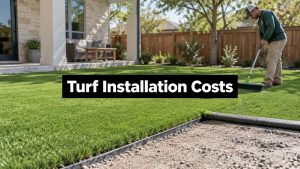
A lot of homeowners get burned because they compare surface prices and ignore the hidden work. That's a mistake. Access, slope, drainage, soil conditions, compaction, and material grade all change the true cost of a project, and they change it fast.
The clearest warning comes from the fact that hidden site conditions and prep can push project pricing from about $200 for small jobs to $15,000+ for major installations landscaping services pricing guidance. That range is exactly why transparent estimates matter. If one bid is much lower, it usually means someone is skipping prep, downgrading materials, or leaving out work that will show up later as a change order.
What drives the estimate
For turf, costs rise when the site needs deeper base work, more edging, or premium fiber and infill choices. For walls, labor and structural complexity matter more than the visible finish. For lighting, fixture quality and layout complexity shape the total.
Bottom line: you're not paying only for the surface, you're paying for the work that keeps the surface stable.
A trustworthy estimate should show the factors clearly, not hide them behind one vague lump sum. That's how you avoid surprise charges after the job starts.
| Service Type | Low-End Cost | High-End Cost |
|---|---|---|
| Artificial Turf | small residential areas | larger custom installs |
| Drainage Tile | short problem sections | full-yard drainage solutions |
| Retaining Walls | simple garden walls | taller, more complex structural walls |
| Custom Pet Runs | compact dog runs | larger fenced pet zones |
| Backyard Putting Greens | basic practice green | custom shaped multi-feature greens |
| Seasonal Lighting | a few entry accents | full-property seasonal layouts |
Project Timelines and Maintenance Expectations
The fastest way to stay sane during an installation project is to plan around the weather, not against it. Austin's dry heat affects installation logistics, and spring rains can slow drainage work or force a site to wait for drier conditions. If your contractor ignores seasonal timing, the schedule will probably slip.
What to expect on timing
Artificial turf often takes longer because the base has to be right before the surface goes down. Drainage tile can move faster on a contained fix, while walls need more time because of layout, structure, and backfill. Seasonal lighting is usually the quickest install because it depends more on routing and fixture placement than excavation.
Here's the part homeowners should care about after the job is done, not every feature is high-maintenance, but every feature needs some care. Turf needs cleaning and brushing, drainage outlets need to stay clear, retaining walls should be checked for settling, and lights need periodic inspection so a small wiring issue doesn't become a dead section of the yard.
A simple maintenance mindset
Maintain the hidden systems first. If drainage is working and the base stays stable, most visible finishes hold up much better.
For homeowners who want a low-hassle setup, the goal is not zero maintenance. It's predictable maintenance that protects the investment. That's a very different thing, and it's the smarter standard to judge a project by.
Hiring Professionals and Selection Checklist
I'd be blunt about this. A professional installation is worth it because the costly mistakes happen below the surface, where most homeowners can't inspect the work after the crew leaves. Insurance, process discipline, and warranty support matter more than a slightly lower bid, especially on drainage-heavy or sloped Austin properties.
A trust-focused landscaping workflow should include itemized estimates, a clear explanation of what's included, and a step-by-step walk-through from the first call to the final punch list, plus a feedback request within 48 hours to support reviews and referrals trust-focused landscaping workflow guidance. That's not fluff, it's how you spot a company that knows how to communicate before, during, and after the job.
What to verify before you sign
- Insurance and licensing: ask for proof before work starts, not after a problem.
- Local project photos: look for Austin yards, not just polished stock images.
- Transparent estimates: you should see labor, prep, and material categories, even if the numbers are bundled.
- Communication protocol: confirm who gives updates, how delays are handled, and when completion is announced.
- Recent reviews: read the newest feedback, not just the top-rated ones.
Modern Yard Installations fits that professional model because they combine turf installation, drainage, retaining walls, and seasonal lighting with a process built around site prep and clear pricing. If you're comparing turf-focused options, their artificial turf installation contractors page is a direct place to start.
FAQs and Next Steps
Retaining wall permits can depend on height and site conditions, so don't assume a wall is automatically simple. The best season for turf or drainage work is usually the one that lets your contractor prep the site cleanly and work without weather delays, which means timing matters as much as the materials. Your yard also needs enough access for tools, materials, and debris removal, because tight access can change labor and equipment choices.
Clear communication is what keeps a project from drifting. Confirm the service date, time, scope, and price in writing before the visit, then expect completion notification soon after the work is done. That kind of follow-through is a major trust signal for homeowners proactive customer communication guidance.
If your yard has drainage problems, weak grass, or a layout that never seems finished, call for a site visit and get a proposal that explains the hidden conditions, not just the pretty surface. A good contractor will measure, explain, and price the work plainly. That's the standard worth demanding before you book.
A CTA for Modern Yard Landscapes.