
If you're staring at a yard that's half dust, half weeds, and somehow still expensive to maintain, you're not alone. A lot of Austin homeowners are stuck in the same cycle. Water the lawn, mow the lawn, patch the lawn, fertilize the lawn, then watch the heat beat it up again.
That old model doesn't make much sense here anymore. The Southwestern U.S. has been in a "megadrought", with warm, dry conditions since 2000 ranking among the most severe in at least 1,200 years, and the EPA notes that outdoor use can account for nearly 30% of household water consumption on average in the U.S., as summarized in this Austin drought and landscaping discussion. If your yard is demanding constant work and high water use just to look passable, the problem usually isn't you. It's the plan.
The End of the High-Maintenance Austin Yard

Austin punishes lazy yard design decisions. Strong sun, hard soil, fast dry spells, and sudden downpours expose every weak spot in a yard. That's why generic residential gardening and lawn services often disappoint here. They copy a cooler, wetter playbook and hand you the bill when it fails.
A better yard starts with a blunt question. Do you want to keep serving the lawn, or do you want the yard to serve you?
Most homeowners I talk to don't want a "perfect lawn." They want a front yard that doesn't embarrass them and a backyard they can use without spending every weekend maintaining it. They want cleaner edges, smarter plant choices, less mud, lower water demand, and something that still looks good in August.
What a smarter Austin yard looks like
A good residential yard design in Austin usually does three things well:
- Cuts waste: less watering, less fertilizer, less weekend upkeep
- Handles heat: materials and plants need to survive long hot stretches
- Solves the site: drainage, slope, shade, traffic, and pet use all matter more than style trends
That doesn't mean every yard should become gravel and cactus. It means each part of the yard should earn its place. If a lawn area gets constant dog traffic, treat it like a dog area. If the side yard stays soggy, solve drainage before planting anything. If your front yard bakes all day, stop forcing thirsty grass where it doesn't belong.
Practical rule: In Austin, the cheapest-looking yard is often the one that keeps getting redone.
Some people still want natural grass, and that's fine. Others are better off with turf, native planting, or a hybrid approach. The right answer depends on how you live. If you want ideas that fit dry conditions better than standard sod, take a look at these drought-resistant lawn alternatives for Austin homes.
What homeowners usually regret
Not the project itself. The regret is usually one of these:
| Common regret | What caused it |
|---|---|
| Lawn still looks rough | Wrong material for the amount of sun and traffic |
| Water bill stays high | Too much traditional turf kept in low-value areas |
| Backyard smells or stays muddy | Pet use without proper drainage planning |
| New plants die off | Pretty design, weak plant selection for Austin heat |
| Yard still feels unfinished | No clear plan for seating, pathways, or focal points |
The fix isn't more maintenance. The fix is a better design decision at the start.
Your Three Paths to a Perfect Austin Lawn
There are three realistic directions for most Austin homeowners. Traditional grass, artificial turf, or xeriscape/native planting. Each can work. Each can also be the wrong choice if you pick it for the wrong reason.

Traditional grass
Natural grass still gives you that classic soft, living lawn feel. If you've got kids who play barefoot, a decent irrigation setup, and you're willing to stay on top of mowing and seasonal care, it can still make sense.
The downside is obvious in Austin. Grass asks for regular attention, and it looks rough fast when you skip it. It also ties you to mowing, edging, weed control, and ongoing water demand.
Choose grass if you love the feel of a natural lawn and don't mind the recurring work.
Avoid grass if you want a low-input yard or you're already tired of spending money to keep it green.
Artificial turf
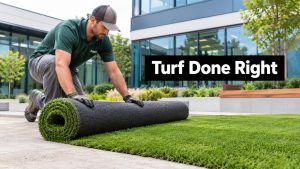
Artificial turf solves a different problem. It gives you a consistently green surface without mowing and without irrigation for lawn growth. For homeowners who want a clean look year-round, a usable play area, a dog run, or a sharp front entry, turf can be a smart long-term move.
But don't buy it blindly. Turf isn't magic. In full Austin sun, surface heat matters. So does drainage. So does the quality of the base, edging, and infill. A bad turf install can look fake, hold odor, or fail early.
Turf is a product category, not a shortcut. The difference between a professional installation and a cheap one shows up fast.
This side-by-side guide on artificial turf vs natural grass for Austin homeowners is worth reading if you're deciding between the two.
Xeriscape and native planting
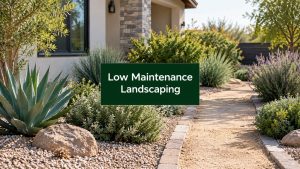
This is the best fit for homeowners who want the lowest routine maintenance and the strongest match for Austin's climate. A well-designed xeriscape doesn't look barren. It looks intentional. Think structured beds, native grasses, stone, mulch, hardy shrubs, and plants that can handle heat without constant rescue.
The weakness is that some homeowners hear "low water" and accidentally build a yard with no softness, no shade, and no place to gather. That's a design failure, not a xeriscape problem. You still need contrast, focal points, and a plan for movement through the space.
A straight comparison
| Path | Best for | Main upside | Main trade-off |
|---|---|---|---|
| Traditional grass | Homeowners who want a classic lawn feel | Natural look and softness | Highest ongoing maintenance and water demand |
| Artificial turf | Families, pet owners, high-traffic yards | Clean, green, low upkeep surface | Upfront investment and heat management matter |
| Xeriscape | Homeowners prioritizing water savings and minimal routine work | Climate-appropriate and low maintenance | Needs thoughtful design to avoid a harsh look |
My honest recommendation
For most Austin homes, the best answer isn't one material across the whole property. It's a hybrid plan.
Use turf where you need clean, durable usability. Use native or xeric planting where grass never made sense. Keep natural grass only where you enjoy it and will maintain it. That mix usually gives homeowners the best balance of appearance, comfort, and long-term sanity.
Custom Features That Transform Your Yard
The lawn choice gets the most attention, but the features around it often decide whether you use the yard. A backyard can look polished and still feel dead. The fix is adding elements that match how you live.
For the golfer who wants a reason to step outside
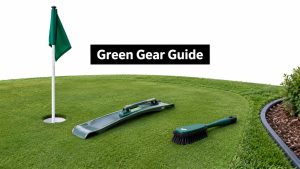
A custom backyard putting green isn't just for serious golfers. It's also one of the best ways to turn an awkward patch of yard into something inviting. Corners, side yards, and underused back sections can become a space people walk toward instead of around.
The key is realism. If the contour is wrong or the base isn't stable, it won't feel like practice. It'll feel like decor. A good green needs clean edges, proper cup placement, and a layout that fits the yard rather than swallowing it.
For the dog owner who wants less mud and less mess
Pet runs are one of the most practical residential landscaping services you can invest in. They solve a daily problem. No more torn-up grass at the fence line. No more muddy paws after every rain. No more guessing where the yard smells bad.
Homeowners in Austin often worry whether turf gets too hot or whether it's really safe for pets. Those concerns are fair. Turf can get warmer than natural grass, but modern systems can include cooling infills and antimicrobial treatments, and proper installation with adequate drainage is what makes pet use and hygiene workable, as explained in this guide to turf heat, pet safety, and drainage considerations.
If a pet area isn't built to drain and clean easily, it won't matter how nice it looked on install day.
For the family that actually entertains outdoors
Some upgrades change the whole rhythm of the property. Outdoor illumination is one of them. Good lighting makes paths safer, trees more dramatic, patios more usable, and the yard more finished after dark. If you're considering it, this overview of landscape lighting design ideas for outdoor living can help you think beyond basic floodlights.
Pair that with a seating area and the space starts working in every season. If you're exploring fire feature ideas, this roundup of high-quality custom outdoor fireplaces is a useful way to compare styles before you commit to a build.
The best custom features feel inevitable
The strongest yards don't feel overloaded. They feel like the right elements were always supposed to be there.
- Putting greens work best when they're scaled to the user, not oversized for bragging rights.
- Dog runs work best when they're tucked into a logical route with easy cleanup access.
- Lighting works best when it highlights movement and gathering areas, not every inch of the property.
A custom feature should solve a real problem or create a real habit. If it doesn't, it's just expensive clutter.
Solving Austin's Toughest Yard Problems
A yard can look polished for a month and still be built wrong. In Austin, the biggest hidden problem is usually water. Not too little water for the plants. Too much water going to the wrong place after rain.

Clay-heavy soil makes this worse. Water tends to sit, spread, and create the same headaches over and over: soggy turf, muddy pet areas, erosion on slopes, and moisture collecting too close to the house. If you install new landscaping on top of that without fixing drainage, you're paying to decorate a problem.
What proper drainage actually looks like
A real drainage solution starts with diagnosis. You identify low spots, outlet options, and where runoff travels during a storm. Then you build the system to move water downhill consistently.
A proper drainage installation needs a minimum 1% slope, which is about 1 foot of drop per 100 feet, so water keeps moving instead of standing still. The perforated pipe is typically laid with holes down, then wrapped in filter fabric to reduce clogging from soil, according to this drain tile installation guide covering slope, pipe orientation, and filter fabric.
What to ask when someone proposes a fix
If a contractor says, "We'll just add a drain," slow down. That's not a plan. That's a phrase.
Ask these questions:
- Where does the water enter? Surface runoff and subsurface saturation aren't the same issue.
- Where does the water exit? A drain without a real outlet is decoration.
- How is the grade maintained? Any reverse in slope undermines the system.
- What keeps the line from clogging? Filter fabric and proper gravel matter.
- How will this affect the rest of the yard? Drainage should support the yard's design, not fight it.
For homeowners comparing options, these yard drainage solutions for Austin properties are a good starting point.
Water doesn't care what you planted. It follows grade every time.
Retaining walls are more than decoration
On sloped lots, retaining walls often do the heavy lifting. A good wall creates usable space, reduces erosion, and supports the long life of everything around it. A bad one becomes a crack, a lean, or a rebuild.
The best wall projects start with purpose. Are you holding soil, creating a level patio zone, protecting a fence line, or improving drainage flow? Once that goal is clear, the wall material and structure become easier to choose.
The right order matters
A lot of failed outdoor yards have the same story. The homeowner installed turf, beds, or hardscaping first, then discovered the drainage issue after the first big rain.
The smarter order is simple:
- Fix grade and drainage
- Stabilize slopes if needed
- Install surface features and planting
- Finish with lighting and detail work
That order saves money. It also saves you from rebuilding the pretty part twice.
What Goes Into a Transparent Landscaping Estimate
You call three companies for the same Austin yard. One hands you a one-page number. One sends a glossy mockup with no real scope. One breaks down prep, materials, drainage, labor, and warranty in plain English. Hire the third one.
A good estimate should make it easy to see where your money goes and what kind of yard you will own five years from now. In Austin, that matters more than the low number. Heat, drought, and clay soil punish cheap shortcuts fast.
The five things that shape your quote
The final price usually comes down to five factors.
Material quality
This is the part homeowners see first, but it is not just about looks. Turf, pavers, edging, lighting, drains, and plant material all have cheap and durable versions. Better products usually last longer under intense sun, foot traffic, pets, and watering limits.
Spend carefully here. I would rather see a yard with fewer features and better materials than a packed design built with products that fade, crack, or fail early.
Site preparation
Prep work decides whether the project holds up. On Austin properties, that can mean cutting high spots, improving grade, hauling off rock, breaking up compacted clay, adding base, and fixing drainage before any finish work goes in.
Cheap bids often hide this part or barely mention it. Then the yard settles, water ponds, turf wrinkles, pavers shift, and everyone argues about what went wrong.
Access and logistics
Labor changes a lot when a crew can drive materials straight into the backyard versus carrying everything through a side gate in summer heat. Tight access, slopes, mature trees, and existing patios all add time.
That does not mean a contractor is padding the price. It means the job is harder.
Design complexity
A basic lawn swap costs less because the crew solves fewer problems. A yard with lighting, multiple surface materials, built-in drainage, planting beds, and custom gathering areas takes more planning and more skilled labor.
Complex projects can be worth every dollar if they match how you live. They are a bad value when they add upkeep you do not want.
Finish details
Excellent craftsmanship distinguishes itself from rushed work.
- Clean edging keeps lines sharp and reduces creep into beds and walkways
- Proper drainage tie-ins keep the yard usable after hard rain
- Correct infill and seam work help turf wear evenly and age better
- Plant spacing and mulch depth affect both early appearance and water use
What a trustworthy estimate should include
You do not need a sales pitch. You need enough detail to compare bids accurately.
| Quote element | Why it matters |
|---|---|
| Scope of work | Shows exactly what the crew will install, remove, or correct |
| Material description | Lets you compare actual product quality instead of vague labels |
| Prep and grading work | Reveals whether the contractor is fixing root problems or covering them up |
| Allowances or exclusions | Prevents surprise charges for haul-off, irrigation changes, or extra base |
| Warranty information | Clarifies what is covered and what maintenance falls on you |
Ask one more question. What will this yard cost me to maintain?
That answer tells you a lot about whether the company is designing for your life or just trying to sell features. Native and adapted planting can cut water use, but it still needs seasonal pruning and cleanup. Turf reduces mowing and mud, but it can cost more up front. Stone, gravel, and pavers lower irrigation demand, yet they need solid prep or they become an expensive repair job.
If you are still deciding what work belongs in a DIY bucket and what should go to a crew, this guide on pest control options for Northwest Indiana homeowners offers a useful way to think about where professional help pays off.
If one quote comes in far below the others, do not get excited yet. Ask what was cut. In this field, the cheapest bid usually drops the parts you cannot easily see until the first drought, the first storm, or the second summer.
Your Checklist for Hiring a Landscaping Pro in Austin
The contractor you hire matters as much as the design you choose. Good residential landscaping services can make your property easier to enjoy for years. A careless crew can leave you with drainage issues, weak materials, and a warranty argument.

Ask the uncomfortable questions
If a company gets defensive when you ask about insurance, warranty coverage, or installation methods, move on. A professional should expect scrutiny.
Here's the checklist I recommend.
- Insurance first: Ask whether they're fully insured and ask for proof if needed. If a worker gets hurt or property gets damaged, you want that handled properly.
- Warranty in writing: Verbal promises aren't enough. Ask what is covered, for how long, and what maintenance responsibilities fall on you.
- Austin-specific experience: Local code issues, HOA requirements, drainage patterns, and soil behavior matter. A crew that understands Austin will spot problems faster.
- Material specifics: Ask what product line, edging, infill, drainage fabric, or stone they're using. "Premium" isn't a specification.
- Site prep process: Have them explain grading, compaction, weed barrier use if applicable, and cleanup. This tells you whether they build for appearance only or for longevity.
Look for process, not just photos
Nice gallery photos are easy to love. They don't tell you how the work was built.
Ask what happens from consultation to completion. Who marks the layout? Who checks drainage? Who handles change orders? Who answers if there's a problem afterward? The more direct the answers, the better.
A contractor who can explain the process clearly usually runs a better project.
Check how they think, not just what they sell
The best companies don't force the same answer onto every property. They should be able to tell you when natural grass makes sense, when turf makes sense, and when a native planting plan is the smarter move.
That mindset matters in every home service. If you're comparing how pros vs DIY choices affect another part of home care, this article on pest control options for Northwest Indiana homeowners is a good example of how to evaluate expertise instead of just price.
Red flags worth taking seriously
| Red flag | Why it matters |
|---|---|
| One vague lump-sum quote | You can't compare quality or scope |
| No discussion of drainage | They may be ignoring the foundation of the project |
| Pressure to sign immediately | Good work doesn't need panic selling |
| No local references or examples | Harder to verify how they perform in Austin conditions |
| They dodge maintenance questions | They may not expect the install to age well |
Hiring well isn't being picky. It's protecting your yard, your budget, and your time.
Austin Landscaping FAQs
What happens during a consultation
A good consultation should feel like a working session, not a sales pitch. You walk the property, talk through how you use the yard, identify problem areas, and discuss priorities. The most useful consultations also deal with the unglamorous stuff early, like drainage, traffic patterns, pet use, and maintenance expectations.
Bring photos you like, but also bring honesty. If you hate mowing, say that. If your dog destroys one side yard, say that. If you want a yard that looks clean with minimal effort, say that too.
How long does a typical turf installation take
It depends on project size, access, site prep, and whether drainage or grading needs to happen first. A straightforward install moves much faster than a yard that needs excavation, slope correction, edging, and custom detail work.
The mistake homeowners make is focusing only on the visible install day. True quality shows up in prep. If a company spends time on the base, seams, and finish work, that's a good sign, not a delay.
What kind of warranty should you ask about
Ask for two separate answers. One for materials and one for workmanship.
Material warranties cover the product itself under defined conditions. Workmanship warranties cover the installation. Both matter. Also ask what can void coverage, especially around maintenance, misuse, drainage issues caused by outside work, or damage from later construction.
How do you maintain a low-maintenance yard
Low-maintenance doesn't mean no-maintenance. It means the work becomes simpler and less frequent.
For example:
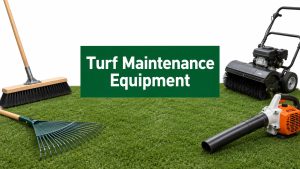
- Turf areas need occasional cleaning, brushing, and inspection
- Native beds need pruning, mulch refresh, and weed control
- Drainage systems need periodic checks to keep outlets clear
- Lighting systems need adjustment and routine fixture checks
The goal isn't zero effort. The goal is a yard that doesn't dominate your weekends.
Should you renovate the whole yard at once
Not always. If budget matters, phase the work by priority. Start with the parts causing the biggest pain. Drainage problems, unusable dog areas, dead lawn sections, and entry curb appeal usually deliver the fastest quality-of-life improvement.
A phased plan works best when it still follows one coherent design. Random upgrades done year by year often create a patchwork yard that costs more to fix later.
How do you know which option is right for your home
Start with your habits, not your wishlist. The right yard matches how you live when you're busy, not how you imagine you'll live on your best Saturday.
If you want softness and don't mind upkeep, keep some natural lawn. If you want a sharp, clean, usable surface with less routine work, look hard at turf. If water savings and low intervention matter most, lean toward xeriscape or a hybrid plan.
If you're ready to stop guessing and get clear advice on what will work for your property, schedule a consultation with Modern Yard Landscapes. They handle turf, drainage, pet runs, putting greens, lighting, and full yard planning for Austin-area homes, and they do it with transparent estimates, strong warranties, and a practical approach that fits real life.