
After a hard Austin downpour, the yard looks fine from the window, then you open the back door and hit that wet, sour smell. The grass squishes under your shoes, water sits in the low spot by the patio, and the dog has already found the only muddy corner in the yard. That's the moment most homeowners realize this isn't just “a little standing water,” it's a drainage problem that won't fix itself.

Austin yards are tough. Clay holds water, sudden rain dumps more than the ground can take, and the wrong fix can make the mess worse. The good news is that drainage solutions aren't guesswork when you know how water is moving, where it's pooling, and what the site can handle. If you're already dealing with flooding, a quick overview of how to prevent yard flooding can help frame the problem before you commit to a bigger repair.
That Soggy Yard Feeling After an Austin Rainstorm
The usual call starts the same way. A homeowner says the yard was usable yesterday, then a storm rolled through and now the back half of the property looks like a shallow pond. In Austin, that happens fast because the rainfall is intense, the soil is often heavy with clay, and water has nowhere to go if the grading or outlet is off.
A yard like that doesn't just feel inconvenient. It changes how you use the space, how the foundation stays dry, and whether the lawn, patio, or turf installation stays healthy over time. The frustration is real, especially when the same spots keep flooding again and again.
What matters most is not the puddle itself, it's what created it. Water can be coming off the roof, off a driveway, from a neighbor's lot, or straight up from saturated soil that can't drain. The right fix depends on which of those is happening.
Practical rule: if the same low area floods after ordinary rain, the issue is usually site design, not bad luck.
Homeowners often start looking at gutters because that's the easiest visible culprit. That instinct is fair, and a resource like SuperiorPRO gutter solutions is useful when roof runoff is part of the problem. But gutters are only one piece of the water path. If the yard slopes back toward the house or the soil stays saturated, the water still needs a place to move.
A dry yard is absolutely possible. The trick is treating the property like a system instead of chasing the puddle one patch at a time. If you've been staring at the same soggy corner after every storm, that's not a small annoyance. It's your yard telling you the drainage plan is missing something.
Diagnosing Your Yard's Water Woes
Start with the easy signs, then work outward. Standing water is obvious, but drainage problems also show up as erosion lines, spongy ground, dying plants, musty odors near the foundation, and mosquito activity in the same low spots. Those clues tell you whether water is sitting on the surface, soaking in too slowly, or moving across the property in the wrong direction.

A quick homeowner checklist
- Persistent puddles. Water remains hours after rain instead of draining away.
- Soil erosion. You see channels, washouts, or exposed roots where runoff cuts through.
- Spongy soil. The ground feels soft and unstable even after dry weather.
- Musty odors. Damp smells near the house often point to poor drainage close to the foundation.
- Plant stress. Shrubs or turf in one area may yellow, wilt, or rot because roots stay wet.
- Mosquito breeding. Standing water is the perfect invitation for pests.
If roof runoff is pouring too close to the house, get the downspout path checked before assuming the yard itself is the issue. A service page like Modern Yard Landscapes' yard drainage fix guide can help you think through the common failure points, but the test is on-site grading and flow direction.
In some urban areas, the surface itself has to be rebuilt to move water properly. The Oklahoma State University Extension notes that correcting drainage can require 8 to 12 inches of good topsoil, specifically loamy sand or sandy loam, to improve infiltration near the surface (OSU Extension). That's a big clue for Austin homeowners, because sometimes the fix isn't another pipe. It's creating a surface that can absorb and shed water the right way.
A drainage diagnosis should answer one question first, where does the water want to go, and why can't it get there now?
If you can answer that, you're already ahead of most homeowners who jump straight to digging.
Your Toolkit of Landscape Drainage Solutions
The right system depends on what kind of water you're handling. Subsurface water calls for one approach, sheet runoff calls for another, and hardscape runoff needs its own capture point. Good drainage work starts with matching the tool to the water pattern instead of forcing every yard into the same solution.
The core options and what they do
A French drain is the classic subsurface answer. Henry Flagg French described and popularized the concept in his 1859 book, Farm Drainage, and the idea still holds up because it gives water a hidden path to move away from saturated soil (historical reference). It is an underground shortcut for water that's stuck in clay.
A surface drain or catch basin handles fast runoff from storms. If water is racing across the yard or collecting in a low point, a basin gives it a place to drop into before it spreads. That's why EZ Plumbing's storm drain guide is a helpful reference when the problem is volume, not just saturation.
A channel drain is the narrow line of defense along patios, driveways, and other hard edges. It works like a trench with a grate on top, intercepting water before it gets where you don't want it. It's especially useful when a slab or paved area sheds water straight into the lawn.
A swale is the simplest-looking tool and one of the most misunderstood. It's a shallow, shaped depression that guides runoff across the property without concentrating it in one destructive path. On sloped yards, that can be more useful than trying to bury every drop.
A rain garden takes water that would otherwise run off and gives it a planted place to slow down and soak in. The USDA NRCS frames good home drainage around slow it, spread it, sink it, and a rain garden is one of the clearest examples of that approach (NRCS Home Drainage Guide).
Permeable pavers belong in the conversation too. Some systems are built over a 12-inch-deep aggregate base and can reach 3 to 5 inches per hour of infiltration, which makes them a serious option for driveways and patios where water needs to pass through rather than pool (permeable paver guidance).
One system is rarely the whole answer
For a homeowner, the mistake is assuming the yard needs only one fix. On many properties, the best result comes from a grading adjustment plus a basin, or a swale feeding a drain line, or a hardscape drain protecting the patio while a subsurface line handles the lawn.
Practical rule: if water is both pooling on the surface and saturating the soil underneath, you usually need a combined solution, not a single pipe.
That's why a professional look matters. The right combination depends on where the water enters, where it slows down, and where it can discharge without creating a new problem.
Choosing the Right Drainage System for Austin Soil
Austin clay changes the decision. It holds water, compacts easily, and punishes cheap fixes that assume the ground will absorb runoff on its own. That's why a one-size-fits-all answer fails here, especially after sudden rain bursts that overload low spots and hardscape edges.

What works where
| Solution | Best use | Clay soil fit | Maintenance | Longevity |
|---|---|---|---|---|
| Grading correction | Fixing slope and flow direction | Excellent as a first step | Low once done properly | Strong, because it addresses the source |
| French drain | Saturated subsurface areas | Strong when outlet and slope are right | Needs cleanouts and correct fall | Strong if installed with proper discharge |
| Catch basin or surface drain | Fast surface pooling | Good for sudden storm runoff | Moderate, because debris management matters | Strong when sized to the site |
| Channel drain | Patios, driveways, hard edges | Very good for hardscape runoff | Moderate, with grate cleaning | Strong when graded correctly |
| Rain garden or infiltration area | Slower runoff in select locations | Site-dependent in clay-heavy yards | Moderate plant and sediment care | Good if the soil and layout allow it |
| Permeable pavers | Driveways, patios, usable surfaces | Good when base prep is done right | Moderate | Good, but only with proper base and upkeep |
Cheap soil amendments often disappoint in clay-heavy yards. Adding sand or compost may sound smart, but if the lot lacks a proper outlet, the water still sits there (Landscaping Network drainage guidance). That's why the most durable approach focuses on whole-site stormwater routing, proper pipe slope, and cleanouts for long-term serviceability.
Why the first move matters more than the final fixture
A dry well might work beautifully in the right soil. In Austin clay, it can become a storage hole that stays full longer than you want. Grading often has to come first because if the property still sends water toward the house or the patio, every drain downstream is fighting the wrong battle.
If you want a local example of how this gets handled in practice, Modern Yard Landscapes' clay soil drainage improvement page is worth reviewing before you choose a system. The point isn't to sell a single product. It's to choose the system that can keep working after the first storm, the tenth storm, and the messy season in between.
Protecting Your Investment in Artificial Turf
Artificial turf changes the drainage conversation completely. A turf surface looks dry on top, but if the base underneath traps water, you can get odors, soft spots, bacterial buildup, and uneven settling that ruins the finished look. For pet runs, that risk goes up fast because waste, moisture, and heat all work against the installation.
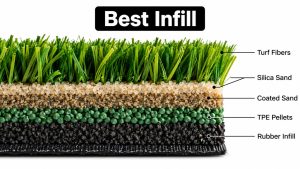
The drainage layer under turf isn't decoration. It's structure. Modern subsurface systems use geocomposite cores with specified compressive strength and flow rates up to 2.0 L/s·m, and those systems are important under artificial turf because they preserve void space under load, help prevent clogging, and support long-term performance (W. R. Meadows MEL-DRAIN).

What the base has to do
A proper turf build needs more than a nice top layer. The sub-base has to move water away without collapsing under foot traffic, pets, or outdoor furniture. That's especially important in Austin, where a heavy rain can expose weak prep work fast.
Here's what a drainage-aware turf install protects:
- Odor control. Water and waste don't linger in one wet pocket.
- Turf lifespan. The surface stays supported instead of sagging.
- Hygiene. The yard dries faster and stays cleaner under everyday use.
- Appearance. Better drainage helps avoid mildew, uneven settling, and dull spots.
- Sub-base integrity. The aggregate layer stays stable instead of washing out.
For homeowners considering turf, Modern Yard Landscapes' artificial turf drainage systems page is a practical place to start. This is one of those jobs where the visible product gets all the attention, but the drainage work underneath is what determines whether the installation still looks good years later.
If the base can't drain, the turf is only hiding the problem.
That's especially true for pet areas. A good turf system should handle rinse water, stormwater, and everyday use without turning the run into a wet, smelly corner of the yard.
Should You DIY or Hire a Drainage Professional
Some fixes are absolutely DIY-friendly. Cleaning gutters, extending downspouts, and clearing debris from grates are sensible first steps, and they often reduce overflow at the source. If the issue is simple and obvious, start there.
The line gets crossed when the work changes the ground itself. Grading, trenching, tying into a storm outlet, or redesigning runoff paths can create bigger problems if the slope is wrong or the discharge point can't accept flow. A failed DIY drain can waste money, reroute water into a neighbor's yard, or push moisture closer to your foundation.
Use risk as your filter
Ask yourself three things before you dig:
- Does the water come from one obvious source? If not, the problem may be site-wide.
- Is the fix only surface-level? If grading is involved, precision matters.
- Will the water have a reliable outlet? A drain without a discharge plan is just a buried problem.
Practical rule: if you can't explain where the water starts, where it travels, and where it ends, the job is too big for a guess.
Professionals bring the equipment and judgment to match slope, pipe size, cleanout access, and outlet capacity to the actual conditions on site. That matters in Austin because clay soils and intense rainfall punish systems that are only partly right. The cheapest fix can turn expensive fast if it has to be dug up twice.
This is also where serviceability matters. Recent drainage guidance has shifted toward cleanouts, inspection access, and water testing before backfill, because a system that can be checked later is easier to keep working. That's the kind of detail homeowners usually don't want to learn after the yard fails again.
Take Back Your Yard from Water Damage
A soggy yard doesn't mean you're stuck with a soggy yard. Once you know where the water is coming from, which parts of the property are failing, and whether the problem is surface runoff, subsurface saturation, or hardscape overflow, the fix gets much clearer. In Austin, the right answer usually comes from combining grading, drainage capture, and a discharge plan that fits the soil.
A permanent solution should protect the lawn, the patio, the foundation, and any turf or pet area you're investing in. That takes local experience, not a one-size-fits-all drain kit. It also takes a team that's honest about what will work and what won't.
Modern Yard Landscapes designs drainage that fits Austin clay, sudden rain, and the way your property sheds water. If you're ready to stop fighting puddles and get a real plan for your yard, visit Modern Yard Landscapes and schedule a consultation.