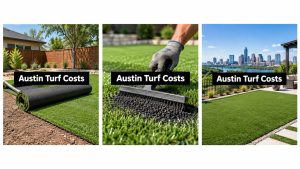

Most Austin artificial grass installations fall between $8 and $18 per square foot fully installed in 2026, with most homeowners landing around $10 to $14. That number only makes sense once you see what's inside it, from excavation and base work to drainage, edging, infill, turf, and labor.
You've probably seen a tempting online price, measured your yard, and multiplied the two numbers. That's a useful starting exercise, but it isn't a quote. A 500-square-foot backyard with stable soil and easy access can cost less than a smaller pet run that needs sanitation drainage, while a putting green can cost more than a standard lawn of the same size.
A trustworthy estimate shows the work in the order it gets built. It separates preparation from materials, identifies optional upgrades, and explains why Central Texas soil and stormwater conditions affect the final price.
What Artificial Grass Actually Costs in Austin Right Now
The phrase artificial grass Austin cost usually hides three different questions:
- How much turf will the project need?
- What condition is the existing site in?
- What performance does the finished space need?
The first question gives you square footage. The other two determine your invoice.
A straightforward backyard conversion may need grass removal, shallow excavation, aggregate base, compaction, turf installation, infill, and perimeter fastening. A difficult Austin lot may also need root removal, deeper excavation, drainage tile, extra aggregate, concrete demolition, or access planning. Both jobs can be described as “artificial grass installation,” but they aren't remotely equal projects.
Use square footage as a starting point
A 500-square-foot backyard at the broad installed range would produce a very different total than a 1,200-square-foot yard, even before site conditions enter the discussion. A 200-square-foot pet run may have less turf but require a sanitation layer, antimicrobial infill, and more detailed drainage work.
That's why I don't recommend choosing an installer from a single advertised rate. Ask what the rate includes. If excavation, haul-off, base depth, drainage, edging, or infill are missing, the low number is only postponing the true conversation.
Four decisions control the price
Your estimate will move most when you change:
- Site preparation, including demolition, excavation, haul-off, and subgrade correction.
- Drainage, especially where clay soil, slopes, or concentrated roof runoff affect the area.
- Edge and infill systems, which influence stability, appearance, odor control, and maintenance.
- Specialty features, such as putting-green shaping, fringe, cooling materials, antimicrobial infill, or pet-run layers.
A useful quote makes those decisions visible. It also compares the installed cost with the operating expenses you may avoid, including irrigation demand, mowing, fertilizer, and seasonal lawn repairs.
Austin Water reports that landscape irrigation can raise daily city water demand by approximately 50% to 60% in August compared with January, even in a relatively wet year such as 2015. Environment Texas separately reports that lawn watering accounts for 32% of Austin's water use, while total city consumption rises 49% during summer. Those figures explain why local homeowners evaluate turf as a water-management investment, but they don't create a universal payback period. Your lawn size, irrigation habits, rates, rainfall, and installation design still control the result. Read the city's Austin landscape irrigation and conservation documentation before treating water savings as guaranteed return.
The Line Items That Move Your Quote
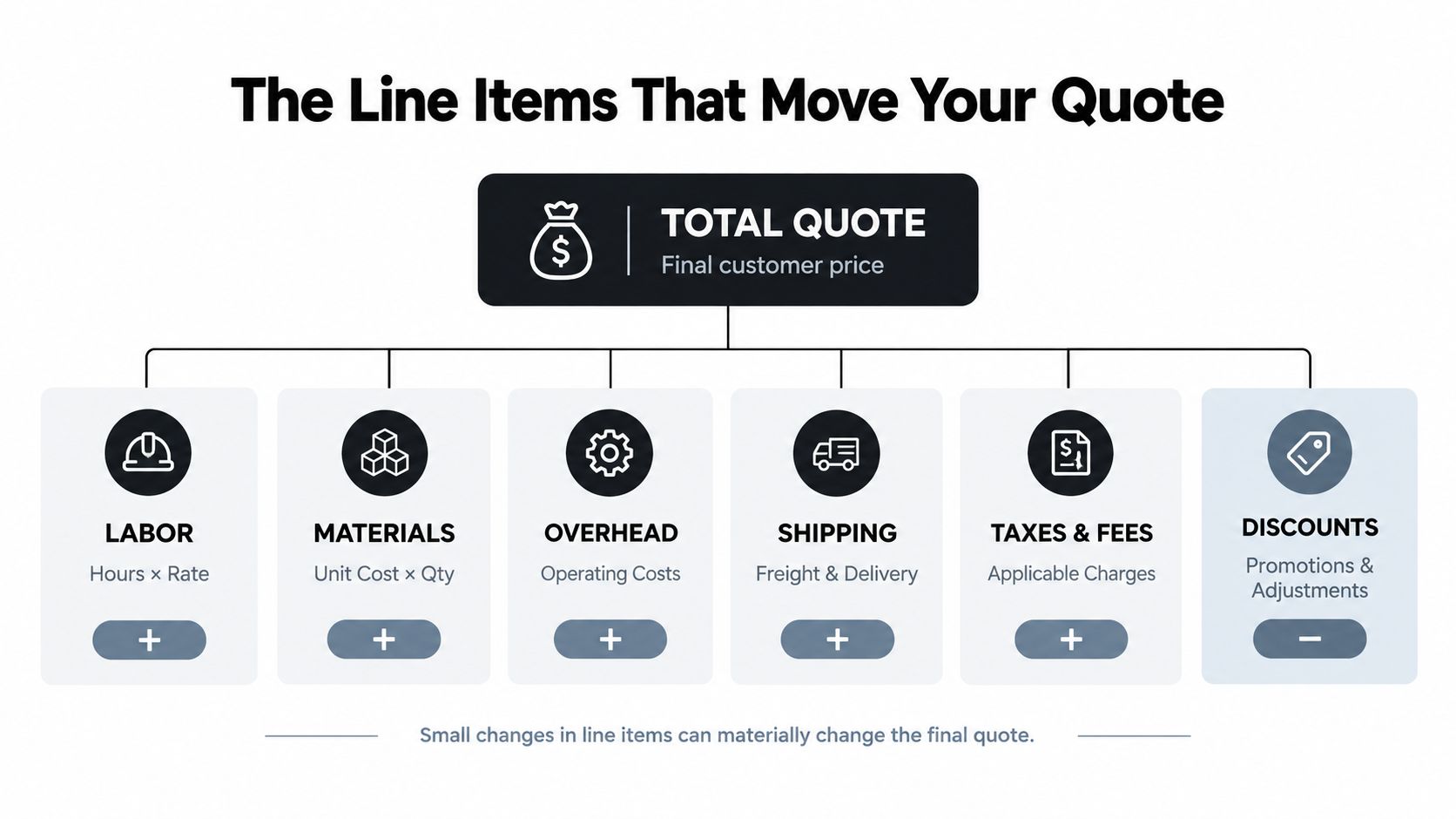
A real estimate starts with the ground, not the turf roll. The installer must determine what gets removed, how far the excavation goes, whether the subgrade drains, and what edge will hold the system in place.
The construction layers
| Cost Driver | Low End | High End | What Pushes It Up |
|---|---|---|---|
| Grass removal and haul-off | $1.00 per sq. ft. | $3.00 per sq. ft. | Thick sod, roots, concrete, restricted access |
| Excavation and subgrade work | $1.00 per sq. ft. | $3.00 per sq. ft. | Clay, unstable soil, deeper cut, difficult haul-off |
| Aggregate base and compaction | $1.00 per sq. ft. | $3.00 per sq. ft. | More depth, delivery access, multiple compaction passes |
| Drainage correction | $1.00 per sq. ft. | $3.00 per sq. ft. | Ponding, slopes, drainage tile, concentrated runoff |
| Turf material | $2.00 per sq. ft. | $6.00 per sq. ft. | Fiber height, denier, face weight, UV resistance |
| Infill | $0.50 per sq. ft. | $2.00 per sq. ft. | Antimicrobial or cooling infill, application quantity |
| Edging and perimeter fastening | $0.50 per sq. ft. | $2.00 per sq. ft. | Steel edging, curves, retaining-wall interfaces |
| Seaming and installation labor | $1.00 per sq. ft. | $4.00 per sq. ft. | Multiple cuts, patterns, seams, obstacles |
These are planning ranges, not a promise of a final price. A line-item review such as this guide to site preparation cost helps explain why preparation can rival the visible turf material.
What each row means
Demolition and excavation cover the old lawn, roots, debris, and the soil removed to create room for a stable base. Austin clay can hold water and move as moisture conditions change, so an installer who skips proper subgrade work may leave you with settlement or ponding.
Base aggregate creates the firm, shaped platform beneath the turf. The crew should spread it in controlled lifts, wet it where appropriate, and compact it thoroughly rather than dumping material and rolling over it once.
Drainage isn't a decorative upgrade. Turf is permeable, but water still needs a path through the surface, base, and surrounding grade. Blocked discharge, downspouts, slopes, and clay soil can require drainage tile or additional design work.
Turf material varies by fiber height, denier, face weight, color blend, and UV resistance. A premium fiber may make sense in a visible front yard or heavy-use area, while a simpler product may suit a low-traffic side yard.
Infill supports the blades and affects feel, resilience, heat management, and pet use. Standard infill, antimicrobial infill, and cooling infill should appear as separate choices, not unexplained substitutions.
Edging and seams determine how cleanly the installation finishes around beds, concrete, fences, and walls. Steel edging, bender board, and pressure-treated nailers each solve different perimeter problems.
Practical rule: If a quote has one line called “materials and labor,” ask the installer to separate preparation, base, drainage, turf, infill, edging, and labor before you compare it with another bid.
Pet-run sanitation layers, putting-green cup sets, shaping, fringe, antimicrobial materials, and cooling technology are opt-in line items. A suspiciously cheap estimate often leaves one of those construction decisions unpriced rather than eliminating the work.
Sample Quotes by Project Type
Square footage becomes useful when you pair it with the kind of space you're building. The following planning examples use the $8 to $18 per-square-foot installed range and show how scope changes the total. They aren't bids, and they shouldn't replace a measured site visit.
Small backyard refresh
A 400-square-foot backyard with easy access, modest demolition, stable grading, and a standard residential turf product may land around $3,200 to $7,200. The low end assumes uncomplicated removal and drainage. The high end usually reflects more excavation, additional base, difficult cuts around existing landscaping, or a higher-grade fiber.
The total can rise quickly if the crew must carry aggregate through the house, remove concrete borders, or correct a low spot near the foundation. Those conditions affect labor and preparation more than the turf itself.
Family yard
A 1,000-square-foot family lawn may plan around $8,000 to $18,000. A simple rectangle with broad access and limited obstacles should sit closer to the lower side. Curved beds, tree roots, multiple seams, drainage corrections, and premium fibers push the project upward.
For this type of yard, ask whether the quote includes full haul-off, the stated base depth, perimeter fastening, infill application, and final cleanup. Those details determine whether two apparently similar bids cover the same work.
Pet run
A 200-square-foot pet run may plan around $1,600 to $3,600 before unusually difficult preparation. The turf area is small, but pet use changes the specification. Antimicrobial infill, a sanitation sub-layer, proper slope, and a drainage path can matter more than choosing the lowest turf price.
A pet quote should identify how waste is rinsed through the system, where water exits, and whether the surrounding grade sends runoff into the run. A green surface without a sanitation plan isn't a complete pet installation.
Backyard putting green
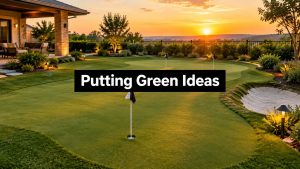
A 350-square-foot putting green may plan around $2,800 to $6,300 as a broad starting range, with custom shaping and specialty construction potentially pushing the scope higher. The same area costs more than a basic lawn because the crew must shape the sub-base, install cups, use shorter-pile putting turf, and build fringe transitions.
A putting green is a shaped performance surface, not a small lawn. Price it by contours, cups, fringe, and finish quality, not by turf area alone.
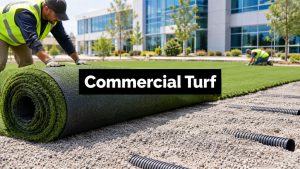
Commercial patches, entrances, and small business courtyards can behave differently again. Delivery access, public use, safety around walkways, and after-hours labor may affect the estimate even when the square footage looks simple.
Why Austin's Climate Changes the Math
Austin's conditions punish shortcuts below the surface. The finished turf may look perfect on installation day, but the base, grade, and drainage determine how it behaves after heavy rain, heat, and regular use.
Clay, heat, and stormwater
Central Texas clay can require deeper excavation and a more carefully engineered base than loose, freely draining soil. Roots, expansive soil, slopes, and existing irrigation lines can also change the preparation plan. A competent installer checks subgrade stability and finished-surface slope before recommending materials.
Summer heat affects product selection and user comfort. UV-resistant fibers matter for long-term color retention, while cooling infill can be considered where people or pets spend substantial time on exposed turf. This overview of heat-resistant artificial turf is useful when comparing performance features, but don't treat a cooling claim as a substitute for shade, airflow, and sound drainage design.
Stormwater deserves its own line in the estimate. Turf is permeable, not waterproof, so water must pass through the surface and base and discharge safely. Downspouts, roof runoff, retaining walls, blocked outlets, and low points may require drainage tile or a permeable sub-base.
Water rates and rebate reality
Austin's current published residential volume charges rise from $3.27 per 1,000 gallons in the lowest tier to $20.40 per 1,000 gallons above 20,000 gallons. The proposed schedule for October 1, 2026 raises those corresponding charges to $3.57 and $22.21, respectively, according to Austin Water's published rate schedule. That tier structure creates a nonlinear payback effect when a heavily irrigated lawn moves out of higher marginal tiers.
Model your own irrigation consumption rather than multiplying lot size by a national assumption. Include avoided mowing, fertilizer, and seasonal repair costs, then subtract turf maintenance, infill replenishment, repairs, drainage work, and eventual replacement.
Don't budget against a city rebate unless the program explicitly covers your selected yard type. Austin Water's WaterWise Landscape Rebate pays $100 per 100 square feet, capped at $3,000 per property, for approved water-efficient yards, but artificial turf isn't eligible under the program. The WaterWise rebate FAQs spell out that distinction.
How to Read an Austin Quote Without Getting Burned
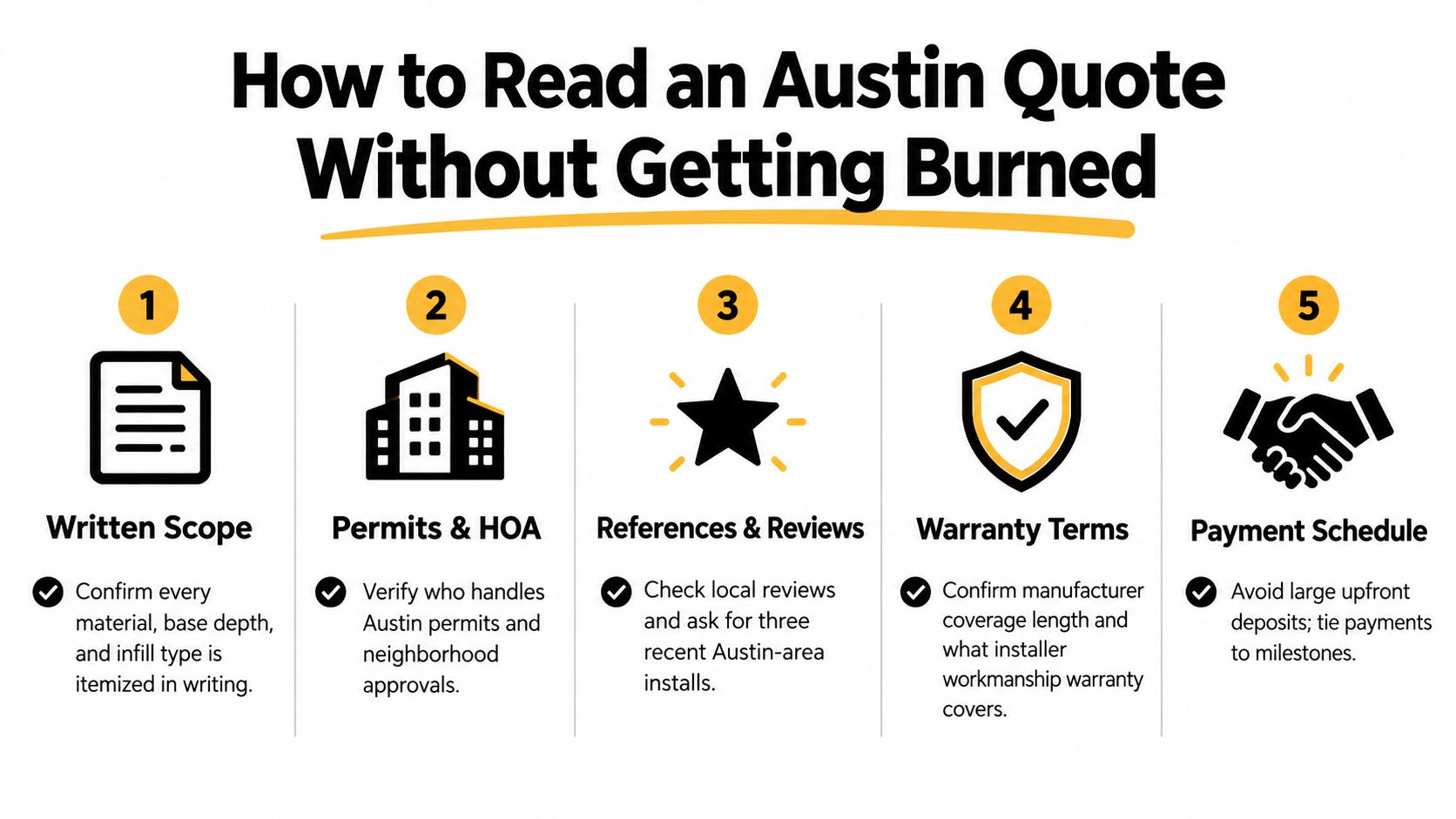
The safest quote is the one that lets you understand what happens before, during, and after installation. If the installer can't explain the base, drainage, infill, and edge system in plain language, you don't have enough information to approve the work.
The Texas Attorney General recommends choosing a contractor with an established physical address, getting multiple written bids, requesting detailed descriptions, checking references, and verifying claims about benefits such as energy savings or increased home value. The Texas Attorney General's home-improvement guidance turns those principles into a practical screening process.
Bring this checklist to the appointment
- Verify the business location: Confirm the installer has an established physical address and reachable contact information.
- Require a measured visit: Satellite measurements can miss grade changes, access limits, roots, drains, and retaining-wall interfaces.
- Demand an itemized bid: Look for square footage, demolition, haul-off, excavation, base depth, compaction, drainage, turf, infill, edging, seams, labor, and cleanup.
- Ask for comparable references: A front-yard renovation isn't the same as a pet run or putting green. Request recent Austin-area work with similar use.
- Test every savings claim: Ask how the installer calculated water or maintenance savings, and don't accept unsupported property-value promises.
- Clarify warranty terms: Separate manufacturer turf coverage from installer workmanship coverage, and ask what exclusions apply.
- Confirm rebate language: If someone promises a city rebate, ask for the exact program name and eligibility rules.
A quote that ignores drainage is incomplete. So is one that lists “premium infill” without identifying the type or application quantity, or one that buries demolition and haul-off inside a vague allowance.

Reviews deserve the same scrutiny as estimates. The Federal Trade Commission's Consumer Reviews and Testimonials Rule took effect on October 21, 2024, and courts can impose civil penalties for knowing violations involving deceptive reviews or testimonials. Use authentic reviews, ask whether an incentive was provided, and compare them with verifiable local references. If you're also planning broader planting work, you can browse East Texas native species for ideas, but keep the turf contractor's scope and qualifications separate from unrelated landscaping recommendations.
Lifecycle Cost, Warranty, and Long-Term Value
Turf isn't maintenance-free, and a responsible estimate shouldn't pretend it is. You may still need to remove debris, rinse pet areas, brush high-traffic fibers, inspect seams and edges, and replenish infill when the surface needs it.
The financial comparison should include the costs you stop paying for natural grass, such as irrigation demand, mowing, fertilizer, equipment, and patch repairs. It should also include the costs you continue paying after installation, including cleaning, minor repairs, drainage maintenance, and eventual replacement.
Material choices affect the ownership experience
UV-resistant, high-denier fiber is a sensible choice for exposed or heavily used areas. Commercial-grade steel edging can provide a stronger perimeter where foot traffic, mowing transitions, or repeated activity put stress on the edge. Antimicrobial infill can make sense in a dedicated pet area, while cooling infill is a site-specific comfort decision.
Warranty language matters just as much as the product specification. Ask how the manufacturer's coverage applies to fading, fiber failure, seams, and installation defects. Then ask what the installer's workmanship warranty covers, who performs repairs, and which maintenance actions are required to keep coverage valid.
This artificial grass durability resource can help you think about material and installation quality as connected decisions. A high-grade turf installed over a poorly compacted or poorly drained base is still a weak investment.
The cheapest installation is rarely the lowest ownership cost if it fails at the base, edge, seam, or drainage layer.
The right way to establish value is a measured on-site estimate. Modern Yard Landscapes provides residential and commercial turf installation, pet-friendly dog runs, custom putting greens, drainage work, and detailed project quotes in the Austin area. Compare that scope with other written bids, then choose the contractor who makes the assumptions visible.
Austin Artificial Grass FAQs
Does artificial turf qualify for Austin's WaterWise rebate?
No. Austin Water's WaterWise Rebate pays $100 per 100 square feet, up to $3,000 per property, for approved water-efficient conversions, and artificial turf isn't an eligible conversion under the program. Confirm current eligibility before buying materials, because the application process requires approval and documentation before qualifying work begins.
Does a residential installation need a permit?
Permit requirements depend on the project scope, property conditions, drainage work, structures, and local rules. Ask the installer to identify any permit or HOA issue in writing rather than assuming every lawn conversion follows the same process.
How long does the project take?
The timeline depends on area size, demolition, access, drainage corrections, material availability, weather, and specialty details. A measured consultation should give you a project sequence covering preparation, installation, finishing, and any needed cure or settling period.
Why does a pet run cost differently?
Pet runs may need antimicrobial infill, a sanitation layer, carefully planned slope, and a drainage outlet. Price the sanitation system and drainage design separately from ordinary lawn turf so you know what you're buying.
Will an HOA approve artificial grass?
HOA rules vary. Before signing, check material, color, visibility, edging, drainage, and approval requirements, then give the association a clear product sample and site plan if requested.
Modern Yard Landscapes provides measured, line-item artificial turf estimates for Austin yards, pet runs, commercial spaces, putting greens, drainage systems, and related outdoor work. Visit Modern Yard Landscapes to review the service options and schedule an on-site consultation based on your actual soil, access, drainage, and design needs.