
You step outside after a hard Austin rain, and the yard is a mess. Water is sitting along the fence line, the grass squishes under your shoes, and the area near the foundation looks like it wants to become a pond. The dog tracks mud inside. The kids can't use the yard. You start wondering if this is just how your property is, or if something is wrong.
Something is wrong.
A wet yard after a storm isn't just annoying. It usually points to a drainage issue you can diagnose and fix if you stop guessing and start reading the site the right way. Some yards need a simple correction. Others need a real drainage system. The key is knowing which problem you have before you spend money on the wrong fix.
Your Guide to a Dry and Usable Austin Yard
Austin homeowners usually hit the same wall. They try one small fix, maybe a splash block, maybe a bag of gravel, maybe a trench they dug on a Saturday, and the yard still floods the next time it rains. That happens because drainage problems don't start with the puddle. They start with the cause behind the puddle.
A yard can hold water for a few very different reasons. The grade may be wrong. Roof runoff may be dumping in the same spot every storm. Clay-heavy soil may be slowing infiltration. Water may even be entering from a neighboring uphill property. If you don't identify the source, you can spend a lot of time and money treating the symptom.
That's why I always tell homeowners to think in this order:
- Find where the water starts
- Track where it wants to go
- Decide whether to redirect, absorb, or collect it
- Choose the least invasive fix that will hold up
If you want a deeper look at professional yard drainage system installation, take a look at this guide on yard drainage system installation.
Practical rule: If water sits near your house after the storm has passed, treat that as a foundation issue first and a landscape issue second.
A dry yard isn't just about avoiding mud. It gives you usable outdoor space, protects hardscapes and foundations, and creates the base for a yard design that stays attractive instead of turning into a recurring repair project. That's the mindset that leads to permanent fixes.
First Find the Why Behind Your Wet Yard
You walk outside the morning after a hard Austin rain, and the same corner is under water again. The turf is slick, the fence line is muddy, and the area by the house still feels soft under your shoes. That is the moment to diagnose the problem before you buy pipe, gravel, or a drain basin that does not match the root cause.

Good drainage decisions start with three questions. Where is the water coming from. Where does it stall. What is stopping it from leaving. If you answer those clearly, you can choose a fix that fits your soil, grade, and budget instead of throwing money at symptoms.
Read the clues before the ground dries out
Inspect the yard as soon as the storm passes. Wet ground shows you more in ten minutes than a dry yard will show you all week.
Look for patterns like these:
- Water hugging the house usually points to bad grading near the slab.
- One soaked area under a downspout points to concentrated roof runoff.
- A broad, spongy yard usually means clay soil, compaction, or both.
- A wet back edge or fence line often means runoff is entering from a neighboring lot.
- Channels cut through mulch or bare soil show the route water already wants to take.
Those clues tell you which category you are dealing with. That matters because each problem calls for a different first move. A grading issue needs reshaping. A runoff issue needs collection and redirection. Slow-draining soil needs a system that works with Austin clay instead of pretending it drains like sand.
If you want to see what a contractor checks during an on-site evaluation, our guide to yard grading and drainage services in Austin lays out the main problem areas clearly.
Check the roofline before you touch the yard
A lot of flooding starts at the gutters, not in the soil. During a heavy storm, the roof can dump a surprising amount of water into one small area. If a downspout ends beside the house or empties into a bed that stays saturated, the ground below never has a fair shot.
A simple way to understand that connection is this article on the benefits of residential gutters. It explains why roof drainage and yard drainage have to be planned together.
Water beside the foundation is a priority problem. Handle that first.
Decide whether the water is generated on your lot or entering from somewhere else
Homeowners miss this all the time. They focus on the puddle they can see and ignore the source they cannot control from the middle of the yard.
If your property sits lower than the one behind it, or if runoff is pouring in from a side yard, alley, or shared fence line, your solution changes. You are no longer just trying to improve absorption. You need to intercept water at the edge, guide it through the yard, or collect it before it spreads. That usually means swales, catch basins, area drains, or a properly designed French drain system. For imported runoff or water threatening the house, call a pro. That is where grade math and outlet planning matter, and guessing gets expensive.
Use a simple decision framework
Here is the fastest way to narrow the problem:
| What you see | Likely cause | Best first step |
|---|---|---|
| Water sits near the slab | Poor slope near the house | Regrade the first several feet away from the home |
| One area floods during roof runoff | Downspout discharge is concentrated | Extend, redirect, or tie the downspout into drainage |
| Yard stays soft for days | Clay soil or compaction | Improve surface flow and add drainage that does not rely on fast infiltration |
| Water enters from the edge of the property | Imported runoff | Intercept it at the boundary and route it to a safe outlet |
That framework helps you choose the least invasive fix that still solves the actual problem. It also protects your budget. If the issue is mild, you may be able to handle it yourself with grading touch-ups or downspout corrections. If the yard has multiple low spots, standing water near the house, or runoff coming in from another property, bring in an expert and get it solved correctly the first time.
That is also how you protect the long-term value of the yard you want. Synthetic turf, clean edging, usable patios, and low-maintenance planting zones all perform better when drainage is handled first. Dry ground is not the finishing touch. It is the foundation for an outdoor space that stays clean, usable, and worth the investment.
Quick Fixes and Common Landscaping Mistakes
Start with the cheap mistakes before you start digging.
A lot of Austin drainage problems come from concentrated roof runoff, clogged flow paths, and finish materials placed in the wrong spot. If you correct those first, you can tell whether you need a simple cleanup, a weekend project, or a buried system like a drain tile system installation that gives you a permanent outlet.
Start with the easy wins
Handle the obvious troublemakers first:
- Clean gutters and downspout exits. When roof water backs up, it spills right beside the house and overloads one area.
- Add or reset downspout extenders. Push water farther from the slab and away from beds that stay wet.
- Break up compacted soil in traffic zones. Hard ground sheds water fast and turns a small runoff issue into a muddy mess.
- Clear leaves, mulch, and sediment from swales and drain paths. Water cannot follow a shallow channel if debris blocks it.
These fixes matter because they help you diagnose the underlying problem. If water clears up after basic maintenance, great. If it does not, stop throwing small fixes at a bigger grade or drainage issue.
Stop making the house perimeter hold water
One of the most common yard mistakes is piling organic material tight against the house. Homeowners do it for a clean finished look. The result is often a damp strip that holds moisture where you want the area to dry out fastest.
PEMCO Insurance recommends using gravel or permeable hard surfaces near the foundation instead of bark mulch in areas prone to drainage problems. That is solid advice. Gravel dries faster, stays in place better during runoff, and does not keep the base of the house wet the way thick mulch can.
Bark mulch has its place. Right against the foundation is usually not it.
Common fixes that waste time and money
These are the moves I see all the time, and they rarely solve anything for long:
- Dumping soil into a low spot without checking slope. You may make the area look higher while the water still settles there.
- Spreading rock over soggy ground. Rock hides mud. The soil underneath stays saturated.
- Cutting trenches with no discharge point. Water only moves if you give it a place to go.
- Ignoring one bad downspout. One concentrated discharge point can create most of the mess in the yard.
- Adding finish materials before fixing drainage. Turf, pavers, and planting beds perform better when the ground below them drains correctly.
That last one matters if you want a yard that stays usable and low maintenance. Drainage is the base layer. Get that right first, then every improvement you add on top of it lasts longer and works better.
Effective DIY Drainage Projects for the Weekend
Some drainage work is absolutely realistic for a handy homeowner. The best DIY projects are shallow, visible, and easy to correct if you need to adjust them. If a project requires exact slope, buried collection, or major excavation near the house, that's where DIY gets risky.

Build a shallow swale that actually directs water
A swale is just a broad, shallow channel that moves surface water across the yard without looking like a ditch. It's one of the most homeowner-friendly drainage tools because it works with gravity and doesn't require complex parts.
Keep it simple:
- Mark the path where water already wants to travel.
- Shape a shallow, smooth channel rather than a narrow trench.
- Make sure the swale leads to a safe discharge area, not another problem zone.
- Stabilize it with turf, groundcover, or stone if water moves fast there.
A swale works best when you need to move surface water across open lawn without installing buried pipe.
Use a dry creek bed where runoff keeps cutting through
A dry creek bed is part drainage feature, part yard feature. It's especially useful in spots where stormwater repeatedly carves a path through mulch or bare soil.
This is the right DIY move when the runoff path is obvious and you want to control erosion while making the area look intentional. Shape the channel first, then line it with stone sized for the volume you're seeing. Don't just scatter decorative river rock on top of flat ground. Give the water a clear path and edge the sides so it stays in that path.
Install a rain garden in the right location
A rain garden is one of my favorite yard drainage solutions because it solves a problem and improves the outdoor environment at the same time. It's a shallow planted basin that collects runoff from roofs, driveways, or lawn areas and lets it soak into amended soil.
Research summarized by SERVPRO notes that rain gardens can absorb up to 90% of stormwater runoff during typical rainfall events and reduce local flooding by 35% to 50% in residential neighborhoods. You can read that in their article on rain gardens and flooded yard prevention.
A good rain garden isn't just a hole with plants. The same source describes a build approach that includes removing 3 feet of soil and replacing it with 1 foot of washed crushed stone and 2 feet of a 50% sand and 50% soil mix. That's what gives the feature real infiltration capacity instead of turning it into another soggy low spot.
Know where DIY should stop
DIY works best for visible runoff control. It stops making sense when the issue is persistent subsurface water, foundation-adjacent saturation, or a yard that needs a buried collection system with a dependable outlet.
If you're comparing options for more serious underground drainage, this overview of drain tile system installation helps show what changes when water has to be collected below grade rather than redirected on the surface.
A good weekend project should improve the yard. It shouldn't create a hidden failure you only discover in the next storm.
Permanent Drainage Solutions for Serious Water Issues
If your yard stays soggy for days after a storm, sends water toward the slab, or keeps failing no matter what you try on the surface, stop treating it like a simple yard chore. You need a permanent drainage plan based on three things. Where the water starts, how it moves across your property, and where it can safely discharge.
That decision matters in Austin. Clay-heavy soil drains slowly, many lots have subtle grade problems, and one bad outlet choice can turn an expensive install into a buried mistake. The right fix depends on whether you're dealing with subsurface saturation, runoff pouring off concrete, or a yard shape that directs water to the wrong place.

French drains work, but only when they're built correctly
A French drain is the right tool for underground water. It is not the right tool for every wet yard.
Commonwealth Insurance notes in its guide to how to prevent yard flooding with a French drain that a properly installed French drain can achieve a 95% reduction in subsurface flooding. The same article points to common failure points such as clogged pipe, missing filter fabric, and poor gravel layering. Those are installation errors, not bad luck.
That matters because a French drain has to do four jobs at once. Collect water below grade, keep soil out of the pipe, maintain enough pitch to move water, and discharge to a real outlet. Miss one of those, and the trench becomes a water trap.
Commonwealth Insurance also describes the basic build details. A perforated pipe buried 1 to 3 feet deep in a gravel-lined trench, using at least a 4-inch diameter pipe, 2-inch washed crushed stone, and a permeable geotextile wrap. That is why I tell Austin homeowners to treat French drains as a design problem first and a digging job second.
If you want to understand the process before hiring it out, this walkthrough on how homeowners can install french drains is a useful background read. Use it to learn the parts and the process. Do not use it as permission to guess on slope, outlet location, or trench depth near your foundation.
A French drain without a dependable outlet fails sooner or later.
Regrading fixes the cause
If water is flowing toward the house or sitting in broad, shallow low spots, regrading is usually the best long-term answer. It changes the shape of the yard so water leaves instead of collecting.
Choose regrading when you see these conditions:
- The slab edge stays wet after normal rain
- Runoff crosses patios or walkways toward the house
- The wet area is wide and shallow, not a small isolated dip
- Past patch jobs improved nothing
This is not a rake-and-topsoil project. Regrading affects drainage patterns, fence lines, irrigation heads, paved edges, and finish elevations across the yard. Done right, it also sets up every later improvement. New sod, planting beds, hardscape, and synthetic turf all perform better when the grade is corrected first.
Other pro-level systems that solve specific problems
Some properties need more than one system, and that is normal.
Use trench drains where water sheets across driveways, patios, or pool decks. Use drain tile systems when subsurface water is spread across a larger area and one collection line will not keep up. Use dry wells when you can collect the water but have limited discharge options. Use retaining walls with built-in drainage on sloped yards where erosion control and water management have to work together.
If you're comparing permanent fixes by yard condition, budget, and discharge options, this guide to professional drainage solutions for yards gives you a clear starting point.
Yard Drainage Solution Comparison
| Solution | Estimated Cost | Effectiveness | Best For |
|---|---|---|---|
| Regrading | Varies by site conditions, access, and soil movement required | High when poor slope is the root cause | Water moving toward the house or settling across broad areas |
| French drain | Varies by trench length, depth, outlet, and material choices | Very high for subsurface water when installed correctly | Saturated lawn edges, foundation-adjacent wet zones, hillside seepage |
| Trench drain | Varies by length, drain body, grate type, and tie-in requirements | High for fast surface runoff on hardscape | Driveways, patios, pool decks, walkways |
| Dry well or drain tile network | Varies by volume handled, excavation needs, and soil conditions | High when paired with the right collection method | Yards with limited discharge options or recurring imported runoff |
I did not put fake price ranges in that table for a reason. Any contractor who quotes drainage without checking slope, soil, outlet options, and access is guessing.
When to stop experimenting and bring in a pro
Call for professional help when:
- Water is reaching the foundation
- The same area keeps failing after DIY attempts
- Your lot collects runoff from a neighboring property
- You need buried pipe, a dry well, or grade changes
- You want a fix that holds up season after season
This is the point Austin homeowners need to hear clearly. Drainage is the base layer of a better yard. If you want a low-maintenance outdoor space that stays clean, stable, and usable, the water problem has to be solved first. Get the drainage right, and every finished improvement that comes after it performs better and lasts longer.
The Ultimate Solution Combining Drainage and Design
You get one of those hard Austin downpours at 6 p.m. By 6:20, the patio is slick, the dog has tracked mud into the house, and the back yard is useless again. At that point, another small drain or a quick patch job usually is not the answer. The better move is to fix the yard as a system, from the soil and base layers up, so water control, appearance, and upkeep all support each other.

Homeowners often split this into two projects. Drainage first, yard design later. That approach causes a lot of expensive rework. If the base is weak, the grade is wrong, or runoff has nowhere to go, the finished yard will not stay clean, stable, or easy to use.
The right decision depends on three things. First, what kind of water problem you have. Surface runoff, standing water, or constant soggy soil all call for different fixes. Second, what your site gives you. Austin clay soil, tight side yards, pool decks, and low spots near the house limit your options fast. Third, what result you want. If your goal is a low-maintenance outdoor space, your drainage plan should be built with that finished surface in mind from day one.
That is why we treat drainage as the foundation of the whole project, not an add-on.
Why finished yards fail without drainage planning
The surface gets the attention. The work happens underneath.
A yard can look great on install day and still fail in the first heavy storm. Base materials shift. Water sits against edging. Pavers settle. Grass thins out in wet spots. Turf can even underperform if the base and drainage path were never corrected. The visible problem shows up at the top, but the cause is usually below it.
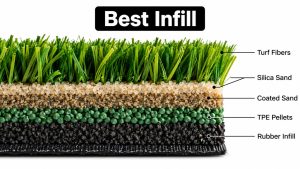
Synthetic turf is a good example. It does not fix flooding by itself. What it does give you is a smart opportunity to rebuild the yard correctly. You can correct pitch, improve the base, add collection or discharge where needed, and finish with a surface that stays cleaner and more usable after rain. For many Austin homeowners, that combination makes more sense than fixing drainage now and tearing the yard apart again later.
How to choose the right level of solution
Use a simple filter.
If the problem is minor and isolated, stick with a targeted fix. A small low spot, splash block issue, or short runoff path may only need grading, a swale, or a catch basin tied to the right outlet.
If the yard stays wet across multiple areas, skip the band-aids. You are likely dealing with poor grade, slow-draining soil, trapped runoff, or some combination of all three. That calls for a coordinated plan that handles collection, movement, and discharge together.
If you already want to upgrade the yard, combine the drainage work with the finished build. That is usually the smartest use of your money because the excavation, base prep, and surface installation can be planned as one job instead of paid for twice.
What smart homeowners should look for before hiring anyone
Drainage mistakes hide well until the next storm. Ask better questions before you hire.
Look for this:
- Clear pricing: You should know what is included, what site conditions could change the scope, and what happens if the crew finds a bigger problem once digging starts. Pipedrive explains why transparent pricing builds trust.
- Recent reviews: Check whether homeowners mention communication, cleanup, and results after real rain, not just right after install. AnswerConnect notes that online reviews strongly influence buying decisions.
- A site-specific plan: Good contractors explain why your yard needs a certain fix based on slope, soil, outlet options, and how you want to use the space.
- Honest guidance on DIY versus pro work: If a company tells you every problem needs a major install, keep looking.
You should feel informed, not cornered.
To prevent yard flooding and end up with a yard that stays useful, clean, and easier to maintain, stop treating drainage like a separate repair. Build the water plan first, then build the finished yard on top of that.
If your Austin yard stays soggy, don't keep guessing. Modern Yard Landscapes helps homeowners solve drainage problems with clear recommendations, transparent estimates, and outdoor solutions built for long-term performance. If you want a yard that's dry, usable, and designed right from the ground up, schedule an appointment and get a real plan for your property.