
You walk outside after a decent Austin rain, and the yard still squishes under your boots the next day. The dog tracks mud into the house. One side of the lawn looks like soup. The other side has patchy grass hanging on for dear life. Near the patio, water sits there long enough that you start wondering if the problem is the soil, the slope, or both.
That's the black gumbo experience. If you've lived in Austin long enough, you've seen it. When it's wet, it sticks to everything. When it dries, it turns hard and cracks. A lot of homeowners waste time on the wrong fix because they never get a clean diagnosis first.
That Soggy Yard Feeling Is All Too Familiar in Austin
You get one solid Austin storm, then spend the next two days stepping around standing water, scraping mud off shoes, and wondering why the yard still feels swampy while everything else has dried out. That usually points to clay doing what Austin clay always does. It holds water near the surface, turns slick fast, and makes a normal backyard feel unusable.

Why Austin yards struggle so much
I see the same pattern all over Austin. Blackland clay swells when wet, shrinks when dry, and gives homeowners two different headaches in the same yard. One area stays soggy and muddy. Another turns brick-hard and cracked.
That alone is bad enough. Then grading mistakes, foot traffic, mower traffic, and rushed builder-level soil prep make the drainage problem worse. Water does not disappear just because the grass got replaced. If the yard has poor slope or packed clay underneath, the puddles come right back.
If you want a plain-language explanation of how soil particle size affects drainage, Leaves & Soul's soil drainage guide is a useful reference.
What homeowners usually get wrong
Homeowners in Austin rarely fail because they ignore the problem. They fail because they start with the wrong fix.
They add sand. They rent an aerator for a weekend. They lay fresh sod over a low spot. They keep watering like the lawn is healthy, even though the soil is already holding too much moisture. None of that changes the reason the yard is staying wet.
The smart question is not, "What product should I buy?" The smart question is, "Is this surface compaction, a deeper clay barrier, bad grading, or all three?" If water cannot move across the yard or down through the soil, you need a diagnosis before you spend another dollar. That is exactly why homeowners dealing with repeat pooling usually need a real yard grading and drainage plan instead of another temporary patch.
A clear plan beats trial and error
Some clay drainage problems respond to soil work and better watering habits. Some need drains, regrading, or a full rebuild of the problem area. Some yards are so stubborn that the best long-term answer is to stop fighting for a natural lawn there and redesign the space around drainage, durability, and lower maintenance.
That decision gets easier once you identify what is failing in the soil.
How to Diagnose Your Clay Soil Drainage Problem
Don't start with aeration. Don't start with gravel. Don't start with a truckload of compost. Start with a test.
A lot of yards look equally wet from the surface, but they fail for different reasons. Some have surface compaction. Others have a deep hardpan or clay pan that stops water lower down. If you don't separate those two, you can spend a lot of money solving the wrong problem.
Run a simple perk test
Use this test exactly once in the problem area. It gives you a baseline you can trust.
- Dig the hole. Make it 12 inches deep and 12 inches in diameter.
- Fill it with water. Let that first filling soak in.
- Come back the next day and fill it again.
- Watch the drain time. All the water should drain out within eight hours. If drainage is less than 1 inch per hour, that points to poor drainage from compaction or high clay content, based on this soil drainage testing guide from Alluvial Soil Lab.
If you want a useful primer on why soil texture changes drainage behavior so much, Leaves & Soul's soil drainage guide does a good job explaining the relationship between particle size and water movement.
The goal isn't to prove your yard is bad. The goal is to stop guessing.
Surface compaction or deep hardpan
Here's the practical split that most homeowners never get from generic articles.
If the perk test shows slow drainage, grab a soil probe, digging bar, or even a sturdy shovel and check down to about 2 feet. The useful framework from this UC Master Gardeners article on compaction and drainage diagnosis is simple:
- If you hit resistance mostly near the top, you're probably dealing with topsoil compaction.
- If you hit a firm restrictive layer deeper down, you may have hardpan.
- If that hardpan is less than 2 feet thick, double digging may help.
- If it's over 2 feet thick, deeper ripping or drilling may be needed.
That's the decision point a lot of people miss.
What each diagnosis usually means
Compacted topsoil often shows up in lawns that get heavy foot traffic, repeated mowing on wet ground, or years of thin turf without organic matter.
Deep hardpan is more stubborn. You can improve the top layer and still create a bathtub effect where water enters the loosened zone but can't escape below.
If your issue looks larger than a single bed or low spot, professional site grading matters as much as the soil itself. A proper yard grading and drainage evaluation helps identify whether the water is being trapped by compaction, blocked by a subsurface layer, or directly flowing to the wrong part of the property.
Quick field clues
Use these signs as backup, not as a replacement for the test:
- Water pools after rain but grass roots are shallow. Often top compaction.
- You improve one area and it still stays wet. Often deeper restriction below.
- A single low zone takes runoff from the whole yard. Likely grading plus soil.
- Beds drain better than the lawn nearby. Foot traffic and turf compaction may be the bigger issue.
Diagnosis first. Fix second. That order saves time, labor, and money.
First-Step Fixes for Improving Soil Structure
If your Austin yard has surface compaction and not a deep hardpan problem, start with the soil itself. That's the right DIY lane.
You are trying to open pore space, add organic matter, and help water move through the top layer without turning the yard into a weekend science project. In Blackland Prairie clay, that takes repeated work and realistic expectations.
Stop adding sand
Sand is the wrong fix for sticky clay in a home lawn. In real yards, it usually makes the surface tighter, harder, and more frustrating to work with. Use compost instead. It feeds soil life, improves aggregation, and gives water and roots more room to move.
I've seen plenty of Austin homeowners spread sand because it sounds logical. Then the yard sets up like brick after the next dry spell. Skip that mistake.
Start with the fixes that match surface compaction
For a lawn, the best first move is core aeration followed by compost topdressing. Pull real plugs, not spike holes. Then spread a thin layer of finished compost so some of that material falls into the open channels and starts improving the top layer where the compaction lives.
For planting beds, work finished compost into the upper soil with a digging fork or shovel. Don't overwork wet clay. You'll smear the soil walls and make drainage worse.
A few other first-step moves help:
- Water thoroughly and less often. Clay absorbs water slowly. Frequent shallow watering keeps the surface soft and slick without improving root depth.
- Keep traffic off wet areas. Kids, pets, wheelbarrows, and mowers can re-compact clay fast.
- Use cover crops in open beds. Clover and other rooting plants help open the soil and return organic matter.
- Mulch exposed soil. Bare clay crusts over. Mulch reduces surface sealing and helps moisture stay more even.
Be patient, but not naive
Soil improvement in clay is slow. One aeration pass will not turn gumbo into loam.
What it will do is start a process. If the problem is limited to the upper layer, repeated aeration and compost over multiple seasons can make a real difference. If you improve the surface and the area still holds water after every decent rain, stop throwing amendments at it. The problem is probably bigger than soil texture alone.
That's the point where homeowners waste money. They keep buying bags of “clay breaker,” gypsum, sand blends, and miracle treatments when the yard needs a drainage plan. If you want a plain-language breakdown of that decision, this guide to fixing yard drainage problems lays out the next step clearly.
Use gypsum only if a soil test supports it
Gypsum gets oversold. It can help in some soils, but it is not a cure-all for Austin clay. If you have not tested the soil, don't broadcast gypsum and hope for a rescue. That is guessing.
The same rule applies to any bagged amendment with dramatic promises on the label. Good drainage comes from the right diagnosis first, then the right fix.
Give planting areas a practical shortcut
Raised beds are often the smartest workaround for vegetables, herbs, and ornamentals. They lift roots above the sticky native clay and give you immediate control over soil quality in the places that matter most. That will not solve a soggy lawn, but it can stop you from losing another season in your garden.
If part of the yard needs a place for runoff to go, not just better soil, you may also end up comparing drains, swales, and soakaway solutions for properties. That's separate from soil rehab. Don't mix those jobs up.
Here's the bottom line. DIY soil work makes sense when the issue is surface compaction, the wet area is limited, and you're willing to stay consistent. If your improvements keep failing, the yard is asking for more than compost and aeration.
When to Call the Pros for Permanent Drainage Solutions
You get one hard Austin rain, and the same part of the yard turns into soup again. Water sits by the fence. The side yard stays slick for days. The patio edge never fully dries out. At that point, stop treating the problem like stubborn soil. The yard needs a drainage system that moves water somewhere on purpose.
This is the point in the process where the diagnosis matters most. If your problem was only surface compaction, the first-step fixes usually help. If the yard still holds water after that work, or runoff is arriving from higher parts of the property, you are dealing with grade, outlet, or deep soil restriction. That calls for excavation, layout, and a real plan.
The tipping point
Bring in a pro when you see patterns like these:
- The wet area is collecting runoff from a wide section of the yard
- You improved the top layer, but the water still has nowhere to go
- The soil acts like deep hardpan instead of simple surface sealing
- Water is collecting near the foundation, patio, or walkways
- The shape of the yard is causing the problem more than the grass is
Those jobs usually call for French drains, dry wells, swales, or a combination of the three.

What each system does
French drains collect subsurface water and carry it away through perforated pipe set in gravel. In Austin, they are often the right answer for side yards, fence lines, and soggy strips near structures where clay stays saturated.
Dry wells hold runoff underground and release it slowly into surrounding soil. They fit spots where water needs a collection point before it can disperse. If you want a plain-language overview of that approach, these soakaway solutions for properties show how subsurface collection systems are used to manage runoff.
Swales guide surface water across the yard with shaping instead of pipe. They work best in open areas where the main issue is contour and flow path, not trapped water below grade.
French drains fail when the layout is wrong
A French drain is a grading job first and a trench job second. If it is too shallow, too flat, or missing a proper outlet, it will disappoint you fast.
In heavy clay, I want to see deliberate slope, enough depth to intercept the wet zone, and a discharge point that can accept water during a storm. Alluvial guidance notes that French drains need a gradual slope and a good outlet at the foot of the drain. That matches what we see on Austin properties every season. A trench can look clean from the top and still fail because the bottom was laid wrong.
A drainage system is only as good as its outlet. If the water has nowhere to discharge, the trench becomes an expensive gravel strip.
Comparing Drainage Solutions
| Solution | Best For | Typical Cost | Permanence |
|---|---|---|---|
| French drain | Subsurface water near foundations, fences, side yards, or persistent soggy bands | Varies by trench length, access, outlet path, and site conditions | High when properly graded and discharged |
| Dry well | Localized runoff collection where water needs underground storage and slow dispersal | Varies by excavation needs, chamber type, and soil conditions | Moderate to high when correctly sized and paired with good inflow |
| Swale | Surface water moving across open yard areas or slopes | Varies by shaping, planting, and length of run | High when the grading pattern fits the site |
I'm keeping the cost column broad on purpose. Real drainage pricing depends on access, digging conditions, existing hardscape, spoil removal, and where the water can legally and safely go. Flat-rate quotes on drainage work usually mean somebody is guessing.
DIY versus professional work
Here's the simple decision guide. DIY makes sense when the issue is small, shallow, and limited to the surface. Call a pro when water threatens structures, keeps returning after basic soil improvements, or clearly needs an exit path below ground.
That line matters in Austin clay. Homeowners can handle mulch, compost, aeration, and raised beds. Trench systems, grade correction, outlet elevation, and drainage around foundations need trained eyes and the right equipment. If your yard has reached that stage, a yard drainage system installation assessment is the smart next move. It gives you a site-specific fix instead of another round of trial and error.
Reclaiming Your Yard with Turf and Landscape Design
Once the drainage issue is handled underneath, the surface finally becomes fun to plan. A lot of Austin homeowners then make a smart pivot. Instead of fighting to maintain a traditional lawn on heavy clay year after year, they build a yard that stays usable, clean, and attractive in every season.
That's why the finish surface matters almost as much as the drainage solution below it.
Natural grass can work, but it asks more from you
A natural lawn on improved clay can do fine if drainage is corrected and the soil structure keeps getting attention. But it still needs the usual cycle of mowing, watering discipline, aeration, and repair in stressed areas. In Austin heat, that can become a lot of effort for a result that still isn't reliable in wet spots.
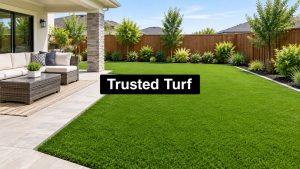
Artificial turf changes that equation. It doesn't fix hidden drainage by itself, but it becomes a strong final layer when the base is built properly.

Why turf makes sense after drainage correction
The biggest benefit isn't just the green look. It's the mud-free use of the yard.
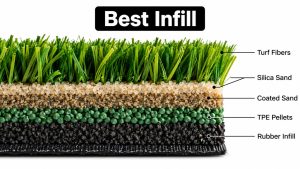
A properly installed turf system uses a prepared, permeable base and deliberate grading. That means:
- No churned-up mud after rain or irrigation
- No bare patches in dog runs or high-traffic areas
- No waiting for grass recovery after heat stress or puddling
- A more predictable surface for kids, pets, and entertaining
For homeowners tired of black clay smearing across patios and indoor floors, that matters more than lawn tradition.
Design solves what patchwork fixes don't
Some properties don't just need drainage. They need shape.
Retaining walls can help carve level space out of a sloped or awkward yard. Beds can intercept runoff visually and functionally. Pathways can direct foot traffic away from soft zones. Turf can cover the most used areas while planting zones handle the edges.
That kind of layout works better than trying to force every square foot to behave like a perfect lawn. It also gives the yard a cleaner purpose. One zone for play. One for seating. One for planting. One for drainage movement that doesn't advertise itself.
The best yard isn't the one with the most grass. It's the one you can actually use after it rains.
The long-term view
If you've spent years re-sodding, patching, or fighting the same soggy corner, it's worth asking a blunt question. Do you want to keep maintaining a problem, or do you want to replace it with a system that behaves better?
That's why artificial turf deserves a serious look in Austin. Not as a gimmick. As a practical end point for homeowners who want cleaner drainage outcomes and less maintenance drama.
Clay soil drainage improvement doesn't have to end with a slightly better lawn. It can end with a surface that works year-round.
Your Next Step Toward a Puddle-Free Yard
Most Austin homeowners don't need more random advice from forums. They need a dependable way to decide what kind of drainage problem they have and what level of fix it calls for.
If your yard has mild surface compaction, the first moves are straightforward. Test the drainage. Improve the soil with compost. Aerate properly. Be patient and repeat the process. That's the right path when the problem is manageable and contained.
When it's time to stop experimenting
If the perk test is poor, probing suggests a deeper restrictive layer, or the whole yard seems to funnel water into one ugly area, don't keep throwing labor at a structural problem. That's how homeowners lose weekends and still end up with mud.
A permanent fix usually comes from one or more of these: corrected grading, a drain system with a real outlet, reshaped ground contours, retaining structures where needed, and a surface finish that doesn't turn into a mess after rain.
Why getting expert eyes on the site matters
Drainage mistakes don't always show up on install day. They show up later, when the next storm hits and the water stalls in a trench, backs toward the house, or resurfaces in the same low spot.
That's why a site-specific review matters. A crew that understands Austin clay, runoff behavior, trench depth, slope, and finish materials can see failure points early. Homeowners usually can't be expected to read those clues from the surface.
If your issue points toward subsurface drainage or collection, a drain tile system installation consultation can help you understand what belongs underground and what belongs on top.

The low-pressure next move
You don't need to commit to a giant project to get clarity. You just need a real evaluation from people who know what Austin gumbo does when it gets saturated, compacted, or boxed in by bad grading.
That kind of guidance builds trust because it starts with the property you have, not with a canned answer. Homeowners are more likely to move forward when a company shows real values through competent, value-aligned actions, not just sales language, as noted in this client trust article from Appointment.com.
A good appointment should leave you with a clear diagnosis, honest options, and a practical recommendation. That's what makes picking up the phone feel less like a risk and more like relief.
If you're done dealing with muddy grass, standing water, and the same drainage headache after every storm, talk with Modern Yard Landscapes. They handle the full picture for Austin properties, from drainage correction and grading to retaining walls and artificial turf, so you can get a yard that drains properly and stays usable. Schedule an appointment and get a clear plan for your property, without the guesswork.