
You're probably looking at the same backyard problem every Austin homeowner knows. The lawn looked acceptable when you moved in, then heat, foot traffic, watering restrictions, pets, and sudden rain turned it into brown patches, muddy paths, or bare soil. You've tried reseeding and adjusting the sprinkler schedule, but the yard still demands attention without delivering a dependable surface.
A durable synthetic lawn can solve that frustration, but only when the project is treated as artificial grass design, not as the purchase of a green roll. The surface, infill, edging, drainage, aggregate base, grading, and heat strategy all have to work together. A good-looking installation can still fail if the contractor skips the foundation underneath it.
Why Your Natural Lawn Is Failing You
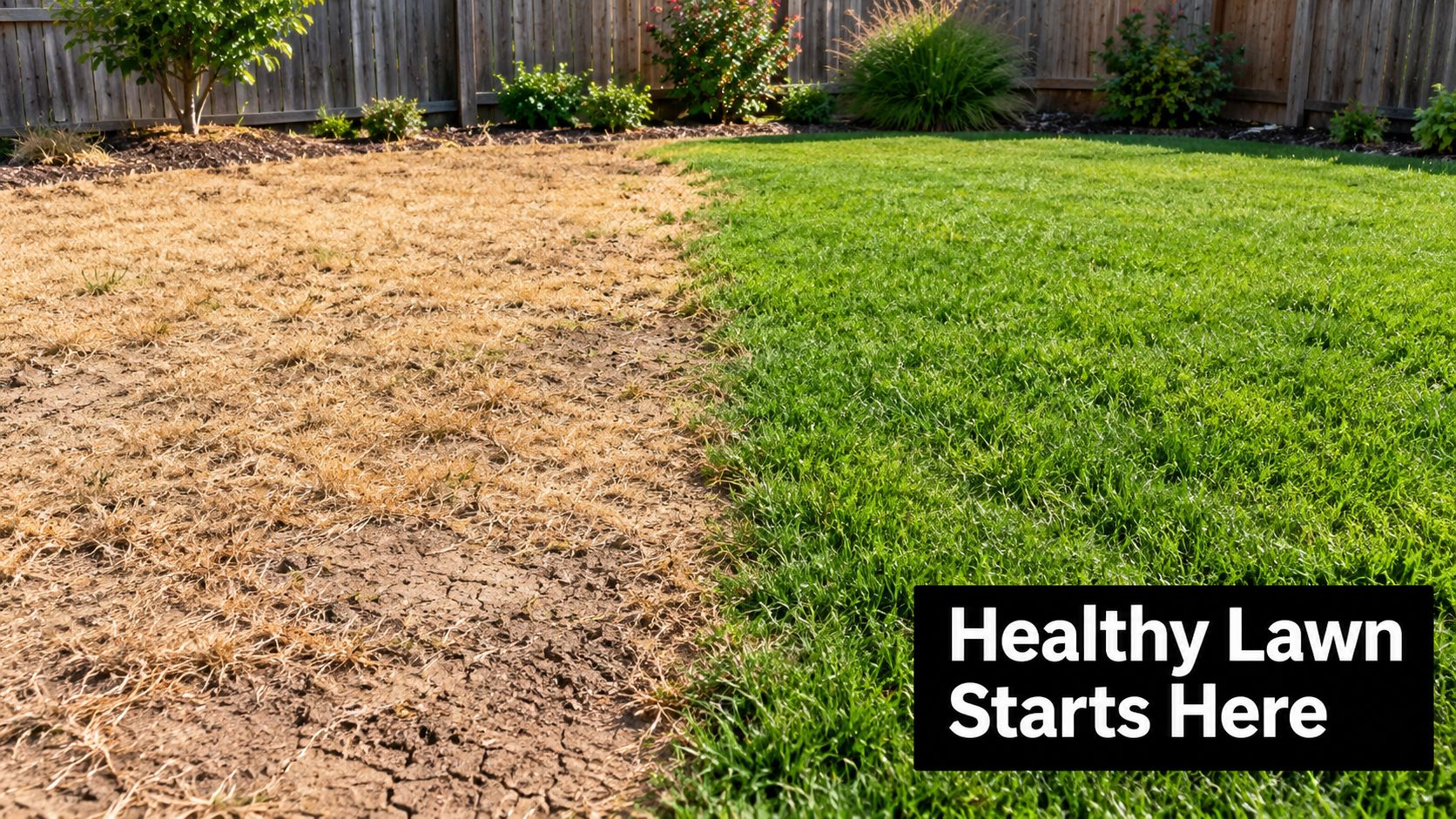
After repeated Texas heat, an Austin lawn can reveal problems that a quick inspection misses. Grass thins beside the patio, soil stays wet near a downspout, and the route from the back door to the gate becomes a worn track. Add a dog, children, or regular entertaining, and the turf has little time to recover before the next demand.
The maintenance cycle keeps repeating. You water, mow, fertilize, pull weeds, and repair the same areas. Compacted soil can hold water in low spots after heavy rain, while dry weather exposes soil, creates dust, and strips color from the grass that survives. If drainage, grading, or base conditions keep producing the same failures, changing the grass variety alone will not fix the underlying site problem.
Practical rule: Diagnose the recurring failure before choosing a replacement surface.
Artificial turf has changed considerably since early systems resembled stiff sports carpeting. The first installation at Moses Brown School in Providence, Rhode Island, took place in 1964, followed by AstroTurf's highly visible debut at the Houston Astrodome in 1966. By the early 1970s, artificial turf was widespread in the United States and Canada, especially in indoor and outdoor stadiums. The history of artificial turf development shows the shift from a basic synthetic surface to systems designed for wear, traction, cushioning, and a more natural appearance.
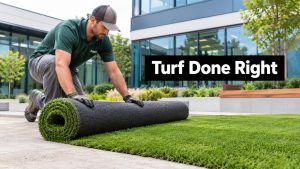
A durable artificial grass design responds to how the yard is used. A decorative front lawn, dog run, pool surround, and commercial entrance each place different demands on drainage, compaction, edging, and heat control. A contractor who focuses only on the visible green surface may leave the installation vulnerable underneath. Ask how the crew handles water movement, prepares and compacts the base, and reduces heat around hard surfaces. Clear answers, site-specific recommendations, and photos of completed local work are stronger trust signals than a turf sample alone.
The market's direction reflects these broader applications. Forecasts place the global synthetic turf market at about USD 9.6 billion in 2026, growing to USD 15.3 billion by 2035, with a projected 5.3% compound annual growth rate, according to Market projections for synthetic turf. These are projections, not guarantees, but they reflect demand across residential, commercial, and sports settings, along with higher expectations for realism, softness, durability, and performance.
The modern decision is whether your property needs a surface built around its actual conditions. Review our artificial turf vs natural grass comparison before comparing bids, because the lowest visible price may not account for the work that makes a lawn last.
Planning Your Artificial Grass Layout
Start with a site plan, not a turf sample. Walk the property after rain, during the hottest part of the day, and when the yard is being used normally. Mark the routes people take, the areas where pets run, the places where water collects, and the edges that meet concrete, pavers, planting beds, fences, or retaining walls.
Map use before choosing materials
A lawn that looks open from a patio can contain several separate zones:
- High-traffic routes: Use a turf system and base design suited to repeated walking between doors, gates, patios, and play areas.
- Pet areas: Plan direct drainage, washable access, odor control, and edging that won't become a digging target.
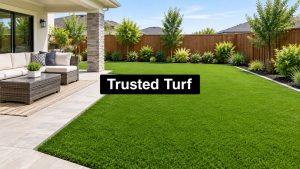
- Decorative sections: Prioritize blade color, texture, grain direction, and transitions into planting beds.
- Hardscape borders: Decide whether the turf should finish flush with concrete, sit inside a steel edge, or transition through a planting strip.
Sun exposure matters before you select fiber or infill. A shaded side yard may need a different visual balance from an exposed west-facing section. Record where shade falls in the morning and afternoon, because a surface that feels comfortable in the morning can become much hotter later in the day.
Measure each section separately rather than treating an irregular yard as one rectangle. Include curves, gates, pillars, drainage structures, and areas where seams could become visible. A professional layout places seams away from the main viewing direction and avoids forcing short pieces into prominent areas. Waste isn't just a material issue. Poor seam planning can make a new lawn look patched together.
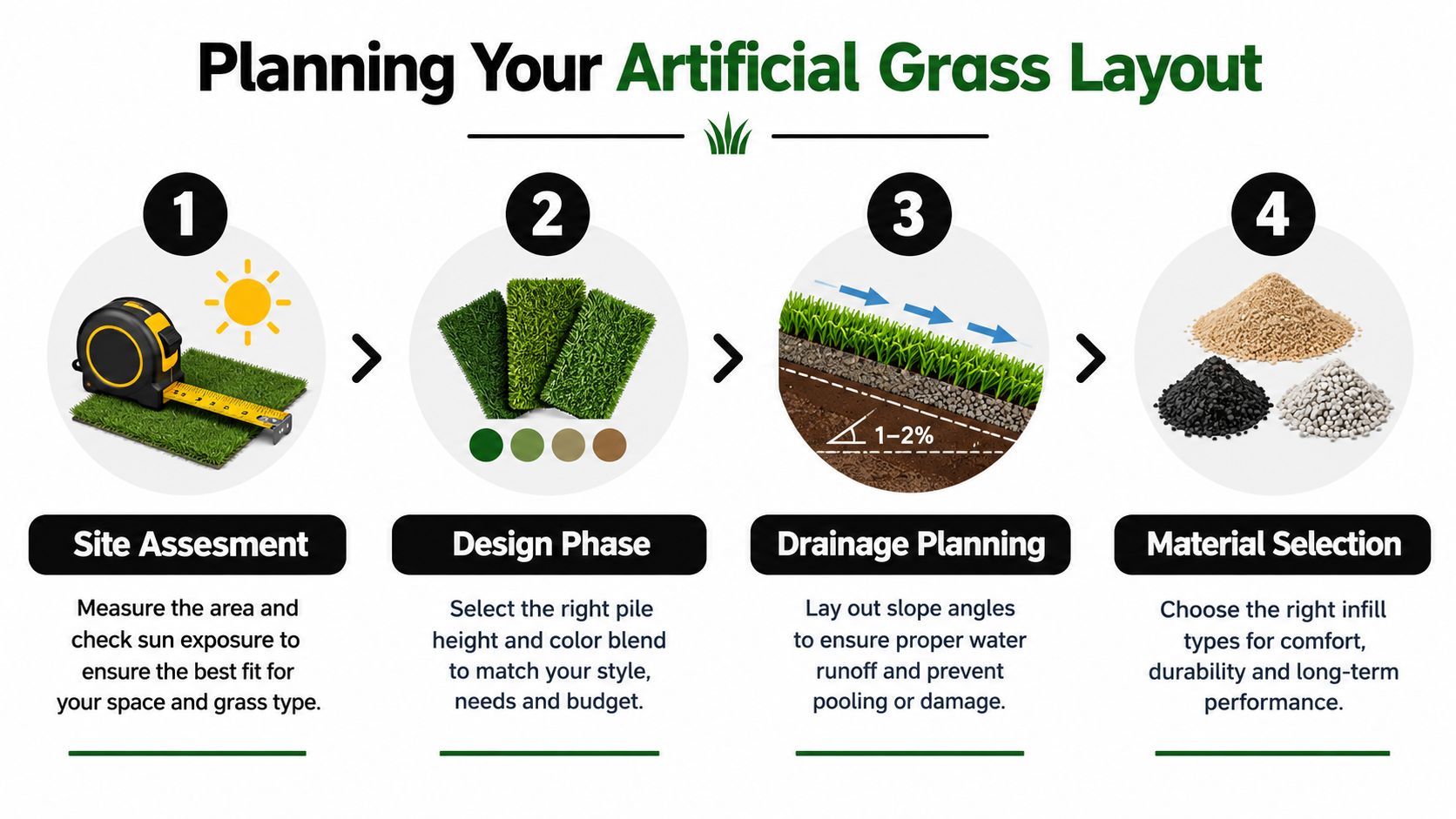
A residential base commonly uses 2 to 4 inches of aggregate over a graded subgrade, followed by a porous weed barrier and final compaction to around 90% for DIY or light-duty construction, according to residential artificial turf installation guidance. The same guidance emphasizes a slight crown or a minimum 1% slope, along with a consistent seam gap. Those details protect the finished appearance and give water a planned route away from the surface.
Before approving a layout, ask the installer to show you where water will go, where seams will fall, how the turf will meet hardscape, and what happens at gates or narrow access points. If the drawing only shows a green shape without those decisions, the design isn't finished.
Selecting the Right Turf for Your Needs
Turf specifications matter, but no single specification tells you whether a product suits your property. Face weight, stitch rate, blade shape, backing, infill, and base preparation all influence how the finished lawn looks and performs. A dense, tall product installed over a weak base can disappoint just as quickly as an inexpensive short product installed correctly.
Polyethylene is widely used because it balances a softer feel with a natural appearance. One market estimate gives polyethylene 40.0% of the global synthetic turf material segment in 2025, with a value of about USD 1.12 billion, while another gives polyethylene 38.5% of sports applications, worth roughly USD 1.45 billion. These figures come from different market definitions, so they shouldn't be compared as if they measure the same segment. They do show why polyethylene remains a common choice where homeowners want softness and realism. Synthetic turf material market information places that material choice within a larger shift toward realistic, durable systems.
Match the system to the use
A decorative lawn benefits from a natural blade blend, resilient fiber, and enough infill to support the pile without making the surface feel hard. A dog run needs open drainage, cleanability, odor management, and an edge that can resist repeated pressure. A putting green needs a short, consistent playing surface and a precisely shaped base rather than the taller pile used for a decorative yard.
Look closely at fiber shape. Textured or curled fibers can help a lawn stand upright and break up the uniform plastic look. Blade color should include variation rather than one flat green tone. A taller pile may look lush in a sample, but it can require more grooming and may flatten in busy routes if the supporting system is inadequate.
Infill does more than add weight. It helps stabilize fibers, influences softness, supports recovery, and contributes to how the lawn handles use. Pet applications may call for a product designed around odor control and drainage, while play areas need a softer system with appropriate fall protection. Use artificial grass types and selection guidance to compare products by application rather than choosing on color alone.
Ask for a complete specification sheet. It should identify the turf, backing, infill type, expected installation method, edging, and base requirements. A contractor who discusses only the visible blade and avoids the rest of the system is selling a surface, not designing a lawn.
The Foundation, Drainage and Site Preparation
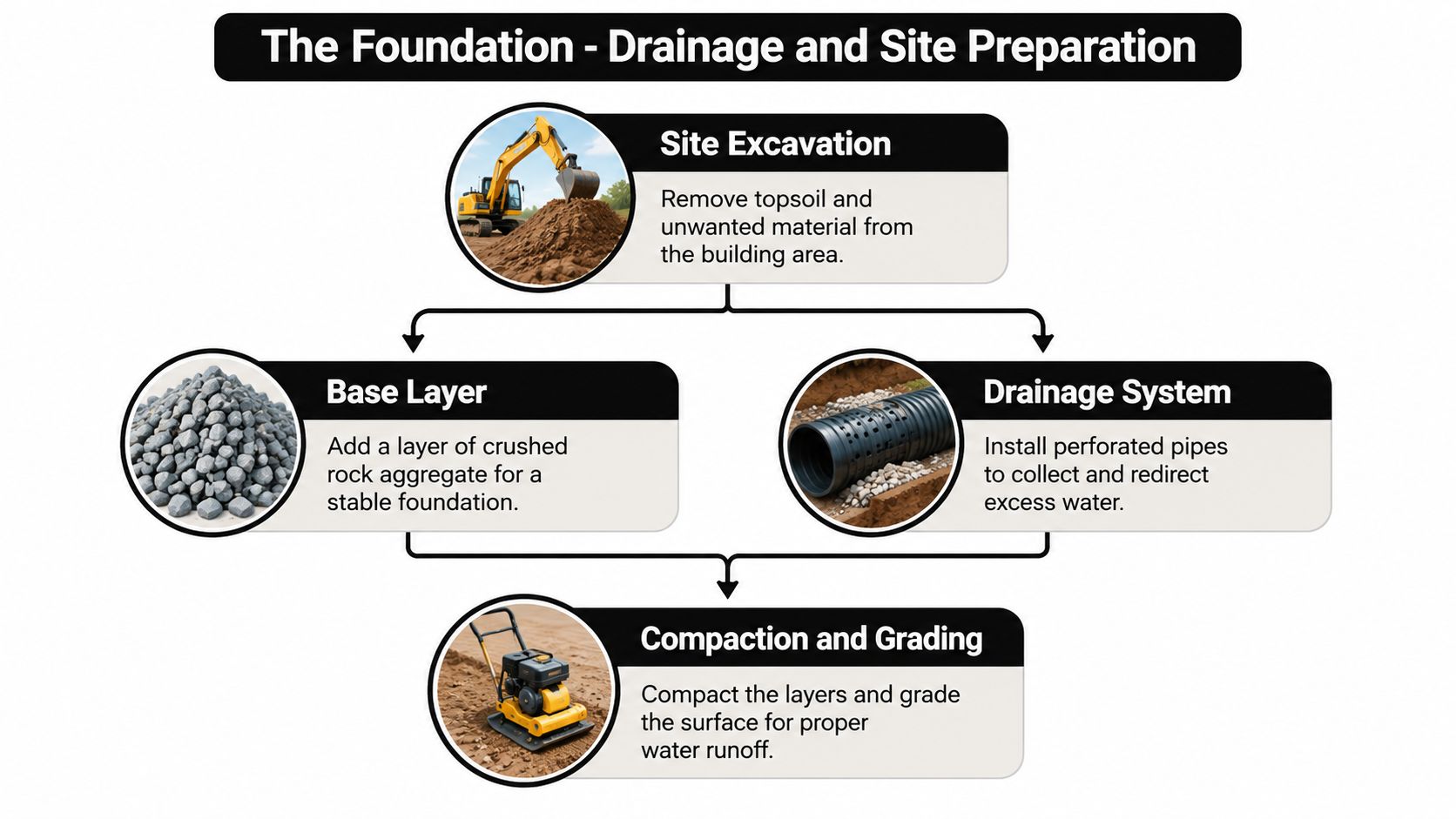
The most expensive mistake in turf work is often the part the homeowner can't see. A contractor can install attractive turf over organic soil, an uneven subgrade, or a poorly compacted base, and the lawn may look finished on installation day. Later, foot traffic exposes soft areas, rain finds low spots, and seams or edges begin to move.
Build the drainage stack from the ground up
A dependable installation typically follows a sequence:
- Strip organic material. Remove grass, roots, topsoil, and debris that can decompose or settle beneath the system.
- Secure geotextile fabric. Use a suitable porous barrier to separate the subgrade from the aggregate and reduce weed intrusion.
- Install a free-draining aggregate base. Choose and place the base according to soil conditions, traffic, slope, and use.
- Compact in lifts. Build a stable platform instead of placing the full depth loosely and hoping the surface settles evenly.
- Grade the finish. Direct water toward an outlet, drainage structure, or approved discharge area.
- Validate permeability. Check the drainage behavior before turf covers the work.
A technical benchmark used in synthetic turf construction is approximately 10 inches per hour through the turf, backing, or infill, and approximately 14 inches per hour through the base and finish stone. The base should reach at least 95% standard Proctor compaction. These benchmarks and the installation sequence are described in the JUTAgrass installation guide.
Compare the base to the application
A pet run isn't a putting green. Dogs introduce concentrated moisture, waste, digging pressure, and repeated traffic along the same paths. That design needs drainage and cleaning access that won't be necessary in a lightly used ornamental strip.
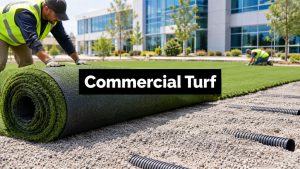
A play lawn needs a stable, even foundation and a surface appropriate for falls. A commercial walkway may need a stronger base because repeated loads and concentrated traffic expose settlement quickly. A putting green depends on precise contours and a smooth finish, so the installer can't treat grading as a simple slope away from the house.
Existing grass or ungraded soil is not a shortcut. Residential installation guidance warns that placing turf over those conditions increases the risk of weeds, unevenness, water pooling, and reduced longevity. Review ground preparation for artificial turf and ask the contractor what will be excavated, what will be hauled away, how the base will be compacted, and how drainage will be tested.
A good contractor can explain the foundation without hiding behind jargon. If the proposal lists turf and labor but says nothing about excavation, aggregate depth, compaction, grading, or drainage, the price comparison isn't meaningful.
Specialized Zones, Pets, Play, and Putting Greens
A yard becomes more useful when each zone is designed for its actual job. Treating every part of the property as one generic lawn creates avoidable compromises. The dog run may need a different infill and cleaning routine from the play area, while a putting green requires a surface that prioritizes ball roll over a lush appearance.
Pet areas need practical details that are easy to miss in a showroom sample. Plan for direct drainage, a surface that can be rinsed, odor-control measures, and durable edging at the places where a dog tests the boundary. Antimicrobial treatments and specialized infills can be considered as part of the system, but they don't replace prompt waste removal or proper drainage.
Children's play areas call for a stable surface, appropriate softness, and fall protection where equipment creates a height risk. The turf should integrate with the playground, not leave a hard lip or exposed edge where children run. A contractor should discuss the equipment footprint, transitions, surrounding hardscape, and how water will leave the zone.
Putting greens are different again. A true-roll green depends on a carefully shaped base, smooth finishing, consistent turf installation, and contours that match the golfer's goals. A compact practice green may need one design approach, while a more complex backyard golf area may include fringe, chipping space, or multiple cup locations. Backyard putting green installation should be planned as a precision design feature, not as a small patch of lawn.
Heat mitigation is essential in an exposed Texas yard. A pet may have nowhere else to go, children may play directly on the surface, and a dark hardscape border can make the surrounding area feel even harsher. Choose the fibers, infill, shade plan, and sub-base together instead of assuming one cooling product will solve every condition.
That system-level approach also protects hardscape integration. A turf edge beside a retaining wall, pool deck, or patio needs room for movement, a clean termination, and a drainage plan. If the border traps water or creates a raised trip point, the lawn won't feel finished no matter how realistic the blades look.
Heat Management and Hardscape Integration
Artificial grass can become uncomfortably hot in direct Texas sun. Market and product guidance notes that turf surface temperatures may reach 60 to 80°C in hot climates, approximately 40% to 50% hotter than natural grass in those conditions. The figure varies with weather, shade, surface color, wind, and material, but it makes one point clear: heat needs to be addressed during design. Artificial grass heat mitigation information identifies UV-resistant fibers, reflective pigments, and cooling infills as active areas of product development.
A better specification starts by mapping the hot zones. West-facing lawns, pool surrounds, play areas, and spaces beside masonry deserve particular attention. Shade from trees, pergolas, umbrellas, or seasonal structures can change comfort more effectively than a product label viewed in isolation. Cooling infill may help, but it can't create shade where the site has none.
Think beyond the lawn edge
The surrounding area also affects how the installation performs:
- Retaining walls: Coordinate wall drainage with the turf base so water doesn't collect at the lower edge.
- Drainage tile: Use planned collection and discharge routes where roof runoff or slope sends water toward the lawn.
- Seasonal lighting: Place conduits and fixtures before turf installation so later trenching doesn't damage the finished surface.
- Patios and walkways: Set elevations carefully to avoid exposed edges, trip points, and water trapped against hardscape.
- Planting beds: Leave clean transitions that won't allow mulch, soil, or roots to migrate across the turf.
The strongest artificial grass design brings these elements together. It considers where people walk, where water travels, where heat builds, and how the lawn meets the architecture. It also gives you a way to evaluate the installer. Ask for a written explanation of the heat strategy, drainage stack, base compaction method, seam placement, infill selection, and hardscape transitions.
If the contractor can discuss only turf color and pile height, keep interviewing. A reputable installer should be comfortable explaining what happens below the surface and how the system will perform in the most difficult part of your yard.
Building Trust and Scheduling Your Installation
Homeowners often research the contractor before they commit to a visit. One home-services industry source reports that, on average, over 55% of consumers search before booking an appointment with a home-services business. Home-services search behavior makes a contractor's online presentation part of the buying experience, not a cosmetic extra.
Use a short vetting process:
- Verify credentials. Look for visible license and insurance information, then ask for confirmation if it isn't clear.
- Review the proposal. It should separate turf, infill, excavation, aggregate, edging, drainage, labor, and specialized features.
- Ask about warranties. Confirm what the turf warranty covers and what the installer stands behind.
- Request project-specific answers. The contractor should explain heat exposure, pet use, slopes, access, seams, and drainage at your property.
- Watch the response. A professional first call should move toward a firm appointment with a specific time window, not leave you with vague interest.
One contractor-marketing source reports that websites displaying license and insurance badges above the fold receive 23% more form submissions, while trust signals overall are reported to increase conversion rates by 15% to 30%. These figures describe reported marketing results, not a promise about any individual contractor, but they reinforce why visible credentials matter when you're comparing providers. Contractor website trust-signal findings provides that reported context.
Before the appointment, note where water pools, where the lawn fails, how the space is used, and which areas need shade or special treatment. After installation, keep the surface clear of leaves and debris, rinse pet zones as appropriate, and brush high-traffic areas when the fibers begin to lean. Low maintenance doesn't mean no maintenance.
Choose the contractor who can connect the finished appearance to the work underneath it. A clear design, documented preparation, practical heat plan, and honest scheduling process give you far more confidence than a low quote built around an unspecified installation.
Modern Yard Landscapes designs and installs residential and commercial artificial turf, pet-friendly dog runs, custom putting greens, drainage tile, retaining walls, and related outdoor features across the greater Austin area. Visit Modern Yard Landscapes to request a consultation and discuss a turf system built around your site, drainage, heat exposure, and daily use.