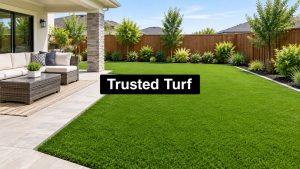

Your dog needs reliable outdoor exercise, but an ordinary grass strip often turns into a daily argument with Austin heat, mud, odors, escapes, and maintenance. One week the yard is too dry and dusty. The next, rain exposes every low spot, and your dog tracks the result back through the house.
The best backyard dog run ideas start with the dog's habits, the yard's soil and drainage route, sun exposure, access points, and your budget. Appearance matters, but a good-looking run that pools water, overheats, or leaves an escape gap won't serve your household for long.
This guide organizes eight practical concepts around containment, heat management, drainage, accessibility, family use, sustainability, and phased investment. You'll also see where artificial turf works well, why fencing and gates deserve careful planning, what maintenance really involves, and when professional site preparation can protect the investment.
Modern Yard Landscapes is an Austin-based full-service option for site assessment, pet-friendly turf, drainage solutions, transparent estimates, and a satisfaction guarantee.
A trustworthy dog-run design should explain both what it solves and what it requires to stay effective.
1. Enclosed Artificial Turf Run with Reinforced Perimeter Fencing
An enclosed turf run is the strongest starting point for dogs that chase, climb, squeeze through gaps, or live near traffic. A reinforced perimeter gives your dog room to move while maintaining visibility and airflow, and it gives you a defined area to inspect, clean, and supervise.
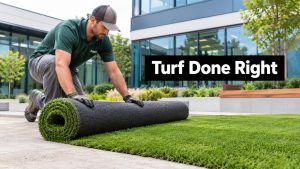
This setup suits an Austin suburban home with a mixed-breed dog that needs dependable exercise, a property beside a busy street, or a rental where preventing worn grass and pet damage matters. The surface can use UV-resistant, high-denier artificial turf, commercial-grade steel edging, and a properly prepared base. The right installation also connects the turf system to a drainage plan rather than treating the surface as a standalone product.
A secure gate deserves the same attention as the fence. DIY guidance recommends properly installed hinges and a secure latch, and the gate should match the fence height to reduce escape risk, according to dog-run gate installation guidance from True Value.
Build security into the entry
For dogs that rush doors or react to passing animals, a double-gate entry creates a small transition area between the yard and the run. It adds installation complexity and uses more space, but that trade-off is often worthwhile for anxious owners or escape-prone dogs.
Ask the installer to inspect drainage patterns, terrain, fence corners, and the route from the house before recommending materials. Antimicrobial infill may help with odor control, but it doesn't replace prompt waste removal, rinsing, and a surface system that lets urine and rain move through.
A historical household survey in Aba, Nigeria found that 63.8% of homes had fences or walls that completely restrained dogs, while 23.0% had fences that didn't fully restrain them and 13.2% had no fence. The same study reported dedicated dog houses or cages in 73.6% of households, offering useful historical evidence that secure perimeter design and designated containment space have long supported on-site dog management. Read the Aba household dog-management study for the full context.
For Austin, pair reinforced fencing with shade, positive drainage, and a maintenance plan. The fence contains the dog, but the base and surface determine whether the run remains usable.

For a site-specific enclosure plan, review Modern Yard Landscapes' artificial turf dog run service.
2. Multi-Zone Dog Run with Separate Activity Areas
A single open rectangle doesn't always work for a household with multiple dogs. A multi-zone run separates high-energy movement, rest, and bathroom behavior, making the space easier to manage when dogs differ in age, size, confidence, or training.
One Austin example might include a running lane for an energetic young dog, a shaded relaxation area for an older companion, and a designated toilet zone near the easiest cleaning access. Puppy training and rescue-dog decompression can also benefit from clear spatial routines. Commercial boarding facilities may use a similar layout to make client-facing outdoor areas feel organized rather than improvised.
Each zone can receive a different surface specification. A denser turf may suit active play, while a comfort-focused area can prioritize cushioning and shade. The toilet zone should receive especially careful drainage and cleaning access. Separating drainage tile lines can make odor management more targeted, though it also increases excavation and installation work.
Design behavior into the layout
Place the rest zone where the yard receives natural shade, while keeping the activity area open enough for supervision. Different natural-looking turf tones can define boundaries without making the yard feel like a commercial facility. Water access belongs near rest areas, but misters or water features need controlled drainage so they don't create a perpetually wet patch.
The design should reflect actual dog behavior rather than adding zones for visual effect. A dog that ignores a distant toilet area won't benefit from it, and a nervous rescue dog may need a quiet retreat instead of more equipment.
Practical rule: Separate spaces only when each zone has a clear job, a reachable maintenance route, and a drainage plan that matches its use.
A practical comparison of layout priorities appears in this guide to building a dog run. Start by mapping where your dogs already run, rest, and eliminate. Then place each zone where it supports those habits instead of forcing a pattern that looks tidy on paper but fails in daily use.
3. Shaded Pergola Dog Run with Climate Control Features
A full-sun run can look perfect during a mild afternoon and become uncomfortable when Austin heat builds. Dogs cool themselves less efficiently than people, so shade, water, ventilation, and limited exposure deserve design attention, not last-minute additions. Animal-welfare guidance highlighted by the Miami Herald's discussion of heat safety supports treating heat management as a welfare issue rather than a cosmetic upgrade.
A pergola, shade sail, or properly installed shade cloth can block direct solar exposure over the areas where dogs spend the most time. The structure should still allow airflow and leave enough clearance for people to enter, clean, and supervise. Light-colored materials and carefully selected turf can reduce heat absorption compared with darker alternatives, but shade remains the more dependable first line of defense.
Cooling infill and misting can add comfort, yet neither eliminates the need for water access and sensible scheduling. Misting water must drain through the surface instead of collecting beneath it. A timer can reduce accidental overwatering, but you'll still need to inspect the system after installation and through the summer.
Treat heat as a system
The most effective design combines overhead shade, a cooler surface strategy, drinking water, and a retreat area. A senior dog or heat-sensitive breed may need more protected space than an athletic dog that spends short periods outside. A run positioned in an exposed yard also needs a different plan from one that already benefits from mature trees.
Think about where the dog lies down, not just where it runs. Resting areas often reveal heat problems first. Add seating for people under the same shade structure when possible, because supervision becomes easier when the space is comfortable for the household too.
For a broader outdoor layout that coordinates shade structures with turf and seating, see Modern Yard Landscapes' outdoor living space design service. Homeowners comparing pergola forms can also consult this modern pergola guide from Outdoor Leisure Living, then ask an installer how the structure will affect drainage, access, and surface temperatures.

4. Accessible Dog Run with Mobility Support Features
Senior dogs and dogs recovering from injury need a run that supports movement without demanding athletic effort. A smooth, gently sloped surface, stable footing, nearby rest areas, and easy water access can turn outdoor time into manageable exercise instead of a source of strain.
This concept fits a home with an aging Golden Retriever, an arthritic dog, or a Dachshund or Corgi with mobility concerns. It can also help during recovery from surgery, although the layout should follow veterinary guidance rather than substitute for it. Ramps, low stepping platforms, raised rest areas, and shallow water features can encourage controlled movement when they're positioned along a simple route.
Avoid abrupt transitions between turf, edging, concrete, and drainage structures. A dog with weak joints may stumble on changes that a healthy dog ignores. Anti-slip infill and cushioning can improve comfort, but cushioning shouldn't interfere with drainage or make the surface unstable.
Make every feature reachable
Place water near a rest platform so the dog doesn't need to cross the entire run while tired. Guide rails or grab handles may help some owners, but they can also create obstacles or snag points, so their usefulness depends on the dog, handler, and available width.
The Lowe's dog-run guidance commonly recommends 3 feet for smaller dogs and 4 feet or higher for medium to large dogs, with larger or escape-prone dogs potentially requiring 5 to 6 feet or more. Those figures address containment height, not accessibility, but they're a useful reminder that the fence must match the dog while the interior layout matches its physical ability.
Ask for a grade assessment rather than accepting a generic “flat” design. A site can look level while still creating awkward transitions or hidden low spots. Inspect rest areas regularly for worn turf, displaced infill, loose edging, or water that remains after cleaning.
The best accessible run feels calm and predictable. It gives the dog room to move, places support where it's needed, and keeps maintenance access simple for the owner.
5. Family-Friendly Dog Run with Integrated Play Features
A dog run can serve more than one member of the household when its play features are planned around supervision and durable circulation. Artificial turf creates a consistent surface for paws and children, while jumps, weave poles, balance beams, and open space add opportunities for shared activity.
An Austin family with an energetic dog might use the run for short training sessions, fetch, and supervised outdoor time. Another household may want a dog-sports practice area that remains attractive when guests arrive. The design challenge is preventing equipment from turning the space into a crowded obstacle course.
Start with one clear running path and place agility features beside it, not across every route. Equipment should match the dog's size, age, confidence, and training level. A senior dog may need low-impact elements, while a young athletic dog can use more challenging features under supervision.
Keep people part of the plan
Seating under shade helps parents and other household members supervise without standing in direct sun. Storage near the run keeps leashes, toys, water bowls, and training equipment from accumulating at the back door. Contrasting turf tones can define an activity area, but keep the palette natural so the dog run remains integrated with the yard.
Family use increases wear, especially around gates, seating, and favorite play stations. Schedule regular inspections of edging, fasteners, obstacle stability, and the surface around high-traffic points. A surface that handles dog claws still needs attention when people, toys, furniture, and repeated foot traffic add new demands.
Cleanability matters here because children may touch the surface and sit on it. Choose a drainage system that allows thorough rinsing, remove waste promptly, and ask how the proposed infill and turf will be maintained. Don't rely on an antimicrobial treatment to compensate for poor hygiene.
A family-friendly run succeeds when it remains easy to supervise. The dog gets exercise, the children get a shared outdoor activity, and the adults don't inherit a complicated maintenance project.
6. Drainage-First Dog Run for Problem Yards and Wet Climates
If water already collects in the yard, choose drainage before turf. Artificial turf won't correct a low spot, clay-heavy soil, a blocked outlet, or runoff that enters from another part of the property. The installation needs to move water through the entire assembly and direct it to a suitable outlet.
A dependable residential system typically uses a compacted crushed-stone base, geotextile separation where fine soils require it, a permeable top layer, edging, and positive grade. Design guidance commonly specifies a 1% to 2% finished slope toward a trench drain, French drain, or daylight outlet, with 3 to 4 inches of free-draining base for residential use. Heavier-use runs may require 4 to 6 inches of base, according to dog-run drainage guidance from Atlas Fence Austin.
Another site-preparation reference recommends a 3 to 4 inch compacted crushed-stone base and at least a 1% grade, roughly 1 inch of fall per 8 feet, so water moves away instead of pooling under the turf. See this artificial-grass drainage preparation guide for that benchmark.
Diagnose the whole water route
Austin yards with clay soil, low areas, or failed landscaping need more than a surface refresh. Ask where roof runoff, irrigation water, and stormwater travel. Ask whether drainage tile can be installed during excavation, where the outlet will discharge, and how nearby garden beds will affect the finished grade.
A pet-turf run should be evaluated by flow-through performance, not appearance. Guidance cites about 30 inches per hour for a single small-to-medium dog, 50 inches per hour or higher for two to three medium dogs or humid climates, and 75 to 100 or more inches per hour for kennels or heavy-use areas, as explained in pet-turf dog-run design guidance. Some installers also specify a 5 mm drainage grid or similar permeable underlayer for ventilation and odor control.
For product specifications, some pet-turf systems advertise drainage above 900 inches per hour, with certain products claiming more than 1,000 inches per hour, as shown by SYNLawn's pet turf product information. Those figures describe product capacity, not the finished yard. Base preparation, slope, seams, outlets, and maintenance still determine real performance.
Request a drainage assessment before comparing turf samples. A beautiful run that holds water is an expensive failure.
For Austin installation planning, review Modern Yard Landscapes' artificial turf drainage systems. If the run connects to a patio or hardscape, this comparison of porcelain and stone pavers can help frame broader material decisions, though the drainage plan should come first.
7. Eco-Friendly Dog Run with Water Conservation and Chemical-Free Design
An eco-conscious dog run reduces the inputs required to keep the space usable. Replacing a thirsty lawn can reduce routine irrigation, while eliminating pesticides and fertilizers creates a simpler environment for dogs and families. The sustainability of the finished run still depends on the materials, infill, drainage route, and disposal plan, so ask for documentation instead of relying on broad labels.
Possible infill choices include sand blends, coconut-husk products, and recycled-rubber alternatives. Each has different texture, drainage, cleaning, heat, and replacement considerations. A material that sounds sustainable may not suit a dog that digs, eats loose material, or spends long periods outdoors.
Ask how water leaves the property
Water-efficient design doesn't mean ignoring runoff. A drainage system can direct water away from the dog area and, where the site allows, toward planting reuse. The installer should explain what water can be captured, where it will go, and whether the proposed route creates problems for foundations, neighboring properties, or planting beds.
Request complete material information, including infill composition, backing, edging, and maintenance products. You can also ask whether the maintenance protocol avoids harsh chemicals and how the company handles replacement materials. Sustainable pet-product guidance from Nandog offers broader context for evaluating pet-related material choices.
An eco-friendly run should also be healthy in daily use. Remove waste promptly, rinse according to the turf manufacturer's directions, and keep drainage paths open. No infill eliminates the need for cleaning, and no surface can compensate for standing water or poor waste management.
This option suits environmentally conscious Austin neighborhoods, households prioritizing pet and family wellness, and owners who want to document lower-water or lower-chemical choices. It may require more questions at the specification stage, but that transparency protects you from choosing materials based only on marketing language.
8. Modular Expandable Dog Run for Growing Families and Future Development
A modular run makes sense when the household may change or the budget won't support the final vision today. Start with a complete, independently useful area, then plan future sections around matching turf, coordinated edging, and a drainage system that won't need to be torn apart later.
A young family expecting another dog may begin with a compact exercise and toilet area. A homeowner who isn't sure how much space the dog will use can test the layout before expanding. The important distinction is between a small finished phase and an unfinished temporary patch. Phase one should already have secure fencing, a working gate, proper grade, drainage, and enough room for the dog's daily needs.
Protect the future connection
Before installation, discuss the long-term footprint, likely expansion direction, access for future equipment, and the location of drainage outlets. Ask for written material specifications and keep turf and infill samples, including batch information, so a later addition has the best chance of matching.
A future section may still show a slight color or texture difference if products change over time. Transparent planning can reduce that risk, but no installer should promise a perfect match indefinitely. The practical goal is a cohesive transition with compatible performance.
Request conceptual estimates for Phase 2 and Phase 3 while the first work is being designed. Future pricing can change with materials, access, grading, and site conditions, so treat those figures as planning information rather than a fixed promise.
A modular plan also helps owners prioritize. Put the highest-risk problem first, such as containment or drainage, then add shade, enrichment, seating, or a larger activity area later. This approach works only when the first phase doesn't block the second. Confirm fence lines, gate swings, utility access, and runoff paths before approving the initial layout.
8-Option Backyard Dog Run Comparison
| Design | Implementation Complexity (🔄) | Resource Requirements & Timeline (⚡) | Expected Outcomes (📊⭐) | Ideal Use Cases (💡) | Key Advantages (⭐) |
|---|---|---|---|---|---|
| Enclosed Artificial Turf Run with Reinforced Perimeter Fencing | 🔄🔄🔄 High, fencing, grading, drainage, pro install | ⚡⚡⚡ High, commercial turf, steel/aluminum fencing, antimicrobial infill; 3–5 days | 📊 Secure containment, low maintenance, durable surface, odor control ⭐ | 💡 Anxious pets; homes near busy streets; rental properties | ⭐ Complete containment; year‑round usability; hygiene focus |
| Multi-Zone Dog Run with Separate Activity Areas | 🔄🔄🔄🔄 Very High, complex layout & zone integration | ⚡⚡⚡⚡ Very High, multiple turf types, partitions, shade structures; 5–7 days | 📊 Tailored performance per zone; reduced conflicts; training-ready ⭐ | 💡 Multiple-dog households; puppy training; boarding facilities | ⭐ Behavioral management; optimized zone-specific function |
| Shaded Pergola Dog Run with Climate Control Features | 🔄🔄🔄 High, structural and cooling system installation | ⚡⚡⚡ High, cooling infill, pergola/misting systems; 4–6 days | 📊 Lower surface temps, safer in heat, extended outdoor time ⭐ | 💡 Heat-sensitive breeds; full-sun properties; long outdoor use | ⭐ Heat protection; comfort; attractive architectural element |
| Accessible Dog Run with Mobility Support Features | 🔄🔄🔄 Medium–High, grading, ramps, hydrotherapy elements | ⚡⚡ Medium, cushioned infill, ramps, shallow water feature; 4–5 days | 📊 Improved mobility, reduced joint stress, therapeutic benefits ⭐ | 💡 Senior or rehabilitating dogs; breeds prone to mobility issues | ⭐ Accessibility-first; joint support; rehab-friendly design |
| Family-Friendly Dog Run with Integrated Play Features | 🔄🔄🔄 High, equipment installation & safety planning | ⚡⚡⚡ High, premium turf, agility equipment, seating; 5–6 days | 📊 Multi-use recreation, increased exercise, family engagement ⭐ | 💡 Active families; dog-sports training; outdoor entertaining yards | ⭐ Dual-purpose space; promotes bonding; durable for heavy use |
| Drainage-First Dog Run for Problem Yards and Wet Climates | 🔄🔄🔄🔄 Very High, drainage engineering & subsurface work | ⚡⚡⚡⚡ Very High, drainage tile, gravel beds, engineered base; 6–8 days | 📊 Eliminates standing water, reduces odors, prolongs turf life ⭐ | 💡 Flood-prone or low-lying yards; clay soils; prior drainage failures | ⭐ Robust water management; usable immediately after rain |
| Eco-Friendly Dog Run with Water Conservation and Chemical-Free Design | 🔄🔄 Medium, sustainable sourcing and water-capture planning | ⚡⚡ Medium, non-toxic infill, low‑VOC materials, irrigation capture; 4–5 days | 📊 Chemical-free environment, water reuse, sustainable credentials ⭐ | 💡 Environmentally conscious homeowners; LEED/green seekers | ⭐ Eliminates harmful chemicals; conserves water; marketable sustainability |
| Modular Expandable Dog Run for Growing Families and Future Development | 🔄🔄 Medium, phasing, documentation, expansion planning | ⚡⚡ Medium, matching materials, modular fencing; initial 3–4 days (expansions 2–3 days) | 📊 Scalable solution, lower initial cost, cohesive future additions ⭐ | 💡 Growing families; budget-conscious owners; phased projects | ⭐ Cost-flexible; future-proofed; minimal disruption during growth phases |
Choose the Run Your Yard Can Support
The right run depends less on a trendy surface than on the problem you need the yard to solve. Choose a reinforced enclosure when escape prevention is the priority. Choose drainage-first construction for low-lying, clay-heavy, or persistently wet sites. Choose shade and cooling features when the run receives strong direct sun or your dog is heat-sensitive.
An accessible layout suits senior dogs, dogs with joint limitations, and recovery periods that require controlled movement. A multi-zone run helps households managing multiple dogs, puppy training, rescue-dog routines, or separate rest and toilet areas. Family play features make sense when children and adults will use the space alongside the dog. Eco-friendly materials support homeowners who want lower chemical and water demands, while a modular plan protects a changing budget or household.
Before scheduling work, prepare answers to the questions that affect design and price:
- Dog count and behavior: How many dogs will use the run, and do they jump, dig, chase, guard, or avoid certain surfaces?
- Available dimensions: What space can you dedicate without blocking gates, patios, utilities, planting beds, or future improvements?
- Sun exposure: Where does direct sun fall during the hottest part of the day, and where can shade structures or trees help?
- Runoff paths: Does water arrive from roofs, slopes, irrigation, or neighboring areas? Where should it discharge?
- Gate access: Can installers bring materials to the site, and where should the dog enter and exit safely?
- Desired features: Do you need zones, seating, agility equipment, ramps, water access, cooling, or future expansion?
- Maintenance expectations: Who will remove waste, rinse the turf, inspect drainage, and maintain infill?
- Budget priorities: Which problem must be solved first, and which features can wait?
A site visit should examine more than square footage. The installer should assess grade, soil, access, fence conditions, existing drainage, shade, and the relationship between the run and the house. Ask for a transparent, factors-based estimate that separates material quality, turf quantity, labor complexity, grading, drainage work, fencing, gates, infill, and specialized features. Comparing turf prices alone can hide the cost of preparing a surface that performs correctly.
Modern Yard Landscapes offers pet-friendly dog runs in the Austin area alongside artificial turf installation, drainage tile, design, and maintenance. The company states that it's fully insured and provides a total satisfaction guarantee. Its site-preparation approach addresses drainage, access challenges, and topography, while estimates account for project-specific factors rather than presenting a single generic price. Those are the details to clarify before installation, especially when your yard has clay soil, difficult access, or an existing water problem.
Bring your dog's habits and your maintenance expectations to the consultation. The best design is the one your dog can use safely, your family can supervise, and your yard can continue to support after the crew leaves.
Modern Yard Landscapes provides Austin homeowners with site-assessed artificial turf dog runs, drainage solutions, pet-friendly materials, and transparent project estimates. Visit Modern Yard Landscapes to discuss your yard conditions, compare practical design options, and schedule an appointment with a fully insured installer backed by a satisfaction guarantee.