
High-use sports fields may be replaced after 8 to 12 years, according to the European Synthetic Turf Council guide. For residential lawns, Modern Yard estimates 15 to 20+ years with proper installation. Actual service life depends on traffic, sun exposure, and maintenance.
The difference comes down to workload and site conditions. The guide says synthetic turf surfaces are generally expected to last at least 10 years, and reports that fields replaced after about 40 hours of use per week were commonly 8 to 12 years old. That range is a planning reference, not a fixed replacement date.
For a yard, rental property, or commercial common area, assess how the surface will be used, how much direct sun it receives, and whether the base drains after heavy rain. These factors help you judge whether a lifespan estimate fits the site.
Lifespan Ranges by Turf Type and Use
A turf lifespan estimate depends on the job the surface has to do. Use the ranges below to compare applications, then account for differences in use and the product selected.
| Application | Typical use | Expected lifespan | Source basis |
|---|---|---|---|
| Residential lawn | Light foot traffic | More than 20 years | Installer estimate quoted in 2024 New Jersey report |
| Football (soccer) field | Regular recreational play | 10 to 12 years | 2024 scoping review |
| High-use sports field | About 40 hours of use per week | 8 to 12 years | European Synthetic Turf Council guide |
| Club-level hockey | Regular club training and matches | 8 to 10 years | Western Australia government study |
| Elite hockey | Daily training and competition | 4 to 5 years | Western Australia government study |
| Commercial walkway or dog run | Heavy, concentrated traffic | Plan toward the 8 to 12 year high-use range, then shorten it for concentrated lanes | Derived from the high-use sports row above |
A 2024 New Jersey Spotlight News report quoted an installer estimating that residential artificial turf can last more than 20 years. That estimate fits a lightly used front lawn or side yard better than a space with daily play and heavy foot traffic. Treat it as a possible lifespan, not a guarantee for every yard.
What the sports rows tell a homeowner
A 2024 scoping review in the International Journal of Environmental Science and Technology reports that artificial turf football fields typically last 10 to 12 years. That gives homeowners a useful comparison for sports use, not a direct residential benchmark.
The hockey figures show how strongly workload can affect service life. Club-level use falls in the 8 to 10 year range, while elite training and competition is associated with replacement after 4 to 5 years. The expected lifespan changes with the demands placed on the surface.
Use these figures as performance ranges, not fixed expiration dates.
Place your own yard on the table
Before choosing turf, assess how each part of the yard will be used.
- Daily use: Estimate how often people and pets cross the surface.
- Traffic pattern: Note where people turn, stop, and gather.
- Use type: Distinguish decorative areas from play spaces, pet relief areas, and walkways.
A shaded, decorative front lawn fits closer to the residential range. A backyard used for play, pet relief, and the route to the patio belongs closer to the high-use range. Match the product's pile and construction to that workload by comparing artificial grass types for different applications.
How Traffic and Wear Zones Shorten Turf Life
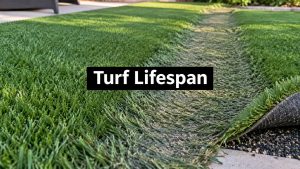
Repeated traffic flattens artificial turf fibers and shifts infill. Unlike natural grass, synthetic fibers do not regrow, so wear remains until grooming or repair addresses it.
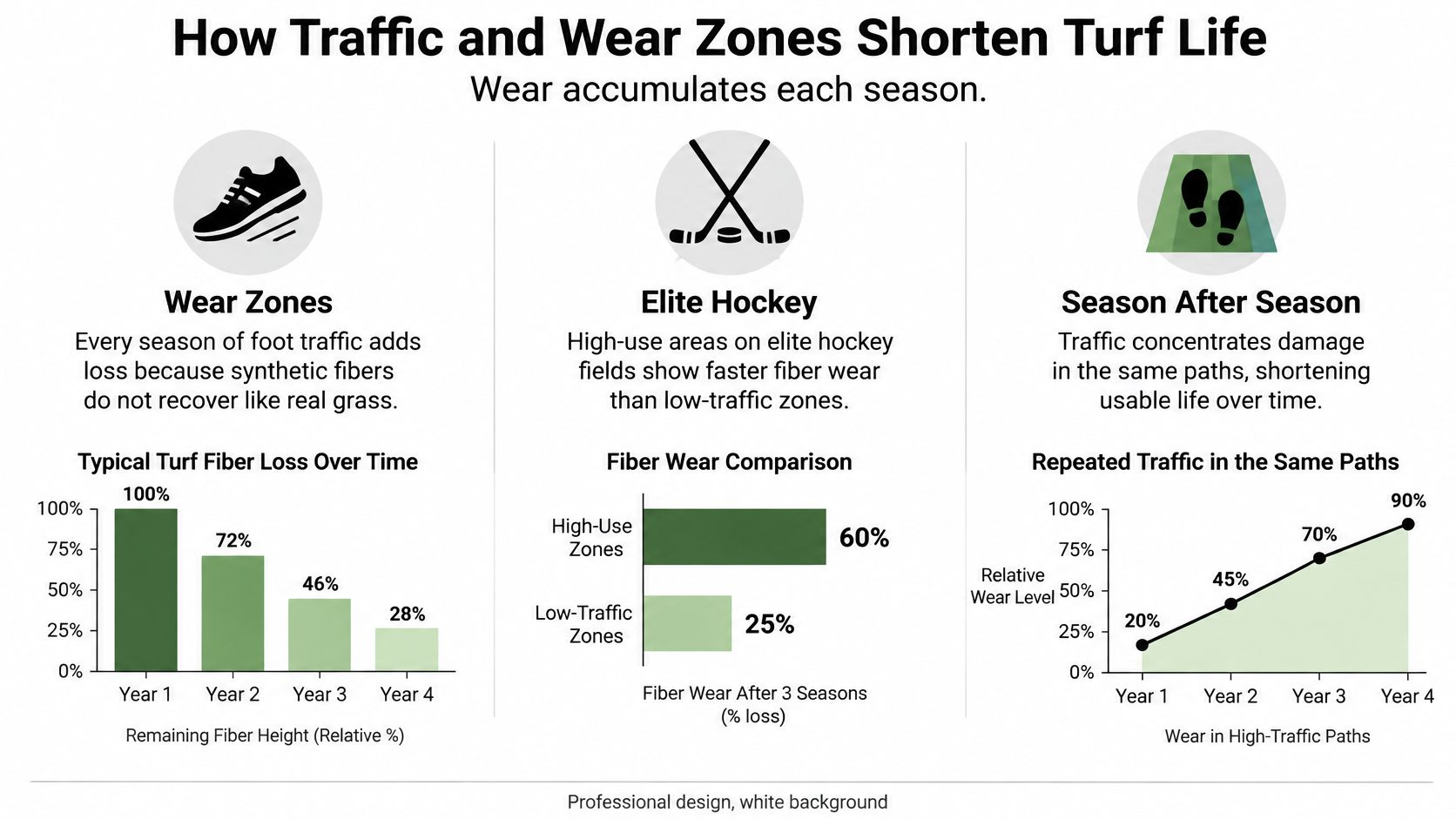
The Western Australia government study comparing natural and synthetic sports turf reports that elite hockey surfaces may require replacement every 4 to 5 years, while comparable club-level surfaces may last 8 to 10 years. Sustained elite use can cut service life roughly in half. The study links the difference to usage, maintenance quality, and the performance standard required.
The same wear pattern appears in smaller spaces. High-traffic areas, such as goal zones and central corridors, tend to deteriorate sooner than lightly used parts of a field. In a yard, the busiest path or turning area can set the practical replacement date, even when the rest still looks sound.
The lanes that fail first
Check where people and pets repeatedly cross, stop, or turn:
- Door-to-patio path: A regular route can flatten pile and shift infill.
- Gate and dog run entry: Dogs often accelerate, stop, and pivot in the same area.
- Play turning zone: Repeated foot planting and twisting concentrates wear.
- Circling corner: A dog patrolling a fence line can wear a narrow track faster than the open lawn.
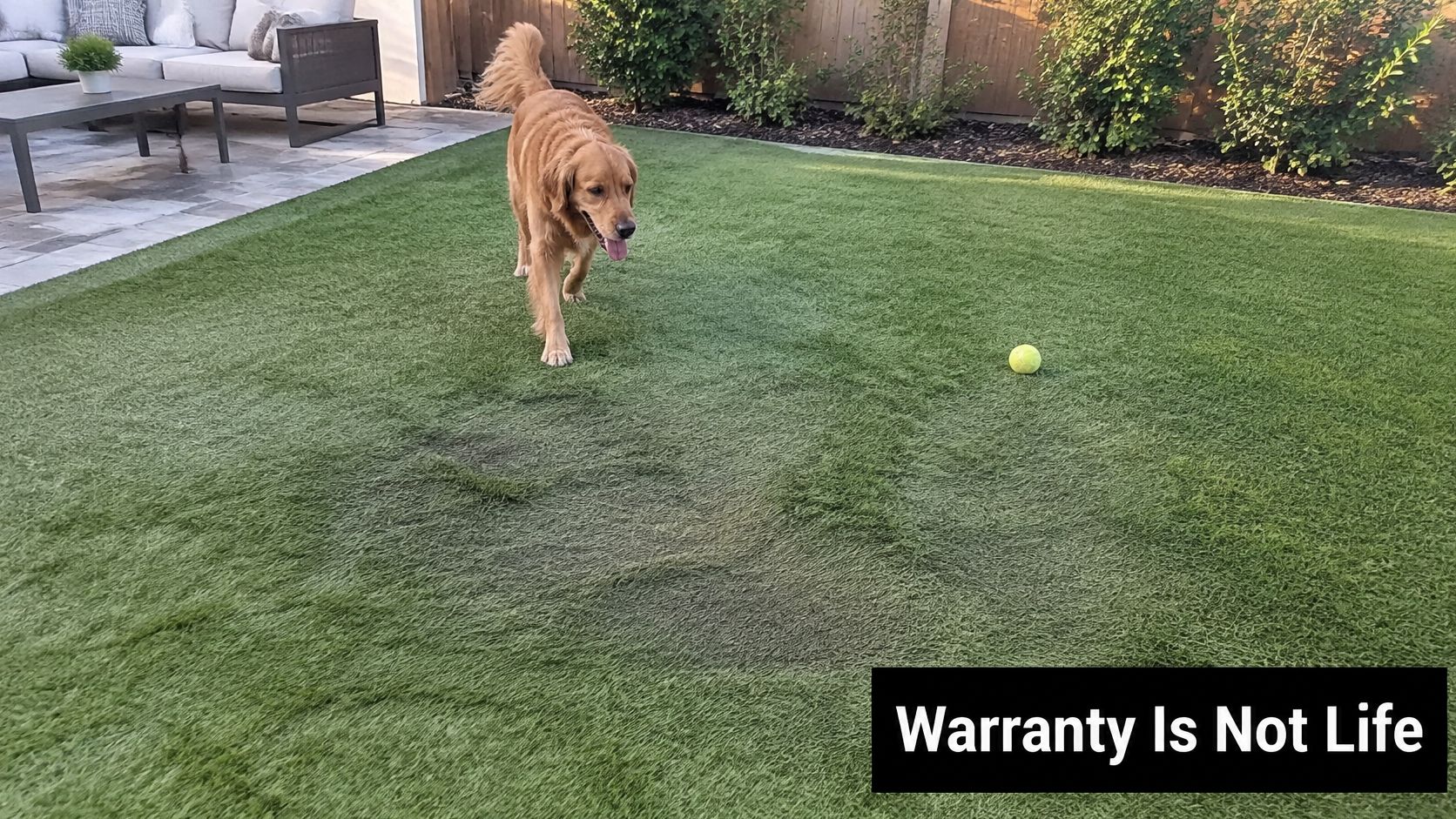
Inspect those zones closely. A worn path can look thin and flat while the rest of the lawn remains presentable. Older, heavily used, or under-maintained surfaces tend to wear out sooner, so busy areas need earlier grooming and closer inspection than decorative zones.
Map before you buy
Sketch the yard and rate each zone low, medium, or high for daily crossings, turning, and standing. Use that map to decide where heavier infill, a tougher product, stepping stones, or a protective border is worth the cost.
Concentrate upgrades where traffic repeats. A reinforced path paired with a standard decorative area can make more sense than using the same mid-grade product everywhere.
For existing turf, look for thin fibers, flattened pile, or visible backing. Those signs indicate advanced wear in that zone, even if the rest of the lawn still looks good. Early grooming, added infill, or a partial repair may address a worn lane before it drives replacement of the whole installation.
How Heat and UV Shorten Artificial Turf Life
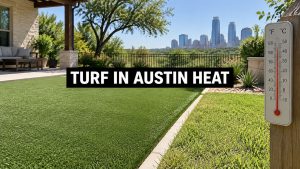
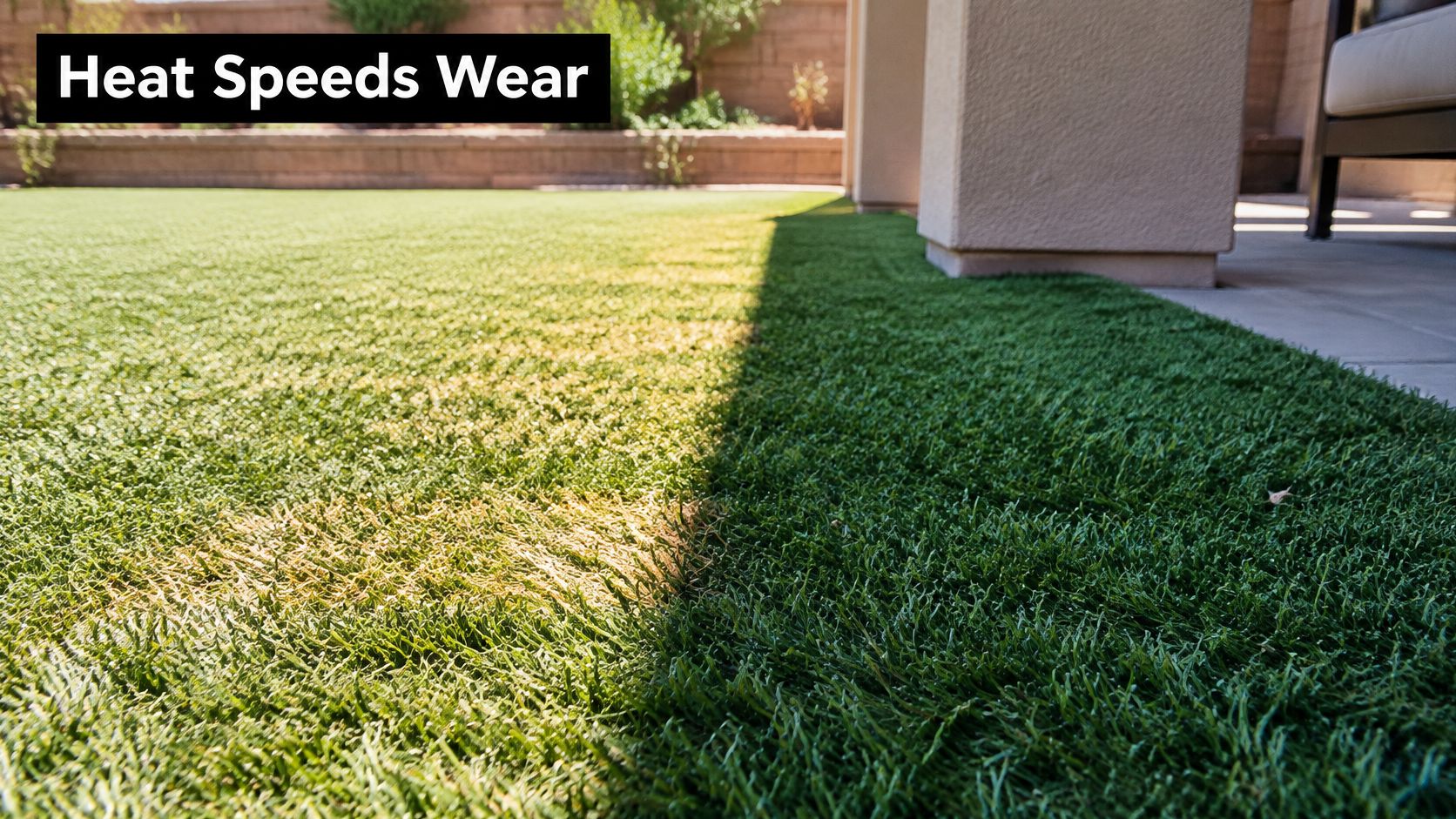
31°C to 57°C (88°F to 135°F) is the range of artificial-turf surface temperatures reported in a U.S. National Toxicology Program summary. The document also describes other measurements reaching 86.4°C (188°F). These figures show why heat should be treated as a material-aging factor, not only a comfort issue.
Ultraviolet radiation gradually degrades polymer fibers. Modern Yard Landscapes uses heat-resistant, UV-stabilized turf, but product selection does not make sun exposure irrelevant. Heat can also affect how comfortable the surface feels: artificial turf may be warmer than natural grass in direct sunlight.
Water cools briefly, but it does not protect against UV
A rinse can cool turf temporarily, which may make it more comfortable to use. It does not prevent UV exposure from aging the fibers, so watering should not be treated as a durability measure.
Shade and appropriate turf selection address different parts of the problem. Shade limits direct sun on the surface; UV stabilization helps the material withstand exposure. For sunny yards, review the details of UV-resistant artificial grass and ask for the product's UV-stabilization specifications.
Design for the hot zones
Map the sun exposure before choosing turf. South- and west-facing glass, light-colored walls, and metal features can reflect heat onto particular areas, so a strip beside a wall may face different conditions from the rest of the yard. Trees, pergolas, or shade sails can reduce exposure over play areas, seating edges, and pet runs.
Heat and UV belong in a realistic lifespan estimate, alongside use and site conditions. A full-sun area and a partly shaded lawn should not automatically receive the same service-life expectation. Consider the exposure across the site when selecting the product and planning the installation.
Maintenance Habits That Extend Usable Life
Maintenance won't make turf immortal. It will keep fibers upright, infill where it belongs, drainage open, and small joint problems from becoming replacement problems. That difference is where years are won or lost.
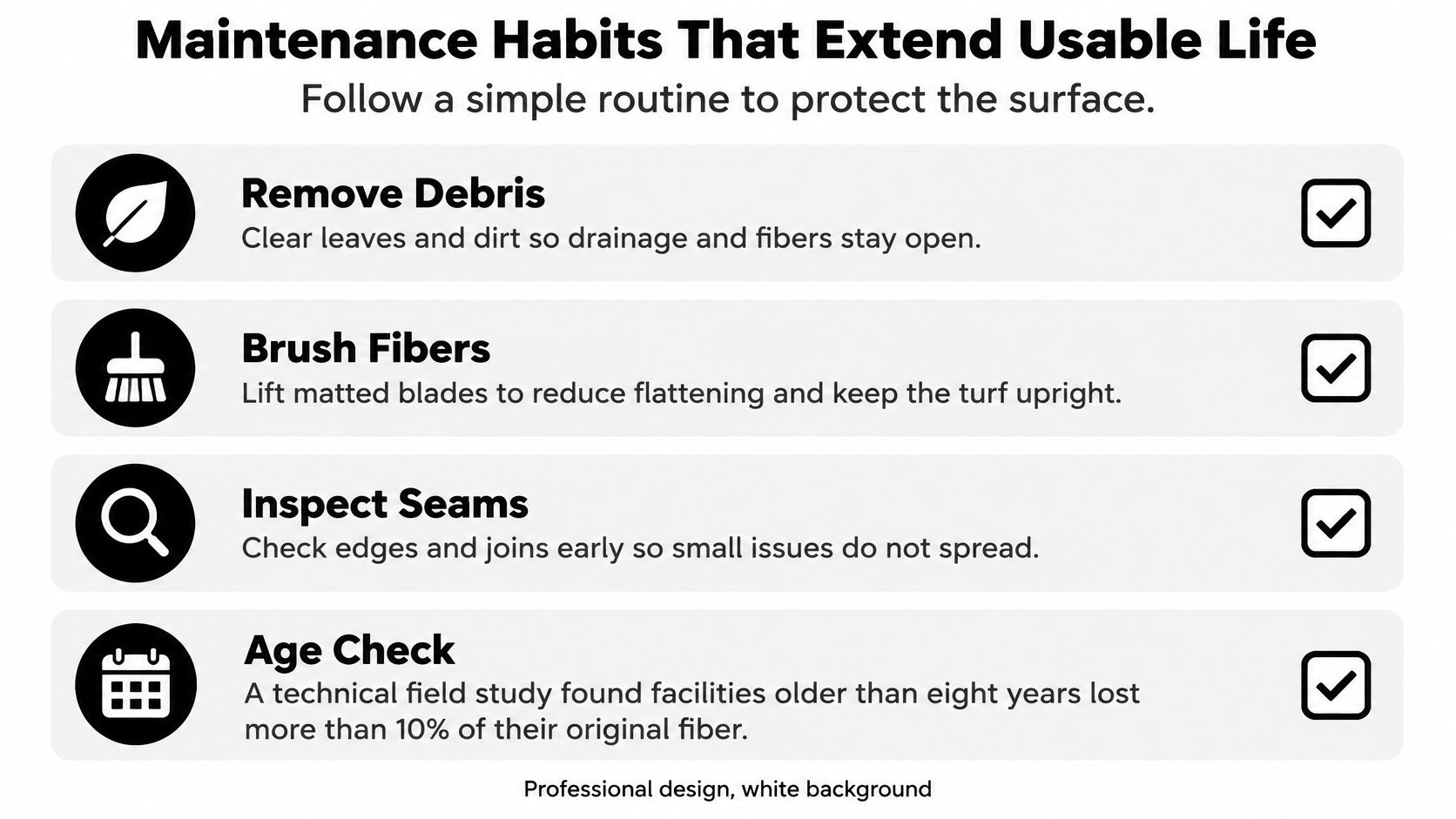
A technical field study summarized by IBV found that facilities older than eight years showed fiber-thickness reductions exceeding 10% of the original value, and that brushing, decompaction, replenishing infill, and repairing open joints improved playing conditions. Thinner fibers bend and abrade more easily, so wear feeds on itself. Early care matters most where the pile already leans.
| Task | Frequency | Why it matters |
|---|---|---|
| Grooming high-use zones | Routine, set by traffic | Restores fiber orientation and keeps pile upright |
| Debris removal | Routine | Stops leaves and grit from abrading fibers |
| Infill replenishment and leveling | When displacement appears | Keeps shock absorption and drainage consistent |
| Decompaction of compacted zones | As soon as a firm, flat spot is found | Restores drainage and fiber position |
| Seam and drainage inspection | At regular walk-through intervals and after major storms | Catches open joints and ponding early |
| Technical condition testing | Every 2 to 3 years | Measures remaining performance against the original specification |
Follow the routine in order
- Groom the traffic lanes: Brush against the lay of the pile with a stiff broom or power broom so fibers stand instead of folding under the next footstep.
- Remove debris before it grinds in: Clear leaves, grit, and pet waste routinely. Organic matter trapped in the pile holds moisture and works like sandpaper.
- Level the infill: Sweep displaced infill back into thin spots and top up where backing starts to show. Even depth supports the fiber and keeps footing consistent.
- Decompact firm patches: Loosen compacted zones so water passes through and fibers can recover their position.
- Inspect seams and edges: Look for open joints, lifting corners, wrinkles, and low spots that hold water.
- Test condition every 2 to 3 years: A technical check compares today's surface with the original specification, so you plan repairs from evidence instead of guesswork.
The common slips are predictable. Owners groom the open lawn because it's easy and skip the gate lane that needs help most. They ignore a damp corner because the grass still looks green. They let grit build up under trees until brushing drags it across the fibers.
Seasonal discipline helps adjacent hard surfaces too. If your patio uses an overlay, the same inspect early mindset applies, and this guide to winter care for concrete overlays is a useful companion for protecting the hardscape that meets your turf edges.
Be clear about the limit. Maintenance can slow functional decline, but it cannot reverse UV aging or polymer loss. Once fiber has thinned past a point, brushing won't restore thickness.
Make a regular walk-through your early warning system. Check the paths, gate, play zone, and drainage low point with your feet, not just your eyes. If one lane feels hard, looks flat, or holds water, act that week. Small corrections are cheap. Waiting until the whole lawn looks tired is how usable life gets cut short.
Drainage, Base and End-of-Life Factors
The lifespan clock also runs underground. Recurring ponding and subgrade movement can damage backing, stress seams, and destabilize the base while the visible fibers still look healthy. By the time wrinkles or dips show on top, the problem underneath may have been building for seasons.
Austin rain tests that hidden work. A heavy Texas downpour finds every low outlet, soft pocket, and poorly compacted edge. Our residential synthetic turf is permeable enough to handle heavy Texas downpours, but permeability in the carpet doesn't rescue a base that traps water below it.
Ask how the ground will be built
Before you approve a proposal, pin down the underground scope.
- Excavation depth: Ask how much existing soil or sod will be removed and where spoil goes.
- Base compaction: Ask what aggregate is used, how it's compacted, and how grade is checked.
- Edging: Confirm what holds the perimeter so turf and base don't migrate.
- Seam placement: Keep seams out of main turning lanes where possible, and ask how joints are secured.
- Drainage outlets: Identify where water exits, not just where it disappears through the backing.
You can compare those answers against our explanation of base material choices for artificial turf. If an installer can't describe the base in plain language, don't trust the lifespan number that follows.
Practical rule: If water has no planned exit, your turf doesn't have a planned lifespan.
What end of life actually looks like
Turf rarely fails evenly. Fibers flatten in one lane, backing deteriorates, a seam opens, infill disappears, or pet contamination makes reuse unsuitable. A single failed drainage zone can trigger replacement while the rest of the lawn remains serviceable. In many replacements, the aggregate base and drainage infrastructure can stay in place if they're stable, which separates total site life from the life of the turf carpet itself.
Pet areas deserve special honesty. Dog urine does not break down the fibers of the artificial grass we install, and it does not affect the look of the lawn over time, but odor control, rinsing access, and infill choice still need planning. Durable habits help indoors too, and choosing pet accessories designed to last follows the same buy once, maintain properly logic.
Don't accept vague recycling promises. Turf is a multi-material product made of fibers, backing, infill, adhesives, and sometimes shock pads, and those parts don't share one recovery path. There's no reliable universal recycling rate you can apply to every removal, so verify disposal claims against local rules and get the removal path in writing.
Ask four site questions before installation.
- Where does water collect after a storm?
- How deep is the excavation and how is the base compacted?
- Where are seams and drainage outlets placed?
- What is removed at end of life, who handles it, and what can remain for the next surface?
Those answers protect artificial turf lifespan more than a glossy sample ever will.
Warranty Coverage Versus Real Service Life
A warranty is a contract term. It isn't a measurement of how your lawn will look, feel, drain, or perform in year nine. Separate four ideas before you sign anything.
Warranty life is the period and conditions under which a named party will remedy covered defects. Functional life is how long the surface drains, supports footing, and holds together for its job. Appearance life is how long it still looks acceptable to you. Total site life includes the base and drainage that may outlast the carpet.
A lawn can drain well and stay intact while the traffic lane looks flat enough that you want it replaced. That lawn's functional life continues, but its appearance life has ended for the owner. Good proposals acknowledge that difference instead of hiding behind one long number.
The Federal Trade Commission guidance on hiring a contractor advises consumers to obtain a written contract identifying who will perform the work, what will be done, where and when it will occur, and the project cost. It also says the contract should identify warranties covering materials and workmanship, name the party honoring each warranty, and spell out the period and limitations.
Put warranties side by side
Ask every bidder the same questions.
- Defect or workmanship: Does coverage separate product defects from installation errors?
- Who honors it: Is each promise backed by the installer, distributor, or manufacturer?
- Full or prorated: Does the remedy shrink over time, and who pays labor and disposal?
- Voiding conditions: What maintenance failures or misuse can end coverage?
- Scope included: Are excavation, base, edging, seams, drainage, and cleanup written into the price?
Then make the claim checkable. ASTM lists standards including F1551-23, F3640-23, and F3846-26 for synthetic turf surfaces, infill sampling, and infill analysis, as shown in the ASTM sports and recreation standards listing. Request applicable test documentation and record the exact fiber, backing, and infill in your contract.
Our own explanation of artificial turf warranty coverage is the starting point we want customers to read before comparing bids. Read any warranty beside the maintenance plan, because coverage that requires care you won't perform isn't protection.
One local claim should never appear in a proposal. The City of Austin WaterWise landscaping rebate FAQs explicitly say artificial turf and permeable concrete are not eligible for that rebate. Water savings still matter in Austin, but no installer should imply that this municipal incentive will pay toward your turf.
A long warranty also doesn't guarantee low environmental impact or easy disposal. Judge warranty length, service life, maintenance burden, and end-of-life cost as four separate lines. That's how you avoid buying a headline instead of a surface.
Schedule a Site Assessment Before You Install
A turf system's service life depends on how well its materials and installation suit the site. Modern Yard has installed premium synthetic turf for 15 years. With proper installation, artificial turf lasts 15–20+ years, even in Austin's heat and fluctuating climate.
Before arranging an assessment, gather five details:
- Area size: Measure the space, including side yards and separate pet or play zones.
- Daily use: Note how many people and pets use each area and how often.
- Sun and shade: Mark full-sun, reflected-heat, and shaded zones.
- Water behavior: Identify ponding, runoff paths, soggy corners, and downspout discharge points.
- Wear locations: Mark paths, gates, turning spots, and gathering areas.
These details help connect the site's conditions to material choices and the estimate. Modern Yard Landscapes provides a transparent, factors-based written estimate and explains warranty coverage in writing before work begins. Most residential turf installations take 2–5 days, depending on yard size.
Ask for a site-specific estimate rather than relying on a generic lifespan claim. Schedule an assessment with Modern Yard Co. to discuss the product, warranty, and costs for your yard.