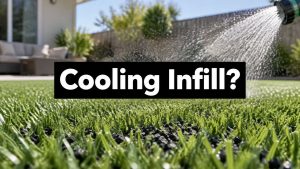

The most repeated advice in this business is that you can fix a hot lawn by swapping the infill. Buy the coated sand, spread it in, and your August backyard becomes barefoot-friendly. I don't sell that story, because the testing doesn't support it. Artificial turf cooling infill is a water-management component, not a heat shield, and the honest way to price it is in minutes of relief per watering, not degrees off a brochure.
That reframing changes what you should buy. A granule that holds moisture buys you a window of comfort after you wet it, and the length of that window depends on how much water sits within reach of the sun, how fast the air pulls it out, and whether your base lets the whole system breathe. Get those three right and cooling infill earns its cost. Get them wrong and you've paid a premium for sand that behaves like sand.
I'd rather you hear the trade-offs from me before you sign than discover them barefoot in July. Below are the comparisons, the timing, the water volumes, and the yard types where I'd tell you to skip cooling infill altogether.
Which Cooling Infills Actually Lower Surface Heat
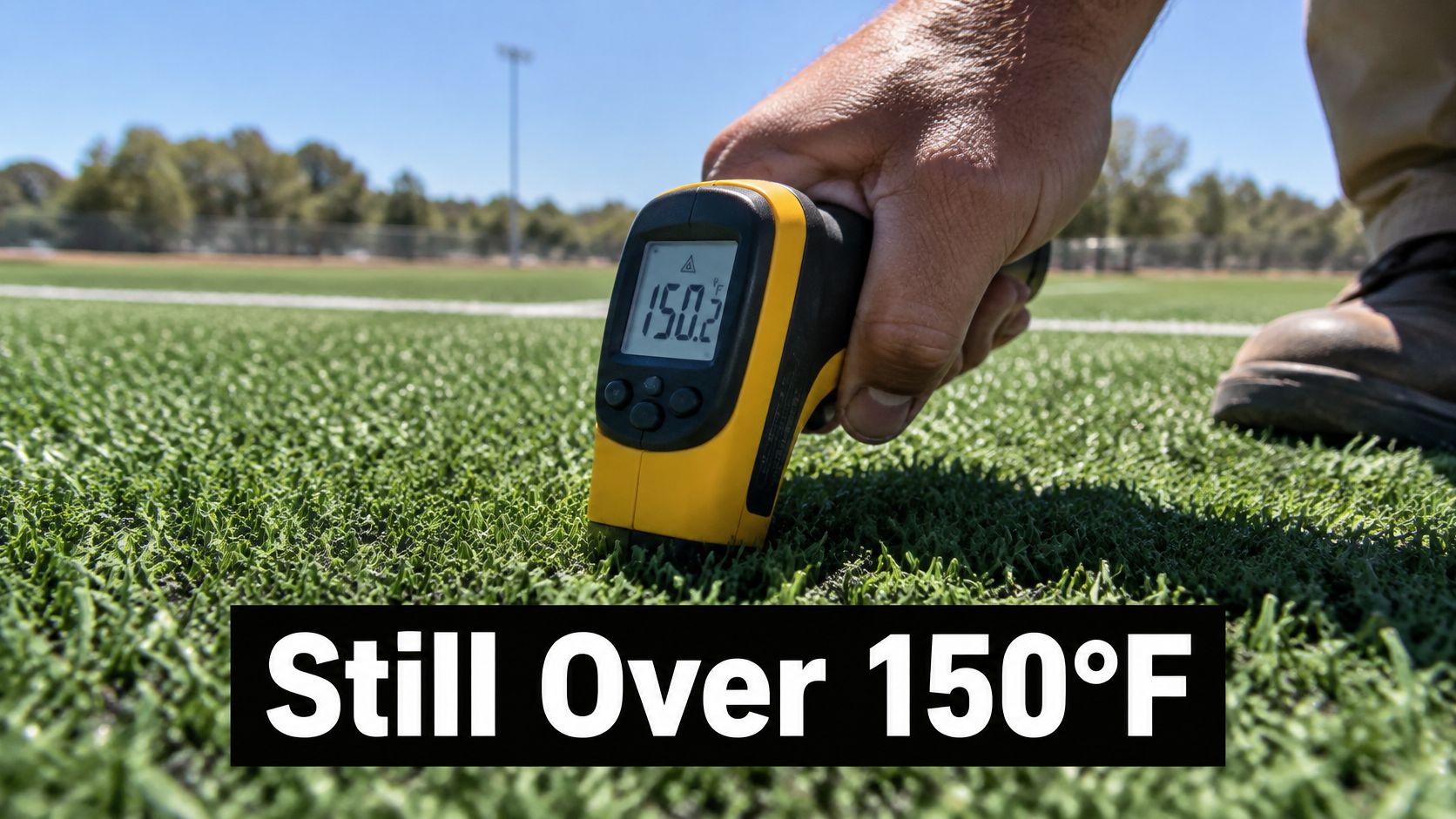
Cooling infill lowers surface heat in some systems, and no tested product keeps turf cool in direct summer sun on its own. Independent Penn State testing of synthetic turf systems found that all tested systems exceeded 150°F during evaluation, and no tested product produced a substantial temperature reduction compared with the standard combination of green fibers and black crumb-rubber infill. Treat cooling infill as heat mitigation with a measurable, temporary effect, never as a guarantee.
What the comparative testing supports
A 2024 systematic review of synthetic-grass sports surfaces found that thermoplastic elastomer (TPE) infill, HydroChill-type infill, and specialized cooling turf fibers can reduce surface temperatures compared with conventional systems using styrene-butadiene rubber (SBR) infill. The same review calls TPE a promising heat-reduction option while warning that evidence is less developed for materials such as cork and colored rubber. That's a real ranking, and it's also a narrow one: it says these systems ran cooler than a specific baseline, not that they stay comfortable at 3 p.m. in Austin.
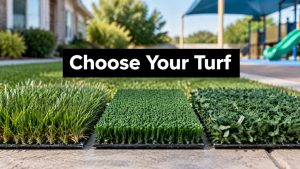
| Infill or Fiber | Heat Evidence | Water Retention | Cooling Depends On |
|---|---|---|---|
| SBR crumb rubber (baseline) | Highest reference surface temperatures | Low | Nothing; heat reduction has to come from shade or fiber changes |
| TPE infill | Lower surface temperatures than SBR in a 2024 systematic review | Low to moderate | Irrigation or an added water-holding layer |
| HydroChill-type infill | Lower surface temperatures than SBR in the 2024 review | Designed to hold water | Regular wetting, drainage and drying time |
| Specialized cooling turf fibers | Can reduce surface temperatures when paired with a cooler infill | Not applicable, it's a fiber | Fiber design, not water |
| Calcined clay amended infill | Cooler only while water is held; cooling couldn't be maintained through a full event | High | An irrigation schedule and the clay proportion |
| Cork infill | Limited evidence | Holds some moisture, but not quantified in the comparative testing | More testing needed before a recommendation |
| Colored rubber infill | Limited evidence | Low, like the rubber it's made from | Color alone isn't proof of a cooler surface |
| Light-colored fibers alone | No consistent reduction versus green fiber with black crumb rubber | Not applicable, it's a fiber | Shade and fiber design, not color |
How to read the table without fooling yourself
Two rows deserve a second look. Calcined clay amended infill holds the most water of anything listed, and it still couldn't hold a comfortable surface through a full sporting event, which tells you capacity alone doesn't buy duration. Light-colored fibers look like the cheap fix and aren't one, because color swaps didn't reliably beat the standard green-and-black system.
Buying rule: if a product's only evidence is its color or its label, it isn't a cooling product. Ask what it was compared against, and how long the difference lasted.
For most Austin homes I default to rounded, lighter-colored silica sand rather than black crumb rubber, paired with heat-resistant, UV-stabilized fiber. If you want the full breakdown of granule types, depths and rates, our guide to artificial grass infill covers the standard options in detail.
Shortlist two rows from that table now, ideally one water-holding option and one fiber-led option. The water and drainage sections will settle which of the two your yard can support.
How Water Turns Infill Into a Cooling System
A wet cotton shirt cools you only while water evaporates off it. Once it dries, it's just fabric in the sun. Cooling infill obeys the same physics, which is why the material has to do two jobs: hold water, and release it slowly enough that the release lines up with the hours you use the yard.
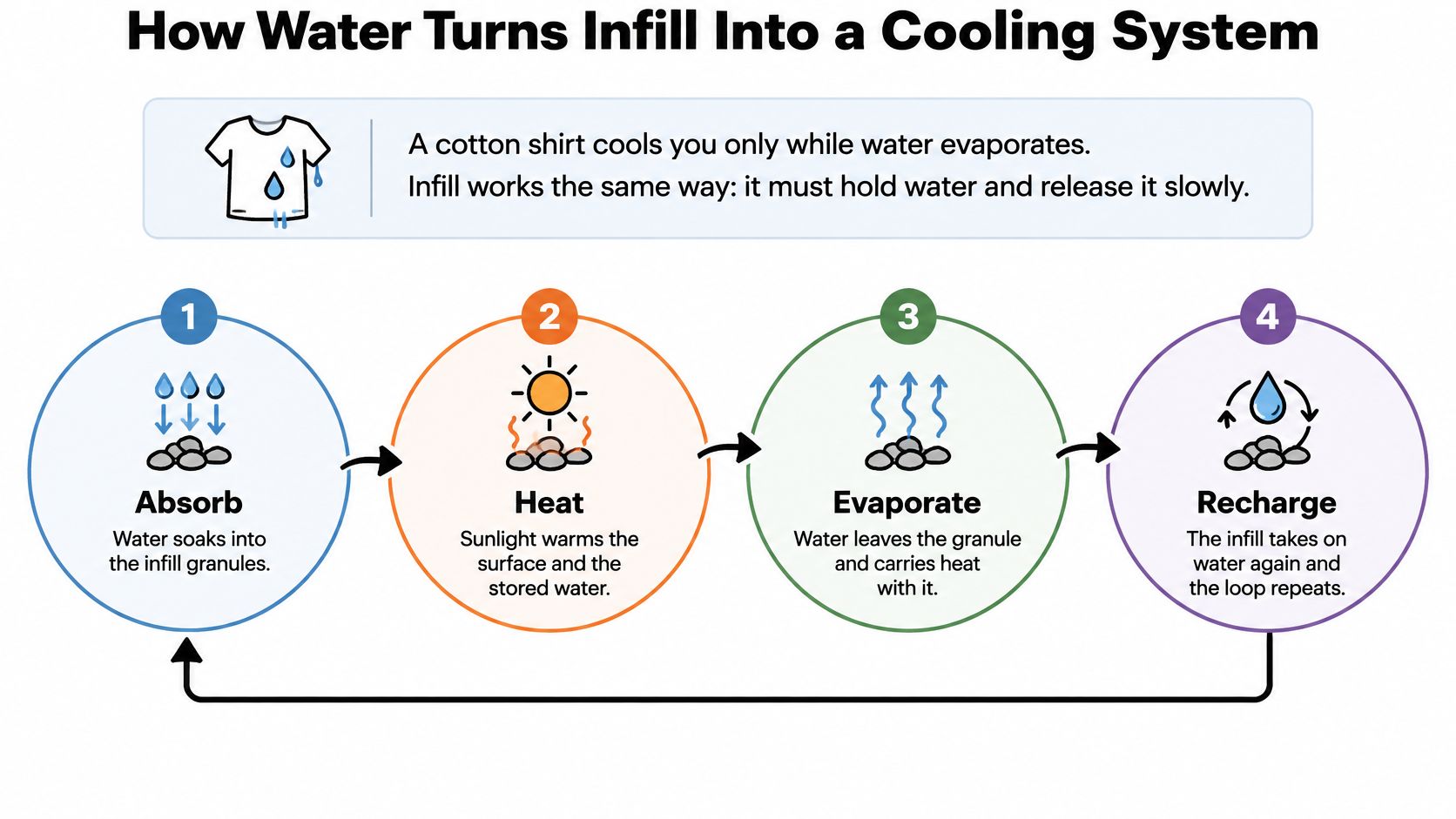
The loop runs like this:
- Water soaks into the infill granules or into a storage layer beneath the turf.
- Sunlight warms the surface and the stored water as the afternoon builds.
- Evaporation carries heat away with the vapor, and the surface reading drops.
- The surface warms again once the reachable water is gone, until you recharge it.
The scale you get when storage is engineered
A 2024 pilot study in Frontiers in Sustainable Cities measured cooled artificial turf at 37°C against 62.5°C for conventional artificial turf during a June heatwave, a gap of 25.5°C. The cooling didn't come from a bag of special sand. It came from rainwater stored below the playing surface and released upward for evaporation, with air temperatures near 30°C at the time.
That distinction matters more than the headline number. The Dutch system worked because water was parked underneath and fed back to the surface all day, not because someone hosed the field at lunch.
Why depth, porosity and the base decide the result
Water only cools the surface if it sits where evaporation can reach it. Infill spread too shallow holds a thimbleful and dries in minutes. Infill packed into a dense, compacted crust holds water low down where the sun can't pull it out, so the granules stay damp while the fibers bake.
- Porosity first: rounded, open-graded granules leave air paths for vapor to escape. Fines and dust fill those paths.
- Drainage second: a sealed or badly graded base traps water below the backing, where it does nothing for surface temperature and everything for ponding and odor.
- Storage third: if you want all-day cooling, you're building a reservoir under the turf, not upgrading a topping.
The same logic applies to every hard surface in a hot yard, which is why homeowners comparing patio materials look at cooler composite decking options from Utah Deck Supply alongside their turf plan. Shade and surface choice work together.
Cooling isn't a fixed property of a material. It's the output of a water system you either built or didn't.
How Long the Cooling Lasts After Watering
Relief after watering is measured in minutes, not afternoons. That's the single most useful thing to know before you spend money on a cooling granule, and it's the number nobody puts on a product page.
Penn State work reported in New Jersey's 2025 synthetic turf report found that 30 minutes after irrigation the synthetic surface reached the temperature of nearby natural turfgrass, approximately 29°C. In the same body of testing, applying roughly 0.75 inches of water twice, at noon and again at 1:30 p.m., lowered the turf temperature, yet the surface returned to its prior temperature within about one hour.
The timeline, in the order you'd check it
| Time After Irrigation | Reported Surface Result | Source |
|---|---|---|
| About 30 minutes | Surface reaches nearby natural turfgrass, about 29°C | Penn State experiment |
| Within 30 minutes | Rebound of 74–102% of the cooling gained | Documented irrigation trial |
| 60–120 minutes | Return to pre-irrigation temperature | Documented irrigation trial |
| About 60 minutes | Surface back to its prior level after 0.75 inches applied at noon and 1:30 p.m. | Penn State test |
| About 200 minutes | Irrigated plots averaged 14°C cooler than non-irrigated plots | Penn State field trial |
| About 3 hours | Irrigated surface still cooler than unirrigated turf | Earlier controlled testing |
The rebound figures come from documented irrigation trials on synthetic turf, where surface temperatures rebounded by 74–102% within 30 minutes after irrigation and returned to pre-irrigation levels within 60–120 minutes. Read that as: most of what you bought with the hose is gone before you finish lunch.
The counter-evidence, which is real
Water-retentive systems do stretch the window. In a Penn State field trial on irrigation and turf temperature, irrigated plots averaged 14°C cooler than non-irrigated plots approximately 200 minutes after irrigation. And Penn State's work on temperature amelioration through irrigation reports irrigated surfaces still cooler than unirrigated ones three hours on, while noting the benefit couldn't be maintained for the duration of a standard sporting event.
Both things are true. Conventional infill loses its cooling fast. Amended, water-holding infill keeps a measurable edge for hours, just not a comfortable one.
For an Austin yard, a noon watering buys you relief through early afternoon and nothing for the evening. If the kids swim at 5 p.m., water at 4:45, not at noon.
Run the test on your own lawn
Buy an infrared thermometer, wet a marked square, and log the surface reading immediately, then at 30, 60 and 120 minutes with similar sun and wind. Write the numbers on your phone. That single sheet of data tells you more about your yard than any manufacturer's claim, and it's the first thing I'll ask to see at a site visit.
Water Use, Drainage and Maintenance Tradeoffs
Cooling infill isn't free cooling. It's paid cooling, and the currency is water. Every liter you apply buys minutes of surface relief, and the evaporation rate needed to pull a traditional synthetic surface toward natural-turf temperatures is a heavy one, sustained only while water keeps arriving.
| Cooling Approach | Water Figure | What It Means |
|---|---|---|
| Evaporation toward natural-turf temperatures | Heavy, repeated wetting | Cooling lasts only while water keeps arriving |
| Subsurface storage with evaporation (Dutch pilot) | About 4 mm per day in summer | Half the evaporation of natural grass |
| Matching irrigated natural grass temperatures | Roughly 3–5 mm per day | A real water cost in drought-prone areas |
The Wageningen research on climate-proof playing conditions on urban soccer fields measured evaporation peaking at approximately 4 millimeters per day, about half the evaporation measured from natural grass. A systematic review of heat and water demand on synthetic surfaces estimated that holding temperatures comparable to irrigated natural grass may require roughly 3–5 mm of water per day. That is the figure to weigh if you're installing turf during a drought stage.
Make the volumes land on your own bill
Take a hypothetical 50 square meter lawn. A storage system giving up 4 mm a day loses roughly 200 liters daily. Matching irrigated natural grass at 3–5 mm a day on the same footprint costs 150 to 250 liters, every day you want the effect. Put those numbers next to your summer water bill before you agree to a cooling package, because a turf lawn that needs daily wetting isn't the water-free lawn you were sold.
Drainage and upkeep are part of the price
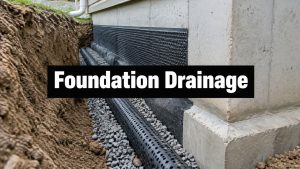
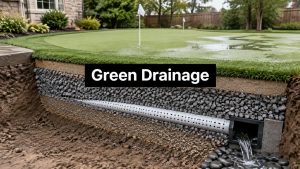
Infill that holds more water can pond after rain, recover slowly, and raise humidity right at ankle height. The base has to move water out, which is why we design the base before we pick the granule, and why our artificial turf drainage systems work matters more than the infill label. Drainage tile helps water move out quickly so the turf dries fast.
Clay-amended and coated infills clog with dust, pollen and debris, and once they do, the retained water stops reaching the surface. Decompaction and redistribution belong in scheduled upkeep, not on a someday list.
- Brush against the lean: a stiff broom or power brush every two to three weeks in peak summer lifts matted fibers and breaks the compacted crust.
- Top up and even out: infill migrates under traffic, so redistribute it into the thin spots rather than adding depth everywhere.
- Inspect while you clean: our turf cleaning includes checking seams and infill for wear, plus grooming and deodorizing.
No cooling infill removes the need to irrigate. Set a weekly water budget in liters, then check it against the minutes of cooling you actually measured.
Where Cooling Infill Falls Short
Here's the qualification I put in writing on every cooling quote: in independent Penn State heat testing, every synthetic-turf system evaluated exceeded 150°F, and no tested product produced a substantial temperature reduction against green fibers with black crumb-rubber infill. Color, coating and marketing language are not proof of a safe summer surface.
Three assumptions worth dropping
"The cooling is permanent." It isn't. Evaporative cooling ends when the reachable water ends, so the correct question is how many minutes of comfort each wetting buys and how often you're willing to repeat it. If you won't run a watering schedule, buy shade instead.
"The infill absorbs the sun's heat for me." Nothing in the system absorbs solar gain on your behalf. Plastic fibers take radiation and hold it, and the only levers are reflecting more of it, blocking it, or carrying it away as vapor. Cooler fibers plus a shade sail over the play zone will outperform any granule working alone, which is the thinking behind our heat-resistant artificial turf installations.
"A light color replaces shade." Light tones help at the margin and don't substitute for a structure that keeps direct sun off the surface for the hours you use it. A pergola, a sail, or a well-placed tree does more for barefoot comfort than a color upgrade.
A cooler reading isn't a cooler backyard
Synthetic surfaces can raise both surface and nearby air temperature compared with natural grass. That means a thermometer reading 20 degrees lower on the fibers doesn't guarantee the air around your patio feels better, especially in a walled courtyard with no breeze. Judge the space, not just the surface.
One more limit worth naming: never pour boiling water on turf to test or clean it. Extreme heat can soften, warp or permanently damage the fibers and backing.
The rule I apply is blunt. No watering schedule, no cooling claim. If a homeowner won't or can't wet the surface, I quote standard infill, cooler fibers and shade, and I say plainly that the yard will be hot at midday. That's a better outcome than a premium product failing to deliver, and it's the same recommendation we make for backyards in Kyle, Lakeway and Bee Cave, where shaded areas, infill solutions or cooling infills are the options we lay out plainly.
Matching Cooling Infill to Your Yard
Five things decide your infill: sun exposure, irrigation access, drainage, how the yard gets used, and budget. Not the product name. Find your situation in the table and you'll have a shortlist before anyone visits.
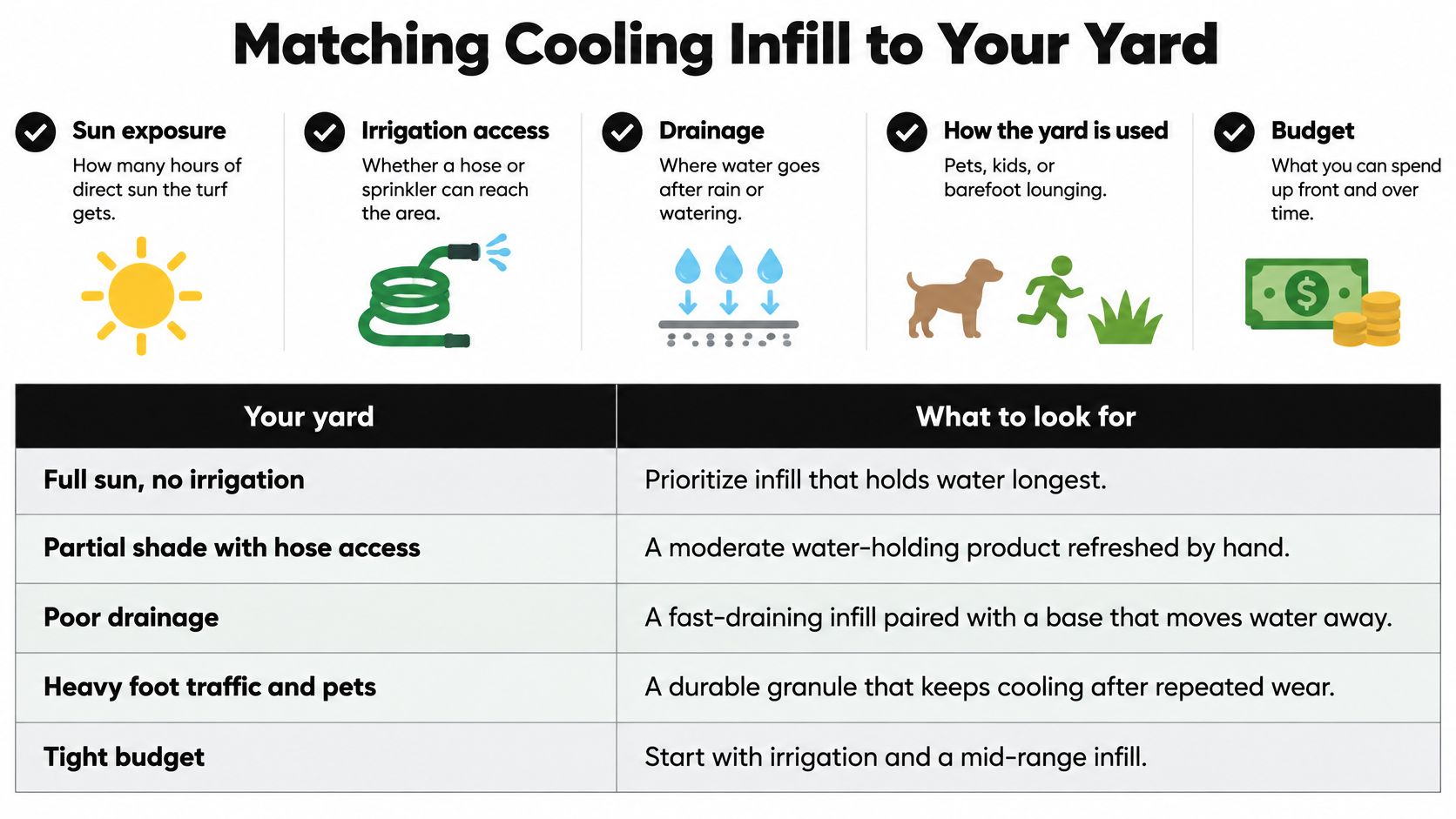
| Yard Scenario | Infill Approach | Irrigation Plan | Watch For |
|---|---|---|---|
| Fully exposed south-facing yard with hose access | TPE or HydroChill-type infill | Two watering windows, such as noon and 1:30 p.m. | Cooling fades within about an hour |
| Partly shaded yard | Standard infill with cooler fibers | Light, short watering | Shade does most of the work |
| Pet run | Drainage-first base with deodorizing infill | Watering for odor control and drainage | Ponding after rain |
| Play or sports area | TPE infill on an engineered base | Scheduled watering before use | Heat builds under continuous use |
| Water-limited yard | Standard infill with shade | No cooling schedule | Cooling claims without water support |
Why each match works
A fully exposed yard with a hose reachable gains the most from a water-holding granule, because you can recharge it on demand and the sun is the dominant load. Time the wetting to the use, not to the clock: rinse right before the kids go out.
A partly shaded yard often doesn't need the upgrade at all. Standard rounded silica with cooler fibers, plus the shade you already have, gets most of the available comfort for less money, and I'll tell you that even though it's the smaller job.
Pet runs are a drainage problem wearing a heat costume. We build dog runs with proper drainage and a deodorizing infill, because quality turf with proper drainage is designed to prevent urine from soaking in or lingering. Water there is for flushing and odor control, and the base has to accept it without ponding.
For play and sports areas, TPE on an engineered base is my pick, with watering scheduled before use rather than during it. Continuous traffic and continuous sun stack up, so plan short sessions and re-wet between them.
Water-limited yards get shade, full stop. Selling evaporative cooling to a household on a rationed supply is bad advice.
Copy this into a site note
- Sun hours: count direct sun on the turf between noon and 4 p.m., and note any Low-E window glare hitting it.
- Water access: can a hose or sprinkler reach every zone, and will you run it?
- Base drainage: where does water go after a storm, and does the area dry fast or stay soft?
- Expected use: barefoot lounging, pets, or sports, since each has a different comfort threshold.
- Budget: split it into upfront material and ongoing water plus brushing time.
Book a Site Check Before You Choose Infill
The right infill is a site decision, not a catalogue decision. Two identical products behave differently on a south-facing slope with a hose bib versus a shaded courtyard on compacted clay, and no product page can tell you which one you have. A site check settles the five variables that matter: sun hours, water access, base drainage, expected use and budget.
What we look at on site
We measure sun exposure across the day, check where water goes after rain, probe the base for compaction, and confirm whether water can physically reach the infill you're considering. If a hose can't get to the far corner, a water-holding granule there is a decoration.
We also review the parts of the job you can't verify from a spec sheet. Proper installation includes extensive soil preparation and compaction, precise grading for drainage, professional seaming, correct infill application and distribution, and proper perimeter securing. Commercial installations in particular depend on professional base preparation, drainage and infill distribution, because a poorly distributed cooling infill cools in patches and bakes in the rest.
Three steps to a decision you can defend
- Call and describe the yard. Sun exposure, size, and what you'll use it for. Two minutes on the phone rules out half the options.
- Book the site visit. We check drainage, shade and water access, and we'll look at your thermometer log if you've kept one.
- Get it in writing. You receive an infill recommendation with a watering plan and the cooling window to expect, so you can judge the product against a number instead of a promise.
Our artificial grass installers handle the base, the grading and the infill as one system, which is the only way cooling infill delivers what it's supposed to. Bring your two shortlisted options to the visit and we'll tell you which one your yard can support, or whether shade is the better spend.
Modern Yard installs heat-resistant, UV-stabilized turf across the greater Austin area with drainage-first bases, deodorizing pet-run infill and cooling infill options matched to your sun exposure and watering plan, all backed by transparent, factors-based estimates and a total satisfaction guarantee. Book a site assessment before you pick a product, and we'll hand you a written infill recommendation with the cooling window you can realistically expect. Visit Modern Yard Landscapes to schedule your visit.