
If your backyard in Austin turns into a mud track every time your dog tears out for a ball, you already know the problem isn't “grass.” It's a surface that can't handle paws, urine, heat, or our stubborn clay soil after a storm. A lot of homeowners start by searching artificial grass for dogs near me, then realize the question is which system will stay clean, drain properly, and still feel usable in July.
I see the same pattern over and over. A yard starts as thin Bermuda, gets shredded by a single summer of fetch, then comes back in patches that never quite fill in. The bags of seed and the endless watering don't fix the yellow spots, and they definitely don't fix the smell trapped in wet soil. If you've already looked at durable lawn options for dogs and you're still weighing synthetic turf, the deciding factor usually isn't looks. It's whether the installation was built to move liquid away, keep odors from hanging around, and survive real dog use.
That's why I talk about pet turf as a drainage-and-cleaning system, not a grass swap. If you want a deeper read on urine smell problems in turf yards, this local guide on dog urine odor in yard covers the issue from the cleanup side too.
The Daily Reality Austin Dog Owners Are Trying to Fix
A typical Austin backyard failure starts small. The dog runs the fence line, the Bermuda thins out near the door, and by the next hot spell the same spots are bare dirt. Then a storm rolls through, the clay holds water, and every paw that comes back inside brings a muddy print with it.
What keeps showing up in the yards I inspect
The complaints are rarely about appearance alone. Homeowners mention yellow urine spots, muddy paw prints, fleas in shaded patches, and a smell that lingers after rain because our clay doesn't release water quickly. Once a yard has compacted, any low area becomes a holding zone for moisture and odor.
That's why pet turf works best when it's treated as four parts working together, not one product on top of dirt. You need the fiber, the backing, the prepared base, and the infill to all do their jobs. Miss one part and the yard might still look finished, but it won't perform.
Austin dog owners also deal with a climate that punishes shortcuts. Summer heat exposes weak turf choices, and repeated wet-dry cycles push cheap installs apart faster than expected. If you want a practical comparison of other surface choices, the homegrown discussion of artificial grass for dogs near me often starts with the same trade-offs, but the important part is the site itself, not the label.
Practical rule: if a yard already smells, pools, or mats before the turf goes in, the problem is usually below the surface, not on it.
The rest of the decision comes down to climate fit. In Austin, that means thinking about drainage, heat, dog traffic, and how the yard will be cleaned after the first month, not just how it photographs on install day.
How Pet-Friendly Turf Actually Works Under Your Dog
Think of a dog run like a layered cake with a job to do at every layer. The top looks simple, but the part your dog feels is only the surface. Under that, every layer decides whether urine drains, whether the yard smells, and whether the turf stays flat under claws and zoomies.

The stack from bottom to top
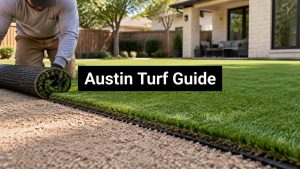
A good install starts with a compacted decomposed granite or crushed-stone base that has been shaped for drainage. On top of that goes a separator layer or weed barrier, then the turf backing, the fiber, and finally the infill. The reason dog turf differs from a putting green is simple, it has to move waste water faster and tolerate more sanitation.
The backing matters more than most homeowners realize. Pet areas need fully permeable or flow-channel backing, because urine has to get through the turf instead of sitting in the fibers. That's what helps with cleanup and keeps the surface from turning into a sponge after repeated use.
The fiber choice matters too. Slightly taller pile hides residue better between rinses, and a pet-specific infill helps manage odor instead of just pinning the blades upright. The turf should feel resilient, not slick, because traction matters when dogs are sprinting across it.
Austin adds one more wrinkle. Our clay swells when it gets saturated, so if the soil below the base isn't excavated and drained correctly, the whole system can shift during a heavy spring rain. That's why a pet install is only as good as the prep under it.
A dog run fails from the bottom up. If the base can't drain, no fiber on earth fixes it.
Four Specs That Separate Real Pet Turf From Pretty Turf
The first thing I look at on a quote is the fiber. For dog use, the turf needs enough face weight and pile length to handle traffic without looking bald after a few weeks. A shiny, mono-filament lawn can look expensive in a showroom, but retrievers and heelers will flatten weak fiber fast.
What each spec should actually do
Fiber. Pet turf should feel resilient under paw traffic, not delicate. In practice, that means a durable polyethylene or nylon blend, enough pile height to hide waste between cleanings, and a face weight that doesn't collapse every time a dog cuts a corner. If the blades mat quickly, the yard starts looking tired and smells worse because debris stays visible and harder to remove.
Backing. Most cheap installs fail. For dog yards, the backing needs to be permeable enough to move liquid through fast, not just “drainable” in a brochure. Industry references commonly point to ASTM F1551 for water permeability, and guidance for pet areas puts 30 inches per hour at the low end, 100 to 300 inches per hour in a good range, and 500 or more inches per hour as high-drainage performance for pet areas and flood-prone settings. Those thresholds give homeowners a real comparison point instead of marketing language.
Infill. The infill is not just ballast. A rounded silica sand base with an odor-focused additive, like zeolite or an antimicrobial-coated product, gives the surface a better chance of controlling ammonia from urine. The right infill won't replace cleaning, but it can reduce how often the yard needs deeper maintenance.
Base. This is the part people miss because they can't see it. Austin clay needs a stable, compacted base, usually crushed stone rather than river rock, and the yard has to slope away from the house. If the sub-base is too thin or poorly compacted, the turf may look fine at first, then soften, wrinkle, or trap odor after one wet season.
| Pet Turf Specs vs. Standard Turf | Pet Turf Target | Standard Landscape Turf |
|---|---|---|
| Spec | Higher drainage, odor management, and claw resistance | Appearance first, lighter duty use |
| Fiber | Durable, slightly taller pile that hides residue | Decorative look, often lower wear tolerance |
| Backing | Fully permeable, pet-focused flow paths | Basic drainage for rain, not repeated urine flow |
| Infill | Rounded sand plus odor-targeted additive | Sand or generic infill for blade support |
| Base | Compacted crushed stone with drainage slope | Lighter prep if the yard is only for visual appeal |
Modern Yard Landscapes installs pet turf with that system mindset in Austin, but the point is the same no matter who you hire, the turf has to be engineered for the dog, not just selected for the color.
Cleaning and Odor Control the Right Way
A clean dog turf yard is managed, not ignored. The biggest mistake I see is the assumption that a hose once in a while solves everything. It doesn't, because urine residue can stay in the backing and infill, and odor comes from uric acid crystals, not just visible dirt.

What daily upkeep really looks like
Solid waste should come off immediately, then the area should be rinsed so residue doesn't dry into the pile. In hot Austin weather, I'd rather see a quick hose-off routine done consistently than a once-a-week deep soak that never reaches the source.
Enzyme cleaners matter because they break down organic residue instead of masking it. If you want a homeowner-facing walkthrough of the process, the local guide on how to clean artificial turf is a useful companion, especially for anyone dealing with repeated dog use. The cleaner has to match the problem, though, and odor that keeps coming back usually means the base or perimeter is holding urine, not the blades.
If the smell is strongest near edges or low spots, stop blaming the grass. The drainage path is probably the real issue.
In practice, rinse more often in hot weather and after heavy use. Use deodorizer when the yard starts to hold a smell between cleanings, not as a replacement for cleaning. When you notice matting, pooling, or a smell that returns after rinsing, that's the sign the system is failing and needs a pro to inspect drainage, base, and infill condition.
What a Quality Install Really Costs in Austin
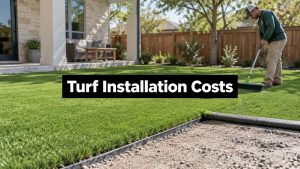
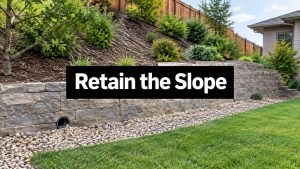
The number most homeowners focus on is the turf itself, and that's the wrong place to start. The expensive part is the prep under it, especially in Austin where clay soils and uneven access can turn a simple yard into a real excavation job. Narrow side yards, retaining edges, and slopes all add labor because crews have to move material by hand or stage equipment carefully.
The price drivers that change the quote
Base depth changes cost more than almost anything else. If the existing lawn has to come out, the soil has to be corrected, or drainage has to be improved before the turf goes down, the project moves up the ladder fast. Infill choice also matters, because odor-targeted products cost more than plain sand.
| Austin Pet Turf Cost Drivers and Typical Ranges | Typical Austin Range | What Changes the Price |
|---|---|---|
| Demolition of existing lawn | Varies by site conditions | Thick root systems, debris hauling, and access |
| Base preparation | Varies by soil and slope | Clay correction, excavation depth, drainage work |
| Infill type | Varies by product tier | Odor control add-ons, antimicrobial options |
| Drainage upgrades | Varies by layout | Perforated pipe, sump tie-in, drainage cells |
| Access difficulty | Varies by yard layout | Narrow gates, side-yard carry distances |
| HOA or fence coordination | Varies by neighborhood rules | Compliance review, gate changes, pet containment |
For homeowners who want a dedicated pricing conversation, this artificial grass for dogs cost page is a good starting point, but it still comes back to site conditions. A mid-range system can feel expensive until you compare it to a failed install that has to be torn out.
What pushes a project high is usually not the blades, it's the engineering. Better drainage, deeper base prep, upgraded infill, and access issues drive the quote up. Cutting the sub-base to save money is the single most expensive mistake I see because it creates the odor, pooling, and repair bill later.
Questions Worth Asking Any Local Installer
A good installer should welcome hard questions. If they get defensive, that's a warning sign, because pet turf should be explained like a system, not sold like a color sample. I'd rather hear a clear answer on drainage than a polished pitch about “maintenance-free grass.”

Green flags and red flags
- Ask for the exact turf specs. Green flag, they can tell you face weight, pile height, stitch rate, and backing type. Red flag, they say it's “premium pet turf” and stop there.
- Ask what infill they use and why. Green flag, they explain the odor-control trade-off between plain sand and pet-focused additives. Red flag, they insist infill never matters for dogs.
- Ask how deep the base goes in clay soil. Green flag, they describe excavation, compaction, and slope. Red flag, they say the existing dirt is fine if the top looks level.
- Ask how they test drainage. Green flag, they can describe flow and where water exits the yard. Red flag, they only promise that it “drains well.”
- Ask about warranty limits. Green flag, they explain what voids coverage, including neglected maintenance or drainage issues. Red flag, they avoid specifics.
- Ask who has installed pet yards locally. Green flag, they can point to Austin projects and explain what changed from one yard to the next.
- Ask whether permits or HOA reviews are needed. Green flag, they know when those steps matter. Red flag, they shrug and tell you to handle it later.
The two questions that tell you the most are simple. First, ask how they handle drainage under the turf. Second, ask how they handle odor at the source. If they can't answer both, they're probably selling a surface, not a pet system.
If you're comparing installers, the guide on how to find the best artificial turf installer near me is useful because it keeps the conversation focused on workmanship, not just price.
Putting It All Together for Your Yard
The right choice in Austin starts below the surface. Our clay-heavy ground needs a real base, not a cosmetic one, and the yard has to be built so water and urine can move away instead of settling in place. In Travis County, that usually means a 4-inch crushed limestone base where conditions call for it, especially when the natural soil is stubborn.
The sequence that makes the yard work
Start with the base, because that's where a large share of the cost and performance lives. Then choose a turf with at least a 1.5-inch pile height and a backing that can move water fast enough for repeated dog use. Pair it with a zeolite or antimicrobial-coated sand infill, then commit to a rinse-and-enzyme routine that matches the number of dogs using the yard.
Heat changes the decision too. In summer, lighter fiber choices and shaded rinse areas help the surface stay more usable, and seams need to hold up through temperature swings. That's why the install method matters just as much as the product, especially when freeze-thaw or seasonal movement can stress a weak seam.
Before you call around, do a quick self-audit.
- Yard slope: does water already run toward the house or away from it?
- Sun exposure: is the yard full sun, partial shade, or under trees?
- Dog size and energy: are you dealing with one small dog or multiple heavy runners?
- Access: can crews reach the area without tearing up the whole side yard?
Those answers shape the quote more than a catalog photo ever will. If you want a site visit that accounts for soil, drainage, access, and how your dog uses the yard, schedule a walkthrough before you pick a product. A good quote should reflect the yard you live with, not just the grass you want to see.
Modern Yard installs pet turf for Austin yards that need real drainage, cleaner cleanup, and a setup that can handle dogs without turning into a mud problem. If you're ready to compare options for your own property, visit Modern Yard Landscapes and schedule an on-site walkthrough so the estimate matches your soil, slope, and dog traffic.