
Artificial grass for dogs usually costs $8 to $20 per square foot installed, and a 500 square foot dog run or backyard project often lands between $5,000 and $10,000. For most Austin pet owners, that isn't just a yard upgrade. It's a permanent fix for mud, dead grass, urine spots, and the mess dogs can turn a natural lawn into.
If you're reading this, there's a good chance your yard is already losing the fight. Maybe the grass is gone along the fence line. Maybe your dog has created a dirt racetrack. Maybe you're tired of muddy paws coming back into the house after every rain. That's often why people start looking into pet turf.
The problem is that most cost guides are too generic to help you make a smart decision in Austin. They throw out a national price range, skip over clay soil, ignore heat, and pretend every yard drains the same. It doesn't. If you want a dog-friendly turf system that stays clean, drains fast, and doesn't turn into a hot, smelly mistake, you need to know where the money goes.
What Artificial Grass for Dogs Really Costs Per Square Foot
Your dog tears across the yard after a summer storm, then tracks orange clay and muddy water straight into the house. That is the moment a lot of Austin homeowners start pricing pet turf, and it is also where generic national guides stop being useful.
Installed pet turf usually falls in the $8 to $20 per square foot range, with a national average around $14 per square foot, and a 500 square foot dog run or backyard often totals $5,000 to $10,000, based on pet-friendly artificial grass installation cost data. Those numbers are a starting point, not a budget you should trust without looking at your yard.

In Austin, price swings primarily stem from what sits under the turf and what gets spread into it. Clay-heavy soil drains poorly. Dogs add urine load. Full sun makes cheap turf miserable by July. If an installer prices your project like a basic decorative lawn, expect puddles, odor, and a surface that runs too hot for paws.
Low-end pricing usually means the installer is cutting corners where homeowners cannot see them. You may get thinner turf, a shallower base, weaker drainage, or standard infill that does nothing to help with smell or surface temperature. The quote looks attractive. The performance usually does not.
Ask blunt questions:
- Does the base depth fit Austin clay conditions?
- Is the turf backing built for fast drainage?
- Is the infill chosen for dogs and heat, or just because it is cheap?
- Does the price include cleanup and disposal of removed material?
That is how you separate a bargain from a redo.
Higher-end pricing usually reflects a system designed for real pet use. Better fibers hold up to running and digging. Better drainage clears urine and rain faster. Cooling or odor-control infill costs more, but in Austin it is money well spent. Homeowners comparing options should also read about the Benefits and drawbacks of artificial grass before choosing the cheapest product on the board.
Material choice matters too. Polypropylene is usually the budget option. Polyethylene gives a better feel for most dog areas. Nylon costs more and takes heat and wear well, but it is not automatically the right pick for every yard. If you want a broader look at where turf dollars go, this guide on the real cost of artificial turf installation gives helpful context.
My recommendation is simple. Budget for a pet system, not just a green surface. In Austin, the hidden costs are usually drainage prep and heat-control infill. Skip those, and the cheaper quote gets expensive fast.
A Detailed Cost Breakdown of Your Turf Project
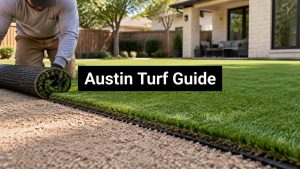
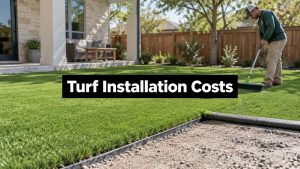
Most homeowners see one number on a quote and wonder if they're getting overcharged. Fair question. A proper pet turf installation isn't just laying green carpet over dirt. The system below the turf is what decides whether the yard drains, smells clean, and lasts.
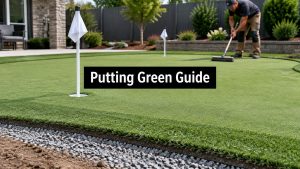
Industry benchmark data puts installed pet turf at $10 to $20 per square foot, and says that pet systems often require 80% to 100% permeability in the backing layer plus specialized prep such as crushed stone bases that add $1 to $3 per square foot to the base material price, according to industry benchmark data for pet turf costs.

The main cost buckets
A real quote usually breaks into a few parts, even if the contractor doesn't label them clearly.
| Cost Area | What you're paying for | Why it matters |
|---|---|---|
| Turf material | The synthetic grass itself | Fiber quality affects appearance, feel, and wear |
| Site prep | Removal, grading, excavation, compacted base | This prevents shifting, puddling, and early failure |
| Drainage | Permeable backing, stone base, drainage support | Critical for dog urine and heavy rain |
| Infill | Stability, odor control, cooling performance | Cheap infill saves money up front and causes headaches later |
| Labor | Cutting, seaming, fitting, securing, cleanup | Skilled labor is what makes the system look natural and perform well |
A commonly underestimated element is the base. Dogs don't just use the yard. They stress it. They pace. They sprint. They hit the same spots every day. That traffic exposes bad prep fast.
What an honest quote should explain
A trustworthy installer should be able to walk you through each line item in plain language. If they can't explain the drainage plan, they probably don't have one.
Ask direct questions like these:
- What base material are you using? Crushed stone and proper compaction matter.
- How does urine move through the system? You want a clear answer, not vague talk.
- What infill is included? “Pet-friendly” means nothing if they can't define it.
- How are edges secured? Weak edges invite lifting and digging.
If you want a plain-English primer before comparing bids, this guide on the real cost of artificial turf is worth reading alongside estimates.
For a wider homeowner perspective before you commit, this piece on Benefits and drawbacks of artificial grass does a good job showing where turf shines and where buyers need to be realistic.
A cheap turf quote usually hides cost by shrinking the prep, not by working magic on materials.
Why Pet-Specific Turf Features Are a Smart Investment
Standard artificial grass and pet turf are not the same product category in practice. If you've got dogs, especially in Austin, skipping pet-specific features is where bad purchases start.
One of the biggest gaps in generic pricing content is that many guides leave out the 15% to 20% price premium tied to antimicrobial infills and cooling technologies that address odor and heat stress in Texas climates, according to this pet turf pricing analysis focused on omitted premium features. That premium is exactly why two quotes can look similar on the surface and perform completely differently after installation.
The three features worth paying for
Start with drainage. Dog urine has to move through the system fast and completely. If it lingers, odor follows. If the backing and base can't handle repeated use, no cleaner will save you.
Then focus on infill. Pet-specific infill does more than hold blades upright. The right product helps with odor management and can reduce surface heat. In Austin, that matters. A turf system that looks affordable on paper can become a false economy if it stays hot and starts trapping smell.
Finally, pay attention to turf construction. Dense traffic zones need a tougher surface. If your dog uses the same path every day, the system needs to handle that wear without matting down immediately.
Where homeowners get burned
A lot of people buy on label language instead of performance. “Pet safe” sounds reassuring. It doesn't tell you how the system drains, what infill is used, or how it handles summer heat.
Here's where I'm opinionated. If you have a dog and you're comparing a basic decorative turf product against a real pet system, stop pretending they're interchangeable. They're not.
Use this checklist when reviewing any proposal:
- Odor control included: Ask what product is doing the actual work
- Cooling considered: Don't assume “green” means comfortable in Texas sun
- Drainage designed for urine: Fast flow through the turf is essential
- Traffic durability matched to your dog: A calm older dog and a young large dog don't stress turf the same way
If you want to compare surface options with a pet-first lens, this guide to the best artificial grass for pets can help you separate decorative marketing from practical performance.
A dog yard should be easy to rinse, comfortable to use, and predictable in all weather. If the product can't do those three things, it's the wrong product.
Estimating Your Project Cost in the Austin Area
Austin changes the math. That's the part national calculators miss.
A homeowner in a newer subdivision might have compacted clay soil in the backyard, a slight drainage issue along one fence line, and a dog that uses the same half of the yard every day. On paper, the yard looks simple. In reality, that site may need extra drainage work and cooling infill to avoid the two most common problems here: trapped moisture below the turf and excessive surface heat.
Recent data says 30% of pet turf failures in the South stem from inadequate drainage layers rather than turf quality, and that cooling infills can add $1 to $4 per square foot while helping prevent paw burns, according to this regional pet turf cost guide on drainage failures and cooling infill. That's exactly why Austin buyers should stop looking at turf as a single material price.
A realistic Austin example
Let's use a typical 500 square foot dog run or backyard zone. The homeowner wants clean drainage, a surface that won't become a mud pit after storms, and a turf system built for dog use rather than curb appeal alone.
Here's what a sample estimate might look like in structure.
| Line Item | Description | Estimated Cost |
|---|---|---|
| Turf installation | Full installed pet-friendly turf system for a 500 sq ft area based on the common installed range | $5,000 to $10,000 |
| Drainage upgrade | Added drainage tile or specialized gravel base for clay-heavy conditions | $200 to $500 extra |
| Cooling infill | Premium infill added across the project area | $1 to $4 per sq ft |
That doesn't mean every Austin project needs every add-on. It means you need to know whether your yard does.
What makes Austin pricing different
Three local conditions drive a lot of the spread:
- Clay soil: Water doesn't always move the way homeowners expect. That can require more drainage support below the turf.
- Heat exposure: A full-sun yard needs a smarter infill discussion than a shaded side yard.
- Storm behavior: Even if your dog only uses the yard lightly, one intense rain can expose a weak base.
If you're comparing local bids, make sure the installer is accounting for the site instead of dropping in a national average and hoping for the best. A local contractor directory page like synthetic grass installers in Austin TX can at least help you see who focuses on this market, but the ultimate test is whether they can explain your drainage plan clearly.
In Austin, the hidden cost usually isn't the turf. It's fixing the ground so the turf can do its job.
Calculating the Long-Term ROI and Savings
Upfront cost matters. Long-term cost matters more.
High-quality pet-grade artificial turf installed at $8 to $10 per square foot typically pays for itself within three to four years, and annual maintenance averages only $250 to $350, according to artificial grass ROI and maintenance cost data for dog owners. That's the number homeowners should focus on when they're deciding whether this is a luxury or a practical investment.

Where the savings come from
Natural grass in a dog yard tends to become a recurring repair project. You water it. Mow it. Fertilize it. Reseed thin spots. Patch damage. Then the dog destroys the same areas again.
Artificial turf changes that cycle.
| Natural grass headache | Turf replacement benefit |
|---|---|
| Constant watering | Little to no watering for appearance |
| Repeated mowing | No mowing |
| Fertilizer and reseeding | No regular lawn recovery cycle |
| Bare spots and mud | Stable usable surface year-round |
You're not just buying synthetic grass. You're buying out of a maintenance loop.
How I'd think about the investment
If your current yard already costs time, money, and frustration every season, then artificial turf isn't competing against “doing nothing.” It's competing against more lawn repair, more cleanup, and more wasted weekends.
That's why the payback period matters. A system that recovers its premium in a few years and then settles into low annual maintenance is easier to justify than a natural lawn that keeps demanding attention.
A practical way to think about value:
- Short term: You spend more up front and stop fighting the yard.
- Mid term: The system starts making financial sense through avoided lawn expenses.
- Long term: You keep a usable dog space without rebuilding the same damaged grass over and over.
The wrong way to shop is to compare turf only to this month's lawn bill. Compare it to years of upkeep, frustration, and replacement.
Your Checklist for Choosing the Right Turf Installer
The installer matters as much as the product. A great turf product installed badly will still fail. A well-built system starts with a contractor who can prove they know what they're doing.
Contractors should display trust signals such as state license badges and BBB membership prominently because those hard-proof signals increase customer confidence and lead conversion in local SEO markets like Austin, according to guidance on trust signals for local contractors. That advice lines up with what homeowners already know instinctively. If a company hides basic credentials, that's a warning sign.

Questions worth asking before you sign
Don't settle for a glossy estimate. Ask the questions that expose whether the contractor builds real pet systems.
- Show me your credentials: License information, insurance status, and visible business trust signals should be easy to find.
- Explain your drainage plan: If they can't describe the base and water flow clearly, keep looking.
- Tell me what infill you use for dogs: Generic answers usually mean generic products.
- Walk me through the warranty: A real pro won't dodge this.
- Show pet-project photos: Not just pretty front lawns. Dog runs, side yards, and high-use backyards.
For homeowners who like comparing how other trades vet contractors, this piece on the best deck builders in Guelph is a solid example of the kind of proof points you should look for in any outdoor construction company.
If you're reviewing local options, a list like turf contractors near me can help you build a shortlist. Then do the hard part and question every bid.
The right installer welcomes detailed questions. The wrong one tries to rush past them.
Frequently Asked Questions About Pet Turf
How do you clean dog waste off artificial turf
Pick up solid waste, then rinse the area well. For urine-heavy zones, use a pet-safe cleaner on a regular schedule and follow the care instructions for your specific turf system.
The bigger issue is drainage. In Austin, clay soil can trap moisture under a bad install, and that is when odor problems start. If the base and drain path were built correctly, cleanup stays simple.
Will my dog dig through it
Some dogs will try. They usually go after edges, seams, or any spot where the installer rushed the prep work.
A well-built pet turf system uses secure edges, tight seams, and a compacted base that does not shift under paws. If your dog is a determined digger, say that before you sign anything. A good installer will change the build details to match your dog's behavior.
Does pet turf smell
Pet turf should not stink if it is built for dogs. Smell usually points to one of three problems: weak drainage, low-grade backing, or the wrong infill.
Austin heat makes bad materials fail faster. That is why I recommend asking specifically about pet deodorizing options and cooling infill, not just turf color and blade height. National pricing guides skip that part, but local homeowners pay for it one way or another.
How can I tell if a company stands behind its work
Start with the basics. Ask what happens if seams lift, if odors show up, or if drainage fails after a heavy rain.
Then look at how they handle follow-up after the job is done. A company that makes it easy for customers to leave honest feedback usually has a real process in place. This article on contractor review follow-up strategy explains why that matters for service businesses.
Is getting a quote worth it if I'm still comparing options
Yes. Get the quote.
A good estimate should show you where your money is going, especially in Austin where base prep, drainage correction, and heat-control upgrades can change the actual price fast. If a company only gives you a square-foot number and skips the soil, slope, and pet use questions, that quote is not worth much.
If you want a straight answer on what your dog yard will really cost in Austin, talk to Modern Yard Landscapes. They're fully insured, offer a total satisfaction guarantee, and build pet-friendly turf systems with the drainage, durability, and cooling details that generic quotes often miss. Reach out, schedule an appointment, and get a clear estimate based on your yard, your dog, and how you use the space.