
If your Lab has worn a path through the same patch of grass, your German Shepherd is pacing at the gate, or the back patio gets too hot to trust under bare paws, you already know the backyard isn't really working. A fenced yard can look fine from the kitchen window and still fail the dog every afternoon in an Austin summer. Outdoor dog runs for large dogs solve a different problem than a simple fence line, because they're built for movement, heat, drainage, and the kind of pressure a 70 to 100 pound dog puts on every seam, latch, and surface.
A lot of homeowners wait until the grass is gone, the fence leans, or the dog starts finding weak spots. At that point, the question isn't whether to improve the yard, it's whether to build something that holds up. A purpose-built run gives the dog a defined, safer place to move without shredding the rest of the property, and it gives you a setup that's easier to clean, easier to cool, and far more predictable in bad weather.
Why Large Dogs Need a Purpose-Built Run
The call usually comes after the damage is obvious. A family with a Lab says the grass is mud half the year, the concrete is too hot by noon, and the dog keeps testing the low spot by the side gate. A German Shepherd owner says the yard looks fenced, but the dog has already learned where the panel flexes and where the ground dips enough to nose under.
A dedicated run fixes problems a normal backyard never really solves. It separates the dog's traffic pattern from landscaping, keeps footing more predictable, and gives water, shade, and cleaning routines a fixed place to happen. It also helps with the thing homeowners underestimate most, surface temperature, because Texas sun punishes plain concrete, cheap turf, and bare soil in ways that aren't obvious until a dog refuses to step outside.
The big shift in pet-friendly urban planning has already happened. A Trust for Public Land study cited in 2011 reported 569 off-leash dog parks in the 100 largest American cities in 2010, up 34% in just five years (New England Condo). That growth tells you something practical, municipalities and property owners started treating dog space as real infrastructure, not an afterthought.
Practical rule: if the dog is strong enough to test a weak fence, the run has to be engineered like a small outdoor structure, not treated like a pet accessory.
For homeowners who want a clean, built-to-last layout, a well-planned approach starts with a proper layout and drainage concept like the one outlined in this dog run build guide. The point is not just containment. It's giving the dog a place that holds up through heat, rain, and repeated daily use without turning the rest of the yard into a repair project.
Right-Sizing the Run for Your Breed
Sizing gets talked about in vague terms all the time, and that's where a lot of bad quotes start. The dog's body should drive the footprint, not whatever happens to fit between the patio and the side fence. A useful starting point is the USDA APHIS method, which says to measure the dog from the tip of the nose to the base of the tail, add 6 inches, then square the result to get minimum floor space in square inches (USDA APHIS).
Translating the measurement into a real footprint
That formula gives you a floor, not a luxury. For large breeds, practical guides push beyond that baseline. One guide recommends a dog run at least 5,000 square feet, with large dogs benefiting from 7,000 square feet or more, while another large-breed guide recommends a minimum enclosure of 6×10 feet per dog and an ideal size of 8×12 feet or more for extended use, with 6-foot fencing as standard (PetsCare). Another kennel-sizing guide puts a single large dog like a German Shepherd, Lab, or Rottweiler at 6×10 feet (60 sq ft) to start, with 8×12 feet (96 sq ft) preferred if the dog spends a lot of time outside (Van Dyke Outdoors).
That range gives homeowners a defensible way to talk to a contractor. If someone quotes you a cute little side-yard box for a big dog, it's too small. If you've got an active breed or more than one dog, the footprint should expand before anyone starts talking about turf color or panel style.

Sizing takeaway: for a large breed, a quote that skips the dog's body length and starts with the fence line is backwards.
If mosquito control matters in a larger yard, it's smart to factor that into the layout before the run is built. Resources like effective strategies for large yard mosquito control are useful because standing water, dense shade, and poor circulation create more than one kind of backyard problem. For owners comparing a large-run layout with a smaller setup, this small dog run guide shows how different the sizing logic really is.
Site Prep and Drainage That Actually Lasts
Most DIY runs fail, and it usually shows up after the first heavy rain. A run can have decent fencing and still turn into a mud bowl if the base wasn't graded right or the water had nowhere to go. In Austin, that means the dog doesn't get a usable surface, and you get a cleanup job that never really ends.
Start with the ground, not the fence
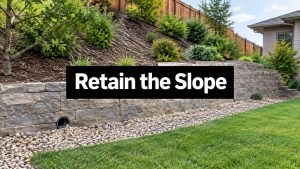
The footprint has to be cleared, leveled, and graded before anything else goes in. A good target is a 1 to 2% slope away from the house so water doesn't sit in the run or push back toward the foundation, a recommendation that shows up in outdoor run guidance for wet yards (Wildly Animals). On sloped lots, you may need a slight elevation change, a retaining edge, or drainage tile to keep the run dry enough for daily use.
The base matters just as much as the slope. Crushed granite or decomposed granite can work well when it's compacted correctly, because it gives you a firmer sublayer under turf or another finished surface. If the soil stays soft, the finished run will shift, settle, and telegraph every mistake to the top layer.
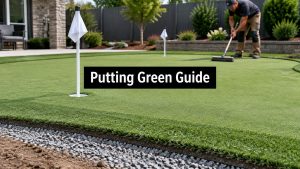
The photo below gives a sense of how serious drainage prep looks on a real site.

If you're asking about anchoring details for support structures, these deck footings and ground screw options are relevant because stable anchoring and stable base prep need to work together. A fence post or shade structure is only as good as what it's tied into.
For a deeper look at drainage-first planning, this yard drainage installation overview is a practical reference. The rule I give homeowners is simple, if the site prep looks cheap, the finished run will act cheap no matter how nice the surface looks on day one.
Fencing, Gates, and Anchoring for Strength and Escape Resistance
A large dog doesn't need a decorative boundary. It needs a perimeter that stays rigid when the dog leans, jumps, scrapes, or slams a shoulder into the wrong panel. The weakest points are rarely the visible panels, they're the gate, the hinge line, and the bottom edge where dogs dig or push.
Choose for failure mode, not for looks
For large dogs, galvanized steel and welded wire mesh have a far better reputation than flimsy alternatives, especially when the goal is resistance under pressure. One setup guide recommends walls at least 6 feet high, with 8×12 feet as a practical large-dog minimum, and warns against 4-foot walls and chicken wire because they're weak under pressure and increase escape risk (CareFocusDaily). That matches what I see in the field. Dogs that jump or climb don't care how neat the fence looks if it flexes.
The other mistake is underbuilt hardware. A strong gate latch, reinforced hinges, and a bottom dig guard matter more than most homeowners expect. A buried perimeter barrier is worth serious consideration for diggers, because a pretty fence sitting on soft soil doesn't solve the problem if the dog can go under it. For climbers or athletic breeds, a covered top can be the difference between a secure run and a constant supervision headache.
Some dogs don't need a taller fence as much as they need fewer leverage points.
For owners wanting a more technical way to choose entry hardware, Nimbio's cellular gate access system guide is a useful comparison point. It's especially relevant when you want controlled access without leaving a gate hanging on a weak spring or a cheap latch.
The difference between a solid enclosure and a frustrating one usually comes down to anchoring. Posts should be tied into a base that won't heave, shift, or loosen the first time weather and a 90-pound dog both put force on it. If the perimeter isn't engineered as a system, the dog will eventually find the failure point for you.

Choosing Turf, Infill, and Surface Treatments
For a large dog, surface choice is where durability and comfort either come together or fall apart. Bare concrete is hard on joints and brutal in heat. Gravel can shift under paws and collect waste in the wrong spots. Natural grass usually loses the fight once a strong dog starts using the same line day after day.
What holds up under big-dog traffic
High-quality artificial turf is the option most homeowners end up happiest with, but only when it's specified correctly. The useful version has UV-resistant, high-denier fibers, a drainage backing that doesn't clog easily, and an infill package that matches the dog's use pattern. Cheaper turf quotes usually cut corners on fiber quality and infill, which is exactly where a large-dog run starts to fail first.
Surface treatment matters too. Some systems use acrylic-coated sand, some use rubber, and some use cooling infills. The right choice depends on the climate, the dog's behavior, and how often the run gets used in peak heat. Antimicrobial treatment helps with odor and bacterial control between cleanings, but it isn't a substitute for rinsing and brushing.
Here's a simple comparison homeowners can use when comparing proposals:
| Surface | Claw Wear | Heat in Sun | Drainage | Maintenance | Cost |
|---|---|---|---|---|---|
| Artificial turf | Good when fiber quality is high | Moderate to high depending on infill and shade | Good with proper base | Rinsing, brushing, deodorizing | Higher upfront |
| Concrete | Durable, but hard on paws | High | Poor unless sloped and detailed well | Easy to hose, can stain | Varies |
| Gravel | Rough on paws, shifts under pressure | Lower than concrete, but inconsistent | Good if installed right | Raking and spot cleaning | Lower upfront |
| Natural grass | Poor under repeated traffic | Lower when healthy, but thin spots fail fast | Depends on soil | Constant repair and watering | Ongoing cost |
Installer's note: if a quote doesn't name the fiber, infill, and backing, it's not really a turf quote yet.
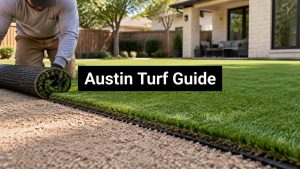
For homeowners comparing a broad install scope, this pet turf installation overview is a practical reference point. In Austin, I've watched well-built turf outlast the cheaper stuff by a long margin because the subbase, seams, and infill were chosen for abuse instead of appearances.
Shade, Water, and Enrichment for Hot-Climate Use
Heat changes everything. A run that feels fine in spring can become unusable by midsummer if it has no real shade, poor airflow, and a surface that stores heat. Austin owners already know the routine, get the dog out earlier, keep water handy, and avoid midday use when the yard feels like a skillet.

Build the comfort layer as a system
Outdoor run guidance says dogs should have water at all times, and it recommends permanent shade from a pergola, shade sail, or similar cover in summer (Wildly Animals). That's the baseline, not the finish line. In a hot climate, the goal is to reduce direct sun, allow air movement, and avoid trapping heat under a solid roof unless the structure is designed for it.
Shade sails are flexible and cheaper to adapt, but they can leave hot edges and don't always protect late-day sun. Pergolas and solid covers give more consistent protection, though they can trap heat if airflow is poor. Misters and cooling mats help most when the surface below them isn't already baking, which is why the turf and infill choice matters in the first place.
Enrichment is part of the comfort plan too. Dogs stay calmer when the run isn't empty and visually dead. Rotating toys, adding a digging box, and breaking up sightlines with a planter, panel, or partial divider can reduce pacing and fence-fixation without crowding the space.
A tired dog is good, but a mentally occupied dog is quieter, easier to manage, and less likely to turn the run into a stress loop.
For Austin-specific day planning, the city's own dog-friendly guidance reminds owners that summers are hot and that shaded outings matter (Austin Texas). That same logic applies at home. A run that's safe in October can become a liability in July if the shade, water, and surface decisions were treated as optional.
Maintenance, Costs, and Choosing the Right Contractor
A good run doesn't stay good by accident. It needs rinsing, brushing, deodorizing, and occasional inspection of seams, edging, latches, and anchor points. If you keep a large dog in the space daily, small failures show up fast, especially where the dog turns in the same spot or paws at the gate.
Why a specialist is worth the call
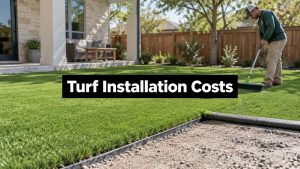
The biggest cost drivers are material quality, turf quantity, labor complexity, and features like antimicrobial or cooling treatments. That's why two quotes that look similar on paper can age very differently in practice. One may rely on light-duty materials and simple edging, while the other includes proper base prep, stronger perimeter hardware, and a surface system that handles heat and moisture better.
A specialty turf contractor usually beats a general handyman. A non-specialist can miss the soft stuff that turns into expensive rework, base compaction, drainage flow, seam stability, edge containment, or how a large dog's movement changes wear patterns around gates and corners. If the installer doesn't talk comfortably about subgrade prep, anchoring, and heat management, the quote is probably missing something important.
Modern Yard Landscapes handles turf installation, drainage, and pet-friendly dog runs in Austin, which matters because those pieces aren't separate problems on a big-dog project. They're connected. When you're ready to compare options, ask for a factors-based quote that explains the surface, base, drainage, and containment choices in plain language.
What to ask for: a site visit, a clear scope, and a breakdown that shows where the money goes before any work starts.
If you're trying to decide whether to DIY or hire out, the simplest test is this, can you set the slope, base, fencing, and surface so they all work together under heat and daily wear? If that sounds like a lot of guesswork, it probably is. Call Modern Yard Landscapes and schedule an on-site consultation, so you can get a practical plan for your yard, your dog, and your budget before the next Texas summer starts punishing the shortcuts.