
You're tired of looking at a front lawn that demands attention even when Austin's watering rules make regular irrigation difficult. The grass may be thin near the sidewalk, compacted near the driveway, and unevenly green after a hot stretch, while your HOA still expects a polished view from the street. Replacing it with random gravel and a few succulents won't solve the design problem.
Modern front yard drought tolerant landscaping works when the yard is treated as a complete system. The layout, plant groupings, soil, drainage, irrigation, mulch, hardscape, and community requirements all need to support one another. Done properly, the result looks deliberate, handles Central Texas heat, and reduces the amount of supplemental water the yard needs.
Why Modern Drought Tolerant Front Yards Win in Austin
An Austin homeowner I'd meet on a typical consultation often starts with the same concern: “I want less lawn, but I don't want my house to look unfinished.” That's the right concern. A front yard is the first thing visitors and neighbors see, so water conservation can't come at the cost of structure, access, or curb appeal.
The water issue is substantial. The EPA's outdoor water guidance says the average American family uses 320 gallons of water per day, about 30% for outdoor uses. Outdoor watering accounts for nearly one-third of residential water use, totaling nearly 9 billion gallons per day nationally. The EPA also notes that up to 50% of outdoor irrigation water can be lost through evaporation, wind, or runoff.
Central Texas homeowners have an immediate reason to take that seriously. The Lower Colorado River Authority has described moving firm water customers from Stage 1 to Stage 2 drought response, with outdoor watering limited to no more than once a week under that response. A yard built around constant turf irrigation becomes difficult to maintain when the local water schedule tightens.

What success looks like
The most convincing front yards I've built don't look like they're missing something. They have a clear walkway, strong planting masses, a restrained material palette, and one or two focal elements that make the architecture feel intentional. Ornamental grasses can soften a hard wall. A clean steel edge can contain angular gravel. A compact patch of artificial turf can provide a controlled green accent without allowing lawn to dominate the design.
That's very different from scattering decorative rock across bare soil. A piecemeal conversion often creates hot surfaces, awkward transitions, weeds, and plant groupings that need different watering schedules. The design may save turf but still waste water because every bed is irrigated the same way.
For homeowners who want a coordinated approach, sustainable landscaping solutions should address water demand and appearance together. The practical standard is simple: the yard should look planned from the sidewalk, remain manageable through seasonal changes, and meet applicable neighborhood requirements before installation begins.
My recommendation: Design the front yard as a series of intentional zones, not as a lawn with pieces removed.
Assess Your Site Before You Design Anything
A beautiful planting plan can fail if it ignores the site. Austin yards may include shallow limestone, heavy clay, compacted construction soil, steep transitions, reflected heat from masonry, or narrow access between a house and a neighboring fence. Before choosing plants or ordering stone, document what the property is already telling you.
Start with a field audit
Walk the yard at different times of day and record the conditions rather than relying on a single impression.
- Map sun and shade: Mark areas that receive direct morning sun, intense afternoon exposure, filtered light, or full shade. A plant that handles bright morning light may struggle beside a west-facing wall.
- Trace drainage: Watch where water moves during rain, inspect low spots, and note whether runoff approaches the foundation, sidewalk, or driveway. Poor grading can undermine both planting beds and artificial turf.
- Test the soil: Dig several small inspection holes. Identify whether you're dealing with shallow rock, clay, sandy loam, or imported fill, then plan soil preparation around the actual condition.
- Measure usable zones: Separate planting areas, walkway space, utility access, driveway clearances, mailbox access, and any area that must remain open for maintenance.
- Record existing irrigation: Locate valves, spray heads, broken lines, and controller wiring. Keeping usable infrastructure may reduce disruption, but only if the system can be zoned correctly.
Drainage deserves special attention. A low-water yard still needs water to move away from structures and infiltrate where plants can use it. If the yard slopes toward the house, get the grading evaluated before adding mulch, stone, or turf. A specialist who handles yard grading and drainage can identify problems that a planting sketch won't reveal.
Check rules before selecting materials
Don't assume that a drought-tolerant label makes every design compliant. Review your HOA documents for requirements affecting front-yard appearance, artificial turf, visible edging, plant height, rocks, color, lighting, and approval procedures. If the neighborhood requires an architectural review, submit the actual layout and material samples instead of a vague description.
Create a one-page site brief with the following information:
- Sun and shade zones.
- Drainage direction and problem areas.
- Soil and rock conditions.
- Measurements and access limitations.
- Existing irrigation components.
- HOA and municipal requirements.
- The architectural features you want the design to reinforce.
That brief keeps the design grounded. It also prevents an expensive mistake, such as placing a tall specimen where it blocks a window, installing loose gravel on a steep grade, or selecting a material that the HOA won't approve.

Design Principles That Keep It Modern and Compliant
A modern Austin front yard should look intentional from the street, even during a dry summer. Build the composition around proportion, repetition, and restraint. Give every element a clear job: the path directs movement, planting beds frame the house, hardscape establishes order, and living plants add texture and seasonal change. Gravel alone is not a design system.
Xeriscape works best when the plan connects plant selection, turf limits, soil, irrigation, mulch, and maintenance to the site. The Austin-specific priority is hydrozoning and proportion. Group plants by water demand, then size each material area so the yard has enough living structure without creating an irrigation burden.
Use a design system, not a plant collection
Hydrozoning determines whether a low-water yard stays efficient after installation. Keep native grasses, shrubs, and higher-demand accent plants on separate irrigation zones. Place plants needing closer observation near the entry or hose bib, and reserve the hottest, driest areas for species adapted to Central Texas conditions.
Use a restrained palette and repeat it across the property. Repetition makes a front yard look designed, while massing keeps pruning, irrigation, and replacement manageable.
- Clear geometry: Choose a straight walk, broad arcs, rectangular beds, or a deliberate grid. Avoid disconnected curves that compete with the architecture.
- Plant massing: Group a limited selection of grasses, shrubs, or groundcovers. Large, repeated blocks read more clearly than scattered specimens.
- Turf restraint: Keep turf where it supports play, pets, or a controlled visual accent. Large irrigated lawn areas are a poor default for a water-conscious front yard.
- Living structure: Use plants for height, shade, screening, and texture. Stone should frame the planting, not replace it.
- Material discipline: Repeat compatible tones at the walkway, edging, retaining elements, and entry feature. Two or three coordinated materials usually look stronger than a collection of unrelated finishes.
UC Davis data cited in the available guidance found native-plant yards used 60% less water than turfgrass yards. UCLA turf-conversion work reported savings of up to 15 gallons per square foot per year and a return on investment of 1 to 3 years. Those findings support reducing thirsty turf, but efficient results still depend on correct zoning and irrigation.

Let compliance shape the composition
Rules can improve the design by forcing proportion. One California front-yard manual permits only 20% of the front yard to use non-organic material in drought-tolerant designs and caps synthetic turf at 75%, with at least 25% living plant material. These are not Austin rules, but they show why a modern yard should not become a field of rock or artificial grass.
Nevada HOA law also requires drought-tolerant planting to fit the community style and pass architectural review. Austin-area requirements vary by property and association, so verify the rules tied to your address before ordering materials or submitting plans.
Review rules for yard signs and flags with your property documents. Front-yard signs, flags, lighting, and other visible elements may follow separate approval requirements.
A compliant layout should pass three tests:
- It reads clearly from the street.
- It includes enough living material to avoid a barren appearance.
- It documents materials, planting areas, and proportions for review.
Before sketching, compare the difference between modern and contemporary. The practical distinction is simple: modern design depends on structure and repetition, while adapted plants provide the softness that keeps the composition from feeling sterile.
Choose Plants Hardscape and Turf That Thrive on Less Water
The right palette depends on the site audit, but the decision itself is straightforward. Choose plants for their mature form and water zone, select hardscape for drainage and durability, and use artificial turf only where it solves a specific problem.
A useful Austin palette often combines ornamental grasses, hardy shrubs, Texas-adapted perennials, shade-producing trees where the site allows them, and groundcovers that can handle the available exposure. Don't mix every plant you like into one bed. A restrained palette repeated across the property will look more modern and will be easier to prune, irrigate, and replace.
Compare the main material choices
| Option | Best Use | Water Need | Maintenance Level |
|---|---|---|---|
| Native and locally adapted plants | Planting beds, habitat, structural repetition | Low once properly established, with supplemental irrigation based on conditions | Low to moderate |
| Ornamental grasses | Entry framing, movement, erosion control, mass planting | Low to moderate by species and zone | Seasonal trimming |
| Conventional turf | Small areas needing a traditional lawn function | High compared with xeric planting | High |
| Artificial turf | Compact green accents, pet areas, controlled play zones | No irrigation for turf surface | Low, with cleaning and periodic care |
| Angular gravel | Drainage-friendly beds, side strips, modern pathways | None | Low, but it needs containment |
| Mulch | Planting beds and soil protection | None itself, but it helps soil retain moisture | Periodic replenishment |
| Steel edging | Clean separation between gravel, mulch, and paving | None | Low |
| Stone walls and retaining elements | Grade changes, seating edges, architectural definition | None | Low after proper installation |
For plant selection, start with low-water landscaping plants and then narrow the list according to sun, soil depth, mature size, and irrigation zone. A plant is not low-water for your yard if it needs constant rescue watering because it's planted in the wrong exposure.
Use artificial turf as an accent
Artificial turf fits modern drought-tolerant design when it's contained and purposeful. A small, clean panel can provide an always-green visual counterpoint to gravel and planting, create a pet-friendly surface, or give children a defined place to play. It looks less convincing when it fills every available area and leaves the property with no living plant layer.
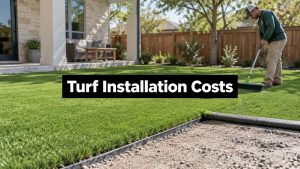
Site preparation matters more than the green color. The installer should address drainage, access, subgrade stability, seams, edging, and the conditions created by reflected heat. For a modern front yard, I prefer turf bounded by steel edging or paving, with planting masses softening the perimeter rather than turf touching every foundation and sidewalk.
Pair materials instead of collecting them
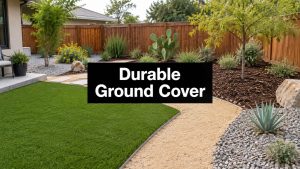
Use one primary paving material, one aggregate or mulch, and one edging finish. Large-format pavers with dark gravel and black steel can look crisp, while warm stone with natural mulch creates a softer modern interpretation. Don't add several competing rock colors, decorative boulders, and unrelated borders to compensate for an unclear layout.
Planting should do the visual work. Repeated masses, varied heights, and a visible transition from path to bed will keep the yard from looking like a parking surface.
Install Smart Irrigation and Keep Maintenance Low
A drought-tolerant design can still waste water if the irrigation system treats every plant as if it has the same needs. The installation should begin with zones, not emitters. Separate turf or artificial turf areas from planting beds, then divide plant beds according to sun exposure, soil, and water demand.
The practical sequence is simple:
- Draw the zones: Mark each bed and identify its plant water category.
- Choose delivery: Use drip irrigation for concentrated planting beds and appropriate sprinkler coverage for any living turf that remains.
- Program the controller: Set schedules by season, include rain delays where supported, and avoid running every zone on one fixed routine.
- Install and protect the system: Secure tubing, keep emitters accessible, and prevent runoff from slopes.
- Test the coverage: Run every zone, check for leaks, observe wetting patterns, and correct overspray onto sidewalks or walls.
The Department of Energy's xeriscape guidance includes efficient irrigation and maintenance as core conservation principles. National Geographic's xeriscaping resource also describes drip lines and soaker hoses as potentially reducing water use compared with inefficient sprinkler systems, but the system still has to match the soil and plant layout.
Avoid the mistakes that erase savings
Overwatering is the most common problem I see. Homeowners hear “drought-tolerant,” then keep the old lawn schedule because the plants look stressed during establishment. Others group plants by appearance instead of water need, so one thirsty accent plant dictates irrigation for an entire bed.
Keep mulch away from trunks and building surfaces, maintain clear access to valves, and inspect emitters after mowing, pruning, storms, or construction work. Seasonal controller adjustments matter because Austin's heat, rainfall, and plant demand change throughout the year.
Controller rule: If the landscape changes, the irrigation schedule must change with it.
Use periodic inspections rather than constant tinkering. Look for dry pockets, ponding, clogged emitters, runoff, broken spray heads, and plants that are growing too vigorously for their assigned zone. For homeowners considering nutrient delivery through irrigation, plant fertilizer drip tips can provide background on the concept, but fertilizer should never replace proper soil preparation or correct watering.
Maintenance stays low when the design supports the crew or homeowner doing the work. Keep edges visible, avoid overcrowding mature plants, and choose pruning forms that don't require frequent shaping. A clean yard is easier to maintain when every bed has a defined boundary and every irrigation component can be reached without disturbing the planting.
Plan Your Budget and Book a Pro Consultation With Confidence
The right budget starts with scope, not a generic price per yard. Material quality, turf quantity, demolition, grading, drainage, soil preparation, irrigation changes, access, retaining features, lighting, and specialty elements can all change the estimate. A compact design with difficult access may require more labor than a larger, open lot with simple grading.
Ask for a written estimate that separates these drivers:
- Site preparation: Removal, excavation, soil work, grading, and drainage correction.
- Materials: Pavers, stone, mulch, edging, plants, irrigation components, and turf.
- Labor complexity: Access, hand excavation, slope work, utility protection, and installation sequence.
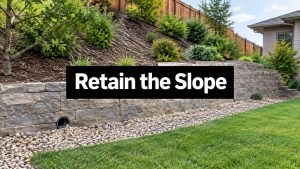
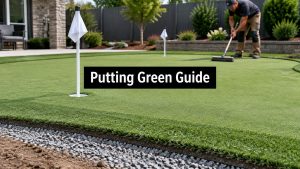
- Special features: Retaining walls, drainage tile, pet systems, putting greens, lighting, or cooling and antimicrobial turf options.
- Aftercare: Warranty terms, irrigation adjustments, plant replacement conditions, and maintenance responsibilities.
Transparent estimating tools can help contractors organize these variables. Exayard landscaping estimating software is one example of software designed to support landscaping estimates and project details. The tool matters less than whether the final proposal clearly explains what you're paying for.
You should also ask whether the installer is insured, how drainage will be handled, what site preparation is included, how HOA documentation is supported, and who adjusts the irrigation after installation. A trustworthy contractor won't pressure you to approve a design before the site, rules, and material choices are clear.
Modern Yard Landscapes is an Austin-based, fully insured landscaping and artificial turf installation company that handles turf, planting-related design work, drainage tile, retaining walls, pet-friendly dog runs, and custom putting greens. Its estimates account for material quality, turf quantity, labor complexity, and specialty features, which is the level of detail you should expect from any serious proposal.
The best consultation ends with a design you understand, not a package you feel pushed into buying. Bring your HOA documents, utility information, photos of problem areas, and a short list of how you want the yard to function. Then ask the contractor to show you the water zones, living-to-nonliving balance, drainage plan, and maintenance routine before you approve the work.
Modern Yard Landscapes can design and install a modern Austin front yard with drought-tolerant planting, properly prepared artificial turf, efficient drainage, and clean hardscape lines. Visit Modern Yard Landscapes to review the services, then schedule a consultation so your site, HOA requirements, and water-saving goals can be addressed in one practical plan.