

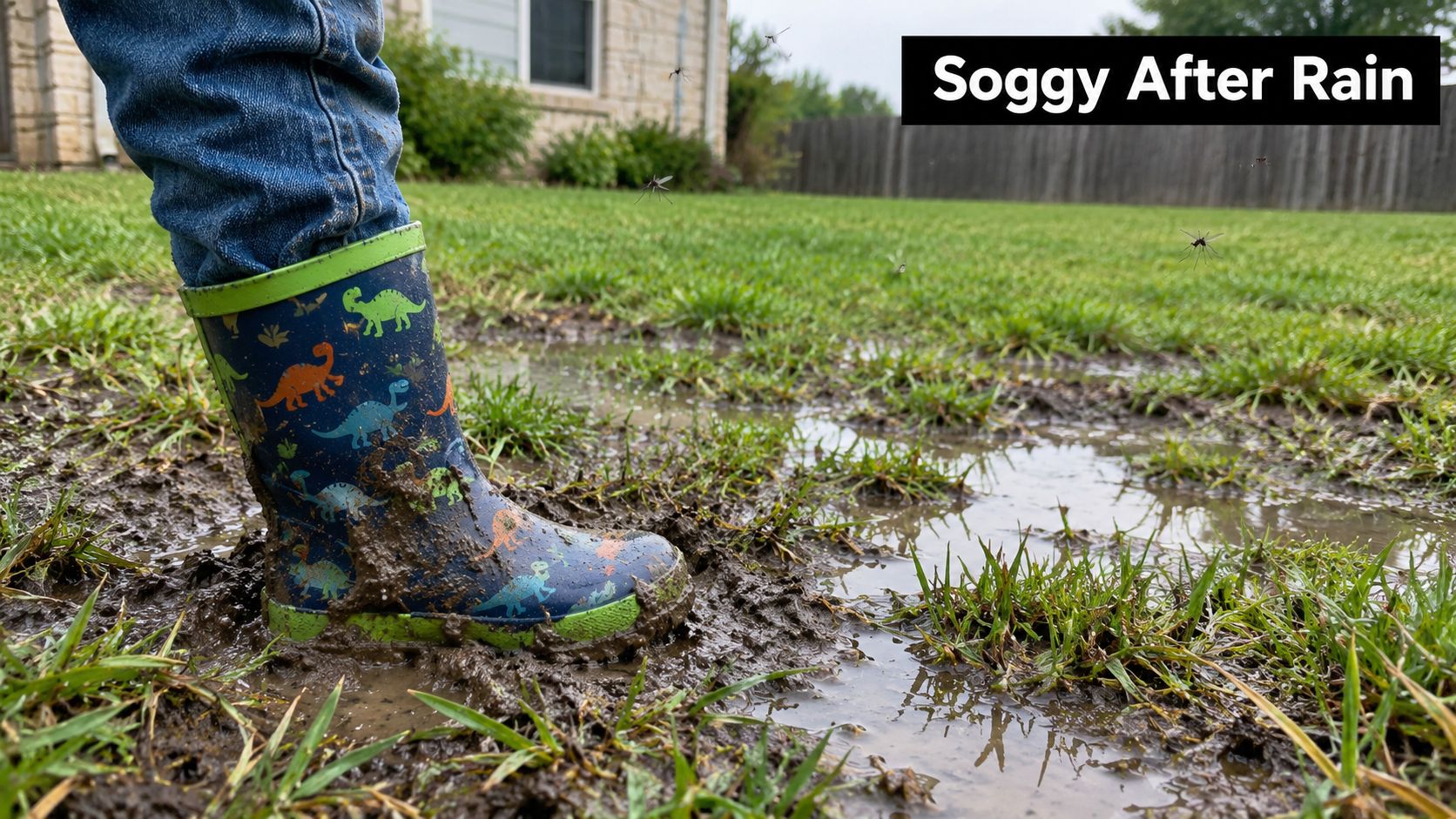
You step onto the lawn after an Austin rainstorm and your shoe sinks into the same soft spot near the fence. A puddle still reflects the sky days later, the grass has yellowed around its edges, and mosquitoes hover whenever you walk past. The problem feels random, but water follows rules. It either soaks into open soil, moves downward through the soil profile, or travels across the surface toward a lower point.
That distinction matters because lawn drainage problems don't all need the same remedy. A downspout spilling beside the foundation calls for a different response than compacted soil that won't absorb water. A low area that catches runoff may need reshaping, while a broad saturated zone may need an underground outlet.
Modern Yard approaches a soggy yard by first identifying how water arrives and where it gets stuck. The path usually moves from observation, to simple testing, to the least disruptive correction. If your yard also sends runoff toward the house, learning about stormwater management for residential landscapes can help you see the property as one connected water system rather than a collection of isolated puddles.
Introduction Why Your Lawn Stays Soggy After Rain
After a heavy Austin downpour, one part of the lawn may stay soft while the rest dries. That pattern points to a water pathway, not “too much rain.” Water must enter the soil, move through its layers, or travel across the surface toward an outlet. If one route is blocked or overloaded, the grass remains wet.
Construction traffic often compresses soil around newer homes. Heavy thatch can also slow infiltration. Colorado State University Extension's drainage guidance recommends core aeration with plugs spaced about two inches apart to reopen compacted soil.
The first task is diagnosis. Adding soil to a recurring puddle can shift the problem downhill. Aerating will not solve roof runoff that overwhelms the lawn, and a drain is incomplete if its collected water has nowhere safe to discharge. A change in appearance does not always change the water's route.
The useful question isn't “How do I remove this puddle?” It's “Why is water reaching this spot, and why can't it leave?”
Start by separating two failures. Surface runoff failure occurs when water arrives over the lawn from a roof, driveway, slope, or neighboring property, then gathers in a low area. Infiltration failure occurs when water reaches the soil but cannot pass through compaction, clay, thatch, or a restrictive layer.
This distinction creates a practical escalation path. Redirect a downspout or adjust the grade when runoff is the source. Try soil improvement or core aeration when the surface is receiving manageable water but absorbing it slowly. If heavier Austin storms exceed what the lawn can hold, a swale, rain garden, drainage tile, or regrading may provide a more durable route. A stormwater management plan for residential landscapes can connect those choices across the property, while a professional consultation helps confirm the least disruptive fix.
How Lawn Drainage Actually Works Beneath the Surface
After an Austin downpour, one part of your lawn may drain quickly while another stays soggy. The difference usually comes down to two controls: how fast soil accepts water and where the grade sends any excess. Soil works like a sponge, while the yard's slope acts like a shallow slide.
Three water movements explain the process:
- Infiltration is water entering the soil surface.
- Percolation is water moving downward through the soil profile.
- Surface runoff is water traveling across the ground when the soil is saturated or the grade directs flow elsewhere.
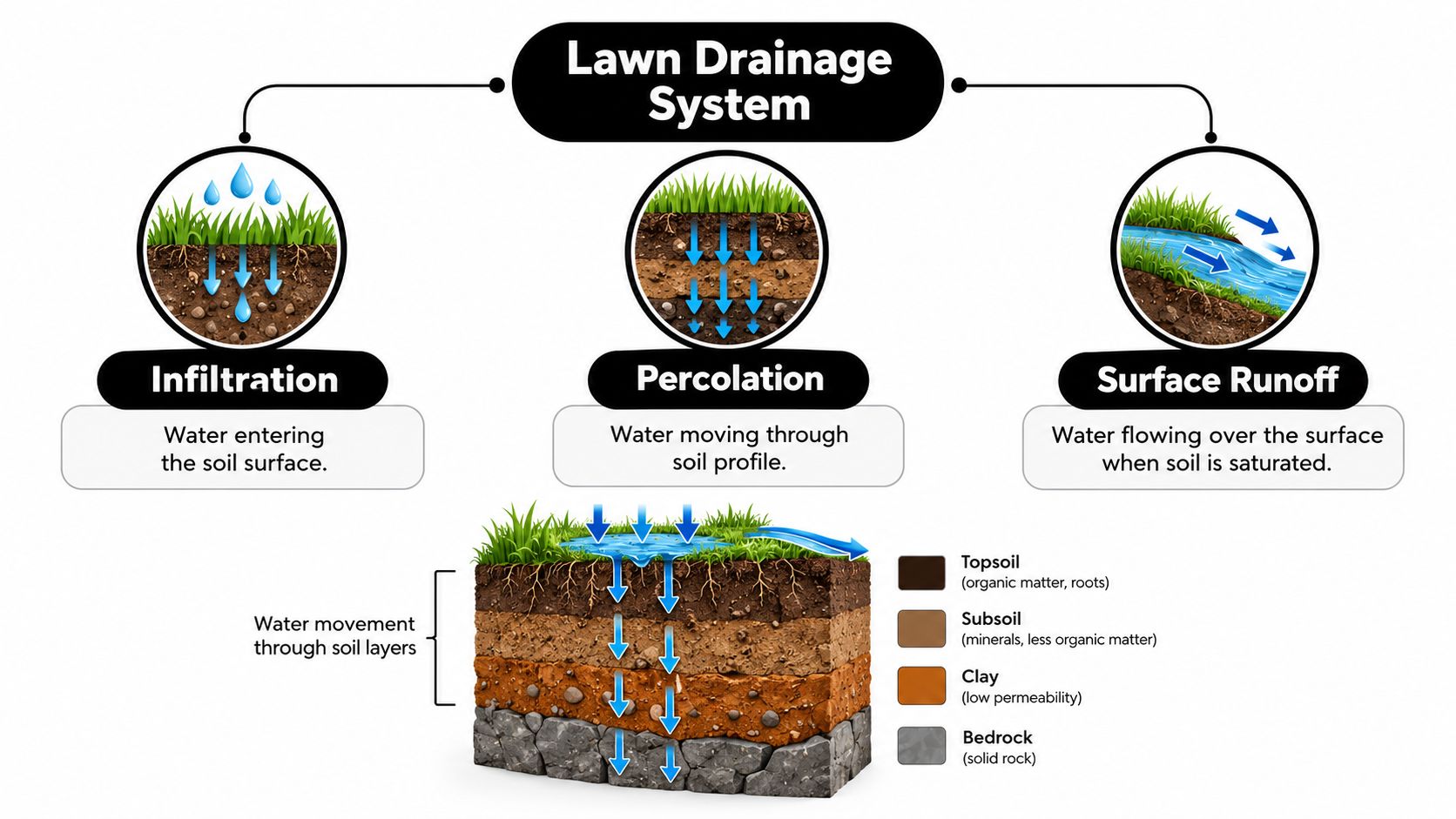
A loose sponge contains connected openings for water. Press it tightly and those openings shrink. Compacted lawn soil behaves the same way. Colorado State University Extension and Cornell Turfgrass Program point to core aeration for compacted areas because removing small soil plugs creates new vertical paths for air and water.
Soil can also have a hidden blockage below the surface. Water may pass through topsoil, then collect above dense clay or compacted subsoil. Michigan State University Extension identifies work on wet soil as a cause of restricted infiltration and percolation, and discusses subsoiling, moling, and surface drainage for deeper restrictions in agricultural settings. That same physical principle explains why a residential lawn can remain wet even after its top layer accepts rain.
Why slope matters
Grade controls the route of excess water after the soil reaches its short-term capacity. Open lawns often use about a 2% slope to reduce standing water, according to drainage slope guidance. That represents about 0.24 inches of drop per foot. A 1% slope represents about 0.12 inches per foot.
Small grade changes can redirect an entire flow path. A yard sloping toward the house can send rain toward the foundation. A nearly flat yard may leave water without a dependable outlet. A walkway or compacted strip can interrupt the grade and turn runoff into a muddy lane.
Diagnosis should guide the least invasive fix. Redirect a downspout or adjust the grade when water arrives across the surface. Improve soil or aerate when the lawn receives manageable water but absorbs it slowly. For heavier Austin storms, a swale, rain garden, regrading, or a subsurface drainage system can provide a longer-lasting route. Any buried system still needs a collection point, a reliable outlet, and preparation that accounts for settling.
Common Signs and Hidden Causes of Poor Drainage
A lawn can look dry in one area while staying muddy a few steps away. A puddle beside a downspout points to a different problem than a broad, slow-drying patch in the middle of the yard. Read each symptom with its location, timing, and shape. Together, they help separate water arriving across the surface from soil that cannot absorb water efficiently.
What the symptoms can tell you
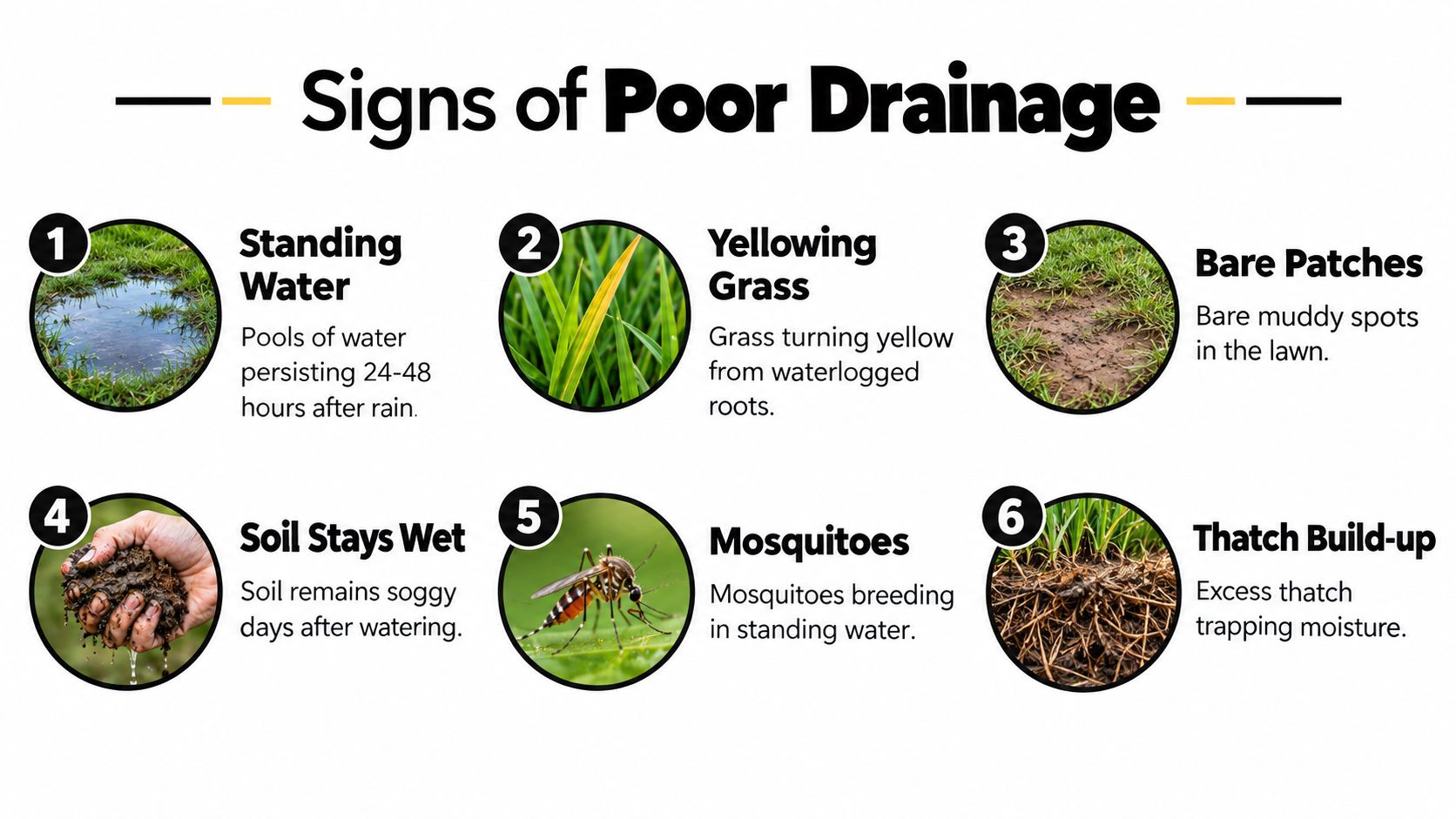
- Standing water: A puddle that remains for 24 to 48 hours is a warning sign in this lawn drainage guidance. If it remains for 7 days or more, lawn drainage information from Lawn Love identifies it as an active mosquito breeding site.
- Yellowing grass: Saturated roots struggle to access air. Yellow turf around a recurring puddle often means that water is staying in the root zone too long.
- Bare muddy patches: Foot traffic, concentrated runoff, or soil that never dries can keep grass from establishing. A narrow muddy trail suggests redirected flow, while a broad depression points toward a grading or infiltration problem.
- Soil that stays wet: Soft ground long after rain or watering can indicate compaction, clay-heavy soil, or a restrictive layer below the surface. Water may be reaching the lawn normally but moving through it slowly.
- Mosquito activity: Persistent standing water creates habitat. Treat mosquitoes as a clue to locate and correct the water source, rather than only as an insect-control concern.
- Thatch buildup: A heavy organic layer can slow water entry. Rain then sits near the surface even when the soil below could accept more moisture.
Match the location to the likely cause
Water directly below a downspout usually begins as roof runoff concentration. Inspect the gutter, downspout connection, and discharge route before disturbing the lawn. Water traveling downhill from a driveway, patio, or neighboring property points more strongly to surface flow.
A puddle in a low area with no visible incoming stream may reflect poor grade or insufficient infiltration. Construction traffic, mowing wet soil, and repeated foot traffic can compress the upper soil profile. Cornell Turfgrass Program recommends core aeration for larger compacted areas, while Colorado State University Extension notes that construction compaction around homes is a recurring drainage concern.
Clay-heavy soil slows water movement and can make every other drainage issue harder to correct. A surface puddle may also conceal compacted subsoil or another deeper barrier. Regrading can shift the water elsewhere if it does not provide a dependable outlet, much like tilting a tray without giving the water a place to leave.
Use the least invasive remedy that matches the diagnosis. Redirect a downspout when water is concentrated from the roof. Address compaction or thatch when the lawn receives manageable water but absorbs it slowly. For heavier Austin downpours, a swale, rain garden, regrading, or a subsurface route may offer more climate-resilient handling than repeatedly repairing the same muddy spot.
Severe grading failures can become expensive. One lawn-drainage review states that full-yard regrading can cost $44,000 or more, so measured diagnosis is safer than immediate excavation. Start by identifying the water's source, then decide whether the ground needs to absorb it or redirect it.
Simple Ways to Test Your Lawn Drainage at Home
A soggy lawn needs a diagnosis before it needs a drain. With a shovel, hose, level, tape measure, and careful observation, you can determine whether water is arriving too quickly or failing to move through the soil. Test a representative wet area, then compare it with a healthier part of the yard. Wait until the lawn has partly recovered from a major storm, or the test may measure an unusually saturated day rather than normal conditions.
The hole-fill test
Dig a hole 12 inches deep in the problem area. Fill it with water and watch the level fall. Independent lawn drainage testing guidance uses the time needed for a 12-inch hole to empty as a practical indication of drainage performance, with water remaining after 30 minutes suggesting a problem.
This test helps separate surface runoff from infiltration failure. If the hole empties reasonably but water still flows in from a roof, driveway, or slope, the soil may be accepting water while the yard receives too much in one place. Redirecting that flow is the smaller first adjustment. If the hole stays full, investigate compaction, clay, thatch, or a restrictive layer below the surface.
A percolation-style measurement
For a closer reading, dig a hole about one foot wide and one foot deep, saturate the surrounding soil, and measure how quickly the water level drops. Percolation testing guidance identifies a fall rate of less than one inch per hour as a severe drainage problem.
Mark the starting level and check it over a consistent period. A slow result confirms that water is moving downward poorly, but it does not identify the correct structural repair by itself. Aeration may help a shallow compacted layer, while a deeper barrier can require a different plan.
Check the grade
Use a long straight board, a level, and a tape measure to check whether the lawn falls away from the house. Open lawn areas often target about a 2% slope, or about 0.24 inches per foot. Treat that figure as a reference, then confirm where water travels during rain.
A soil test tells you whether water can enter and travel downward. A grade check tells you where water will go when it doesn't.
Record puddle locations, downspout discharge points, and low areas. This simple map helps a drainage professional distinguish runoff from infiltration failure and choose ways to prevent yard flooding that fit the property and Austin's heavier downpours.
Comparing Drainage Solutions From Easiest to Most Structural
A lawn can stay wet for two different reasons. Water may be arriving too quickly from a roof, driveway, or higher part of the yard. Or the soil may accept water slowly, leaving rainfall sitting on the surface. Start by identifying which failure you have, then choose the least invasive repair that addresses it.
| Solution | Best For | Relative Cost and Disruption |
|---|---|---|
| Downspout extension or gutter correction | Water concentrated beside the house or below roof outlets | Lower cost and low disruption when the outlet has a safe route |
| Core aeration and organic-matter incorporation | Compacted upper soil and small wet patches | Lower disruption, but limited when a deeper layer blocks percolation |
| Regrading | Low areas, incorrect surface slope, or water moving toward structures | Higher disruption because turf and soil levels change |
| French drain or drainage tile | Persistent flow paths and broad saturated areas with a usable outlet | More excavation and planning, with long-term underground infrastructure |
| Rain garden or swale | Runoff that can be slowed, stored, and planted within the property | Moderate landscape disruption and ongoing plant maintenance |
| Permeable surfaces | Patios, walkways, and other hardscape areas generating runoff | Higher installation disruption, with base preparation and maintenance |
| Retaining wall | Sloped ground where grade changes need structural control | Most structural option, requiring careful design, excavation, and drainage behind the wall |
Redirect concentrated runoff first
If a puddle forms directly below a downspout, correct the gutter connection or extend the discharge before excavating for a French drain. The outlet needs to release water along a safe route, away from the foundation, walkways, and neighboring property. A short extension can solve a concentrated flow problem without disturbing the lawn.
Regrading is the next surface-level option when the ground sends water toward a low area or structure. It reshapes the slope so runoff travels where planned, but it cannot make severely compacted soil absorb water faster. The new grade must also meet doors, paving, planting beds, and existing drainage points without creating a second low spot.
Match soil repairs to shallow infiltration failure
Core aeration removes plugs and creates short vertical passages through compacted upper soil. Organic-matter incorporation can improve soil structure over time. This approach fits a lawn where water enters slowly, the wet area is limited, and the surrounding grade already directs runoff toward a suitable outlet.
Heavy thatch can act like a dense felt mat above the soil. Water may collect there even when the soil below could accept more moisture. Aeration alone will have limited effect if that surface layer remains the main bottleneck, so address the layer causing the slowdown rather than treating every wet patch the same way.
Add a planned route when the problem persists
A French drain or drainage tile collects water below grade and carries it toward a planned outlet. The pipe, stone, and slope must fit the site's topography. Sending water toward a foundation, property boundary, or unusable low point moves the problem.
Persistent flow paths may call for landscape drainage solutions designed around the property's elevations. Retaining walls can be part of that plan where a steep grade needs structural control, with drainage installed behind the wall to manage water pressure.
Rain gardens, swales, permeable surfaces, and underground retention help a yard handle heavier Austin downpours by slowing and storing runoff. They work best when roof water, hardscape, slope, and soil are considered together, rather than forcing the full storm load into one lawn area. A professional can compare these options and recommend the smallest system that gives water a reliable route.
When to DIY and When to Call a Drainage Professional
After an Austin storm, start with the least invasive fix that matches the cause. If water comes from a clogged gutter or short downspout, clean the gutter and extend the discharge away from the lawn. A small, isolated wet patch may respond to removing heavy thatch, while core aeration can help compacted turf. Topdressing with suitable organic matter may improve surface soil structure, as long as it does not bury the grass or block an existing drainage path.
These repairs fit surface runoff when water arrives from elsewhere and the affected area is limited. If rain reaches the lawn but cannot move into the soil, the problem is infiltration failure, and repeated surface work will not solve the bottleneck.
Escalate when puddles keep returning after the obvious source is corrected. Standing water lasting beyond 48 hours signals a drainage concern. A failed hole-fill or percolation test also points to restricted infiltration rather than a simple lawn-care issue. At that stage, a professional can determine whether the smallest effective repair is soil work, grading, or a planned drainage route.
A professional assessment makes sense when
- Water approaches the foundation: Regrading or drainage tile near a structure requires accurate elevations and a safe outlet.
- The wet area is broad: A large saturated zone may involve several flow paths or restrictive subsoil.
- Your test results are poor: Slow infiltration can make aeration ineffective on its own.
- The slope is complicated: Retaining walls, neighboring grades, driveways, and narrow access can affect the design.
- You're preparing for turf: Artificial turf still needs a properly prepared base and drainage. Covering wet soil only hides the problem.
A site assessment should review topography, soil, entry points, access for equipment, existing hardscape, and the location of a functional outlet. It should also consider whether the lawn must support children, pets, vehicles, or commercial foot traffic.
Modern Yard provides drainage tile installation and retaining wall installation alongside artificial turf and related work. Planning these elements together can prevent a finished surface from covering an unresolved water problem.
Building a Yard That Stays Dry and Looks Great Year Round
A yard that stays usable through Austin's heavier downpours needs a plan for where water collects, how long it remains there, and what happens when the soil is already saturated. Retention areas should have enough space to hold stormwater without sending it toward the house. A shallow rain garden or planted swale can slow flow, while permeable paths give water another place to enter the ground.
Choose plants for both wet spells and Austin's dry heat. Deep-rooted native or well-adapted plants can stabilize collection areas, and moisture-tolerant species suit the lowest spots. Keep turf on the higher, better-drained parts of the yard, where it is less likely to thin or become muddy.
Small habits protect the finished work. Clear gutters, inlets, and outlets before storm season. Check collection areas after heavy rain, remove sediment, and watch for erosion at discharge points. Avoid driving equipment over wet soil, since repeated traffic can close the soil's pore spaces again.
Artificial turf still depends on the layers beneath it. A prepared base, suitable grading, and a planned drainage route prevent the finished surface from hiding saturated soil. Permeable hardscape and planted collection areas can spread water management across the property instead of forcing every storm through one narrow channel.
Muddy shoes and recurring puddles do not have to define an Austin yard. Modern Yard Landscapes can assess the property and install drainage tile, retaining walls, artificial turf, or related improvements. Visit Modern Yard Landscapes to schedule a consultation and choose a practical repair plan.