
You're standing in the yard in late August, staring at cracked Bermuda grass that looked fine in March. The sprinkler schedule has tightened, the soil is hard underfoot, and every rainstorm sends water toward the patio instead of into the planting beds. You need landscaping services in Austin, TX, but you don't need a national template with generic sod and default sprinkler settings. You need a plan built for Central Texas.
Austin landscaping has to account for heat, clay, limestone, slopes, runoff, and changing water restrictions at the same time. The right contractor won't start by selling you a plant list. They'll start by asking where water collects, how the yard is used, what the soil does after rain, and which parts of the lawn still deserve irrigation.
Why Austin Yards Need a Different Kind of Landscaping Plan
A yard can look finished in spring and fail by late summer. In Austin, generic sod, fixed sprinkler settings, and shallow planting decisions often break down under Central Texas heat, clay soils, limestone, water restrictions, and sudden storms. Choose a plan around the property's actual conditions, not a standard package.
Four conditions shape the job
Soil comes first. Blackland clay holds water in some areas, then becomes hard when dry. Hill Country lots add limestone and rock, creating shallow rooting zones and difficult excavation. Drainage trouble often starts below the visible surface, so installing plants or turf before correcting soil and grade usually wastes money.
Heat changes maintenance. A water-hungry yard becomes difficult to maintain when restrictions limit irrigation. Austin Water's Conservation Stage allows automatic and manual irrigation systems to run only on one designated day per week, while hose-end sprinklers and drip systems are limited to two days per week. The city assigns watering days by address and conservation stage, so check the current Austin watering day and schedule before committing to a high-water yard.
Drought stages affect the plan itself. Stage 2 and higher restrictions can tighten watering rules and prohibit irrigation of nonfunctional turf. A turf-only design makes little sense on properties where the lawn is decorative rather than used for play, pets, or entertaining. Keep living grass where it earns its space, and use lower-water planting or hardscape elsewhere.
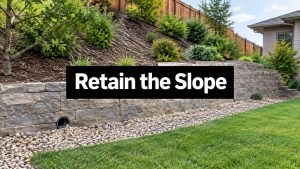
Slopes move water quickly. On a Hill Country lot, a short storm can send runoff across walkways, toward foundations, or into a low corner. Regrading, dry creek beds, retaining walls, and drainage tile must function as one system. Adding disconnected features leaves the original problem in place.
Practical rule: If a yard looks good in March but has no plan for July heat, restricted watering, and heavy rain, it is temporary decoration, not finished work.
Start with a site assessment. Use drought-tolerant planting strategies suited to Austin where they fit the property, preserve functional turf, and correct drainage before installing costly finishes. That approach keeps the yard usable and reduces the repair cycle that follows a poorly matched design.
The Core Services Every Austin Landscaping Company Should Offer
A dependable Austin landscaping company should be able to connect four service categories, not just quote one attractive feature. Turf, drainage, hardscape, and adaptive planting each solve a different problem, but the site only performs when the pieces are designed together.

Turf and lawn replacement
Natural sod gives an immediate finished look, but it still needs the right soil depth, irrigation, and establishment care. Bermuda can handle sun and traffic, while St. Augustine performs differently in shade and moisture. Neither should be installed over a compacted base with unresolved runoff.
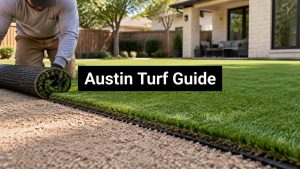
Artificial turf makes sense for high-use areas, pet runs, and homeowners who want consistent coverage without routine mowing and supplemental irrigation. Hybrid layouts often work better than a full conversion, keeping live planting or functional grass where it provides real value and replacing weak lawn zones with hardscape, gravel, or synthetic turf.
Drainage and grading
A shallow decorative trench won't solve a clay-soil drainage problem. In many sites, a properly installed 4-inch perforated pipe, surrounded by suitable aggregate and connected to a real outlet, performs better than a narrow French drain that fills with sediment. Surface drains, catch basins, regrading, and rain gardens each have a place, depending on whether water arrives as sheet flow, concentrates at a low point, or rises from below.
Hardscape and retaining structures
Flagstone patios, decomposed granite walkways, and retaining walls make a yard usable. Limestone-block or segmental walls generally suit Austin's heat and local materials better than untreated timber, which can deteriorate faster in exposed conditions. If you're comparing wood options for a separate outdoor feature, this guide to outdoor timber structures is a useful reference, but walls still need site-specific footing, drainage, and backfill decisions.
Native and adaptive planting
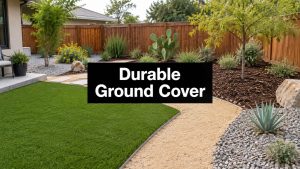
Texas sage, lantana, and mountain laurel can support a lower-water design when they're matched to sun, soil, and mature size. Plant selection alone won't fix poor grading. For a full residential plan, review residential landscaping services that include the layout, soil preparation, irrigation adjustments, and ongoing maintenance rather than treating plants as isolated decorations.
Artificial Turf, Putting Greens, and Pet Runs Explained
Artificial turf, putting greens, and pet runs look similar in photographs, but they're built for different kinds of use. The wrong product can create heat, odor, drainage, or durability problems that become obvious after the first demanding season.
| Product | Typical Cost per Sq Ft (Installed) | Best Austin Use | Key Local Detail |
|---|---|---|---|
| Artificial turf | Varies by material and site | High-traffic lawn areas | Base preparation and drainage matter more than blade appearance |
| Putting green | Varies by design and contour | Practice areas and golf-focused yards | Slopes, cup placement, fringe, and ball response require careful shaping |
| Pet run | Varies by drainage and infill package | Dog areas and side yards | Dedicated drainage, odor control, and washable infill are essential |
Artificial turf for everyday yards
Don't judge turf by the sample blade alone. Ask about UV resistance, fiber density, pile height, backing, edging, and infill. In Austin, the decomposed granite base should typically be 6 to 8 inches deep, properly compacted and shaped to move water. A cheap installation often saves money by reducing excavation or base depth, and that shortcut can lead to rippling, soft spots, weed growth, and drainage failures.
For dogs, zeolite infill can help manage odor when combined with proper drainage and regular cleaning. Turf still needs care. Leaves, dirt, and pet waste need to be removed, and the surface should be rinsed as needed.
Putting greens are precision work
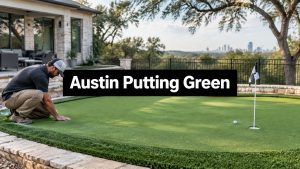
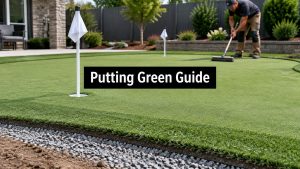
A putting green isn't just lawn turf with a hole cut into it. Cup count, fringe design, break direction, slope transitions, and ball speed all affect whether the surface feels useful. On a Hill Country lot, the installer needs to shape the subgrade before laying the green. A putting surface placed on an unstable or poorly drained slope won't stay predictable.
Homeowners considering this use should review artificial turf for putting greens and ask to see completed work, not just product samples.
Pet runs need their own drainage plan
A dedicated dog run benefits from a drain path, antimicrobial or odor-control infill, washable surface design, and rounded edges that reduce sharp transitions. It should also sit where runoff won't carry waste toward a patio, foundation, or neighboring property. Pet turf is the right choice when the area has a clear use and can be cleaned routinely. It's a poor substitute for fixing a yard-wide drainage problem.
What Landscaping Really Costs in the Austin Market
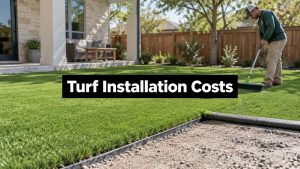
A contractor cannot price an Austin yard accurately from a phone description. Two properties with the same lawn area can carry very different costs. One may offer easy access and stable soil, while the other has tree roots, buried irrigation, steep grades, clay, and limited space for excavated material.
The ranges below help you compare what a proposal includes, not predict a final price. Reliable pricing stays site-specific and qualitative until the contractor measures the property and reviews its conditions.
| Service | Typical Cost (per sq ft or flat) | Main Cost Drivers | Austin's Price Range |
|---|---|---|---|
| Artificial turf | Site-specific | Turf grade, excavation, base depth, edging, access, drainage | Quote after measurement |
| Putting green | Site-specific | Contours, cups, fringe, base preparation, slope correction | Quote after design |
| Pet run | Site-specific | Drainage, infill, edging, access, wash-down needs | Quote after site review |
| French drain | Site-specific | Pipe length, outlet, excavation, rock, clay conditions | Quote after drainage assessment |
| Surface drains | Site-specific | Catch basins, pipe route, discharge point, grading | Quote after runoff review |
| Segmental retaining wall | Site-specific | Height, footing, geogrid, drainage, stone choice, access | Quote after elevation check |
| Small Austin yard project | Site-specific | Demolition, haul-off, irrigation, prep, materials | Written proposal required |
What moves the number
Demolition affects the quote when the crew removes St. Augustine, Bermuda, roots, concrete, or old weed barrier cloth. Access affects labor and hauling when materials must pass through a narrow gate instead of being placed beside the work area. Clay amendment and compaction also matter because the finished surface depends on the ground below it.
For turf, confirm that the proposal covers excavation, haul-off, aggregate base, compaction, weed barrier where appropriate, edging, seams, and infill. For drainage, verify that the design connects to a usable discharge point before approving the work.
A low bid isn't low if it leaves out the work that makes the installation last.
Permits, irrigation cap-offs, disposal fees, tree protection, and restoration outside the immediate work zone may appear as separate line items. Read the exclusions carefully. Use this site preparation cost guide to organize the questions you ask before signing a proposal. In Austin, a clear scope matters more than a tidy headline price.
From First Walkthrough to Final Walkthrough
A well-run landscaping project has a visible sequence. You should know who measures the site, who makes drainage decisions, when permits are handled, and what the crew will do before the finished surface goes in.
The planning stage
The first visit should cover goals, measurements, access, existing trees, utilities, irrigation zones, slope, and areas where water stands or moves too quickly. The contractor should inspect soil conditions rather than assuming the entire property behaves the same way.
The proposal should identify materials, quantities, preparation, drainage, labor, schedule, exclusions, and warranty terms. If a retaining wall, drainage tie-in, or other regulated work requires City of Austin approval, the contractor should explain who pulls the permit and when that happens.
The installation sequence
Most residential turf or drainage jobs take 3 to 7 working days once started, while larger retaining wall or full-yard rebuilds commonly run 2 to 4 weeks. Those timelines come from the project scope and should be treated as planning ranges, not guarantees.

A typical sequence looks like this:
- Discovery and measurements: The crew records dimensions, grades, drainage paths, and intended uses.
- Design and proposal: Materials, layout, preparation, and pricing are documented.
- Permits and scheduling: Required City of Austin approvals are addressed before regulated construction begins.
- Demolition and rough grading: Existing turf, debris, failed structures, and unsuitable soil are removed.
- Drainage and base preparation: Pipes, outlets, aggregate, soil amendments, and compaction establish the foundation.
- Installation and closeout: Hardscape, turf, plants, irrigation changes, cleanup, and the punch-list walkthrough complete the work.
Don't accept a finished yard without testing gates, drains, irrigation zones, edges, transitions, and runoff paths. The final walkthrough is where you confirm that the outdoor space works, not merely that it photographs well.
Water Savings, Drainage, and Year-Round Maintenance
Austin's water rules and soil conditions turn maintenance into part of the design. A yard that looks low-maintenance but needs frequent irrigation, constant mowing, or repeated drainage repairs isn't a low-maintenance yard.
Austin Water has described a new establishment schedule that permits up to 0.5 inches per day for the first 10 days, every other day from day 11 through day 20, followed by the normal city schedule. The details matter because newly installed plants and turf need establishment care, but that care still has to fit local conservation requirements. Confirm the current rules before installation rather than relying on an old contractor handout.
Water decisions should match the use
Replacing about 200 square feet of grass with plantings that don't need watering can save about 2,000 gallons over the summer, according to the Lower Colorado River Authority's guidance cited in the provided Austin outdoor living material. Austin Water has also discussed a laundry-to-outdoor space requirement for new homes estimated to save 3,500 gallons per home per year. These figures illustrate why turf conversion and efficient outdoor planning are practical resource decisions, not just style preferences.
Independent Austin-focused reporting says drought-tolerant conversions can reduce outdoor water use by 40% to 60%, though the result depends on the original lawn, irrigation system, plant palette, and maintenance approach. Treat that range as a planning reference, not a guaranteed result for every property.
Drainage prevents recurring damage
Austin drainage design often has to address clay-heavy soils, caliche, limestone interfaces, and perched water behavior. Municipal guidance recommends directing excess water toward lower infiltration areas and building a soil base about 6 to 8 inches deep, while local technical guidance commonly uses a 1% to 2% positive slope away from structures where grading is appropriate. French drains, dry creek beds, catch basins, and retaining-wall drainage should be selected according to the actual flow path.
Maintenance stays simple when the installation is correct. Rinse turf when needed, remove debris, monitor infill, keep drain inlets clear, and inspect drainage routes before the heavy-rain season. Native planting still needs pruning and establishment care, but it avoids the constant cycle of replacing plants that never matched the site.
How to Choose the Right Landscaping Contractor in Austin
Contractor selection is where homeowners protect the entire investment. Good materials can still fail if the installer skips compaction, misreads the slope, buries a drain without an outlet, or leaves irrigation running against the city schedule.
Ask questions that reveal how the company works
Don't settle for a polished estimate and a vague promise. Ask:
- Daily supervision: Who will supervise the crew on site each day?
- Permit responsibility: Does the company pull required City of Austin permits directly?
- Drainage warranty: What warranty covers drainage corrections, outlets, and connections?
- Structural warranty: What warranty applies to retaining-wall movement, settlement, or repair?
- Insurance: Can the company provide proof of general liability and workers' compensation coverage?
- Local experience: Can the contractor show finished Central Texas projects with comparable soil, slope, and materials?

A door-knock quote that skips the site visit is a warning. So is a bid that says “prep work included” without identifying excavation, haul-off, soil amendment, base depth, compaction, edging, or irrigation changes. A contractor who won't explain where drainage water goes is asking you to pay for a problem twice.
There's also a meaningful difference between a one-person operation that hires a sub crew for every task and a fully insured local firm with a stable address, documented process, and accountable supervisor. Small operators can do excellent work, but you need to know who is responsible when the project has a setback.
Request three written bids, call two references, and drive by one completed project in the same ZIP code before signing. Ask those references whether the crew protected trees, kept the site clean, honored the schedule, and returned after final payment. For a significant project, trust is not a soft benefit. It's part of the construction specification.
Your Next Step Toward a Yard That Works for Austin
Every Austin decision comes back to three questions. How much live turf does the property need? Where will stormwater go after the next hard rain? How will the design handle slope, whether through grading, a dry creek bed, or a properly drained retaining wall?
Answer those questions before choosing turf color, plant combinations, or patio finishes. A family with kids and a dog may need durable functional turf in one zone, shade planting near the house, and a drainage correction at the side gate. A property manager may need consistent appearance, simple maintenance access, and surfaces that stay usable under strict watering limits.
Texas's design market is projected at $894.8 million in 2026, with 3,080 businesses and 6,406 employees in the category, according to the Texas landscaping market report. The report also estimates average annual business-count growth of 2.2% from 2021 to 2026 and market-size growth of 3.4% annually over that period. Austin homeowners have plenty of contractors to call, which makes careful comparison more important, not less.
For budgeting, don't trust a generic phone quote. Most installations should be discussed within a $8 to $25 per square foot planning band, but that range is a broad editorial budgeting guide, not a verified price schedule. The actual proposal depends on clay, roots, slope, access, demolition, drainage, material quality, and the amount of base preparation.
Schedule an on-site walkthrough instead of asking for a ballpark over the phone. Clay, tree roots, buried irrigation, and elevation changes can't be priced responsibly from a photograph. The right Austin contractor will walk the yard, ask about the dog's run and the kids' soccer games, test the drainage logic, and return with a plan priced to your lot rather than copied from a national template.
Modern Yard Landscapes provides Austin-area artificial turf installation, custom putting greens, pet-friendly dog runs, drainage tile, retaining walls, and planning for residential and commercial properties. Visit Modern Yard Landscapes to request an on-site walkthrough and discuss a practical plan for your soil, slope, water schedule, and daily yard use.